
The rousing reunion of the surviving members and comrades of the protest group Women for the Ouster of Marcos and Bases, known by the acronym WOMB, was still uppermost in the attendees’ minds. It is primarily because, as one pundit said, “You girls don’t even need to change the meaning of WOMB.”
Sure, the American bases may have been kicked out by continued protests from the nationalistic bloc and Nature’s fury in the form of Mt. Pinatubo’s eruption and lahar flows. But look who’s bullying us in the West Philippine Sea. And look who’s back as part of the visiting forces agreement.
As Fides Lim, one of the speakers and head of KAPATID, a human rights organization that works for the welfare and release of prisoners of conscience, said, “It seems a lifetime ago that we marched on the streets for the ouster of Marcos and the bases. But both are back as if to spite history.”
Held at The Hub of Diliman Preparatory School in Quezon City on Jan. 20, the reunion was billed as a tribute to fallen comrades. Host Nikki Coseteng, former senator and a WOMB stalwart, welcomed everyone, a rainbow coalition of political affiliations, mainly center and left of it. Not even a minute into reading her handwritten notes, Nikki was choking back tears at seeing the room filled with those who had marched, or worked, to help bring down an authoritarian regime in 1986.
She remembered how her father, businessman Emerson, died from heartache, as that administration made life increasingly hard, grabbing enterprises here and there and raising interest rates. Her family was, in the end, left with only the school property which Marcos and cronies did not covet because it was way out on Commonwealth Avenue, where the bodies of “salvage” victims were thrown.
Historian Maris Diokno recalled the contributions of the likes of Dr. Mita Pardo de Tavera, who graciously hosted WOMB meetings in her Dasmariñas Village home in Makati; former beauty queens Maita Gomez and Nelia Sancho, who stood out in more ways than one in their combined patriotism and heroism; “Ka Universe” Gilda Cordero-Fernando and “Ka World” Odette Alcantara. The last two were creative sidekicks in thinking up forms of protest beyond shouting “Makibaka! Huwag matakot” and raising clenched fists.
In one yellow confetti rally in Makati, Gilda convinced Mert Jacinto-Loinaz, an equestrienne, to mount a horse and ride it along Ayala Avenue a la Gabriela Silang. Mert is wife to Xavier, then president of the Bank of the Philippine Islands, who probably viewed the proceedings from a high-rise window on the corner of Ayala and Paseo de Roxas with dread in his heart.
In one yellow confetti rally in Makati, Gilda Fernando convinced Mert Jacinto-Loinaz, an equestrienne, to mount a horse and ride it along Ayala Avenue a la Gabriela Silang
I attended one such meeting with Dr. de Tavera, who preferred to be addressed as “Mamita.” Maita encouraged the WOMBies to sell their wares after the official meetings ended. In her case, she was selling dried fish. This made actor Gigi Dueñas quip, “When the going gets tough, the tough sell daing!”
At the same meeting was then economics professor and petite Gloria Macapagal-Arroyo or GMA (yes, she was a WOMBie, records show). Irreverent Gigi, who towered over her, said to her in Filipino, “Gloria, ang kamukha mo ay ama mo, hindi ina mo (you look like your father, not your mother)!” Gloria simply smiled.
Such is my memory for trivia that I’ve had to draw from it while drafting four changes in the audio-visual script presented at the reunion, all submitted to a collegial body made up of organizers Coseteng, Vikky Bondoc-Cabrera, who served as temporary treasurer for the collections at the door and the sales of tiangge items, Judy Taguiwalo, who brought in a number of woke second-generation youth and who continues to teach social work, and Daphne Ceniza.
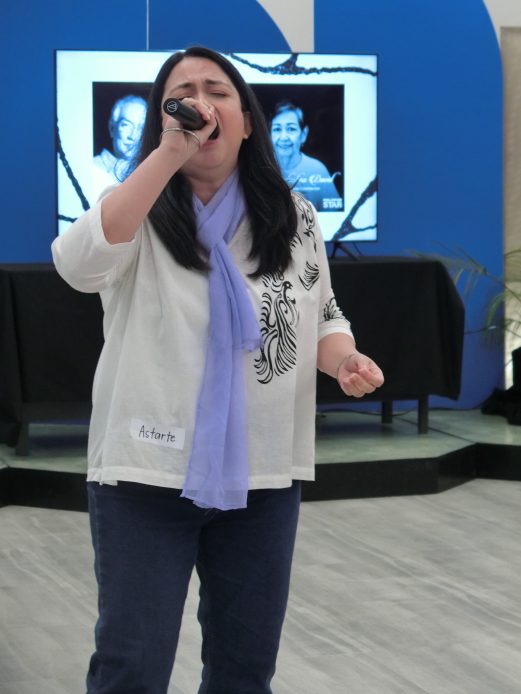
Singer Astarte Abraham set the tone for the afternoon with her spirited interpretation of Babae, composed by Mon Ayco, while in the background, the television sets projected images of the duo Inang Laya (vocalist Becky Demetillo Abraham and the late guitarist Karina Constantino-David). Afterwards, Karlo acknowledged the presence of Karina’s husband, the sociologist-columnist Randy. The body gave surviving Becky a standing ovation.
Judy paid tribute to the ones she called “the anti-dictatorship titas” made up of our elders: Inday de la Paz, Baby Jalandoni, both of WOMB, and Thelma Arceo, Nini Quezon-Avanceña and Maring Feria of Concerned Women of the Philippines. They were colegialas who went to exclusive Catholic girls’ schools like Assumption, St. Scholastica’s, or St. Theresa’s.
She said, “The presidency of Ferdinand Marcos and his declaration of martial law would take the titas out of their gated villages to join street protests against the Marcos dictatorship and to various prisons to visit political prisoners, including my Camp Crame baby and me.”
She called Nini “the original senior citizen I knew who was proud of her gray hair. The ouster of the dictatorship did not stop her from joining protest actions. We have a picture on Ayala marching together with Maring Feria and (National Artist) Bien Lumbera to protest the ‘Hello Garci’ scandal of GMA sometime in 2007.”
She concluded, “We honor them, we pay tribute to them, not just for the sake of remembering, but as a reminder to us who continue to live, this time under another Marcos, that the struggle for sovereignty, accountability, peace, and social justice that they fought for, that we fought for, continues.”
Also acknowledged were the contributions of other departed members such as writer-watercolorist Baboo Mondoñedo of Baguio; writer Petronila G. Cleto, who could be relied on to draw up position papers on political and social issues; actor Adul de Leon, who was fierce in her performances but was a kind, softspoken person in personal relationships; honorary WOMB members Behn Cervantes, actor and stage director; and film director Lino Brocka.
-

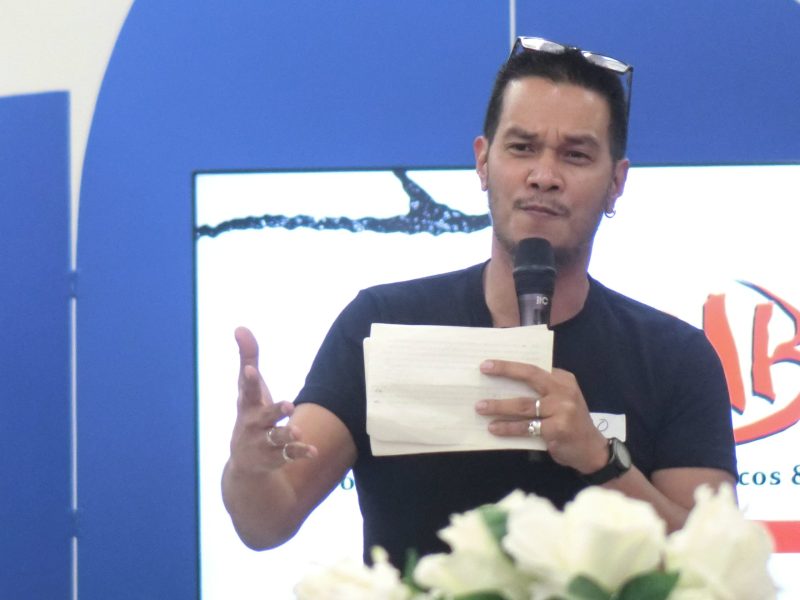
- Emcee Karlo Altomonte, actor-director, worked like he was stirring up a rally. Photo by Anna Leah Sarabia
-
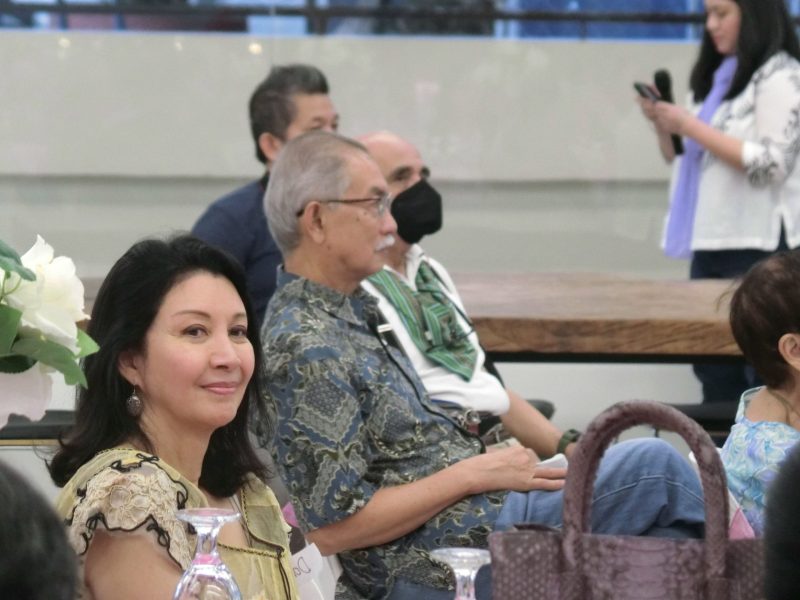
- Daphne Ceniza, left, one of the original WOMB members with sociologist-columnist Randy David
-
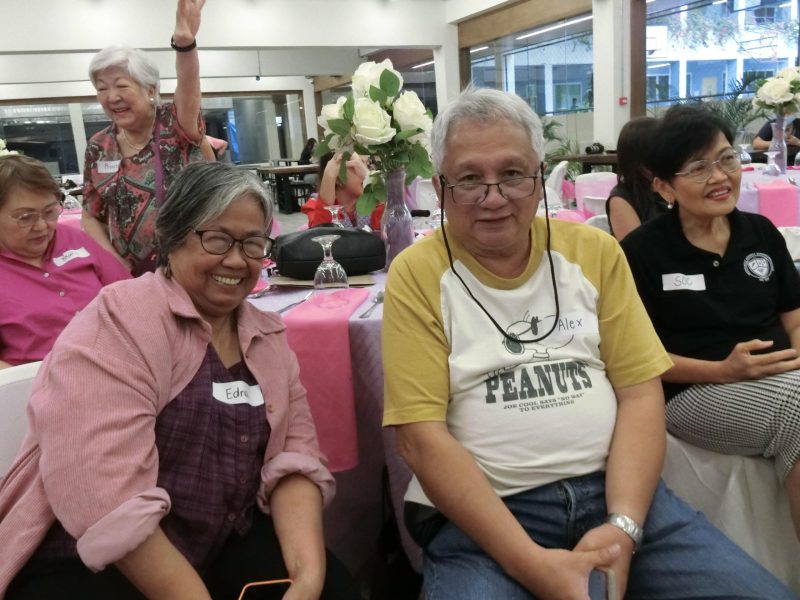
- From left: historian Maris Diokno, socialist Princess Nemenzo, ‘Lola Aktibista’ Edna Aquino, husband Alex and Socorro Reyes. Photo by Anna Leah Sarabia
The roster of living members, including their closest allies, was called out by emcee Karlo Altomonte: Fe C. Arriola, Feny de los Angeles-Bautista, Vikky Bondoc Cabrera, Sandra Lozano Celestial, Daphne Ceniza, Coseteng, Diokno, Ma. Victoria G. Dizon, Gigi Dueñas de Beaupre, Lilia Tumanda Fabregas, Arche Ligo, Babeth and Suzy Lolarga, Joji Ravina-Lourence, staunch ally Sr. Mary John Mananzan, Helen Mendoza, Hilda Billano Narciso, Marie Reyes Marciano, Rosario M. Pinguel, Cierlene Rivera, Nympha Saño, Lia Seelin, Gilda Segismundo, Son Soto, Judy Taguiwalo, Deng Cordero Tan, Venus Lucero Tinio, and Olive Tripon.
From Guadeloupe, French West Indies, Gigi sent a taped message that was broadcast to the hall. Speaking in her husky voice, she recalled, “I always connect WOMB to good lunches, eternal merienda cena, and dinners. We always did our activities around a table full of food, and its conviviality really gave us the energy to go on with the struggle…So many things happened na, and WOMB continues to evolve. I hope we can still be around for a while so we can contribute to the betterment of our society. Some of us were waylaid along the way. I hope you guys won’t make the same mistake. The Duterte era was like a nightmare.” She signed off with her signature, “Babbooh!”
‘I hope we can still be around for a while so we can contribute to the betterment of our society. Some of us were waylaid along the way,’ said Gigi Dueñas in a taped message
Sociologist Mary Racelis, who at 92 continues to teach and organize women leaders living in informal settlements, spoke about what has kept her going when she could have easily retired quietly and comfortably long ago. She brought her doctoral student and friend Jennie Kleskie to the reunion. Jennie came away “very impressed at the energy, creativity and history exploding all over the room,” Mary said.
Fides reminded the audience that “we also come here to remember what we should never forget. They include those who are back in prison because they just won’t give up. They are the political prisoners. They include my husband Vic Ladlad who’s in Bicutan for five years now, stooped from chronic obstructive pulmonary disease (COPD) but spirit still unbowed and guwapo pa rin (still handsome).”
She said Vic was among the 801 political prisoners in the Karapatan list as of Jan. 12. The breakdown of prisoners is as follows: Of the 90 arrested under Marcos Jr., 164 are women. She added that Kapatid, her support group for political prisoners, “puts the actual total at 843 with the inclusion of the entire 135 political prisoners in Negros island, 42 of whom are still being documented.”
-
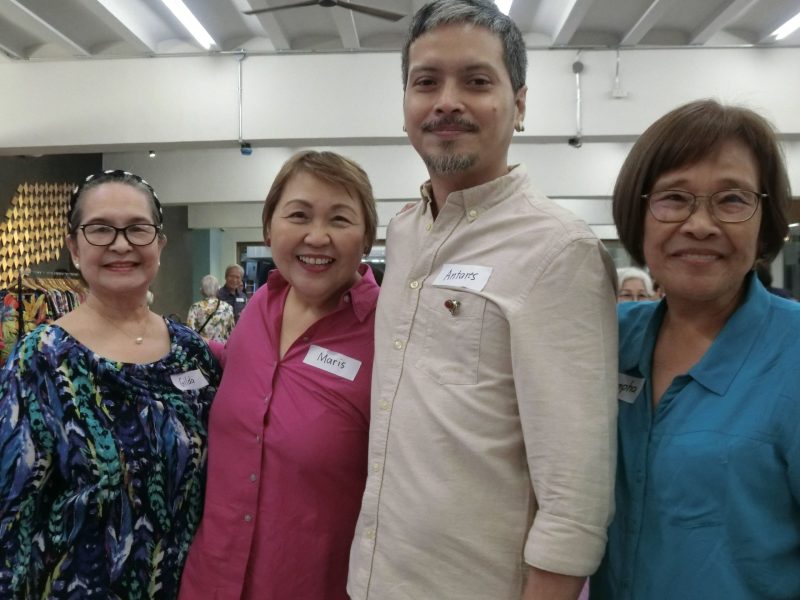
- Antares Gomez Bartolome, Maita’s son, stands tall with his other WOMB ‘mothers’ Gilda Segismundo, Maris Diokno and Nympha Sano. Photo by Anna Leah Sarabia
-
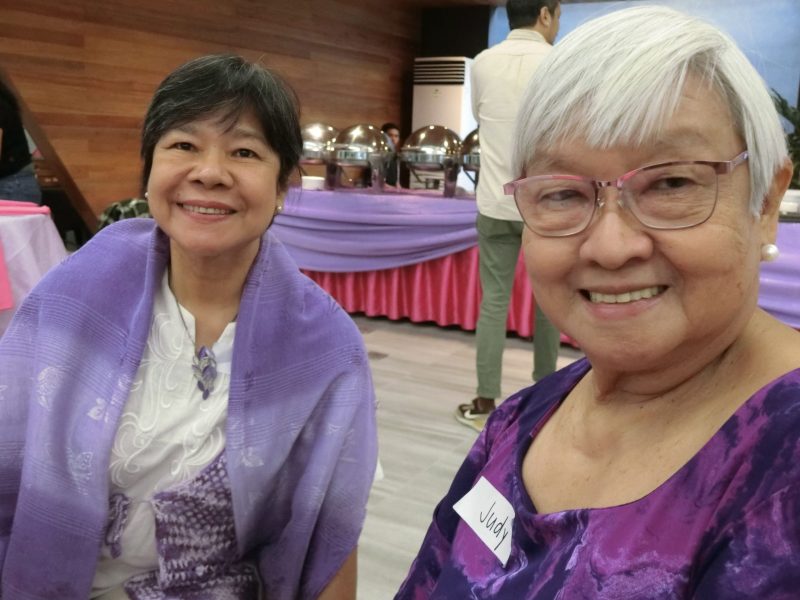
- WOMB members Irene Lolita Donato and Judy Taguiwalo
-
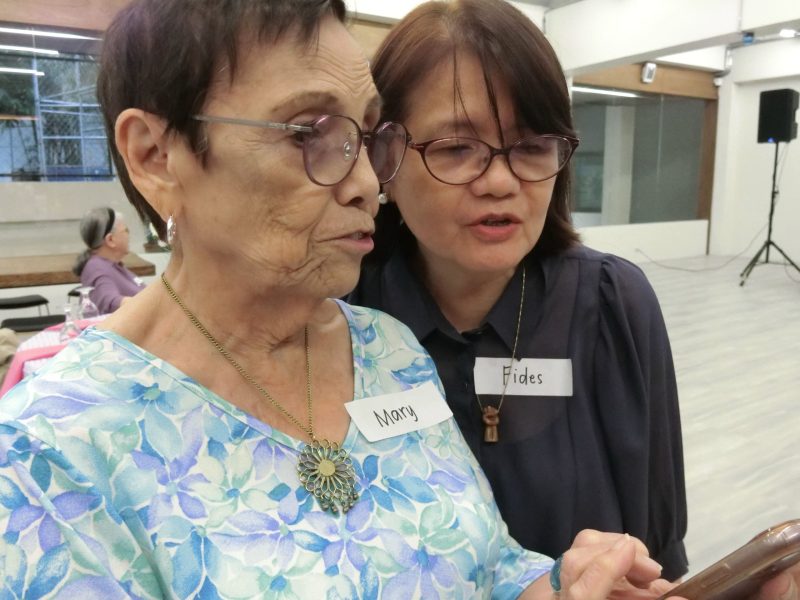
- Two generations united and exchanging contact details: sociologist Mary Racelis and Fides Lim of KAPATID, a human rights org that works for the release of prisoners of conscience. Photo by Anna Leah Sarabia
She gave a rundown of the features of the political imprisonment:
manipulation of the judicial system through filing multiple trumped-up, non-bailable criminal cases such as planted firearms and even murder in order to criminalize political dissent;
labeling political prisoners as terrorists with the weaponization of laws;
imposition of excessively harsh sentences. Over 95 per cent of political prisoners in the New Bilibid Prison are serving a sentence of reclusion perpetua or life imprisonment for fabricated crimes;
confinement in severely overcrowded prisons;
government indifference to releasing the elderly, sick, and long-incarcerated based on humanitarian considerations such Gerardo Dela Peña, 84;
arbitrary and unnecessary tightening of restrictions in jails; and
subhuman conditions and grossly inadequate services—food, medical, legal aid, communication with families, among others.
Fides encouraged the WOMB ladies and their friends to “please come visit like what Bishop Ambo David did just last Tuesday in Bicutan when he offered Mass and the best food of all—hope.”
She said visiting the prisoners or buying their handicrafts are not acts of “mere charity but justice. To eat, pray, love, fight is the work of justice.”
Fides Lim said visiting the prisoners or buying their handicrafts are not acts of ‘mere charity but justice’
I was most touched by the story-telling of Vicky Bayno, only 52, a two-termer kagawad of Quezon City and one of the urban poor who joined Gigi’s Workshop for Creative Survival alongside the children of political detainees in the 1980s. Now the administrative assistant of Diliman Integrative Technical Consultancy, Inc. at the University of the Philippines, she delivered her short speech in flawless Filipino.
She recalled how the workshop began at Gigi’s home in Project 6, Quezon City, then moved to St. Anthony’s School in Malate, St. Theresa’s College on D. Tuazon, also in Quezon City, at the Philippine Educational Theater Association and the former home of Coseteng in La Vista, Quezon City. It was through the workshop that she met the women of WOMB and Gabriela.
Bayno said, “Ipinamulat po sa amin ng workshop na ito na tayo ay pantay pantay, walang mahirap, walang mayaman. Nakasama po namin ang ibat ibang kabataan, anak ng mga militanteng naka kulong, mga palaboy at may mga prostitute pa, ngunit wala po kaming idea kung sino-sino sila. Basta kami po ay sama-samang gumagawa ng mga craft materials na amin pong ipinagbibili upang matustusan ang mga gastusin sa aming workshop. Ang aming palabas na Ang Leon, Ang Agila at ang mga Daga ay kumakatawan sa ating bansa noong tayo ay sinakop ng mga Kastila at kalaunay mga Amerikano. (The workshop made us aware that all people are equal, there is no such thing as poor or rich. We met all sorts of youth, the children of jailed militant activists, street children and even prostitutes, but we didn’t have an idea of who they were. We just went on working with craft materials that we sold so we could have money to cover workshop expenses. Our play Ang Leon, Ang Agila at ang mga Daga represented our country when we were under the Spaniards followed by Americans.)”
The workshoppers held concerts in different galleries like Hiraya and Luz. They shared the stage with Lea Salonga, Ric Segreto, and Ivy Violan at Rizal Theater under the direction of Behn.
Bayno said her experiences served to inspire her, in a simple way, to help the youth in her community when she ran for political office and won. It is her wish to be of help to the community members in their time of need. She said all these wouldn’t have been possible had it not been for her training in Gigi’s workshop.
The workshop was also where activists like Maita parked their kids because it was a safe space. My sister Suzy recalled baby-sitting Maita’s eldest son Pogpog. He now goes by the name Antares Gomez Bartolome, and is a respected writer-artist. When the two were reintroduced last Saturday, Pog lost no time in standing up from his seat and politely apologizing to Suzy for any misbehavior in his early childhood. She remembered how he once played with a cutter. The adults were able to pry it out of his hands.
-
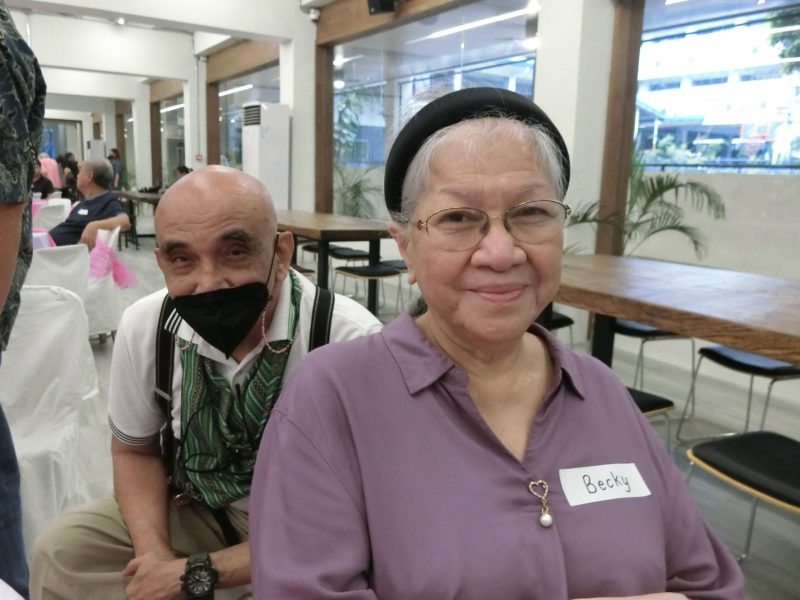
- Edru Abraham of Kontra-gapi with wife Becky Demetillo Abraham of Inang Laya. Photo by Anna Leah Sarabia
-
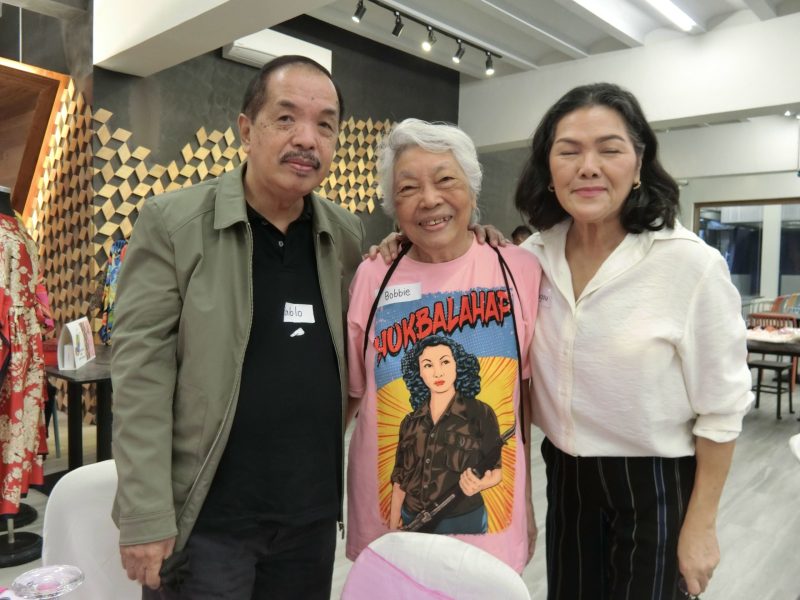
- From left: Journalist Pablo Tariman, former National Democratic Front negotiator Bobbie Malay in her Hukbalahap t-shirt and writer-jazz singer Gou de Jesus
-
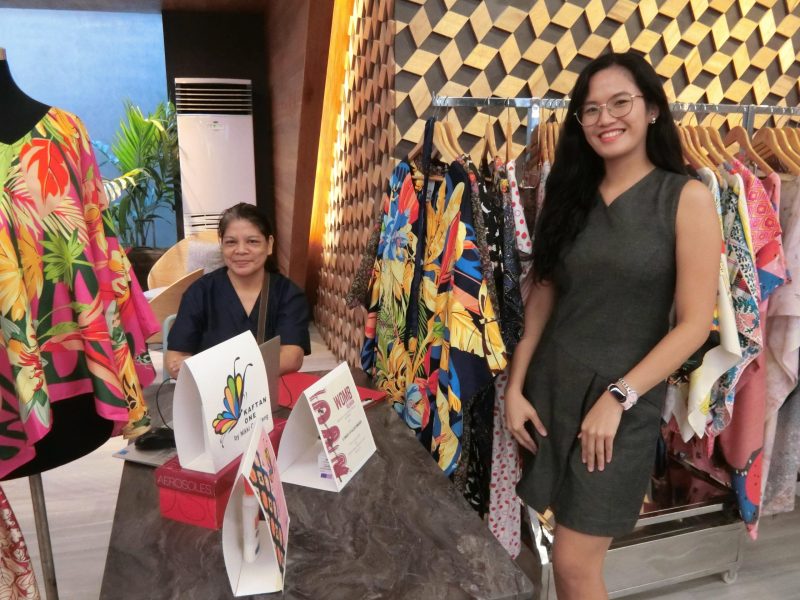
- A colorful bazaar that included kaftans by Nikki Coseteng. Photo by Anna Leah Sarabia
Clarice Palce, the 20-something secretary general of Gabriela which is marking its 40th year of founding with a year-long celebration, led in the one-time chanting of “Makibaka! Huwag matakot.”
Astarte ended the sobering talks with the Jose “Pete” Lacaba (translation) of the danceable song Sway. The feminists rose to their feet, even the ones with canes, to sway, samba or cha cha cha to show that the political can segue to the personal and back to the political without missing a beat.
Photos by Anna Leah Sarabia and Sinag de Leon
Vintage photos from the WOMB files


