
I’VE only sobbed underwater twice in my life (and no, for a long-time scuba-diver, that’s not life-threatening). First was when we scattered my late friend (and fellow diver) Abby Tan’s ashes at Twin Rocks in Anilao, Batangas, after she died of breast cancer several years ago.
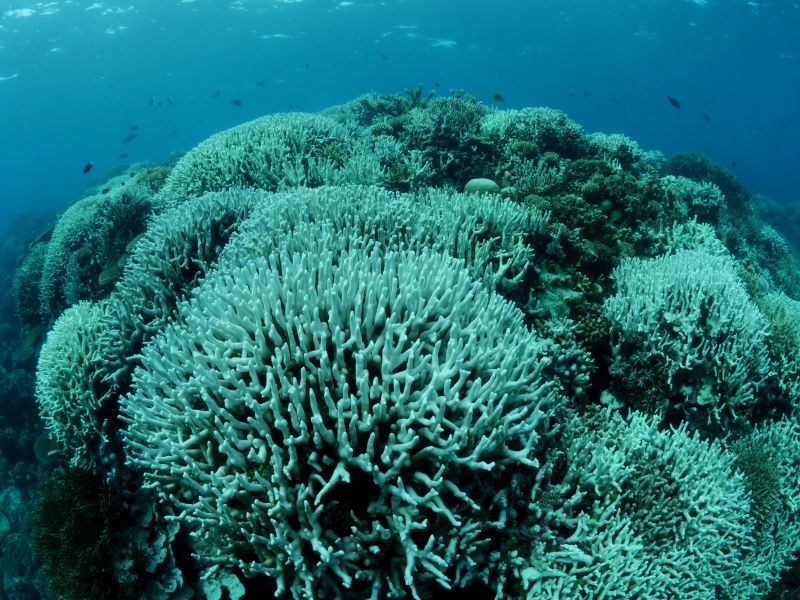
Hard corals bleached from extreme water temperatures from the summer of 2024. (Photo by Danny Ocampo)
The second was just last June, during our annual visit to our happy place, the Tubbataha Reefs Natural Park (TRNP). We saw a lot of coral that had been bleached from the summer’s intense heat; as it turned out, the heatwave had been felt all over Southeast Asia, and it was a testament to the health and resilience of the corals in this Sulu Sea apex ecosystem that the bleaching was not disastrous (although some effects could be long-term, and remain to be seen).
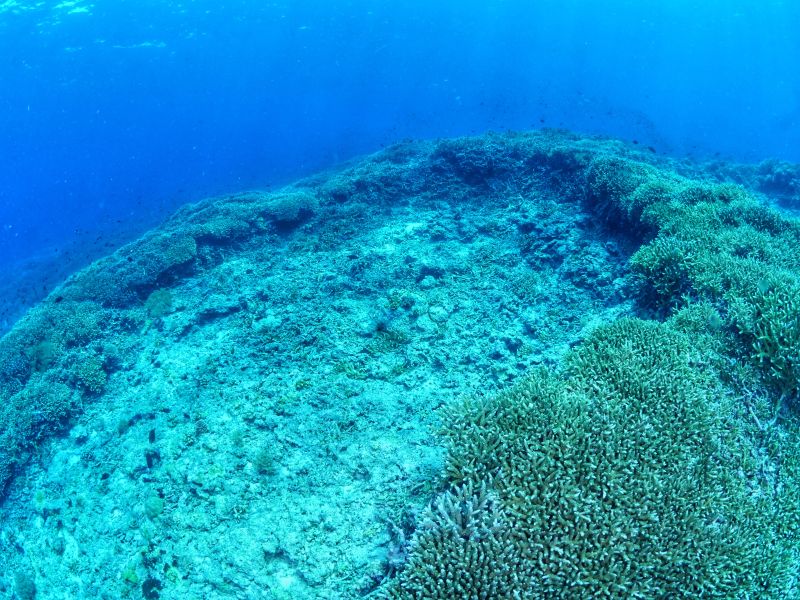
Crater caused by dynamite fishing in Jessie Beazley reef. (Photo by Danny Ocampo)
What got my mask all fogged up was seeing the craters caused by the explosives that had been thrown by illegal fishers into the water in Tubbataha, from pandemic days, when, for the first time in their 20-odd years of guarding the 97,030 hectares of reefs, the Tubbataha Marine Park Rangers had to abandon their station for a couple of weeks because of the combined ravages of a COVID-19 outbreak among their ranks and a storm that rendered the Ranger Station uninhabitable for a while. That, plus the sheer size of the reefs that the rangers must patrol, left some far-off reefs unattended.
We had done several days of wonderful diving, as usual, so it was a bit of a shock to end up in some barren coral fields in Jessie Beazley, still part of the park—still dotted with fish, yes, but as Protected Area Superintendent and my friend Angelique Songco said, “The fish don’t even quite know yet that their homes are gone.” Dynamite fishing is unequivocally illegal, as declared by Republic Act (RA) 10654, the Amended Fisheries Code, which states that “it shall be unlawful for any person to catch, take or gather or cause to be caught, taken or gathered fish or any fishery species in Philippine waters with the use of explosives, noxious or poisonous substance such as sodium cyanide, which will kill, stupefy, disable or render unconscious fish or fishery species…” As we all know, however, in the Philippines, our written laws are infinitely more impressive than our ability to implement and enforce them; RA 10654 is 10 years old.
And so we swam somberly, viewing these patches of rubble, with the fuses of the explosives still in the water. I confronted once more man’s ability to seriously f-uck up his environment and rape the ocean—despite her unceasing generosity—and all I could do was cry.
Then again, as environmental advocates will tell you, it’s always a balancing act. During the pandemic, the exodus of people working in the cities but heading back to their coastal provinces, after losing jobs in urban centers because of lockdowns, created renewed pressure on fishing grounds. Marine park managers talked of fish populations and resident schools of fish that disappeared. So you dwell on the conundrum: save the oceans, but let the people starve? As all the studies will tell you, however, indiscriminate fishing will inevitably lead to people starving, anyway. Only good fisheries management—impossible without political will, by the way—will save Philippine seas for the future.
Many determined groups are working hard for this future, but when you have to contend with commercial fishing operations that pillage reefs and steal fish from under the noses of subsistence fisherfolk—and which, incidentally, include government officials as owners and investors—then you would understand why so many give up. A birdie told me that when renowned National Geographic Explorer, marine biology pioneer, and one of my idols, Dr. Sylvia Earle, was quietly (why the gatekeeping, by the way) flown in by the Department of Environment and Natural Resources last June, some cabinet official proudly informed her that one of their ranks actually owned “one of the biggest commercial fishing fleets in the country!” Dr. Earle was speechless, the aghast birdie told me. “Stupid” doesn’t even do this justice, but let’s move on.
In the course of one of the projects I’ve been working on as a freelance writer and editor of environmental publications, we interviewed Norlan Pagal, a fisherman from Cebu who was a staunch Bantay Dagat or defender of marine protected areas, who never backed down from calling out illegal fishers—until goons of local commercial fishing bigwigs (or was that a local government official? Or both?) shot him, leaving him paralyzed from the waist down and wheelchair-bound.
Did it discourage him? Nope. He continues to talk, conduct training for people’s organizations, and inspiring next generation Bantay Dagat to not be afraid.
So if it was hungry subsistence fishermen from starving communities who bombed holes in Jess Beazley reef, in a national park, defacing a national treasure, it would make some sense. But if it was one of several commercial fishers encroaching on areas they’re not supposed to be in, all for profit, then yes, it could make you cry and hope their boat gets swallowed up by the next typhoon. Or like in Norlan’s case, it would make you really mad, and even more determined to step up. God bless him and others like him.
Still, Songco keeps her hopes up; she has to, which is what makes her such a maverick at her job. “It’s like a human being,” she said of the place she is protecting. “If you’re healthy, you bounce back faster from disease.” So just a couple of weeks after the heartbreak, we heard some great news.
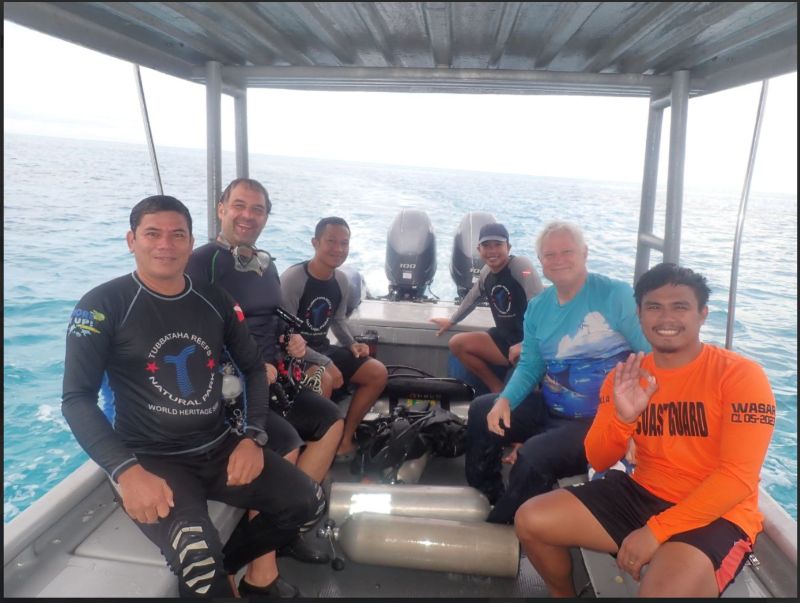
Dr. Klaus Stiefel (second from left) and Dr. Kent Carpenter (second from right) join Tubbataha Marine Park Rangers, led by Manny Bundal (leftmost) on the fish inventory. (Photo by Jeffrey David)
Last June 22 to 28, international scientists Dr. Kent Carpenter and Dr. Klaus Stiefel returned to the Philippines for their fourth TRNP fish inventory. They found 32 previously unlisted fish species, 12 unique to the lagoons of Tubbataha. Over all, 135 species have been added to the existing TRNP list since the survey’s inception—23 of them found only in Tubbataha’s North Atoll. In other words, after all these years, new fish species are still being discovered in the Tubbataha Reefs, adding to the already thousands there, and further reinforcing the role of the park as an unparalleled marine ecosystem.
For those not in the know, these dudes are not scientific slouches. Carpenter is an ichthyologist (a zoologist studying fish) who has been studying the marine fishes of the Philippines since 1975, and has been involved in the annual monitoring of reef fishes of Tubbataha since 2018. He’s a professor and scholar in Biological Sciences at Old Dominion University in Virginia, and even has two species named in his honor (how cool is that?). He’s best known in the Philippine environmental field as co-author, with Victor Springer of the Smithsonian Institution’s National Museum of Natural History, of the study released in April 2005 declaring the Philippines “the center of the center” of marine shorefish biodiversity. “Scientists have long known that the area in Southeast Asia that includes Indonesia, Malaysia, and the Philippines holds the richest marine biodiversity,” he said in an interview for the Old Dominion University News in 2005. “I was amazed to discover that the extreme center of this biodiversity is in the Philippines, rather than closer to the equator.”
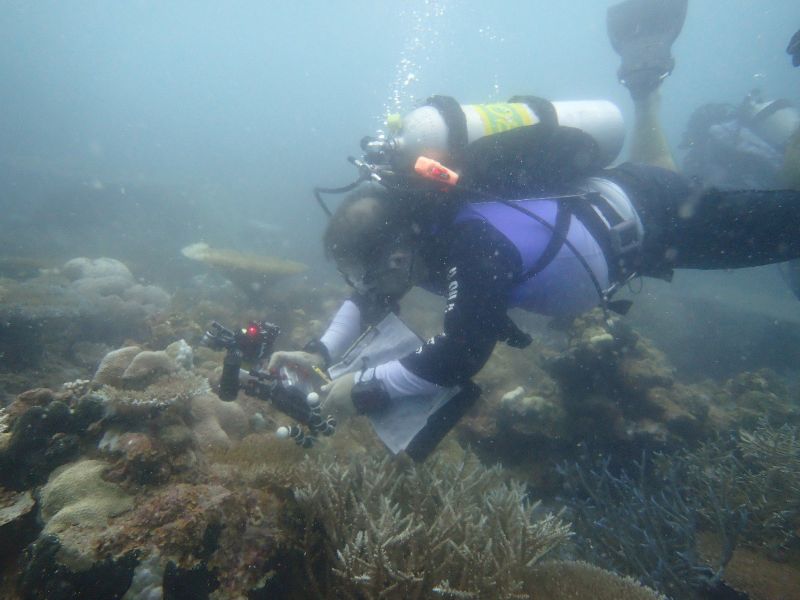
Photo documentation of the 2024 TRNP fish inventory (Photo by Jeffrey David)
Stiefel is originally from Vienna, but has lived in the Philippines since 2014. He is an underwater photographer and videographer, author, and biologist who was on his second TRNP fish inventory, and has taught at the University of the Philippines and Silliman University, where he is part of the Silliman University Angelo King Center for Research and Environmental Management. A favorite subject of his is gobies, a large group of bony marine fishes abundant in the Philippines; in fact, his latest book, published in 2022 by Asian Geographic Singapore, is entitled The Lives of Gobies.
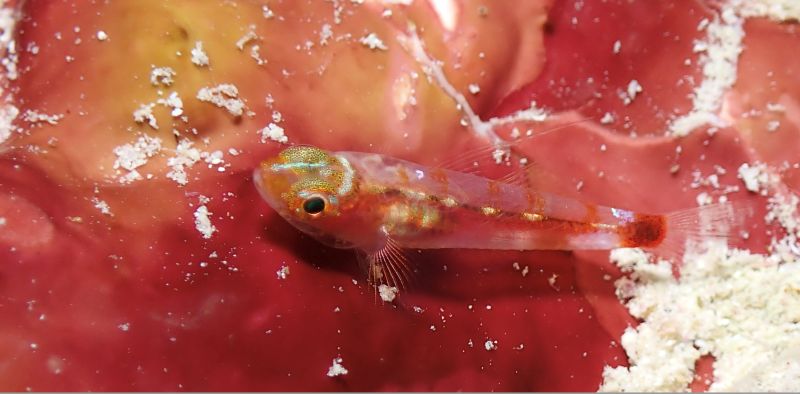
‘Trimma nasa,’ a nasal pygmy goby, photographed in Tubbataha by Dr. Klaus Stiefel
The Tubbataha Marine Office also conducted a survey of the endangered fish Napoleon wrasse (Cheilinus undulatus), its first in six years, confirming that Tubbataha’s lagoons are nurseries for this charismatic species. These big, stunning fellows can weigh as much as 400 lbs, but no thanks to people who eat it as a luxury food, it’s a favorite target of the illegal fish trade—like we said, greed.
“We are just learning about more fish species that make their home in Tubbataha,” says Songco. “The lagoons, which we do not monitor as often as the reef crest, are home to very interesting species, to juveniles, and even humongous adult fish. After over two decades, it appears we’ve barely scratched the surface of the water. Nature is truly filled with wonders!”
Like in most cases of environmental protection, even if the situation looks ugly and utterly depressing, in the long run, science will save the day—scientific management and fact-based policies. That, and a lot of political will that just won’t tolerate short-term greed. In the end, we find hope in the little victories, like these tiny fish that have chosen to live in Philippine waters. That’s where we have to take heart.


