
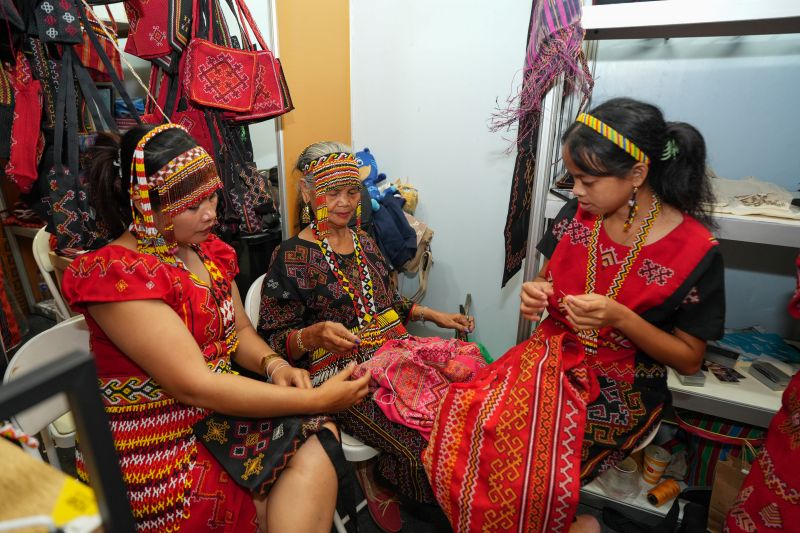
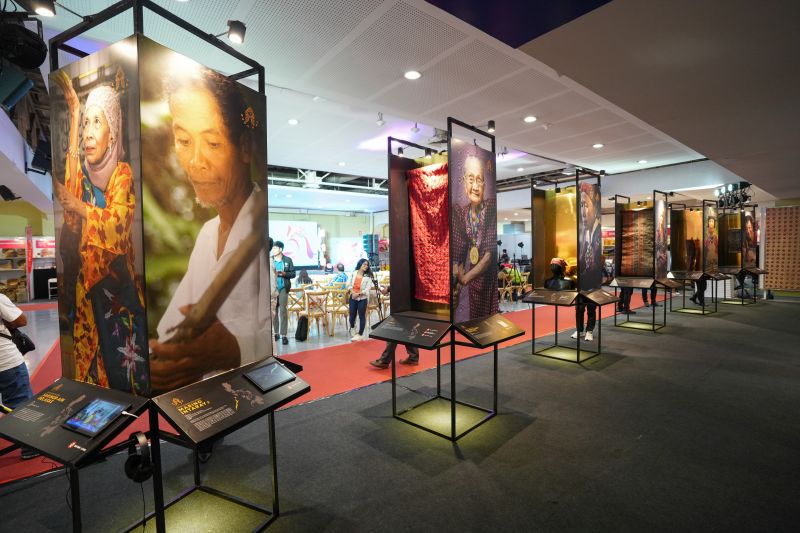
The annual National Arts and Crafts Fair (NACF) is a vital platform for cultural preservation and community empowerment. from October 23 to 27 at the Megatrade Halls 1-3 of SM Megamall, it was an intersection of cultural heritage and craftsmanship, presenting artisans from marginalized and indigenous communities.
I recently had the opportunity to visit the National Arts and Crafts Fair (NACF), held Oct. 23-27, 2024, at the Megatrade Halls 1-3, SM Megamall, and it felt like being immersed in all things Filipino.
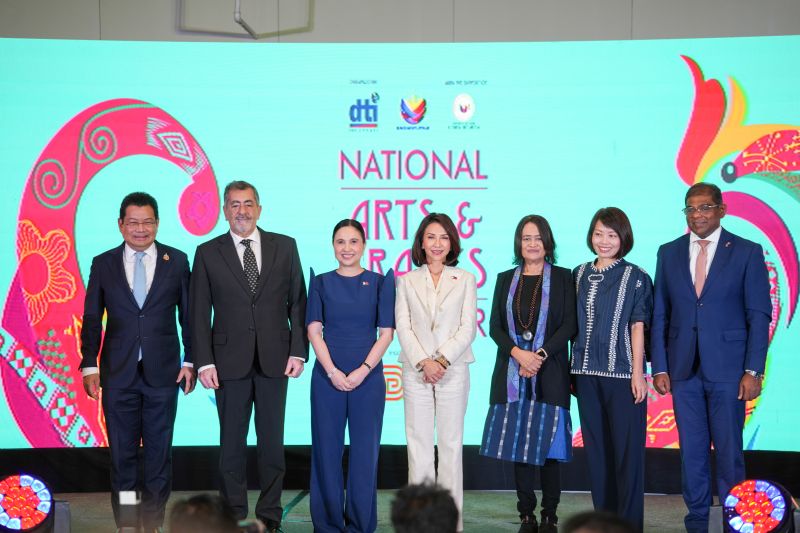
At the opening, from left, Thailand ambassador Tull Traisorat, Greece ambassador Ioannis Pediotis, DTI Secretary Ma. Cristina Aldeguer-Roque, DOT Secretary Ma. Esperanza Christina Garcia Frasco; DTI Regional Operations Group Undersecretary Blesila A. Lantayona; Singapore ambassador Constance See Sin Yuan, and Malaysia ambassador Dato’ Abdul Malik Melvin Castelino
One of the stories that struck me was from Jordan, Guimaras, about the product known as tultul. Tultul is a salt made of coconut milk that has long been a part of the community, but the tradition was not practised for the longest time, until it was revived in the mid-2000s. Vinsoy Abawan of Tultul Salt Manufacturing told me about his community, and how it was affected by the worst oil spill in Guimaras in 2006, which stopped all production of tultul in the city. Then just as they were about to resume production in 2016, another oil spill crushed that dream once more. They tried again in 2020, then the pandemic hit.
But in true Filipino resilience, post-pandemic, Abawan worked with another community member and his parents to revive the tradition despite major obstacles. His words bore a sense of pride as he recounted to me how what started as a two-man team has grown into an operation of 20 people.
As I tasted the salt, it dawned on me that, beyond the taste, this wasn’t like any salt. There was a story behind it that meant so much more.
As someone who grew up in the Philippines but also has some extensive experience living abroad, I feel how even in our soil, the craftsmanship of our countrymen is often overlooked. It doesn’t make any sense, considering how we Filipinos have always been a resourceful lot. We have the resilience to make the best of what is given us. We are blessed with a rich history, with people from all walks of life, who have a lot more to offer beyond our food. While food is universal language, and beauty is subjective, one can appreciate the work that goes behind it, the story behind the work.
I am no historian nor anthropologist, but I’m trying to develop a deep love for our arts, culture, and history. It’s one thing to see a variety of products in your specialty pasalubong stores (no shade to them), and a completely different thing to see and meet people behind the crafts displayed in front of you. Of course, nothing beats visiting and immersing yourself in the community the products come from. But not everybody has the opportunity to visit every corner of the Philippines.
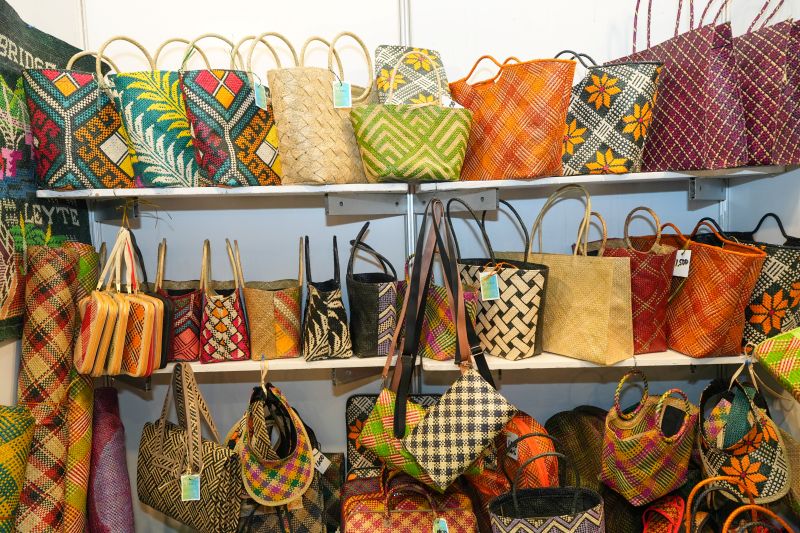
The NACF provided a happy medium, giving the craftsmen and representatives of communities a platform for cultural preservation, appreciation, and community empowerment, while also providing the convenience of having all of them in one place for people to go and purchase from the community members themselves.
Conceptualized by Sen. Loren Legarda in 2016, and supported by her to this day, the NACF has become an annual celebration of Filipino ingenuity, bringing together local artisans, indigenous communities, and micro, small, and medium enterprises (MSMEs) to showcase their work before a wider consumer market.
Conceptualized by Senator Loren Legarda in 2016, and supported by her to this day, the NACF has become an annual celebration of Filipino ingenuity
In her welcome remarks for this year’s NACF, Legarda highlighted the significance of the fair in preserving cultural traditions. “The NACF has served as a powerful platform to mainstream our indigenous arts, crafts, fashion, and cultural heritage into broader markets, allowing local artisans, MSMEs, and our indigenous communities to gain visibility, access new markets, and sustain their livelihoods,” she said. “In a world where modern technology often overshadows the traditional, their work proves that nothing can match the beauty of crafts made by hand, with heart and soul poured into every product.”
There was so much to appreciate as you walked throughout the exhibition hall, from traditional, centuries-old crafts to modern barong and terno. It was colorful, diverse, and most important, Filipino through and through. You were practically spoiled for choice, with all 200+ exhibitors throughout the hall. The exhibits from different regions included handmade crafts, woven fabrics, traditional products, and more. Visitors had the chance to purchase authentic, hand-made local products and to engage with artisans.
This year’s NACF also set itself apart from previous years by featuring the Schools of Living Traditions (SLTs). These schools are community-managed centers that serve as cultural centers for indigenous groups to teach their younger generations the traditional skills and crafts of their forebears. The goal is to ensure that the community traditions aren’t lost in the ever-changing landscape of modernization. The NACF gives people the rare chance to connect with members of these communities.
I love to check out art fairs and flea markets, and make it a point to chat with vendors and exhibitors. Maybe it’s the daldal side of me, but as a writer and storyteller, learning other people’s stories is just as important as creating my own. I had the opportunity to listen to people talk about their communities, the meaning behind the symbols they weave, and the work that went behind what I saw in front of me.
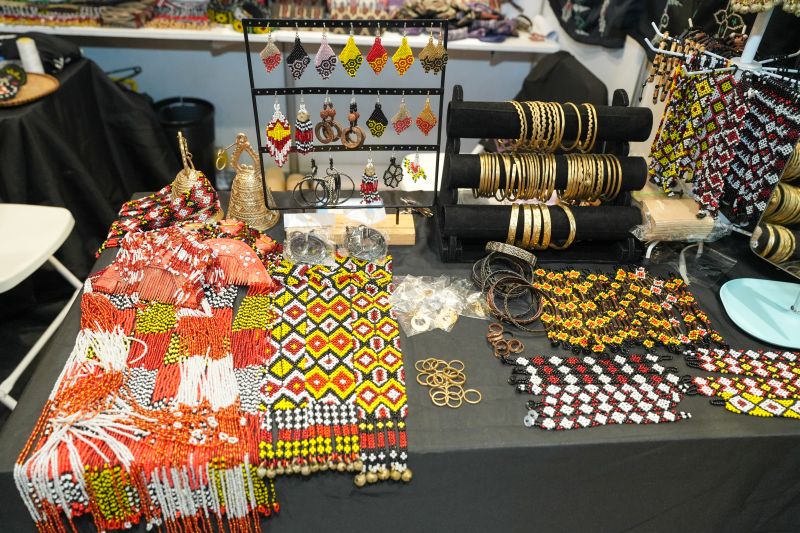
So, if you have the opportunity to attend the NACF in the future, you should. Talk to the people and connect with them. Learn their stories and ask them questions. Empathy goes a long way, and being able to directly support them means more to them than you’ll ever know. Though we might not get the chance to travel to every corner of the Philippines in this lifetime, we can get a glimpse of that reality when we learn about the communities.
To some, this might be as shallow as a bazaar to buy Christmas giveaways. It’s easy to say, “I got this from an indigenous community,” then pat yourself on the back, which is also fair, and it is still great to support indigenous and underrepresented groups. But events like these can be so much more. Creating a connection with members of these communities, learning their stories with an open heart, and sharing their stories are probably just as important as buying their products. In the digital age where practices like these could be lost in time, it’s in the knowledge of their stories and traditions that can keep the flame of our national arts and crafts burning.

Oftentimes, the production process is set so far apart from the consumer. While learning about tultul, I met two men who have so much passion and pride for their community and this traditional craft. The story has stuck with me since. It’s so easy to get lost in consumerism and buy things without second thought. But when you are surrounded by artisans and people whose lives are dedicated to their craft, you can’t help but feel inspired. There’s always something to be proud of as a Filipino.


