
Charro Jambalos is driving down Highway 101 in California in her Toyota Hybrid one October Friday. She and her husband Michael Levin just arrived from their annual European holiday and, a week later, are en route to Sherwood Oaks in Los Angeles. They’re seeing Michael’s centenarian father, who’d been feeling under the weather.
“Behind those mountains is the Pacific Ocean,” says Charro.
The car’s other passengers would have made the late British conservationist Gerald Durrell proud: Michael rides shotgun while Merlet Perlas and I, family friends, sit in the back with Bella the labradoodle and Genghis the turtle.
“This is the setting of John Steinbeck’s works,” Charro adds, looking at me through the rearview mirror.
Present-day Monterey is a postcard-pretty landscape of lush green farmlands. I spot farmers who, I reckon, will endure the backbreaking work and sweltering temperature like Steinbeck’s tillers of the soil.
It takes seven hours to get to Sherwood Oaks from Palo Alto, where we’re based. The duration can stretch with Friday’s traffic buildup at Santa Barbara, but we avoid the jam with Charro’s smooth driving and a 7 am start.
LA holds a kaleidoscope of significance for travelers like myself in various stages of our lives. Gardena was for a Christmas visit with relatives when I was 18. Rosemead, Studio City, and West Covina were short respites from work in my 30s and 40s.
Making my way to LA this time felt like picking up where I left off with a jigsaw years ago. A reconnection and discovery, if you will, of Sherman Oaks and Pasadena. Completing the puzzle is impossible with the vastness of LA demanding more than a transitory visit.
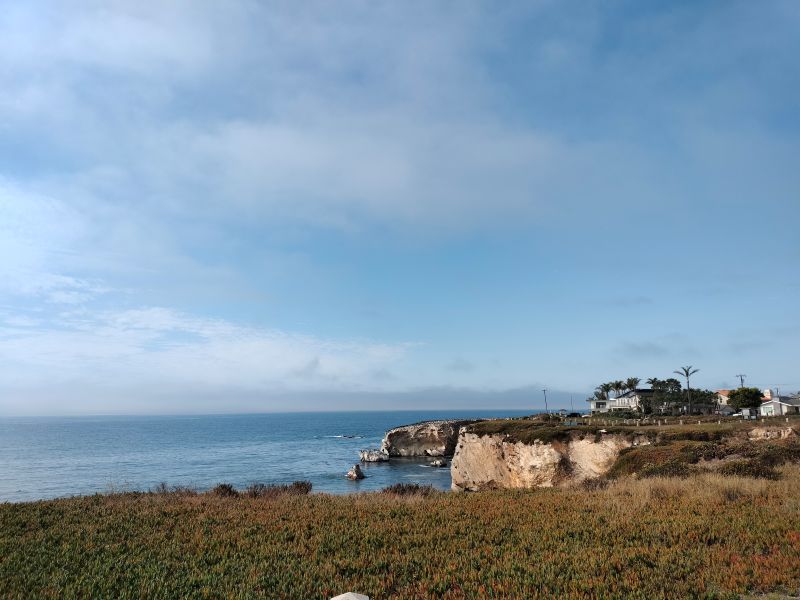
View from San Luis Obispo
Charro stops at San Luis Obispo three hours into the road trip—Bella needs a bathroom break and Genghis a stretch from his small plastic box. I see children at the playground on Cliff Avenue. Why not? The morning’s sunny, with a cool wind.
While Bella and Genghis gambol on the grass (Genghis runs fast!), we walk as close as possible to the cliff’s edge. The sight of the calm dark-blue waters is bracing. Seagulls flying overhead hover seemingly within a finger’s breadth from our heads.
Back on the road, highway construction diverts the vehicles to Highway 1, the freeway behind the mountains engulfed in a San Francisco-like fog. It’s the kind of fog American author Dashiell Hammett described as rolling in and cloaking the landscape in grey, which, combined with the hum of the car engine, lulls me to sleep.
California weather is fickle. I wake up to blue skies and feathery clouds in Santa Barbara, although the chill hangs in the air as we stop at Shalhoob Funk Zone Patio for lunch. The pulled pork-and-barbecue ribs restaurant serves salad (avocado) and sandwiches (turkey), but it wins me over with its Baja fish taco—crisp fish in Parmesan tempura batter with chipotle aioli, pico de gallo, slaw, and Mexican cheese on soft house-made corn tortilla.
California weather is fickle. I wake up to blue skies and feathery clouds in Santa Barbara, although the chill hangs in the air
While we wait for our orders, Charro quips: “Montecito is near here. It’s where Prince Harry and Oprah live.”
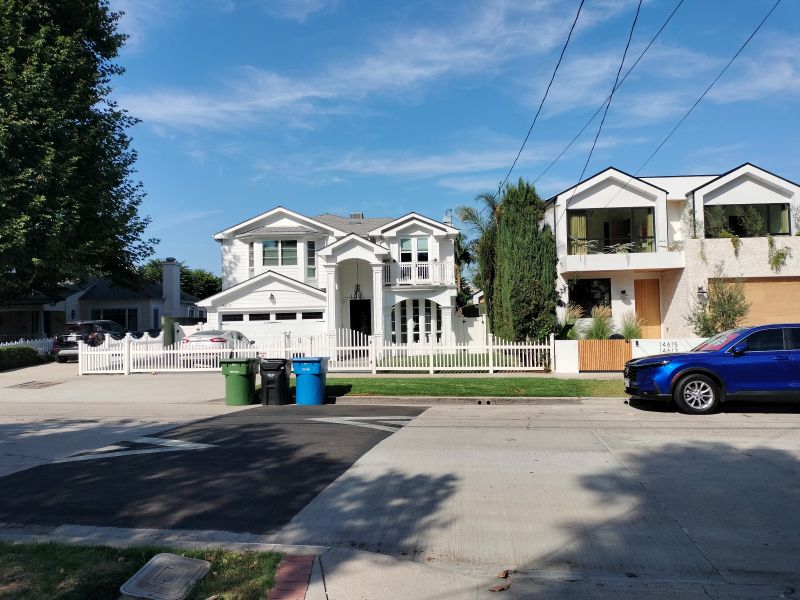
Greenleaf Street’s beautiful houses and stately trees
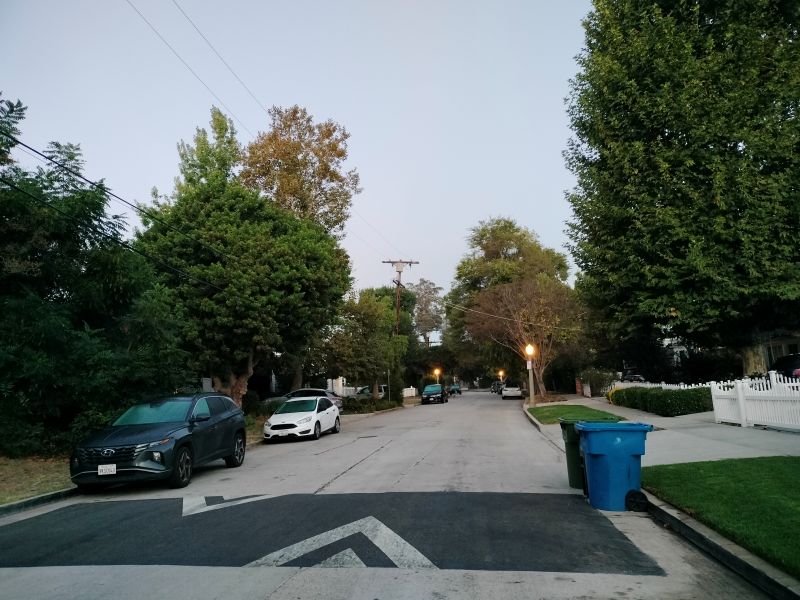
Sherman Oaks’ sweetgum and southern magnolia trees
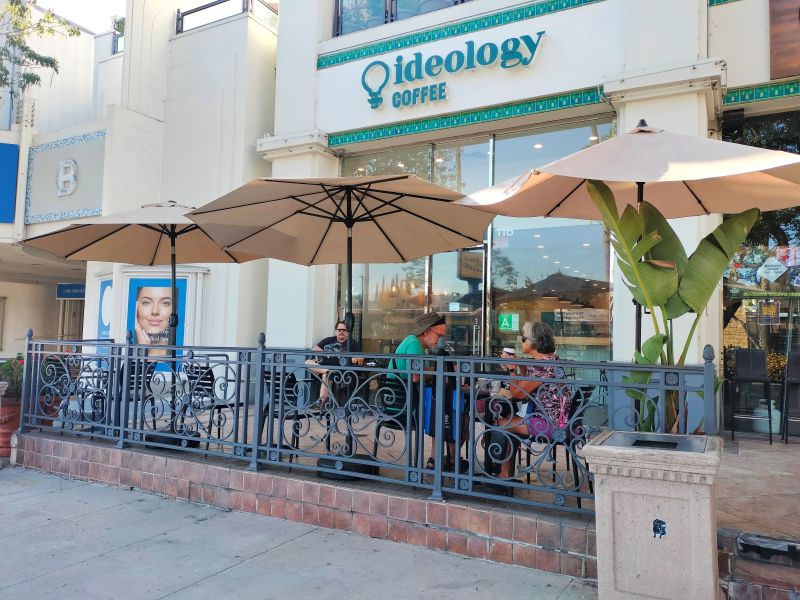
Ideology Café on Ventura Boulevard
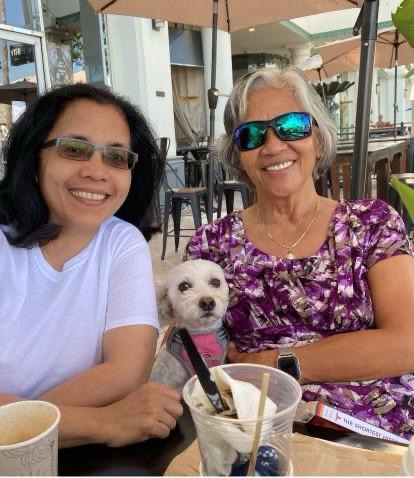
Coffee with Bella and Charro at Ideology Café
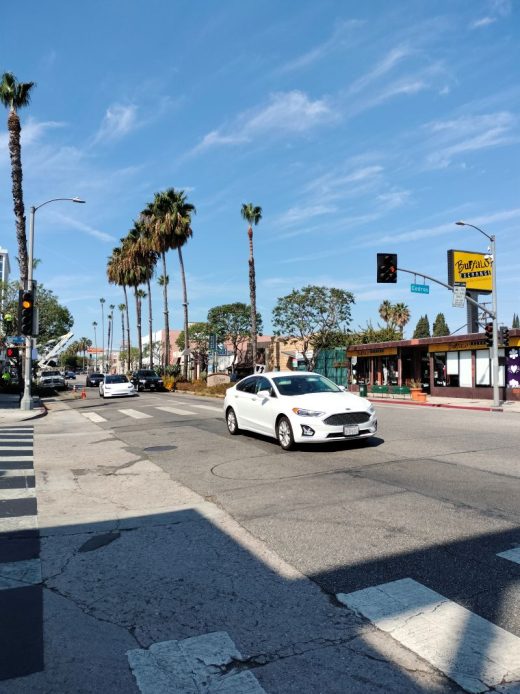
Sherwood Oaks has beautiful homes, majestic trees, and a revitalized post-COVID Ventura Boulevard. Turning left from Cedros Avenue into Ventura, you note coffee and bread (Ideology Café and Noah’s bagels), ice cream (Cold Stone), cake (Nothing Bundt Cakes), and Thai cuisine (Anajak). Going right leads all the way to The Higher Path, a recreational cannabis dispensary.
The city is named after Moses Sherman, developer of properties in California (Westside LA, San Fernando Valley, and Hollywood) in the early 1900s, and operator of the Phoenix Street Railway in Arizona in the late 1880s before he moved to LA.
Stories of coyotes roaming the neighborhood seem like an urban legend (much like New York’s sewer alligators), until a distinctive yowl rips through the silent night as Merlet and I go up Greenleaf Street from Ventura. We run back to Michael’s father’s house—a wrong move if we had come face to face with the coyotes, says Google. Running away is a no-no. It’s crucial to look big by standing tall and holding out your arms, making noise, and not walking the dog at dusk or dawn.
Michael tells us he sees the roaming pack of coyotes when he gets home after walking Bella. Unlike us, he’s been coyote-trained since he was young, so he remained where he was and waited for them to walk away. On another night walkabout with Bella, Michael was accosted by a woman who told him that the coyotes are attacking cats and dogs and that someone has been feeding them. Michael suspects that the coyotes’ den is in the jungle-like backyard of the house near his father’s house. He could be right: Two coyotes were on the street on the morning of our departure from LA, while we were loading our bags into the car trunk. They ran away as a school bus came up the road.
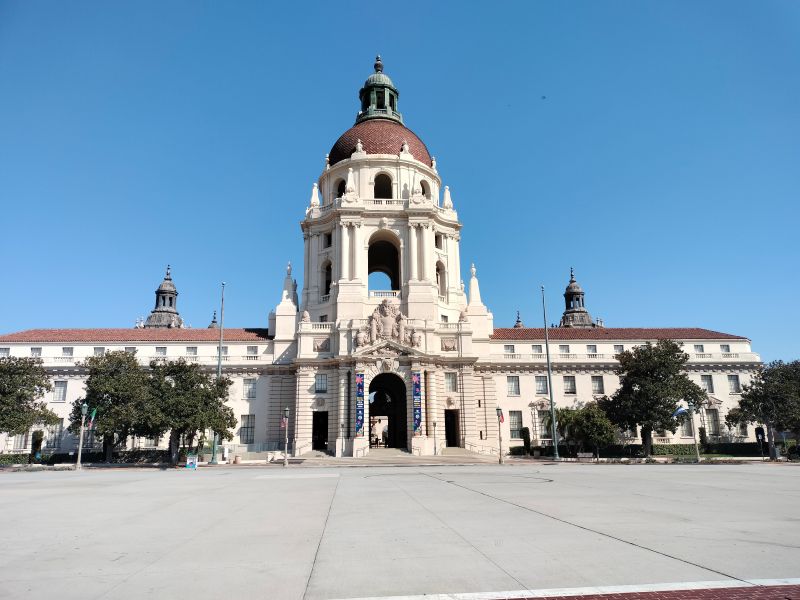
Pasadena’s City Hall is a fave location shoot.
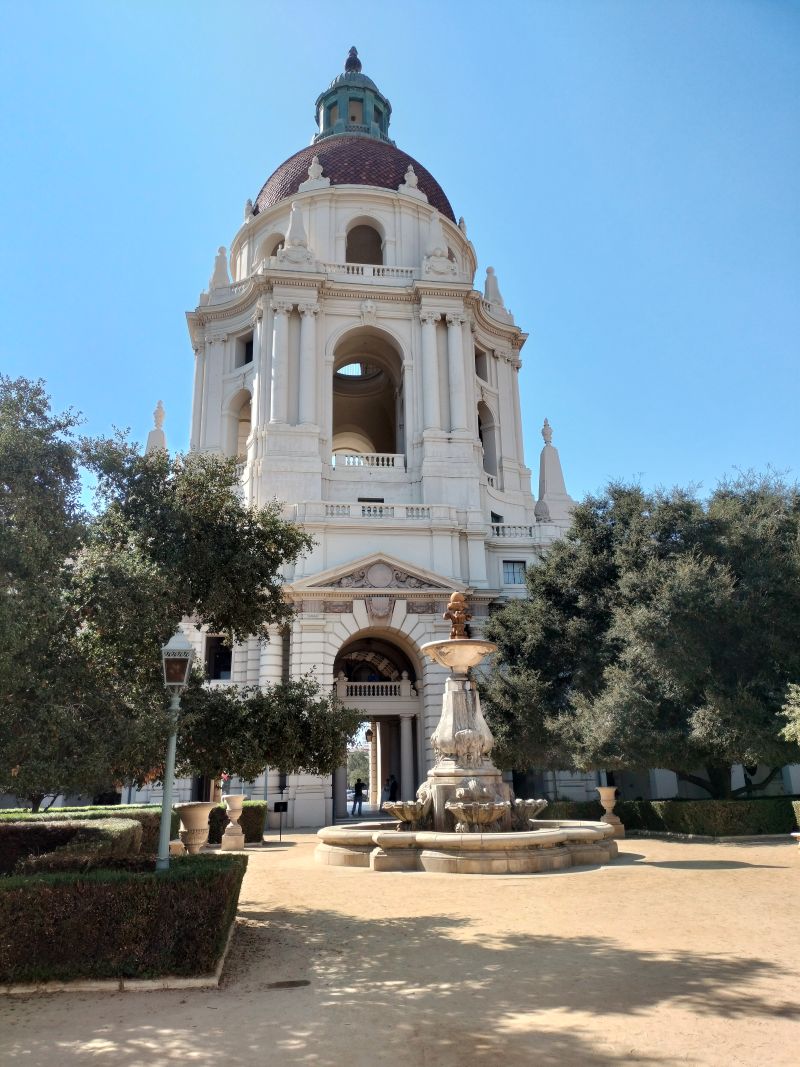
The courtyard gives romantic vibe.
Before then, however, I enjoyed a reunion with Efren and Gemma Cabrera, longtime friends of my family, who negotiated the route from their place in Monrovia to Sherwood Oaks. These LA residents believe that “nothing is far in LA when you have a car.” Our destination is Pasadena, a city known particularly for the Rose Parade (aka Tournament of Roses) that I recall watching on TV while visiting LA in my teens.
Efren says the rose-covered floats trundle down the 5.5-mile Colorado Boulevard every year on New Year’s Day for the Rose Parade, which ends at the Rose Bowl stadium where the annual college football match takes place. Marching bands (high school, college, university, and military) and “high-stepping equestrian units” accompany the floats.
Per the Rose Parade’s website, the first procession of flower-decorated horses and carriages in 1890 was spurred by the city’s abundance of roses during winter. Motor-driven floats replaced the horse-carriage floats in 1920.
Each parade has a new theme and grand marshal/s. The 1999 theme was a major highlight because of the four grand marshals—actress-diplomat Shirley Temple Black, astronaut Buzz Aldrin, documentarian David Cooper, and baseball legend Jackie Robinson (first posthumous grand marshal)—who represented the 20th century in the theme “Echoes of the Century.”
For 2025, the theme is “Best Day Ever,” and the legendary tennis player Billie Jean King is the grand marshal.
Pasadena is also linked to American college football—the Rose Bowl Game—with two of the top four teams chosen by the College Football Playoff selection committee competing on Jan. 1 at the Rose Bowl stadium for the Leishman Trophy. The trophy, designed by Tiffany & Co., is named after William Leishman and his son Lathrop, presidents of the 1920 and 1939 Tournament of Roses, respectively (tournamentofroses.com).
Pasadena is also linked to American college football—the Rose Bowl Game
“The highlight of the football game is the half-time show, but my favorite is the stealth bomber which flies over Monrovia,” says Gemma, who wrote for the fortnightly magazine Celebrity (now defunct) in the Philippines before they moved to the United States. In 2016, the world collectively praised Beyoncé and Bruno Mars’ half-time show, and in 2004 gasped in shock when Janet Jackson’s wardrobe malfunctioned during her and Justine Timberlake’s show.
Interestingly, Pasadena’s City Hall on North Garfield Avenue—the rectangular edifice and spacious court—is a popular location shoot for weddings and the quinceañera, a celebration marking a girl’s transition into womanhood in the Mexican and Latino communities in the US.
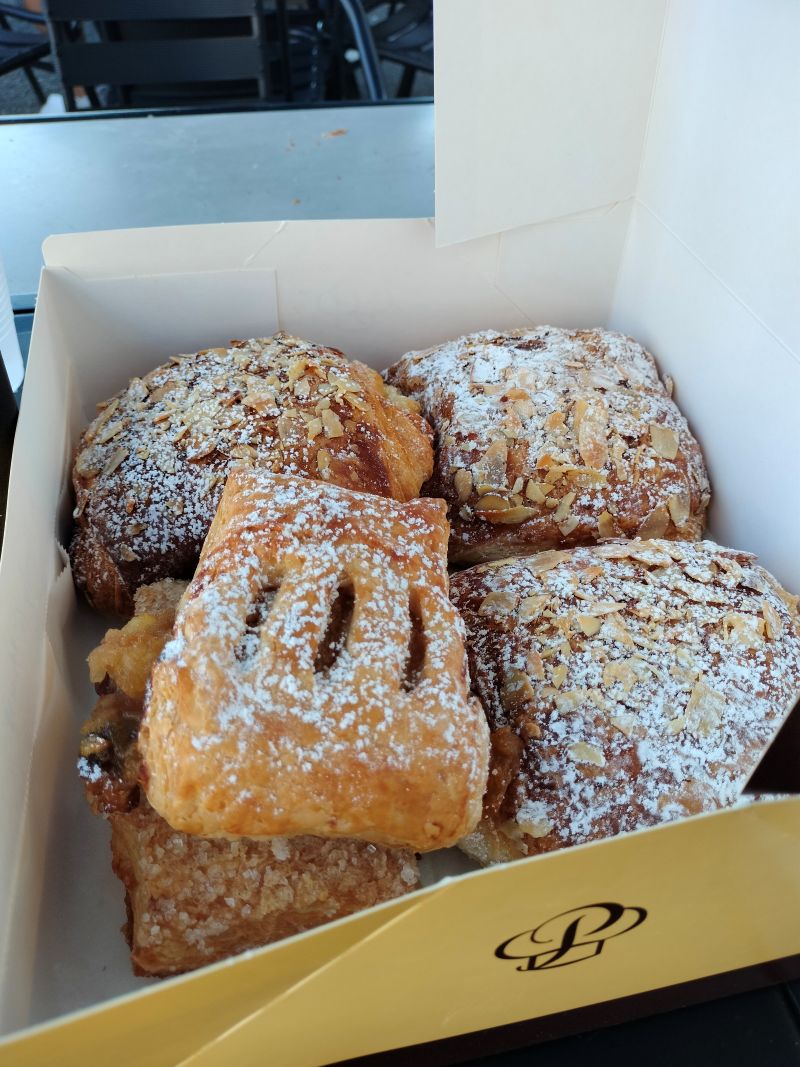
Porto’s almond croissant and apple strudel
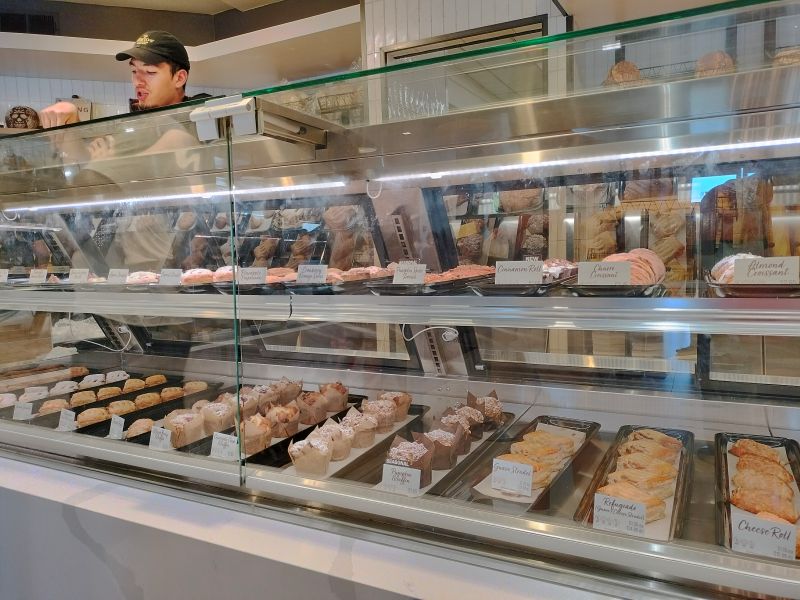
Pick your pastry at Porto’s.
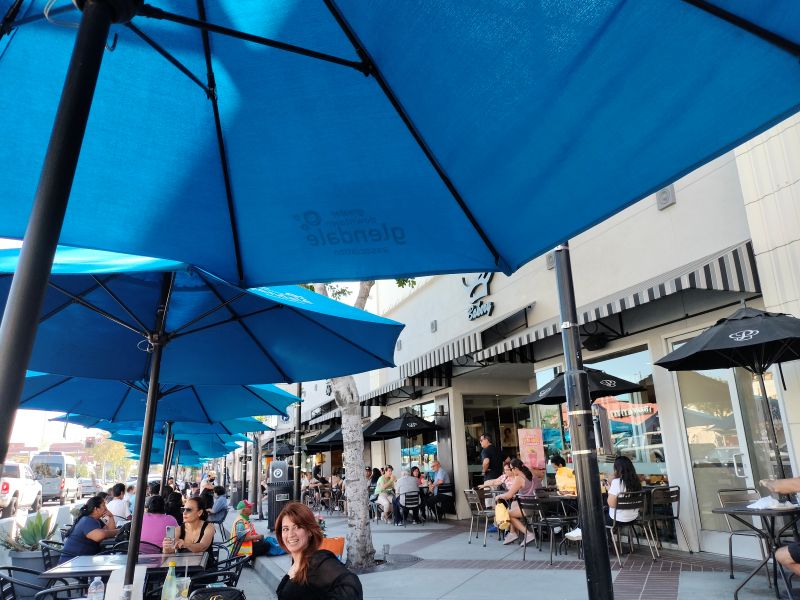
Porto’s al fresco section
We end the reunion at the popular Cuban Porto’s Bakery in Glendale, a 15-minute drive from Pasadena. A cousin had raved about its cheese roll. This time, Efren enthuses over the almond croissant and apple strudel, and Gemma savors the banana chips. I discover its tiramisu.
Traci Kato-Kiriyama captures what LA is all about in her poem Los Angeles- 1. The LA-based visual artist writes, “You cannot just visit, you must actually stay for a while, you will need wheels [and] a map.”
There are so many places to see, but getting around LA isn’t as easy as in Palo Alto or San Francisco. Public buses come few and far between. Walking? Can you imagine walking to and from Disneyland?
The city’s immense size—it measures 502 square miles—comes with an automatic isolation from people and places, making it important to reconnect with relatives and friends. They know LA like the back of their hand and can help you decide about LA: Do you hate or like it?
A whole picture forms when fragments are joined together, like my jigsaw of LA with Sherman Oaks and Pasadena. It’s far from complete, and so Kiriyama has me thinking of future visits, say, a brief stop at Lake Balboa and a longer one at the Los Angeles County Museum of Art.


