
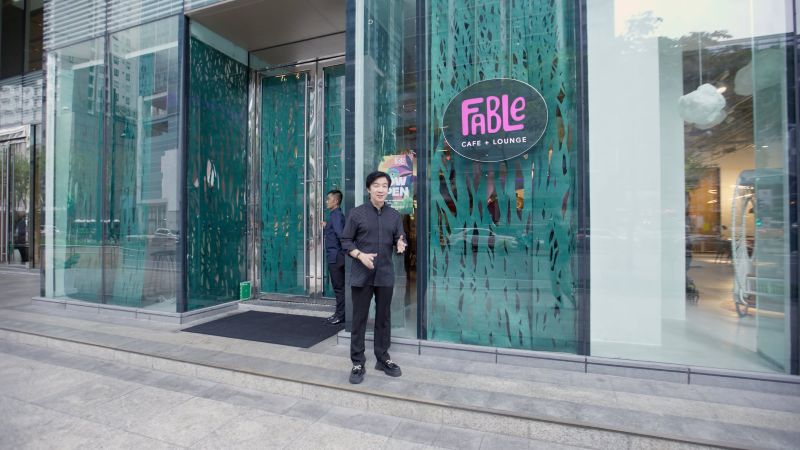
Kenneth Cobonpue creates not just furniture—but another world at Fable
Photos and video by Julian Reantaso
The relentless march of urban development in Metro Manila has led to a homogenization of public spaces, including vibrant districts such as BGC. Even hotel lobbies and showrooms here and abroad have fallen victim to a monotonous aesthetic. In this globalscape, industrial designer Kenneth Cobonpue is challenging the norm with Fable Café + Lounge, a space that embodies his philosophy of dramatic, imaginative design.
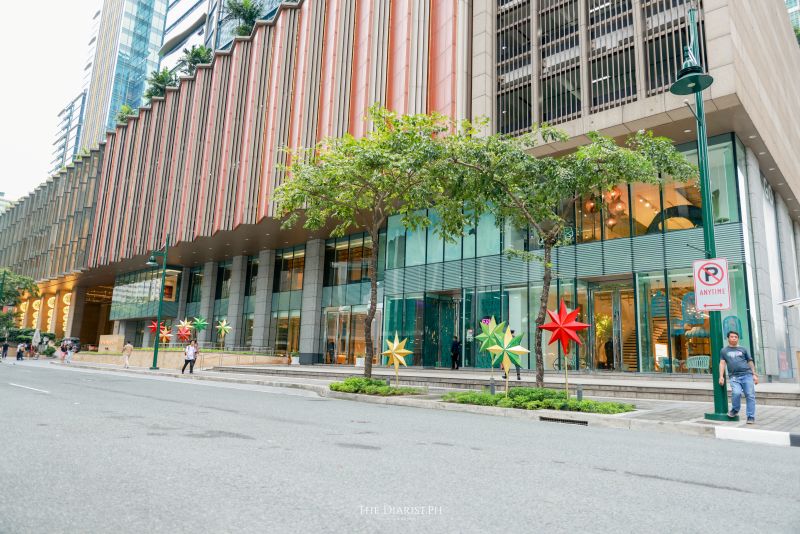
Located on the ground floor of Grand Hyatt Manila Residences in Taguig, Cobonpue’s furniture showroom has been transformed into a multi-functional venue of creative endeavors that include Fable, and artist Ronald Ventura’s Cloud Gallery.
The anchor store, Cobonpue’s namesake showroom, highlights his enduring design legacy. From the classic Croissant Sofa to the whimsical Amelia jewelry organizer featuring porcelain birds perched on branches, the two-story space presents the breadth of his creative vision.
Cobonpue is no stranger to the hospitality industry. In the 2000s, he collaborated with architect Eduardo Calma to design Morals and Malice, a mysterious, cave-like restaurant-bar at The Tinderbox in the affluent section of Banilad, Cebu. It was characterized by variations of web patterns and floating amorphous shapes, showcasing, early on, his ability to create immersive environments that push the boundaries of design.
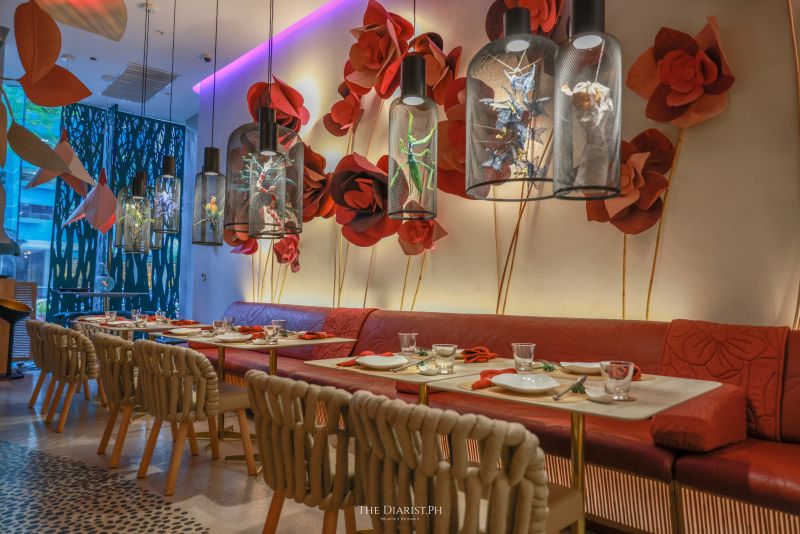
This aspect of architectural creativity has often been overlooked, limiting our understanding of the cultural significance of restaurant-clubs. In fact, such spaces offer opportunities to experiment with music, technology, and identity, and to explore innovative design concepts. Fable demonstrates the potential of restaurant-clubs to serve as platforms for artistic expression.
Cobonpue acknowledges design deacon Budji Layug for solidifying the concept and creating a harmonious flow. In 1999, it was Layug, with then Citem head Eli Pinto, who took note of the Cebuano designer’s playful designs and introduced him to the public through Movement 8, a collective of designers expressing Filipino Moderne founded by Eli Pinto, which gained a following in trade fora around the world.
Cobonpue’s furniture showroom retains its post-industrial aesthetic, with exposed ceiling pipes and a neutral color palette—a nod to his former showroom at Greenbelt Residences, Makati. “The concept of Fable is to integrate entertainment,” says Layug. “We’re able to amplify a concept and not just build a showroom. With the art gallery, this becomes a multi-purpose space. Since Kenneth Cobonpue is an international brand, the menu of his restaurant should reflect that. Fable is a continuation of his whimsical style.”
‘We’re able to amplify a concept and not just build a showroom,’ says Budji Layug. ‘With the art gallery, this becomes a multi-purpose space’
“I wanted to go beyond furniture through lifestyle and food. Thus, the one venue with three different experiences,” says Cobonpue.
As a brand, anything he produces is news.
Fable is a brunch place and bistro by day and a club lounge with a DJ at night. The place transforms as the crowd shifts, from a leisurely daytime gathering to a vibrant night-time scene.
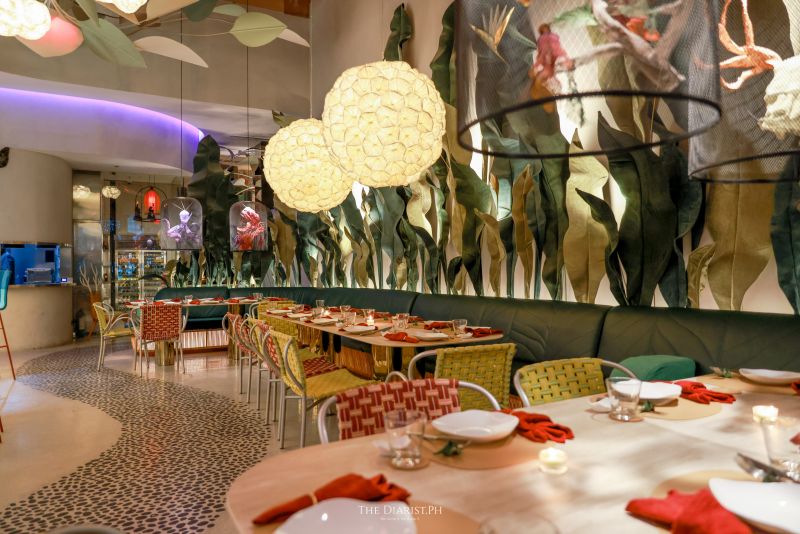
In numerous interviews, Cobonpue has explained that Fable is an abstraction of nature. The allure lies not only in the food, but also in the deep dive into a capricious world. “These magical realms can be found everywhere—the sea, the forest, the sky, even a rabbit hole. The narrative is that you step into a world of wonder,” he says.
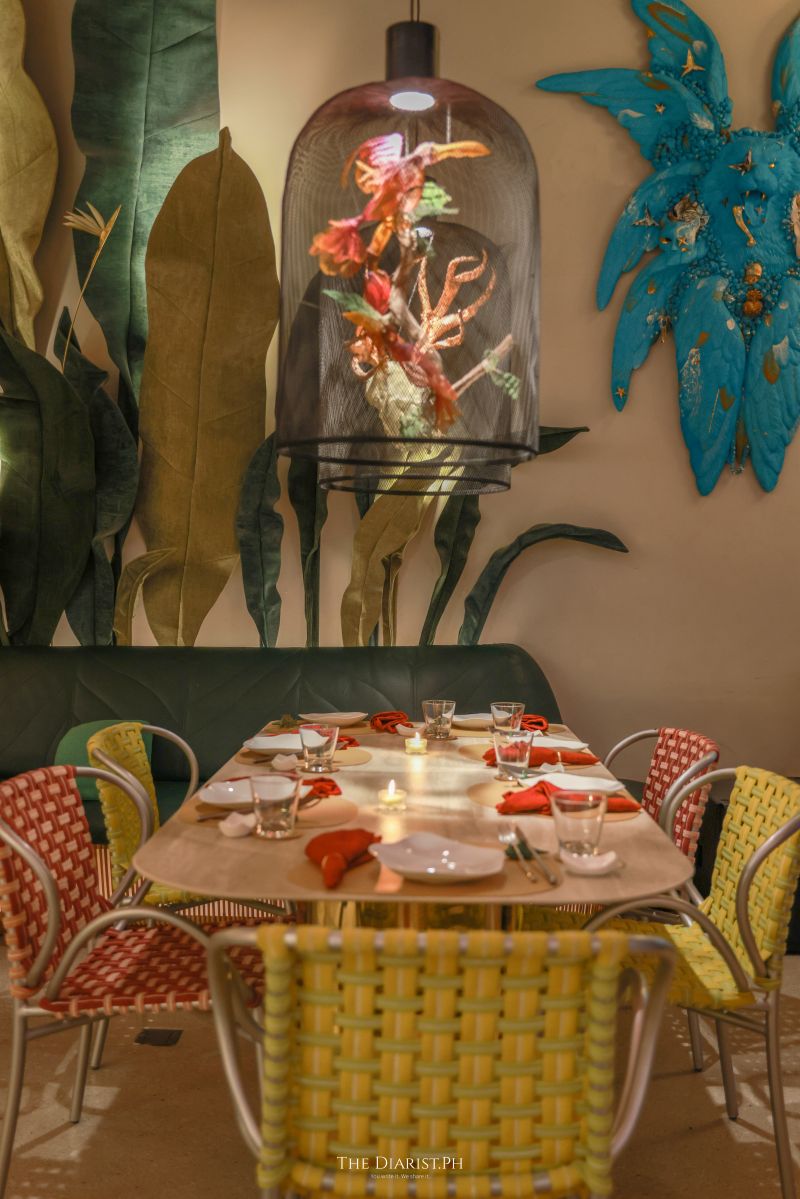
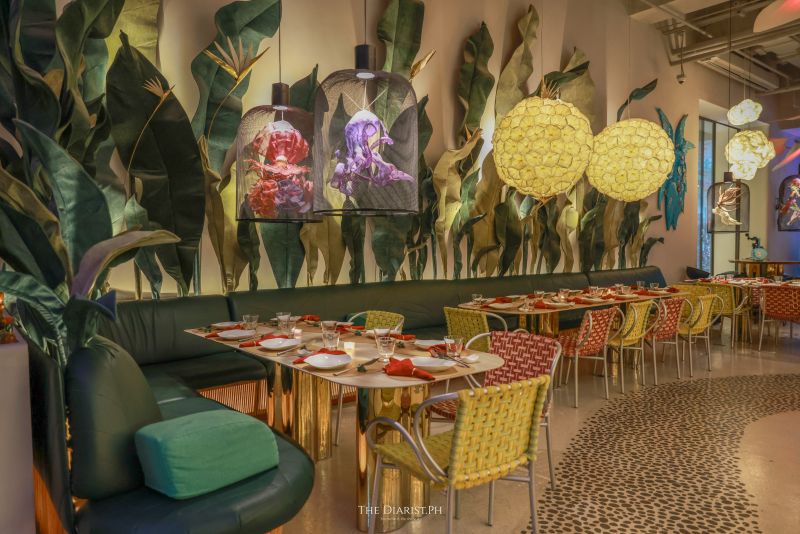
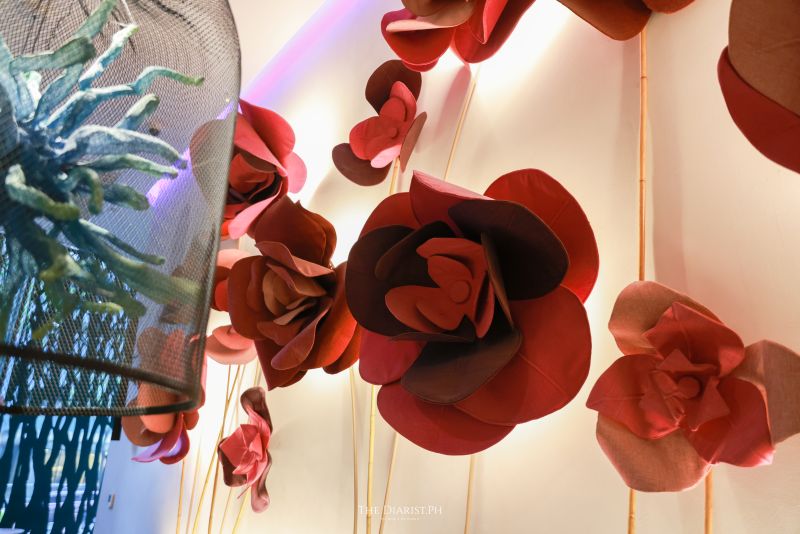
Guests are greeted by a pulp-based cutout of bamboo groves, a creation by Japanese designer Wataru Sakuma. A painted floor, reminiscent of a pebble-strewn path, guides visitors through the space. One side of the lounge shows fabric flowers blooming from rose-colored leather couches etched with floral patterns. On the opposite side, fabric banana trees rise from green couches with leafy veins. These botanical elements not only add visual interest but also serve as acoustic buffers.
Ronald Ventura’s turquoise resin sculpture, a surreal depiction of an otherworldly being, enhances the atmosphere of fantasy.
Before the pandemic, Cobonpue had aspirations to expand his brand into handmade carpets, collaborating with the now-defunct Tai Ping Rugs. A prototype crocodile carpet, never realized, now hangs on the wall, often mistaken for a gecko.
Three woven carabaos form a striking DJ booth. “The DJ looks as if he’s riding on them. It’s our version of the Pamplona run,” Cobonpue jokes.
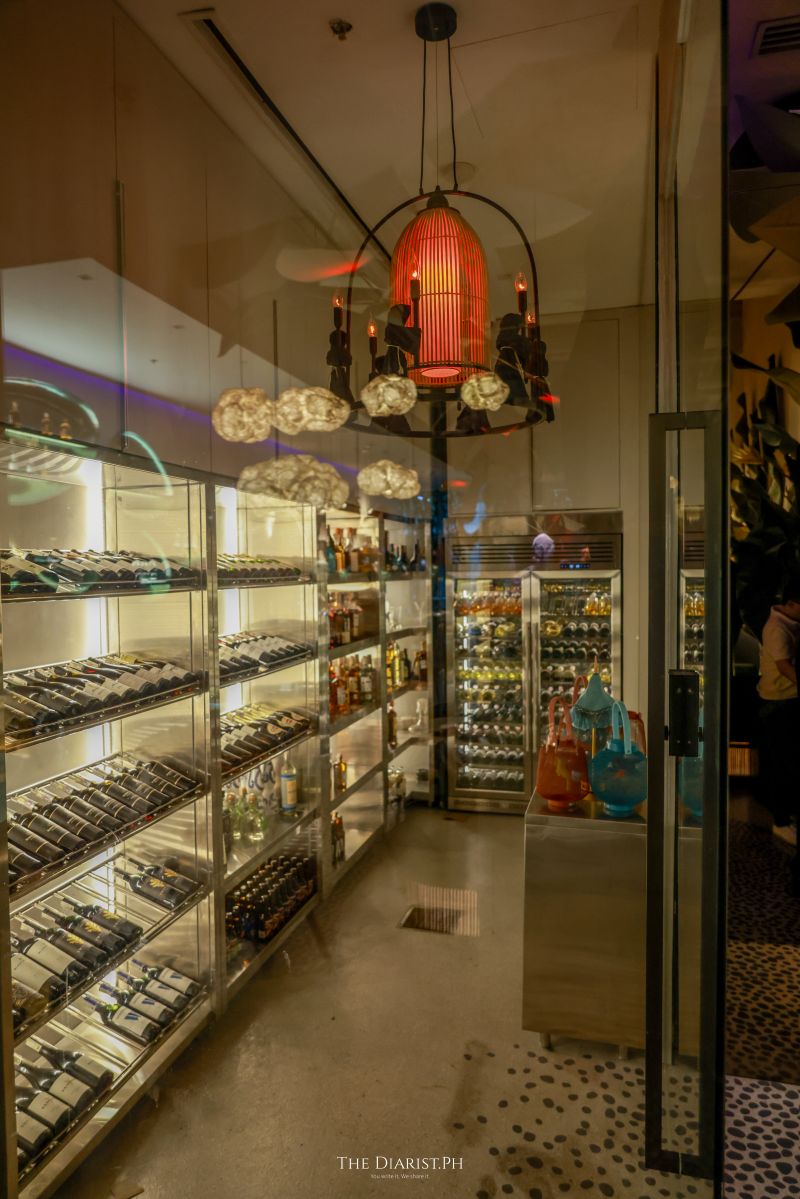
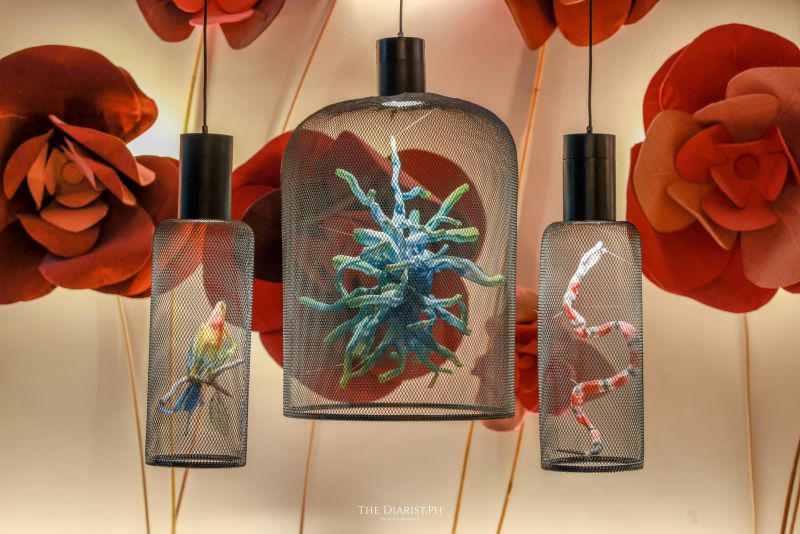
Cobonpue’s Curio collection, a series of mesh cages filled with handmade mesh fish, birds, mammals, and flora, adorns the ceiling. LED lights cast intriguing shadows on the tables below. Inspired by childhood fascination with antique curio cabinets, Cobonpue reimagined the concept using underlit specimen jars.
‘Three woven carabaos form a striking DJ booth. ‘The DJ looks as if he’s riding on them. It’s our version of the Pamplona run,’ Cobonpue jokes
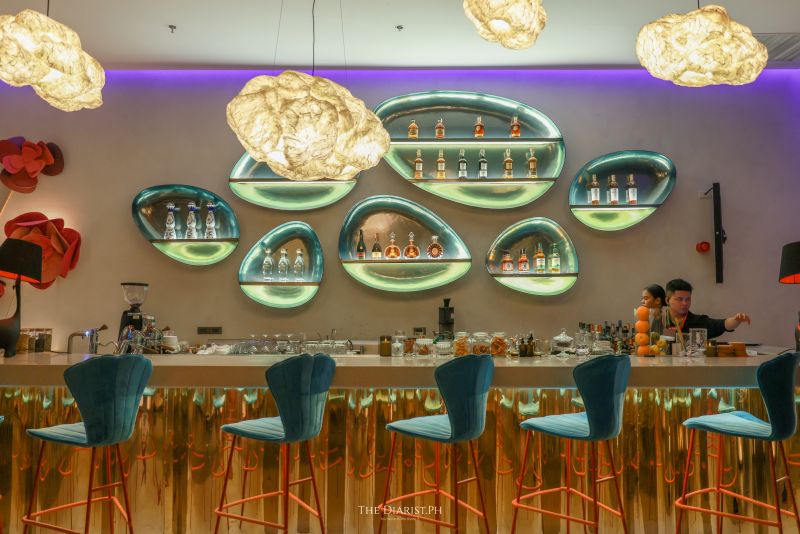
Juxtaposed with chandeliers featuring metallic leaf cutouts, oversized solihiya scalloped lamps, customized for the bar, dominate the space. Their hefty proportions and traditional aesthetic contrast sharply with the delicate Cloud Hanging Lamps made of cotton fiber and Hae Young Yoon’s cumulus cloud lamps, also designed for Cobonpue.
The bar evokes a marine theme, the wall having droplet-shaped niches that display liquor bottles. The stainless steel counter, with ombre gold finish, suggests the shimmering reflections on water. The scalloped bar stools reference the clam shell from which the goddess emerges at sea in Botticelli’s The Birth of Venus.
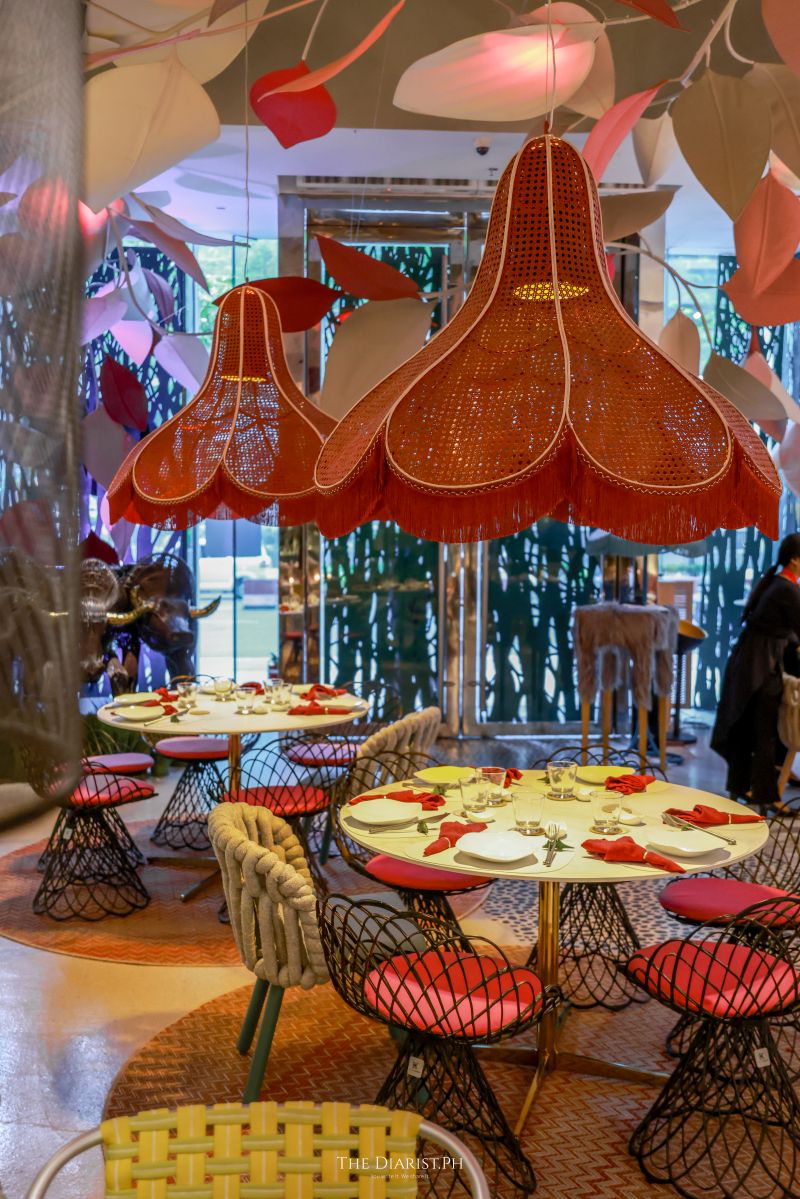
The tables, crafted from a special Spanish stone resembling travertine and set on stainless steel bases, evoke a sense of lightness.
Cobonpue’s followers will appreciate the eclectic mix of chairs. The Spineasy, a chair made from carbon fiber strands woven into loops, recently won the 2024 Golden Pin Design Award for sustainability. The classic woven outdoor furniture, now reimagined in vibrant colors, exudes a modern appeal. The other chair style features padded foam tubes that wrap metal frames, and presents Cobonpue’s signature blend of industrial materials and traditional craftsmanship.
“The challenge was layering elements without overwhelming the space,” Cobonpue explains. “The look is maximalist, but the key is to create cohesion between different colors and textures. It’s not easy to combine red and green without suggesting Christmas.”
The nubby texture of the Belgian napkins, the organic forms of the cutlery holders, and the plates complement the anthropomorphic shapes throughout the space. “Running a restaurant requires meticulous attention to detail,” Cobonpue admits. He fulfilled his wish to collaborate with Cebuano designer Cary Santiago, who created the asymmetrical uniforms of the front-of-house staff.
Asked if he would decorate his home like Fable, Cobonpue replies, “I prefer a more flexible design approach”—as if there were more surprises to be had from a Kenneth Cobonpu


