

Three Filipino designers—Steph Verano, Peach Garde and Karl Nadales—will take the stage at Japan Fashion Week on September 2, representing the country after winning the 2025 Bench Design Awards (BDA).
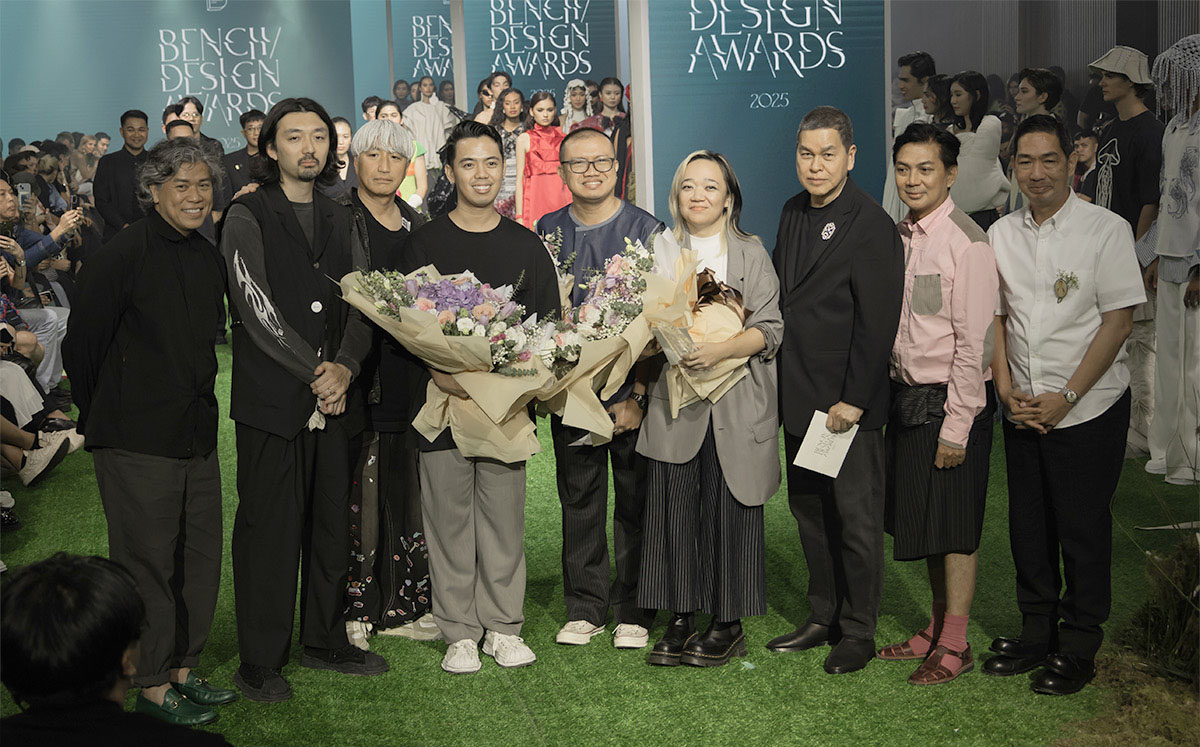
Bench founder and driving force Ben Chan (third from left) with, from left, Dennis Lustico, Kaoru Imajo, Mihara Yasuhiro, Karl Nadales, Peach Garde, Stephany Verano, Michael Salientes, Joey Samson
Now on its eighth year, BDA has become a platform for new talent, giving emerging designers the visibility to break into the international circuit.
What makes this trio compelling is the diversity of their aesthetics.
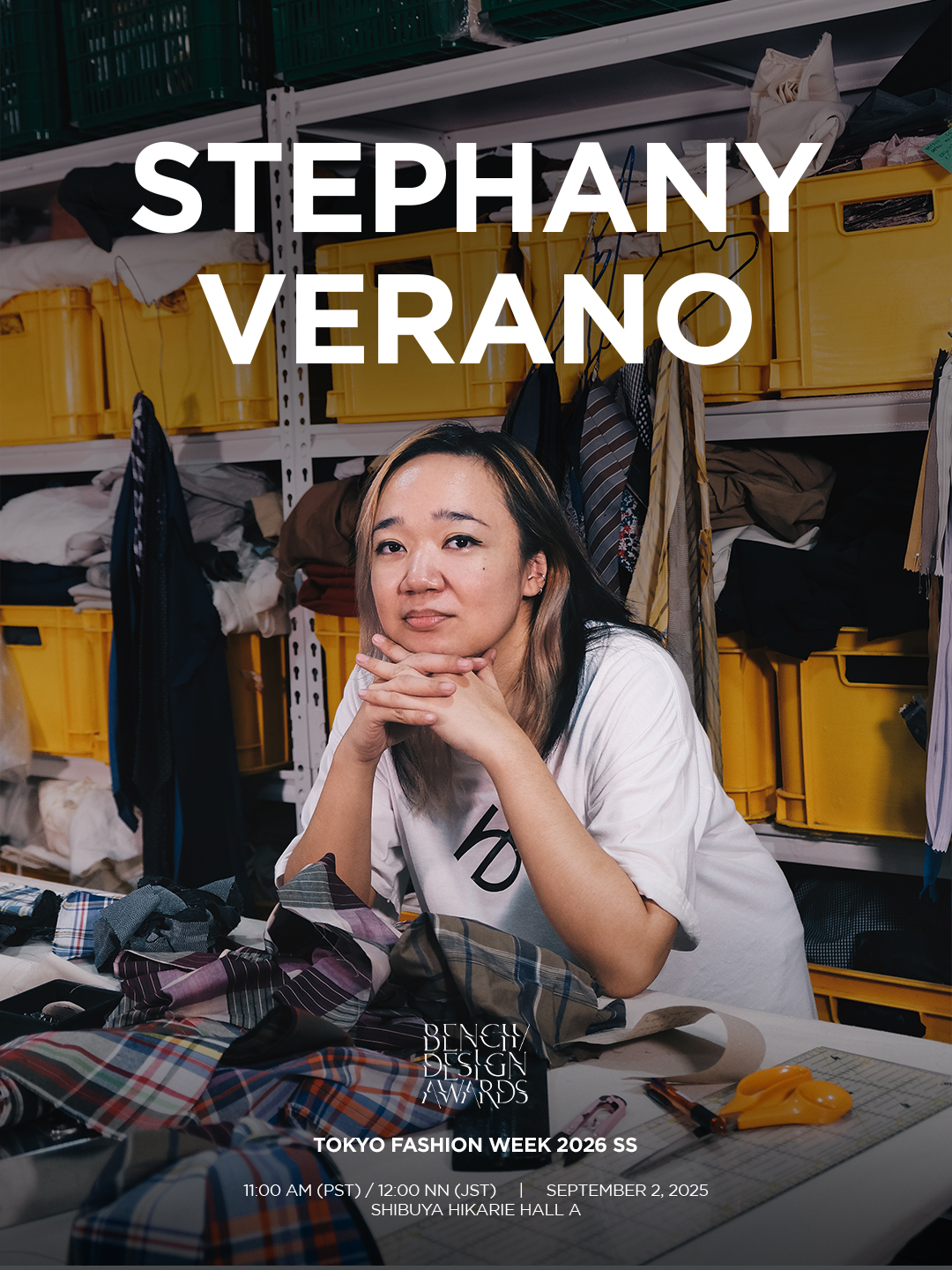
Steph draws from structured and exaggerated silhouettes and a flair for storytelling. Peach/Peter balances restraint with craft, turning humble fabrics into garments of quiet elegance, Nadales pushes deconstruction to new terrain, transforming the language of process into fashion itself.
Together, they reflect the breadth of Filipino design today—rooted in heritage, unafraid of experimentation, and attuned to global conversations on sustainability and innovation.
She joined the university’s hip-hop dance troupe
Stephany Verano came into fashion almost by accident. In college, she joined the university’s hip-hop dance troupe, searching for a way to express herself. Her parents urged her to take up a business course, but when it became clear she was drawn to fashion, she enrolled at Slim’s Fashion and Arts School.
In Paris, she earned a diploma in fashion design at ESMOD, concentrating on womenswear, ready-to-wear and knitwear. Her training spanned some of the industry’s most demanding houses: as patternmaking assistant at Vetements, as press and graphics assistant at La Prestic Ouiston, as textile assistant for Coralie Marabelle, and as atelier assistant at Leonard Paris, a heritage brand celebrated for its prints. She also worked with textile designer Kirsten Thoerle, known for embroidery.
Her design instincts trace back to Yohji Yamamoto
Her design instincts trace back to Yohji Yamamoto, whose stark silhouettes and sculptural cuts shaped her eye for form and texture.
Today, her work shifts between fitted and loose, relaxed and structured, simple and intricate. Fabric manipulation and patchwork anchor her approach, both for their tactile interest and their reuse of materials. For pop-up collections, she often turns to Filipino themes and sustainability.
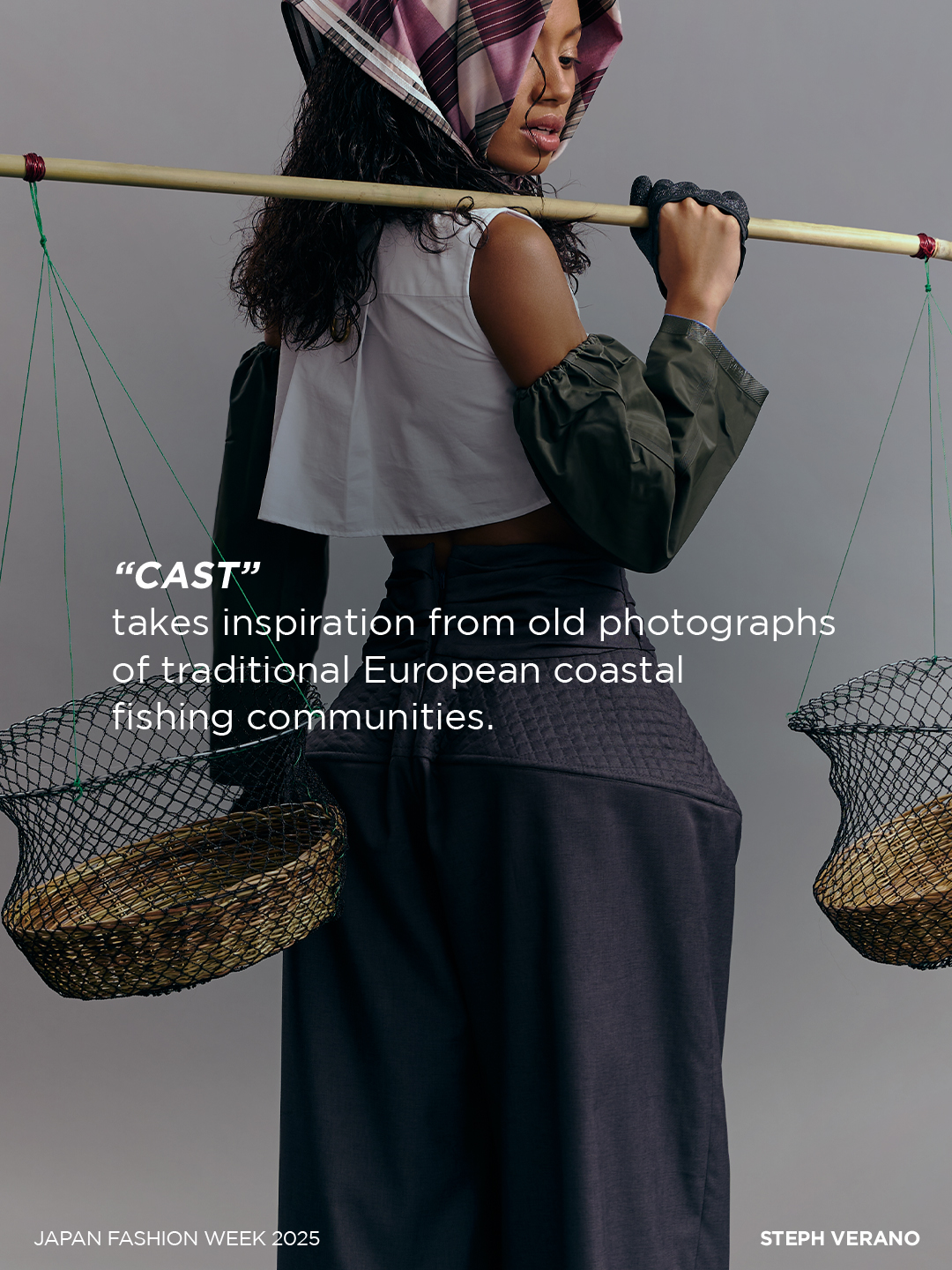
Her collection for Japan Fashion Week was inspired by vintage photographs of European fisherfolk—men in high-waisted trousers, women in draped aprons. From these images, she drew a palette of blue, gray, brown and beige. Utility was central: detachable life vests and trousers that transform into jumpsuits or even bags; deep zip pockets, reversible patchwork shorts; quilted skirts padded and hooped to suggest fishing floaters. Some trousers were similarly padded, exaggerating the hips.
Marine hardware as embellishment was derived from D-rings, hooks, oversized silver eyelets and clasps, while netted dresses, padded skirts and customized headgear gave the collection a handmade sensibility. Quilting adds structure and artisanal depth.
The result is a sequence of interchangeable looks—practical yet sculptural, rooted in the grit of fishing villages but commanding on the runway.
Garde grew up without TV, magazines, or family ties to dressmaking
Peach Garde, known as Peter Gagula, first made his mark as the grand prize winner of TernoCon, where he gave the traditional Philippine attire a modern edge inspired by National Artist for Architecture Leandro Locsin. He translated Locsin’s rational geometry into fabric, cutting boxy ternos that carried the weight of structures while remaining wearable.
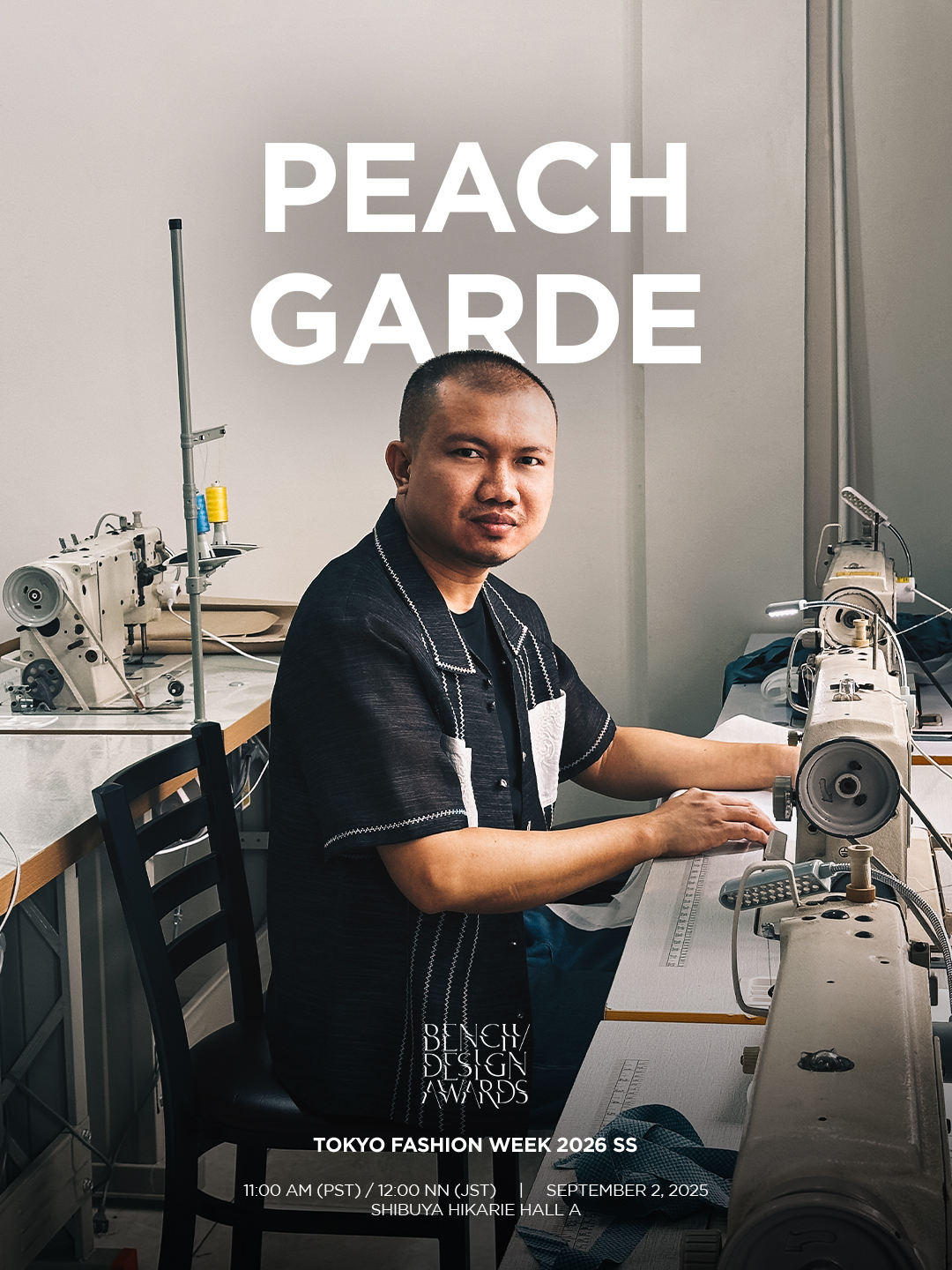
Born in Capiz, Aklan, Garde grew up without TV, magazines, or family ties to dressmaking. He moved to Iloilo City to study nursing but never finished the course, instead taking a job at SM Iloilo as a checker and later in customer service. His supervisors encouraged him to earn a degree so he could be promoted.
At 24, he enrolled in Fashion Design and Merchandising at Iloilo Science and Technology University, with little idea what it entailed. What began as chance quickly became a calling. He completed British Bespoke Tailoring course at Slim’s Fashion and Arts School and now teaches menswear design in his alma mater.
Garde’s style leans toward restraint—clean, tailored lines that serve as canvas for carefully considered embellishment. Fabric is his starting point, shaping decisions about comfort, versatility, and innovation in cut or treatment.
Heritage follows close behind: “You will never forget where you came from. There has to be a touch of something Filipino.”
His clothes reveal that balance: understated in silhouette, enriched by artisanal detail, never tipping into excess.
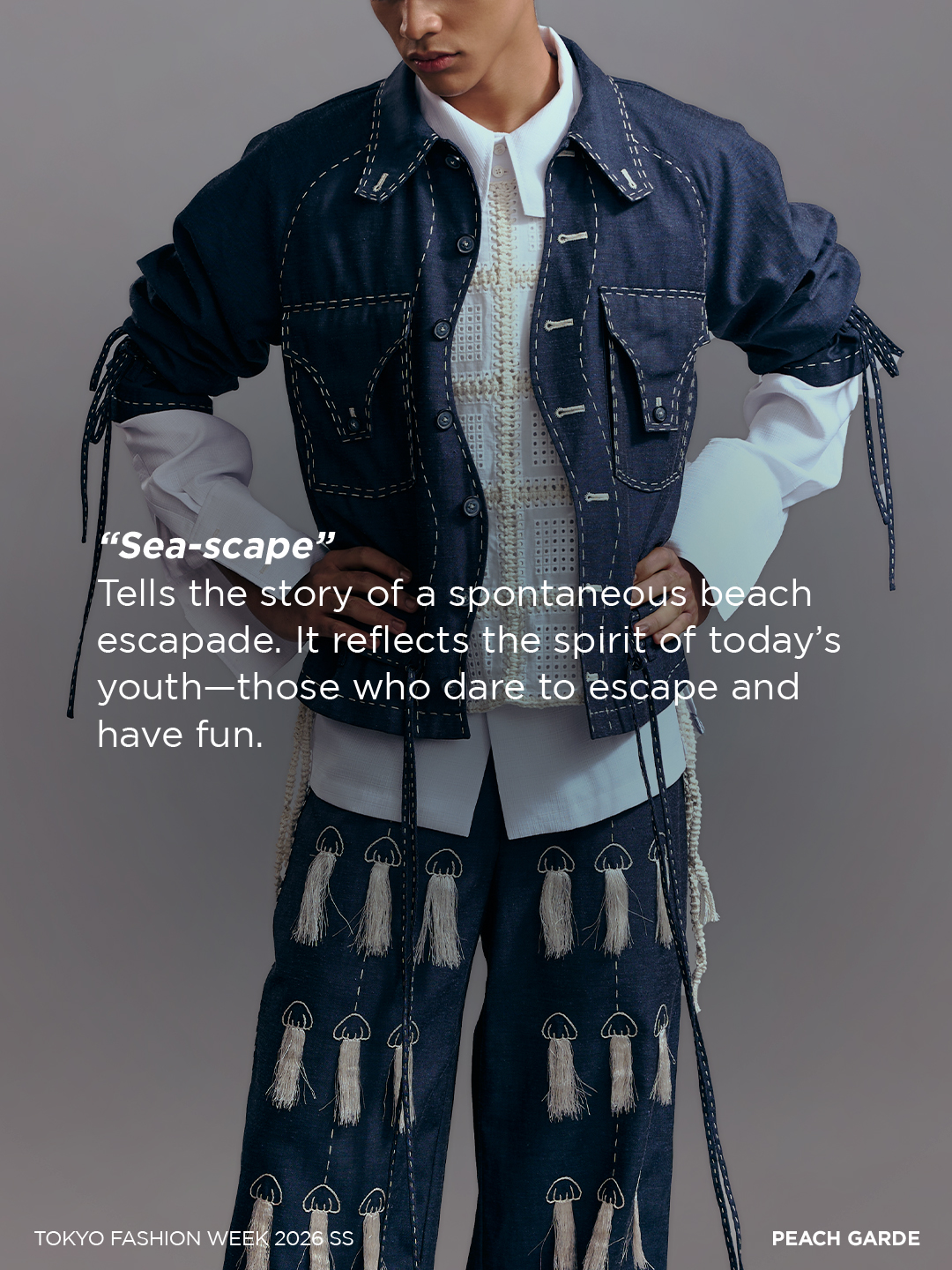
For Japan Fashion Week, he unveils Seascape, a collection rooted in blue cotton that is both fluid and firm enough for tailoring. From there, he expands to cotton, denim and khaki, letting humble fabrics shed their utilitarian roles. Stripes ripple into waves, jellyfish floats into tassels and macramé, and embroidery surfaces as artisanal touch.
Pieces shift easily between masculine and feminine, underscoring his gift for androgynous tailoring.
His Seascape designs are roomy enough to move from daily tasks to sleepwear. For him, the highest compliment is when people see his designs as clothes for everyone, not just for models and beauty queens.
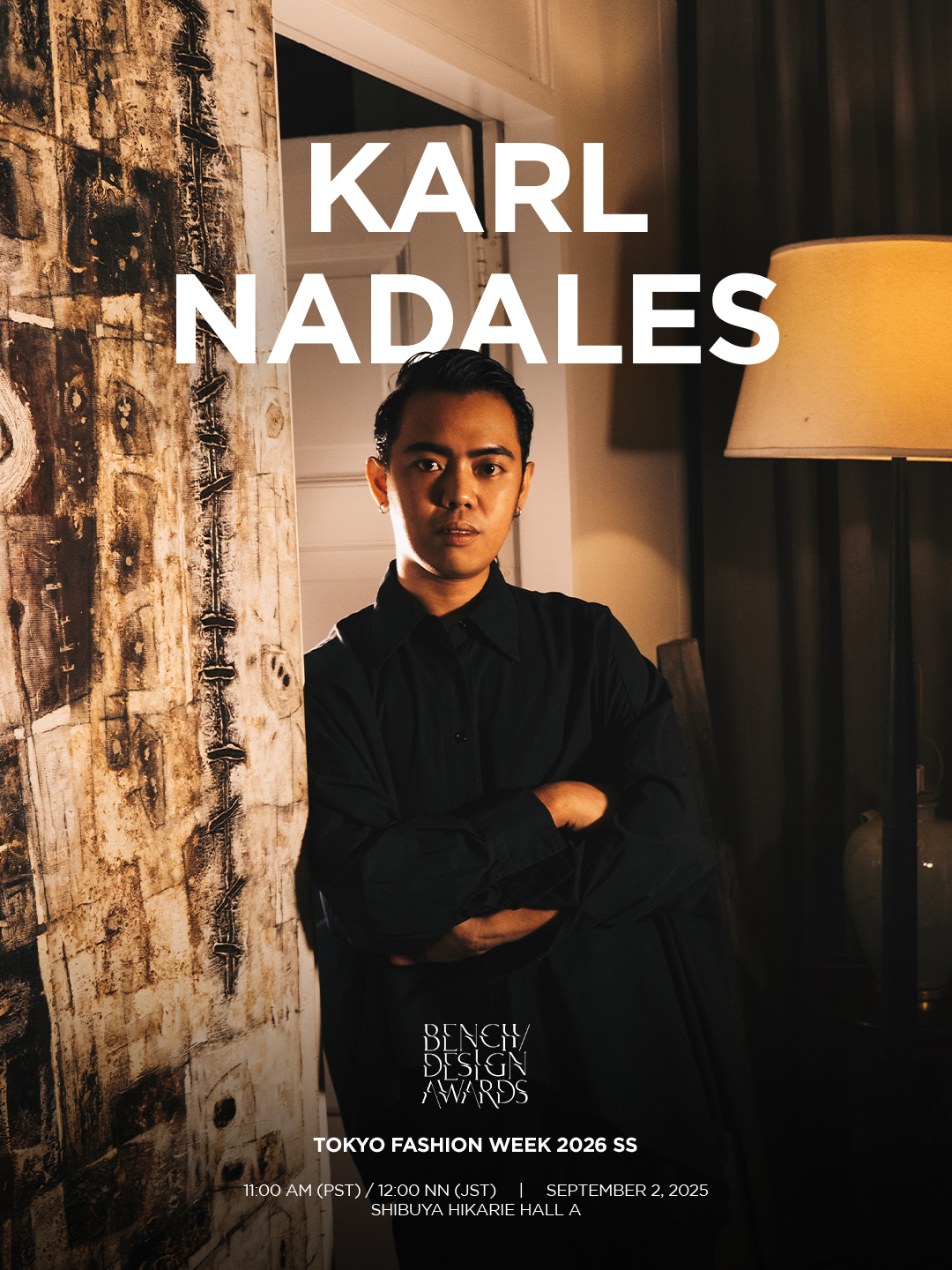
Nadales’ clothes bore his signature asymmetry—unfinished yet intentional
Growing up in Iloilo, Karl Nadales learned dressmaking at his mother’s side, absorbing everything from the parts of a sewing machine to the drafting of patterns.
To refine his skills, he joined the first batch of scholars at FAB Creatives, the fashion school founded by designer Jojie Lloren. The veteran designer quickly recognized Nadales’ originality and later brought him to his atelier as assistant. There, Nadales oversaw production, worked closely with clients, and mastered the intricacies of cutting, altering, and perfecting complex patterns under his mentor.
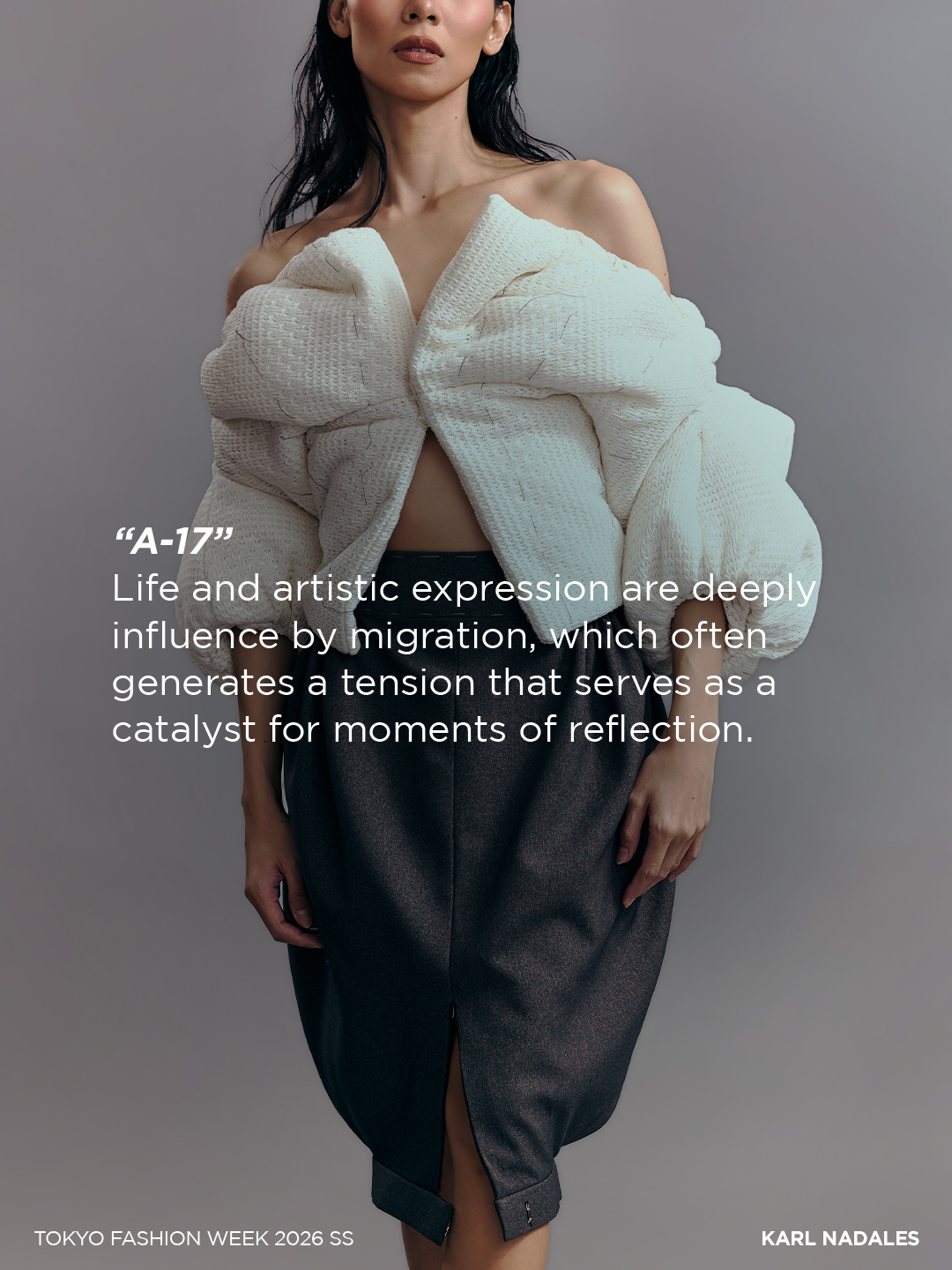
Nadales’ style leans toward the unconventional—experimental in cut and fabric treatment. He favors asymmetry, skewed lines and unexpected proportions, pushing the boundaries of drapery to let clothes mirror the individuality of the wearer. His process often reflects the intensity of an artist’s moods, shifting between meticulous precision and bursts of spontaneity.
Sustainability anchors his practice. He frequently works with deadstock and scraps, transforming inexpensive fabrics through bleaching, painting or manipulation. “I can give them more life,” he says.
Simple silhouettes, in his hands, acquire depth through texture and reworked surfaces, extending the lifespan of materials often overlooked.
Nadales draws directly from his journey of change from the province to the city. In a collection shaped by the lessons of FAB Creatives, he embraces deconstruction: raw seams, unfinished hems and visible stitching evoking the language of toiles and the process of patternmaking. These elements become metaphors for his move from the province to the city.
Stitches map his path, waistbands of trousers turned into capes and skirts, and muslin drapes shifted into tops and wide trousers.
By twisting seams and shifting outlines, he blurred the body’s form into softer, less rigid shapes. Often reversible or interchangeable, his clothes bore his signature asymmetry—unfinished yet intentional, a portrait of change stitched into every garment.


