
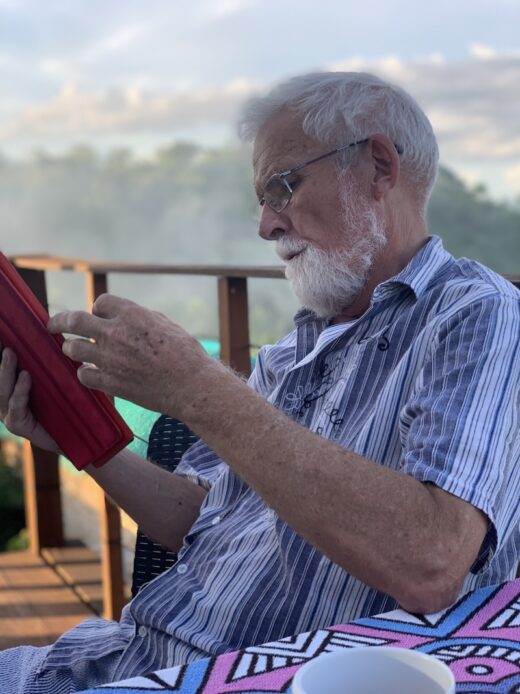
Photos courtesy of the Luyk family and Jennifer Patricia A. Cariño
In the Baguio community, the tall, lanky, bearded figure of Hubrecht “Huub” Luyk has become a familiar figure in the building and construction circles and in scrabble games.
Not many know that he has lived here since 1976. Or that he is struggling to stay alive from Crohn’s disease, an auto-immune condition that requires an injection worth more than P100,000 every eight weeks for him to continue living.
Because of this, the Cultural Arts Events Organizer, Guacamole Productions, Genesis Transport Services Inc., and friends of Huub have organized a fund-raising concert called Christmas at Canto on Dec. 13, 2025, 6 p.m., at Canto Bogchi Joint at 32 Kisad Road, Barangay Legarda-Burnham Park, Baguio. Featured performers are soprano Charina Balmores, bari-tenor Ruzzel Clemeno, and pianist Michael Valenciano, all prize-winning artists.
Huub was sent out here by his home church in Sassenheim, The Netherlands, where he grew up. In 1975, he met a missionary who talked about her work in Asia. At the end of her report, the pastor invited the congregation to participate in her work and an offering was taken.
Huub thought then, “It would be good if I gave time to work abroad and help where I could. Soon after, an advertisement of the Organization of Netherlands Volunteers, set up in 1963 after the US Peace Corps initiative, was shown on TV, and I volunteered.”
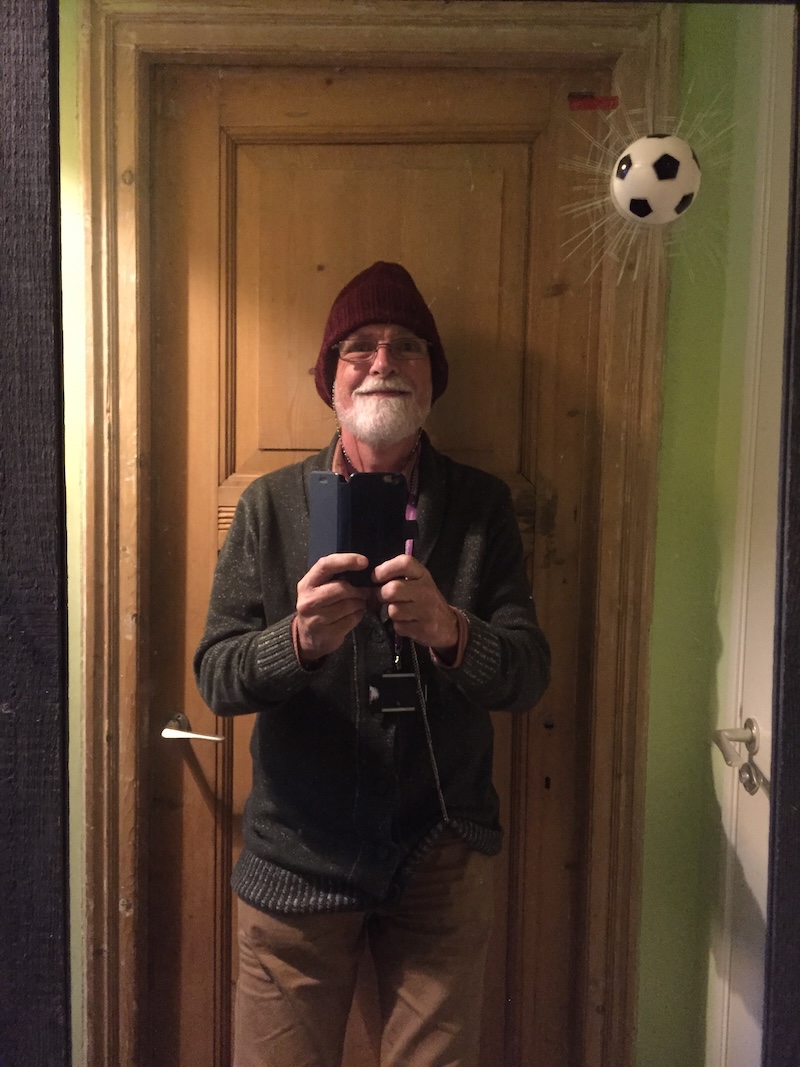
Luyk in Haarlem, The Netherlands, home of his eldest son Irha (Contributed photo)
He was first sent to Tanzania, but then President Julius Nyerere, he said, “disapproved of my looks and refused two of us. I was chosen to go to the Philippines.” He arrived here on April 11, 1976. By then he had graduated from a course in high-voltage engineering from the Higher Technical School in Haarlem, The Netherlands. Preparation for this job included a six-week training at the Tropical Institute in Amsterdam and a four-week acculturation training in Manila and Marilao, Bulacan.
He said, “I was prepared with the knowledge of ningas cogon, pakikisama, utang na loob and a flurry of other facts and figures about the Philippines. I was intrigued by what I had read and excited to see Manila. I wanted to do more than just give a little extra in the offering box and feel good about that little help.”
Even in his younger years, Huub was interested in foreign lands and cultures. He said, “I still have albums in which I collected pictures and stories about Indonesia, Eskimos, Greece, to mention a few. I spent many days with my grandparents, talked with them and visited distant relatives all over Holland by moped or bike. My uncle taught me Swedish just in case I would end up there!”
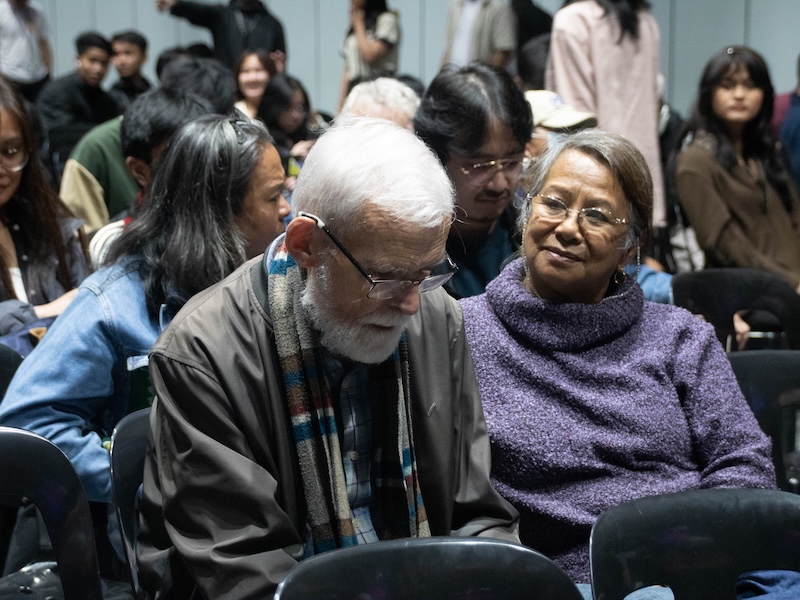
Huub and Becky Luyk during a date night recently at ‘La Boheme’
He recalled his arrival in Baguio on May 13, 1976, when a desk was prepared for him. Immediately, he pulled out the picture of his girlfriend and placed it on the desk as if to say he was taken. After a week or so he met a woman, the one who requested for a volunteer from the Dutch government. She introduced herself as Rebecca “Becky” Molina. He was smitten.
He said, “Not soon after, the pic on my desk disappeared into a drawer. Becky was so different from the other workers at the Diocesan Adult Training Center.”
When they married and raised a family, they divided their time between Holland only partially and fully in the Philippines. Huub said, “There were a few vacation trips and twice a period of two-year stay in Holland with the children to establish their Dutch roots. I got thoroughly embedded in Philippine life and culture and found that there was much to do and work for here.”
We asked Huub to list the Top Five most memorable building and engineering projects he had been involved in the rural places. He said, “I’d like to rank these five by the impact they had on their surroundings or on the Philippines.”
Here is Huub in his own words.
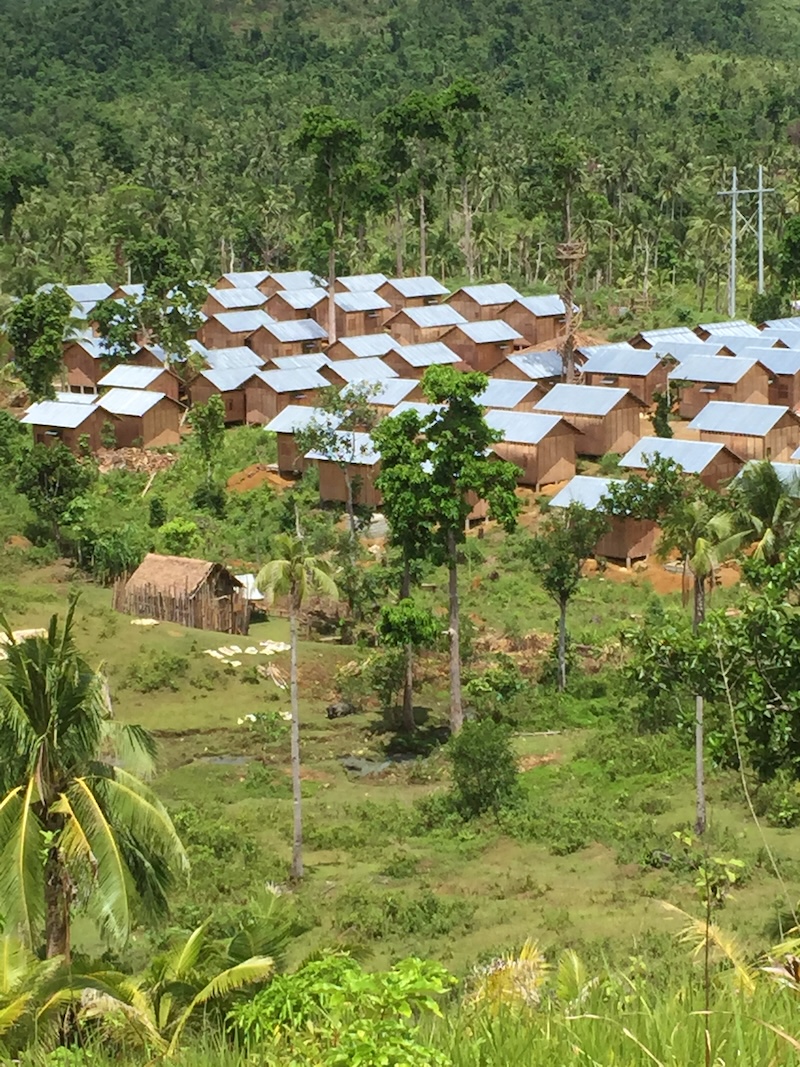
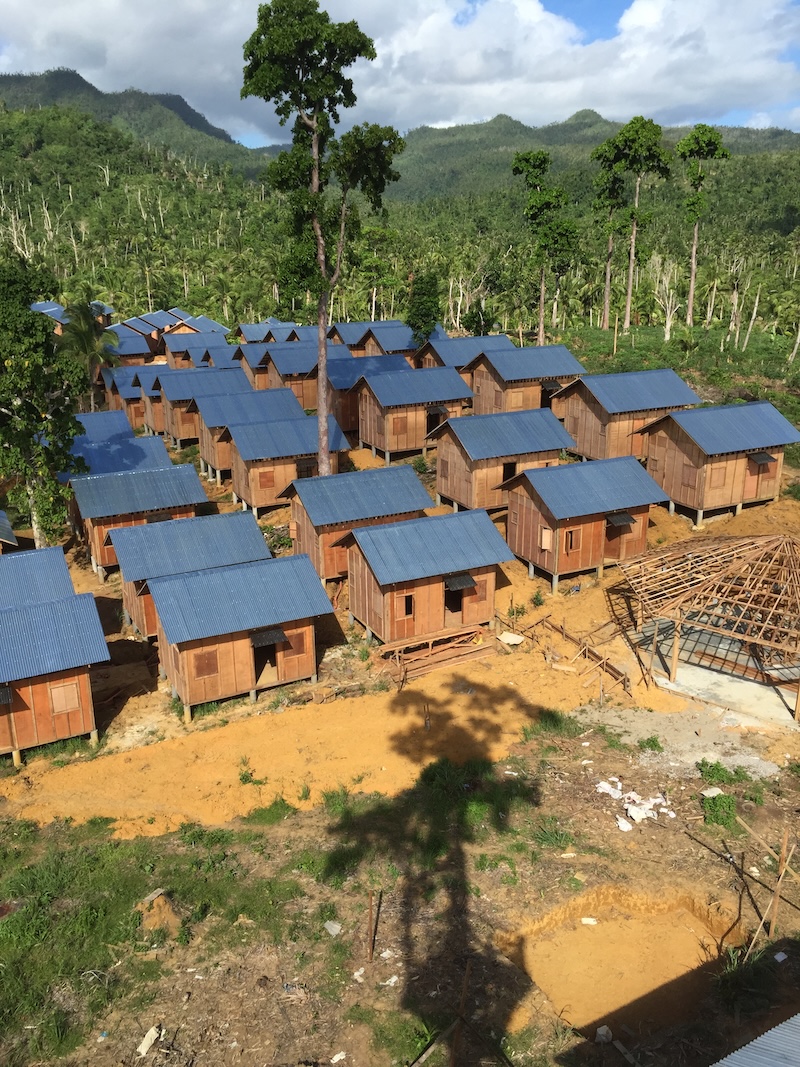
Two villages in Marabut, Samar, where 450 houses were built for survivors of super-typhoon Yolanda
1. “The immediate impact of my involvement in a project was most noticeable with the housing we built in Marabut, Samar after super-typhoon Yolanda. When the call came to help, I went immediately. We put up 450 houses good for at least 10 years. These houses were for the many people who lived in the 40-meter permanent danger zone along the coast who lost everything they had. We also built fiberglass bangka, water filters and set up seaweed farms. These were happy days of hard work, but so very worthwhile!
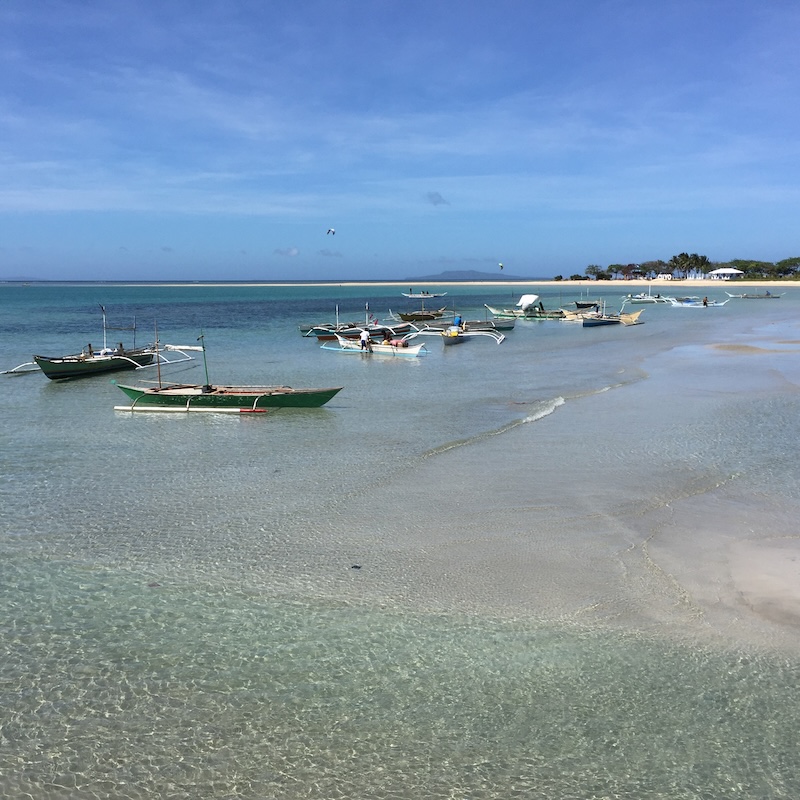
Agutaya Island where Huub and company built an airstrip
2. “The landing strip on Agutaya Island, Palawan. The need for this was felt urgently during typhoon Yolanda. When New Tribes Mission asked me if I could build an airstrip I said yes immediately and considered the consequences later. Without going into details, this project was accomplished in three and a half years with most of the people of the island chipping in by manually removing and burying huge boulders and breaking rocks to make the gravel for the 60-m wide and 1,000-m long strip.
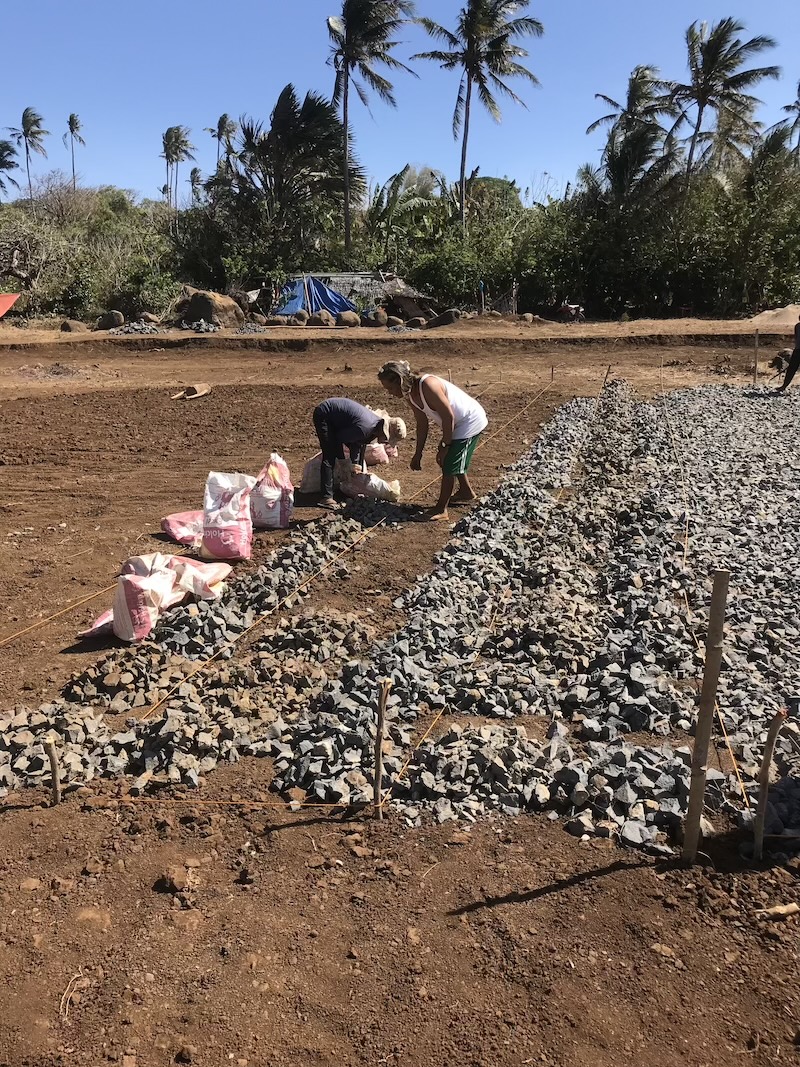
The airstrip was paved with handbroken boulders, 40 bags per row, a total of 80,000 bags.
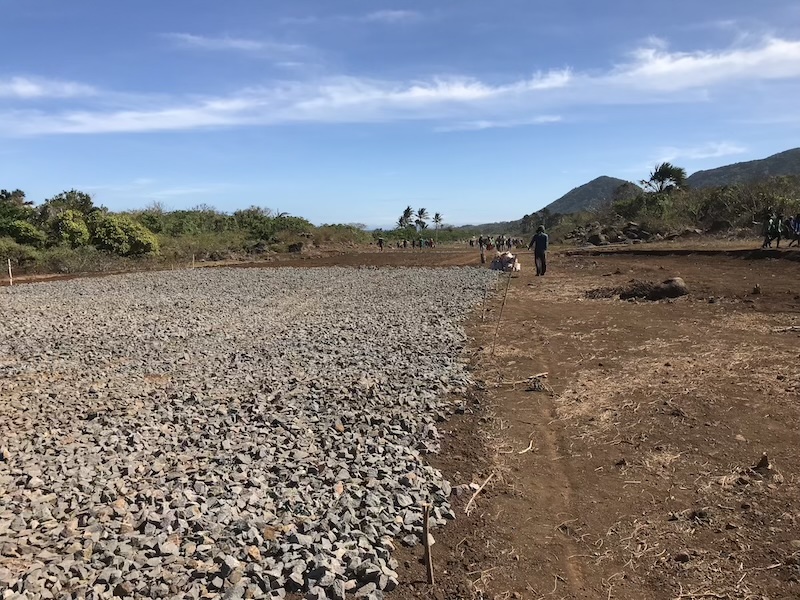
Paved airstrip awaiting grass seeding
3. “We built four multi-story buildings for the Philippine College of Ministry, a school training rural ministers for evangelization and church planting in Longlong, La Trinidad. The impact that the graduates have in the various provinces of Northern Luzon is great, and the school thrives until today.
4. “In 2002, we completed the seven-story Global Missions Center along Ambuklao Road in Baguio. The many graduates who have passed through the doors of this venerable institution are spread over the entire world and proclaim God’s message of reconciliation to thousands!”
As for the fifth, Huub recalled the time after American missionaries Martin and Gracia Burnham were rescued from their captors, when “a great number of new recruits for the ministry of New Tribes Mission in the Philippines presented themselves to come and work as missionaries here.”
There was a need for larger, newer facilities in Mandaluyong, and the five-story Martin Burnham Mission Center was conceptualized and finished by Huub’s group in 2007.
Huub has witnessed the delays and bureaucratic red tape in our system. Asked how he coped as a Christian with all these to go on with his mission, he answered, “My colleagues and I were educating adults and providing them with trainings and inputs to fit in and deal with all aspects of society, not only practical skills like motor rewinding or literacy only. This obviously included explanation of issues in the city, the province and ultimately the country. Our discussions lasted often long into the night, and I’m sure we solved problems over and over again.”
He continued, “Being a Christian was first of all shown in the solidarity that I sensed with the Filipino people and my initial motives for going out and doing this kind of volunteer thing. I learned Ilokano soon after I arrived in May 1976 and taught, haphazardly, the out-of- school youth beginning in August 1976. The first word I learned was barbasan (bearded) for obvious reasons! The fact that I am a foreigner I like the word ‘sojourner’ in the Philippines, brings with it a bit of carefulness. I used to blurt out things without considering the consequences, but quickly learned that I needed to be sensitive to the circumstances around me. Until today I encounter situations in which I am the accidental tourist again and want to shout: ‘Hey guys! I’m almost 50 years here and a Filipino by now!”
He said, “As a Christian my witness is first and foremost in who I am and as a result of that, what I do. This has been shown in the many people I’ve talked with and taught both practical skills and personal values to. People I meet say, ‘Remember me? I was your student 40 years ago.’ My patience was challenged in the beginning years. So many things I said or did were not accepted because I forgot that they (my values) were so Dutch! But over the years I have let myself, Becky and the children be led by God, especially in the mundane and routine aspects of life.”
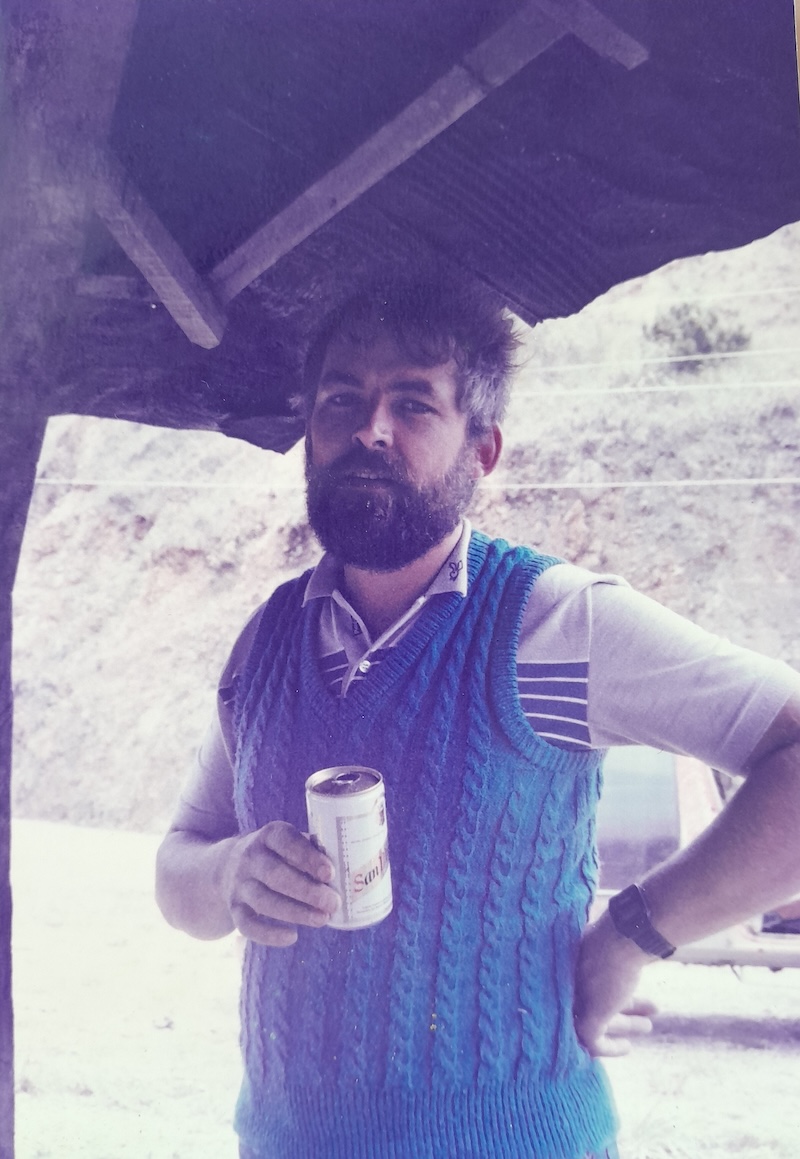
Bearded Huub Luyk in younger years, relaxing
Asked how his disease has changed his outlook in life, and what else he still hopes to achieve, he replied, “Not much has changed. Crohn’s disease has slowed me down a bit. With retirement comes an entirely different daily routine. I have done a few worthwhile projects here and am very thankful for the impact we, could not have done this without my dear wife Becky, have had in a few places around us. With God’s precious help and unfailing directions, we can do some more work for God’s kingdom and influence others to follow Him.”
For tickets or reservations to “Christmas at Canto,” text or call 0927-986-7188, 0920-954-0053 or 0918-347-3027 or email josephuy2004@yahoo.com.


