
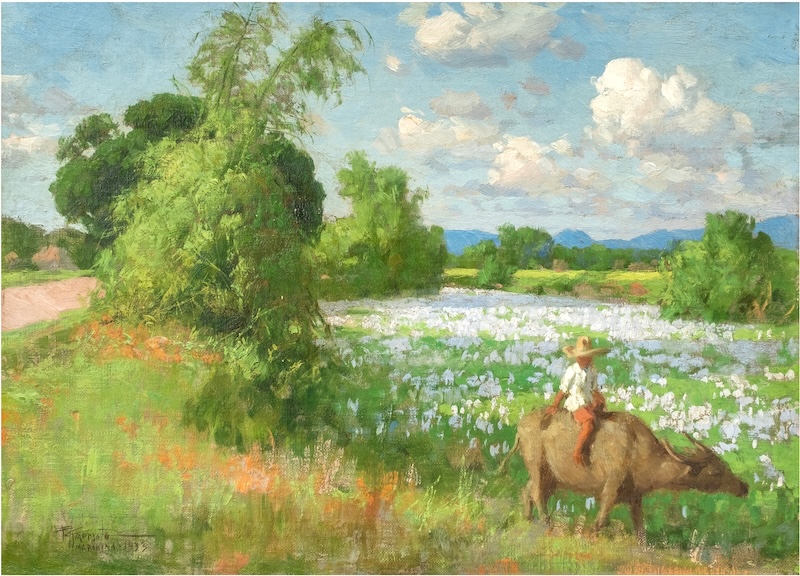
León Gallery and The Asian Cultural Council present two golden-era Amorsolo paintings from the collection of an American businessman, among other precious works, in The Asian Cultural Council Auction 2026, on February 14, 2 p.m.
Alex Frieder was an esteemed gentleman and a key player in the rescue of more than a thousand Jews during the Holocaust. The two works to go on the block are Marikina (dated 1933) and Market Scene (dated 1948) done by the Filipino master during his peak, and collected by this American businessman who was a prominent figure in wartime Philippine history and became a believer of Amorsolo.
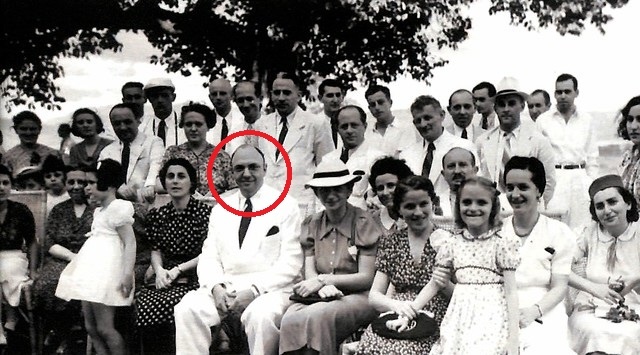
Alex Frieder (encircled in red) with Jewish refugees in Manila. © Rescue in the
Philippines: Refugee from the Holocaust documentary website
Originally from Cincinnati, Ohio, Alex Frieder shuttled between the Philippines and the US to manage his cigar production company. He took turns with his brothers to oversee the business, taking residence in Sta. Mesa. Also avid poker players, the Frieder brothers forged meaningful ties to influential figures of the era, including businessmen and politicians.
During World War II, when the anti-Semitism movements intensified and alarmed by the hostilities against the Jews, Alex used to his advantage his connections in the Philippines, particularly with the Commonwealth government led by President Manuel Quezon. One fateful evening, during a poker game, Frieder tried to convince his close poker mates, President Quezon, US High Commissioner Paul V. McNutt, and Army Colonel Dwight D. Eisenhower, to save the endangered Jews.
Together, the Frieder brothers, Quezon, McNutt, and Eisenhower devised a plan to provide refuge in the Philippines to German and Austrian Jews. The result was the establishment of the Jewish Refugee Committee in Manila in 1937. The Committee worked to secure visas, arrange transportation, and provide housing and employment for the Jews, assisting them in transitioning to life in the Philippines.
From 1937 to 1941, the Committee, spearheaded by the Frieder brothers, Quezon, McNutt, and Eisenhower, rescued approximately 1,300 refugees. The Jews, now safe and protected, found a new home in the Philippines, with livelihood opportunities and a second chance in life.
These events happened in the late 1930s, the same period when Fernando Amorsolo was in the peak of his career, imprinting the effervescent Amorsolo light on the Philippine art scene. Amorsolo captured not only the scenic idyll of the Philippines and its rustic culture and heritage, but also the devastation of war and the rehabilitation task.
The Amorsolo light captivated Frieder, who became a patron of the maestro even before the war broke out. Frieder returned to the Philippines a few years after Liberation. He acquired the paintings of Amorsolo to celebrate his ties to the country, to express his gratitude to the young country that helped save lives of his fellow Jewish people, and to reflect the compassion that underpinned his relationship with the Filipinos.
Two of these works are in this year’s Asian Cultural Council Auction.
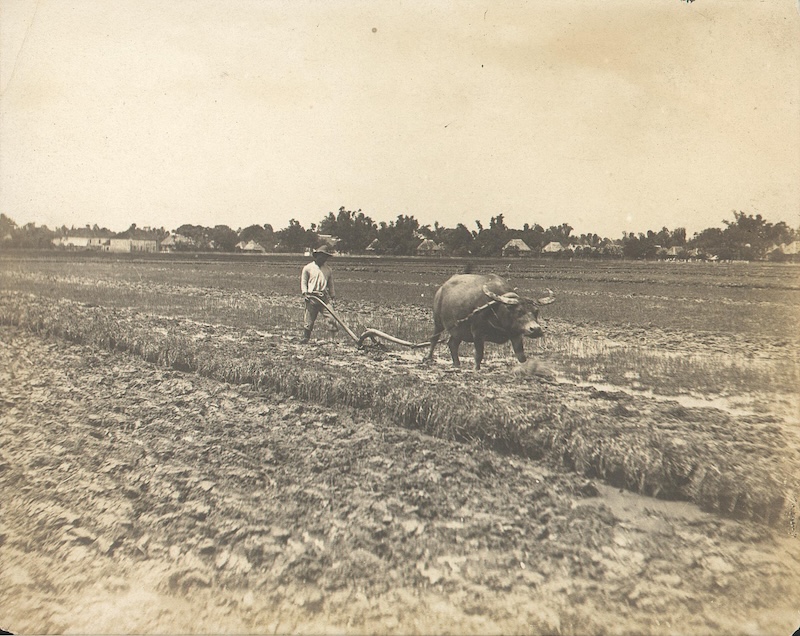
A farmer plowing a rice field in Marikina, then a part of Rizal Province, early 20th century (1900 – 1930). © Everett Thompson photograph collection – University of Michigan, Special Collections Library
Marikina, dated 1933, bears the exuberance of Amorsolo’s plein air paintings, a homage to his countryside excursions and outdoor painting sessions. This piece also offers a glimpse of the pristine landscape of pre-war Marikina.
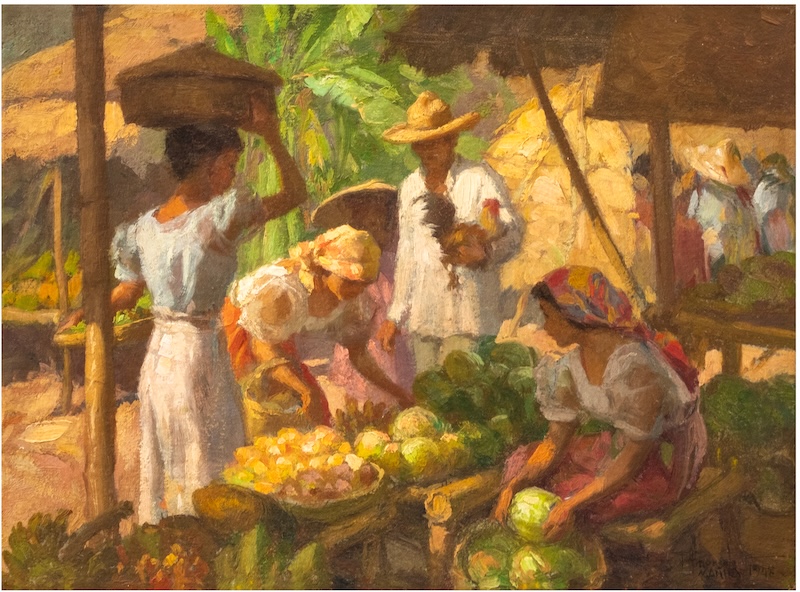
From Alex Frieder collection, Fernando Amorsolo (1892-1972), ‘Market Scene,’ 1948, oil on canvas, 11 1/8” x 15 1/8” (28 cm x 38 cm)
During the war, Amorsolo continued to sketch and paint, documenting the harrowing events unfolding before him. After the war, Amorsolo painted the peace and idyll of his beloved countryside, only this time, he captured an image of the not-so-distant past to symbolize hope for a new dawn. His 1948 Market Scene was one such work.
For the past 11 years, León Gallery and the ACC have been collaborating to support emerging Filipino talents and grant them the opportunity for exposure to foreign culture and life, and to nurture their art abroad. This opportunity not only allows them to explore and develop their artistic skills but also to forge ties.
This Valentine’s Day, Leon Gallery and the Asian Cultural Council Philippines celebrate art, love, and camaraderie, and continue their commitment to patronize Filipino artists and facilitate cultural exchanges around the world.
Leon Gallery’s Asian Cultural Council Auction 2026 will be held Saturday, Feb. 14, 2026, 2p.m., with the preview exhibit from February 7 to 13, 9 a.m. to 7 p.m., at G/F Eurovilla 1, Rufino corner Legazpi Streets, Legazpi Village, Makati City.—Jessica Magno for Leon Gallery
To browse the online catalog, visit https://leon-gallery.com/. For further inquiries, email info@leon-gallery.com or contact 8856 2781. Follow León Gallery on their social media pages for timely updates: Facebook: www.facebook.com/leongallerymakati and Instagram @leongallerymakati.


