
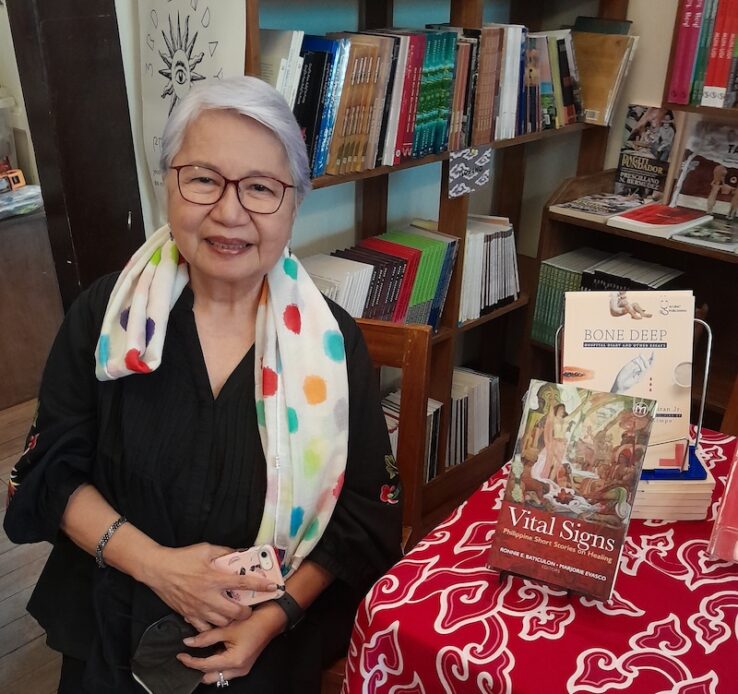

‘Book Haul’ by Cecil Robin Singalaoa, watercolor on cotton rag paper, 2020, 4×6 inches
Allow me the confession that it has taken me three years to peruse and dig deep into Marjorie Evasco’s omnibus collection of poems, It Is Time to Come Home, handsomely designed by Felix Mago Miguel. I liken my slow reading process to delighting in a dairy chocolate dessert studded with praline nougats and truffles, and I don’t want the gustatory excitement to end by quickly chewing and gulping down every bit.
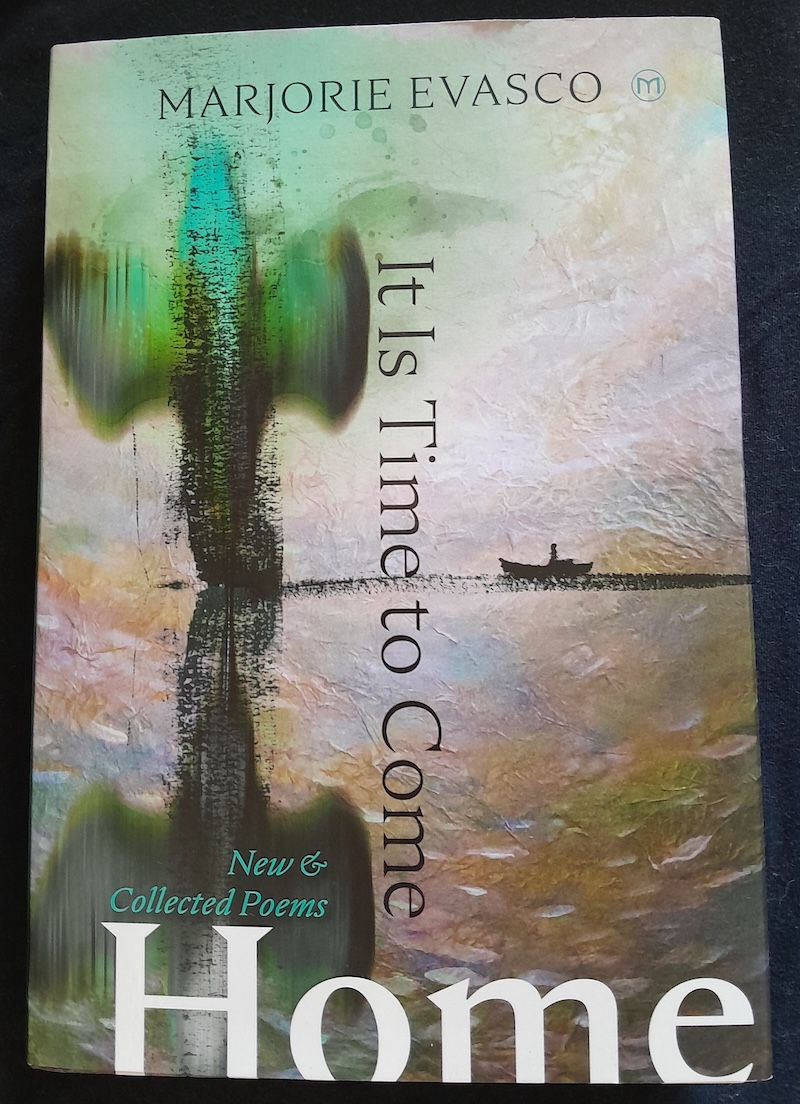
Latest book by multi-awarded Marjorie Evasco
To me, Marjorie has become the chief babaylan/high priestess of poetry in English, standing on such shoulders as those of Edith Tiempo and Virginia R. Moreno. When the latter two passed, I felt that Marjorie was the next torch bearer and practitioner of what Dylan Thomas called “my craft or sullen art.” And on this annual celebration of National Literature Month, let me add to the paeans offered to her.
Apart from writing, she has a teacher’s generosity of spirit. This has enabled her to train many physicians in crafting their narratives of life and healing and by extension, get them in touch with their humanity. See her Vital Signs: Philippine Short Stories on Healing, which she edited with Dr. Ronnie E. Baticulon.
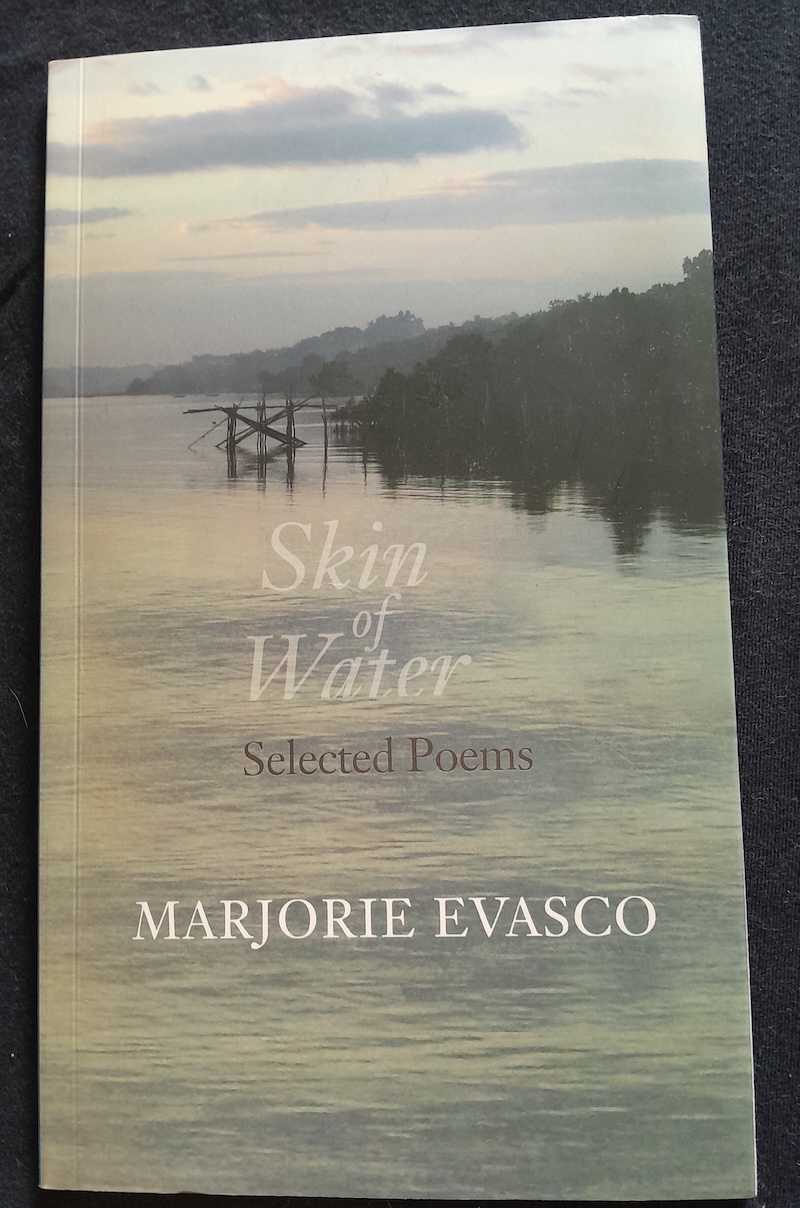
Poetry collection by Evasco
In her 416-page volume of new and collected poems, the author gathers her out-of-print books: Dreamweavers: Selected Poems 1976-1986; Ochre Tones: Poems in English and Cebuano; Tando-Huni Ug Uban Pang Mga Balak; Skin of Water: Selected Poems; Fishes of Light/Peces de Luz. She also shows her dexterity in navigating languages apart from English: Binisaya (she is from Bohol, after all) and some Spanish.
I have zero knowledge of the Visayan language which did hamper an appreciation of the poem Sylvia, dedicated to the late writer Sylvia Mayuga whom the poet considers a babaylan. While trying to crack the linguistic code, I imagined the author’s pain of losing a friend, the deceased’s commitment to the environment, among others.
Merlie Alunan, Marjorie’s fellow poet from the Visayas, in the introduction, wrote that the poems “are firm but gentle assertions of courage and belief against the imminence of pain and disorder. She recognizes the afflictions of being human, but affirms the way to order, stillness and peace.”
The poems were written by “one who had been brought to the edge of the abyss, and who had watched the seething whirlpool beckoning below, but with prayer and sheer will, had stepped back and rejected the maelstrom, turning firmly to love and light and faith…”
I think the “home” referred to in the book’s title is the return home to one’s mother language, which happened to Marjorie after having been raised in English and Filipino in school. She wrote: “…whenever I tried my hand at writing in my native language, my ears curled like a child’s fingers around the vowels of a tongue I know, but seemed to have forgotten how to dream in. Translation was the path I took into the grove. In the next six years, I found myself translating poetry in English by poets born and raised in Central Visayas into Cebuano. I learned to test the seaworthiness of my translations by sending them to poet-friends…”
Yes, even her prose tastes delicious.
When she practices ekphrasis, or the literary description of an artwork, that is where I am truly sold, I being an avid follower of this practice. I quote her Parisian Life in full.
Parisian Life
(After Juan Luna, 1892)
What would they make of her
In his painting, alone at dusk,
Waiting in a café in Paris?
Perhaps one of them will peer close enough
To catch the hint of absinthe in her breath,
And she could whisper to him: there is a street
Going south to an abandoned train station
Where many stories have left their remorse
On the wrought-iron benches. She could say
There is a river on whose banks you could
Walk ten miles to a village where the mime
And the fool danced a love story like a duel:
There once was a woman and a man
Struck dumb by roses, pursued by lightning.
They were brought to their knees by bees.
She is the woman who sits there, alone in a café
At dusk in Paris, not in hope nor in regret
But in time. As if every moment now
Could be the beginning of a different story.
I found beguiling the image of a once static woman caught sitting in a café but with a secret life of her own—once half of a duo that danced but was “struck dumb by roses, pursued by lightning” and finally “brought to their knees by bees.” I am sure Luna didn’t have those images in mind when he painted the female figure, but Marjorie’s imagination brought the stasis to life.
I stumbled recently on a website, https://poetrylondon.co.uk/prizing-our-poems-on-sustaining-a-life-in-poetry-beyond-recognition/, where Marjorie converses with fellow poet Romalyn Ante. Reading the email exchange, I felt like eavesdropping on an intimate convo about poetic practices.
In the online exclusive, the older and seasoned poet revealed that there were gaps of up to 10, even 12, years in between the publication of her books. She is no poet in a hurry. She described it as a turtle’s pace, “the pattern of working quietly on my poems.”
She said, “The living always exceeds the writing and demands from the conscious writer full attention so that the writing can be an exercise of a different form of paying attention to the why and wherefore of the living.”
Marjorie is not the type to do shotgun poetry writing if there’s a call for submission for works on a certain theme. As she put it, “I do not and will not write poetry on schedule or on demand from forces outside my life. Writing poetry is my way of puzzling out and working with the rhythms of my life–its famines and bumper harvests, its openings and closures–towards a new understanding of the meaningfulness of a lived chaotic, confusing, or confounding experience.”
She also has advice on fallow periods in writing when seemingly writer’s block is an obstacle difficult to hurdle. She said, “…(N)or do I look at periods where I am not in the physical act of writing a new poem as seasons of ‘nothing’. There is always some writing to do, other forms of engaging with the power of language, ways of working with words to craft a good line, a fragment of a good sentence into verses.”
It was she who once told me that even writing a status on Facebook is already a form of writing. Thank you, dear Marjorie!
It Is Time to Come Home: New & Collected Poems is published and distributed by Milflores Publishing Inc. and available through its website www.milflorespublishing.com.


