
LONG before Franco Mabanta and his Peanut Gallery Media Network (PGMN) discovered that journalism is a very lucrative business, corruption already existed in the news media industry. But Mabanta and his crew elevated corruption to the highest level, reportedly demanding about P300 million pesos to suppress an explosive flood-control news story.
The dark side of legacy media had never heard of such an enormous amount for a corruption story that may not even be true or exist.
It was funny when Mabanta said the 90-minute documentary on Leyte Congressman Martin Romualdez’s involvement in the billion-peso infrastructure project scandal would be released only if something happens to him. Journalists worth their salt would never suppress a public interest story. They would never threaten to release a story if their own personal safety was on the line.
Mabanta’s gambit is simply criminal. What the National Bureau of Investigation (NBI) was simply saying was that Mabanta and his PGMN were extorting from the former speaker of the House of Representatives.
Journalists are not strangers to this practice. Some bad eggs in journalism make money by attacking and defending politicians and business leaders. They are simply called AC/DC for “attack and collect” or “defend and collect.” Some simply do public relations work rather than journalism, becoming mouthpieces for politicians. The worst kind are those who distribute money to fellow journalists on behalf of politicians or business interests. However, these journalists do not earn millions. Perhaps, only a few thousand pesos, not even hundreds of thousands.
Journalists, who were assigned to the police beat in the 1980s and early 1990s were introduced to the bribery system…. But they were content with receiving P50 every week
Journalists, fresh from the universities, who were assigned to the police beat in the 1980s and early 1990s were introduced to the bribery system in the news industry. But they were content with receiving P50 every week, known as “intellihensiya” from local police commanders or from illegal gambling and prostitution den operators.
At that time, the amount was substantial because an average of P800 pesos a week was collected on the Manila Police beat alone, when an ordinary worker was getting a minimum monthly salary of more than P700.
When democratic space was restored after the 1986 People Power uprising, the old payola system returned to the political beat in both houses of Congress, as well as in Malacañang and other executive offices. However, not many journalists received regular payola from news sources in exchange for favorable coverage or for pulling their punches when controversial issues arose.
The term “payola” was coined in the 1930s in the US entertainment industry, when companies paid radio stations to play their vinyl records to gain popularity. It was illegal for radio stations not to acknowledge payment for a sponsored broadcast during the pre-war period.
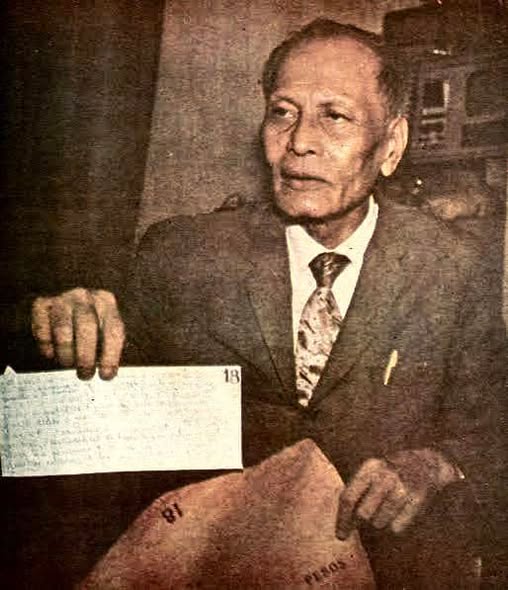
After the war, the payola system expanded into politics. In the Philippines the most famous payola scandal broke out in the 1971 Constitutional Convention when a delegate, Eduardo Quintero, admitted to receiving a bribe to vote in favor of Ferdinand Marcos to defeat a ban on the president seeking an unprecedented third term in 1973 under a new Constitution.
Quintero’s payola became a household term in the 1970s for bribery and corruption, not only in politics, but also in business, sports, entertainment, and news media. Payola has existed in news media to this day due to several factors, such as ownership structure, low and irregular pay, and poor working conditions. Thus, the payola system becomes a lifeline, particularly to small community papers in the provinces.
No wonder more than 30 news media workers died in Maguindanao in November 2009, when each was promised money to join a convoy that would file a certificate of registration for the 2010 election in Sharif Aguak town.
However, decent, honest, and more professional journalists outnumber the corrupt
The corruption in the news media only mirrors the worsening social problem in Philippine society. However, decent, honest, and more professional journalists outnumber the corrupt who practice what was then known as “envelopmental” journalism. Many journalists decline envelopes filled with cash from the PR staff of politicians and businessmen who hold press events. Some, fearing being ostracized by peers, accept the money only to donate it to humanitarian institutions, like the Red Cross, with donation receipts returned to the politicians or businessmen.
There are also what journalists called “crying” or “smiling” money. When gifts or a token amount are given wholeheartedly without expecting a favor in return, this is “smiling” money. But when money is demanded by a journalist, and a threat made to destroy someone’s reputation, it is called “crying” money. Some of these journalists go as far as asking for money to pay for electricity bills, monthly apartment rentals, a child’s baptism, or hospital bills.
Of course, it is also acceptable to receive token gifts, as Filipinos, like most Asians, have a gift-giving culture to say thank you for a good deed. More often than not, favors are not expected for token gifts, whether in kind or cash, although journalists frown on cash gifts. This is unlike in most Western cultures, where even free lunches are prohibited, and cheap tokens are declined.
In some Philippine newsrooms, policies are now set on how much a journalist can accept as a gift on certain occasions, such as Christmas and birthdays. Usually, a P2,500 limit is set, or something that a journalist can afford to buy with his or her meager pay.
Journalists are not allowed to get bonuses or allowances outside their news organizations. Newsrooms even pay for hotel, airfare, and food allowances for journalists sent to cover events abroad or in the provinces when disaster strikes. Sometimes, newsrooms provide a reasonable amount for journalists to pay for lunches or dinners with their news sources. It’s not always a free lunch.
What is not tolerated in the newsroom is regular cash payments, no matter how large or small the amount. That’s bribery. Journalists have no business selling news stories or weaponizing information to extract favors or cash from politicians and businessmen.
There are strict ethical rules in journalism in every newsroom’s Business Code of Conduct. Some are rigid but flexible, too. The Code of Ethical Conduct separates the journalists from would-be and pseudo-journalists.
These newsroom ethical policies are, however, not set in stone. Journalists would do well to widely observe ethical rules to gain credibility and the people’s trust in the news media.


