
Salcedo Auctions’ Finer Pursuits afternoon online and live auction is on June 6, 2026
Last May, a rare collection of 104 early photographs of the Philippines arrived at Salcedo Auctions. The albumen prints—so called to describe the use of egg whites to bind light-sensitive chemicals to paper—arrived not in opulent packaging, but in an old binder with a professionally restored spine. Yet beneath this humble exterior lies a visual treasure far more valuable than its modest casing suggests: a significant record of a nation in transition, done toward the end of the 19th century, as American forces arrived to challenge Spain’s centuries-old colonial rule.
In his expert assessment of the collection, renowned historian, curator, and collector Jonathan
Best noted both the album’s exceptional condition and its historical significance.
“The overall album is well preserved, with many of the important images exceptionally sharp, boasting rich sepia toning and minimal fading,” Best observed. “The images are mounted on thick, coated cardboard stock, which has helped to safeguard them for well over a century.”
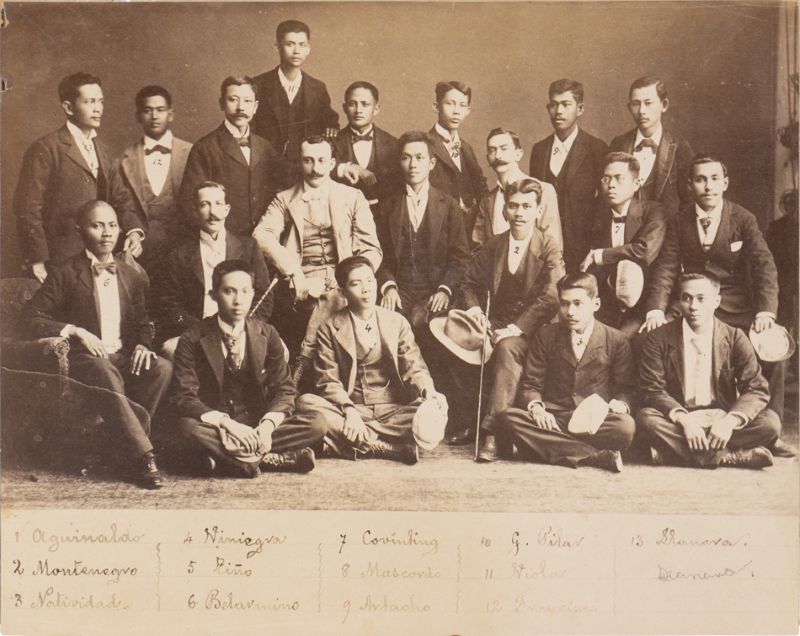
General Emilio Aguinaldo alongside fellow revolutionaries associated with the Pact of Biak-na-Bato
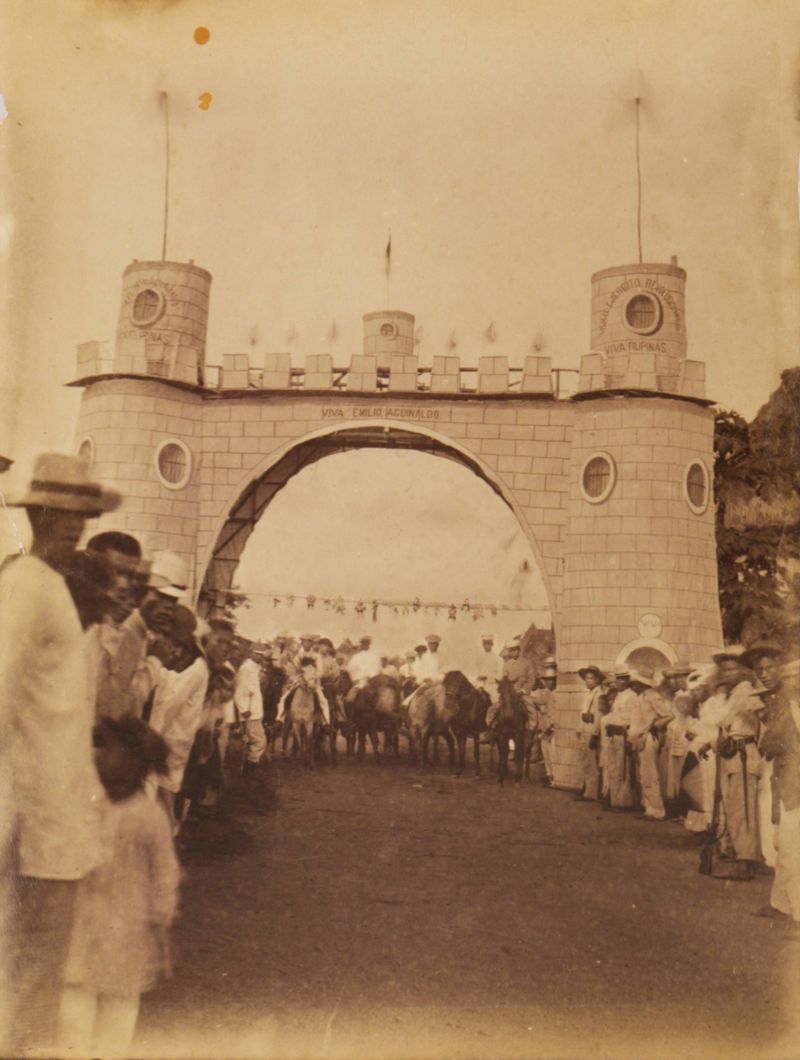
A crowd on horseback and on foot gathered around a makeshift triumphal arch. ‘Viva Emilio Aguinaldo’ is written above the center arch, flanked by towers with the hand-painted text ‘Viva El Ejercito Revolucionario’ and ‘Viva Filipinas.’
He added, “This rare album of historical photographs is a vital contribution to national heritage, and would be a major addition to any institutional or private library of Philippine history.”
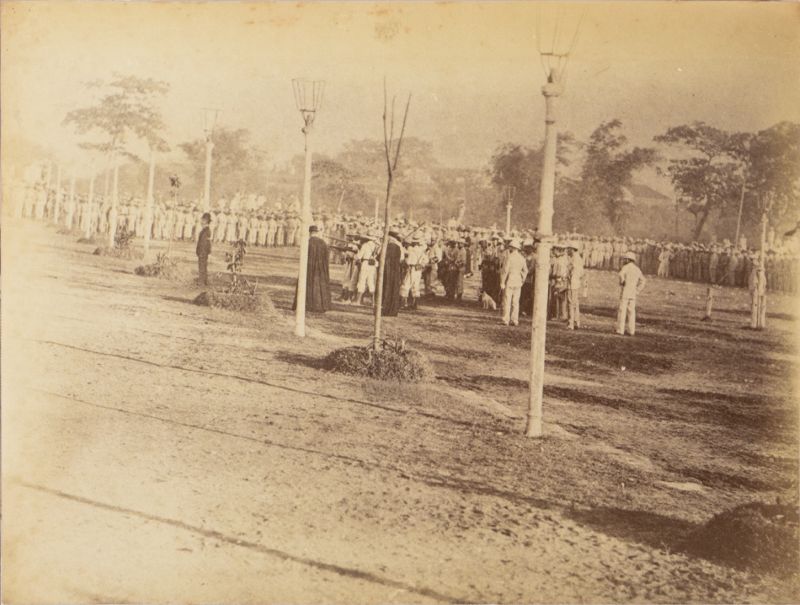
Most Filipinos will find familiar four of the photographs in the collection, chief among them the stark image of Dr. José Rizal in his final moments before a Spanish firing squad at Bagumbayan field (now Rizal Park), captured on Dec. 30, 1896 by Spanish bookseller and amateur photographer Manuel Arias y Rodríguez. Original prints of this scene are exceedingly rare.
With no other known copies in private hands, this well-preserved photograph stands as a crown jewel of the upcoming auction on June 6.
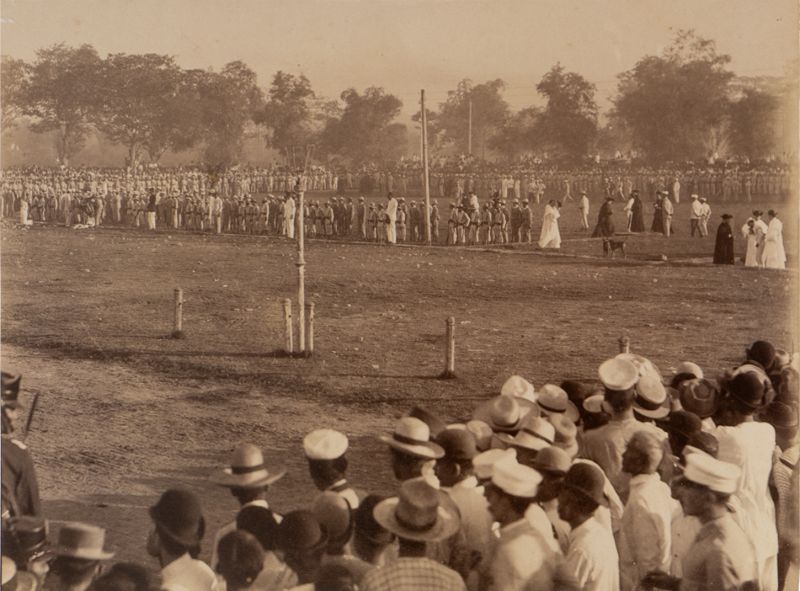
A photograph of the Thirteen Martyrs of Bagumbayan shows Moises Salvador lying prone on the ground, too weak from torture to stand with fellow patriots awaiting execution.
Another extraordinary rarity from 1897 features a group portrait of General Emilio Aguinaldo alongside fellow revolutionaries associated with the Pact of Biak-na-Bato, the historical nucleus of the Junta Patriótica Filipina during their subsequent exile in Hong Kong. This particular print is a revelation; it preserves a fuller, unedited version of the frame that includes an additional handwritten identification (“Llanera”) that was cropped out in all later historical reproductions.
Aguinaldo’s short-lived leadership is further captured in a photograph showing a crowd on horseback and on foot gathered around a makeshift triumphal arch. “Viva Emilio Aguinaldo” is boldly written above the center arch, flanked by towers with hand-painted text: “Viva El Ejercito Revolucionario” and “Viva Filipinas.”
The album also contains two chilling images captured just 12 days after Rizal’s execution, offering what initially appears to be straightforward documentation of the execution of the Thirteen Martyrs of Bagumbayan. A closer, more agonizing look at one image, however, reveals a single figure—Moises Salvador—lying prone on the ground. Having survived brutal torture before the execution, he had become too weak to stand alongside his 12 fellow patriots as they faced the firing squad.
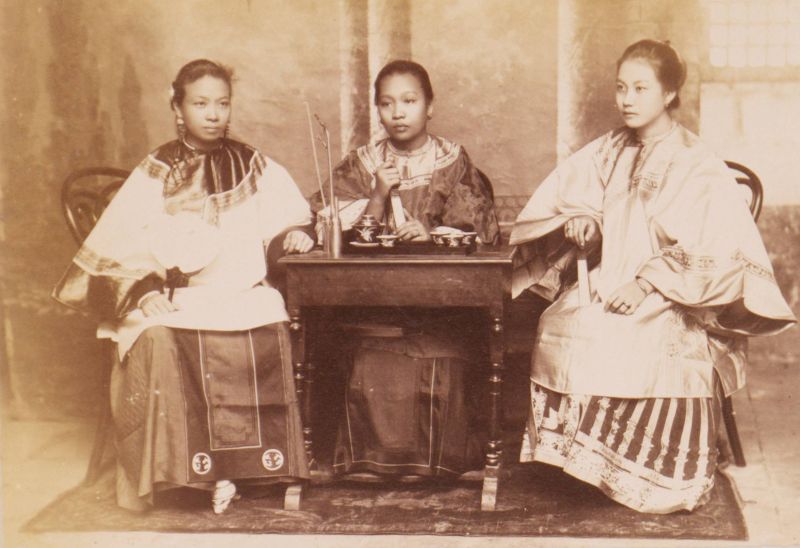
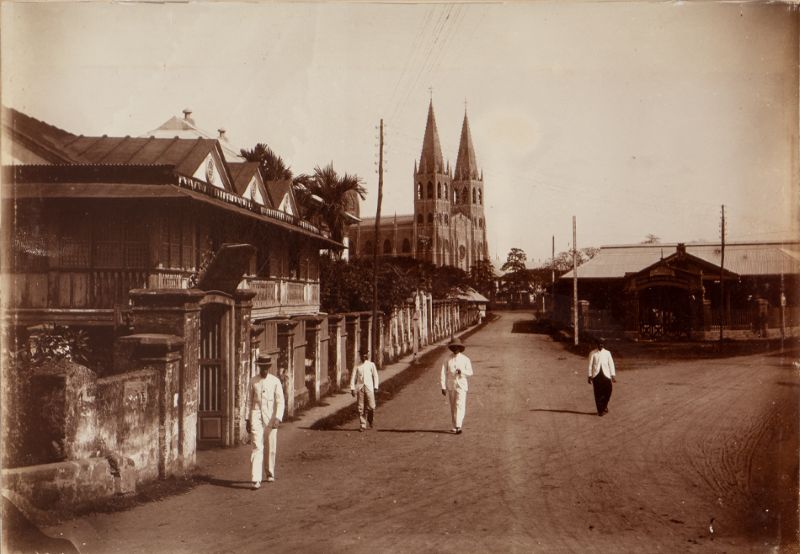
The album of 104 photographs has images of historic moments, portraits, and landscapes.
These watershed images evoke the tension of a fermenting revolution. They stand in stark contrast to the placid, idyllic mood of some images in the album: sweeping rural and urban landscapes, studio portraits of the ilustrado class and prosperous Chinese migrants, alongside figures casually strolling or posed against the backdrop of Spain’s built legacy.
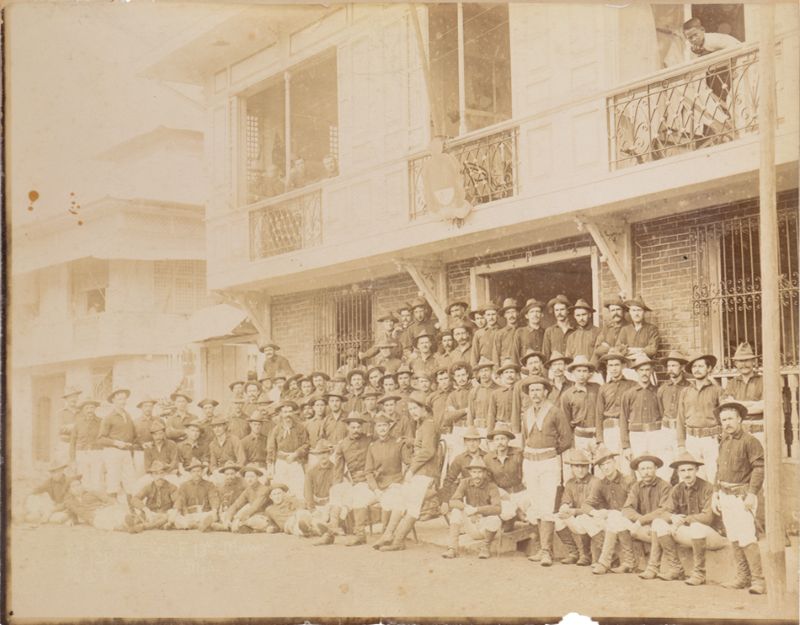
A boy leans over from second floor balcony of a ‘bahay-na-bato,’ above an American military regiment.
In other pages, images document a shifting geopolitical guard. A series of photographs shows American soldiers embedded with Filipino troops in rural settings. The most intriguing image from this transition depicts a young boy leaning over a second-floor balcony, accidentally photobombing a military regiment below—a poignant snapshot of a young nation entirely unaware of the new colonial complications looming on its horizon.
The late 1800s was a transformative era for the medium of photography. The global wave of uprisings across the Americas, Asia, and Europe from the mid-19th century onward catalyzed the birth of war photography, as empires and military leaders routinely dispatched photographers to document conflicts.
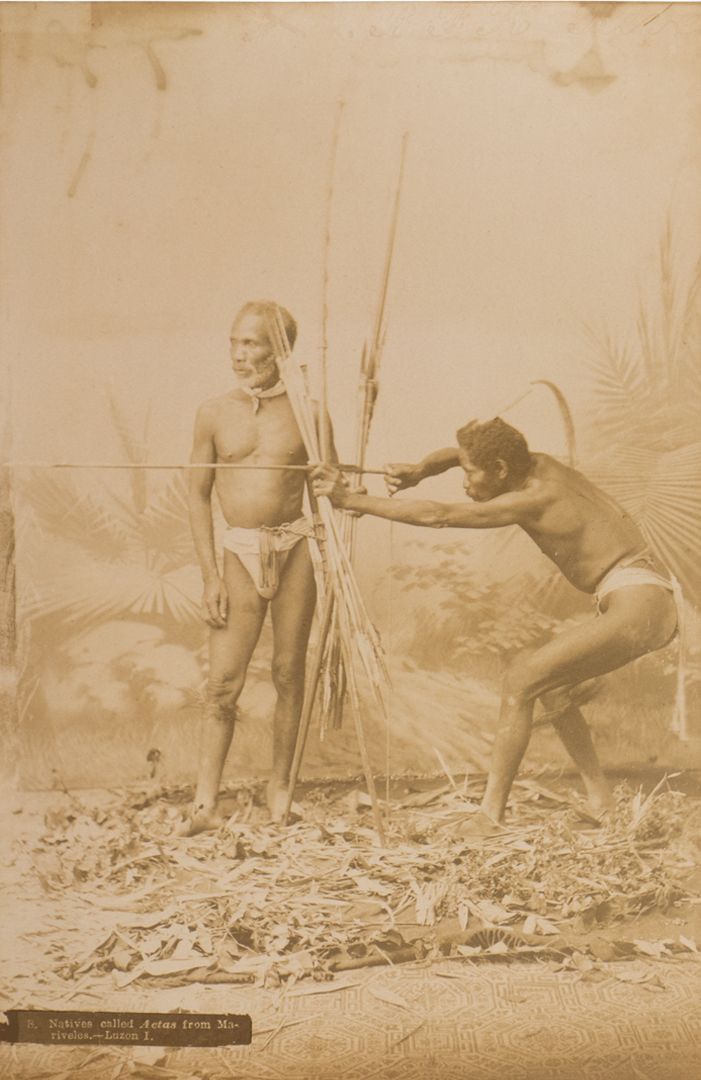
A staged photograph of two Aetas in traditional clothing and armament
Recognizing the immense emotional power of the medium, colonial authorities readily used photography as weapon for propaganda. One specific photograph in this album serves as prime example of this insidious use. Obviously staged inside a studio, its floor artificially strewn with dried shrubbery, the photograph depicts two indigenous Aetas in traditional attire holding hunting weapons, the English caption suggesting an American photographer behind it.
After seizing control from Spain, the United States needed to audit its new territory—its landscapes, natural resources, and people. While some of these efforts were driven by genuine ethnographic and scholarly impulses to classify a diverse population, they coincided with a fierce domestic debate in Washington over whether or not to grant the Philippines independence.
To swing American public opinion, images depicting an “uncivilized” or “primitive” populace were widely circulated, creating the justification for American paternalistic intervention in a country deemed unfit for self-governance. The portrait of the Aetas served precisely this narrative.
This era also marked the emergence of early photography of Filipino subjects made exotic and erotic. Among the portraits of women in the album, one image stands out: Though heavily faded, it portrays a Filipina reclining amid nature. It is a visual trope that American photographers would replicate habitually, depicting subjects in varying degrees of undress.
Mirror to the past
Ultimately, this extraordinary album of 104 albumen prints reveals just as much about the birth of the Philippine nation as it does about the individuals who stood behind the lenses. It lays bare the agendas of the colonial patrons who sought to capture, categorize, and shape how Filipinos would be perceived by the rest of the world, making its preservation today not just a matter of historical curiosity, but also an act of cultural reclamation.
The entire album is up for bidding at Salcedo Auctions’ Finer Pursuits afternoon online and live auction on June 6, 2026. View the catalogue and register to bid here: CATALOGUE.


