
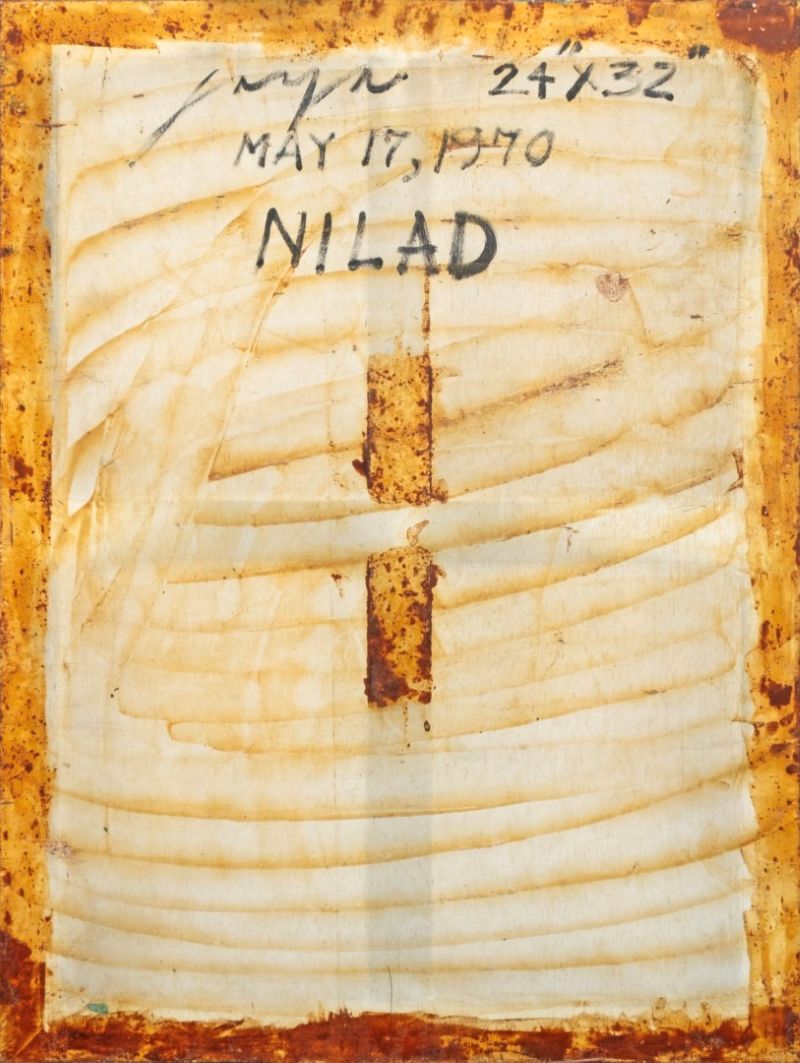
The back of the painting showing Joya’s signature and his own handwriting detailing the artwork’s title, date of creation, and dimensions
The preview exhibit of The Spectacular Mid-Year Auction 2026 will run from June 6 to 12, 9 am to 7 pm, at Eurovilla 1, Rufino cor. Legazpi Streets, Legazpi Village, Makati City.
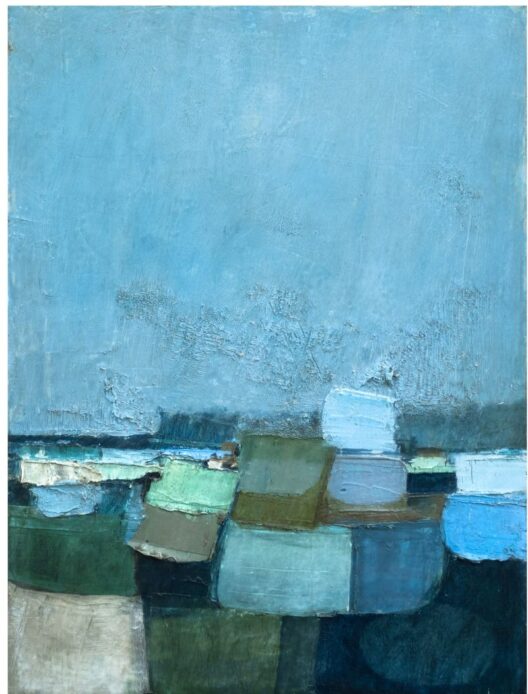
This landmark Jose Joya painting, titled Nilad, is among the highlights of León Gallery’s Independence Day offering, The Spectacular Mid-Year Auction 2026, on June 13, 2026, 2 pm. The sale of this important Joya masterpiece, depicting the mangrove plant from which Manila takes its name, coincides with the 455th anniversary of the founding of Manila, established by the Spanish conquistador Miguel López de Legazpi on June 24, 1571.
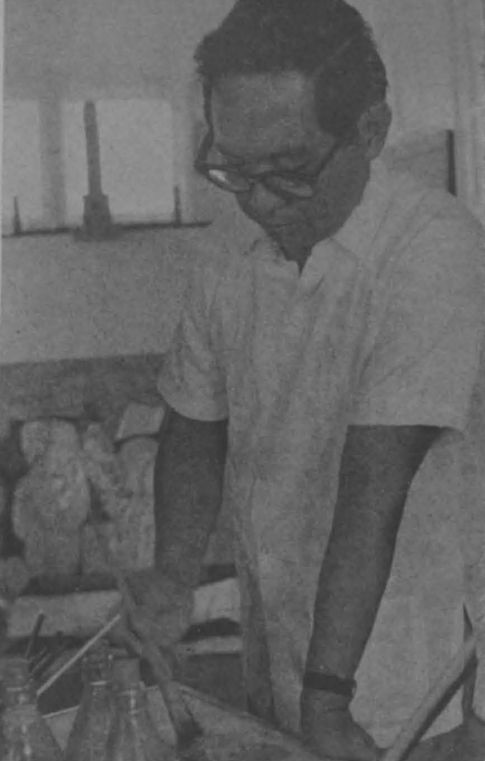
Jose Joya in the early ’70s. Photo from the ‘Philippine Panorama,’ ‘The New Joya Returns,’ 3 January 1971
In September 1969, Jose Joya marked his much-awaited homecoming to the Philippines after almost two years in the US, where he became the first Filipino painter recipient of the John D. Rockefeller III scholarship grant and the Ford Foundation assistance, studying painting and printmaking in New York.
Joya exhibited his works in several shows, most notably the US traveling exhibition, Artists Abroad, for which he was handpicked by Rene D’Harnoncourt, former director of the Museum of Modern Art (MoMA).
When Joya returned to the Philippines, he immediately mounted an exhibition that would earn rave reviews and would draw a huge crowd on opening night.
Reported The Manila Bulletin on Joya’s exhibition: “Joya’s new pieces bear a marked departure from his familiar abstract expressionistic style, often repeated in series. This serial style has been practiced by several Oriental artists in their art. Joya…was preoccupied with primitive symbolic graffiti recalling ancient Filipino drawings found in burial pottery.”
The article continued, “The exhibition, his first major show in the country in three years, coincides with his rediscovery of Philippine history, a new enthusiasm to explore the pre-Hispanic Philippine visual symbols. There are titles denoting ancient Philippine names like Ibalon, Tandaya, Luconia, and Madya-as.”
Wrote Maria Luisa Reyes-Llamado in her article, The New Joya Returns, in the Philippine Panorama: “Jose Joya is back after an absence of almost two years in New York. His opening night for his 13th one-man show had the usual glittering crowd, and the Luz Gallery crawled with people.”
Continued Reyes-Llamado, “We met old friends and got some of their views on the ‘new’ Joya. Hernando Ocampo was admiring ‘Psychedelic Voyage,’ one of the first pictures that were quickly sold. When asked to comment, Ocampo said, ‘It is a very satisfying synthesis of his old abstract lyricism and his more recent circular zodiac works.'”
Poet-critic Larry Francia praised Joya’s paintings, remarking that the artist “has reached a level of sophistication and self-confidence.” Eminent artist-critic Alfredo Roces declared in his Manila Times column on 3 January 1971 that Joya’s was the “best one-man show” and “one of the most significant cultural events of the (past) year.”
Prominent gallery owners also lauded Joya’s comeback show as one of 1970’s most profitable, earning Joya a spot on the list of the country’s best-selling artists, alongside BenCab, Sanso, Roces, J. Elizalde Navarro, and Zalameda.
SUBHEAD: It was during Joya’s ‘New York Period’ that he discovered, through extensive research and study, the rich pre-colonial history of the Philippines
Beyond the blockbuster and the praises, Joya’s new works signaled a metamorphosis. Foremost critic Leo Benesa wrote that Joya’s creative evolution was indicative of “a shift towards social commitment,” echoing the artist’s sentiments about his new style. It was during Joya’s “New York Period” that he discovered, through extensive research and study, the rich pre-colonial history of the Philippines. Joya began amassing an extensive collection of rare books on Philippine history, writing in his book of drawings (1973), “Digging into rare sources, I came across materials that gave light to facets of Philippine history.”
Joya became fascinated with Philippine pre-colonial arts and crafts, particularly Moro and Lumad brass work, Igorot burial jars, and anthropomorphic burial jars in South Cotabato. Joya was engrossed in the discovery of the Manunggul burial jar in Palawan in 1964, which became a landmark event in Philippine archaeology. The cover notes of the December 1971 issue of The Philippines Quarterly, which featured Joya’s oil painting titled Manunggul Vessel, described how he was “so struck by the originality of the design of these ancient relics” that he “adumbrated [their designs] into a series of paintings.”
Joya also delved into the news of his time regarding the Late Neolithic to Metal Age earthenware excavated in the Tabon Caves in Palawan (surveyed and excavated from 1962 to 1966), where the Manunggul Jar was also discovered, and 14th to 15th century Thai and Ming Dynasty trade ceramics in Calatagan, Batangas (1958). Both excavations were helmed by anthropologist and the pioneer of modern Philippine archaeology, Dr. Robert Fox.
Furthermore, archaeological excavations in Santa Ana, Manila, in the late 1960s, that unearthed artifacts such as Chinese pottery and iron slags, and burial sites dating from the 12th to 14th centuries, underscored an advanced cultural evolution in what would become Manila, even before the arrival of the Spaniards.
“Excavations in the Philippines are paving new avenues for national identity and pride and possibly, vigorous new art forms,” wrote Joya in his annotations to his book of drawings.
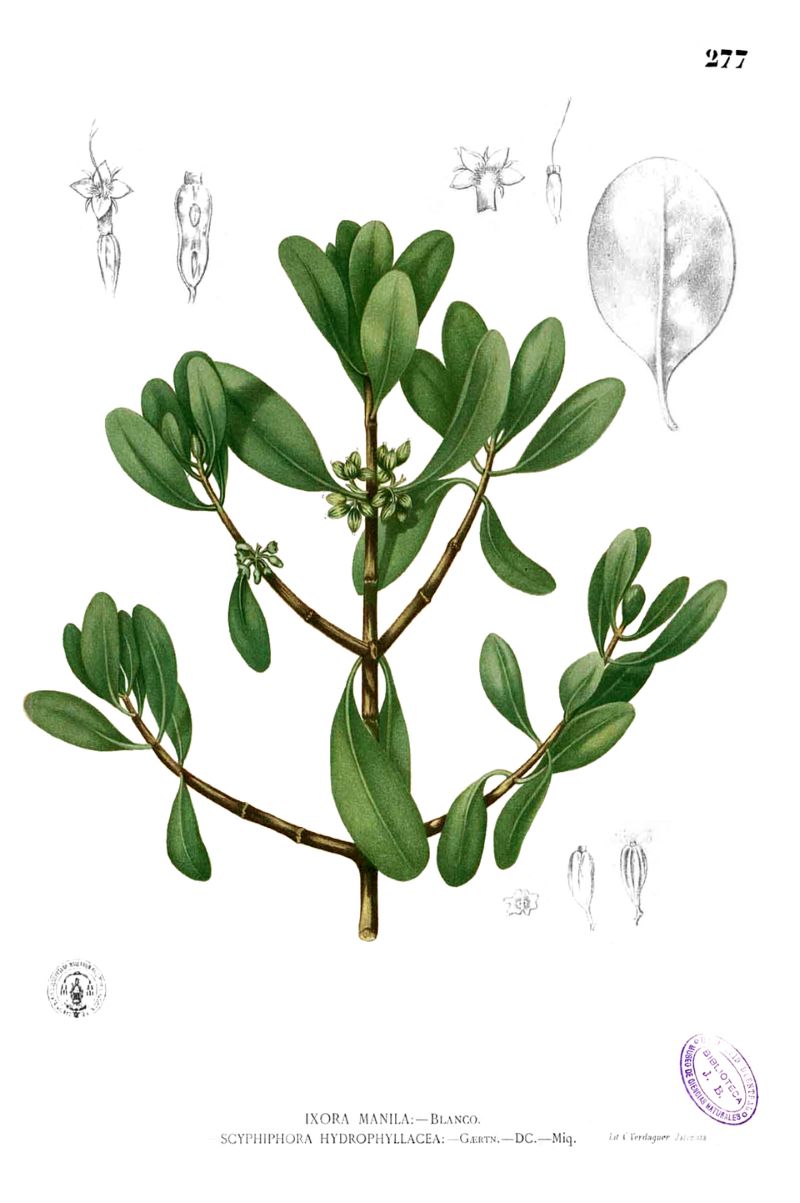
‘Nilad,’ as illustrated in Fray Manuel Blanco’s landmark book on Philippine flora, ‘Flora de Filipinas’
One of the more interesting and intriguing paintings in Joya’s homecoming show was Nilad, painted in May 1970, just before Joya became the eighth Dean of the University of the Philippines School of Fine Arts in August that same year. It was the perfect painting to mark Joya’s Manila homecoming, an homage to the origins of the country’s preeminent city.
Nilad bears Joya’s recognizable geometric forms in his serial style, inspired by and evoking flake tools and pottery shards, the latter being the most ubiquitous artifacts in archaeological excavations and noted by Dr. Fox to have been in use in the islands since the Neolithic Period.
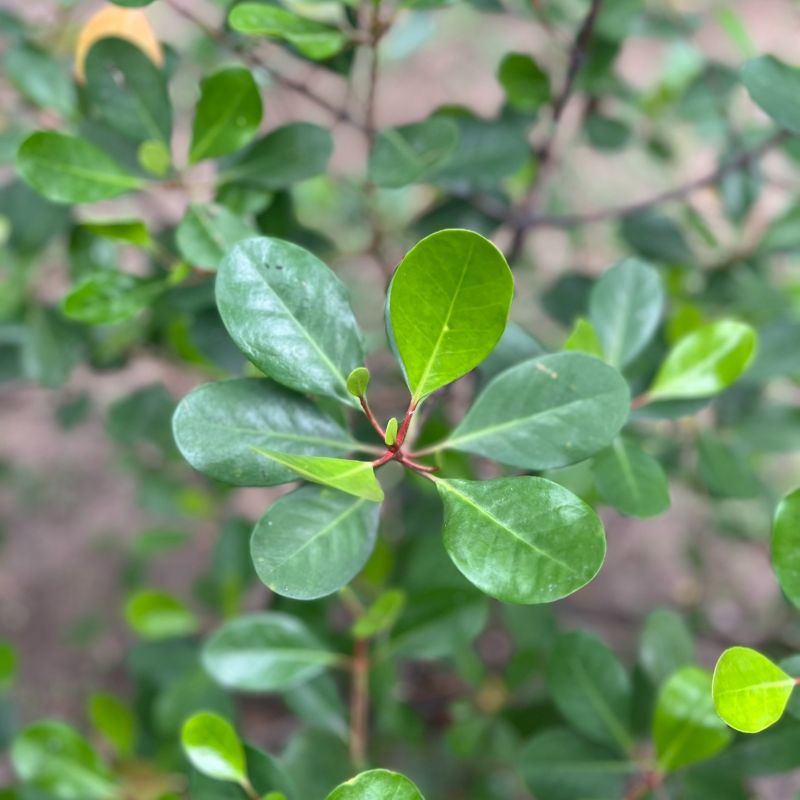
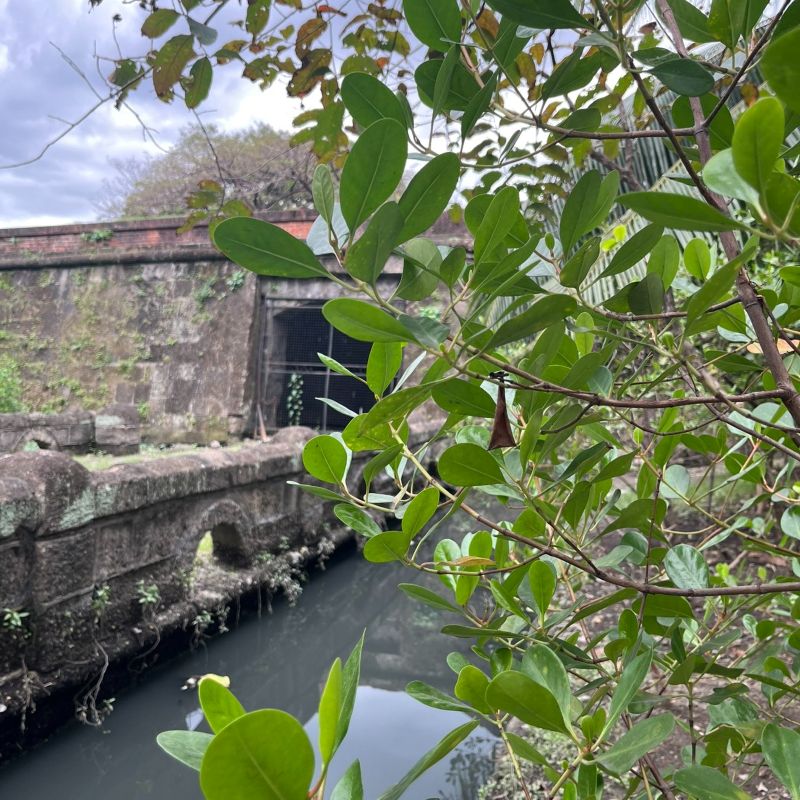
The ‘nilad’ still thrives in the present as a symbol of Manila’s culture and history. Many of these are planted in Intramuros, Manila’s original core, in the gardens of the Revellin del Parian. (Photo by Gelo Andres, published in Renacimiento Manila FB Page)
Rendered in thick impastos of colors, ranging from muted and lagoon blues to fern greens, applied intuitively using a palette knife, Nilad refers to the eponymous plant that once grew along the banks of the Pasig River and the mangrove forests of Manila Bay. A mangrove species, the nilad (Scyphiphora hydrophylacea) possesses dark brown wood, with small, tubular flowers in dense clusters, leaves that are glossy and deep green in the upper part and paler in the lower portion, and fruits that are light brown when ripe, features that are symbolically presented in this work through colors, with the blues representing the waters of the Pasig.
One can imagine the nilad flourishing on the shores of the Pasig River, Manila’s birthplace, whose banks once teemed with mangroves. The nilad witnessed the rise of the wealthy maritime chiefdoms of Tondo and Maynila— how these two dominated commerce, with the former monopolizing trade with two to three Chinese junks per year and the latter selling the goods throughout the islands by utilizing their vessels known to the Visayans as “sinina” or “Chinese.”
Even neighboring Namayan, which now encompasses current Manila districts, including Santa Ana, Paco, Pandacan, and Quiapo, thrived with trade, such as agriculture, earthenware, masonry, carpentry, and piña embroidery. Manila, particularly Intramuros, which was the city’s original core and the location of the old Kingdom of Maynila, famously ruled by Rajah Matanda and Rajah Sulayman at the advent of Spanish colonization, was a swampland that was most suitable for nilad‘s growth. The natives had been calling their settlement “Maynilad” since time immemorial, which, over time, became “Maynila,” the result of language evolution.
One of the earliest mentions of the “nilad–Maynilad” etymology is in the three-volume Historia Plantarum (published between 1686 and 1704) by the English botanist and naturalist John Ray, who published the Jesuit naturalist Georg Joseph Kamel’s Historia stirpium insula Luzonis et reliquarum Philippinarum (London, 1704) in the appendix of the Historia Plantarum’s third volume.
Fr. Kamel wrote: “Nilad, a plant of average height and oftentimes curved. Its wood is compact and dense, like molavin (molave) wood. In places where mangle or mangroves abound, the place is called “Manglar;” that is why if nilad abounds in one area, the place is called “Maynilad.” Over time, the place became known as “Manila,” as it was corrupted [by the Spanish]. The fruit of the nilad is green, fleshy, and has three small, crooked horns.”
SUBHEAD: The depiction of old ‘Maynilad’ was only one of Joya’s ventures into seriality and geometric expressionism, and his abandonment of abstract expressionism
The depiction of old “Maynilad” was only one of Joya’s ventures into seriality and geometric expressionism, and his abandonment of abstract expressionism, born of his profound exposure to our country’s pre-colonial past during his studies abroad. Was it a result of homesickness? Or a profound realization of a decolonized past that ran parallel with the resurgence of nationalism and a nationalist historiography, particularly in the late 1960s, as spearheaded by Teodoro Agoncillo and Renato Constantino?
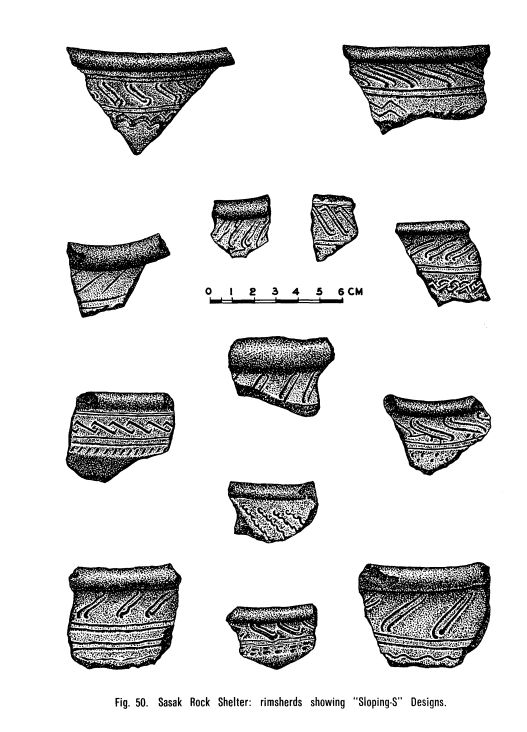
Illustrations of pottery shards discovered by Dr. Robert Fox’s team during their archaeological excavations in the Tabon Cave complex in Palawan from 1962 to 1966. Their designs inspired Joya’s unique geometric forms. Published in ‘The Tabon Caves’ (Monograph by the National Museum, 1970) by Dr. Robert Fox.
Joya wrote in his book of drawings, “Serial designs, basically oriental in concept, have become much of an obsession among occidental modern painters.”
For Joya, seriality is not a novel concept that became more dominant only with the rise of Pop Art in the West. It is inherently Oriental; it is ubiquitous in ancient Chinese handscroll paintings and Philippine indigenous art, most notably burial jars, pottery, weaving, embroidery, metalcraft, and the mystical anting-anting (amulet).
Seriality is omnipresent in nature through patterns, and nature was paramount in the daily life of our pre-colonial ancestors. Our forebears believed in diwata, the spiritual being residing in nature and the guardian of harmony and balance—the sky deities, mountain spirits, river guardians, animal spirits —and the anitos or ancestral spirits who, in many indigenous cultures, journeyed into the spirit world across the waters, a most important element for an archipelagic people. Up to now, our indigenous peoples, who safeguard the traditions of our ancestors, are the custodians and defenders of our natural wealth against exploitation.
Joya’s venture into this language of abstraction is, therefore, rooted in the indigenous and the paramount importance of nature, which is an artist’s best teacher. It is a creative introspection that looks inward rather than outward. Like the nilad plant, whose flowers are densely clustered, and the collectivist, tight-knit character of our cultures, Joya’s geometric abstraction consolidates ideas and concepts.
In contrast, in his action paintings, each stroke demands attention and individuality.
Joya’s Nilad can be likened to an excavated artifact that intrigued the eminent artist, one that ingeniously tells the story of a rich, indigenous past. For Joya, seriality, manifested through art, offers and symbolizes a unifying aspect for the present-day Filipino people who have always been diverse yet always connected through a shared history of reverence for nature.
It is also a way to reclaim one’s indigenous identity and history, a reflection of our collective pride, our constant and protracted struggles and triumphs in re-exploring and redefining what it truly means to be a Filipino, that is, honoring the diversity of our native past and the role our indigenous countrymen play in preserving and defending these identities.
By also painting pictures of a pre-colonial past, Joya shows an inherent preference for landscapes and, therefore, a predisposition towards nature, to which our pre-colonial ancestors gave much reverence, deeming it the “alpha” and the “omega” of life. In this way, Joya reconnects with them in spirit and art.
The preview exhibit of The Spectacular Mid-Year Auction 2026 will run from June 6 to 12, 9 am to 7 pm, at Eurovilla 1, Rufino cor. Legazpi Streets, Legazpi Village, Makati City.
To browse the catalog, visit https://leon-gallery.com/. For further inquiries, email info@leon-gallery.com or call tel. no. 8856-2781. Follow León Gallery on their social media pages for timely updates: Facebook: www.facebook.com/leongallerymakati and Instagram @leongallerymakati.


