

It was four years ago when the drive to declare the Pasig River a National Cultural Treasure (NCT) was pushed forward by the International Council on Monuments and Sites (ICOMOS).
In the first Statement of Significance in 2022, it was necessary to justify the declaration of the river for the highest official designation, NCT, given to a site, structure, or artifact. Examples of these declarations are Paoay Church, Juan Luna’s Spoliarium, the Las Piñas Bamboo Organ, and the Maitum burial jars.
An NCT declaration secures protection for any site, structure, or artifact. The petition must meet at least one of these criteria: historical, aesthetic, architectural, scientific, or national importance. Finding the appropriate significance requires detailed research, as a declaration entitles the site or artifact to prioritized government funding, conservation, and restoration, but not permitting alterations or relocations.
In short, to create a satisfactory declaration for an NCT is no walk in the park. This year, ICOMOS, in partnership with the Heritage Conservation Society (HCS), convened a stakeholders’ consultation meeting for the Pasig River declaration after months of finalizing the document.
On May 25, 2026 at the Grand Ballroom of the Metropolitan Theater, an audience of 76 like-minded individuals—local government unit (LGU) representatives and non-governmental organizations (NGOs), academic institutions, business groups, heritage advocates, and cultural stakeholders—gathered. The consultation served as a jump-off point to move forward the citation for the Pasig River to be recognized not just as a cultural landscape, but as an important, if not central, asset in the development of Manila as a city. Research unveiled layers of the river’s historical centrality, eventually leading to Manila’s recognition as the country’s capital. This fact was prominent in the opening remarks of ICOMOS president, Dr. Cheek Fadriquela.
From at least 900 AD, the Pasig River had been a significant landmark in the country, serving as the primary trade route for the Tagalog people and Southeast Asian traders. Throughout the Spanish and American colonial periods, the river had been the connecting point to larger bodies of water, specifically Laguna de Bay and Manila Bay. Communities existed along its banks, serving as lucrative spots for livelihoods like fishing and transportation.
One of the primary presenters, Atty. Mark Evidente, called the river’s collective assets and significance a “multi-dimensional cultural landscape, articulating the four key arguments supporting its declaration as a National Cultural Treasure: its foundational role in national history, its influence on urban form and civic architecture, its cultural and social significance in shaping identity, and its overall outstanding cultural value.”
These four factors embody the foremost significance of the river site that warrants its long-awaited recognition as National Cultural Treasure.
The presentation of the petition was followed by an open forum.
During the discussion, Art Valdez discussed maritime heritage using his own personal experience as part of a group that organizes voyages on a balanghai. He could not emphasize enough the role of Pasig River as a waterway, drawing a positive reaction from the other attendees on how direct river experiences for local leaders “could deepen appreciation of (the river’s) deteriorated condition and huge potential through re-vitalization.”
This was a common theme echoed by representatives from the Philippine Coastal Storage and Pipeline Corporation as they stressed that “any restoration effort must go beyond heritage appreciation to include urgent attention to sanitation, sewage management, waste control, human settlement issues.”
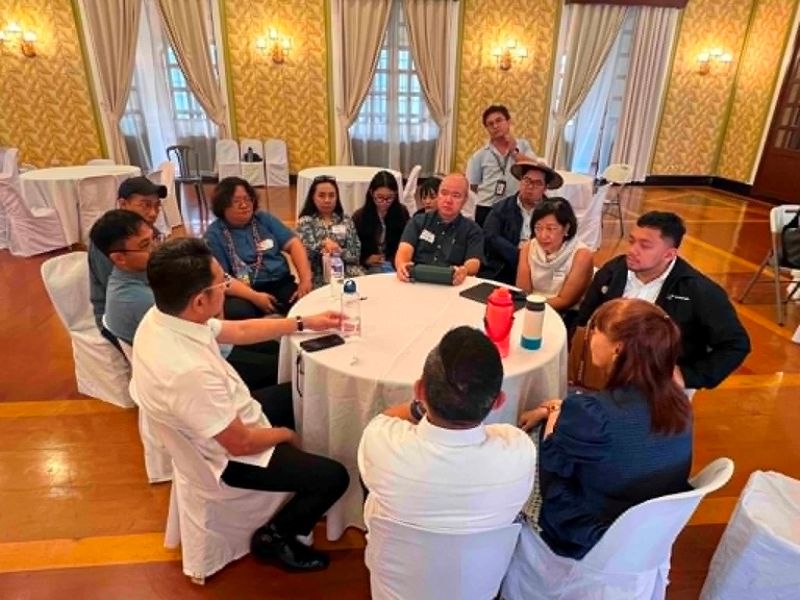
Stakeholders’ consultation meeting May 25, 2026 at Metropolitan Theater ballroom (Contributed photo)
Other suggestions included the re-introduction of mangroves, aquatic vegetation, and biodiversity supportive interventions like those successfully done in other countries.
The discussions also brought up the river’s historic role in connecting settlements such as Sta. Ana, Manila, and Taytay, all these to improve water quality, “directly enhancing the quality of life for surrounding communities.”
‘Any restoration effort must go beyond heritage appreciation to include urgent attention to sanitation, sewage management, waste control, human settlement issues’
To implement these suggestions would require stronger heritage protection frameworks and cautious scrutiny of infrastructure projects perceived to threaten the river’s ecological and cultural integrity. As strongly noted by Atty. Evidente, to achieve these would require “adequate resources, political will, and coordinated implementation across national and local governments, supported by zoning plans, ordinances, and context-specific heritage policies.”
The latter was a common theme from all sectors—that stronger heritage protection frameworks be introduced, with “cautious scrutiny of infrastructure projects perceived to threaten the river’s ecological and cultural integrity.”
Looming ominously and framing that last concern regarding infrastructure was the proposed construction of the PAREX (Pasig River Express) bridge, a 19-km bridge supported by numerous heavy pilons over the Pasig River, drawing strong and valid comments, urging stakeholders to meticulously evaluate any “development” affecting the river not just for the mobility factor, but also “for its ecological, hydrological, and heritage impacts, including effects on tributaries and esteros.”
As the discussions came to an end, there was a clear unified agenda to support the Pasig River’s declaration.
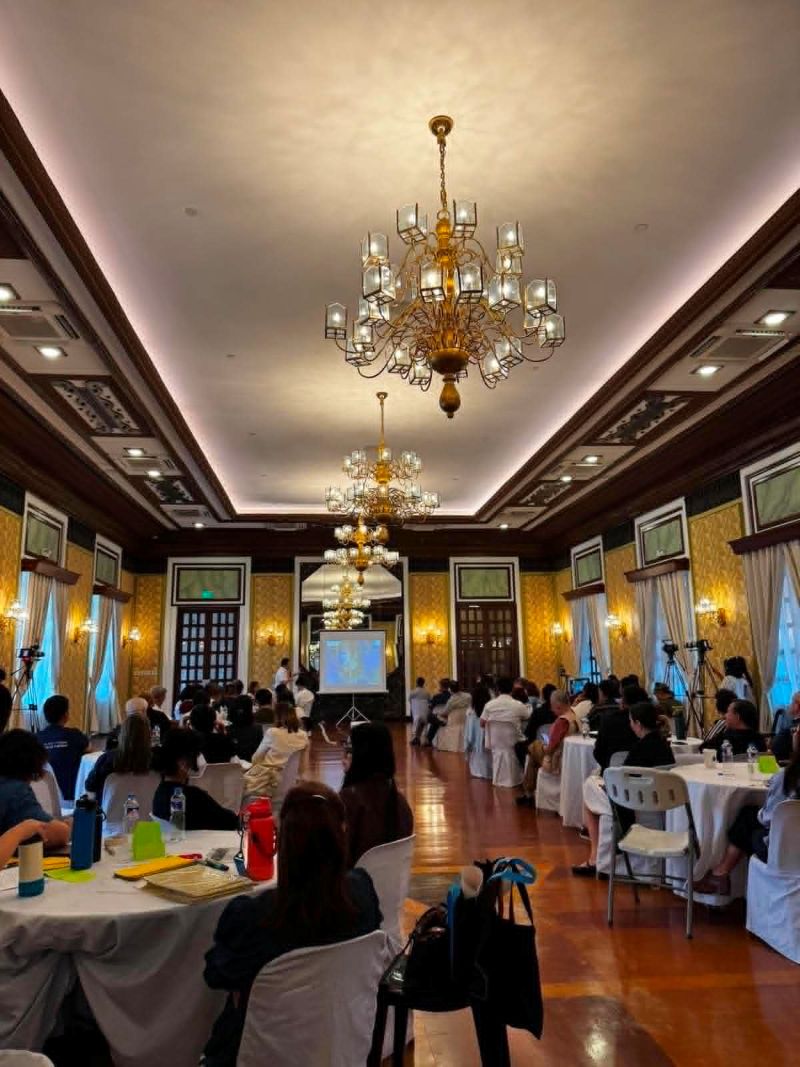
Concluding remarks by the president of the Heritage Conservation Society, architecyt Gio Abcede, couldn’t emphasize more that “Philippine history cannot be separated from the Pasig River,” further pushing forward the initiative to declare the river as a National Cultural Treasure, urging a “broader national effort to recognize and protect the Pasig River’s enduring role in shaping Filipino identity and collective memory.”
Landscape and memory play a definitive role where the river is artistically romanticized, serving as artists’ inspirations for their work. As early as 1857, José Honorato Lozano featured the river in his work, Balsas de cocos de la Laguna Navegando por el Rio Pasig, just one of many works of that time. More recently, in 1926, Nicanor Abelardo’s kundiman classic, Mutya ng Pasig, about a river goddess bemoaning how the river had been neglected, and made into a movie and a painting by National Artist for Painting Fernando Amorsolo.
In the more recent past, former First Lady Ming Ramos initiated Pasig River’s clean-up campaign picked up later by the late Gina Lopez, aptly named “Piso Para sa Pasig.” A song, Anak ng Pasig, sung by Geneva Cruz, pitifully described the river’s present condition with the descriptive lyrics “basura dito, basura doon.” It was a pitifully far cry from Abelardo’s musical masterpiece that ends with the verse sung by the tormented goddess, “Kung nais niyo akong mabuhay, pagibig niyo inyong ibigay (If you want me to live, give your love to me).”


