
In 1985, my husband Mario and I were privileged to watch the Royal New Zealand Ballet touring Beijing as part of the historic cultural exchange between China and New Zealand. Living in Beijing as exiles since 1971, we were happy to meet and become friends with the diplomat Nona Zaldivar from the Philippine Embassy, who was the Philippine Cultural Attaché. Through her, we got tickets to the ballet performance of the troupe with the Filipina Sofia Radaic as principal ballerina.
My artistic photographer of a husband was able to take photos of the lovely Sofia and their riveting performance showcasing the Māori-inspired work, Moko, with international repertory like Faust Divertissement and Le Beau Danube.
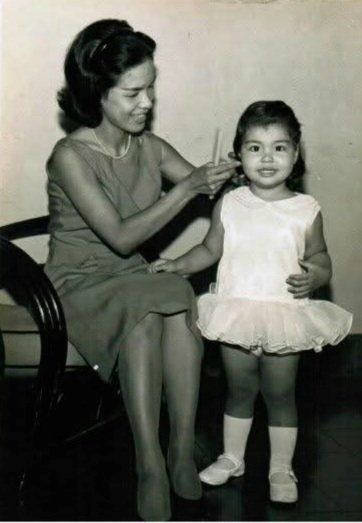
Tita Radaic with little Sofia
We met up with Felicitas “Tita” Layag Radaic, Sofia’s mother, when my family came back from China after the 1986 Edsa People Power Revolution. We brought her Mario’s photos of Sofia, nicknamed Vinki, from her performance in Beijing.
Our first meeting with the gentle, sweet, and engaging lady became the start of a lifelong friendship forged in the crucible of art and culture.

Mother and daughter in 2009
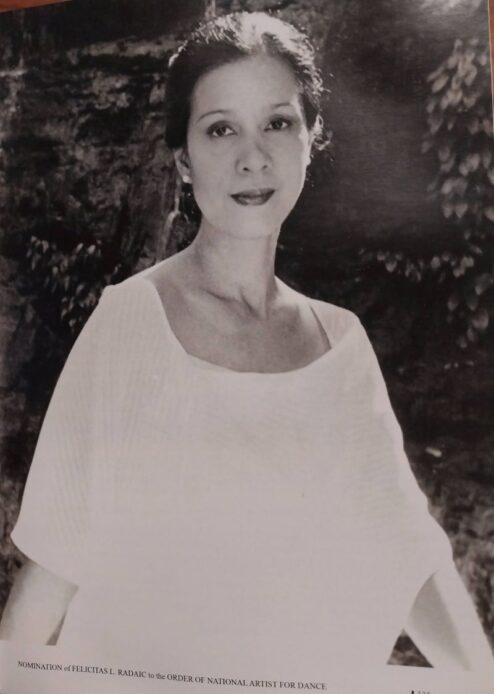
Ms. Radaic, who we affectionately call Tita, was well known as a passionate ballet dancer, teacher, choreographer, director, and indefatigable trailblazer of Philippine ballet for over half a century.
Born on July 10, 1936, Tita graduated with a Bachelor of Arts degree from the University of the Philippines while pursuing her early dancing career with the Anita Kane Ballet Company. “According to dance chronicler Steve Villaruz,” wrote the much-lamented culture writer Pablo Tariman, “Kane (who came from New Zealand but was raised in the Philippines) was the pupil of the Russian expatriate Katrina Makarova, who was one of the few who helped pave the way for classical ballet in the Philippines, along with Lubov Adameit, who inspired National Artist for Dance Leonor Orosa Goquingco, Kay Williams, and Mara Selheim.”
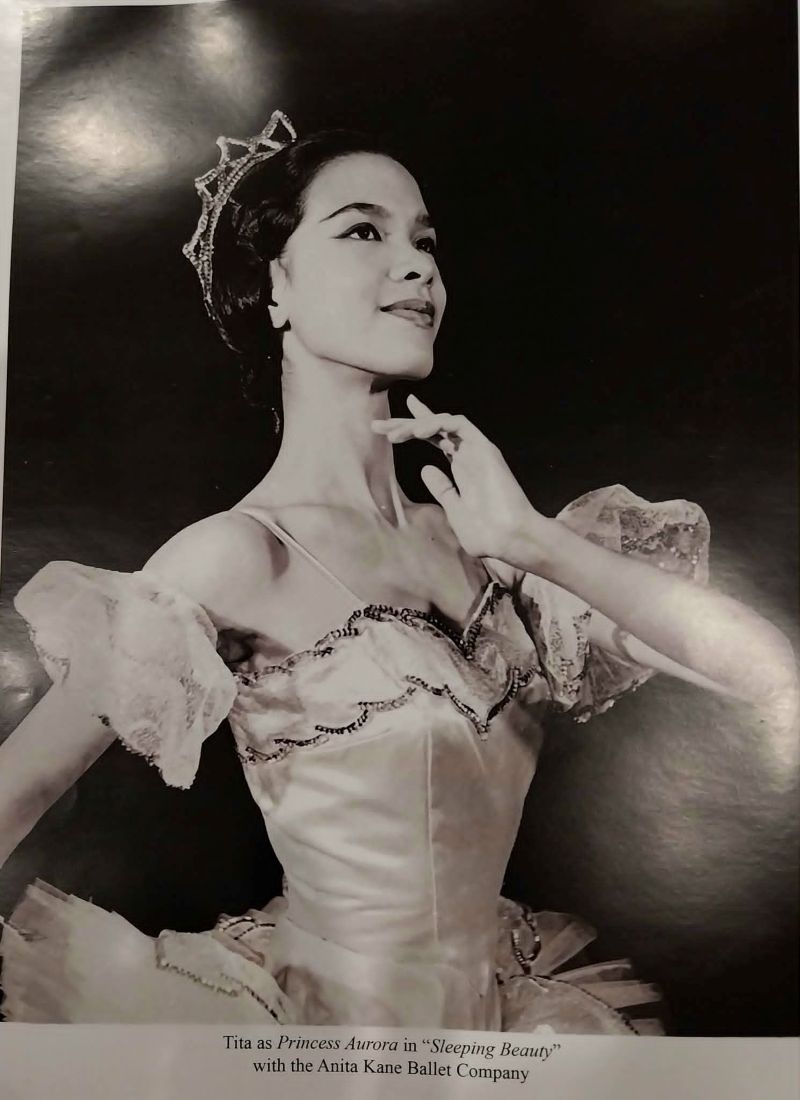
As Princess Aurora in ‘Sleeping Beauty’
Anita Kane was Tita Radaic’s first teacher in the ’50s, when Tita danced her first Giselle at Far Eastern University (FEU) Auditorium in Morayta, then considered the cultural center of the Philippines.
Tita’s art developed and flourished not just in the ballet classes she conducted, but also in back-breaking engagements in the provinces where the venues were not exactly ideal for dance. She became a principal ballerina, becoming the youngest Filipina ever to dance Giselle; she was also Princess Aurora in Sleeping Beauty, among others. She was considered one of the most “lyrical ballerinas the country produced.”
When Russian prima ballerina Dame Alexandra Danilova visited Manila, she chose Tita to dance in her Manila production. Tita thought that production was the end of her dancing career, as she was on her way to Spain to pursue her Master of Arts studies at the University of Madrid. But Danilova referred her to Valentine Kaschuba from the Marinsky Theatre in St. Petersburg, who was then residing in Madrid. At age 21, she did not only earn Sobresaliente for her thesis on Jose Rizal written in Spanish, she also had private dance training with Kaschuba.
She later underwent training in Paris and in London, where she was fortunate to watch a performance of Dame Margot Fonteyn, who had visited Manila a number of times. From Fonteyn, who would later be conferred the title of prima ballerina assoluta by Queen Elizabeth II, Tita received a recommendation to study the Royal Academy of Dancing (RAD) syllabus. Thus, she became the first Filipina to become a member of the prestigious RAD in the United Kingdom.
Coming home, Tita became the first RAD teacher in the Philippines. She co-founded Dance Theater Philippines (DPT) in 1986 with Julie Borromeo and Eddie Elejar, and headed the school for over 20 years, innovating on a classical ballet syllabus that fit Filipinos’ physique.
Later in her teaching life, she envisioned a National Ballet Syllabus that could serve generations of Filipino dancers. She assembled a team of specialists from different ballet traditions with her dance co-mentor Noordin Jumalon, and encouraged them to challenge her own ideas in pursuit of something greater and better suited to the Asian body. Over 300 ballet teachers have taken the National Ballet Syllabus course.
Tita was also instrumental in breaking a 10-year religious ban on ballet in Catholic schools. With Sr. Nieves Valdes, ICM, then director of St. Theresa’s College, she put up a ballet school at St. Theresa’s College after coming back from her studies abroad. Tita’s devotion to her students, whom she painstakingly nurtured and developed into world-class performers, is legendary. Among them were Lisa Macuja-Elizalde, Irene and Hazel Sabas, her daughter Sofia Radaic, Mary Anne Santamaria, Eloisa Enerio, Anna Villadolid, and Mylene Saldaña.
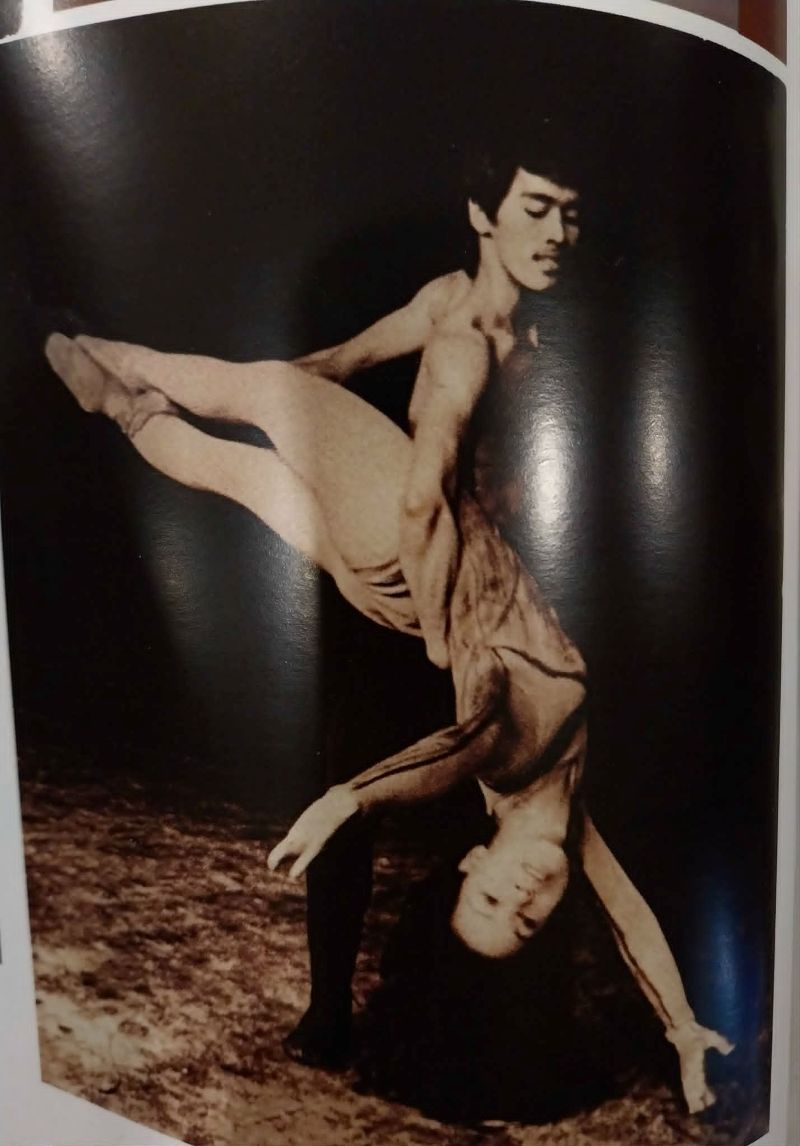
Siblings Tita Layag Radaic and Luis Layag
Tita Radaic also produced and choreographed the productions Mir-I-Nisa (1969), May Day Eve (1971), The Prey (1973), Japonsina (1975), Nan-Pangkat (1975), La Inamorata (1983), Oy Akin Yan! (1968), Tanan (1968), and Tubig! (1979)—which all took inspiration from our Filipino culture.
But she was much more than the manifold roles of a dancer, choreographer, director, producer, and teacher. She had a string of advocacies in the arts and environment. I still remember her valiant ecological efforts, alongside other Antipolo concerned citizens like Pinto Museum’s Dr. Joven Cuanang, to rehabilitate Hinulugang Taktak. She invited our family to the fund-raising concert and dance they organized and held in that protected landscape in Rizal province. Their efforts paid off. Hinulugang Taktak was rehabilitated, and the waterfall area designated as a national park by virtue of Republic Act No. 6964 in 1990.
In 2015, Tita Radaic and daughter Sofia with Dr. Joven Cuanang (From Sofia’s FB)
On that Hinulugang Taktak project with Tita, Dr. Cuanang says, “I love Tita dearly, my soulmate who led the artistic committee passionately.” He reminisces: “That should be post-Edsa, 1989. We had Concerts by the Waterfall with Lisa Macuja doing Giselle in the blue-lit waterfall—very memorable! We also had the Philippine Philharmonic Orchestra, the Ramon Obusan Folkloric Group, the UP Concert Chorus, Dance Theater Philippines way down the waterfalls, lit by hundreds of candles, curated by our dear friend, architect Vic Ampil.”

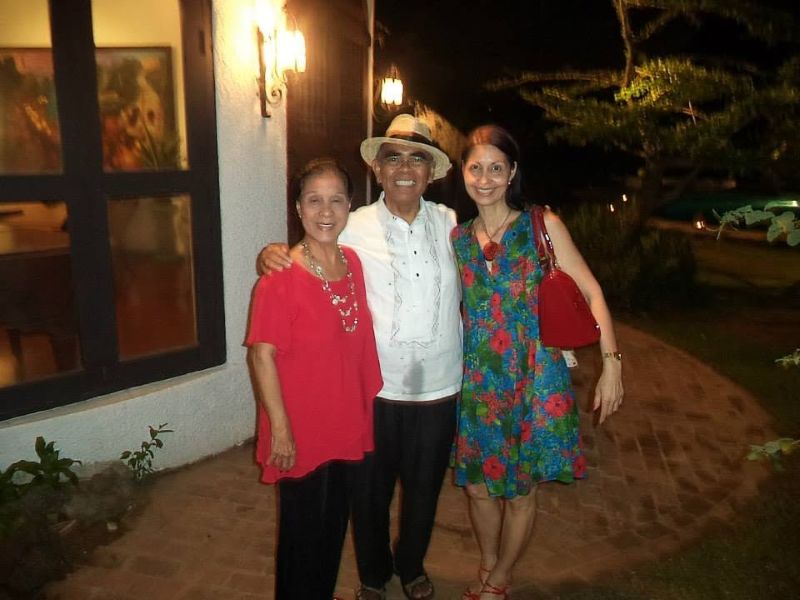
The author (second from left), her husband Mario Miclat, Tita Radaic and daughter Sofia, with the Miclats’ grandson Raja
The good doctor continues his reminiscences: “The first exhibit of Salingpusa was in the Hinulugang Taktak Aristocrat with Tita Maring Llamado. We also brought the CCP crew to light up the waterfalls. The glitterati, including the Zobels, were regulars!”
He mentioned the publication Veritas, which featured them for their ecological movement, one of the first such movements. “We studied the aquifer and researched on the causes of the waterfall pollution.
“Then politicians wanted to make sawsaw. They uprooted the plants planted by the garden clubs and replaced them with Bulacan garden plants which, of course, couldn’t thrive under the giant trees. The moss growth which fascinated the plant enthusiasts was cemented. Tita came rushing to me! Really upset! We were all upset—we, members of the Antipolo Foundation for Arts, Culture and Ecology (AFACE). Sorry, nag-catharsis tuloy ako, sa galit namin! So, I transferred my efforts to the Pinto Art Museum and Arboretum. Ayan—wala nang mga politico.”

From left, Shayne Lumbera and National Artist Bienvenido Lumbera, Tita Radaic, the author, Linda Pamintuan, and the author’s sisters at the 2014 Maningning Art Award and launch of ‘Fairground–A Literary Feast’
On a personal note, Tita was a staunch supporter and patron of the Maningning Miclat Art Foundation, Inc., which we founded in 2001 in honor of my dearly departed daughter Maningning, a visual artist, trilingual poet and author, translator, and teacher. We have been holding the Maningning Poetry Award during odd-numbered years since 2003, and the Maningning Art Award during even-numbered years since 2004. For many years, we were privileged and honored by Tita’s inspiring presence at our awarding ceremonies and activities, a true hallmark of a National Artist, even if she was not one.
When Tita passed away June 2, 2026, I found an entry in my diary I’ve been keeping since Maningning passed in 2000 dated August 2, 2007. I wrote: “Had a very long dinner with Tita Radaic in Makati. She bought a ticket for the Maningning Miclat Art Foundation’s benefit show, ‘Maningning: An Evening of Poetry and Music,’ and we split the tab of P800+ for our dinner of lengua, laing, tibok-tibok, green mango shake, and peppermint tea.”
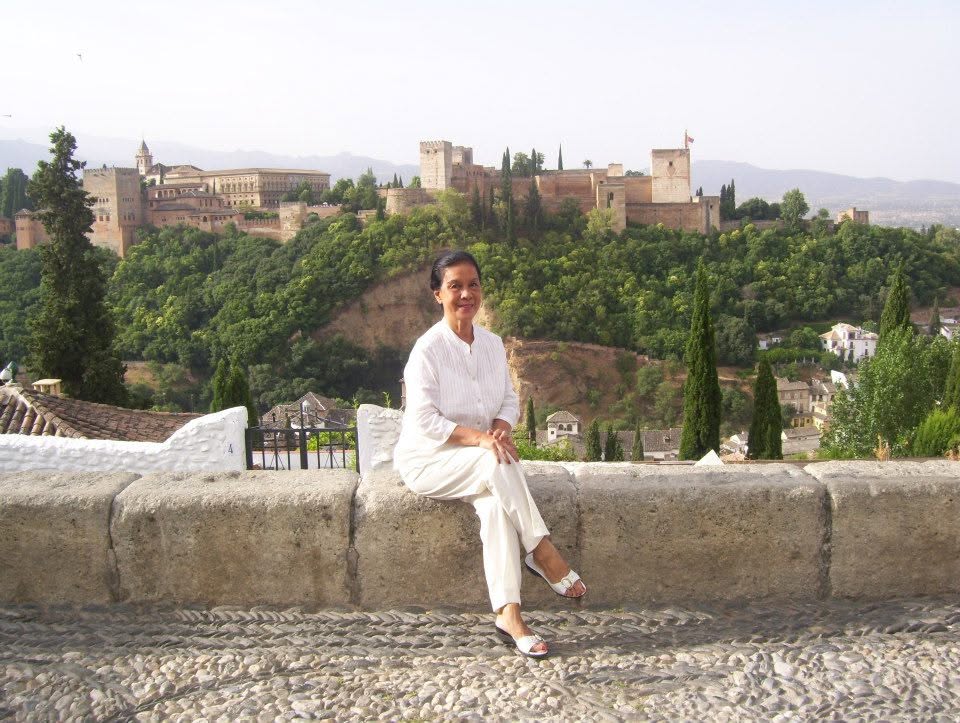
Tita Radaic in Spain, June 2012
My diary entry continues, “Surprisingly, she opened up about her late husband, Ante Radaic…. She was exuberant in talking about her meeting Ante at the Universidad de Madrid where she was an MA student of the Spanish language and he was a Ph.D student of philosophy…. Ante couldn’t believe Tita would want to marry him, even as he showed his foot, which was amputated during the war. Ante, with four other students, rowed a boat from Croatia (formerly Yugoslavia) and landed in Spain.”
When Ante died, Tita said Nick Joaquin repeatedly asked her to lend him Ante’s diaries. I didn’t ask Tita if she finally acceded to Joaquin’s request.
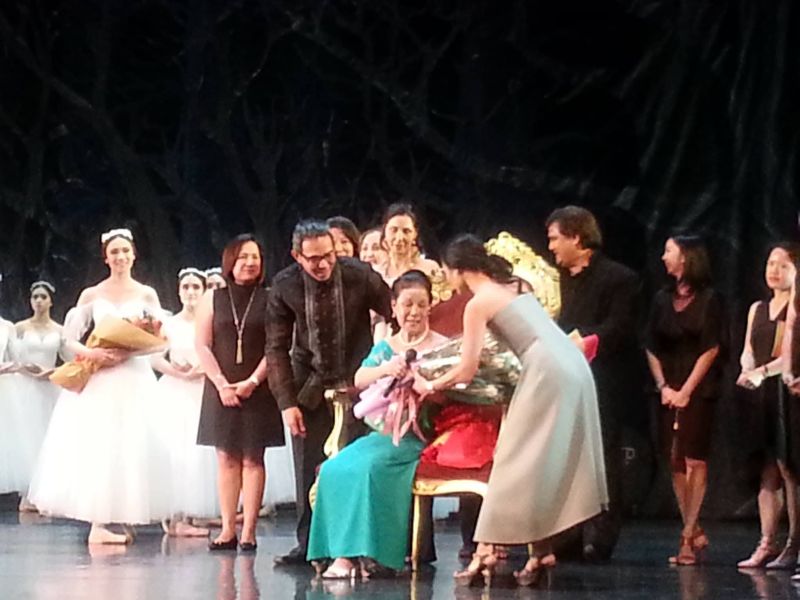
CCP tribute to Tita on June 25, 2016 for her 80th birthday on July 10
Felicitas L. Radaic was given the prestigious Gawad CCP para sa Sining (Dance) on Sept. 10, 2008. On her 80th birthday in 2016, CCP honored her with a full-length ballet Giselle by Ballet Philippines, Ballet Manila, and Dance Theater Philippines at the jampacked Main Theater of CCP. And in 2019, her daughter Sofia received the Gawad Buhay Award for her mother from National Artist Alice Reyes and Lisa Macuja-Elizalde. By this time, Tita was already bedridden, having gone through a heart bypass operation and angioplasty and survived three strokes, plus a cornea transplant, a plethora of illnesses that a mere mortal could not have survived. This quiet, soft-spoken, beautiful soul’s tenacity was legendary.
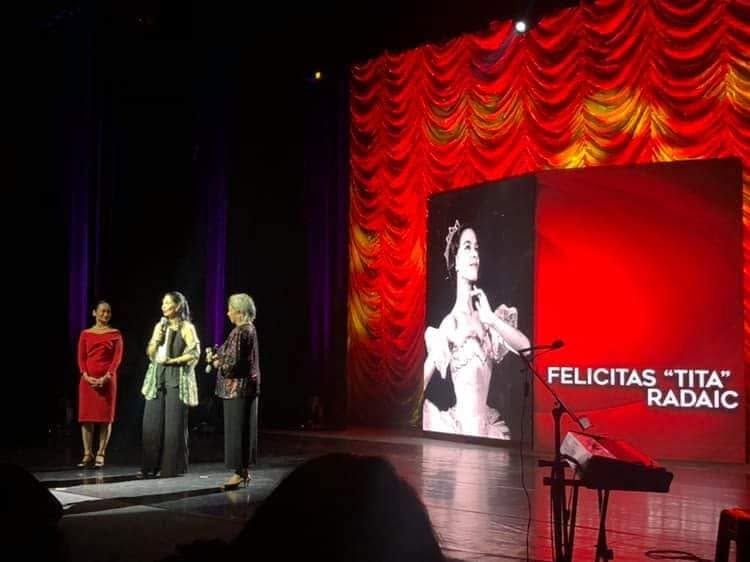
Sofia receiving her mother’s recognition as Philstage Gawad Buhay Awardee in 2019 from National Artist Alice Reyes and Liza Macuja-Elizalde
I posted a note on Facebook on April 12, 2017, requesting prayers for a successful cornea transplant, as one of her eyes was already totally blind. Eighteen days after, Mario and I visited her at the ICU of St Luke’s Global after a bad stroke, and asked for more prayers.

Tita with Sofia and husband in Dresden, 2009
For the last nine years until Tita’s passing on June 2 (she would have been 90 on July 10), Sofia took very good care of her mother, flying all the way from Berlin, where she and her German husband are based, and staying longer with her mom, year in and year out. In one of her messages to me in 2024, she wrote: “I continue to do my best to care for my mother…and balance my life as well in Germany. Though it comes with its challenges, with God’s ever-guiding hand we have been managing alright.”
Last June 5, Sofia messaged, “Today her bodily remains shall be cremated at 5 pm at the Haven of Angels Crematorium. It will just be myself (and our parish priest, Msgr. Henry). Very private, as my mother would have wished.”
In one of the souvenir programs of DTP’s performances, Tita wrote: “Ballet is good training ground for children who will one day be adults—they learn to get up and go, even after a fall, to finish the dance even when they are tired, to go up on their toes even when these are blistered and hurting, to give joy and share in it through something they all love, something beautiful: the Dance.”
The private yet driven, soft-spoken but tenacious Tita Radaic is now a legend dancing with the angels in the firmament where megastars like her are showered with laurels by God. With a grateful smile, Sofia said, “My dearest Mama is now dancing freely amongst the Angels. Our Creator has finally called her Home to be with Him.”


