
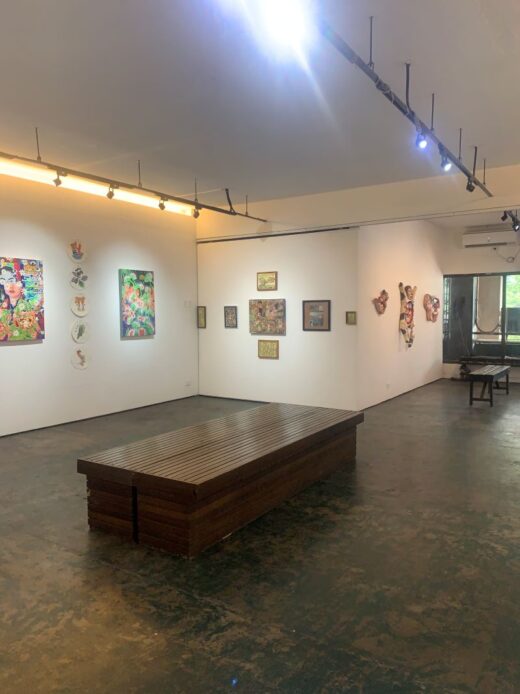
Social media has flattened the cultural playing field. Today, independent artist-run spaces can compete with commercial galleries in promoting their out-of-the-box creations, not only online, but also in the cultural arena.
Manila’s artist-run spaces, viewed as the alternative art scene, have had a decades-long tradition of radical defiance and a commitment to keeping art accessible and decentralized,
Along with financial grit, these spaces bring fresh perspectives and innovative approaches to the arts. The set-up fosters an environment that nurtures talent and encourages experimentation, offering new pathways for growth that promote diversity and inclusion, facilitate collaboration, drive cross-pollination of ideas, and somehow create an impact on how creative businesses operate.
Many of the artist-run spaces act as cultural incubators within affordable or subsidized studio spaces that allow artists to focus on their work without the pressures of commercialism. This paves the way for groundbreaking projects and new forms of artistic expression, significantly contributing to the collective development of the contemporary arts community, inheriting the spirit of experimentation and DIY resourcefulness.
Looking back, before these underground artistic endeavors were undertaken, Roberto Chabet (1937–2013), widely known as the “father of Philippine conceptual art,” sought absolute creative freedom in 1974 by launching Shop 6 as a critical antidote to state-sanctioned aesthetics. It was during the martial law years, under Ferdinand Marcos, when state-run cultural venues were tapped as propaganda tools for the regime. His cohorts included Joe Bautista, Joy Dayrit, Rodolfo Gan, Yolanda Laudico, Fernando Modesto, and Boy Perez.
Shop 6 operated under a strict rule of total experimentation. They popularized the Tagalog concept of pakulo—a trick, gimmick, or spectacle—to strip art of its bourgeois status. They flooded galleries with readymades, industrial scraps, and consumer debris.
It was a chaotic, radical statement: Artists did not need corporate gatekeepers, elite patrons, or state museums to build a community. Though Shop 6 closed after roughly a year, Chabet spent the next three decades injecting its process-over-form DNA into his students at the University of the Philippines.
Collectively built on the back of Shop 6, a series of trailblazing spaces followed suit. They opened a succession of short-lived but highly influential spaces designed to bypass commercial galleries that usually favored only established, traditional painters. These were Pinaglabanan Galleries (1984–1989), The Junk Shop (1996–1999), Third Space (1998–2000), Surrounded by Water (1998–2002), Big Sky Mind (1999–2005), Future Prospects (2005–2007), and the longest-running artist-run initiative in the country, the Green Papaya Project, now celebrating its 25th anniversary.
Today, the spirit of Shop 6 lives on in a new vanguard of artist-led spaces that are pushing the boundaries of geographic and institutional limitations.
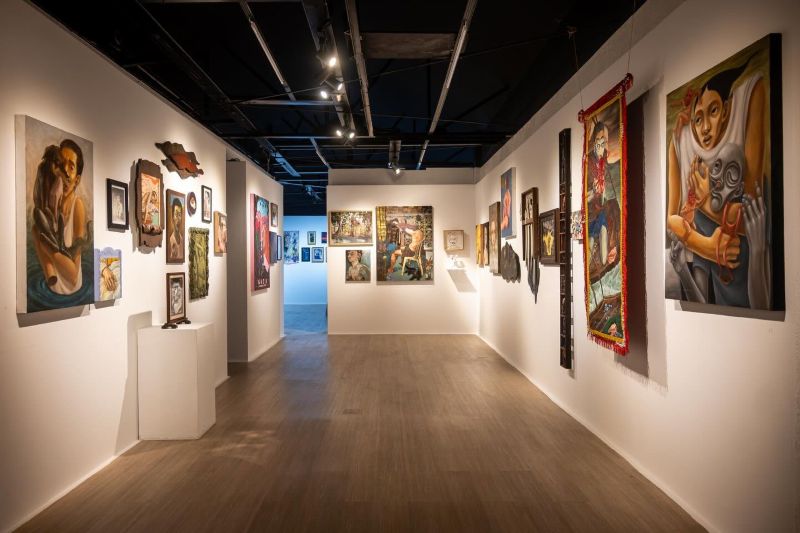
Gravity Art Space
Gravity Art Space (GAS) excels at bridging underground subcultures with highly focused, experimental contemporary programming. GAS actively rejects standard commercial gallery pressures by rejecting industry trends. Instead of the standard monthly gallery rotation, GAS runs shows for two months to encourage “slow art” consumption and deeper curatorial dialogue. Their traditional year-ender exhibition features anonymous works from both upcoming and veteran artists. Collectors and viewers are forced to judge and view art purely on immediate visual merit, completely stripping off the usual institutional signatures.
Today, GAS has pushed beyond local borders, opening Gravity Art Space Bangkok and planning the Asia-centric Intersections Art Summit for 2027 to drive regional cross-cultural dialogue.
Kalawakan Spacetime functions as a multidisciplinary incubator. Here, apparel design, music production, and street art organically cross-pollinate. Crucially, Kalawakan Spacetime uses its platform to fight the centralized power of the Metro Manila art market. Every month, the directors purposefully curate and highlight artists from the Visayas and Mindanao regions, ensuring “Filipino art” truly encompasses the entire archipelago. They build deep, lasting relationships across economic borders by offering personal mentorship and lending their own library of art books to regional creators.
Because artist-run spaces rarely rely on high-volume commercial art sales, their survival depends on creative financial engineering such as out-of-pocket pooling where founders routinely split monthly overhead costs like rent and electricity, commercial design gigs, or art sales made in external galleries.
These spaces frequently adapt underutilized properties. They set up shop in cheap residential houses and old industrial warehouses, or offset costs through micro-leasing. For example, Kalawakan Spacetime leases out its mezzanine floor specifically to keep its independent hub alive without being tied down by institutional restrictions.
These spaces frequently adapt underutilized properties. They set up shop in cheap residential houses and old industrial warehouses, or offset costs through micro-leasing
Within this network of alternative spaces, there is a tight-knit group of dedicated patrons who value raw, unfiltered experimentation over safe, corporate investment art.
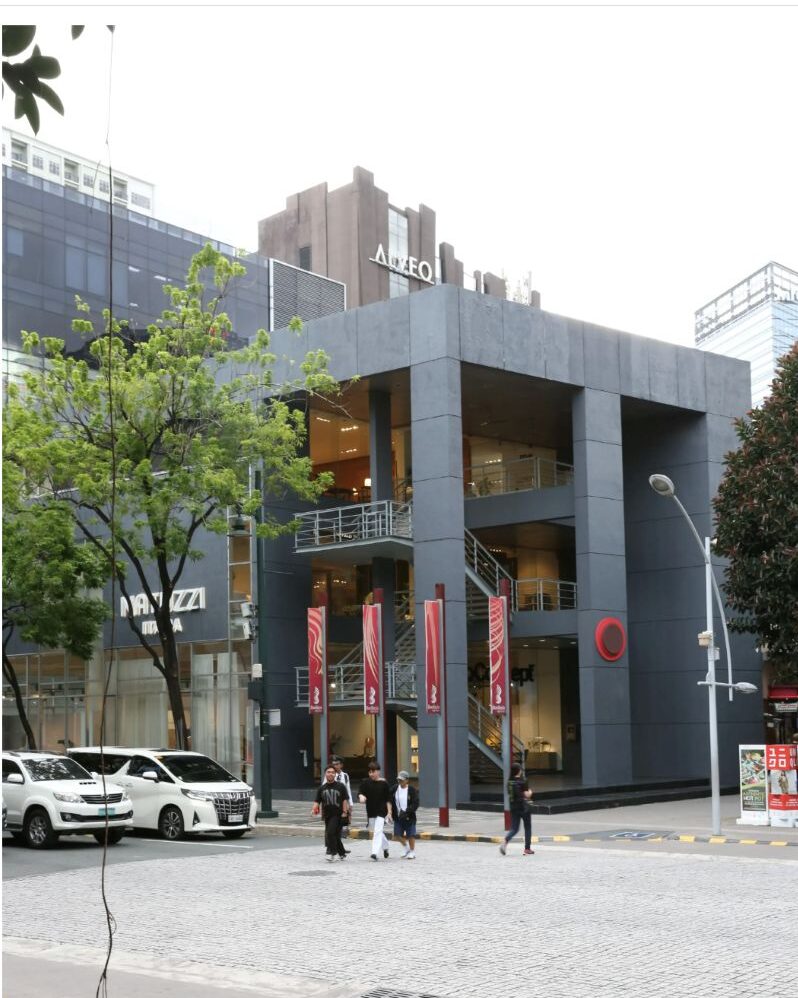
MO_Space Gallery
Other artist-run spaces today are: MO_Space in Bonifacio Global City, Headroom in Santa Ana, Modeka Art in Makati, Artery Art Space in Quezon City, Grey Space in San Juan City, Agos Studio, Eskinita Art Farm, Linangan Art Residency, Orange Project, Pasilyo Press, Project Space Pilipinas, Tungtung Alon Art Foundation, and others.
The global “artist-run space” movement as it is recognized today began in the 1950s and exploded in the late 1960s to 1970s, originating primarily in New York City.
While independent exhibitions have existed for centuries (such as Gustave Courbet opening his own “Pavilion of Realism” in Paris in 1855), the formalized phenomenon of a physical, collective, non-profit space run by and for artists emerged as a direct reaction to the commercial art market and traditional museum gatekeeping.
Unlike historical Western collectives that entirely boycotted commercial spaces, Filipino artist-run spaces maintain a nuanced, symbiotic relationship with major art entities. Traditional commercial galleries generally view artist-run spaces as essential R&D (research and development) hubs rather than direct competitors. Within this artist network of alternative spaces, we also find a tight-knit group of dedicated patrons who value raw, unfiltered experimentation over safe, corporate investment art.
These spaces act as testing grounds where emerging artists can experiment, fail, and build a local following without commercial pressure. Once an artist gains traction in these grassroots circles, major commercial galleries often step in to offer formal representation. The relationship is symbiotic, moving between mutual collaboration, talent scouting, and a distinct division of labor within the art ecosystem.
Usually, these spaces close down quickly due to financial constraints. This is where the Manila Artist-Run Spaces Archive comes in. Made up of local art historians, the dedicated group actively works to preserve the physical ephemera, posters, and documentations of past collectives and less-marketable mediums such as live sound design, performance art, and video installations, so their history is not lost.
Keep in mind, when artists control the space, they control the future of the culture.


