
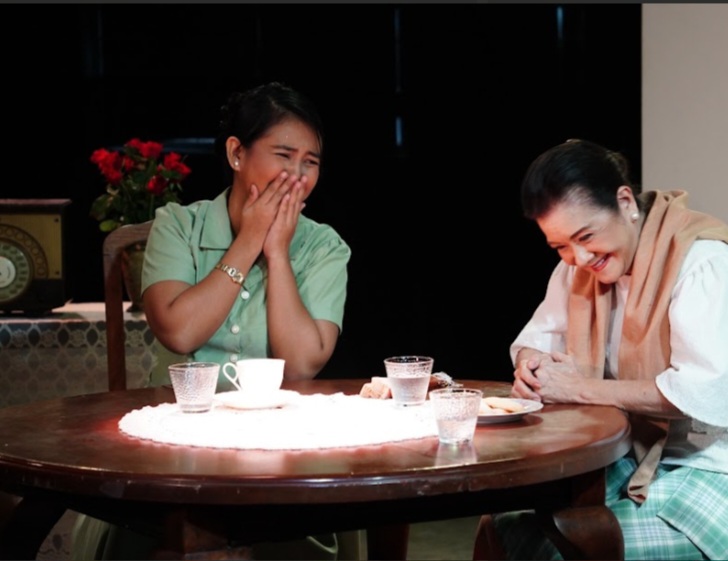
‘Every Male or Female,’ presented by Corner Room Studio in a double-bill dubbed ‘Pasiya,’ on final weekend June 20, 21 at the Headroom in Sta. Ana, Manila.
Nearly every person who played a significant role in the Filipino uprising against the Spanish regime has at one time or another been the subject of plays or musicals.
One playwright chose to move on to the American colonial period to tackle a social issue that seems to have been forgotten. Theater director/author Eldrin Veloso’s latest play is Every Male or Female, a one-act drama about three ladies who lobbied for women’s suffrage in the Philippines.
The play, premiered last weekend, is set in the mid-1930s when the right to vote had already been granted women. Lead protagonists are three female activists—spinster Pacita (played by Carla Martinez), Hilda (Rain de Jesus), and Esperanza (Althea Aruta). Topic for discussion during a meeting is the upcoming plebiscite on the 1935 Constitution. Ironically, this new constitution would temporarily cancel women’s right to vote. Another plebiscite would have to be held for its reinstatement.
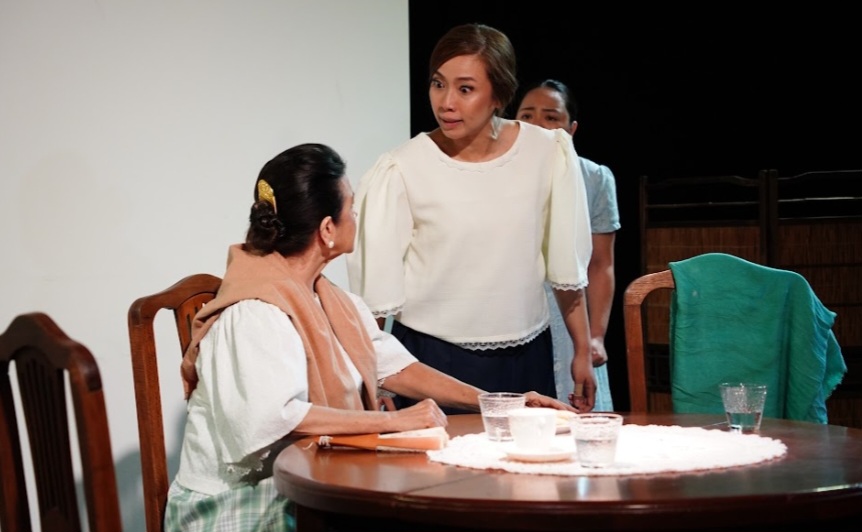
Let the debates begin: Carla Martinez and Rain de Jesus
The premise may sound boring but rest assured, playwright Eldrin Veloso has added the perfect ingredients to make the medicine go down. The banter is breezy and spiced with just the perfect amount of humor to offset some truly serious debates. It’s as if Veloso had fused Jane Austen (Sense and Sensibility) with Henry James (The Bostonians), with the older Pacita as the progressive feminist.
In contrast to Pacita’s activism, Hilda still believes that marrying well remains the top priority for women. She intends to have her daughter Felisa (Vea Verona) engaged to a well-to-do suitor. Dabbling in feminism would only taint the daughter’s image.
Hence, the arguments begin with Pacita ironically championing women’s rights, while in the other corner, Hilda espousing the traditional role of women and the Maria Clara culture.
Veloso certainly deserves credit for putting the issue back on the spotlight and for making it compelling and entertaining. He chose a group of actresses who make such effective mediums for Veloso’s message. I think what he wants to say is as a society, we’ve long been hindered by old norms, which holds true to this day.
Seasoned actress Carla Martinez dominates the play. She’s given the best lines and she delivers them with relish. The performance is effortless and she makes Eldrin Veloso’s words her own.
Ms. Carla’s co-stars aren’t exactly overshadowed, it’s just that they do what’s right for their roles by not being in competition with the star of the play. They stay in character and say their lines in a manner that’s expressive and clear and without shrieking like a banshee.
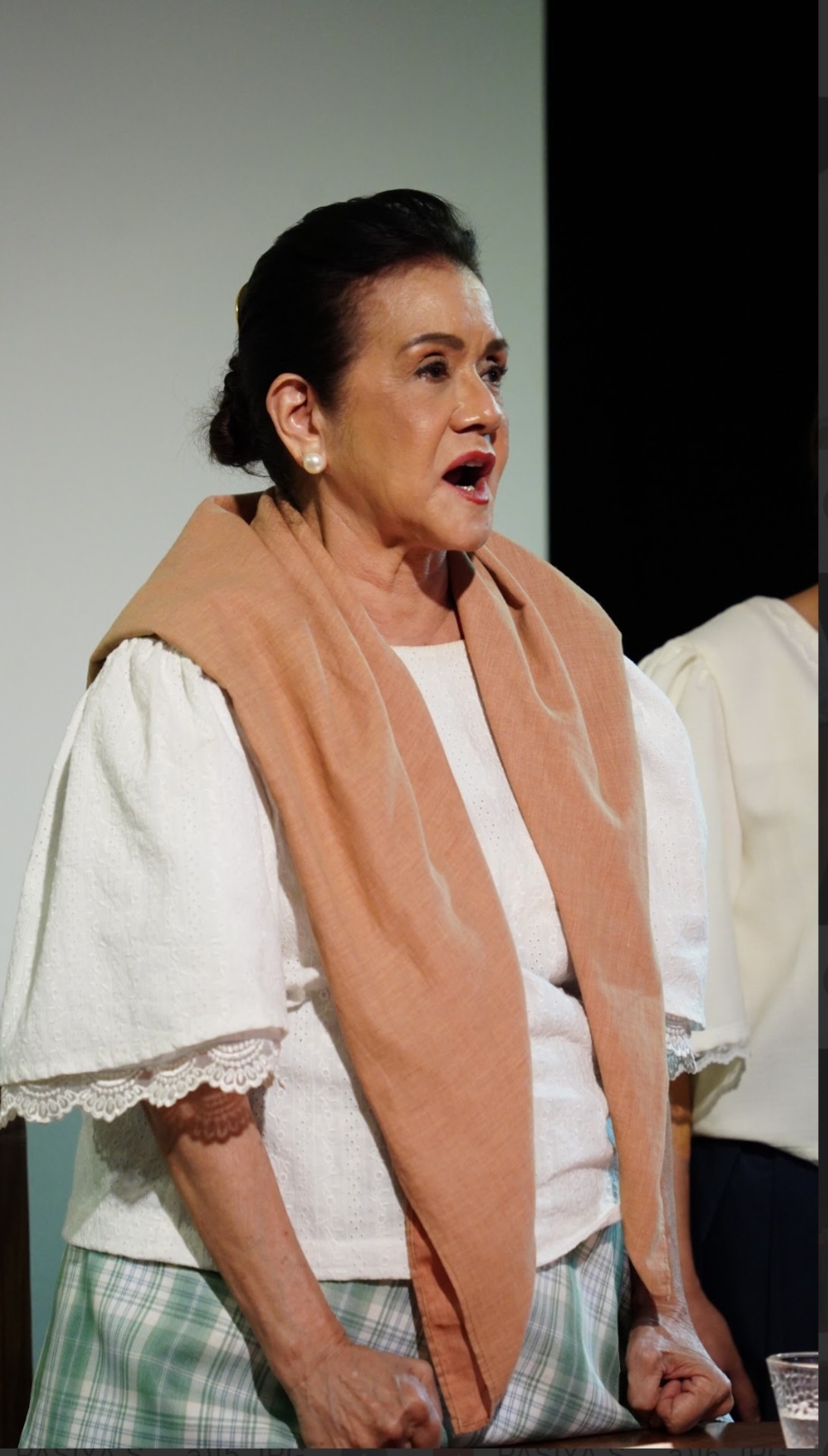
Carla Martinez is spellbinding as the older activist.
To explain my point, I usually end up exhausted listening to the thin and high-pitched voices of some actresses starring in the current Virgin Labfest. A Tagalog word best describes such hysterics: palengkera.
I also love the fact that Veloso didn’t try to tell the story in an experimental way. The staging is straightforward. The older ladies are in traditional costumes which make them seem like a Philippine version of the Mad Women of Chaillot, as opposed to the modern garb of younger women.
The play, however, seems impervious to what was popular in the country during the 1930s. Like what would have been their reaction to the modern American woman who smoked cigarettes and occasionally wore pants?
Apparently, Veloso’s four ladies had built a wall to protect themselves from Hollywood influences and fashion. Did they watch movies or even listen to the radio? Did they swoon over Clark Gable or read about Greta Garbo? Or were they still so old-fashioned and were staunch believers in superstitions which in that era, came by the truckload?
My maternal lola was said to have adopted the American style of dress. She was 29 in 1935, with three little children. She had no qualms about wearing a bathing suit and posed in it for a picture. She gave directions to taxi drivers in Spanish and played mahjong all day. She smoked her Chesterfields up until she had a fatal heart attack at 63. Of course, the eyebrows of her two conservative sisters-in-law would go up whenever my lola was mentioned. They lived to their 90s, by the way.
The ladies in Every Male or Female need just a little more explanation. It would help the audience know where the three were coming from. Of course, one could only do so much for a play that’s supposed to end in an hour. That hour quickly goes by, thanks to Veloso’s riveting lines so expertly delivered by the cast. Thus, allotting an extra 10 minutes to more character development wouldn’t have hurt at all.
Every Male or Female is being presented by Corner Room Studio as a double-bill dubbed Pasiya. The second play is a restaging of Eldrin Veloso’s People vs Dela Cruz. The two plays go on their final weekend this June 20th and 21st at the Headroom in Sta. Ana, Manila.


