
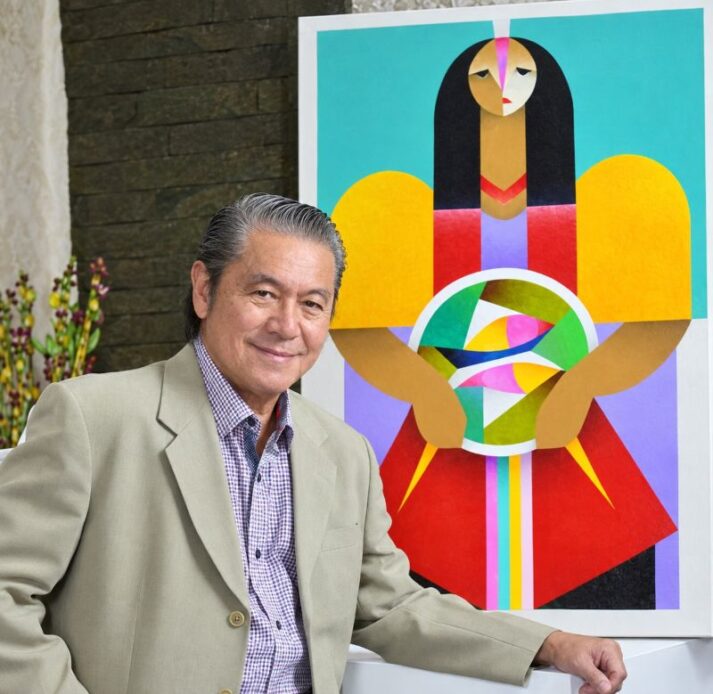
Cid Reyes was my creative director when I started in advertising.
I worked with him on P&G, Mandarin Oriental, J&J, and Magnolia Juices, but somewhere between brainstorming sessions and deadlines, our conversations inevitably drifted toward painting, film, and music.
We discovered a shared fascination with Impressionism and its profound influence on contemporary art. We could spend long hours talking about everything, from Pop Art to classical music, from sopranos Callas and Caballé to composers Bach and Bacharach (which became a print ad headline for the Mandarin’s Captain’s Bar), and his encounters with Andy Warhol and Vanessa Redgrave.
I knew he was working on books about important Filipino artists, but I rarely asked much about them then. I was amazed at how he managed to balance the demands of advertising with what we casually regarded as his “sideline.” I later learned that when Ace Saatchi’s president asked Cid to return to the agency, one of his conditions was that he be allowed to continue pursuing his art projects. For Cid, art was another life running alongside advertising.
Cid studied painting at the Accademia di Belle Arti in Rome and art history in London. A painter himself, Cid mounted his first solo exhibition in 1969 and many more thereafter. In 1978, almost fortuitously, he received the Art Association of the Philippines’ “Best in Art Criticism” award, a recognition that opened yet another path.
Over the decades, Cid became one of the Philippines’ most prolific writers and chroniclers of art. His 1989 book, Conversations on Philippine Art, grew out of interviews with artists who shaped Philippine modern art. He would go on to write hundreds of reviews and more than 40 books, including major volumes on National Artists Arturo Luz, BenCab, J. Elizalde Navarro, and Napoleon Abueva.
But I think it was the conversations that truly defined him.
Cid sought out the artists themselves. He spoke with Victorio Edades, Vicente Manansala, H.R. Ocampo, José Joya, Arturo Luz, Ang Kiukok, Anita Magsaysay-Ho, Malang, Pacita Abad and many others. He asked questions, listened, and, most importantly, recorded their conversations.
Looking back, I’m convinced that the discipline of writing and editing, his exposure to art and publishing, and his habit of constantly interrogating ideas greatly benefited his advertising work. Cid moved effortlessly from discussing abstraction to selling soup and soap.
Years later, when management was looking for someone to head the creative department, and I was being considered for the position, Cid immediately supported the move.
“I wouldn’t accept it even if it were offered to me,” I remember him telling me. “You’d be perfect for the role, and it’s well deserved.”
There was no ego when Cid eventually had to report to me as his boss. Titles did not seem important to him. His ongoing engagement with the arts was far more valuable.
We saw less of each other after I left the agency to start my own. We would occasionally reconnect when he invited me to an exhibition, or when he wanted to show me work he thought I might like.
During the pandemic, he featured my home in a magazine he was publishing. As the economy began to reopen, his managing editor had returned to her own business, and running the publication was becoming increasingly taxing for him. Cid proposed that I take over the magazine.
I suggested something quite different. We met for lunch at Pablo Bistro at Picasso Hotel (art, apparently, could not escape us). I brought up the idea of an online platform—a YouTube channel dedicated to people moving Philippine contemporary art forward. I told him the medium would reach a much larger market, far wider than a magazine with a limited run, which would probably be accessible only in privileged homes and beauty parlors. Cid could continue doing what he did best: engage artists in conversation. I had a team that could handle video production, editing, uploading, and asset management.
Cid and I began meeting once a week to discuss content and logistics, and eventually, with the production team, to view the raw footage. In August 2024, immediately after Ghost Month, articulatePH was born. Ronald Ventura became Episode 1.
As we were getting used to a system that looked like a different form of publishing, Cid casually mentioned something that caught my attention.
He told me he had an Orocan container full of old cassette tapes. They contained interviews he had recorded decades with some of the great figures of Philippine art: Abueva, Joya, Malang, H.R. Ocampo, and others who would become National Artists and masters of their generation.
The tapes were already decades old. I feared they could have deteriorated, grown mold, and simply become useless, and with them would go the actual voices of artists talking about their work and their time. I proposed that we digitize the recordings and build episodes around the sound bites, interspersed with the artists’ works.
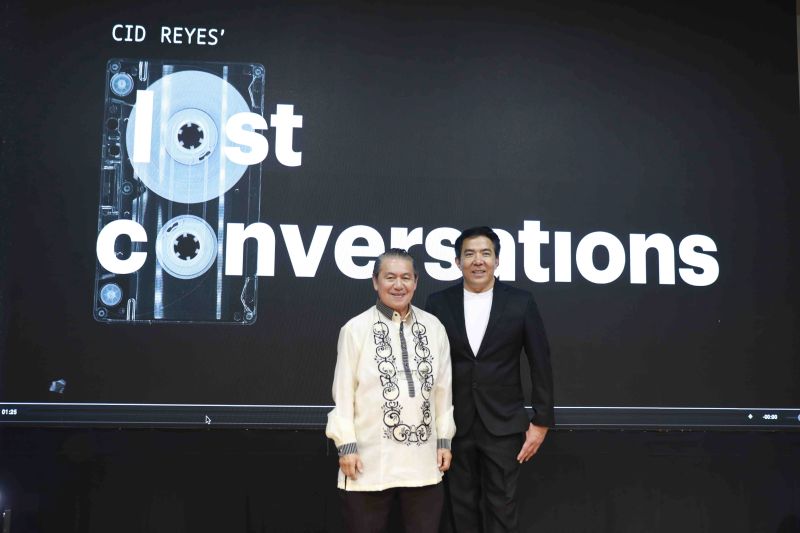
Reyes and the author at the launch of ‘Lost Conversations’
I called the series Lost Conversations.
Cid loved the idea and soon presented dozens of cassette tapes. As I looked through them, I was struck by what we might easily have lost: not just recordings, but valuable pieces of oral history about Philippine art.
The tapes have been preserved and digitized (thanks to the generosity of Sound Design Manila), and most have been turned over to the National Museum for safekeeping. Paintings can survive in museums, and books can sit safely in libraries. Voices are more fragile. Through Lost Conversations, Cid’s lifelong habit of asking questions unexpectedly became an archive.
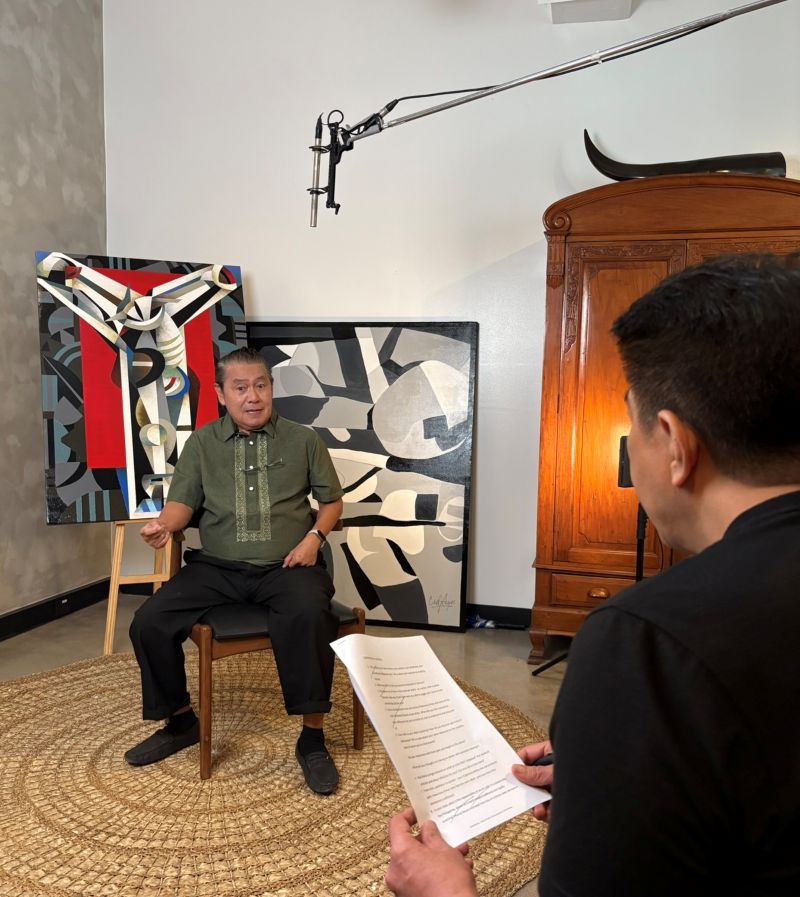
Reyes being interviewed for ‘Lost Conversations’
For our 100th episode, I suggested that we bring Cid back. The channel’s 50th episode, which featured him, simply could not accommodate the wealth of insights, wisdom, and juicy trivia he had to share, stories that we felt deserved to be recorded as part of our art history.
Cid celebrated his 80th birthday only a few weeks before the channel’s second anniversary. While one might expect him to slow down, he shows no signs of doing so.
And so we head toward the next hundred episodes with Cid and the enthusiastic young crew of articulatePH, believing that Philippine art is a deep, cavernous treasure trove. After 100 episodes, we have uncovered only a handful of its sparkling gems.
There’s still so much to uncover. Fortunately for us, Cid Reyes is still asking questions.


