
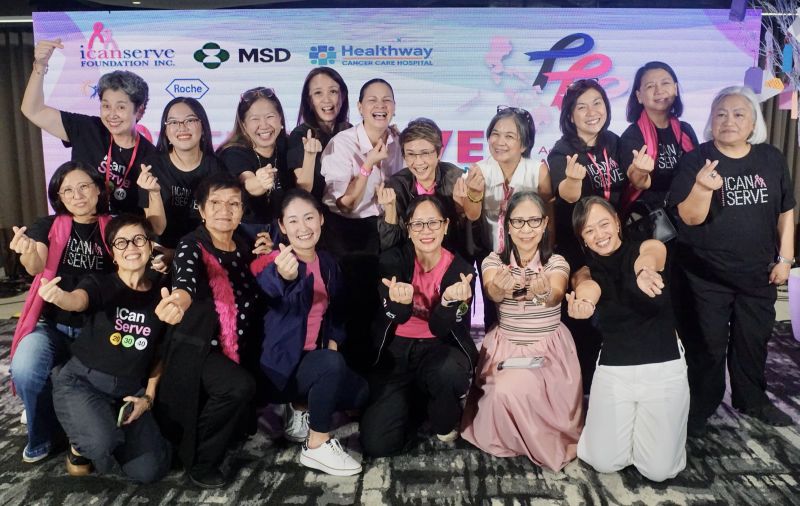
The 5th Patient Power Philippines 2026 Summit of the ICanServe (ICS) Foundation Philippines was held last September 4 and 5, Friday and Saturday, at Brittany Hotel Bonifacio Global City, with the support of MSD, Healthway Cancer Care Hospital, Bio-ONCO, Roche, PhilHealth, Nutri-Asia, and CWC Interiors.
This biennial event of the well-known breast cancer patient advocacy group presented a wealth of information on how to move beyond the planning, with the theme Advocacy to Action: Advancing the Global Breast Cancer Initiative (GBCI).
The GBCI is the World Health Organization program established in 2021 in response to alarming statistics identifying breast cancer as “the most common cancer worldwide and leading cause of cancer death among women,” according to the WHO website. GBCI’s goal is to reduce breast cancer globally by 2.5 percent each year, saving 2.5 million lives over a 20-year period (2020–2040), using three key strategies: health promotion and early detection, timely diagnosis, and comprehensive breast cancer management. ICS president Kara Magsanoc-Alikpala, who founded ICS in 1999 with fellow survivors Crisann Celdran, Bet Lazatin, and Becky Fuentes, sits on the GBCI technical working group.
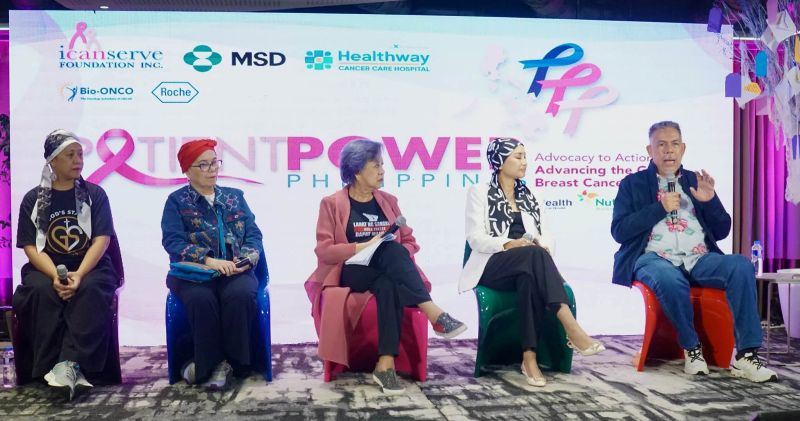
‘Stories of Hope’ from Aileen Bacarro-Pascual, Cathy Babao, moderator Bibeth Orteza, Celine Cornejo, and rare male breast cancer survivor Wig Tysmans
A number of talks covered subjects like “Easing the Financial Burden: Programs and Pathways for Cancer Patients,” with inputs from organizations like PhilHealth and the Philippine Charity Sweepstakes Office (PCSO), and “Breast Cancer Patients’ Rights, Made Real,” about breast cancer survivorship in the workplace. There were discussions on survivorship care, nutrition, exercise, and the always moving “Stories of Hope” that had survivors sharing their experiences, with this year’s edition featuring, among others, veteran photographer Wig Tysmans, who dealt with a double whammy of prostate and breast cancer—one of only 1 percent of men who receive the latter diagnosis.
As an ICS member and 13-year cancer survivor and 30+-year mental illness survivor, I was tapped by Kara to moderate a session on the dreaded question always in the back of the minds of breast cancer survivors: What if my cancer comes back? Every survivor lives with the condition we only half-jokingly call “scanxiety” every time check-up time rolls around. Frequency of such check-ups changes from quarterly for the newly diagnosed, bi-annually by your fifth year, and annually beyond that. Still, we hear of sisters, as we call each other in ICS, whose cancers recur some 10 to 15 years after their first diagnosis.
Thirteen years ago, while still under treatment, I was also invited to help endorse a hypoallergenic cleansing gel along with two younger survivors, Patty and Michi, beautiful, bubbly young mothers. They had completed treatment by then, and were managing side effects, but had returned to their lives. The sad fact is, both eventually saw their cancers recur and passed away, along with several friends in ICS whom I knew, laughed with, worked with. It boggles the mind, how things can change in the blink of an eye.
It is a question which also greatly affected me, because a major episode of depression and bipolar illness came only after I had completed treatment in 2014, at a time when everything was supposed to be finally resolved. Today, fear of recurrence (FOR) has been identified as a genuine challenge, along with other mental health issues that never used to be discussed as part of the survivorship story.
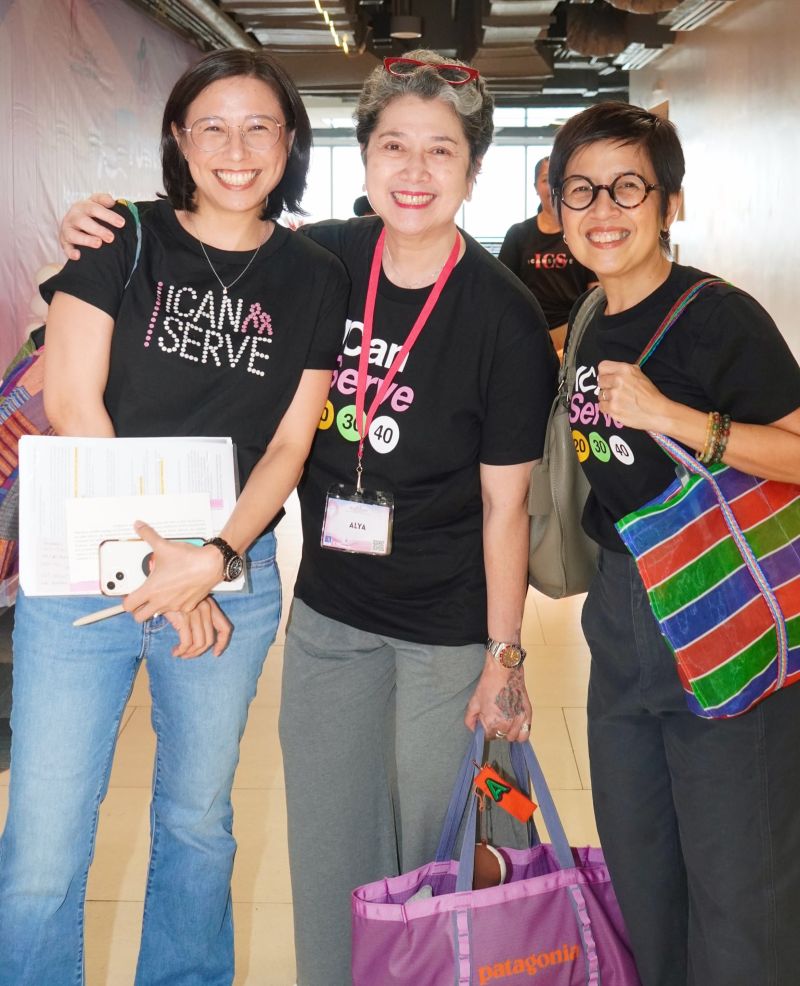
The author flanked by session chairs Yasmin Tang and Teret Pison
Session chairpersons Yasmin Mapua Tang and Teret Peña Pison—ICS assigns members to take charge of preparing each session—identified the objectives of our session entitled “Fear of Recurrence: Understanding, Coping, and Moving Forward.” These were to recognize that FCR is real, to understand the realities and hidden psychological burden of this fear, and to identify some strategies and actions to address FCR on a personal, community, and societal level.
We had a distinguished trio of speakers for the session. Speaking via video from Melbourne, Australia was 23-year survivor Sarah Powell, CEO of Inherited Cancers Australia (ICA), a group which helps women diagnosed with the genetic mutation that predisposes them to breast cancer. “For many people, the hardest part is not the diagnosis itself,” Sarah said. “It is living with uncertainty afterwards.”
‘For many people, the hardest part is not the diagnosis itself. It is living with uncertainty afterwards’
She revealed that FCR was the most significant challenge reported, even more than side effects and finances; in fact, 96 percent of participants in Project Shirley, an ICA project named after former child star and breast cancer survivor Shirley Temple-Black, reported that the illness had a negative impact on their mental health, and two-thirds were unhappy with the emotional support received from the health system—and this is Australia, a first-world nation. Yet, it seems to be a universal experience that cancer care systems are designed only around treatment, Sarah noted. “Patients live with risk and uncertainty for years, sometimes decades.”
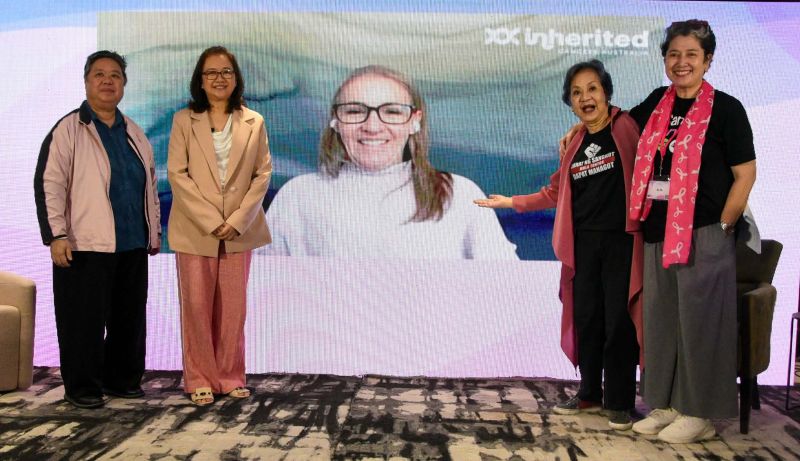
The author (rightmost) with speakers Jelly Virata and Dr. Maddie Mallillin, Sarah Powell on video call, and session moderator Bibeth Orteza
The other speakers on the home front were Dr. Madeline Mallillin, head of psychosocial oncology at St. Luke’s Medical Center and a pioneer in the field. Doc Maddie was also founder and convenor of the Psycho-oncology and Supportive Palliative Care Group of the Philippines, a group of doctors, nurses, counselors, and allied health professionals involved in psychosocial care. We also had counseling psychologist Jelly Virata of the In-Touch Foundation, who has been in the field for 20 years, and believes in working with the whole person—body, mind, spirit, and emotions. Jelly is also an example of what we survivors call our “lived experience” of illness; she was diagnosed with stage 3A lung cancer last October 2025, underwent chemotherapy, and is currently undergoing immunotherapy treatment.
Despite the cultural and contextual differences, Sarah confirmed that the stigma of being constantly fearful of recurrence—and the regular, annoying assurances from others that “it’s no big deal—can be daunting in itself. Both Jelly and Doc Maddie emphasized the need to listen to survivors expressing such fears, while also reining in over-reactions. They cited such productive steps as encouraging positive thoughts and drawing support from family and friends. Jelly in particular noted how even as a counselor, she too could feel depressed because of her condition, but tries to use the experience to establish greater empathy with her patients.
Genetic testing is not commonly done among average breast cancer patients in the Philippines, but Sarah notes that even if data refers only to averages, people still get extremely fearful. She recommended some steps to address FCR, including raising awareness of fear of cancer risk and recurrence, starting survivorship conversations, pushing for psychosocial support, and collecting patient stories and evidence, with the latter being quite doable in our country, we Filipinos agreed, because of our openness to sharing life stories.
Breast cancer survivorship has come a long way since we were just treated with surgery, chemotherapy, and radiation. Counselors are now accompanying patients on their journey, but it’s a privilege not yet quite available to the majority.
Still, all support systems notwithstanding, the cancer survivor’s journey is hers or his, first and foremost. There’s no avoiding it; it’s simply about learning to put one foot in front of the other and not letting the disease take over your life. “Finishing treatment does not mean the fear disappears,” ICA declares in its website. “Survivorship is not simply about living longer; it is about being supported to live well with uncertainty.”


