
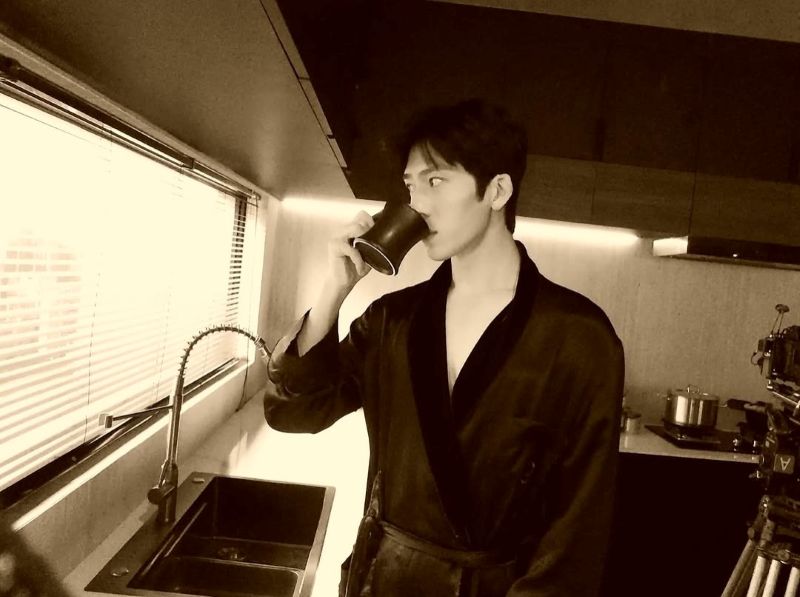
The Early Spring
Starring Jing Boran, Sun Qian
24 episodes
Netflix
Lun Nian is the popular fictional corporate executive from The Early Spring, a 24-episode series adaptation of Gu Niang Bie Ku’s web novel Zhao Chun Qing Lang streaming on Netflix. He goes by the English name Luke, and his icy demeanor and acerbic tongue are overlooked by his colleagues because he’s the primary creative maven of Lime, Beijing’s top-tier advertising firm.
Playing Luke is actor-singer Jing Boran who, given his growing popularity now, has practically made Luke his alter ego to a burgeoning fanbase. Boran, according to screenwriter-producer Gao Xiaoxian, came across as a strong fit for the character when she thought of actors who could play Luke. Per Dramadazz on Facebook, Gao says Boran embodies maturity, and has refined presence and the ability to convey feelings through subtle expressions and body language.
Audiences are drawn to Luke because of his advertising brilliance, looks, and the sartorial elegance that has him turning Lime into his private fashion runway in every episode. A video posted by @sweetmovie520 on Threads says Boran was closely involved with crafting Luke’s fashion style—which deviates from the idol dramas’ fashion aesthetics—because he wanted the world to know about China’s sartorial aesthetics. Boran is reported to have brought more than 120 outfits from his personal collection to help build Luke’s closet.
Luke’s personality actually leaves much to be desired. His persona, says Facebook fan group I love Cdrama, was purposely depicted by Boran as polished yet flawed, and with emotional shortcomings. Thus, it’s interesting how, despite the red-flag characterization, Luke’s (and Boran’s) popularity have landed the series at No. 2 on Netflix’s Global Non-English TV list and No. 1 on Netflix’s weekly TV charts in Hong Kong, Taiwan, Thailand, and Vietnam.
It’s interesting that viewers think that Boran is a newcomer in a breakout role, when he’s actually a veteran actor (debuted in 2010) experiencing a career resurgence. His 2024 thriller series Regeneration was hardly noticed despite his impressive portrayal of multiple characters in a gripping plot. He started with “glamorous idol” projects—or shows focused on visual appeal and star power—and later shifted to “realistic characters with emotional shortcomings and genuine flaws,” says I love Cdrama.
Simply put, Boran wanted substantive roles to sink his teeth into, much like Johnny Depp, who left the popular 1980s American TV show 21 Jumpstreet to escape his teen idol image and pursue more creative roles.
But there’s a wild downside to Luke/Boran’s fame, indicative of the worrisome blurring of fiction and reality by delulu fans: its impact on Boran’s girlfriend, Liu Wen. Radica Daisy on Facebook narrates that overzealous fans of the series denigrated the supermodel for “ruining” the fictional romance of Luke and Shang Zhitao (played by co-star Sun Qian), when she liked one of Boran’s promotional posts. Aside from being body-shamed, Liu was bombarded with ageist comments and wishes for their breakup so Boran could be with Sun Qian.
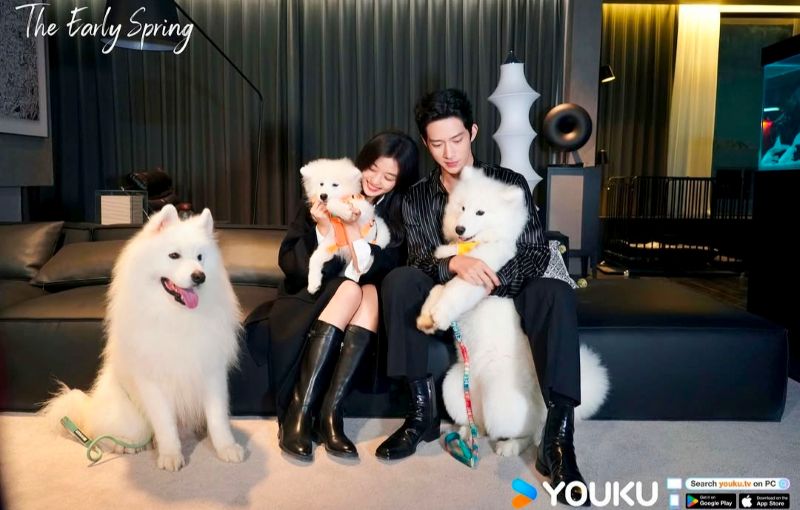
Zhitao and Luke as purr parents to dog Luke (his puppy version and double) (Image from @youkouofficial)
The Early Spring leaves you questioning the idea of falling in love, unlike Song Weilong’s Love for You, which makes you yearn to fall in love. Being in a relationship like Luke and Zhitao’s is like hitting yourself on the head with a hammer. Their relationship isn’t an end goal, but a warning against romance. Their initial tryst mirrors the idea of the 1986 American film About Last Night: Hooking up is easy, but getting into and maintaining a relationship is difficult.
‘The Early Spring’ leaves you questioning the idea of falling in love…Being in a relationship like Luke and Zhitao’s is like hitting yourself on the head with a hammer
The problem starts with their night of intimacy that’s propelled by anything but love. Zhitao is instantly attracted to Luke when she sees him striding across Lime’s lobby, and eventually spends the night with him. Her thank-you note on his pillow the morning after inadvertently turns potential romance into tawdry hook-up. Luke texts her with the same energy, pursues her albeit in his haughty manner, setting the pace of their turbulent liaison.
Luke is charmed by Zhitao’s guilelessness and gumption. He’s dumbfounded by what she—an intern—does that nobody else in the company dares to do. She boldly accosts him to tell him she’s honored to work with him. She completes the rookie initiation of interviewing him. She doesn’t fall in on herself when she learns he’s the one who abruptly ended her preliminary job interview and, after she’s hired by HR, bluntly tells her, on her first say, to quit.
Not jaded at all, she comes across as genuine with her work ethic, resilience, and persistence. Oddly, his brusqueness and biting words push her to make herself better (she’s ambitious).
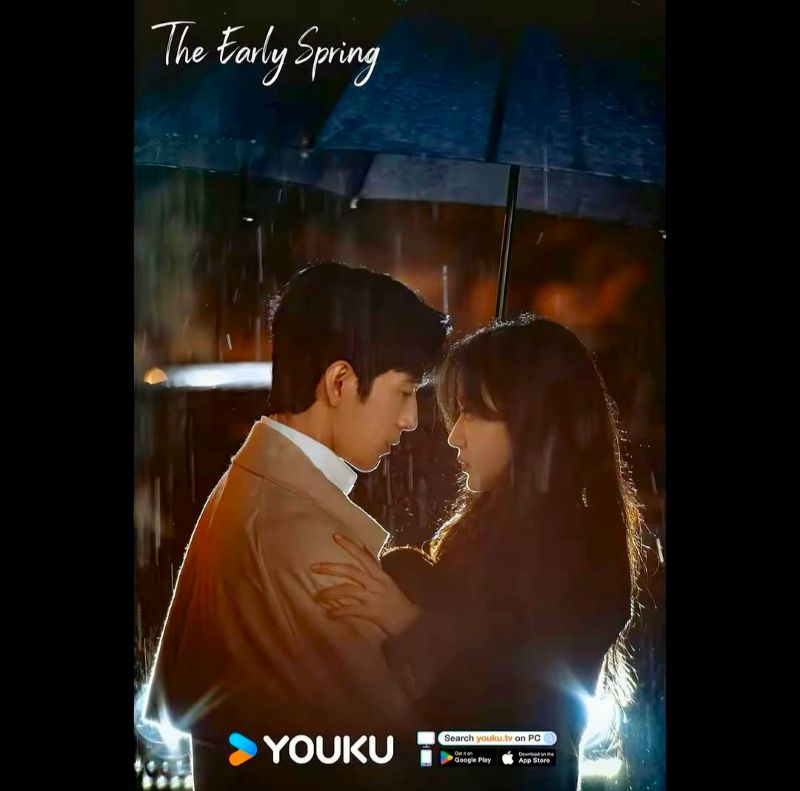
Luke and Zhitao’s paths cross in the cutthroat world of advertising in Beijing. (Image from @youkouofficial)
Circumstances lead Luke and Zhitao to more intimate nights, which, production-wise, have set a precedent for Chinese romance dramas. Their intimate scenes aren’t poetically rendered like in Pursuit of Jade, but instead are sensually choreographed into a very tame version of Ana and Christian’s steamy nights in 50 Shades of Gray. There’s Taiwanese intimacy coordinator Tsai Jia-yin for that. A Threads post by @xixibn2026 says The Early Spring is the first mainland Chinese production to employ an intimacy coordinator. Tsai, who’s also an actress, designed the “glances, touches, and movements” and helped ensure that the intimate scenes weren’t merely for entertainment value.
An intimacy coordinator helped ensure that the intimate scenes weren’t merely for entertainment value
Luke and Zhitao’s intimate scenes are more realistic but not risqué. They illustrate the dynamics and complexities of their relationship—the unsaid feelings finding expression in sexual intimacy—and why a cut-and-dried opinion of one party being solely responsible for the break-up comes up short.
Interestingly, how Zhitao ends up at Luke’s place has a 50 Shades of Gray vibe. Zhitao and her French-English tutor are in a bar and she’s three sheets to the wind (like Ana) after several martinis. They’re about to go home when Luke takes Zhitao with him (like what Christian does), and she ends up in his posh apartment after telling him she dreams of him and he has to marry her.
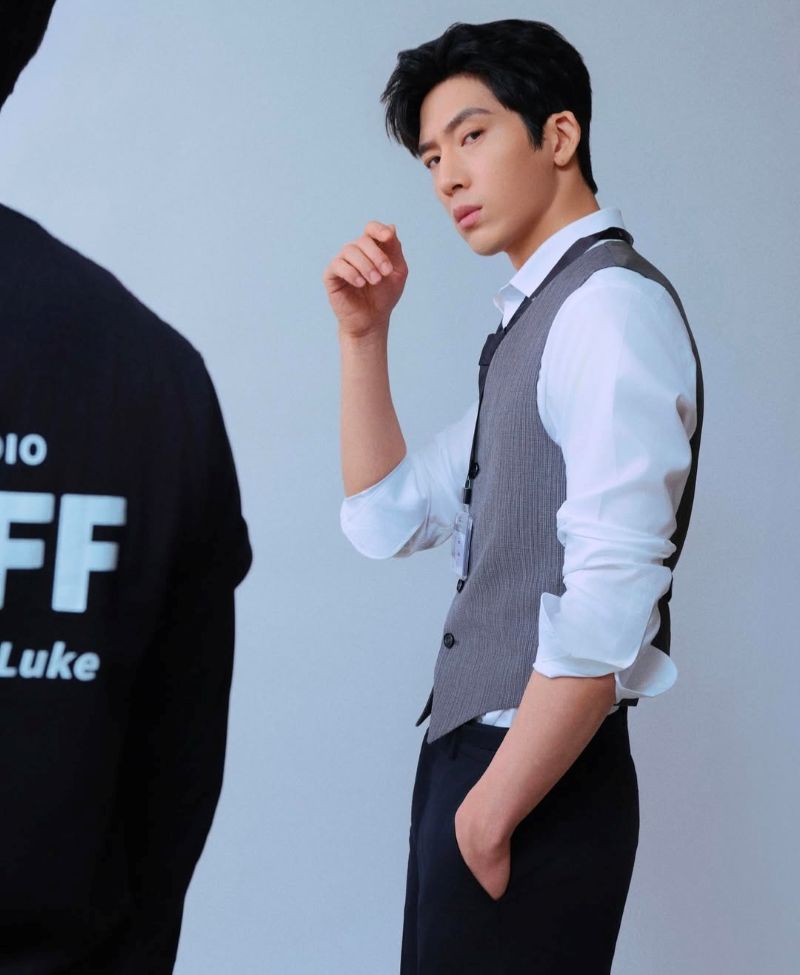
Jing Boran channeling Luke’s hauteur and dapper look on his IG (Image from @jianxiaoxiansheng)
Audiences have divided into Team Luke and Team Zhitao, and each blames the other for the relationship’s toxicity.
Arguably, no one’s completely at fault or innocent. Their relationship, which they entered on their own accord, is pitiful because of the absence of communication, transparency, and trust. Luke’s hauteur and coldness (thanks to an overbearing father) do not make him a depraved egoist, so he’s not the main problem. Similarly, Zhitao safeguarding her career and financial independence does not make her the culprit, either.
The problem initially lies in their relationship lacking label and direction, leaving Zhitao miserable with Luke’s mixed signals. Zhitao doesn’t rigidly compartmentalize her professional and personal lives the way Luke does. The major issue is the decision to have a secret relationship, as opposed to a public romance. Luke verbalizes the idea that Zhitao can’t say directly, and she sets the conditions—i.e., friends, family, and colleagues can’t know of it; it’s an exclusive relationship; professional boundaries must be maintained at work.
A secret relationship is a death sentence because they limit their spaces (they can’t be seen together outside unless it’s a business trip), fettering themselves to their positions as boss and subordinate that they struggle to maintain. They restrict expression of their feelings, and can’t celebrate their relationship openly.
How long can they keep up with the text messages, surreptitious glances, and elevator/stairwell encounters? The secrecy leads to Luke’s fits of jealousy, compounding their volatile situation because his jealousy makes his behavior colder and his words to Zhitao more vitriolic.
Conversely, Zhitao is in a bind, as speaking up will let the cat out of the bag—until her repressed emotions erupt and she leaves Beijing and Luke.
To keep the drama of Luke and Zhitao’s relationship from becoming trite, the stirring subplot of loyal friends is introduced. Zhitao is a Beijing drifter—someone who relocates to Beijing to build a new life—like her flatmates, Sun Yu and Sun Yuanzhu, who she turns to when life at Lime and Luke get too much to handle. Lumi, her mentor at Lime, is another of Zhitao’s anchors. As Zhitao starts out at Lime, Lumi has her back and encourages her not to be intimidated by Luke. She’s pivotal in reconnecting Luke with Zhitao—through a project in Harbin—and persuading Zhitao to give Luke another chance.
Luke has Tan Mian, who, among Luke’s friends, is privy to and understands his guarded personality and relationship history. More importantly, he’s the catalyst in Luke and Zhitao’s reconciliation. He sends Zhitao a secret video recording he’s made of a desolate, teary Luke the night he keeps dialing Zhitao’s disconnected number and, beneath the aurora borealis, confesses his love and admits his past mistakes. Tan Mian, like Lumi, urges Zhitao to reunite with him.
Audiences are watching and talking about ‘The Early Spring’ because of Boran and the story of a volatile love
Audiences are watching and talking about The Early Spring because of Boran and the story of a volatile love. Luke always pushes Zhitao to a corner, belittling her, doubting her love, and demanding she explain her unacceptable actions. He’s too caught up in overthinking her perceived slights.
After vicariously experiencing Luke and Zhitao’s roller-coaster relationship, you are confronted with the question: Would you go for Luke?
Zhitao does, and stays for six years with him. Professionally, she becomes indispensable at Lime and remains ambitious, taking on projects others find risky. Personally, she’s a wreck and, to save her sanity, she distances herself from Luke by taking on a 14-month project in northeastern China.
A different Zhitao emerges when she loses her best friend Yuanzhu to suicide, then suffers a major setback in her career, and Luke downplays her pain. Instead of comforting her as a boyfriend should, he tells her he’s losing his patience with her.
She disappears from Luke’s life. If Luke is a master in cold detachment, Zhitao is a “ghosting” expert. And the series should have ended at this point. The couple didn’t survive their own relationship, given all the secrecy and unsurmountable distrust. It’s the plausible, logical end to a roller-coaster relationship.
But skeptics are given pause. C-dramas have bittersweet endings, but not The Early Spring, not after Jing Boran has invested time, effort, and his clothes in bringing Luke to life. He can’t go down in the ignominy of being an obnoxious narcissist in the history of dashing male leads. Luke’s change arc, coupled with Zhitao’s growth arc, sees a happier, romantic couple with a love that’s safe (not volatile or traumatic), and a marriage proposal from Luke that rivals the proposal by the other narcissistic executive in Korean drama What’s Wrong with Secretary Kim?
So, would you still want to fall in love with someone like Luke? My skeptical heart says watching The Early Spring is safer than diving into real romance. #


