
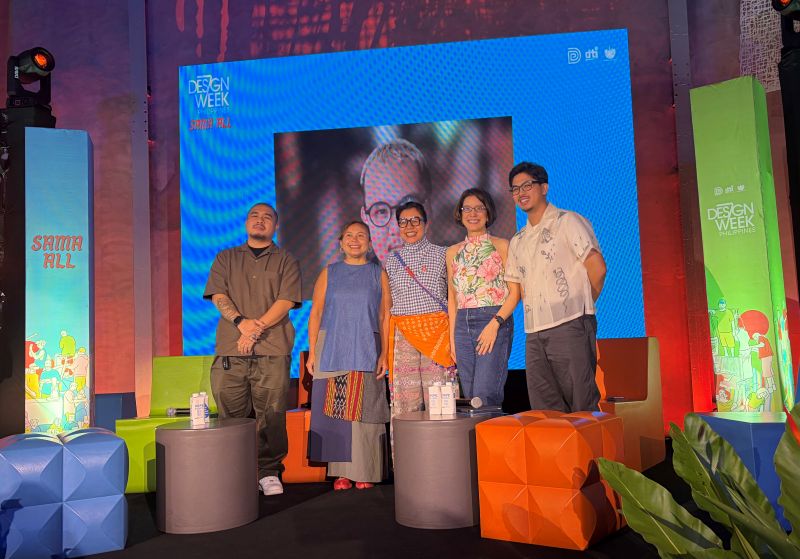
Design Week Philippines celebrates its 15th year like a nationwide fiesta, with events happening simultaneously across the country. In Negros, a sungka competition brings a traditional Filipino game into the design conversation. At NBS Park in Mandaluyong, Open Table invites people to share a table to read, sip coffee, or chill. In Makati, Comuna hosts Ihaw at Saya, an outdoor barbecue and party. Gypsy Café leads a market-to-table tour in Makati. The inaugural Oro Design Week in Cagayan de Oro features a graphic design conference with an all-female lineup of speakers.
Organized by Design Center Philippines (DCP), the weeklong festival marks its 15th year by inspiring community-led events across the country, from workshops, lectures, and exhibitions to tours, performances and pop-ups.
“One of our first projects was to engage designers and find out what skills-building opportunities they needed,” aid Rhea Matutue, DCP executive director, at the festival’s launch. “We then explored how we could develop these with our partners. It’s important for us to activate our partners across the Philippines and help nurture local talent through our initiatives.”
Design is part of everyday life, often experienced without much thought. Design Week encourages the public to look more closely at the objects, spaces, and experiences around them, and to see how designers draw inspiration from their surroundings. It also gives designers opportunities to share ideas, develop their skills, and connect with communities.
This year’s theme, Sama All, draws on a familiar Taglish expression “sana all” that conveys the wish for everyone to enjoy something good. Applied to design, it becomes a call for wider access and greater inclusion, with opportunities reaching beyond Manila to designers and communities across the country. Good design should not be confined to the capital or to people who work in the industry. Everyone should have a chance to experience it, learn from it, and take part in it.
DCP chose Likhang Filipino for the Design Week Philippines launch to introduce the venue as a future hub for the country’s creative industries and give designers a preview of how they might use the space. Once a traditional product showcase run by the Center for International Trade Expositions and Missions (CITEM), Likhang Filipino is expanding to include creative services such as game development, animation, and film. The broader vision is an ecosystem that supports enterprises, from talent development and collaboration to retail and exports. A shared-service facility is also planned to help businesses develop and prototype products with DCP’s team.
The launch presented the event partners. Jeth Torres, graphic designer and vice president for events and partnerships of the Communication Design Association of the Philippines (CDAP), described Design Week as a platform for creatives from different disciplines and regions to showcase their work. There will be a leadership forum which brings together leaders from design studios and companies with creative departments to discuss the challenges they have faced in their careers, share lessons from their experience, and explore how to prepare the next generation of creative leaders. The festival also features exhibits and workshops in various parts of the metropolis, including a workshop at Areté on transforming found objects into art, and the Design Fair which runs from Oct. 15 to 18 at Likha Exhibition Halls and Tent in Parañaque.
Design Week encourages the public to look more closely at the objects, spaces, and experiences around them, and to see how designers draw inspiration from their surroundings
Candy Alipio, organizer of Design Week Baguio, recalled that when their festival began, many people in the art-centric city did not understand the difference between art and design. Its goal has been to introduce the public to design not through lectures alone, but also by letting people experience the process. Children, for instance, get to try designing, while architecture exhibits and activities across different fields show how design works in everyday life.
This year, the architecture exhibit organized with architect Iris Gold expands to include book and graphic design. Other activities take design beyond galleries and studios. Chef Waya Araos-Wijangco of Gypsy Baguio leads a farm-to-table tour of the city’s public market, selecting vegetables and other ingredients, before preparing a three-course lunch and explaining how the market shapes her menu. Fashion design students join an ukay-ukay tour and an upcycling workshop, while participants in a walking-tour workshop develop new ways to experience Baguio. Two tours, a ghost tour and a market tour, will be piloted on Oct. 17 and 18.
Karl Adrian Aguro, a Cagayan de Oro-based graphic design entrepreneur, illustrator, and art director, organizes the annual Oro Design Conference as part of Oro Design Week. The festival brings local designers and people from other industries together in Mindanao to explore how design can improve branding, products, and experiences. Design also shapes how people see and experience the world, Aguro said, creating shared experiences that connect people from different backgrounds.
Oro Design Week features an art and design market, a night walk with installations by local photographers, daily workshops on branding and design, and discussions on giving recycled materials new life. Local businesses and micro, small, and medium enterprises are invited to participate. On Oct. 17, a talk will focus on sustainability through design, a timely subject for a region recovering from typhoons in recent years.
Comuna in Makati is an example of how a property can become more than a place to do business. Developed by Maya Katigbak-Colayco, the complex occupies a site that once served as a taxi terminal and KTV bar. Instead of simply building to sell or rent out, Colayco took a different approach, creating a home for creative enterprises, with open spaces and a central garden where tenants and visitors can meet, exchange ideas, and collaborate. The project’s emphasis on community, alongside its makeover of the site, earned it recognition at the Good Design Award Philippines.
That creative community now shapes Comuna’s identity. Its mix of designers, artists, food businesses, and other independent enterprises has grown into a network that shares resources and organizes events together. This week, Comuna will open its doors for a full day of activities, including designing poetry, memoir writing, cake decorating, and chocolate-making workshops, a women’s fitness event exploring the link between movement and creativity, and an evening grill fest with a dance party, live jazz, and DJs. The festivities run from 5 pm until dawn.
Design Center Philippines is trying to change how people think about design, from something they see on a product to something that shapes daily life. It can make a meal memorable, give a neighborhood its character, or help a business stand out. “Design enhances the experience, enhances the memory,” said Matute. She hopes the government could take the same approach, rethinking rules and bureaucratic processes that no longer serve the public, and helping cities and towns build on what makes them different.
Design Center Philippines is trying to change how people think about design, from something they see on a product to something that shapes daily life
For festival director Marvin Conanan, the appeal of this year’s theme, Sama All, lies in the idea that design is everywhere, even in the smallest details. The ice cream vendor who modifies a cart with two wheels; the fisherman whose boat reflects years of practical knowledge; and the storekeeper who finds a better way to serve customers: all are examples of Filipino ingenuity at work. People may not think of themselves as designers, Conanan said, but the choices they make to improve a product, simplify a task, or make something work better are part of the design process. “Design is everywhere,” he said. “At some point, all of us have designed something.”
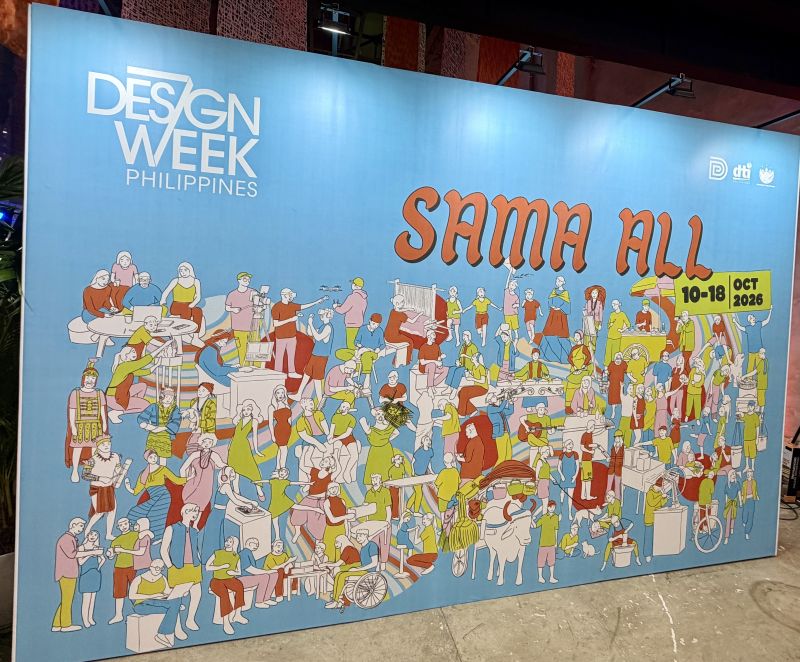
Artwork defining Design Week Philippines by Dana Garcia shows creatives from various disciplines working together. The colors are derived from ‘teks’ cards.
Designer Dana Garcia gives this idea a vivid visual expression in the festival’s graphics. Her interpretation of Sama All brings designers and craftspeople from different fields together in a riot of bright colors reminiscent of teks, the illustrated children’s playing cards of the 20th century. The reference is distinctly Filipino, drawing on a familiar piece of childhood culture and the bold, lively imagery of the cards. The colors give the design a playful feel, while the gathering of different creatives reflects the theme’s inclusive message: design belongs to everyone, from skilled craftspeople to professionals shaping the country’s creative industries.
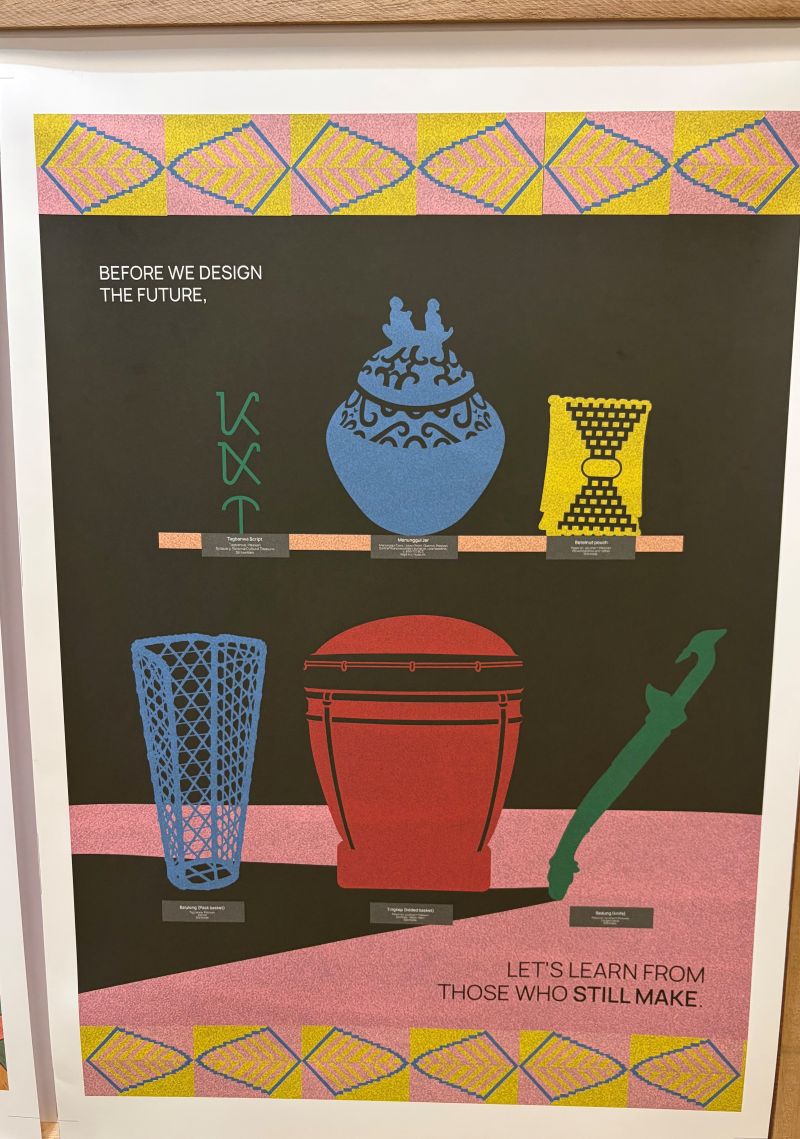
Poster from Design 100 exhibit
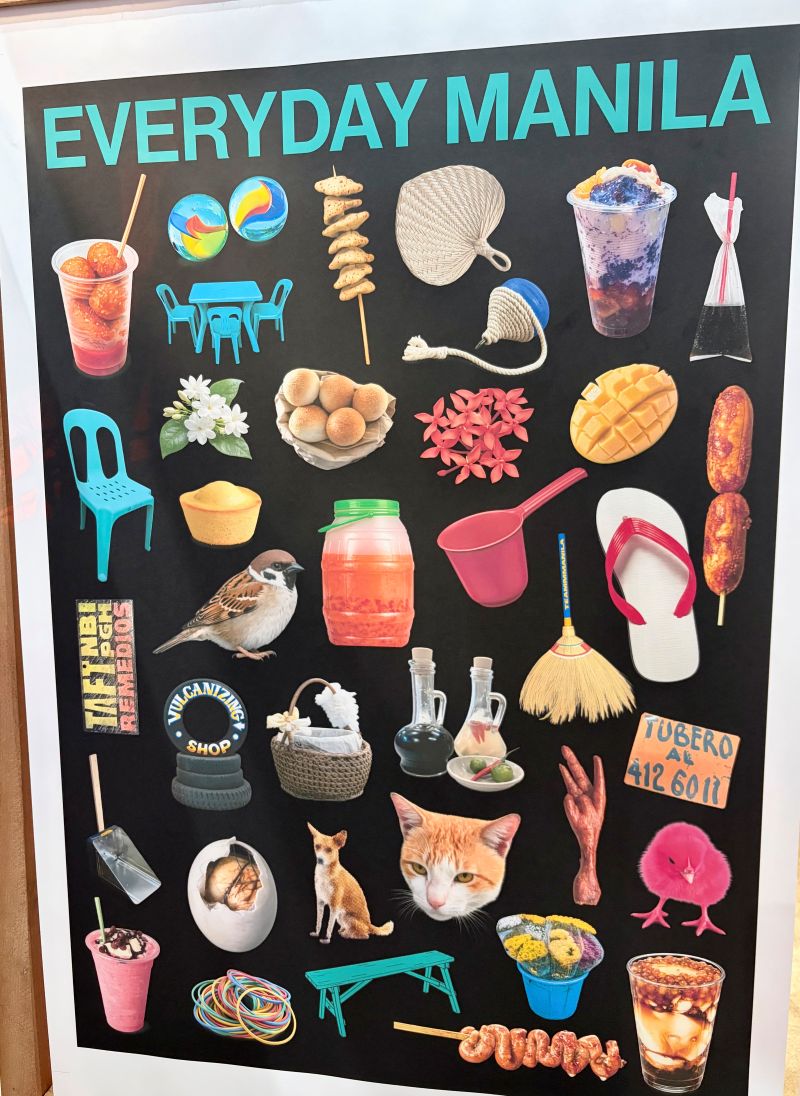
Poster from Design 100
After the talks, the festival opened the Design 100 poster exhibition, a collection of 100 posters tracing Philippine design from local roots to futuristic visions, in collaboration with graphic design studio Team Manila and the Communication Designers Association of the Philippines.


