
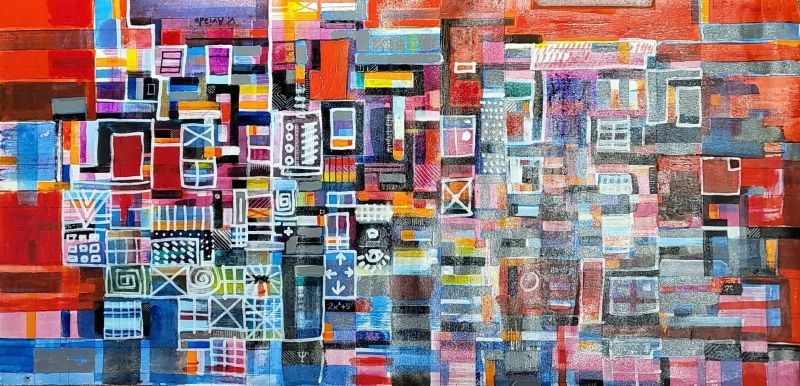
When ManilART ’26 held a vernissage and gala night on October 14, newly named National Artist for Visual Arts Imelda Cajipe Endaya commented on the theme of the National Art Fair, “Where the Line Begins,” as representation of communities of artists from Mindanao, Visayas, and Luzon to exhibit and to participate in discourse. She happily recalled that some 30 years ago, when the National Commission for Culture and the Arts (NCCA) was newly established, artists and art galleries volunteered to serve in NCCA committees. With its members mostly coming from Metro Manila, the National Committee on Art Galleries (NCAG) welcomed galleries from the regions. Surely, she said, “Metro Manila by itself is a magnet of representation from all over the country, thus accessibility to international fairs and markets is within its compass.”
In 2009, Atty. Amy Loste of Gallery Nine fame wondered, “Why wait for the world to come to us? Why not create a stage right here, where people could come under one roof and experience the breadth of Philippine art?”
That astute idea was brought to the NCAG, headed by Lyn Yusi with Loste, the project proponent, Noli Romero, Kitty Taniguchi, and Chit Asignacion, and gave birth to ManilART. The NCAG project to strengthen and professionalize the art gallery sector and bring Filipino art to the global stage is now on its 18th edition as the Philippines’ longest running visual arts fair.
A flagship project by the NCCA through NCAG, ManilART, which ran until October 18 at the SMX Aura Convention Center in Taguig, is held annually during the Museums and Galleries Month of October. It is not simply an art exhibition, but a trade fair where galleries could present the artists they represented and have a common venue to reach collectors and buyers. “Our initial exhibitors were galleries belonging to the committee, each bringing its own roster of artists,” says Loste.
But having their own galleries to run, like Loste’s Gallery Nine founded in 1999, organizing a fair at the beginning became quite a challenge, especially when the NCCA providing government support changed its rules, and ManilART had to apply for funds under competitive grants. They needed a private organization to carry the project forward. And that eventually became the ManilART Foundation in 2013, with their private-sector counterpart, the implementor called BAGO (Bonafide Art Galleries Organization) under Jonathan Sy, Delan Robillos, Romana Go, and Robbie Bjorn Santos.
ManilART started with just over a dozen exhibitors in small booths at NBC Tent, a popular event venue at BGC in in 2001. ManilART was recognized as the National Art Fair when it was institutionalized by NCCA through a board resolution and adopted as banner project of the Sub-commission on Cultural Heritage. This year, ManilART featured 36 exhibition booths and over 500 participating artists at SM Aura.
ManilART started with just over a dozen exhibitors in small booths at the NBC Tent. This year, it featured 36 exhibition booths and over 500 participating artists
Tess Rayos del Sol, the Art Fair director from 2015 to 2022, and the NCAG head then, says: “For over 18 years, ManilART has grown into a collegial body, and from it sprouted other private initiatives, including Art Fair Philippines and the auction houses. That is the legacy we carry forward, as the National Committee on Art Galleries now brings the same spirit to the Luzon Art Fair, Visayas Art Fair, and Mindanao Art Fair.”
Art Luzon 2026 (formerly the Luzon Art Fair), with the theme “Across Regions,” was held in Tarlac this year featuring 400 artists, hundreds of weavers and crochet makers, and dozens of regional exhibitors. The Visayas, meanwhile, had Tubô Cebu Art Fair 2026, connected to the region’s art movement held at Ayala Center Cebu with the theme “Resonance.”
The Mindanao Art Fair 2026, pioneered by maverick Mindanawon artist Kublai Millan in 2019, featured works from over 500 artists under the theme “In the Changing Cycle of Dark and Lightness.” This eighth edition of the fair, in partnership with SM Mall Lanang in Davao, has just won the Gold Stevie in the Innovation in Cultural or Community Events category at the 2026 Asia Pacific Stevie Awards.
“This shows that when we bring art to the regions, it stands among the best in Asia-Pacific,” emphasizes Rayos del Sol. “It is also why we continue to nurture the Luzon Art Fair, Visayas Art Fair, and Mindanao Art Fair, so that Filipino creatives everywhere have a stage worthy of their talent.”
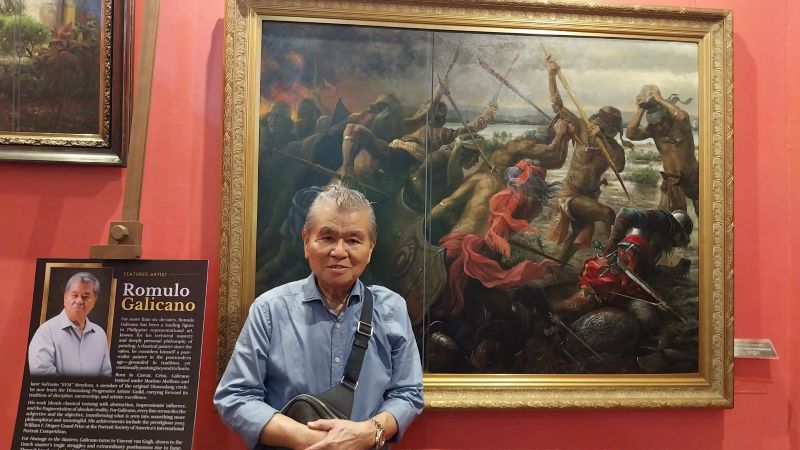
Romulo Galicano with his painting, ‘The Victorious Warriors of Datu Lapulapu’
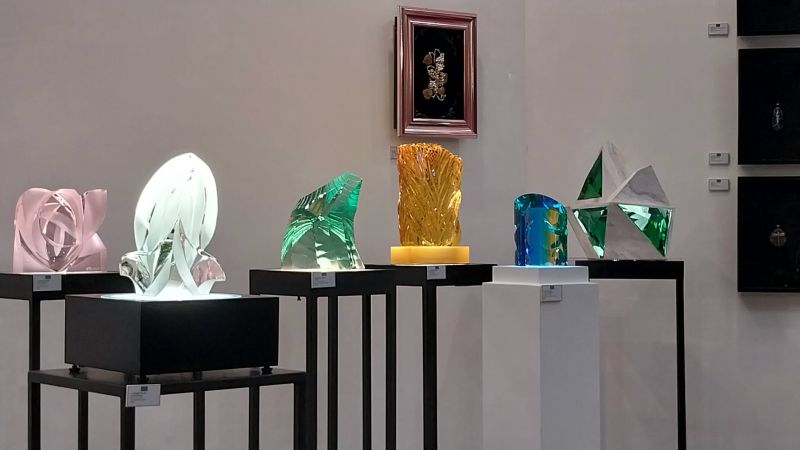
Ramon Orlina’s glass sculptures at ManilART ’26
It’s always a pleasure to visit ManilART for the magnificent artworks that are a feast for the eyes and the senses, and for the opportunity to meet the outstanding artists featured in the fair. Masters and National Artists like Ang Kiukok, Arturo Luz, Jose Joya, Federico Aguilar Alcuaz, Bencab, Romulo Galicano, Ramon Orlina, Araceli Dans, Raul Isidro, Nemiranda, and many others have made their presence felt at ManilART through the years through their artworks. Young galleries, meanwhile, are making bold moves with their dynamic and avant-garde young artists who stand side-by-side with the established ones, and they’re succeeding. One of them is Nami Art Gallery, which keeps a stable of exciting young artists while still showcasing their established artists.
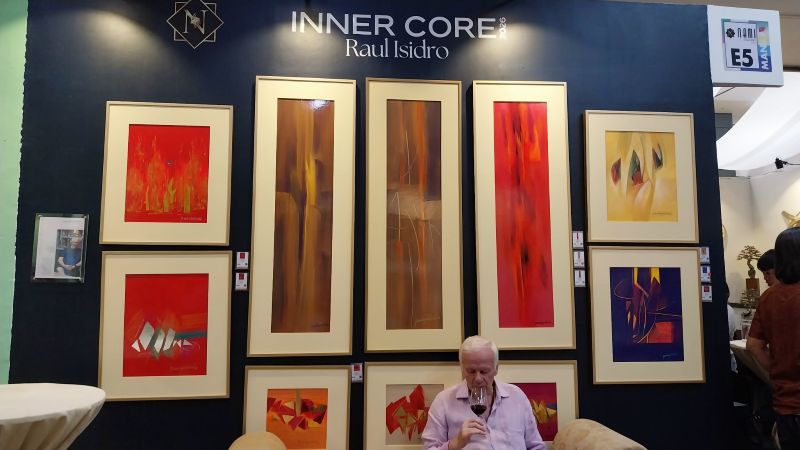
Paintings by master Raul Isidro
One particular ManilART fair this author remembers and even wrote about was in 2019, when three artists collaborated to showcase vibrant colors, enticing texture, and diverse Mindanao features on canvas framed in exquisitely designed hardwood and illuminated by intricately carved ostrich eggs. The artworks, seemingly done by a lone artist, were in fact collaborative pieces by three disparate artists: painter and sculptor of gigantic monuments in Mindanao Ray Mudjahid Ponce Millan, aka Kublai Millan; furniture designer Agi Pagkatipunan; and lone ostrich egg sculptor Danny Rayos del Sol. All the innovative artworks were sold out.
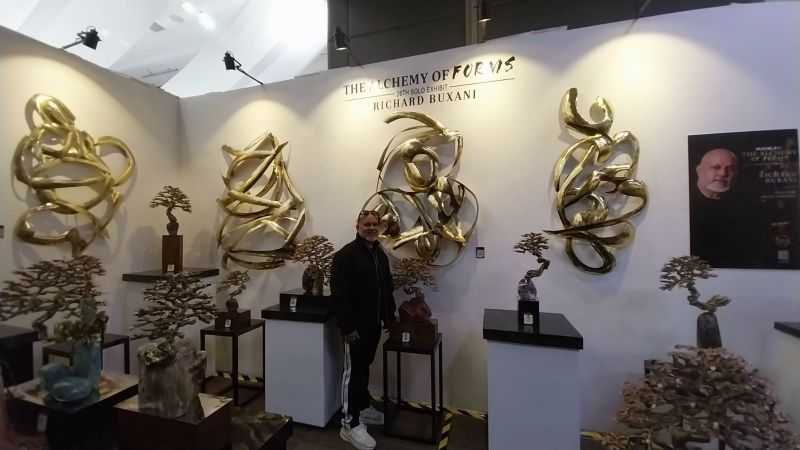
Modern and contemporary Fil-Asian brass sculptor Richard Buxani
But the pandemic that started in 2020 changed that scenario. Due to the limitations in attendance imposed by quarantine, they had to be creative because they believed that there was no art fair when it was purely online. Tess Rayos del Sol suggested a satellite exhibit at Tawid Gallery in Shambala Living Museum in Silang, Cavite. They also revamped their website to make navigating the galleries simple for their clientele.
With the theme “Continuing Legacies,” ManilART 2021 took a big leap forward and extended its reach by adding six satellite shows in different cities in Luzon and Mindanao. Balai Kalipay or House of Joy, located in the mountainous Malagos area of Davao City, was ManilART’s satellite exhibit from Mindanao, in cooperation with the Department of Foreign Affairs’ Cultural Diplomacy Unit. It was built and spearheaded by Kublai Millan with Atty. Elba S. Cruz. Kublai’s vision was to chronicle both indigenous and contemporary Mindanao art in Balai.
While physically set up in situ, 360-degree walkthroughs on ManilART’s portal brought audiences virtually to the shows simultaneously happening “off-site” during the fair. That brought art straight to the homes and screens of audiences while remaining bound in its context and place. Synchronously with the “on-site” fair, the portal brought together a shared experience in the celebration of art and a one-stop-shop for the online visitor to virtually experience art “under one roof.”
ManilART 2021 coincided with the commemoration of the 500th anniversary of the Philippine part in the first circumnavigation of the world, the victory in Mactan, and other related events, collectively known as the 2021 Quincentennial Commemorations in the Philippines (2021 QCP).

‘Galleon, the Harbinger’ by Danny Rayos del Sol
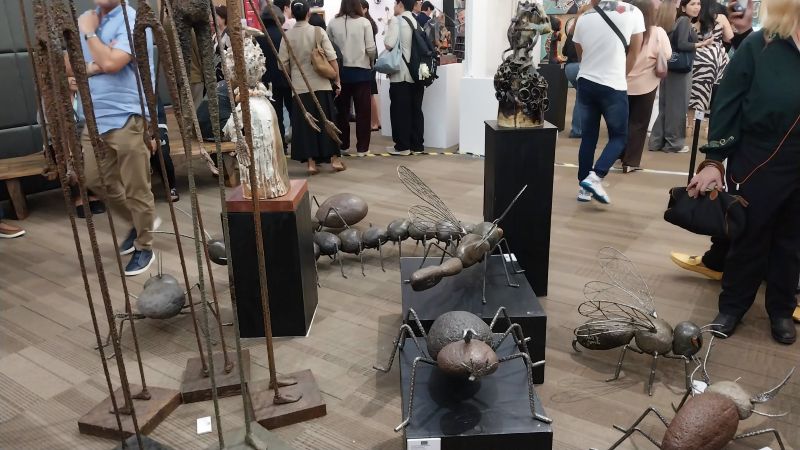
Metal sculptures by young artist Ino Pagkatipunan
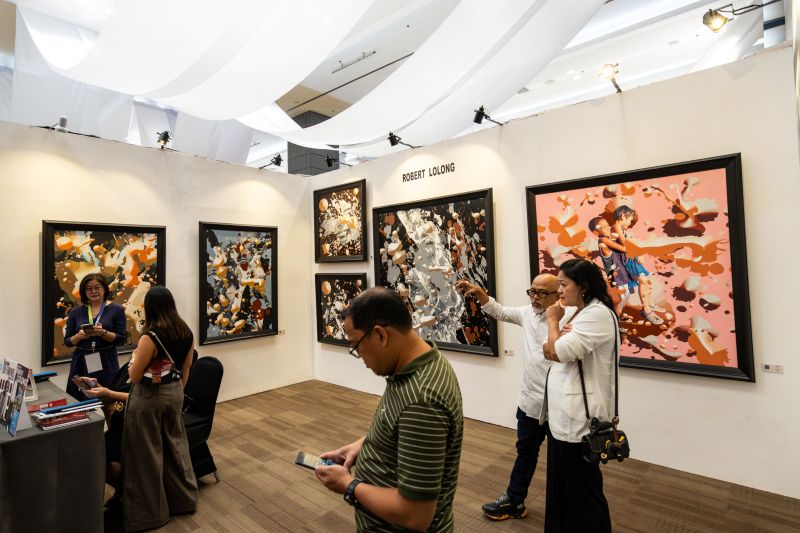
Roberto Lolong exhibit at ManilART
The 2026 edition of ManilART expanded its engagement with the arts community by bringing Taguig City’s artists and cultural initiatives into the National Art Fair. It was more than a gathering of galleries and artists. In partnership with the City of Taguig, the Department of Education, and the Tax Management Association of the Philippines (TMAP), the fair became a space for learning, community, and nation-building, says Tess Rayos del Sol.
She further says: “At the heart of the program is a commitment to the next generation. Through the Art Tour, 1,000 students from partner schools are guided through the fair, many encountering Philippine art up close for the first time. For the teachers who carry that learning back to the classroom, a workshop for 60 teachers offered practical tools for bringing art into everyday lessons. Together, these activities reflect ManilArt’s belief that appreciation for art begins in schools.”
Through the Art Tour, 1,000 students from partner schools are guided through the fair, many encountering Philippine art up close for the first time
Amy Loste could not have agreed more: “I think there is now a greater understanding that art can have both cultural and economic value. Artists need to earn a living, galleries need to be sustainable, and collectors need places where they can discover and acquire art. A functioning art market is part of the support system that allows artists to continue working. For us, education, cultural development, and commerce were never mutually exclusive.”
The ManilART Lounge this year featured pocket exhibits devoted to Larry Alcala and Patis Tesoro, offering visitors a glimpse into two distinct contributions to Filipino culture.
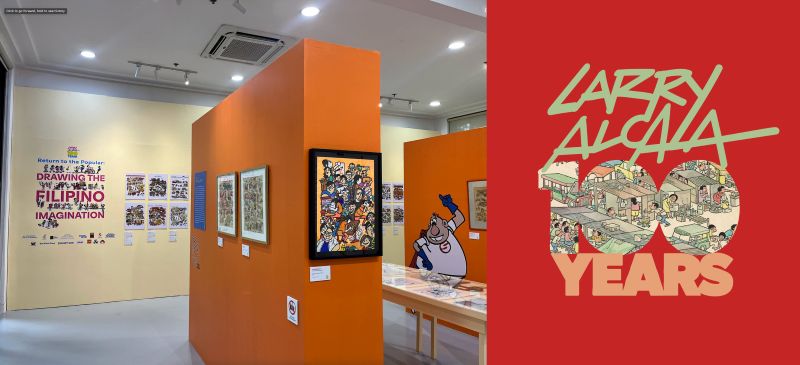
National Artist Larry Alcala Centennial
Alcala, National Artist for Visual Arts in 2018, is best remembered for his illustrations and comics portraying everyday Filipino life, transforming everyman’s experiences into visual narratives. In celebration of his centennial this year, Seven Lakes Komiks group of San Pablo held a talk on the Filipino comics tradition and its place in the country’s visual culture. The program also featured talks on the legacy of Mars Ravelo and the komiks history, and discussion with representatives of estates of comics pioneers, including National Artist Francisco Coching.
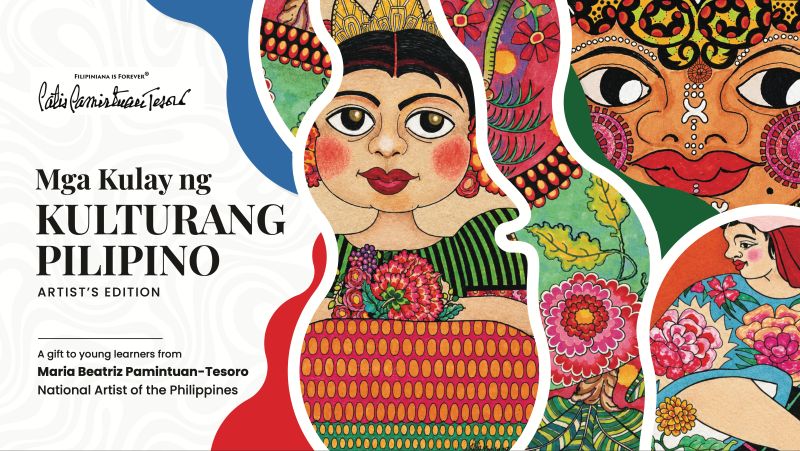
Cover of Patis Tesoro’s coloring book collaboration with the Department of Education
Tesoro, newly proclaimed National Artist for Design, is known for her interpretation of Filipino cultural heritage through fashion, textiles, and design. In collaboration with the Department of Education, ManilART ’26 launched her coloring book, an invitation to children and families to engage with our Philippine heritage through colors.
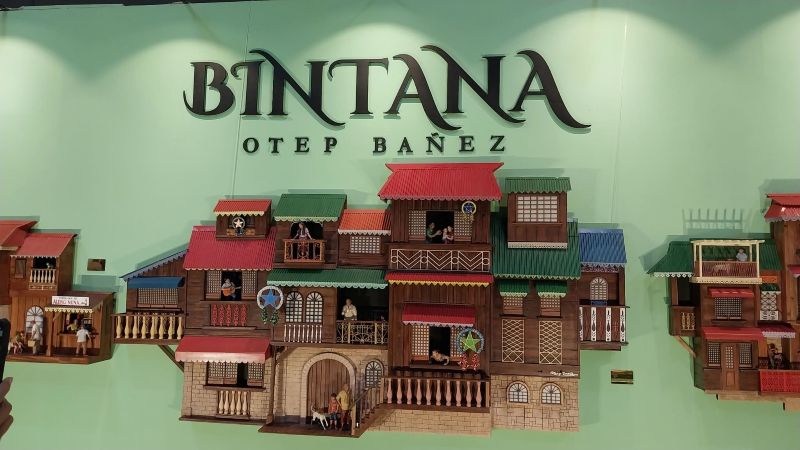
Modern expressionist painter from Paete, Laguna, Otep Bañez
While ManilART brings a range of artistic practices together under one roof, partner exhibitions were also held to extend the experience to other places and communities, where art is shaped by local histories, creative networks, and cultural contexts.
If there is one big takeaway from the 18 years of ManilART, says Loste, “It is the importance of collaboration. The visual arts don’t exist in isolation. Over the years, we’ve explored connections between art and gastronomy, fashion, and new media. This year, through our theme, ‘Where the Line Begins,’ we highlighted illustration and graphic arts and partnered with Larong Atin, a board-game producer promoting Filipino games and artists. These collaborations create new ways for people to encounter visual art, including those who might not ordinarily visit an art fair.”
The San Pablo Art Circuit brought together 13 member venues for Artstravaganza 26. Participating spaces included Patis Tesoro’s Verbena Gallery, Ugu Bigyan’s Pottery Studio, and Villa Escudero Museum.
At the House Legislative Museum in Batasan, Unified Spectrum is a ManilART partner exhibition bringing the celebration of the arts into a national institutional setting.
In Rizal, meanwhile, Alab ng Sining, featuring the Starry Starry Group, runs at Angkla Art Gallery from October 10 to November 30, another opportunity to encounter Filipino artists in their local setting, just like the Cavite Art Fair 2026 which took place from October 20 to 22 at the New Provincial Government Center in Trece Martires City.
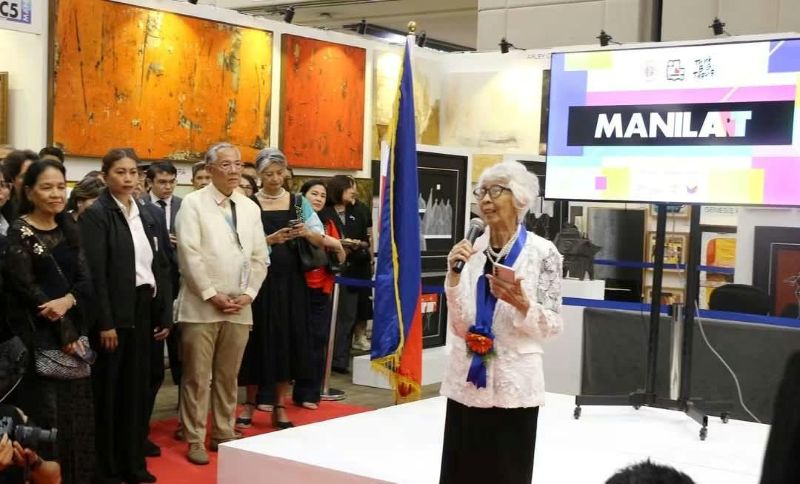
National Artist Imelda Cajipe Endaya at ManilART ’26
Other than the first Filipina National Artist for Visual Arts Imelda Cajipe Endaya, ManilART ’26 was also graced by Taguig mayor Lani Cayetano, NCCA chair Eric B. Zerrudo, deputy executive director Bernan Joseph R. Corpuz, and senior director for Arts and Culture at the Ayala Foundation, Jorell Legaspi.
On ManilART’s direction moving forward, Loste says, “The first is to connect visual art more actively with other creative disciplines. I see this as a way to expand our audience, encourage new forms of collaboration, and respond to how people experience culture today. We remain a trade fair for the visual arts, but we can engage with other creative fields without losing sight of our core purpose.”
Loste believes that “the way forward is not simply to make the fair bigger. It is to help build a stronger, more connected art ecosystem—one in which galleries and artists can thrive, regional initiatives can grow, and more people can encounter art in their everyday lives.”
The president of ManilART concludes, “The challenge is to remain clear about what ManilART is while staying open to what it can become.” And certainly, that is “Where the Line Begins!”
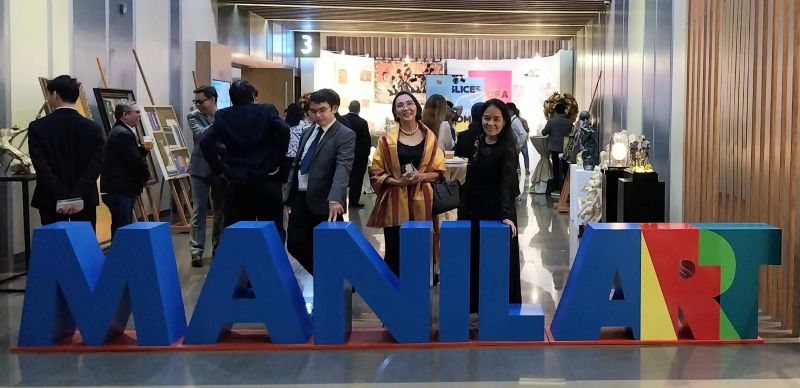
The author with grandson Raja and friend Grace Chua
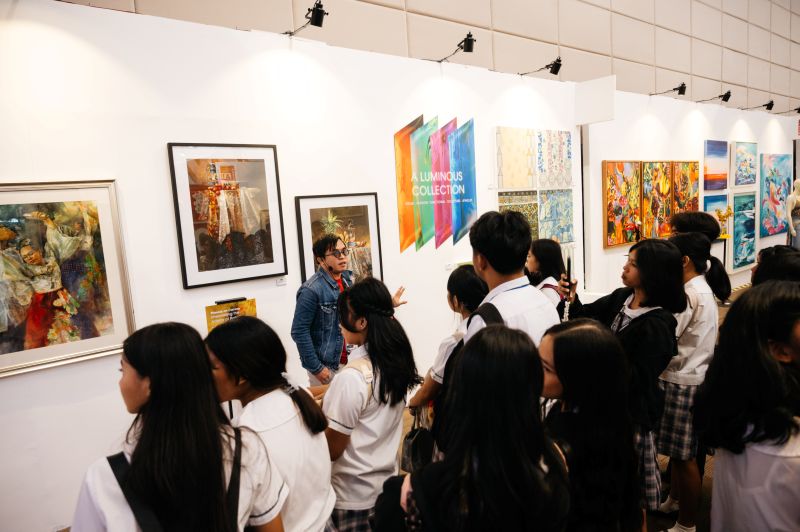
Taguig City students toured by artists at ManilART


