
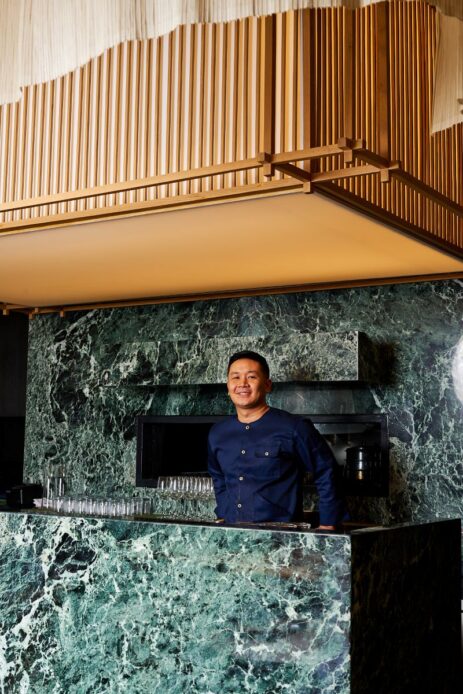
In glossy write-ups, Chef Jorge Mendez is often cast as a culinary demigod, plating dishes that glimmer with contrast—crisp against silken, smoky beside bright, each element tuned like notes in a chord. In person, he looks younger than his 33 years and speaks with a playful ease, laughter bubbling up as he talks. As executive chef and creative director of Cibo restaurants, he carried the impression of being Margarita Forés’ chosen successor. That role took on more weight when he opened Makanai, a Japanese restaurant with global influences, envisioned as his own but still carrying traces of his mentor’s influence.
When Margarita suddenly passed away last February, Mendez faced a daunting challenge: how to create a menu that had begun as a collaboration. “My only way to do the menu was through memories with Margarita,” he recalls. “I know her palate, how she thinks. Sometimes she would just give me the ingredients and say, ‘It’s up to you, Jorge. Surprise me!’”
One wouldn’t expect pasta at a Japanese restaurant. “Is it really Makanai with Margarita without the pasta?” he thought. But before she died, Margarita never allowed herself to be credited. “Oh, no, you just put whatever you want. Because that’s your concept. I just want you and me to work together,” she would tell him.
Mendez insisted: “No, no, no.” They didn’t settle on what food really would define Makanai while she was alive. That became one of the hardest parts of creating the menu. But when he was conceptualizing it, there were two things he knew had to be there: First, a pasta. Second, a dish that was Margarita’s favorite, but given his spin. He says, “It’s more of memories.”
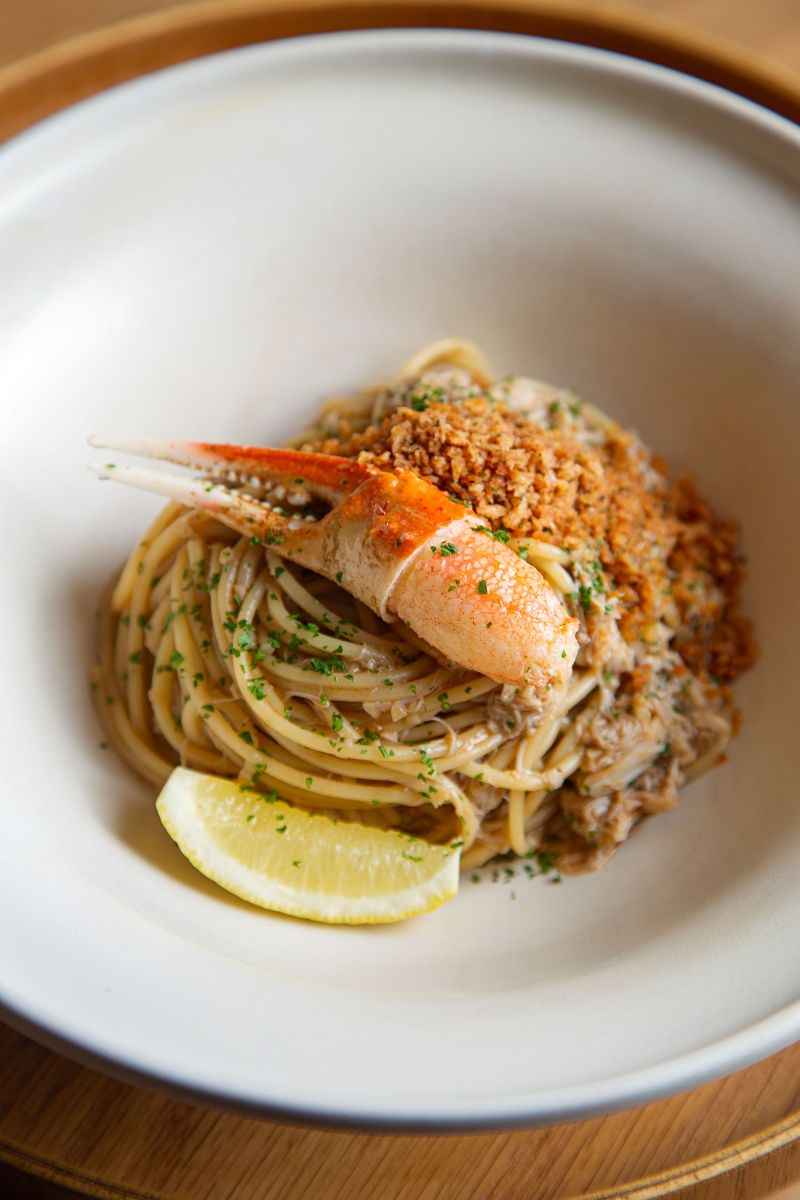
Crab aglio olio
If Margarita were to sit down at Makanai today, Mendez says the first dish he would want her to experience is the crab aglio olio, his dedication piece. “She loved tomato-based pasta, very light, and always something that could be paired with white wine. Very her,” he says.
The dish sounds deceptively simple, but its execution reveals the discipline of Mendez’s training. A guest diner, who once lived in Italy, gave it a thumbs up for tasting “authentically Italian.” Each strand of spaghetti is coated in sauce, never clumping or breaking. Mendez explains why: “The secret is the stock. We build it from the crab shells, then fold the crab meat into the sauce itself, not just scatter it on top. That way, the flavor becomes part of the sauce, like a hidden spice.”
Many restaurants serve pasta that clumps together, breaks, or sits in a puddle of oil. At Makanai, the noodles are cooked so that the starch naturally binds with the oil and garlic, creating a sauce that is glossy, light, and flavorful without additives. “You have to agitate the pasta in the pan at just the right moment,” he says. “It releases starch, which emulsifies with the oil. Margarita calls it palaway sa pasta (to coax or tease the pasta). That’s why the sauce clings to every strand without feeling heavy. The pasta is full of protein.”
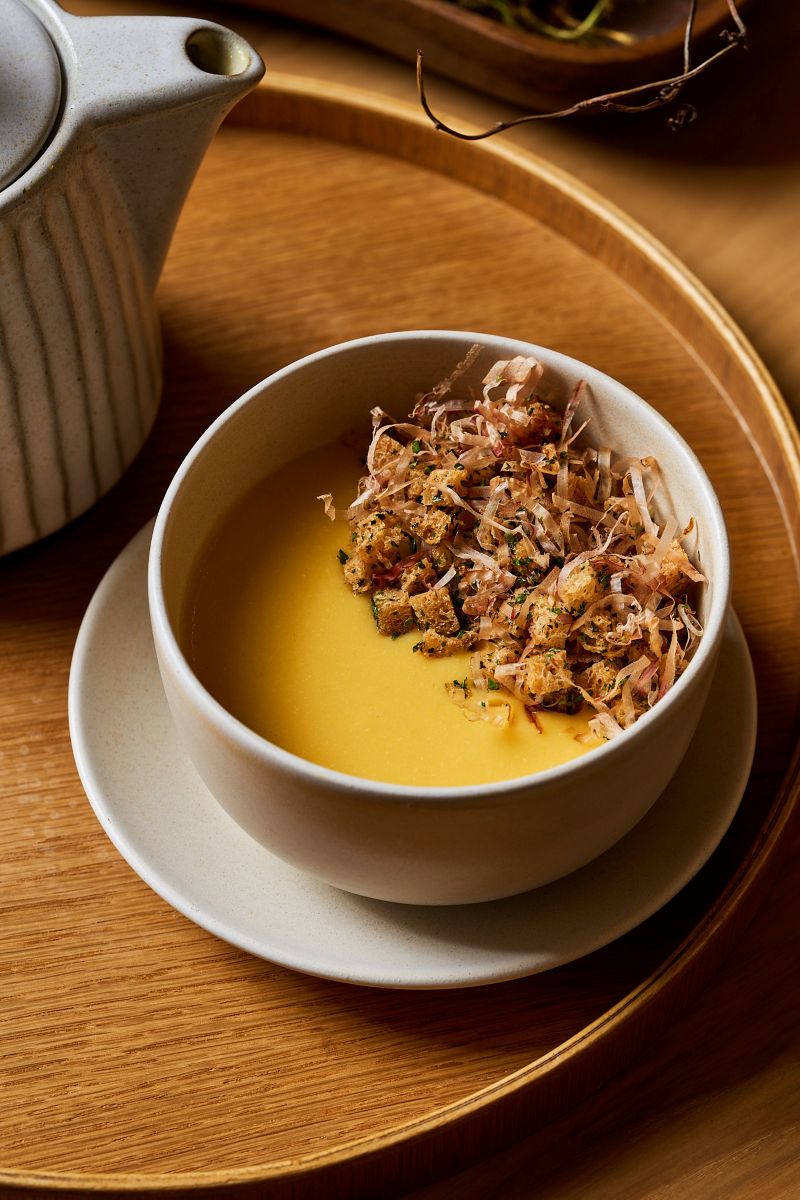
Sweet corn chowder
This technique, learned from Italian chefs, requires precision, patience, and timing. It is also a mark of a disciplined kitchen. “We train our staff for months so they can do it on their own,” Mendez says. “Before I leave the kitchen, I make sure my mark—and Margarita’s mark—is there. She was very meticulous.”
Another of those memories was of Spaghetti Napolitan, the Japanese version of tomato-ketchup pasta. The classic Napolitan dish has soft-cooked spaghetti tossed with onions, green peppers, sometimes mushrooms, and meat (such as sausage or bacon), all coated in a sweet-tangy tomato-ketchup sauce.
Mendez wanted to make Napolitan feel more “Italian” for Margarita. Hence, the Bacon and Egg Napolitan. Instead of relying solely on the Japanese ketchup style of sauce, he emphasizes the texture of the spaghettini, the balance of tartness and sweetness, and adds toppings she loves—bacon and egg—because she was always a fan of bacon.
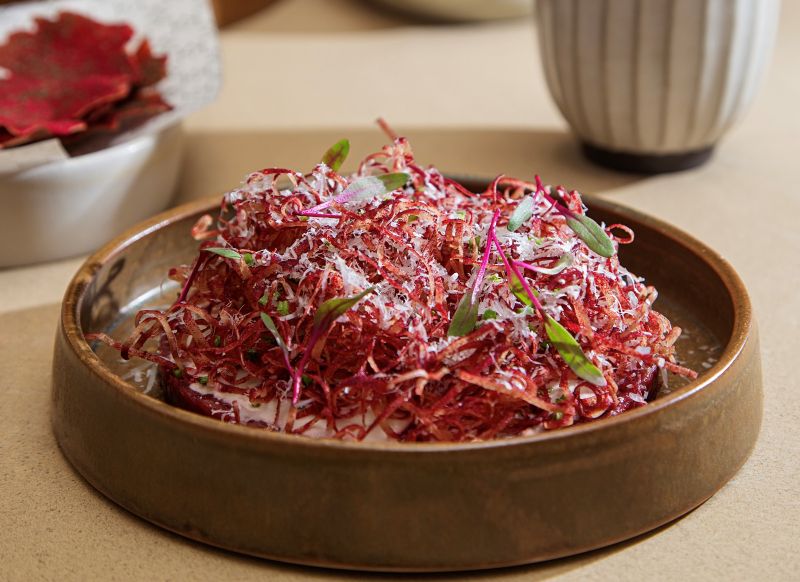
Gyoza tartare
Yet another of Mendez’s surprises now on the menu is the gyoza tartare. It was inspired by Margarita’s twin loves: French-style tartare and Japanese gyoza. “Normally you serve gyoza hot and seared,” Mendez explains. “Here we serve it raw, like a typical tartare, but seasoned with the same flavors you’d find inside a gyoza.” Instead of the usual onion base, he folds in ginger and garlic to mimic the paste-like filling of dumplings, then tops the minced beef tenderloin with wasabi sour cream and a drizzle of organic honey.
The more traditional counterpart is the pork-and-chives gyoza, a dish that Forés often requested. “She loved gyoza, and she always wanted a version with pork,” Mendez recalls. To achieve balance, he mixes pork fat into the filling so that the richness bursts when you bite into it, with the sharpness of chives kept in check. A visiting foodie who sampled it praised its balanced flavors, noting that the onion, fat, and herbs complemented one another rather than overpowering the palate.
Together, the two gyozas show both sides of Mendez’s cooking: one adventurous, one classic, and both carrying the imprint of his late mentor’s instincts.
Other Margarita favorites on the Makanai menu reflect the same blend of memory and play. Take the Unagi Fish and Chips. Forés adored fish and chips but rarely touched unagi, the rich, oily freshwater eel often found in Japanese cuisine. “I thought, what if we put the crunch she likes into unagi so she could enjoy it?” Mendez says. The eel is first grilled, then battered and fried until crisp. Instead of the usual tartar sauce, it comes with a glaze of unagi tare, a sweet-salty reduction similar to teriyaki but enriched with the eel’s flavor. The result is at once familiar and surprising, comfort food with a Japanese accent.
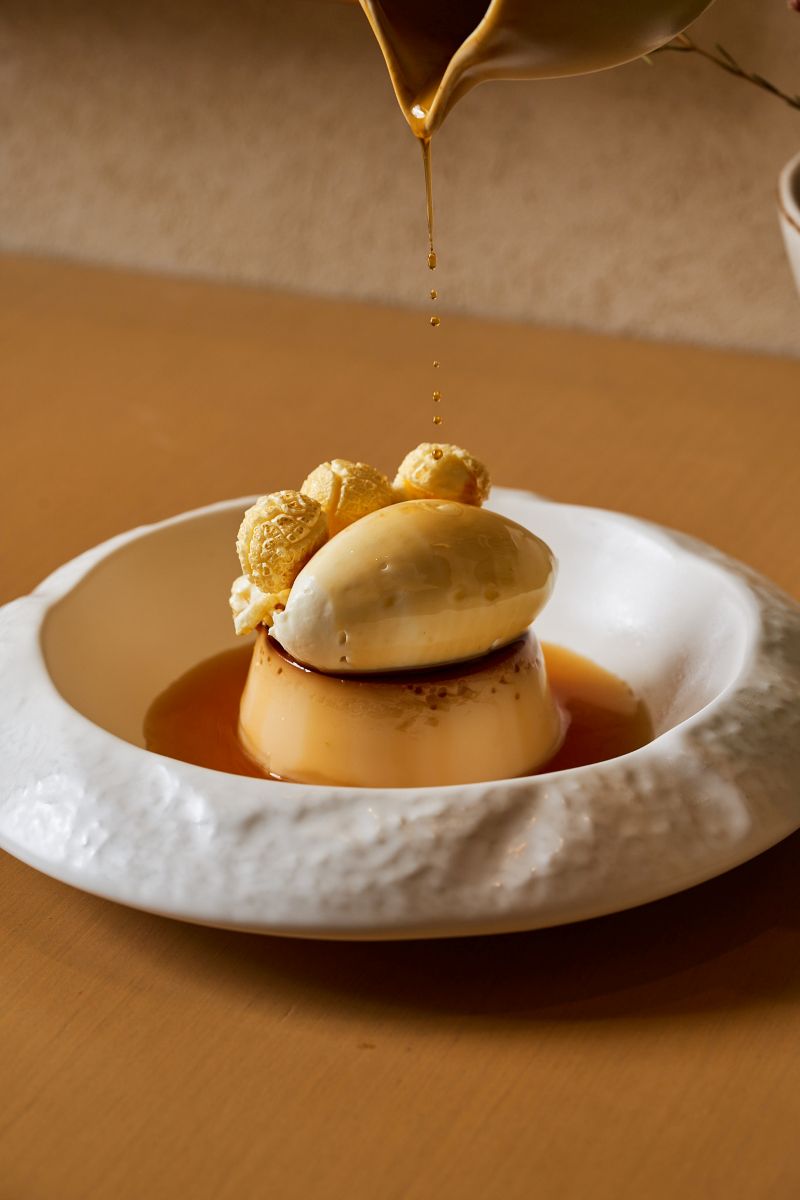
Popcorn purin
Dessert brings another playful nod to her tastes: Popcorn Purin. The Japanese version of crème caramel or flan, purin is smooth and eggy with a caramel layer. Margarita loved caramel popcorn from a particular Japanese brand, though it was difficult to source outside Japan. Mendez found a way to fold that flavor into a custard base. “We infused the taste of popcorn into the flan itself, then finished it with different kinds of popcorn on top,” he explains.
The Dark Chocolate Cake with Matcha was created despite (and for) Margarita’s well-known aversion to chocolate. “She doesn’t like chocolate at all,” Mendez says, “but if she were to eat it, it would have to be dark chocolate because it doesn’t taste as sweet or heavy.” That challenge became his inspiration.
The result is a moist, supple cake made with dark chocolate, its bitterness softened by a creamy layer of matcha. The green tea lends a grassy sweetness and faintly bitter edge, cutting through the dark richness of the cake while adding brightness. On top sits a chocolate tuile, a delicate and crisp wafer, made from egg whites left over from the truffle pasta. Instead of letting them go to waste, Mendez folded them with dark cocoa powder to create a feuilletine-style garnish. The dessert tastes restrained, never cloying, its deep chocolate balanced by the freshness of matcha.
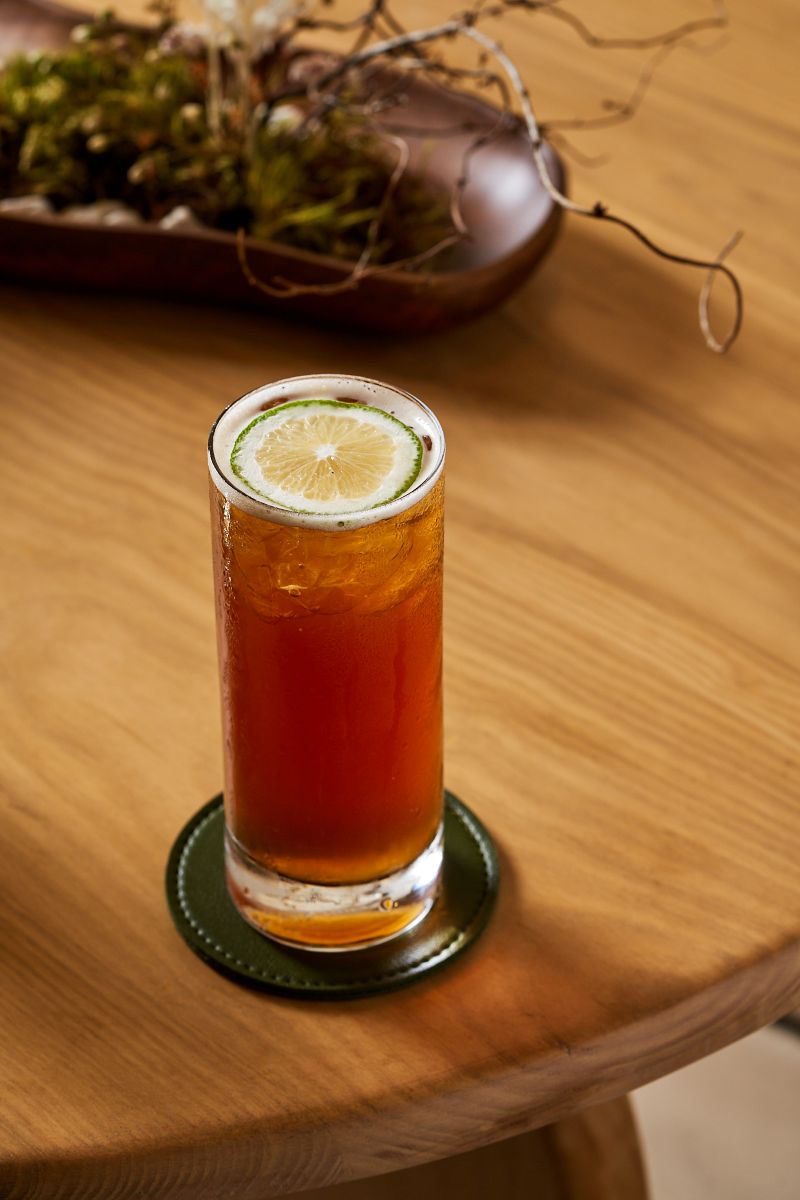
Makanai iced tea
For drinks, Makanai offers its signature iced tea, which bridges the restaurant’s Italian-Japanese spirit. “Technically, it’s a mix of Cibo and Makanai,” Mendez explains. Cibo’s iced tea has long been loved for its bright, tart profile—premium-tasting, never overly sweet. At Makanai, he builds on that with a Japanese twist, using teas such as oolong or genmaicha when available. The oolong adds a smoky depth that lingers at the back of the throat, giving the drink a rounded finish that complements the tartness. It feels refreshing yet layered, as if something familiar had quietly taken on a different flair.
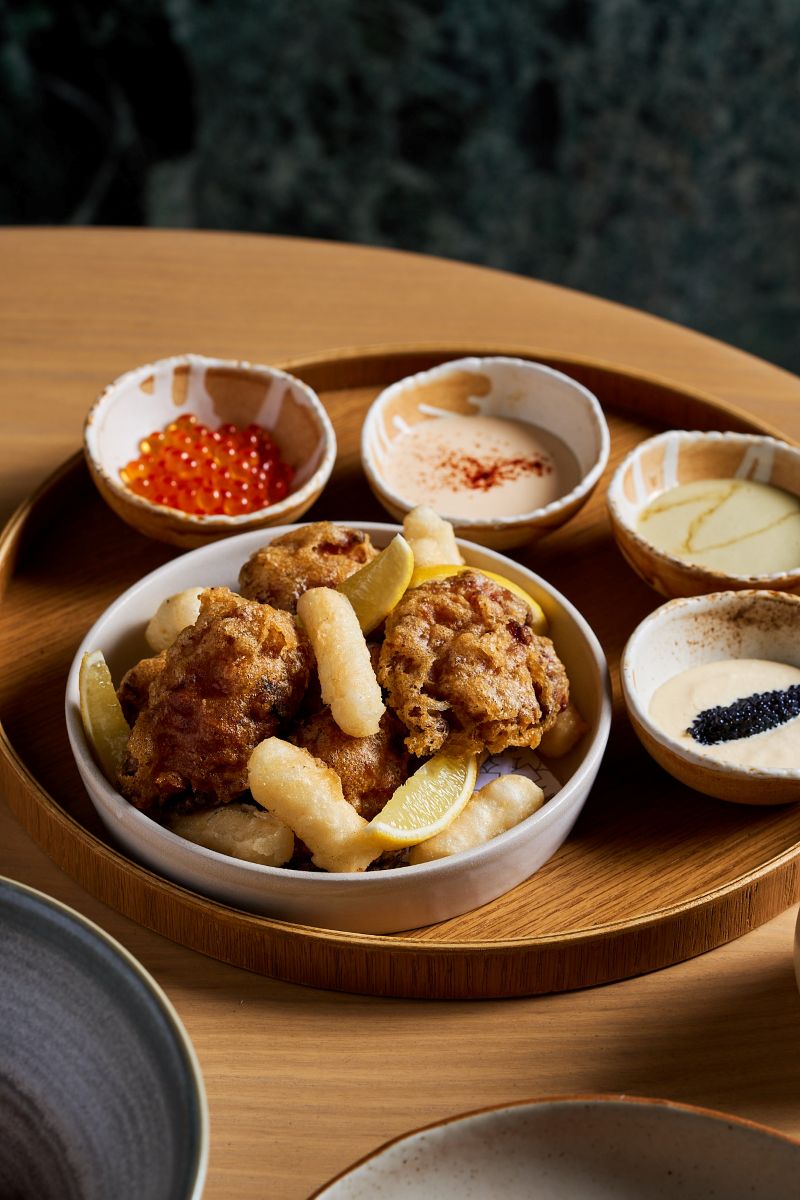
Makanai ‘karaage’
If the dishes tell stories, so does the man behind them. Mendez’s craft was sharpened by years of hard experience. He grew up in a family of cooks, learning early from his mother. At 17, he and his girlfriend (now his wife and “finance officer”) had a daughter, Caprice Cayetano—now 16 and a Kapuso talent. To prove he could stand on his own, Mendez took on line cook jobs in various restaurants, even fudging his age on resumes to get his foot in the door.
He formalized his training at Global Culinary Academy in Mandaluyong, then broadened his skills through stints in Japan, Singapore, Hong Kong, and New York, learning from chefs abroad the kinds of best practices that rarely picked up in the local scene.
His turning point came more than 10 years ago when he met Margarita during a job application for sous chef at Alta, the high-end restaurant in Ascott BGC. She recognized raw potential in him. Once she asked him for a special presentation at Madrid Fusión 2016. For that, he created audacious dishes: Five Eggs in the Chicken, a mille-feuille of crab, and cow udder turned into a rich spread that tasted like something between tofu and cheese, served alongside jams.
Over time, Mendez was promoted to head chef. Their efforts at Alta transformed the operation. Where before Alta’s breakfast buffet served just 50 diners, under their collaboration it scaled up to 350 people. They also expanded services to include bar, in-room dining, and banquets. Though the partnership with Ascott eventually ended, Margarita continued to bring Mendez along into her ventures.
In 2016 she earned the title Asia’s Best Female Chef, and she drew Mendez into her guesting stints abroad, most memorably in Japan. At one event in Tokyo, Chef Hiroyasu Kawate of Restaurant Florilege shouted out “Makanai! Makanai!” During lunch, Jorge and Margarita asked what that meant. They learned makanai is the Japanese word for the meals cooked for restaurant staff—essentially “family meal” for the kitchen. The concept struck a chord: a name born from kitchens, shared meals, and collective soul. The chef kept it in mind for a future project.
By his mid-20s and in spite of exposure to high-caliber kitchens, Mendez entered what he calls “semi-retirement” and becoming his own boss. He founded Modan Fine Dining, and also launched side concepts like Some Thai and Mugen Ramenya. Then one day, Margarita called. She needed a consultant. “It was as if I was working full-time again,” he says. “You know Margarita—when she needs you, she needs you. I’m flexible.”
After the pandemic, Mendez was elevated to executive chef of the Cibo restaurants.
One day, Margarita floated the idea of a restaurant collaboration. “I told her, ‘What if we do Makanai?’” Mendez recalls. “Japanese with global influences and also memories of Margarita, because we traveled a lot.”
There is one practice of hers that he carries with him. “She treated everyone like family. When I first worked with her at Ascott, before she left, she would say goodbye to everyone, down to the dishwasher.”
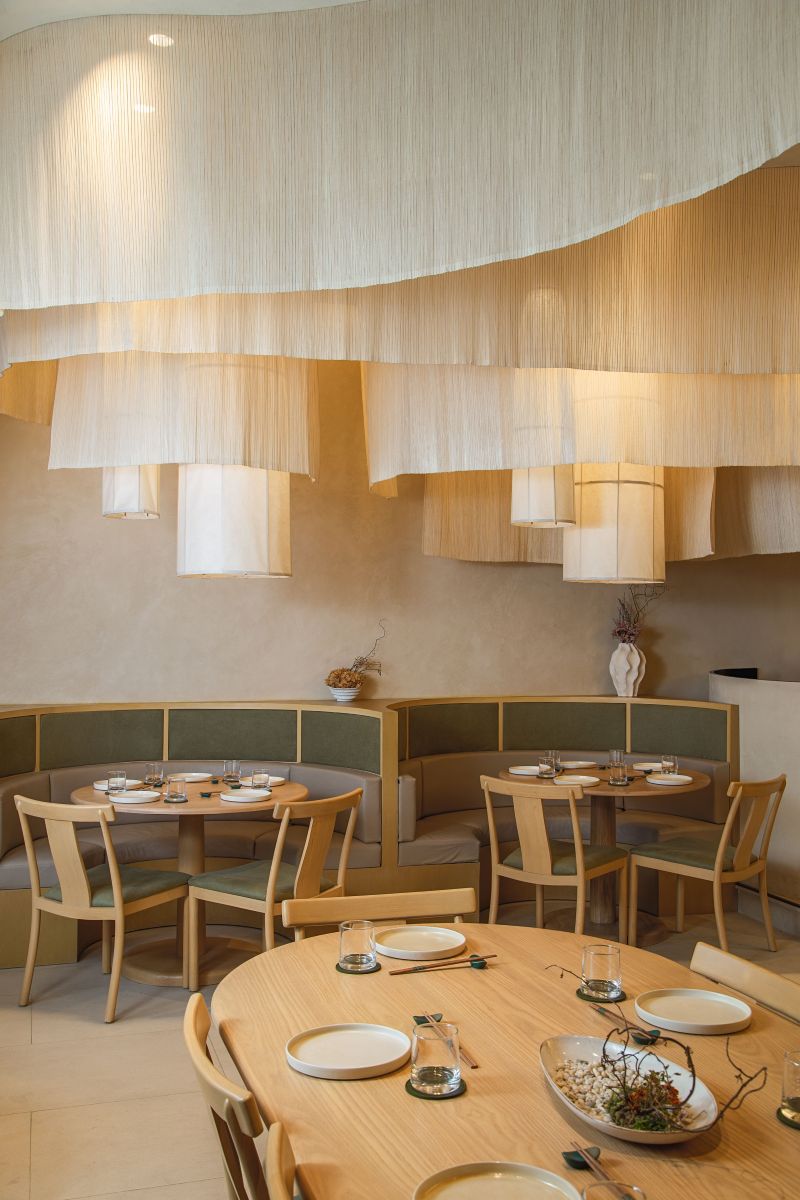
Minimalist interiors that highlight the art of the food
For Mendez, that spirit is what gives Makanai its soul. He hopes people will remember it not as a “staff meal,” but as a place where a familial atmosphere infuses every plate. “Everyone who enters that door will be treated as family. That’s how I felt every time I ate in her restaurant. It wasn’t just about the food. It was the warmth, the way she spoke to us and made us feel at home.”
Makanai was recently declared a Michelin Selected restaurant for 2027. It is located at Unit 1B, West Gallery Place, 9th Ave. corner 28th St., Taguig, tel. no. (0968) 125-3808.


