
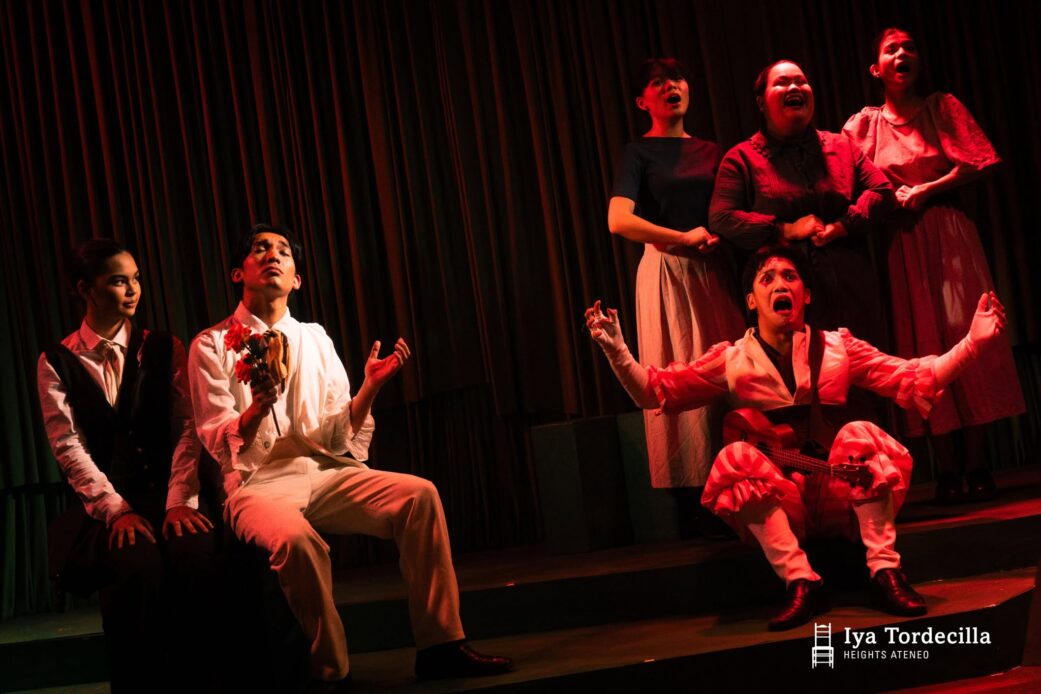
A Shakespearean comedy like Twelfth Night may already be familiar to many of us, but
Tanghalang Ateneo’s trainee production of Ikalabindalawang Gabi, translated into Filipino
by National Artist Rolando Tinio, finds its own charm in the distinct quirks and idiosyncrasies of its characters. Directed by Miel Barrera Abong, the production puts comedy at the forefront of its staging.
Sabel Lamadrid’s portrayal of Viola, Sebastian’s (Jio Japson) twin who gets separated
from him following a shipwreck, brings to mind a sheltered sibling suddenly forced to
stand on her own. Her characterization carries an innocence that makes her decision to
disguise herself as a man named Cesario and work for Duke Orsino (Jeshua Cases) of
Illyria feel like an impulsive response to her situation.
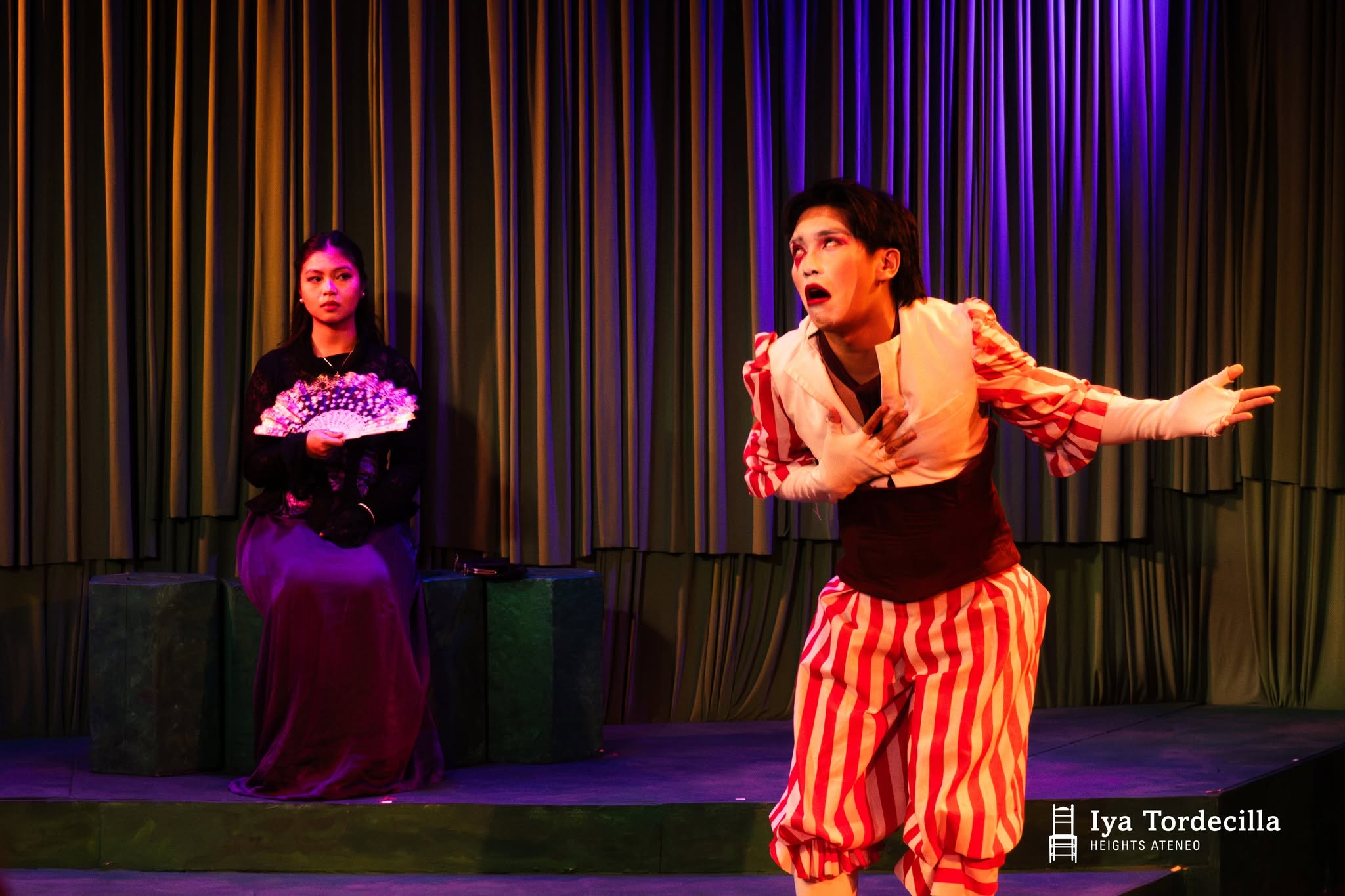
The production also takes liberties with the original source material. (Photo by Ivy Tordecilla for Heights Ateneo on Tanghalang Ateneo FB page)
There’s little effort to fully transform Viola’s appearance into Cesario. Costume designer
Albriz Bagsic dresses Lamadrid in nothing more than a pair of pants and a suit vest, with
her hair tied up in a bun to suggest her disguise. The production seems less concerned
with making the transformation entirely believable than with drawing attention to Viola’s
clumsiness, which Lamadrid emphasizes through her exaggerated facial expressions and
mocking gestures.
Tinio’s translation also presents a noticeable challenge for the cast. At times, the dialogue
seems to hinder their ability to convey the full sense and depth of certain scenes. However, given the production’s clear emphasis on comedy and eliciting laughter, the performers make up for this through visual gags and physical humor. Juan Miguel Ponce, in particular, makes good use of these in his portrayal of Malvolio. Rather than presenting him as a conniving, greedy man hoping to marry Lady Olivia (Bea Villena) and take advantage of her status, Ponce plays him as a foolish man desperately in love with his employer, making him an easy target for the others’ trickery. This is especially evident when Malvolio appears in bright yellow cross-gartered stockings, having mistakenly believed that wearing them would win Olivia’s affection.
The mischievous trio of Maria (Rona Layne Badilla), Sir Toby (Sen Mendoza), and Sir Andrew (Yeoj De Vera) also command the stage, with their scenes given considerable room to unfold in keeping with the production’s comedic direction. Their chemistry and timing make their playful schemes particularly entertaining, especially as they find new ways to make a fool of Malvolio.
Aldrie Valmonte’s lighting design adds to the humor of their scenes, particularly when the three hide in different corners of the stage and change their poses as they keep watch over Malvolio. The shifting lights draw attention to their movements, making their attempts to stay hidden just as amusing as the plot they are conspiring to carry out.
Like Ponce’s Malvolio, De Vera’s Sir Andrew is portrayed with a lighter touch, emphasizing his frailty and foolish infatuation with Lady Olivia. However, De Vera’s portrayal lacks direct interaction with Olivia, leaving his misplaced affections and the absurdity of his pursuit largely unexplored. Badilla, meanwhile, delivers a strong performance as Maria, balancing mischief with a slyness that makes her an especially entertaining presence in the trio.
The production’s commitment to comedy comes at the expense of other aspects of the
story. Themes of romance, grief, and betrayal, which give Twelfth Night much of its
emotional weight, often take a backseat and become little more than devices for humor.
KD San Juan’s portrayal of Feste, the jester, suffers from a similar lack of dimension. While San Juan is well-suited to the production’s comedic approach, Feste’s presence feels less distinct, at times serving as little more than an addition to the mischievous trio. His character also offers limited variation in emotion and nuance, leaving little room for the wit and occasional introspection that make the jester an important figure in the play.
On the other hand, there’s undeniable chemistry between Villena, Lamadrid, and Cases, but the romantic entanglement among their characters lacks the depth needed to make their shifting affections convincing. Orsino’s love for Olivia, Viola’s growing affection for Orsino, and Olivia’s sudden attraction to Cesario are all central to the play’s complications, yet their emotional development feels somewhat rushed. This is particularly apparent in Olivia’s transition from being infatuated with Cesario to embracing Viola as a sister once her identity is revealed. While the shift offers a convenient resolution to the twisted fate, it happens so quickly that the resulting sisterhood feels more like a necessary plot conclusion than a relationship that has been meaningfully established.
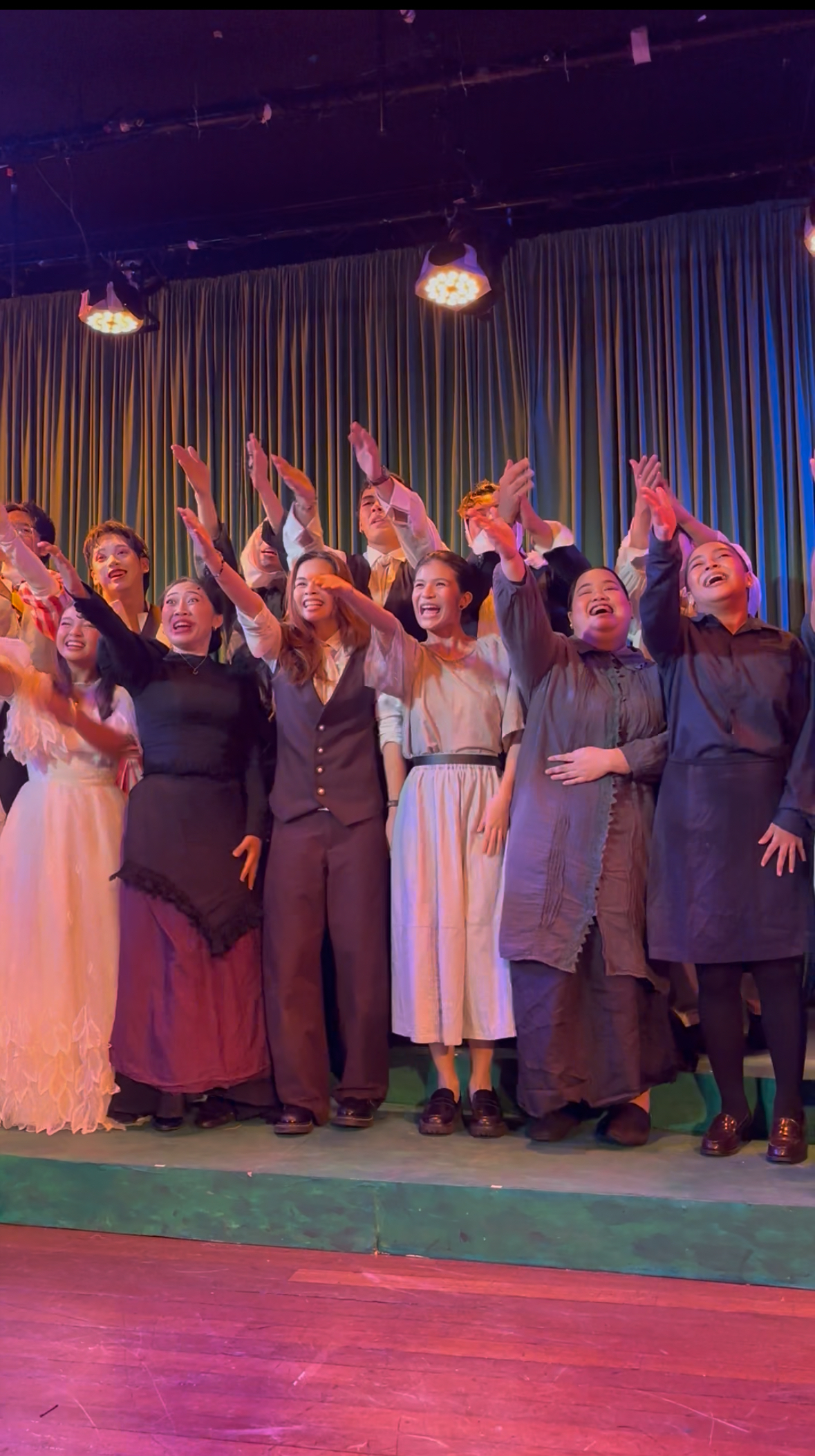
The cast at curtain call (Photo by Trixia Policarpio)
Cases initially portrays Orsino as a vain man hopelessly smitten with Olivia, bringing a certain charm to his lighthearted characterization. However, when Viola’s identity is revealed, and the love triangle begins to unravel, the heartbreak that should accompany Orsino’s realization is largely sidelined. His shift in affections toward Viola feels just as abrupt, leaving little room to understand how his feelings for Olivia give way to a newfound love for Cesario’s true identity.
Tanghalang Ateneo’s production also takes considerable liberties with the source material, changing it in ways that distinguish it from the familiar ending of Shakespeare’s comedy. Under Abong’s direction, alongside dramaturgs Gab Mactal, Keith Bernas, EricaDeliguer, Enrico Figueroa, Isa Geronimo, and Meeka Sayaboc, the production reimagines important plot points. Most notably, the change to Sebastian’s fate, with him returning as a ghost in this staging, appears intended to give Viola closure over the loss of her brother while paving the way for her and Olivia to accept each other as sisters. However, neither development feels fully earned. The production offers little build-up to Viola’s acceptance of Sebastian’s death or to the bond that eventually forms between the two women. As a result, these moments lack the emotional depth needed to make Viola’s journey through grief and her newfound sisterhood with Olivia fully convincing.
In the end, Tanghalang Ateneo offers a lighthearted take on Shakespeare’s classic, letting
its characters’ quirks and gullibility drive the plot and deliver a night full of laughter.
Tanghalang Ateneo’s ‘Ikalabindalawang Gabi’ ran from Nov. 6 to 8 and Nov. 13 to 15 at Gonzaga Fine Arts Theater, Ateneo de Manila.


