
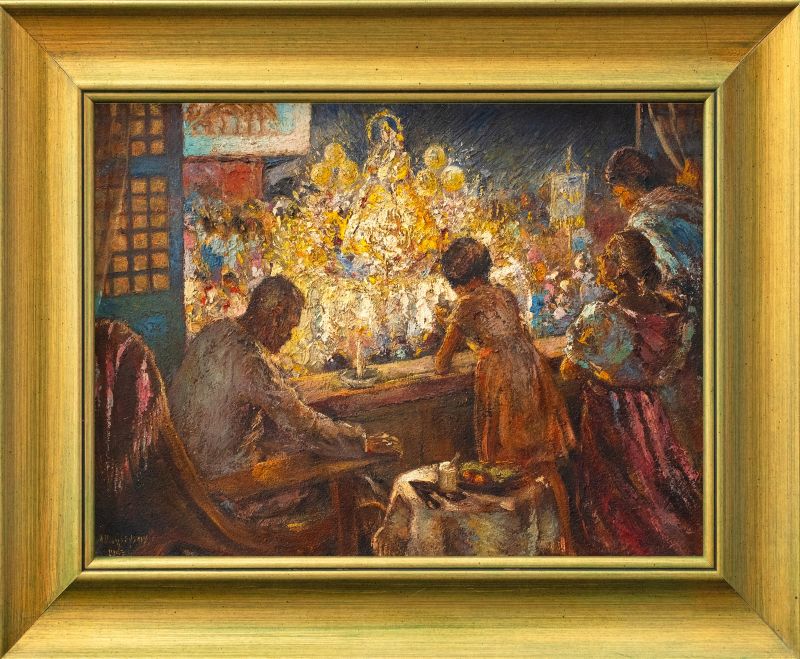
Anita Magsaysay-Ho’s loving family portrait, Procession, depicting her childhood years in her family’s ancestral home in pre-war Paco, Manila, is a highlight of León Gallery’s year-end sale, The Kingly Treasures Auction, happening on 28 November 2026 at 2 pm.
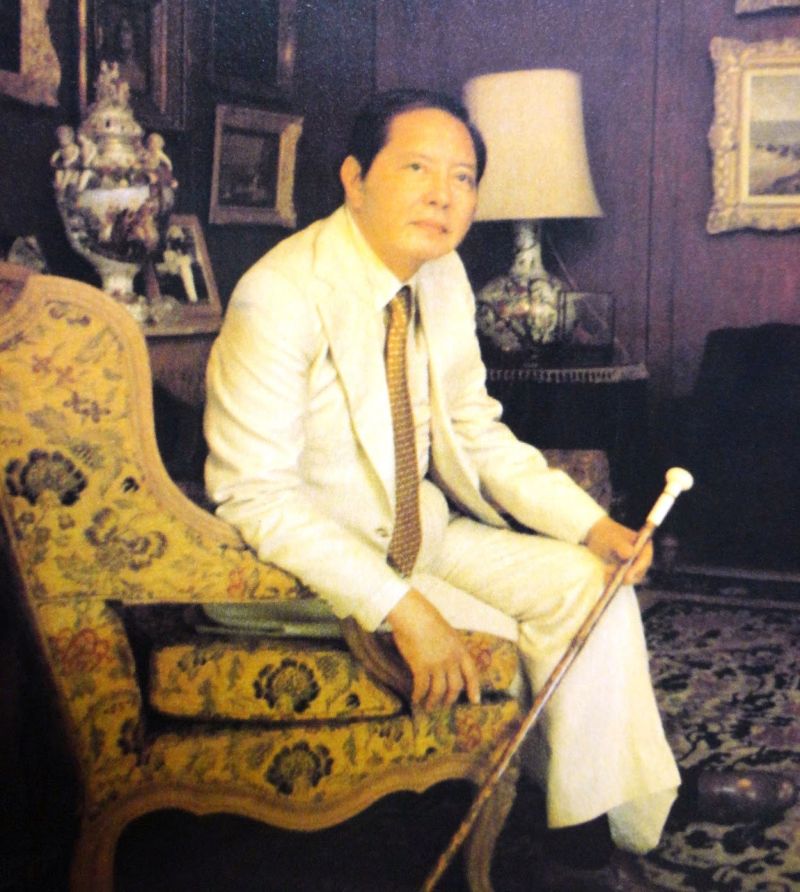
Don Luis Ma. Araneta y Zaragoza in his Forbes Park mansion, surrounded by his great collection of paintings
The work, from the storied trove of eminent architect, philanthropist, art and antique connoisseur, scholar, collector, and heritage advocate Don Luis Ma. Araneta, offers a rare glimpse into Anita’s beautiful childhood in their ancestral home in Paco, Manila. The work features a unique portrait of Anita as a young girl accompanied by her family: her granduncle Don Teodoro Yangco, her grandmother Ramona Ferriols Corpus, and her mother, Doña Amalia Corpus Magsaysay, who was also Ramona’s daughter.
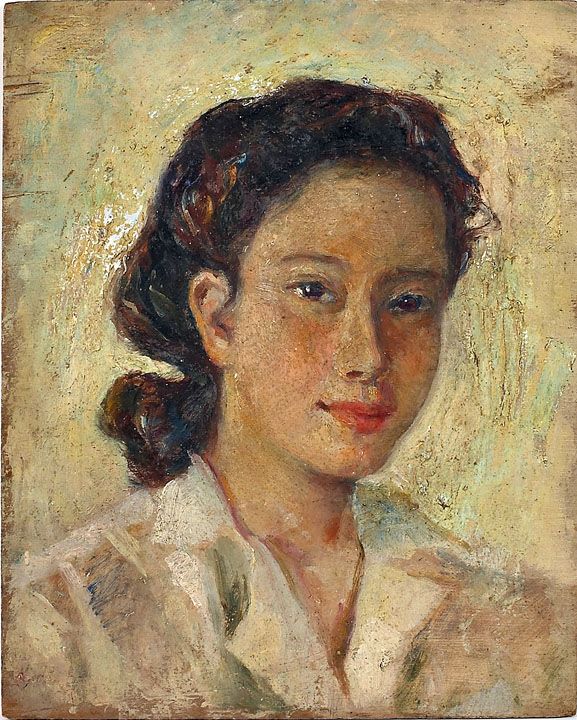
Anita’s self-portrait in her 20s or 30s
The work is highlighted in three of the most important publications on Anita’s work: Alfredo Roces’ Anita Magsaysay-Ho: In Praise of Women, Anita’s memoirs published in 2000, and the exhibition catalog of Anita’s landmark retrospective at the Metropolitan Museum of Manila in late 1988. The show, which marked Anita’s Philippine homecoming after four decades of living abroad, was the Philippines’ first large-scale, full retrospective exhibition, attended by Manila’s crème de la crème and said to have caused a massive traffic jam along the stretch of Roxas Boulevard and nearby streets during the hype of its opening cocktails.
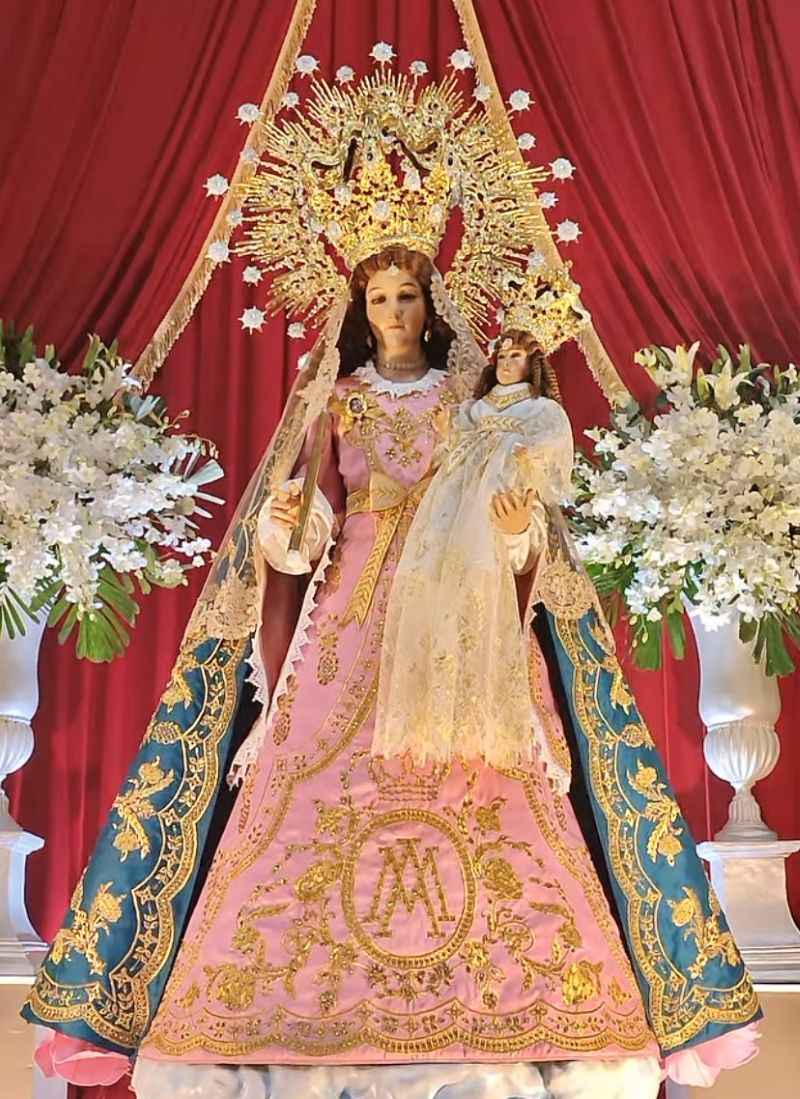
The Nuestra Señora de la Purificación y Candelaria de Paco, the Marian image featured in Anita’s painting (Photo from Wikimedia Commons, Ihavearidiculousname)
Don Luis was most likely drawn to this work by virtue of its devotional subject, reminding him of his youth when he and his mother, the pious Doña Carmen Zaragoza y Roxas, “used to dress the family’s images of Santa Teresa de Avila and San Juan de la Cruz and prepare their carrozas during the fiesta of Nuestra Señora del Carmen” in pre-war Quiapo, Manila, as noted by social historian Toto Gonzalez.
In her annotations to Alfredo Roces’ monograph on her works, Anita wrote that this early work bears the influences of Fernando Amorsolo and Fabian dela Rosa, the two foremost artists of the pre-war era and Anita’s former professors at the University of the Philippines (UP) School of Fine Arts.
The painting depicts the procession of the Nuestra Señora de la Purificación y Candelaria de Paco, the patroness of Paco enshrined in the San Fernando de Dilao Parish. The devotion to the Virgen de la Purificacion y Candelaria in Paco dates back to the 16th century, with the first church of Paco (1580) originally dedicated to the La Purificación de Nuestra Señora. Lt. Don Cristobal Mercado commissioned the creation of the first image of the Virgin in 1600 and donated it to the Paco Church. However, this image was transferred to Laguna in 1603, and is now venerated at the Mabitac Church.
A second image was carved in the 1920s, revitalizing the people of Paco’s devotion to Our Lady. This image has been one of Manila’s most revered, along with the Señor Santo Sepulcro, another Paco religious treasure. In the painting, the Virgin Mary is paraded in an elaborate carroza illuminated by candles, accompanied by the Catholic faithful, some carrying estampas or banners bearing images of religious figures.
The work is set in peacetime Manila, sometime in the 1920s, during Anita’s girlhood. The feast of the Nuestra Señora de la Purificación y Candelaria de Paco is celebrated every February 2, coinciding with the Feast of the Presentation of the Lord, which also commemorates the humility of Mary by submitting herself to ritual purification after childbirth, in accordance with the Jewish laws of her time, notwithstanding her virtue as the Immaculate Conception.
Anita paints a portrait of herself (in her signature bob cut from childhood) as a curious little girl, looking out the window while standing atop a chair as the carroza of the Virgin passes by their house. Don Teodoro, whom Anita called “Lolo Doyong,” wears a camisa de chino and sits on a butaka (a traditional Filipino lazy chair of the affluent) in solemn prayer. Anita’s Nana, with her signature tortoise shell comb and neat hair shining with coconut oil reflecting the carroza’s light, can be seen kneeling, her eyes in a zealous gaze as she prays fervently to Our Lady. The woman on the rightmost side is presumed to be Anita’s mother, Doña Amalia Corpus.
“This is a scene from our house in Paco. It was a custom to kneel by the window to pray as the image of the Blessed Virgin or the town’s saint passed,” Anita wrote.
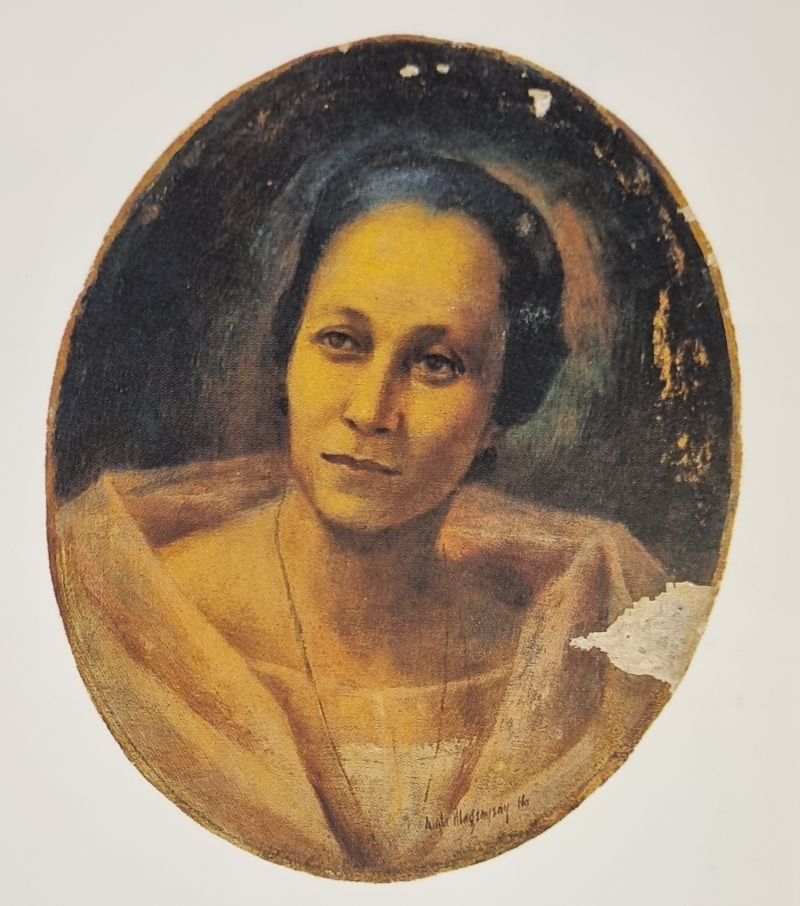
Anita’s 1945 portrait of her ‘Nana,’ Ramona Ferriols Corpus (Reproduced from Anita Magsaysay-Ho’s ‘An Artist’s Memoirs,’ 2000)
The subject is set in the splendid bahay na bato where Anita grew up and spent her most cherished childhood years. The house was built and owned by shipping tycoon and the “Rockefeller of the Philippines,” Don Teodoro Yangco, her granduncle and half-brother to her grandfather, Pablo Corpus. Don Teodoro’s father was Capitan Luis Yangco, a notable financier of the Philippine Revolution and the “King of Manila Bay and the Pasig River” due to his prolific inter-island shipping services catering to both passengers and freight. Don Teodoro built the house for his mother, Doña Ramona Arguelles, whom Anita called “Lola Monang.” In 1900, Don Teodoro, together with Doña Ramona, Anita’s Nana Ramona (Pablo’s wife), and the young Amalia Corpus moved into this house.
Don Teodoro once served as Philippine Resident Commissioner to the US Congress from 1917 to 1920, succeeding future President Manuel L. Quezon. He would serve as president of Insular Life, the pioneering Filipino life insurance company, and the influential Chamber of Commerce of the Philippines, which he also co-founded. Don Teodoro also established a major dry-goods market, Yangco Market, in bustling Divisoria and Bazaar, Siglo XX, one of pre-war Manila’s leading department stores and the first of its kind owned and managed by a Filipino. Notably, the bazaar’s initial capital was garnished by Don Luis from Don Teodoro’s salary when he first worked as an employee/apprentice under his father’s shipping business in the 1890s.
Don Teodoro was disinherited in 1907 by his father due to the latter’s accusations that his son hurled “insulting language” at him. Nevertheless, he boldly forged his own commercial ventures. He became the sole proprietor of Bazaar Siglo XX. Don Teodoro established his own transportation firm, Try-Tran (Teodoro R. Yangco Transportation), managing and supervising land and water transit. Try-Tran would eventually expand into a line of 60 autobuses traveling from Manila to Zambales and the Ilocos, and Manila to Rizal and Laguna. The company also offered taxi cabs, garage cars, and auto-calesa services in Manila, and had shipping lines and steamship services to Cavite, Pampanga, Zambales, Bataan, Aurora, Bicol, and Northern Samar. Don Teodoro also established his own shipyard, Yangco Drydocks and Shipways, and had extensive operations in real estate.
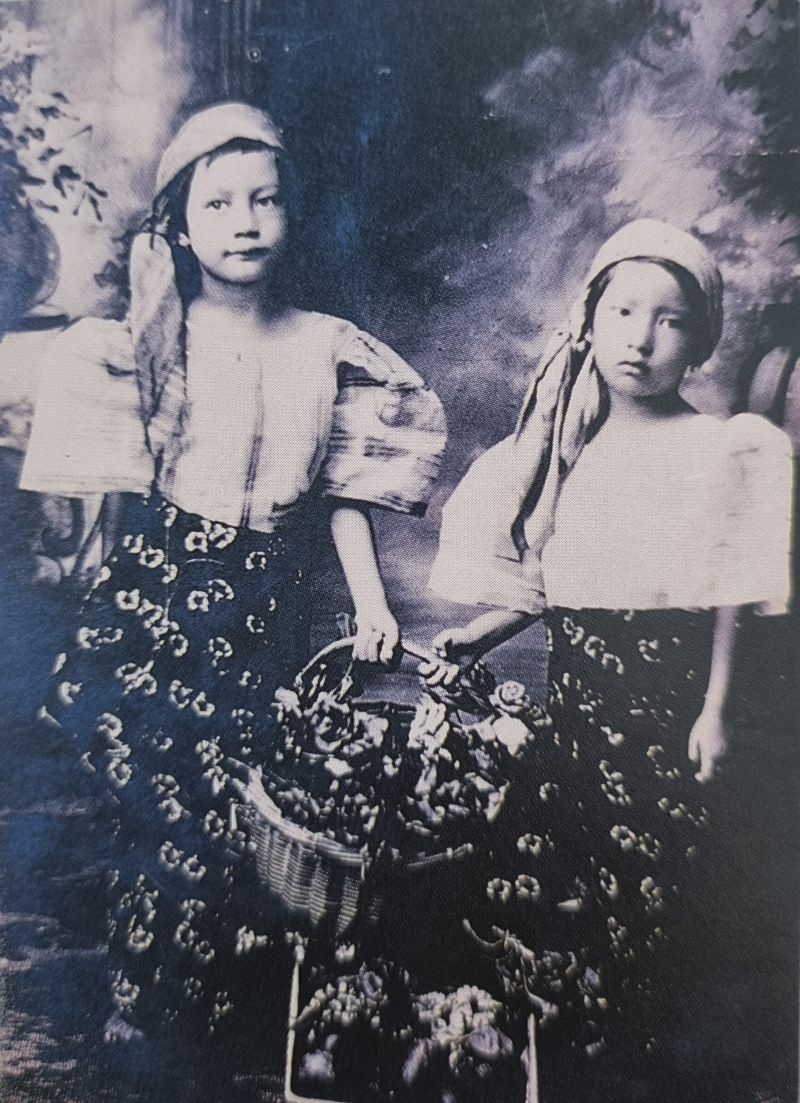
Anita (right) at five years old, with her sister Ramona (Reproduced from Anita Magsaysay-Ho’s ‘An Artist’s Memoirs,’ 2000)
In her memoirs, Anita reverently reminisced about their Paco home, the painting’s setting. She described this abode as a huge house that “continued to grow whenever more space was needed.” The sprawling complex was located at the corner of Calle Paz and Calle San Gregorio, near the Estero de Paco.
“The foyer and the living room were spacious,” Anita recalled. “The floors were of small strips of bamboo neatly nailed together. The floor was waxed and polished. Vienna chairs, imported from Europe, crowded the living room. There were so many chairs that I could form a serpent, under which I would crawl from end to end.” Furthermore, the mansion was adorned with paintings Don Teodoro bought from his European sojourns.
Don Teodoro’s mansion had a large backyard that overlooked the once-pristine Estero de Paco. Here, the young Anita would gleefully watch the cascos sailing by, bringing fresh produce to the bustling Paco Market.
Anita always loved it whenever it rained, as it became an exciting avenue for some creative exploration. “The rain would pour out of the spouts into the small canals around the house where I would ‘sail’ my paper boats,” she said. But by the time the rain stopped, Anita and her sister Emma would come out in the afternoons, cross the street to their cousins’ house, and play luksong tinik, escondite, piko, and jumping rope. Anita also played badminton with her father, Don Ambrosio Magsaysay, each morning.
“But if there was one thing I loved more than anything else, it was to draw while sitting on my Nana’s lap,” Anita wrote in a tender recollection.
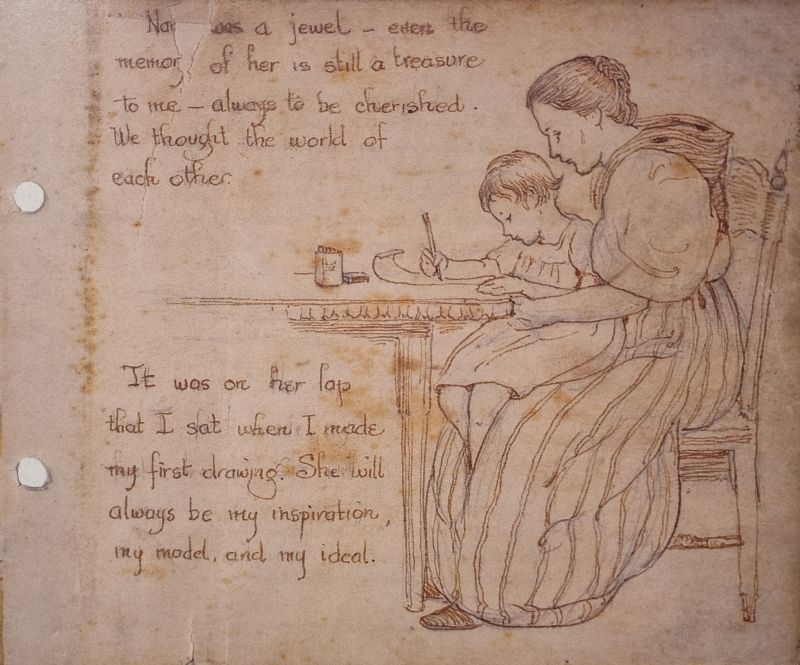
A page from Anita’s diary depicting the moment she drew her first drawing while sitting on Nana’s lap (Reproduced from Anita Magsaysay-Ho’s ‘An Artist’s Memoirs,’ 2000)
In this loving home, she first honed her artistic passion, writing in her memoirs that she made her first drawing while sitting on her Nana’s lap, whom she lovingly called “my inspiration, my model, and my ideal.” Nana, reminisced Anita, was her protector, someone she always ran to whenever she got scolded by her mother because of her naughtiness.
“I was blessed with a happy childhood,” Anita wrote. “As my grandmother’s ‘pet,’ I always ate with Nana in the main dining room along with the Godino twins, who teased me incessantly.”
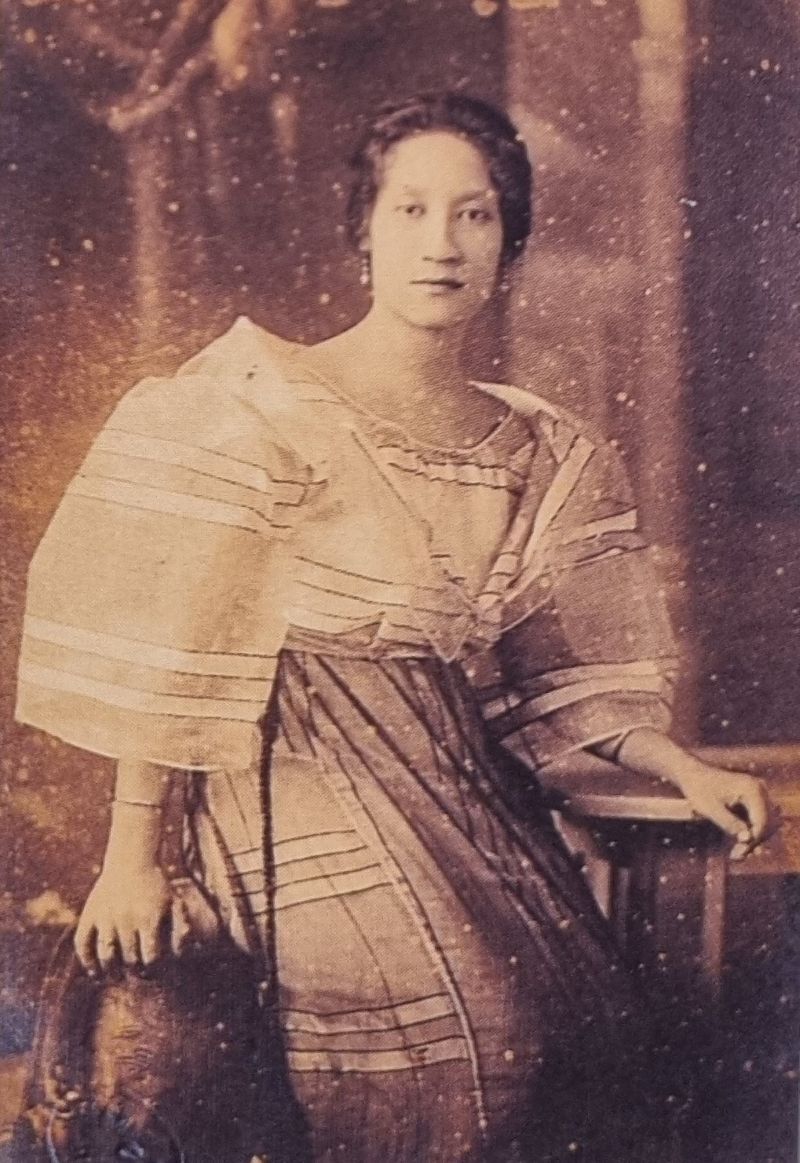
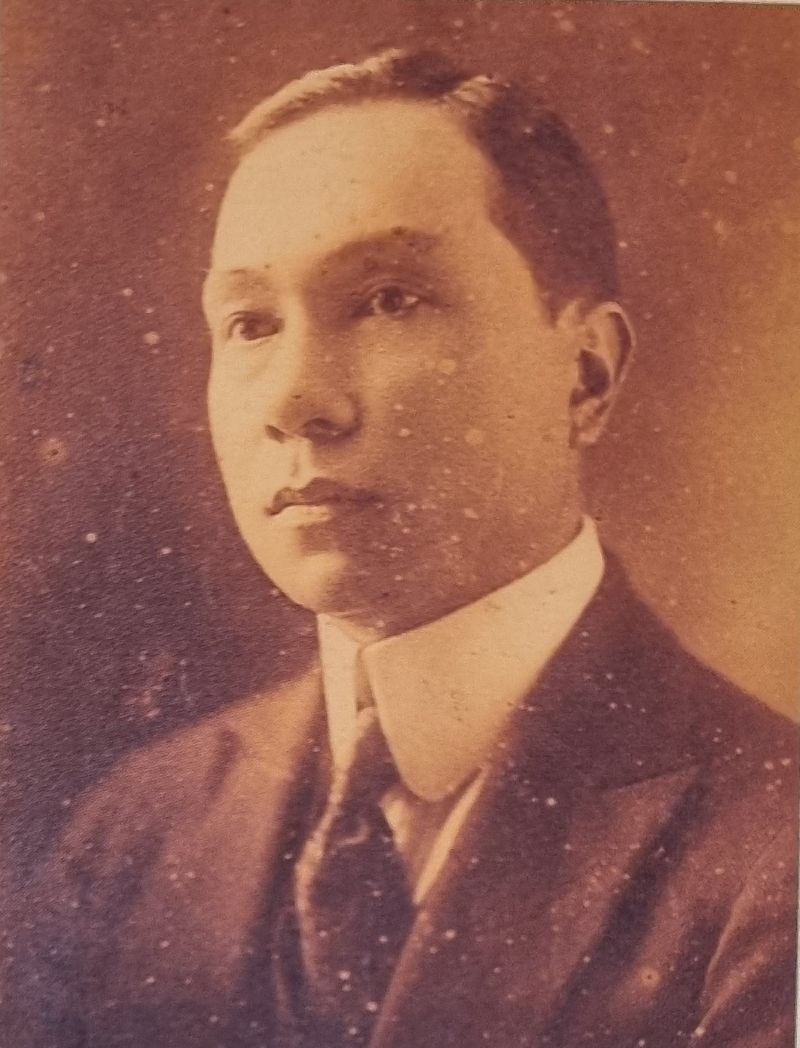
Anita’s parents, Amalia and Ambrosio, in the 1930s (Reproduced from Anita Magsaysay-Ho’s ‘An Artist’s Memoirs,’ 2000)
The young Anita sparkled and blossomed with passion, as her love for the arts was nurtured in her encouraging home. Anita recalled that “my parents were happy with my resolve” when she finally decided to pursue a career in painting by continuing her studies at the UP School of Fine Arts.
Anita remembered that her beloved Nana first discovered her love for drawing, noticing her passion during her primary schooling. “She is always drawing on any piece of paper she finds,” Anita echoed Nana’s words. This was after her Nana noticed that she loved drawing but hated piano lessons, which she and her sister, Ramona, also took. She wrote that her Nana suggested to her parents that the then eight-year-old Anita take drawing lessons.
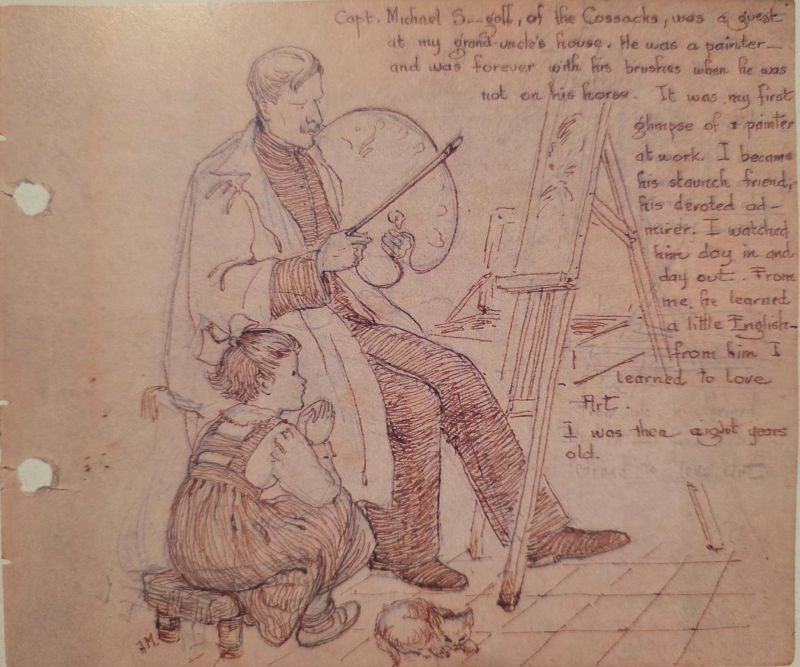
A page from Anita’s diary depicting her as a young girl watching Captain Michael paint on the verandah of their Paco home, inspiring her to paint (Reproduced from Anita Magsaysay- Ho’s ‘An Artist’s Memoirs,’ 2000)
“Mr. Irineo Miranda was my first teacher,” Anita recalled. “My first drawing was the portrait of a negro, in black and white, from a Saturday Evening Post illustration.” Anita then wrote that it was in the comfort of her Nana’s lap that she drew this very first drawing. She also remembered a certain Captain Michael, one of the visiting Cossacks from Russia who participated in horseback racing spectacles at the Manila Carnival, who was invited by Don Teodoro as a guest after learning they had not been paid and had no place to stay when the Carnival concluded. Watching Captain Michael paint on the verandah of their Paco home, and seeing his box of paints and brushes, made her tell herself, “I was going to be a painter and one day own an easel and a box of paints.”
When Nana died, Anita, then 13 years old, experienced piercing grief. To recover, she eagerly enrolled at the UP School of Fine Arts to take drawing and watercolor courses despite her tender age. Art became a mending solace for Anita, just like in the old days when drawing on Nana’s lap was her most cherished and comforting thing to do.
Anita had only gratitude for her “Papa,” Don Ambrosio Magsaysay, for encouraging her artistic endeavors and instilling in her the value of seeing the beautiful in every corner of the living world. Anita remembered those nights in their home when her parents would dance while her sisters played the piano. In this home, Don Ambrosio instilled in her the importance of simplicity in character and lifestyle, so much so that when the war came, she never complained about the hardships. Anita also learned from her father that even simple enjoyments had to be worked for to be earned. To watch a film, she had to do “something worthwhile,” like baking a cake or cooking a special dish.
Anita always eagerly anticipated their Christmases in Paco. “Christmas was a big affair,” Anita wrote. “There were multicolored lights on the big acacia trees…The garden was open to the public. At night, it was as bright as day because of all those gloriously lit trees.”
But one Christmas stood out as the most memorable, leaving a lasting impact on her young mind.
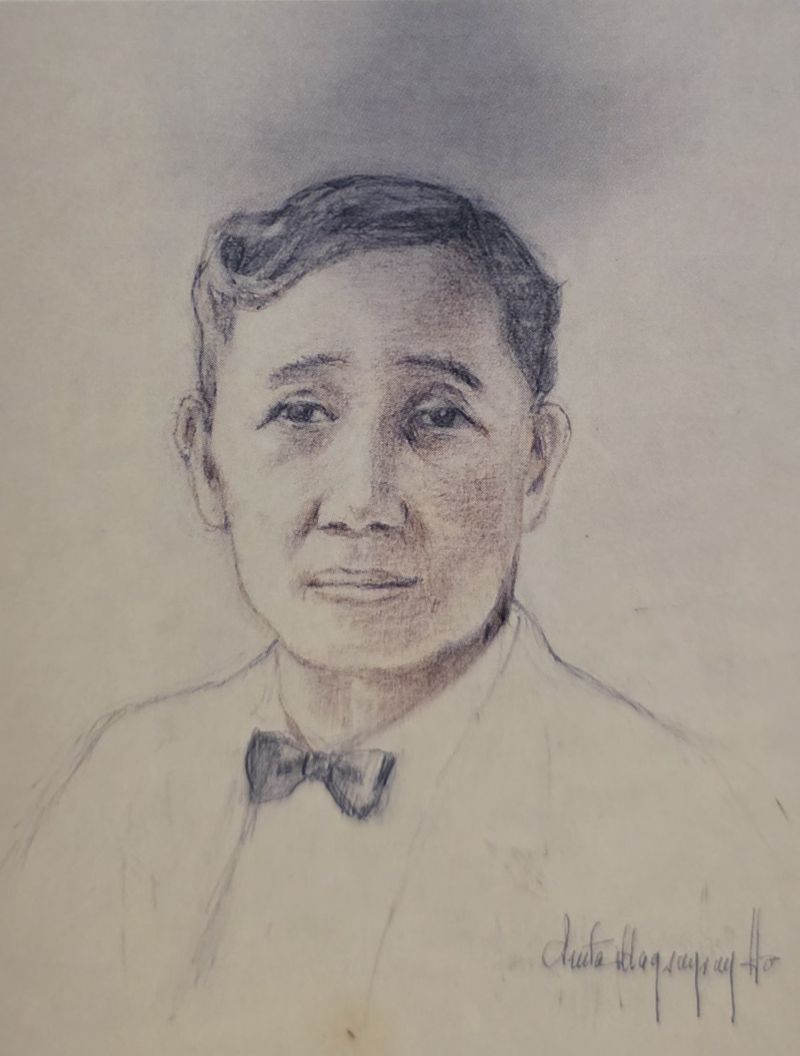
Anita’s portrait of Don Teodoro Yangco, her ‘Lolo Doyong’ (Reproduced from Anita Magsaysay-Ho’s ‘An Artist’s Memoirs,’ 2000)
“One Christmas, [Lolo Doyong] told us, ‘I will not invite my friends to a Christmas dinner, as I am sure they are enjoying it with their family. Instead, I shall invite the poor of Paco.’ So, the servants distributed tickets to the poor of the neighborhood. The caterer was Gonzales, the best in Manila. There were castles of peanut brittle on the tables and tall gelatins with fruits. The joy and warmth of this happy occasion is unforgettable to me.”
Living by the value of noblesse oblige, Don Teodoro dedicated his life to philanthropy, donating more than 31,000 sqm of land beside Manila City Hall, which became the site of the Young Men’s Christian Association (YMCA) of Manila, where he also became its longest-serving president. The Gota de Leche, established in 1906 to meet the nutritional and medical needs of indigent mothers and their children, was largely funded by his benevolence; he allotted P8,000 to build its building on a 3,318-sqm lot on Lepanto Street in Sampaloc, Manila, which he also donated. There was also this story Anita recalled of Don Teodoro rescuing the Godino brothers, conjoined twins from Samar who were unfortunately mocked and displayed naked at a public fair in the United States. Don Teodoro, who was then Resident Commissioner, rescued the twins, immediately sent them to Manila to live in his home as his wards, and sent them to school.
“Lolo Doyong was God-fearing, compassionate, and benevolent in helping those less fortunate,” Anita wrote. “Despite his wealth, he was very humble and always reminded us that his money was not his but God’s. He regarded himself as only the Lord’s steward.”
Anita continued, “Lolo Doyong commanded respect and awe. As a small child, I loved to listen to him whenever I was lucky to be asked to join the family at his table. He would explain to us his principles of how life should be lived, always emphasizing the importance of thinking about others, especially the handicapped and the poor.” Anita always imbibed and emulated Don Teodoro’s virtue and humility, especially as an artist who celebrated the resilience and triumph of the common Filipina in her labors and living.
In 1939, Don Teodoro died, leaving his house to his immediate family. The Magsaysay family moved out of the mansion and transferred to a bungalow on Villaruel Street in Pasay. Sadly, Don Teodoro’s house burned during the Liberation of Manila. What was left of the property was inherited by Don Teodoro’s loyal housekeepers.
The neighborhood of pre-war Paco held a sweet, soft spot in Anita’s childhood recollections.
Paco in the 1920s, according to her, “was a quiet suburb of Manila.” Beyond the annual fiestas and processions, Anita also vividly remembered the calvarios or makeshift chapels built during Lent along San Marcelino Street, where the faithful would pause and reflect on the Via Crucis. Anita reminisced about a small church at the end of Leroy Street where they attended the Sunday Mass. Anita “had a special feeling for this church,” as it was where she and her siblings were baptized, confirmed, and received their first communion. She also recalled throwing flowers to the image of the Virgin Mary during Flores de Mayo.
“Today’s youth may find these rituals boring, but for us they were just magic,” Anita wrote.
Watching the Comedia during the summer was peak entertainment for the young Anita. A memorable occasion for her was participating in the Santacruzan as the biblical “Reyna Judith,” holding the severed head of Holofernes made from coconut. After the procession, young Anita would excitedly look forward to the bitin, where a rope was attached to a square, flat frame of crisscrossed bamboo, which was then strung with various goodies: candies, fruits, and small snacks. The contraption was lowered and raised in a playful, teasing manner, with children grabbing the snacks in a frenzy.
A Japanese refreshment shop at the end of Calle Paz was a childhood favorite, where Anita quenched the summer heat with mongo con hielo and mais con hielo. She also remembered running over to a sari-sari store owned by a Chinese man named Puti, who was everybody’s friend and whose store was the neighborhood’s pantry.
Interestingly, it was in Paco, specifically at the Paco Cemetery (now a park), where Anita painted her first landscape as a young fine arts student under the supervision of Amorsolo, then the professor of landscape drawing and painting. This landscape won Anita her very first medal as an artist. Anita noted that she would walk “considerable distances” under the scorching afternoon sun just to find the perfect spot for landscape painting.
Painted in the immediate aftermath of the devastating war in 1945, Procession is a tender picture amid the ruins and desperate survival in a desolate post-war landscape. Anita’s choice to depict Lolo Doyong and Nana as the protagonists is an ideal way for her to transform the trauma of war into an image of love and comfort, as these two figures left the most lasting impact on her. That Anita painted a picture of the home and neighborhood where she spent her happiest, carefree years right after the smoke had barely cleared was perhaps a reminder of hope and unfaltering resilience, the deeply rooted faith and passion for all things beautiful she had cultivated as a child that she harnessed in overcoming the trauma of her times. Looking back at a glorious past helped alleviate, at least, the complex tribulations and prolonged ordeals of the post-war period.
The painting further reinforces that memory had always been the central theme of Anita’s oeuvre. Made possible by dabs of the palette knife, the painting’s dynamic texture gives it the impression of a moment frozen in time, as if to say that memories are not merely specters of the past; they are lasting dwellers in the present, living and breathing through sensory experiences, and the impetus for the future.
León Gallery’s The Kingly Treasures Auction 2026 will be held on Saturday, 28 November 2026, at 2 pm. The preview exhibit will run from 21 to 27 November, 9 am to 7 pm, at G/F Eurovilla 1, Rufino corner Legazpi Streets, Legazpi Village, Makati City.
To browse the online catalog, visit https://leon-gallery.com/. For further inquiries, email info@leon-gallery.com or contact 8856 2781. Follow León Gallery on their social media pages for timely updates: Facebook: www.facebook.com/leongallerymakati and Instagram: @leongallerymakati.


