
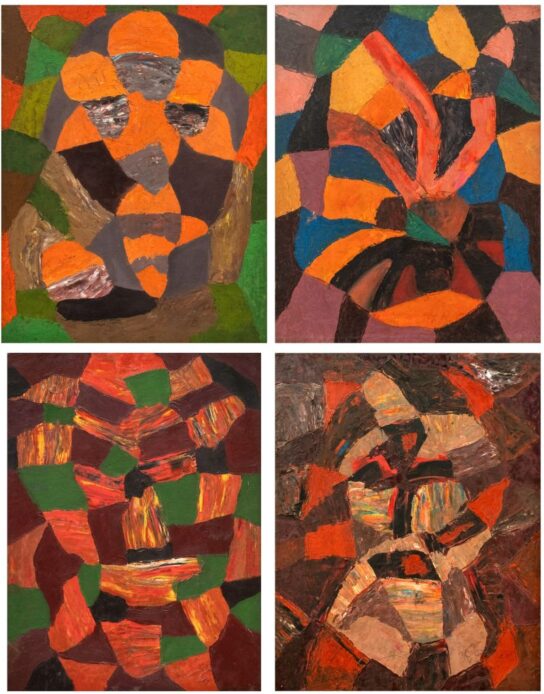
A set of four abstract paintings by Hernando R. Ocampo, gifted to his secret daughter, Lorena Potenciano Arcega, that reveals a story of paternal loss and a hopeful reunion, is a highlight of León Gallery’s year-end offering, ‘The Kingly Treasures Auction,’ happening on 28 November 2026 at 2 pm.
“I was HR Ocampo’s secret child. I was about 2 years old when my mother and I got separated from my biological father, Hernando Ruiz Ocampo. This was during the chaos of World War II.”
– Lorena Potenciano Arcega
This highly important set of four paintings belonged to the collection of Lorena Potenciano Arcega, Hernando R. Ocampo’s “secret child” for many years before he finally reunited with his own flesh and blood later in life. These four paintings were precious gifts by the artist to his loving daughter, whose identity and story resurfaced to the public after León Gallery auctioned several of her father’s paintings in her collection in 2017.
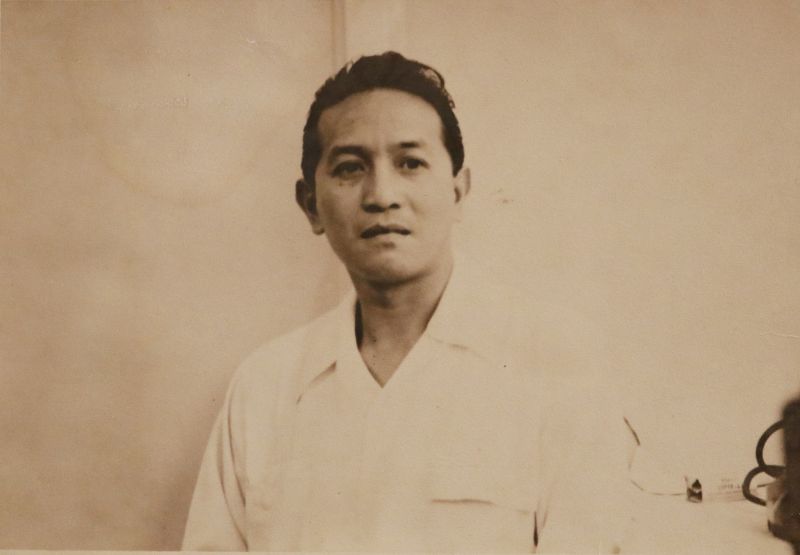
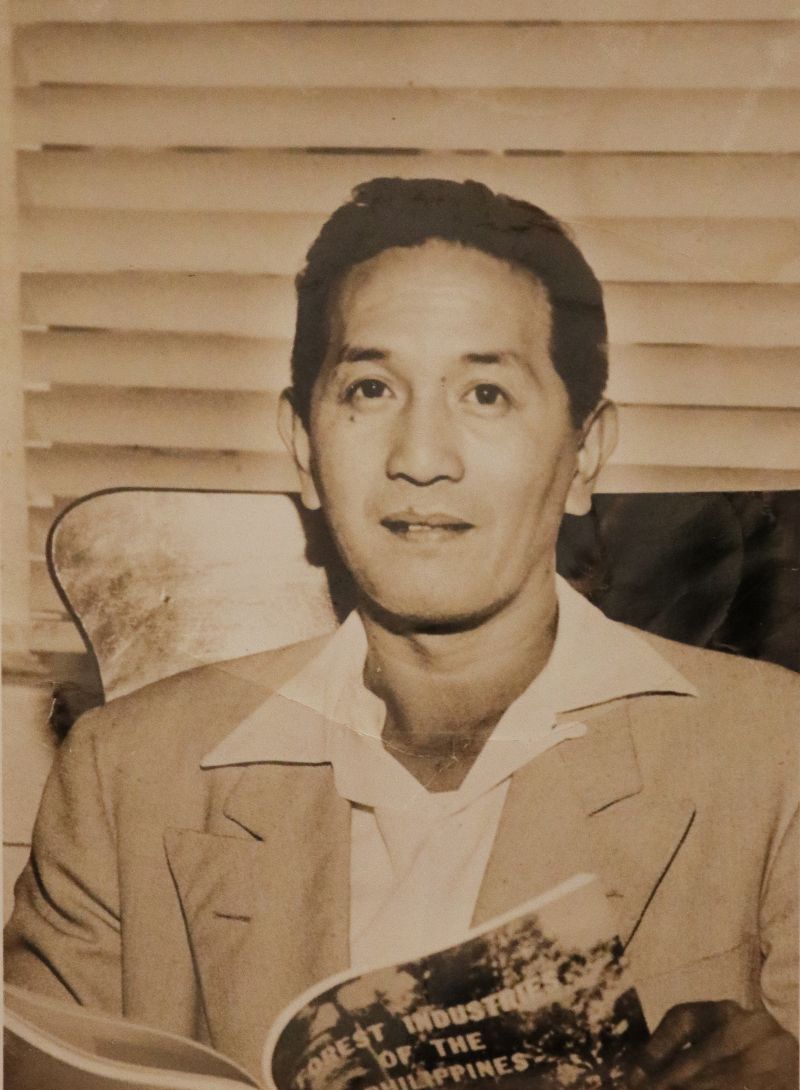
Photos of Ocampo as an ad man in the 1950s. (Photos from the Lorena Potenciano Arcega photo archives)
It all started in 1935 when Ocampo, then working as executive secretary of the National Paper Mills, Inc. owned by pre-war financier Andres Camasura, met an employee who, for privacy’s sake, was only referred to as “Rosa” in the all-important monograph on Ocampo by his friend and fellow Veronican writer, Angel G. de Jesus. Ocampo, already married to Irene Yusay Illorato of Sampaloc, Manila for three years by then, fell into frailty. Ocampo and Rosa’s closeness grew complicated and developed into an affair that bore a daughter out of wedlock. The baby was Lorena. Irene, meanwhile, bore three children with Ocampo: Dante, Beatriz, and Norma.
Ocampo and Rosa’s relationship lasted for eight years. But supporting two families caused financial and mental strain on Ocampo, whose employment at the National Paper Mills was unfortunately terminated in 1936, severely worsening his financial situation. Fortunately, he found a job at the Herald Mid-Week Magazine as an associate editor in 1938, but this was still not enough to feed two families.
Ocampo’s financial disability was further exacerbated by the war. He stopped painting during this time, propelled by the urgent need to put food on the table for both his families. Ocampo worked as a censor, chief scriptwriter, and assistant director of stage plays at the Capitol, Lyric, and Avenue theaters. But in reality, he was an intelligence spy planted by Col. Yay Panlilio of the Markings Guerrillas in Hodobu, the Japanese Army’s propaganda corps, together with fellow writers Salvador P. Lopez (Ocampo’s former work colleague), Manuel Arguilla (his first mentor in creative writing at the Valenzuela School of Journalism in the early ’30s), Narciso Reyes, and Montano Nazario.
Rosa and Lorena, recounted de Jesus, had no permanent residence during the war, hopping from one house to another. For a time, the two lived with the couple Manuel and Lyd Arguilla (future founder of the legendary Philippine Art Gallery), who generously shared the comforts of their home with them. They also lived with Col. Yay Panlilio of the Markings Guerrillas. In the immediate weeks before the Liberation of Manila, Ocampo, Rosa, and Lorena lived in a room in an apartment owned by Nazario, then a reporter for the Philippines Herald.
When the Battle of Manila commenced, Ocampo, Irene, and their children were in Maypajo, away from the ground zero of the brutal war. Rosa and Lorena were on San Marcelino Street in Ermita with a man de Jesus called only “Ramon,” whom he noted was a member of Young Philippines, a political party of law students founded by University of the Philippines (UP) Law alumnus Wenceslao Vinzons that advocated Philippine independence from the US. Ramon was Ocampo’s friend when he established the Ocampo Art Studio in the aftermath of his termination from Camasura’s company. Thankfully, Rosa and Lorena were spared from the horrors and brutality in their vicinity.
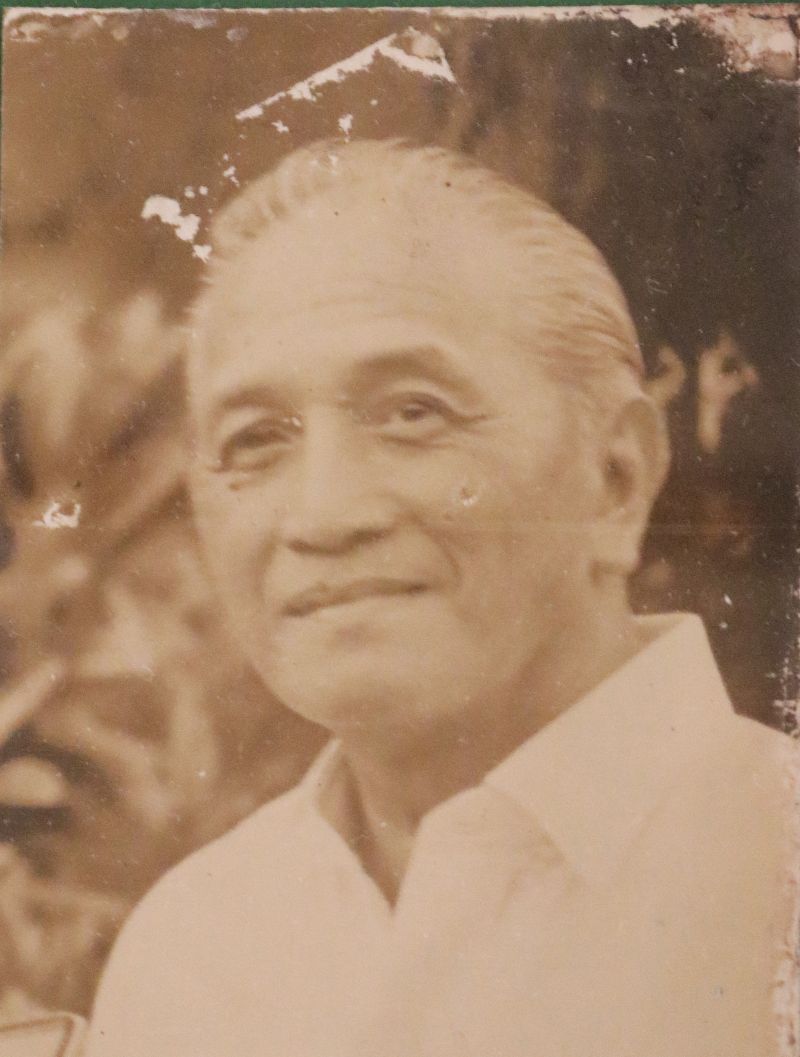
H.R. Ocampo in the ’70s. (Photo from the Lorena Potenciano Arcega photo archives)
To make matters worse, Ocampo would be incarcerated at the Bilibid in Muntinlupa for eight and a half months in the days following the Liberation of Manila. He was wrongfully accused by someone he thought was a friend. This unfortunate moment in Ocampo’s life was summed up by de Jesus:
“The basis for his arrest was two affidavits,” De Jesus wrote. “During the Occupation, he had innocently asked a friend where a common friend could be located. It happened that the one he sought was illustrating for Freedom, an underground paper. On Liberation, the “friend” to whom he asked filed an affidavit charging him of being a spy for the Japanese. The other affidavit was submitted by a movie actress’ boyfriend, who was jealous of Nanding because he had seen him kissing his lady love, a habit Nanding has of greeting women friends.”
While still in prison on 13 May 1945, Ocampo learned of the death of his wife Irene. Drowning in overwhelming depression, Ocampo sketched a self-portrait, depicting himself in agonizing pain, helplessly clinging to the iron bars for the precious time and life lost to war. When charges against him were dropped by the People’s Court, Ocampo went “on a day-and-night drinking spree, grieving over the death of his first wife Irene and sorrowing over the thought of Rosa and Lorena,” as de Jesus put it.
Truth was, Ocampo did not know that Rosa had already married Ramon. Perhaps Rosa longed for marriage and a man she could love and commit to, and a fatherly figure who could care for her child, free from all the baggage and hindrances of having to support multiple families. Ramon, Rosa, and Lorena would settle in Laguna, Ramon’s hometown. Later, Ocampo would learn that Rosa and Lorena were safe and sound, relieving him and easing his emotional tension.
Lorena shared with León Gallery years back: “My mother and I settled in Laguna, the home province of my stepfather (a friend of HRO and a co-member of The Veronicans, an organization of writers. HRO was not only a great painter, but a very good poet and writer), whom she later married and had me believe that he was my father. As I was growing up, I always had this hazy memory of a man, carrying me, and playing with me when I was a toddler.”
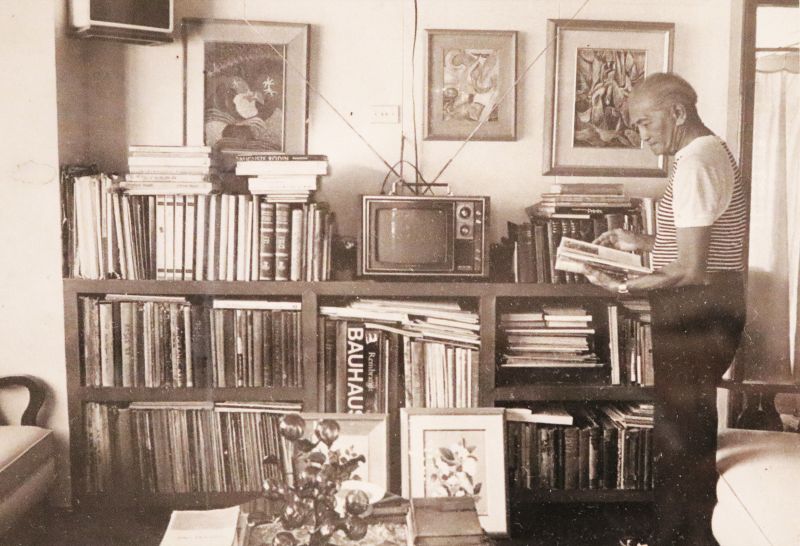
Ocampo in the living room of his home in Maypajo, Caloocan (Photo from the Lorena Potenciano Arcega photo archives)
Fast forward to a decade later. When Ocampo’s youngest daughter, Norma, entered her freshman year at UP Diliman and lived in a dorm on campus, she fortuitously met Lorena, a freshman who, coincidentally, also became her seatmate in a class, as seating arrangements for first-year students were organized alphabetically by surname. One day, Norma borrowed a textbook from Lorena and took it home. When Ocampo saw Lorena’s name on the book, he felt a surge of excitement and nervousness and a gush of longing; he last saw Lorena during Liberation, and she was only about two years old then.
Ocampo thought that day would never come, since he had become content knowing that Rosa, and especially Lorena, were showered with love and support in their new family.
Ocampo eventually revealed to Norma that Lorena was his own long-lost daughter, her “ate,” pulling out a deep-rooted thorn that had pierced him all those years. He then told Norma not to tell Lorena, but lovingly reminded her, “Be good to your sister, and help her always.”
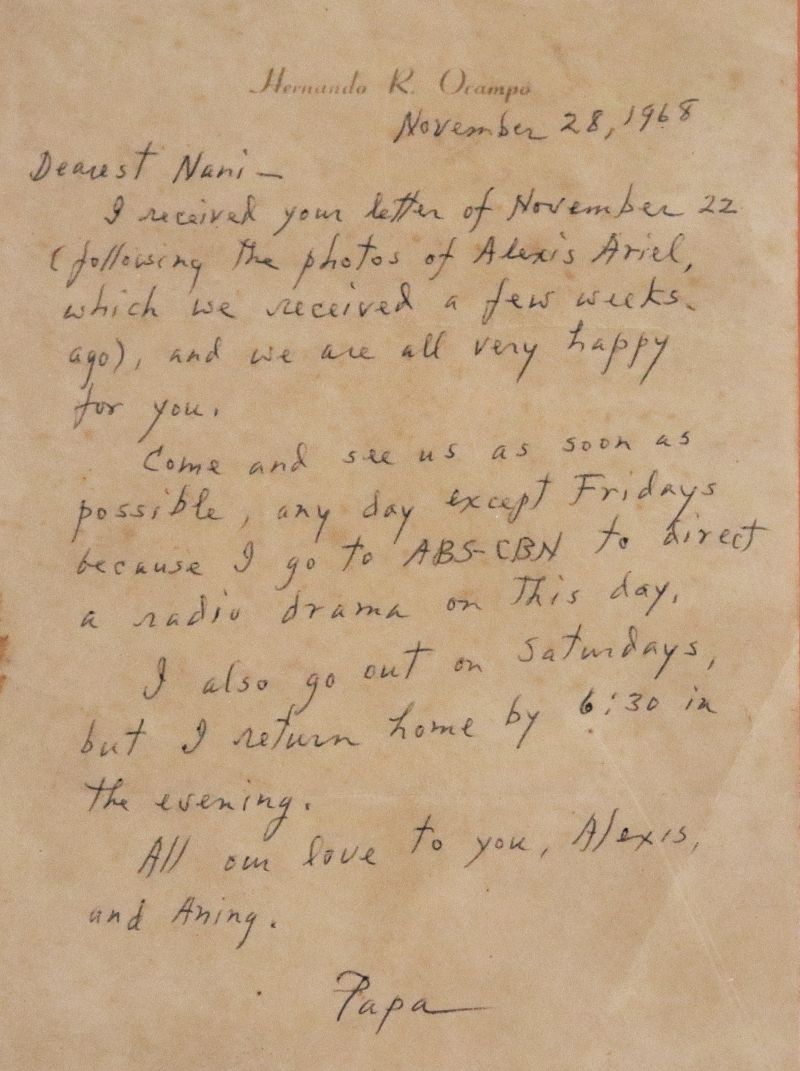
Letter of Ocampo to Lorena dated 28 November 1968, hoping for a visit from the latter. (Photo from the Lorena Potenciano Arcega photo archives)
One day, when the school year ended, Ocampo received a letter from Lorena that read, “You are my father. I would like to see you.” De Jesus noted that “It seemed that Ramon and Rosa had told her the truth. So, a meeting was arranged for father and daughter at the South Annex of the UP dormitory at four o’clock in the afternoon, the visiting hour.”
Lorena vividly recalled this pivotal moment in her life. “I first met my Papa in my last year of college,” she wrote. “I did not know what he looked like, but when he came to see me at the dorm, I saw this handsome, kind-looking gentleman walking towards me and a surge of pure love and affection confusingly welled up in my heart. He instantly hugged me and kissed me on the cheek, saying, ‘I have been looking for you for the longest time.’”
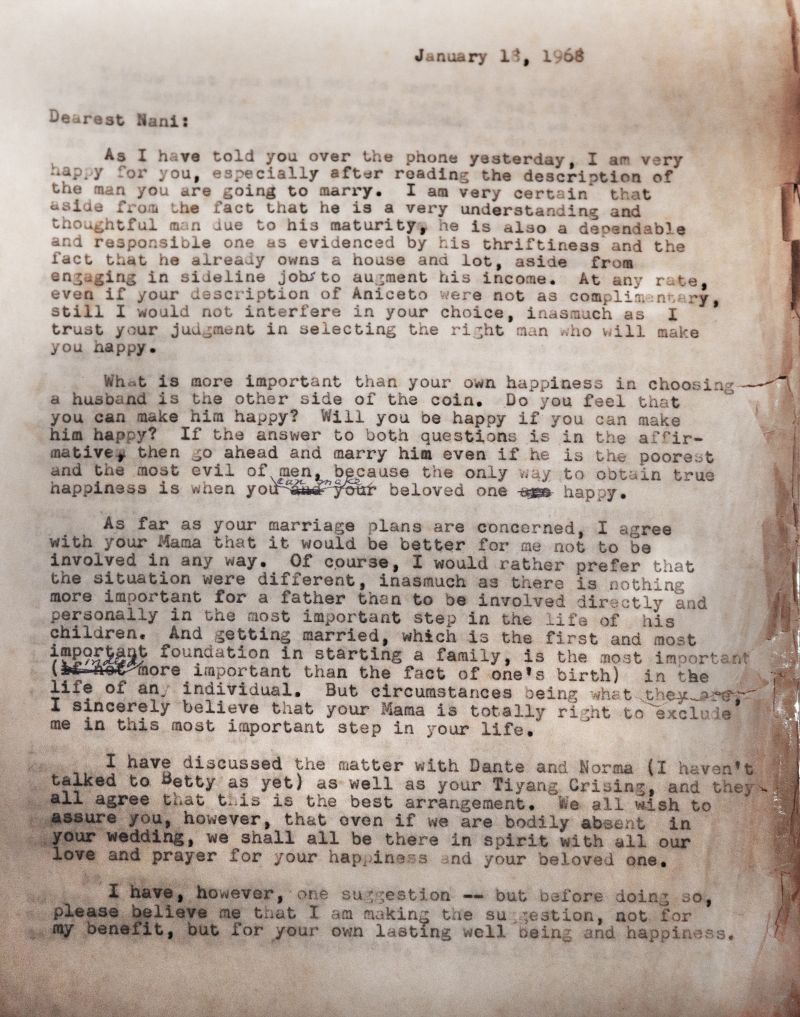
Typewritten letter of Ocampo to Lorena dated 18 January 1968, with the former congratulating his daughter on her wedding and being happy with the man she was going to marry (Photo from the Lorena Potenciano Arcega photo archives)
When the two finally met, the father and daughter clasped each other in a yearning embrace. They immediately reconnected as if enough years had not slipped away, so much so that memories of Lorena as a young girl playing with her father and remembering the warmth of his arms whenever he carried her were all too familiar to become merely reminiscences of her distant past, and too intensely palpable to be relegated into her subconscious. Lorena then spent weeks at Ocampo’s Maypajo residence that summer and never again missed a chance to reconnect and breathe new life into their paternal bond.
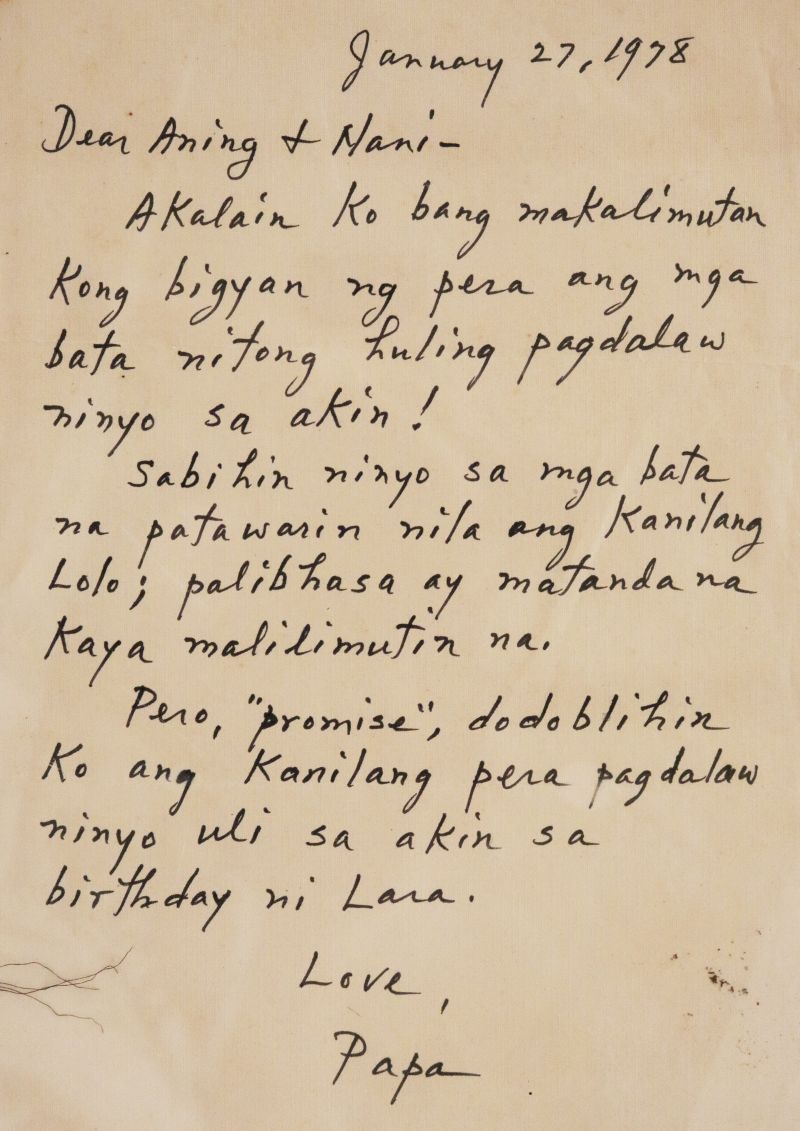
Letter of Ocampo to his daughter, Lorena, dated 27 January 1978. This is one of Ocampo’s last letters to his daughter. (Photo from the Lorena Potenciano Arcega photo archives)
“My first impression of HRO as being a very good man was proven true by the many instances of love and kindness he has shown me and my family through the years that I have known him,” Lorena wrote. “Papa, you are not only a great painter, you are also a great human being. I miss you Papa. I love you so much.”
León Gallery’s ‘The Kingly Treasures Auction 2026’ will be held on Saturday, 28 November 2026, at 2 pm. The preview exhibit will run from 21 November to 27 November, from 9 am to 7 pm, at G/F Eurovilla 1, Rufino corner Legazpi Streets, Legazpi Village, Makati City.
To browse the online catalog, visit https://leon-gallery.com/. For further inquiries, email info@leon-gallery.com or contact 8856 2781. Follow León Gallery on their social media pages for timely updates: Facebook: www.facebook.com/leongallerymakati and Instagram: @leongallerymakati.


