

As I stepped out of the Zara fitting room in Seville, Spain, the store was already being corded off and the sales clerk was giving me that irate look. It was almost 2 p.m., and I completely forgot that this is Spain where they close the stores in the afternoon for siesta time. Of course, for the Filipino shopper, closing is the last word you like to hear, and as expected, it’s the Filipino shopper (me) who was one of the last persons to leave the store. I got only a shirt.
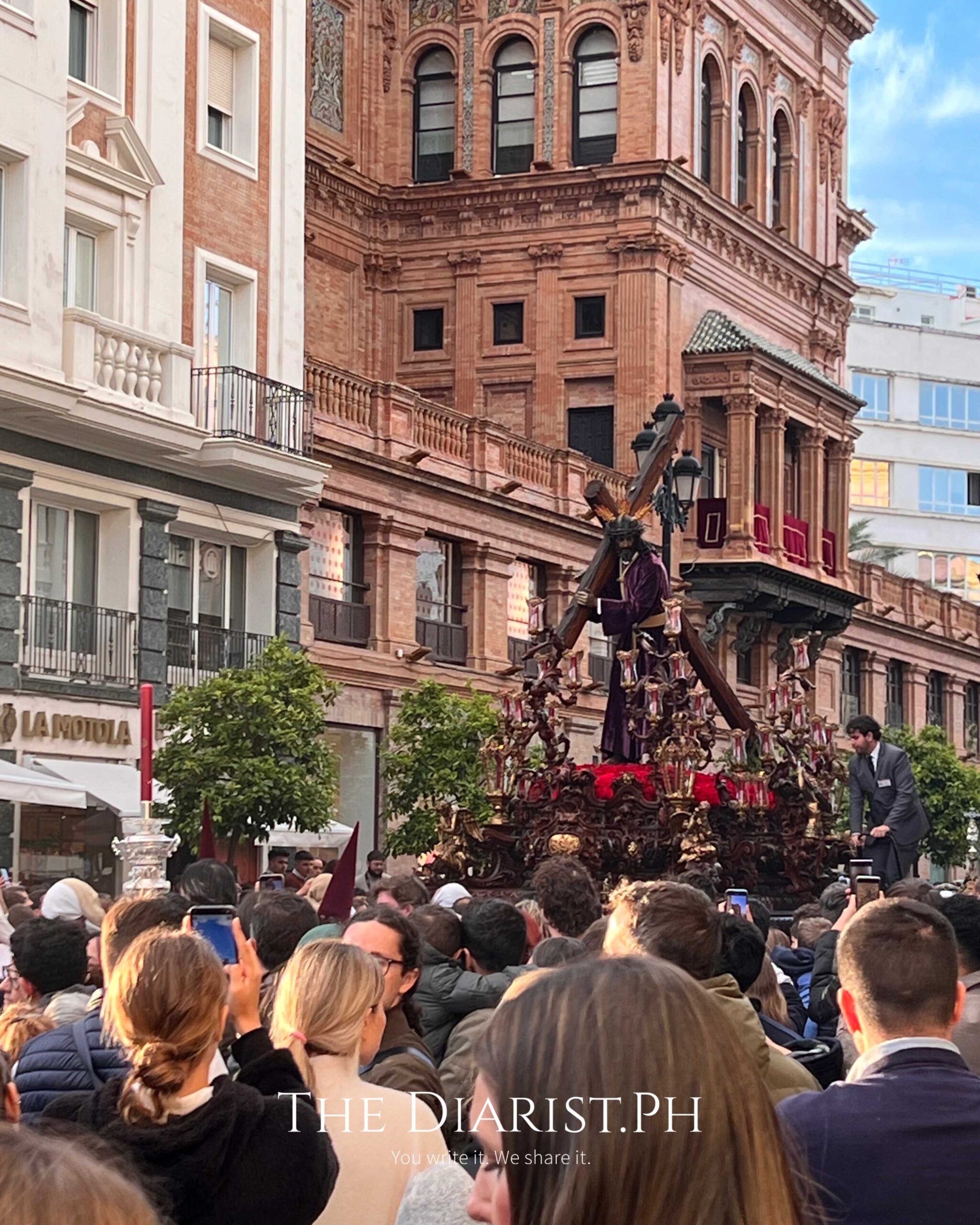
The first procession the author encountered on Holy Wednesday in downtown Seville last April (Photo by Luis Carlo San Juan)
But there was another reason the store closed that afternoon, it was Holy Wednesday, and most stores in the city center would be closed because of the series of Holy Week processions going around the city.
I had to remind myself, “This is supposedly a Holy Week, not a shopping, trip.”
I had decided only at the last minute to tag along with my mom and her friends for a Holy Week trip to Spain last April, specifically Madrid, Alhambra, Seville and Barcelona, with Lourdes in France as last leg, because this was an opportunity hard to pass up. I’d seen Spain’s Holy Week festivities only in documentaries and in YouTube.
Seville would be the significant culmination of this Holy Week trip, since the city and the rest of southern Spain are among the most popular destinations for their Semana Santa celebrations marked with pomp and pageantry. If one is curious where Filipinos got our deep and multi-layered religious observance of Holy Week traditions, including our fluvial processions with richly decorated carrozas, one only has to visit this part of Spain during Semana Santa.
I remember growing up, we would go to our ancestral town of Obando, Bulacan, where our grandaunts would decorate the family’s Pieta and Maria Salome, and we would watch these images pass by the house, the gloriously lit carrozas being pulled by our cousins, with a generator for the lights. Our lolas’ Pieta was considered one of the most beautiful, if not the most beautiful, images in the Good Friday procession in Obando. Sculpted by the famous Maximo Vicente, the sight of the face of the Virgin in grief, cradling her fallen Son, was enough to move you to tears. Since our grandaunts are long gone, and there’s no more ancestral house to come back to, seeing the Seville processions brought back a lot of memories; it was actually my first Holy Week procession since the Lent of my childhood.
In the Philippines where each town has an endless row of images and carrozas, the Holy Week processions seem more like a competition between the town clans—who has the most extravagant and eye-grabbing carroza. In Seville, a procession consists of only two to three very detailed and highly decorated pasos, depicting scenes from Christ’s Passion and the sorrowful Virgin Mary known as Mater Dolorosa.
One very famous Marian image of Seville, La Macarena (Our Lady of Hope Macarena) also the patroness of the city, has one of the grandest and longest processions in Seville. As a big crowd gathers outside, some of whom have been waiting all day, the image is brought out of the Macarena cathedral at midnight, signaling the start of the procession that will bring her all over the city. The procession usually lasts 14 hours. It is paraded back into the cathedral usually in the afternoon of the following day. This must be one of the longest Holy Week processions in the world, if not the longest.
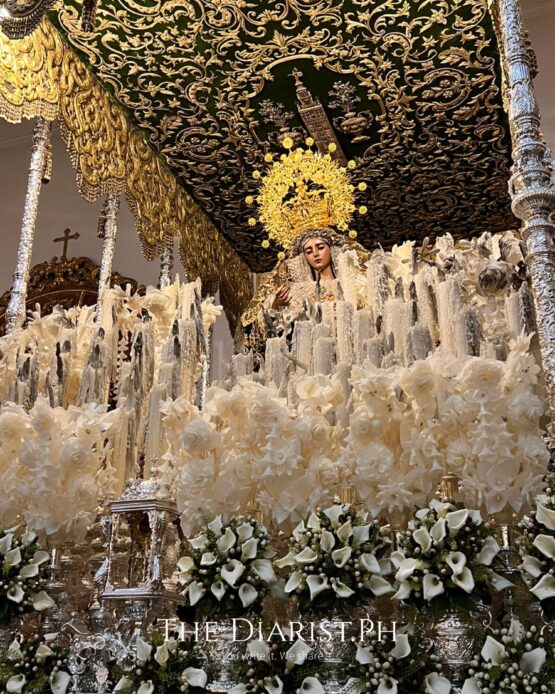
Unlike in the Philippines, these pasos are not transported in wheels, nor do they have electric-powered lights. These 1.5 ton (at least) pasos are borne by men or religious brotherhood called confradias, who walk the long routes, with brief rests along the way. The resplendent carriages are illuminated with countless large beeswax candles. The Marian floats all have canopies or pallio, decked with imperial regalia and expensive textiles and intricate embroideries.
This religious custom dates back to the 16th century, when Sevillanos—and penitents in other southern Spanish cities like Málaga and Córdoba—celebrate the Passion and Death of Christ. The confradias organize the processions. In Seville alone there are 60 processions during Semana Santa, from Palm Sunday to Easter Sunday.
Each brotherhood parades a number of pasos from its home church, bringing its own vibe, colors and traditions, in a procession that takes hours. Each procession also includes penitents called nazarenos, dressed in colored flowing robes with pointed hoods, carrying either candles or crosses which are symbols of penance and devotion. Even children can join the adults in this procession wearing these robes. The traditional robe assumed a negative connotation in history when it became associated with the white supremacist group, Ku Klux Klan (KKK), in the US. But there is no historical, cultural, or ideological connection between the nazarenos and the KKK.
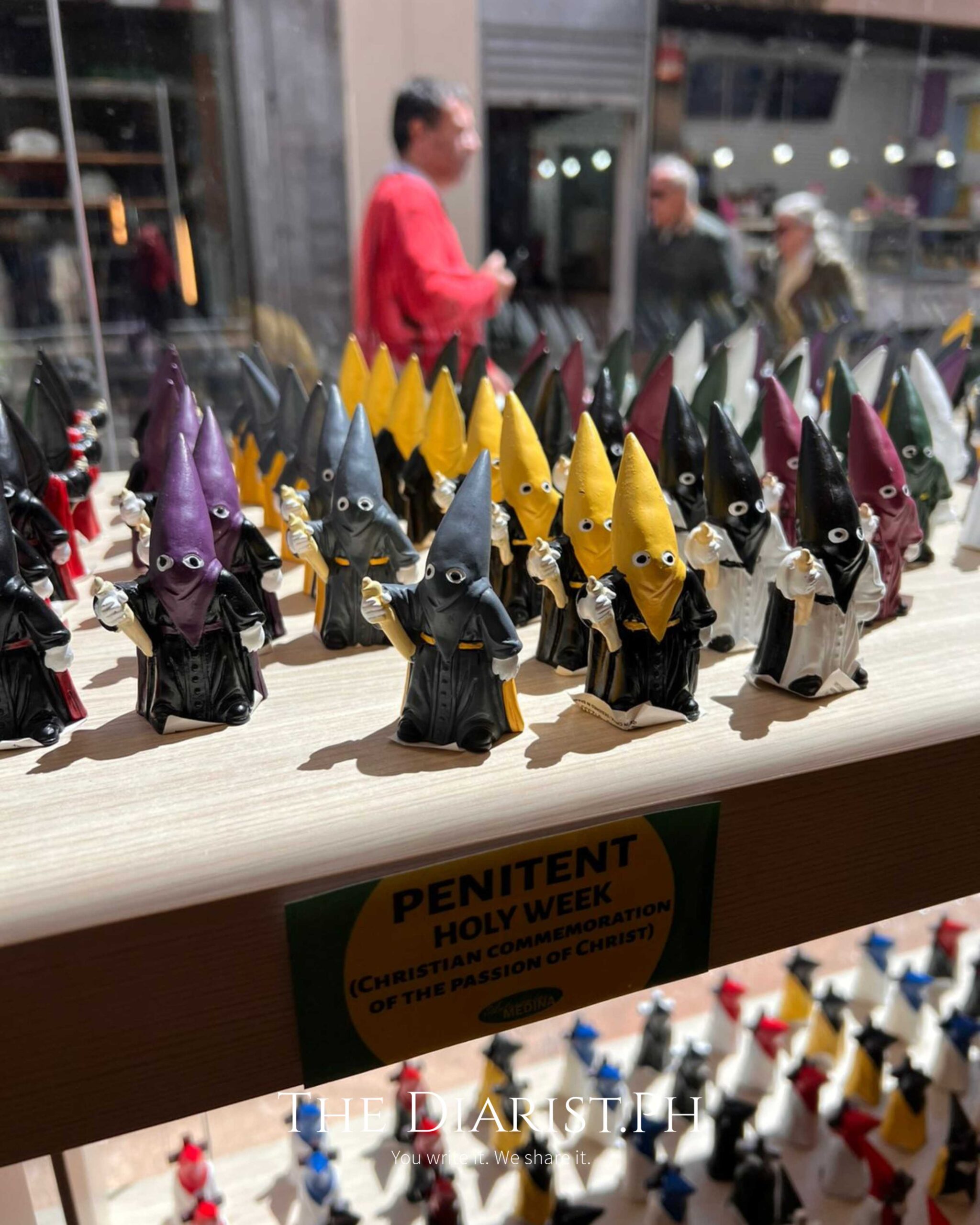
Cute ‘nazarenos’ (penitent) figurines (Photo by Luis Carlo San Juan)
Infusing emotion into each procession is the sacred music played by the marching bands. Each procession has more than one marching band, each pasos accompanied by a full wind and percussion ensemble with 30 or more members. On the street, one is stirred by the somber beating of drums signaling the approaching image, then the brass band plays a series of procession music.
A sudden hush would take over the street crowd observing a moment of reverence, then in Spanish fashion, the people would break into hearty applause. Overall, it is a moving, emotional and spiritual experience; some would make the Sign of the Cross or be moved to tears.
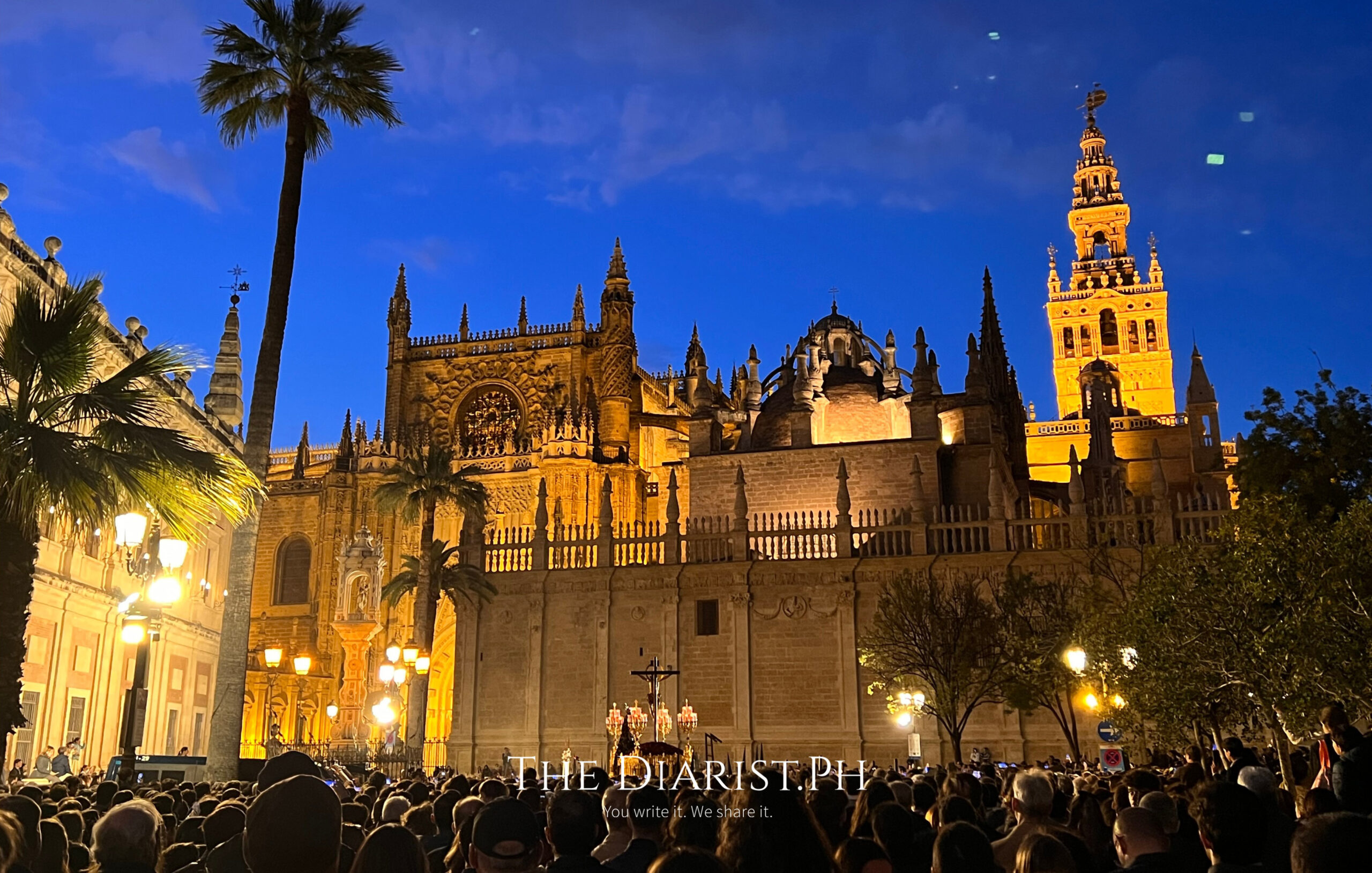
Crowds gather in silence at the Seville Cathedral before a passing ‘pasos.’ (Photo by Luis Carlo San Juan)
Semana Santa in Seville is more than just a religious experience, it is also a celebration of family and community. One notes that there are really more locals than foreign tourists, the former all dressed up in suits and elegant dresses as they watch the procession pass by from their balconies or the streets. Some houses or hostels, hotels along the procession route accommodate guests who like to view the procession from the balconies as they enjoy cocktails. Some even wait a whole day for the procession.
Maunday Thursday is also a special occasion for the women who join the procession and the festivities wearing elegant black dresses, lace gloves, black shoes, vintage jewelry, and black lace mantilla as head piece.
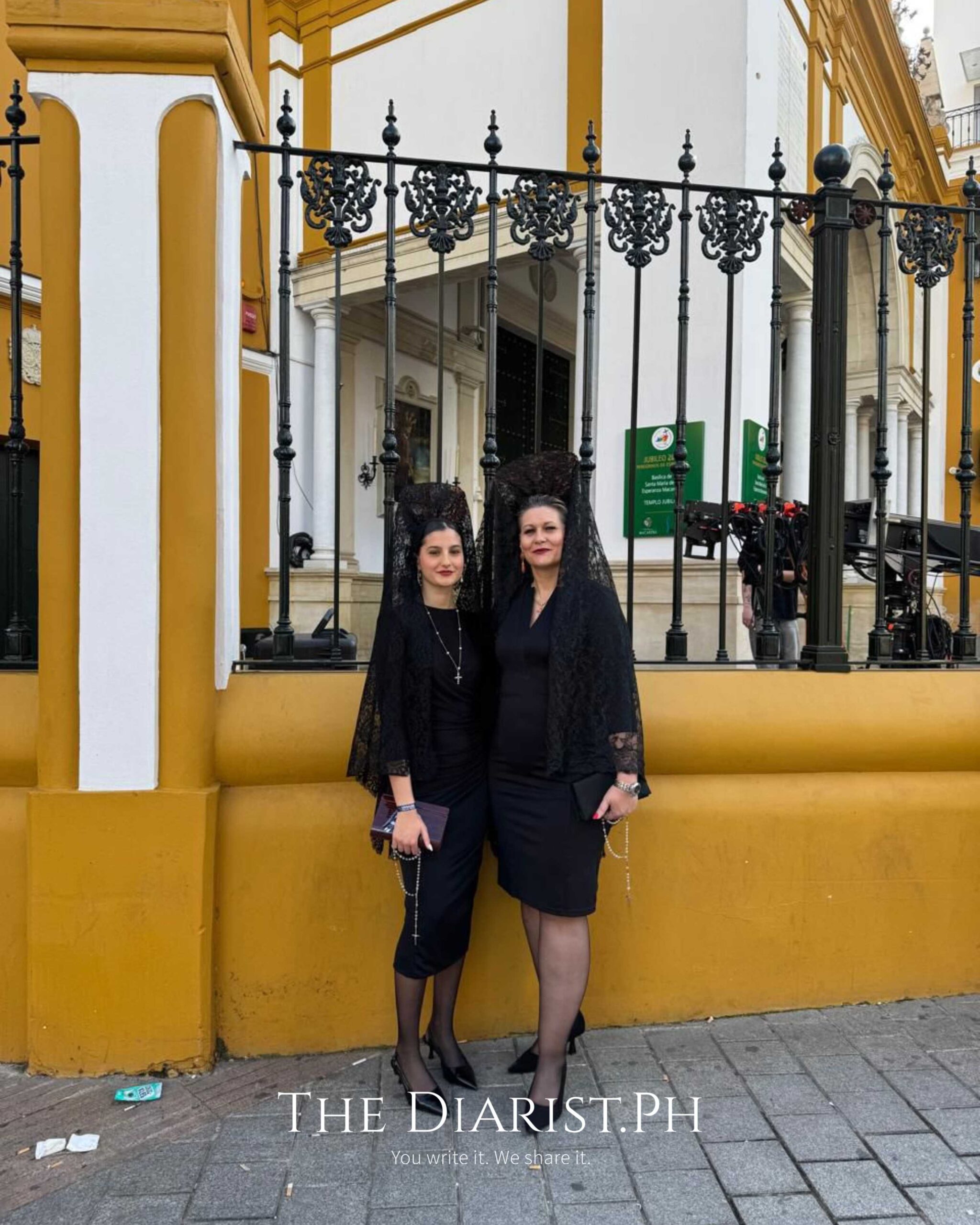
The beautiful women of Seville, dressed in the customary elegant black dress and black veil, before the Maundy Thursday procession outside the Cathedral of the Macarena (Photo by Luis Carlo San Juan)
Since Seville is a walking city, one can explore the city on foot, so you can see more than one procession, and if you know how to work your way through the crowd, you can really come close to the passing image. Once the procession is done, one can enter its home church and see the images up close.
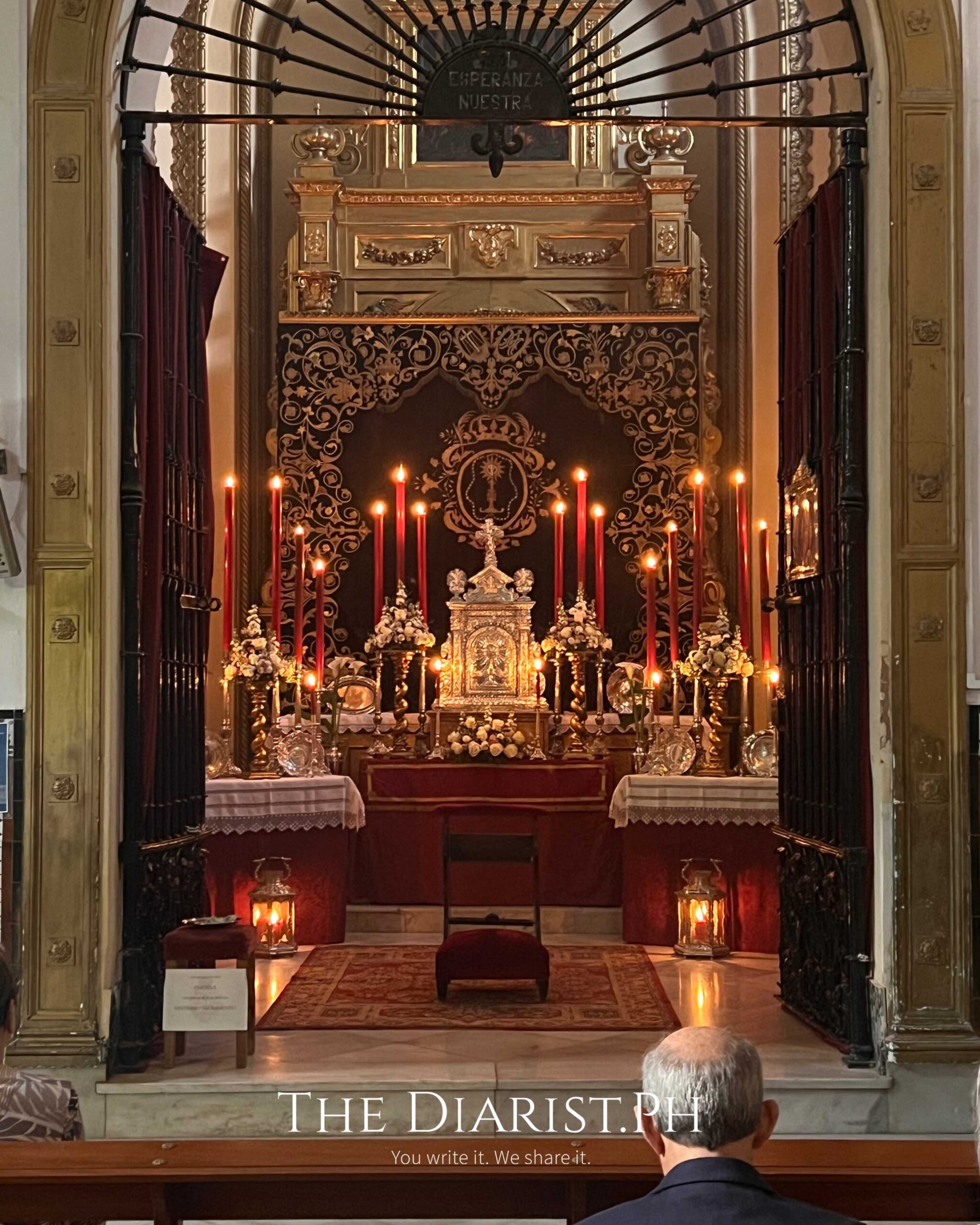
An Altar of Repose in one of Seville’s churches on Maundy Thursday (Photo by Luis Carlo San Juan)
Shopping
Those planning to go to Seville or southern Spain during Holy Week, plan your days for shopping. The city has a few shops selling locally made leather footwear. Stores are closed Maunday Thursday and Good Friday and they open again Black Saturday. But stores across Spain close again on Easter Sunday and Easter Monday. Arriving in Seville on Tuesday gives ample time for marathon shopping, but then again, it’s Holy Week, learn to give up some things, and that includes shopping.
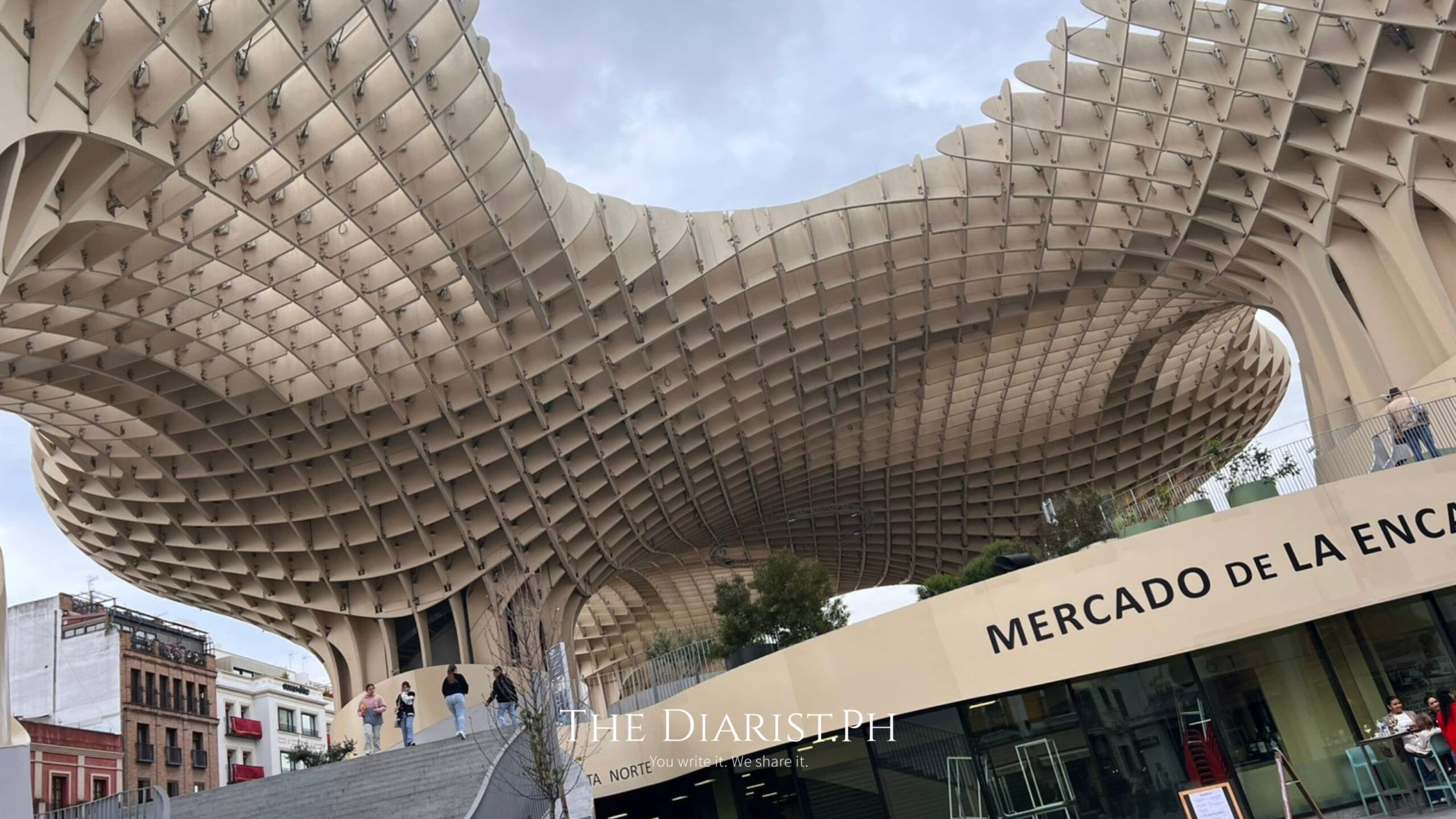
One of Seville’s modern landmarks, ‘Setas de Sevilla’ or the ‘Mushrooms of Seville’ (Photo by Luis Carlo San Juan)
When in Europe, never skip the museums
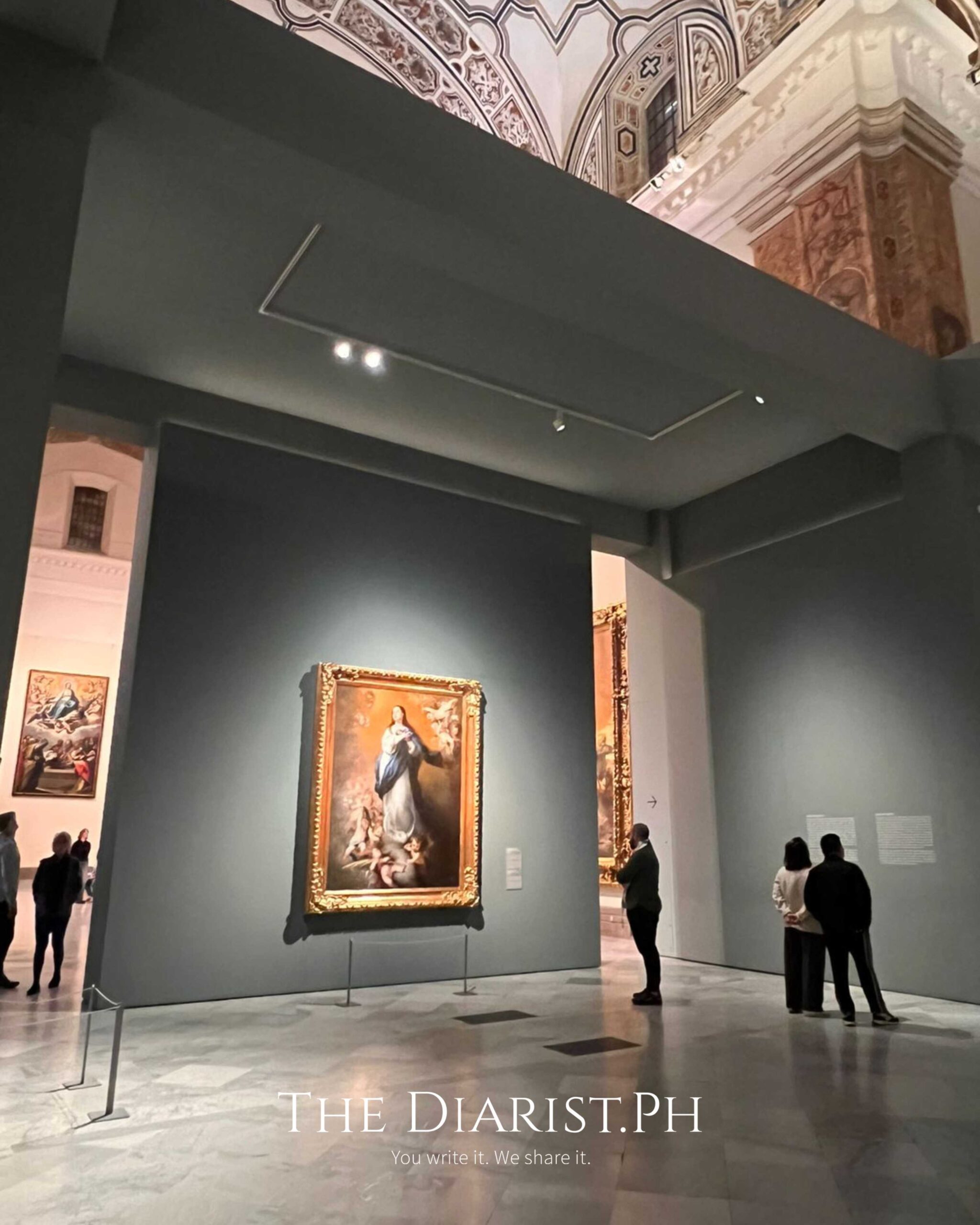
The Seville Museum of Fine Arts (Photo by Luis Carlo San Juan)
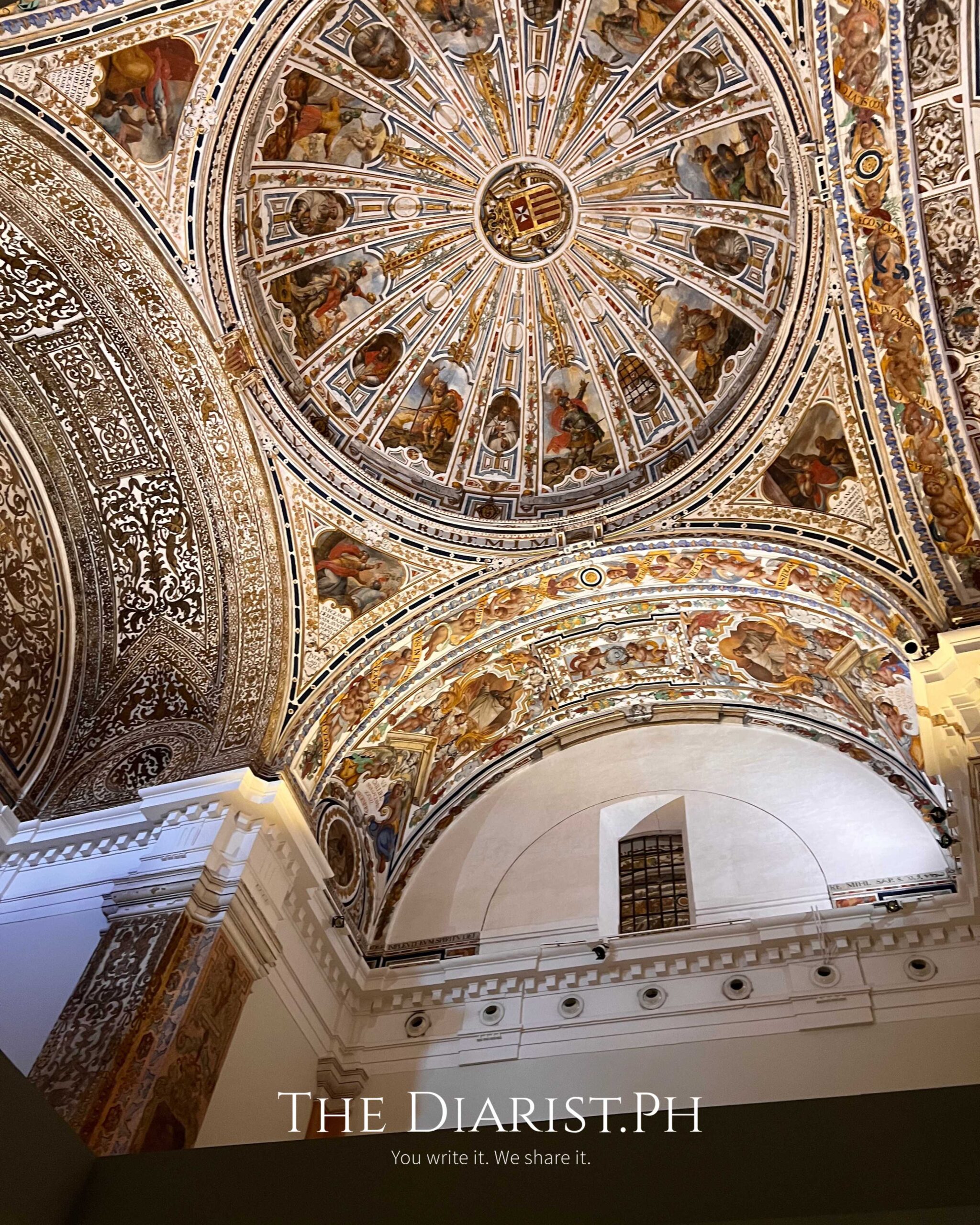
Another way of discovering Seville’s rich artistic and religious heritage, and also a way to spend a quiet Holy Week afternoon, is to visit Museo de Bellas Artes de Sevilla or Seville Museum of Fine Arts.
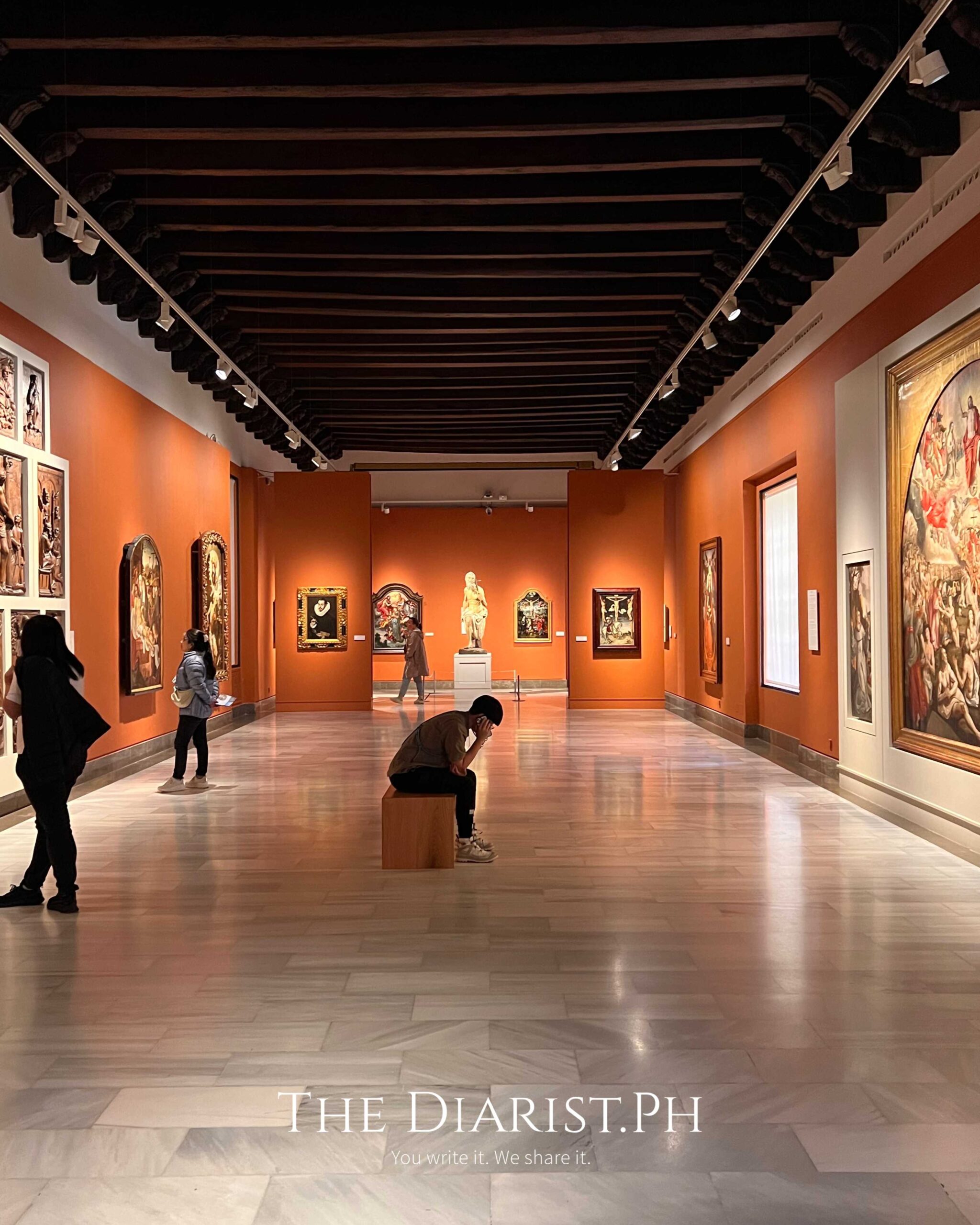
One of the halls at the Seville Museum of Fine Arts (Photo by Luis Carlo San Juan)
Considered the most important art museum in Spain after the Prado Museum in Madrid, it has works of art from the Middle Ages, Renaissance, Baroque era and up to the 20th century, mainly Spanish artists such as Francisco da Herrera, Murillo, El Greco, Velásquez, José García Ramos and Francisco Zurbarán. There are also foreign painters such as Jan Brueghel l’Ancien, Pieter Aertsen and Cornelis de Vos.
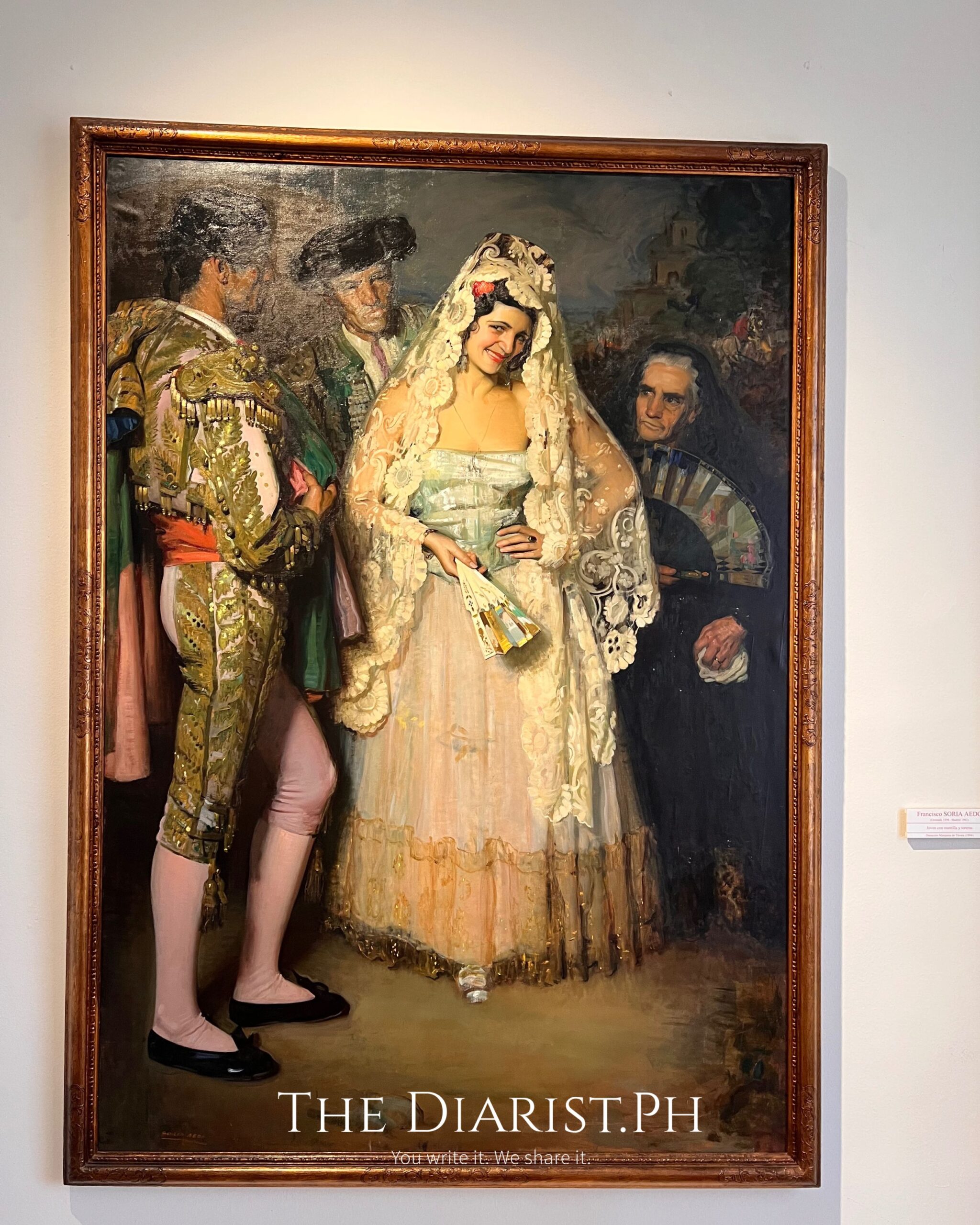
‘La Maja y los Toreros’ by Spanish painter Francisco Soria Aedo. (Photo by Luis Carlo San Juan)
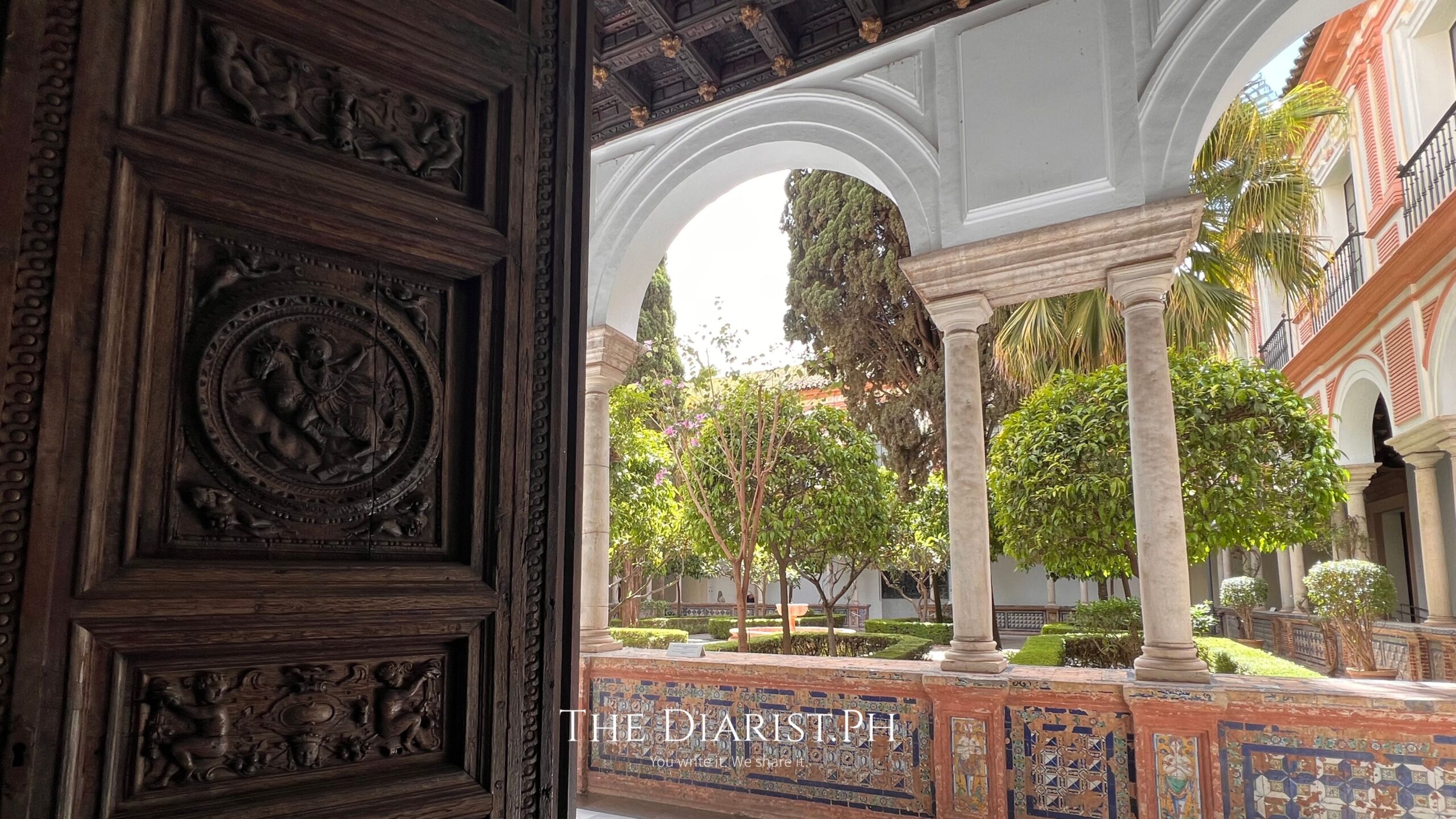
The courtyard of the Seville Museum of Fine Arts. (Photo by Luis Carlo San Juan)
Entrance is free for EU residents; the ticket is Euro 1.50, around Php 94. The museum is in the Plaza del Museo, a square with a bronze statue of Bartolomé Esteban Murillo, a very important Baroque Spanish painter.
Holy Week in Seville is observed mostly by the locals who fill the streets, more than the foreign tourists, since this old Spanish tradition is a celebration of faith, community and families.
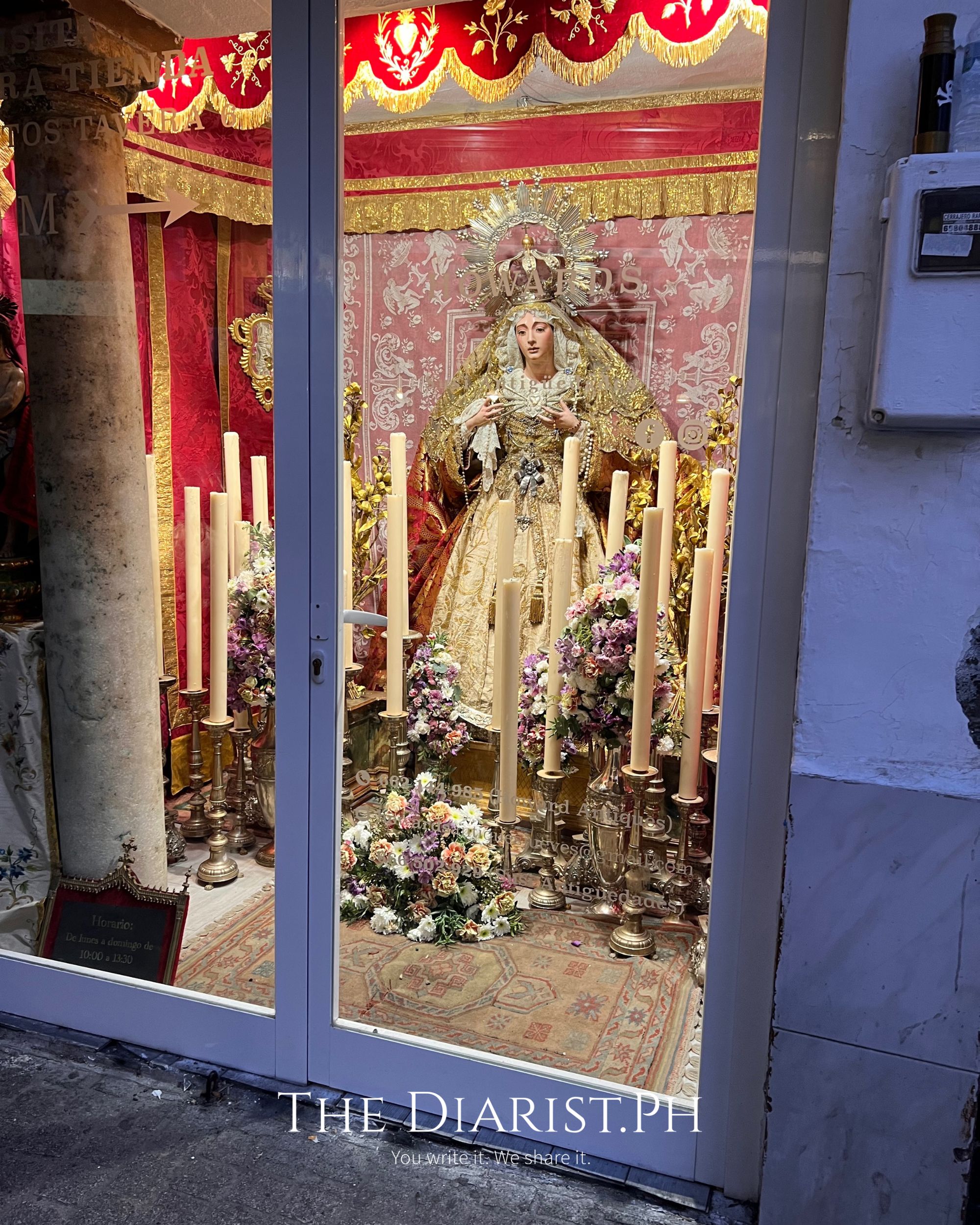
A store front of an antique shop in downtown Seville. (Photo by Luis Carlo San Juan)


