
“Let me not to the marriage of true minds
Admit impediments. Love is not love which alters
When it alteration finds,
Or bends with the remover to remove:
O, no! it is an ever-fixed mark,
That looks on tempests and is never shaken.”
This excerpt from Shakespeare’s Sonnet 116, even as I feel audacious enough to quote, somewhat expresses the love my husband Mario and I shared for half a century, a love that transcended the First Quarter Storm (FQS) in the ’70, on to Covid-19 in the 2020s.
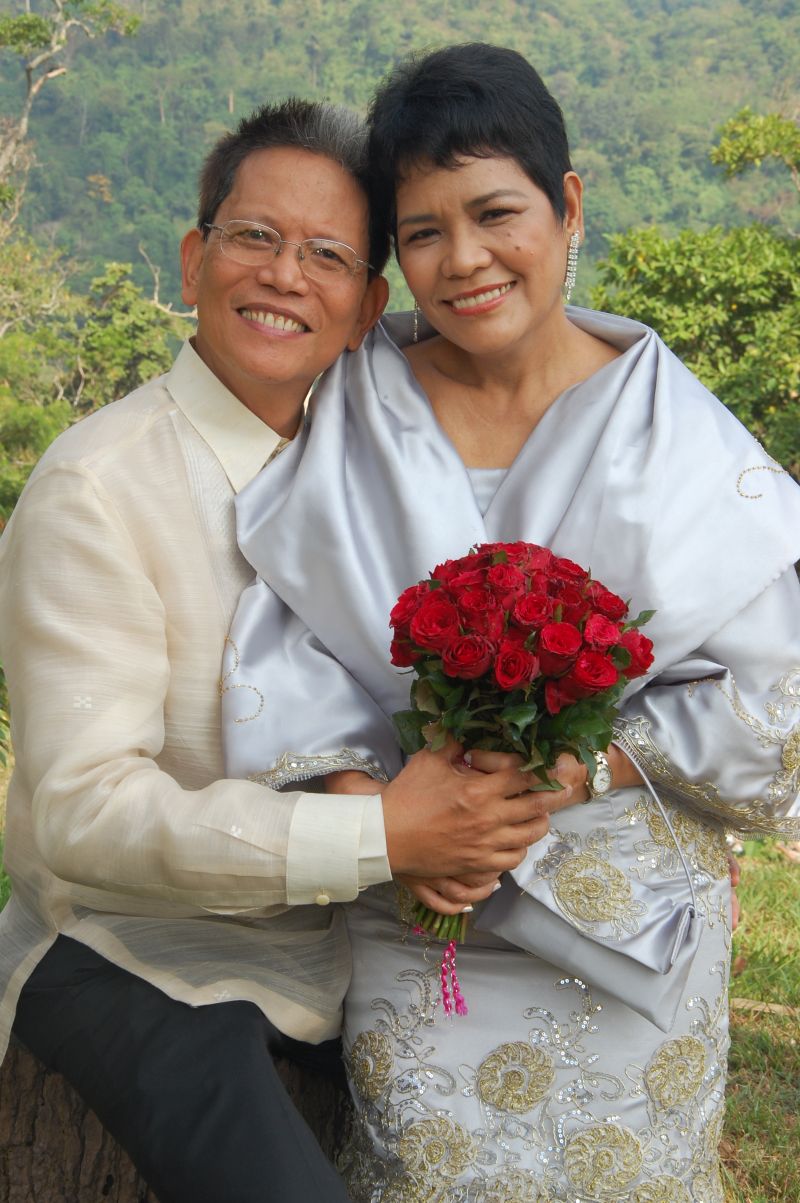
Mario and Alma Miclat celebrating their 40th wedding anniversary
Renewing our vows during our 40th wedding anniversary in May 2011, he professed:
“Alma, you are my soulmate. We have made love under a Tipolo tree a thousand years ago.
“In this lifetime, I did not find you in Marikina, Rizal where I was born in 1949. Nor did I meet you in Tubod, Lanao where I had my earliest memories as a two-year-old boy. At four, I gathered katuray flowers, wild tomatoes and kamote tops for lunch in the NARRA resettlement of Masbate where Daddy was President Magsaysay’s supervisor-cum-legal tender guarantor and Mamma was nurse, midwife and medicine woman, but there was no trace of you.
“In 1965, UP in Diliman was a merry mix-up of souls in thoughts, beliefs, ideas, philosophies, ideologies and idiosyncrasies. The caballero trees lining the avenues bloomed and shed their leaves in the cool months of February. I started looking for you.
“Suddenly you were there, listening to my lecture under a spreading acacia tree in Diliman. And my sight was nailed on you, as we say in Tagalog…”
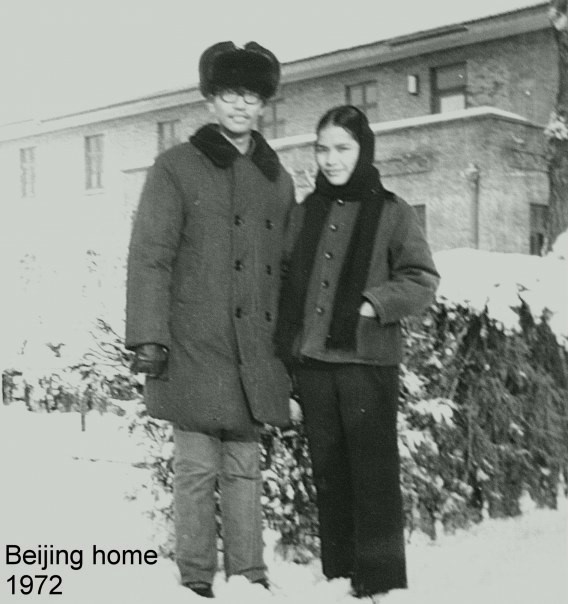
I didn’t realize that Mario already noticed me on our first encounter, the provinciana with waist-long black hair, naïve and innocent to the ways of the world. He was the talk of the girls I knew on campus, the brilliant and eloquent firebrand with good looks to boot. I had a crush on him, was fascinated with the past he was recounting, entranced with the future he was envisioning. But it didn’t cross my mind that he would even be interested in me—until I joined the small discussion group (DG) he led, which discussed not just the Philippine revolution which was the first topic I heard from him in his lecture at the Sunken Garden, but also Marx and Engels, Lenin and the October revolution, Mao Zedong thought and China’s socialist revolution.
Mario proposed to me when he felt threatened by a suitor who wanted to marry me. There was no contest. I really liked him a lot because he was bright and intelligent, tall, slim and handsome, and smart, and he was opening a whole new world which fascinated me. He was also a kind-hearted and good man. We went to rallies together, and he gave me glimpses of his work, such as proofreading manuscripts in the printing press at unholy hours. He also took me to movies with political undertones or were outright revolutionary, like Marlon Brando’s Burn, Battle of Algiers, and Soldier Blue.
I thought the ceremony of exchanging bullets—rather than rings—was a bit too much
I was young and in love and believed in the cause that I thought would change the world. I followed my heart, and I just knew I would go with him to the farthest corner of the universe. So, when he took me to a safe house where we were supposed to be married in an underground wedding, without me knowing it initially, I just went with the flow. Looking back, I think I was not a wide-eyed, happy and blushing bride. Even as I was in love with the man and had no qualms about spending the rest of my life with him, I thought the ceremony of exchanging bullets—rather than rings—was a bit too much for one as naïve as I was.
We would not have a proper honeymoon as he would leave for the boondocks shortly after, a preparation for our trip to China which would turn out to be a 15-year exile.
From Manila, we flew to Hong Kong, took a ferry to Macau and a coaster to Guangzhou where we stayed for a few nights before flying to Beijing. I had vomited a lot so my first day in the Chinese capital was spent in a hospital, where a doctor announced that I was pregnant.
Our first year in China was a period of big adjustments not only to the climate, food and political way of life, but also to our personal relationship, for Mario and I were just adjusting to each other as a newly married couple.
We spent our first two months in the People’s Republic touring Beijing and the suburbs and attending our first National Day celebrations at Tiananmen Square. On Oct. 26, 1971, we started working in the Philippine Section of Radio Peking as waiguo chuanjia, or foreign expert. Our routine work in the Radio was a most welcome change in what was becoming a humdrum existence in a big house provided us by the Chinese in a most exclusive, tightly guarded compound in western Beijing. The compound named Shibasuo, Eighteen Mansions, was huge yet nondescript when viewed from the outside. It was, however, a haven of trees—poplars, pines, apples, walnuts and persimmons.
I was having prenatal blues and was losing weight. Every time I partook of the greasy dishes of the northern Chinese cuisine, I threw up. One time, while Mario and I were taking a walk inside the compound, I took a fancy to the unripe little green apples hanging temptingly from the trees around the compound. Mario picked some for me, and I ate and enjoyed the fruit for the first time since we arrived in Beijing.
At Radio Peking, everybody was solicitous, especially our Chinese colleagues in the Philippine section, advising me on what to eat, how to keep myself warm at the onset of winter, and to be extra careful when walking the slippery icy road. It was a difficult transition period for me, having moved from a tropical clime to a temperate country, now with a baby growing in my tummy; not to speak of the gnawing feeling of homesickness. Mario was my anchor in this difficult early phase of our life in Beijing.
I went through an arduous pregnancy and almost lost my baby on her sixth month. It was followed by long and tedious labor pains from morning till night and beyond. But with proper breathing and right timing, and with shouts of encouragement from the interpreter, I brought forth Maningning into the world at 9:45 a.m. on the 15th day of April, 1972. It was a normal delivery.
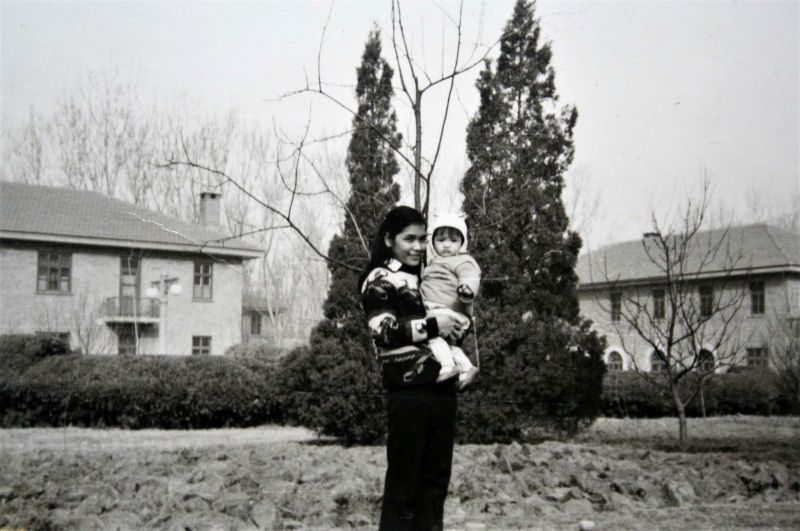
Alma with Maningning in Shibasuo, Beijing
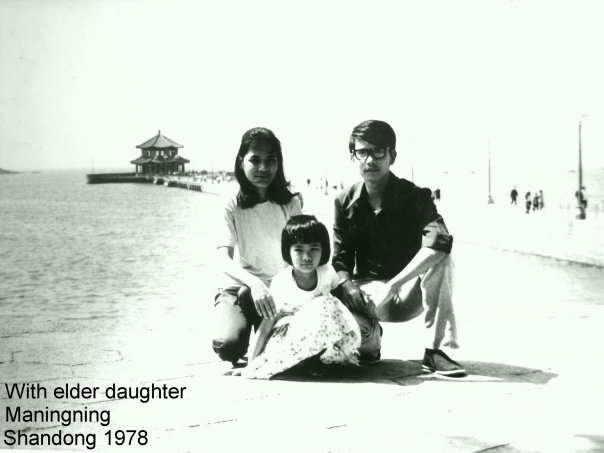
Alma, Mario and Maningning in Qingdao, Shandong
My second baby, Banaue, who came after seven years, had a different story altogether. Mario had just come back from some tumultuous events in the state farm in Hunan. He was gaunt and sick and was diagnosed with primary complex TB, which he transmitted to me in no time. The International Liaison Department arranged a vacation for us and Maningning at Badaguan seaside resort of Qingdao (Tsingtao), Shandong province in East China. The peace and quiet we found, with the balmy sea breeze and fresh seafood, gave us new strength and energy when we returned to Beijing after a few weeks. It was then that our daughter Banaue was conceived.
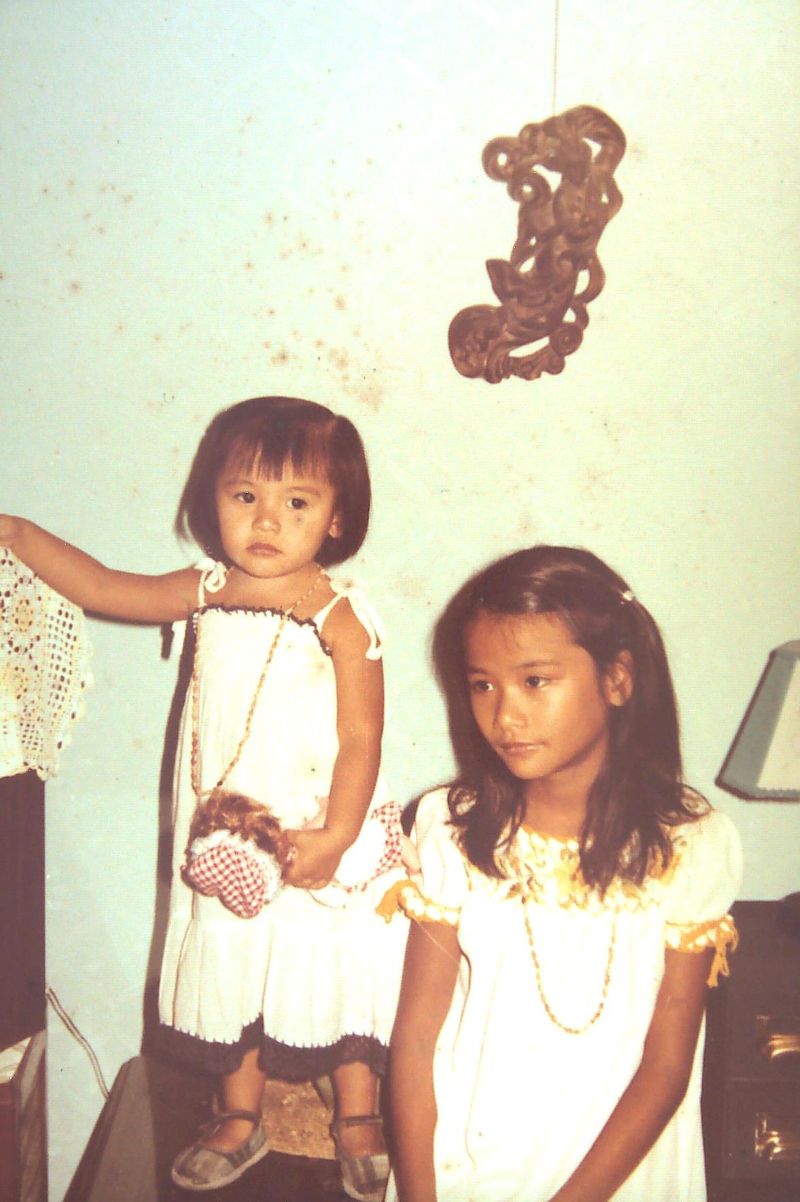
Maningning and Banaue growing up in Zhuanjialou, Foreign Experts’ Bldg.
With changes going on in China’s leadership calling for liberalization and reforms in 1979, we reiterated our request to live a more or less normal lifestyle away from the exclusive 18 mansions. We thought we owe it to our Maningning and our new baby, Banaue, to leave the confines of Shibasuo. We finally lived a semblance of normal life in Zhuanjialou or Foreign Experts’ Building, an enclave of foreigners working at Radio Peking. There, our two children were able to make friends with other children easily.
Shock and disbelief overpowered us when we heard about Ninoy Aquino’s assassination in 1983. Mario’s short story, The Assassination of a Citizen, was inspired by that single dastardly act of cowardice which galvanized the whole Filipino nation into action. He submitted the manuscript to Asiaweek’s literary contest in 1984. It was cited as one of the Ten Best of that year.
Meanwhile, Mario’s experiences living in a commune in the countryside amid political uncertainties became the subject of Antonio and His China Wall. It later won a Palanca Award for Short Story in 1986-87. He garnered the grand prize in the Gawad CCP para sa Panitikan for his Ang Rebolusyon Ay Katotohanan, a short story written after we finally returned home to the Philippines.
Mario and I have gone through a lot. We had suffered emotionally in an alien country, yet we also hurt somewhat when we left that alien land for home
Coming home in 1986 right after the Edsa Revolution, I found myself looking for a job while Mario took the post offered him as instructor at the UP Asian Center. We would enter another phase of life.
Mario went on to teach and handle administrative work as college secretary and assistant to the dean for administration of the Asian Center while doing his M.A. in Asian Studies. After finishing his MA, I prodded him to work for a Ph.D. We had an unwritten understanding that I would look for a job that could sustain us, while he would go on writing and teaching.
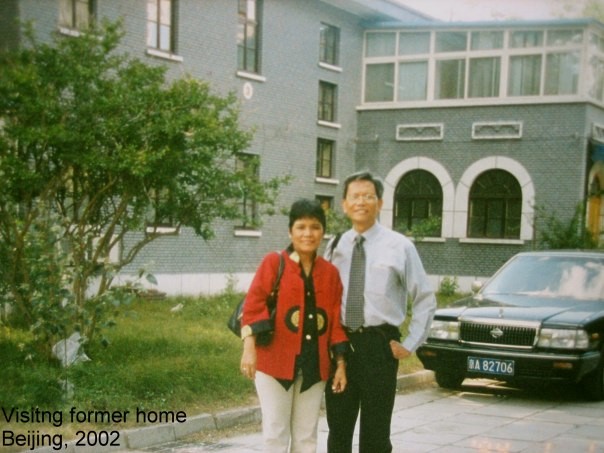
The Miclats visiting their old home, in Shibasuo, Beijing, in 2002
Mario and I have gone through a lot. We had suffered emotionally in an alien country, yet we also hurt somewhat when we left that alien land for home. In China, we spent the most creative and best years of our life, our youth. It was there where sprung the two most wonderful kids who brought enormous happiness to our wearied souls. Through it all, we struggled, we matured, we learned, and we survived.
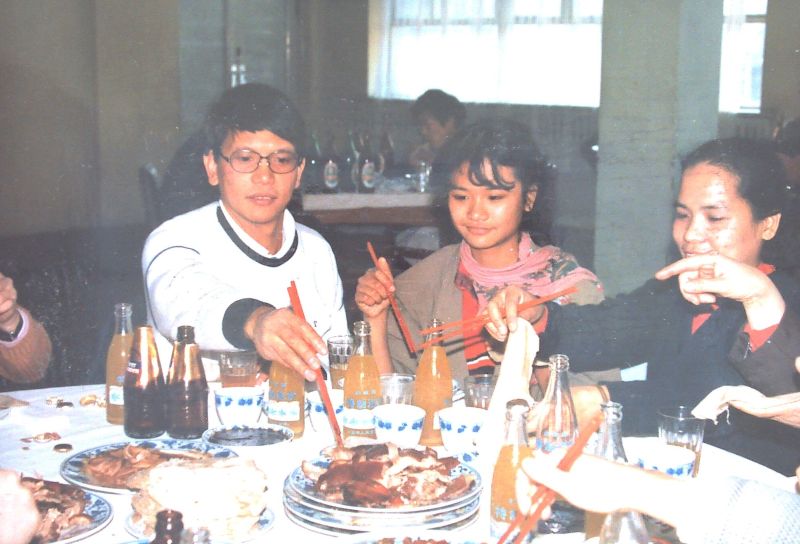
Mario, Maningning and Alma eating Peking duck in Beijing
Our family of four loved to do things together and enjoyed each other’s company. Book launches, exhibits, concerts, plays were a family get-together, and so was eating out, even in the most obscure places where we could adventurously try out exotic dishes, a tradition that dates back to Beijing in 1971.
Mario and I were in Washington, D.C. in September 2000 for a conference when we received the news that Maningning fell from the seventh floor of the Far Eastern University in Manila where she was teaching fine arts.
The death of a child is the worst and hardest grief to absorb and work through, because it is a violation of the natural order of living and dying
The death of a child is the worst and hardest grief to absorb and work through, because it is a violation of the natural order of living and dying. The trauma is often more intense, the memories and hopes harder to let go of. As such, the mourning process is longer.
Through all those years since Maningning left us, Mario was my comfort and joy, especially when Banaue left for the US for postgraduate studies. And even with a plethora of health challenges, Mario helped a lot in founding the Maningning Miclat Art Foundation, Inc., and in implementing its activities—awards and creative programs.
He was extremely busy during the lockdown in 2021, putting together his collection of poems (Kailan Diwata at 70+ na Tula) and his anthology of essays (Hundred Flowers, Hundred Philosophies), and finishing his second autobiographical novel (21 West 4th Street), as though he was in a hurry. As well, he was excitedly preparing for his Zoom greeting to our grandson Raja, who was to celebrate his ninth birthday with the Zoom launch of his book, #Rajisms. Little did I know he would leave us one month and three weeks later.
He still had some plans for projects, but I already could sense his vulnerability when his surgeon did not do another angioplasty in late December of 2019 (when we spent Christmas at the Philippine Heart Center) because the affected arteries had atrophied. He was a walking time bomb which exploded when COVID-19 caught up with him at the end of March 2021.
In September 1998, Mario was first intubated when he had a heart bypass operation at age 49. He was already 71, much older, weaker and more vulnerable, when he was intubated for the second time in April 2021. He did not make it this time. His last three books would be launched in September of that year, when he was supposed to turn 72.
It’s been four long years, and there is not a day that I do not think of Mario. He, whose love is constant and true, heartfelt and everlasting. His Facebook memories that pop up warm my heart, like his Valentine greeting on Feb 10, 2021:
“Bago mag-busy sa launch ng book nina Maharadya & Banaue, self-imposed deadline ng book projects, birthday pa ni Raja, babati na ako: Hapi Balentaym, mahal!” (Before we get busy with the launch of Maharadya and Banaue’s book, my self-imposed deadline of book projects, plus Raja’s birthday, I’ll greet you now: Happy Valentine’s, Dear!)
To his last breath, he professed his extraordinary love for me when he posted this image on Facebook on April 1, 2021 just before his intubation: Nay, I love you!
Like Shakespeare’s sonnet on love which is an ever-fixed mark and never shaken, my beloved Mario concluded his vow in 2011 with these words:
“Nanay, together with you and our children, we have built a home where we nurture the love we started a thousand years ago. Amidst a jungle of a thousand and one trees, I promise to keep on loving you, for another thousand, and tens of thousands of years. And like a fairy tale, we continue to live happily ever after.”


