


The author (right) with his brother Gab in Currimao
Way before Ilocos Norte was even considered as a local tourist destination, my siblings and I would make the trek to Laoag City, where my mother Esperanza is from. The trips coincided with school holidays and could last anywhere from a week to well over a month.
Thrice a year—Holy Week, All Souls’ Day, and Christmas—we would pack our bags and head to the Maria de Leon bus station on Dapitan Street behind the University of Santo Tomas for the evening trip that would take us away from the traffic-choked streets of Manila to ones lined with massive shade trees. As we drove away and sleep slowly came over us, we would catch glimpses of moonlit rice fields and mountainsides, or dark, silent seas that stretched on forever.
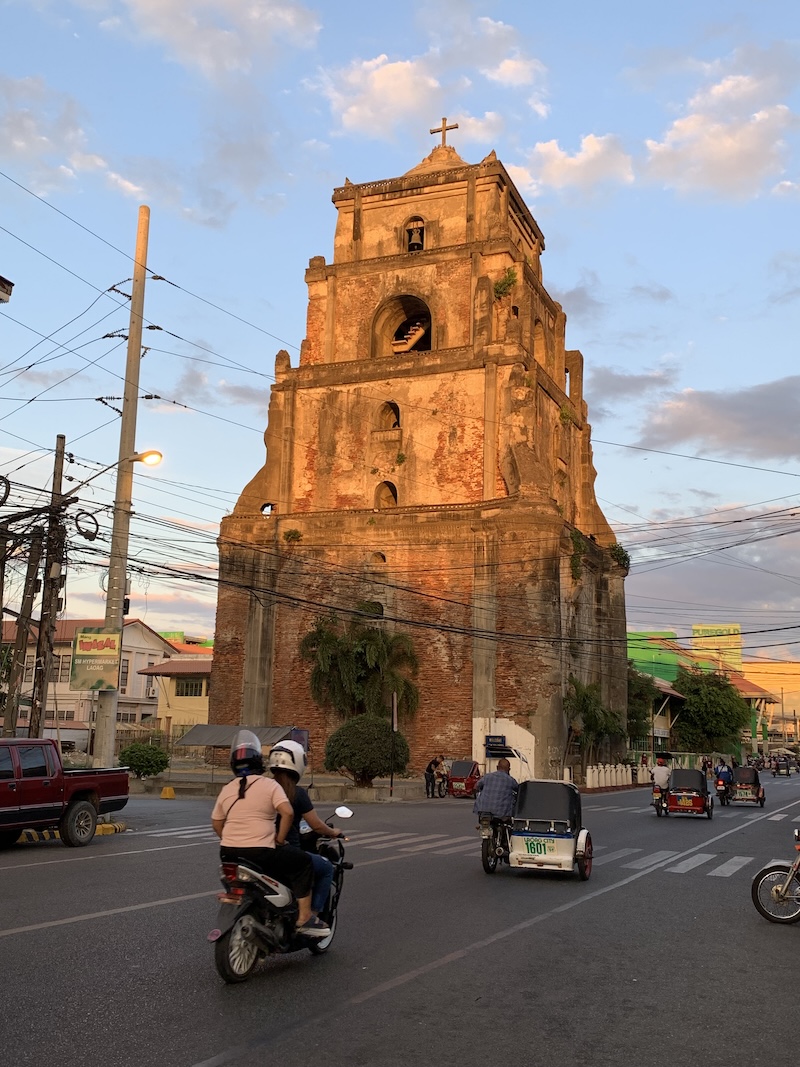
Laoag City’s ‘sinking’ bell tower
No matter how soundly we slept on those trips, we always seemed to wake up just as the bus began its approach into Laoag City. It would be dawn by then, but the lights on the bridge would still be burning. In the distance, we could already see the bell tower, and a few hundred feet away, the facade of St. William’s Cathedral.
The bus would then make its way to the station and we would always point out the same things: the town bakery that used to be manned by an elderly gent with a high-pitched voice, the insurance office where my grandfather used to work, the farmacia, and once the bus turned the corner, my mother’s house, a bahay na bato with a wooden door and beveled second floor windows located on one of the city’s main streets.
The first order of the day was always breakfast, a huge and hearty one prepared by my aunt, a self-taught cook and my uncle’s wife. It consisted of longganisa and fried eggs, yusi (a beef soup), coffee, hot pandesal, and fruit. Sometimes there would be assorted rice cakes like bibingka or tupig, linapet or patupat, but the mix seldom changed, and we were happy with it. It made us feel welcome.
There would be much laughter and talking in Ilokano, Tagalog, and English. That’s how I learned Ilokano—by hearing it spoken at home and among our relatives. Our parents and my mother’ sister would comment on how tall their five nieces had grown, and my aunt and uncle would say the same about my brothers and me.
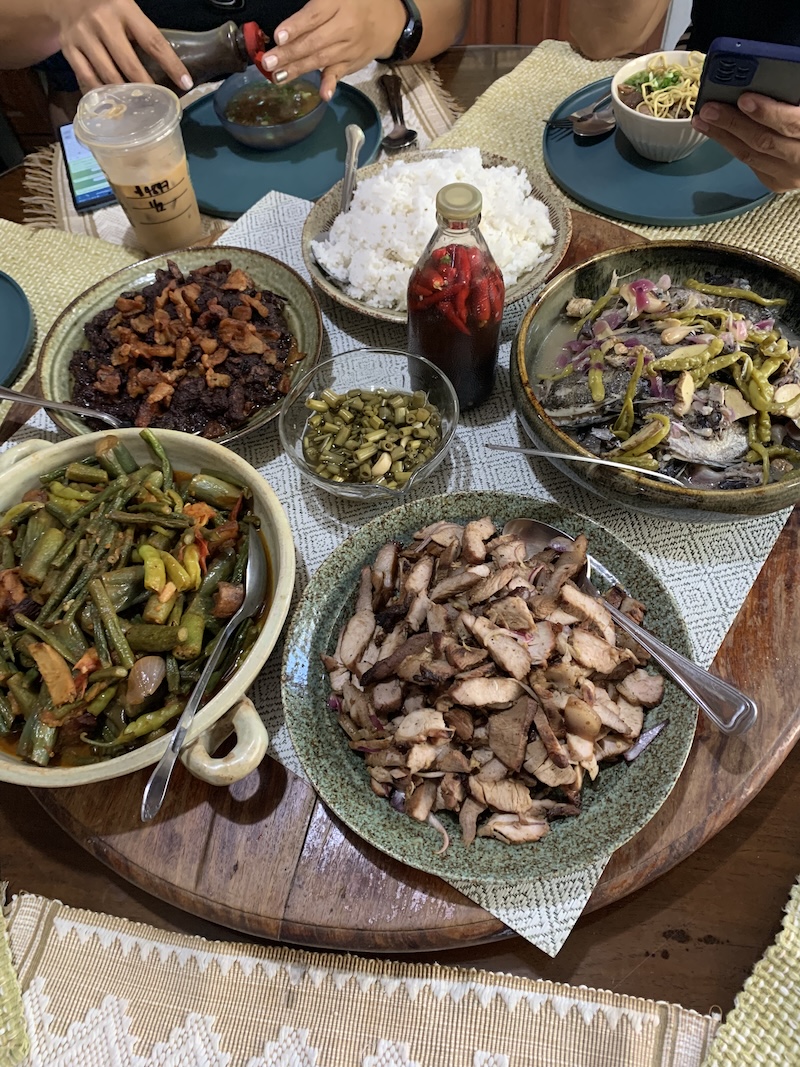
Lunch with the author’s Laoag relatives usually consists of (clockwise, from top right) ‘paksiw na samaral,’ ‘dinakdakan,’ ‘pinakbet’ and ‘dinardaraan’ or ‘dinuguan.’
Two hours later and with bellies full, we would finally, finally kick off our vacation—with a fortifying nap that ended hours later with the call to come down for lunch. It would invariably consist of bagnet (pork crackling) and pinakbet and piping hot rice. The menu on that first day seldom changed, which was perfectly fine.
I realize now that I am a creature of habit and derive pleasure from the mundane. Yes, I tried “blasting” the La Paz sand dunes onboard an ATV once, but I really prefer heading to the town of Currimao for an afternoon spent wading in the shallows of Subli-Subli beach.
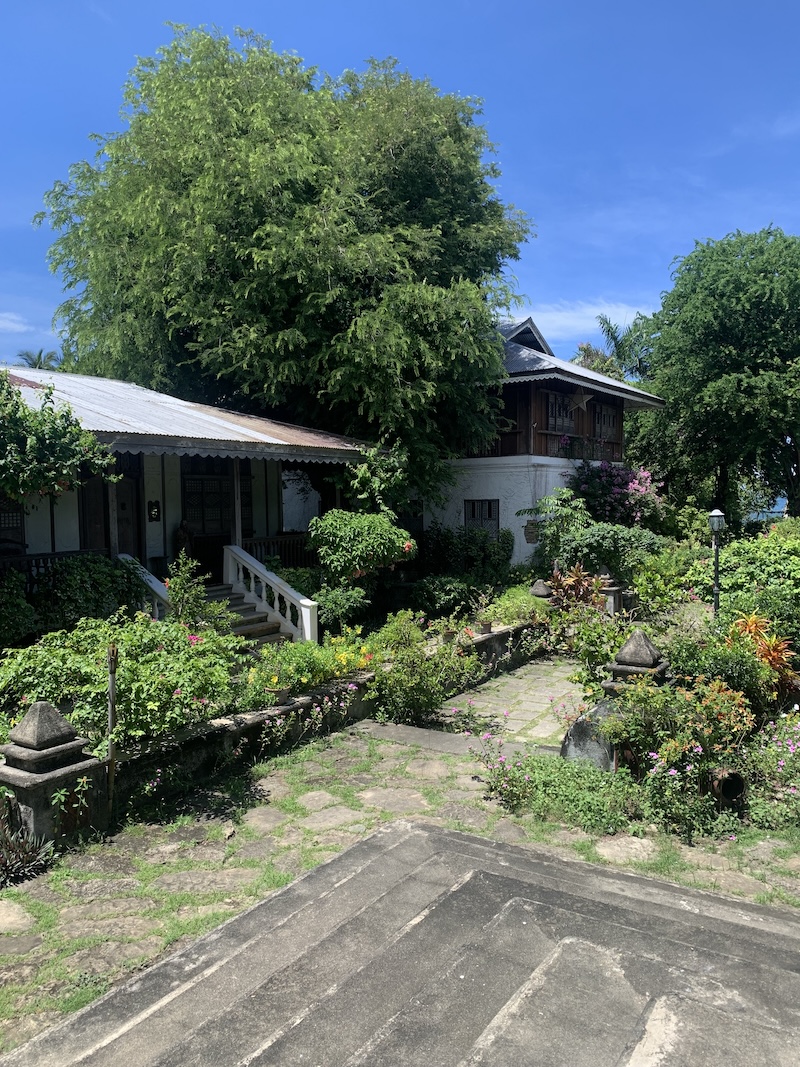
Two of the relocated, restored, old Ilokano homes at Sitio Remedios
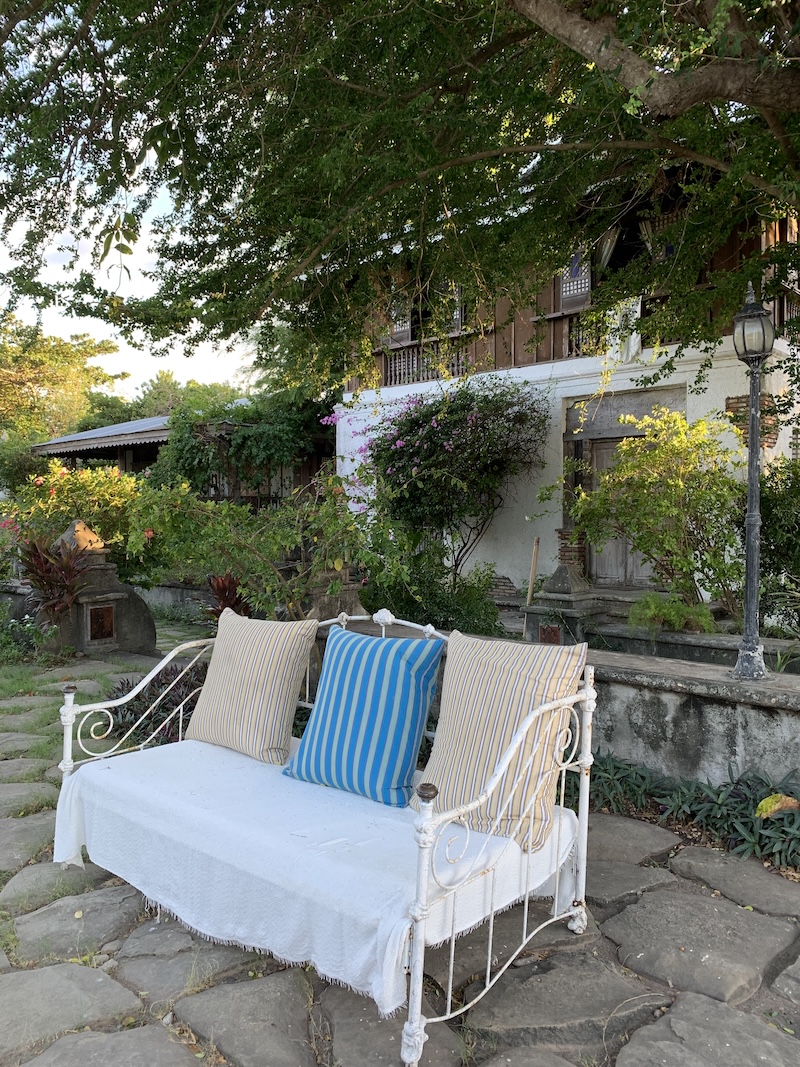
Daybed at Sitio Remedios has beddings made of ‘inabel.’

The beach just meters away from Sitio Remedios
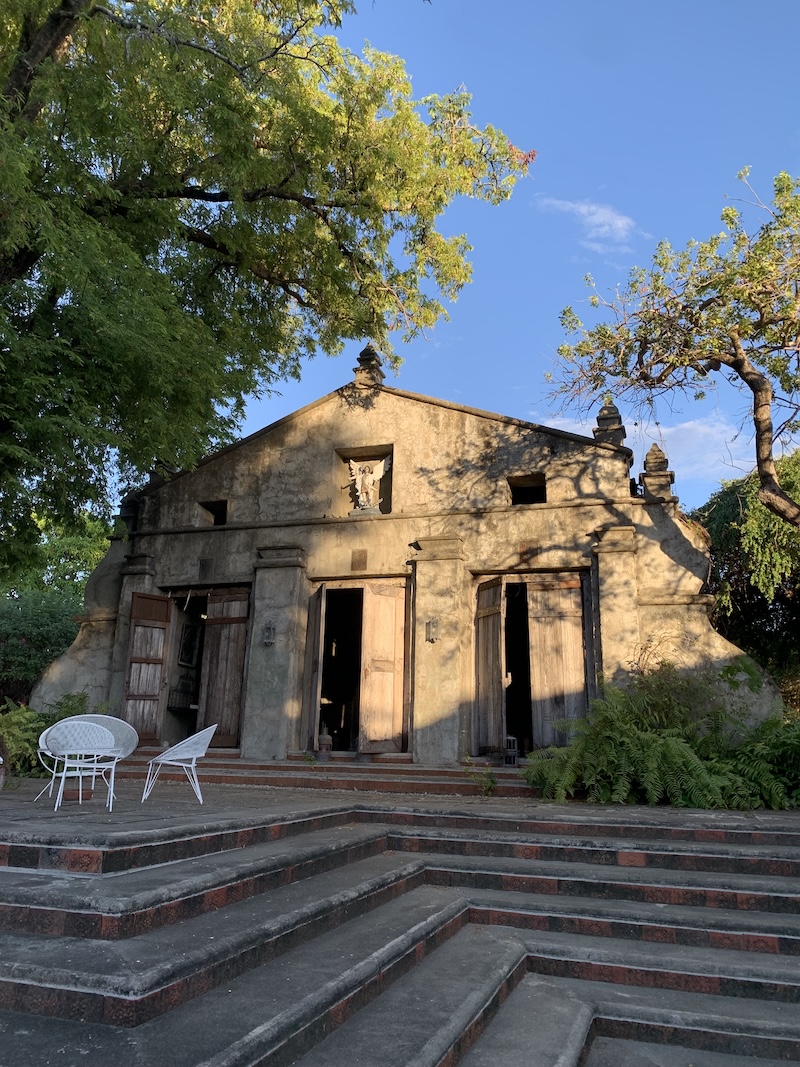
The chapel at Sitio Remedios is a replica of Paoay Church.
A few meters away is Sitio Remedios, the tiny and beautiful resort owned by Dr. Joven Cuanang. Since opening almost 20 years ago, it has earned a reputation for its genteel and rustic elegance. The resort villas are actually houses cobbled together from old Ilokano homes set to be demolished but rescued by Cuanang and his team. They line a cobblestone plaza where parties are held, the steps leading to a chapel that’s a replica of the centuries-old Paoay Church, complete with flying buttresses.
During an earlier visit to Sitio Remedios as guest of Dr. Cuanang, I was amazed at the sight of the plaza illuminated with what looked like hundreds of tea lights arranged in a grid formation. It was like the stars had descended to earth.
My cousin Margo and her husband had their wedding reception at Sitio after their church wedding at Paoay Church in 2007, and became the first to do so. They booked the entire resort and we partied until late. More recently, my brother Gab and I went to Sitio, where we swam in the clear waters before washing off the salt under the outdoor showers.

At the Batac ’empanadahan,’ one can also order (clockwise, from bottom right) grilled ‘longganisa,’ grilled squid, and ‘miki’ noodles.
A trip to Ilocos Norte is never complete without at least one afternoon spent in Batac, where there’s an entire covered area near the church dedicated to empanada, those bright-orange turnovers filled with steamed bean sprouts, whole eggs and chopped longganisa—best doused with sukang Iloko spiked with chilies. There are several stalls to choose from, but they all sell the same items: empanada, grilled longganisa, dried squid, and miki, a thick and heavy noodle soup that can be ordered split into two bowls.

Batac ’empanada’ is filled with mung bean sprouts, an egg, and crumbled ‘longganisa.’
Batac empanadas are different from the ones sold in Vigan in Ilocos Sur that are smaller and not as overstuffed. The empanadahan in Batac comes alive at dusk and stays open till late. Look for the printed menu on display but don’t laugh at the options that include a “seedless” variant made without bean sprouts, and is really just a turnover with egg and crumbled longganisa.
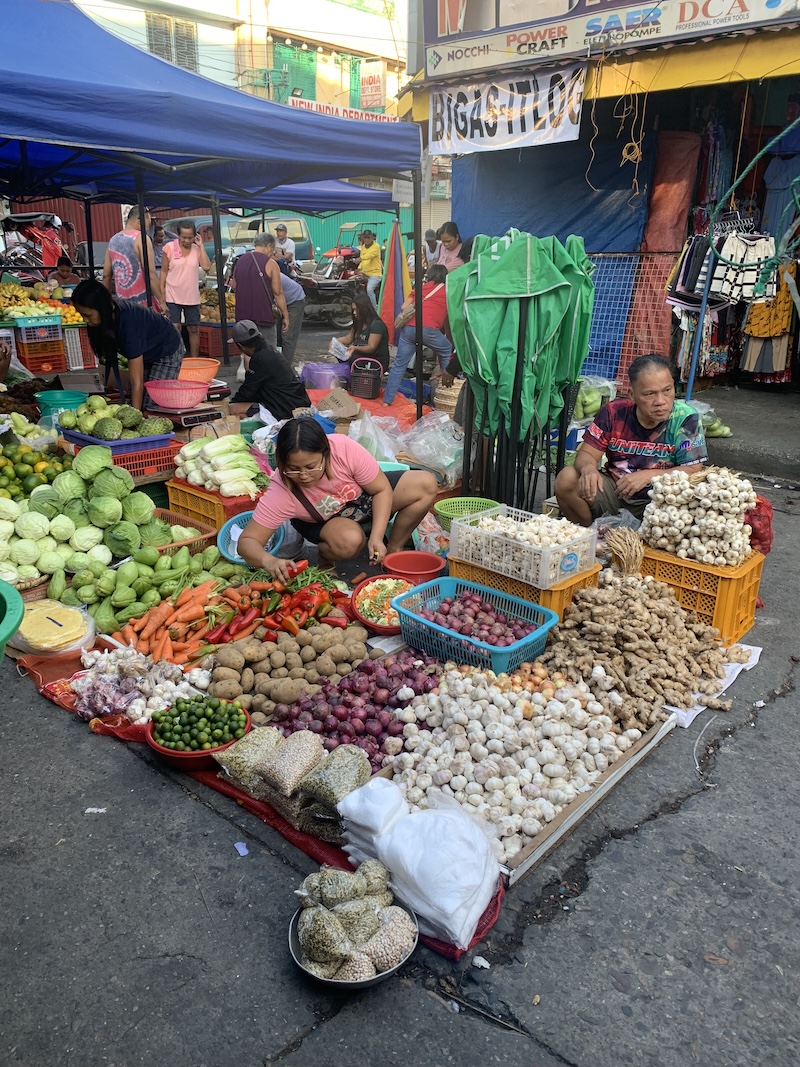
On market days in Laoag City, vendors from nearby towns arrange their produce on tarps.
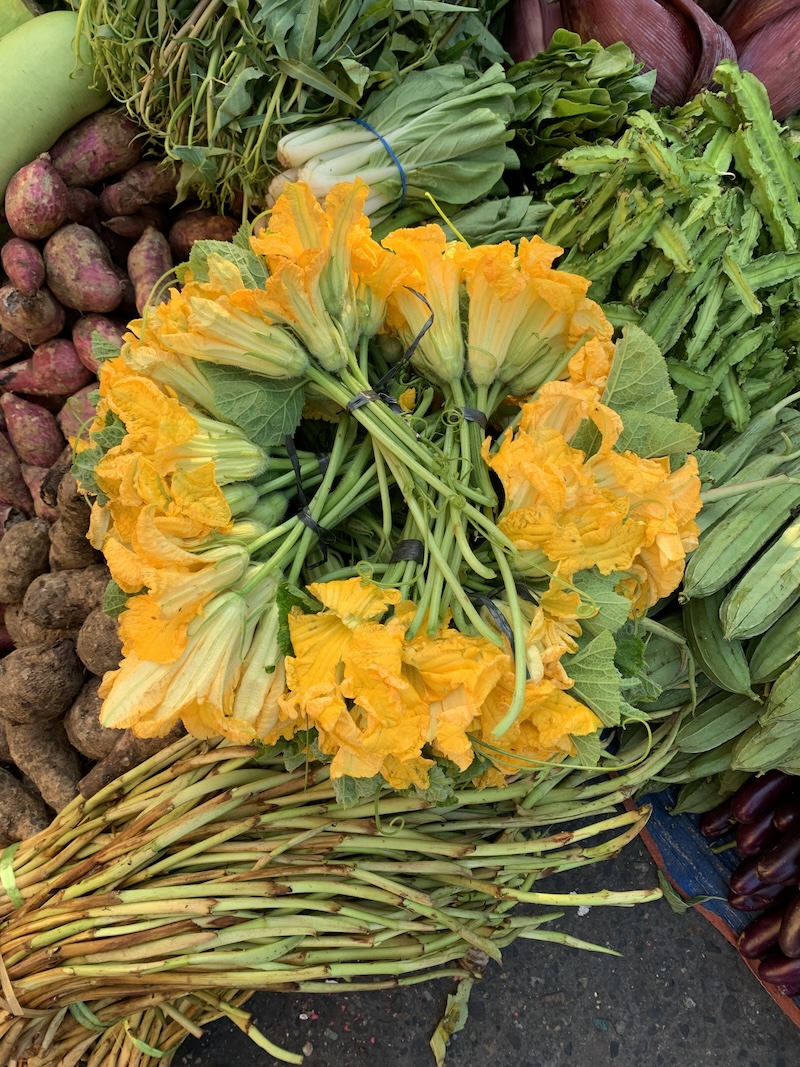
‘Kalabasa’ flowers

‘Uong’ or native mushrooms
Whenever my visit to Laoag falls on a weekend, I make it a point to wake up early on Saturday, market day. I walk to the market located a few streets away from the Cathedral to marvel at the freshness and variety on display, from tiny clams in basins and bright-yellow kalabasa flowers to live, hapless geese transported in native bayong. The tomatoes, eggplants, and bitter gourds are smaller but look juicier, denser than their supermarket counterparts.
I spotted tiny, marble-sized eggplants I imagined bursting with sweetness in one’s mouth when cooked in ‘pinakbet’
On my last trip, I spotted straw-colored uong (native mushrooms) and tiny, marble-sized eggplants that I imagined bursting with sweetness in one’s mouth when cooked in pinakbet.
There was a stall selling homemade peanut butter, and a table was packed with all kinds of native rice cakes one could buy piecemeal. My cousin Jenina, who takes after her mother and is also a wiz in the kitchen, recalls how her mother Eleanor always made a beeline for the itinerant vendors. These were the ones who would arrive way before dawn on Wednesdays and Saturdays, bringing their freshly harvested fruits and vegetables that they would then arrange on bilao spread on the sidewalk.
“Always buy from them because aside from being sure that what you’re buying is fresh, you’re also helping their families and their livelihoods,” Eleanor told her daughters.
As Christmas draws near, we’re planning to head to Laoag to mark the holidays with my mother’s relatives in a city that continues to change, but still retains many of its old ways. In a year of painful losses, I know that familiar places and faces will act as a balm that will fortify me for what lies ahead.


