
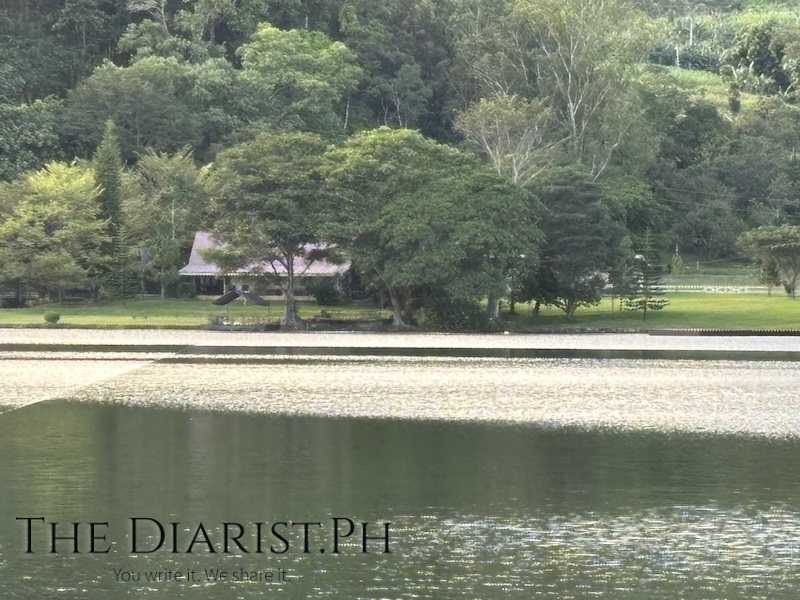
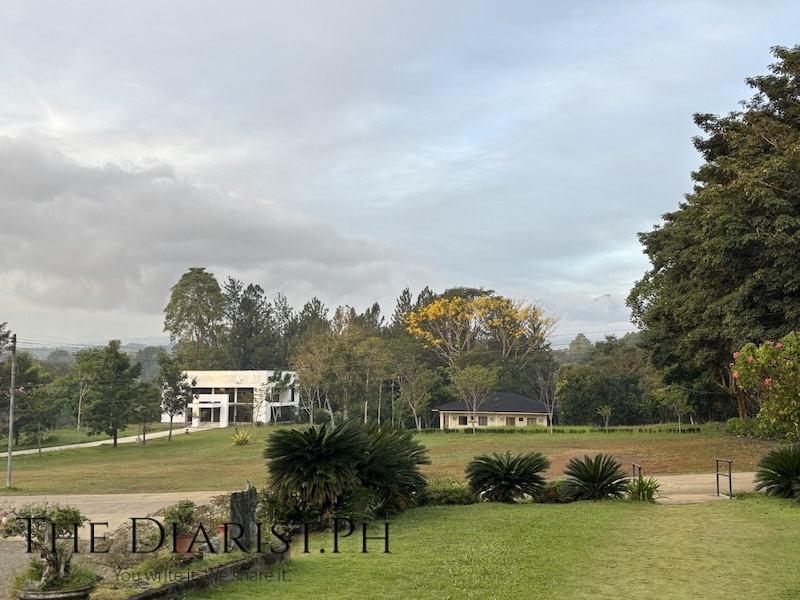
Picturesque view of the Museum at the Monastery of the Transfiguration
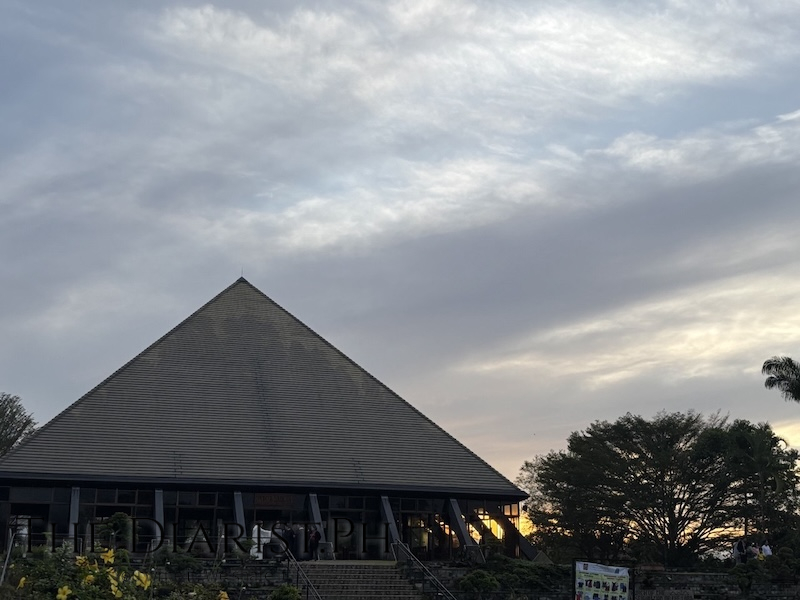
The Monastery of the Transfiguration at sundown
This was one trip where the only thing I had to do was to show up.
What else was there to do when traveling with fellow Theresians reared in quasi-military-school discipline and efficiency by the Belgian and Filipino nuns, touring with women so trained and used to running the show? Relax (after you pay your fare and your share), sit back, and let your life be run by them, if only for five days. I so welcomed that.
Classmates from grade school to high school and for some, to college, at St. Theresa’s College Quezon City, we couldn’t call ourselves “barkada,” but our entire batch has been such that it has stayed bound through the decades, especially now with social media and chat apps (it can take you days to go through the unending group chat thread, so let’s not go there). So regardless if we met up or communicated regularly, we volt in (to use a ‘70s term) and bond naturally once we’re thrown into the same space and time. In this case, a post-Christmas trip to Cagayan de Oro and Bukidnon—which could be an option you consider this Lenten break.
There’s hardly any need to adjust to each other—well, if ever we did, it was to each other’s maintenance meds, excluding the ballerina Malen Claravall who has no need for them (envy!). There really must be something about a shared early school life—its agony and ecstasy, its naughtiness and naivete—that turns it into an instant glue, like Mighty Bond. On the surface is nostalgic fun, but dig deeper, you see values and faith, spiritual faith. Shared values and faith.
Theresian education, perhaps like in other Catholic girls’ schools (don’t like to generalize), cultivated fear of authority and adherence to discipline, order and structure—a DNA you don’t shake off, not even in your senior years. So—our CDO-Bukidnon trip would have just that.
In this case, the appointed authority for us five was Malen Claravall, a ballet veteran and pioneer of London’s Royal Academy of Dance in the Philippines. For quite some time, Malen had been telling us about Bukidnon and how, she always says, it is “the fertile soil for consecrated men and women.”
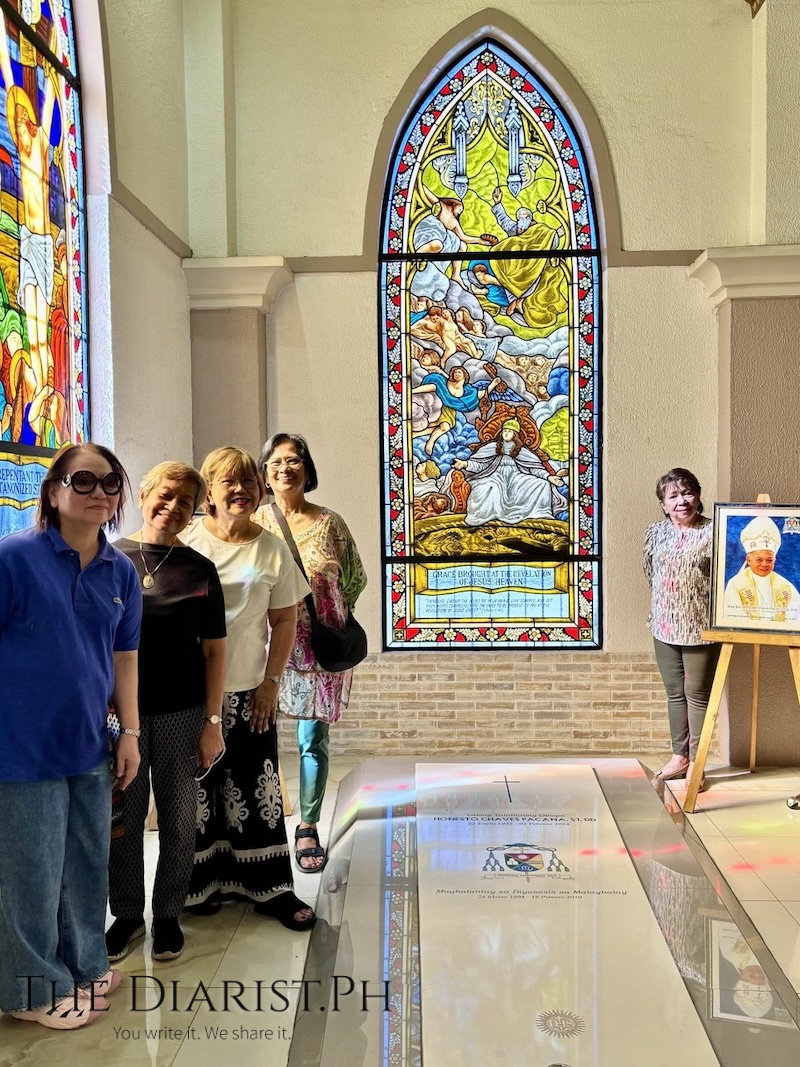
In the tombsite of Bishop Honesto Chaves Pacana, SJ, DD at the San Isidro de Labrador Cathedral in Bukidnon, Theresian travelers pay their respects: from left, the author, Celeste Molina, Grace Sabas-Raquino, Aleli Raymundo-Belonia, Malen Claravall.
She puts it thus because Bukidnon is home, a training ground particularly, to various religious orders—the Jesuits, Carmelites, Benedictines, the Missionary Congregation of Mary, the Religious of the Assumption. Malen has traveled to Bukidnon now and then primarily because her uncle, the well-loved Bishop Honesto Chaves Pacana, SJ, DD, was based there until his passing two years ago. Malen was very close to her uncle, a progressive and people-centric head of the Church, and would visit him regularly.
It was also in Bukidnon, with Bishop Pacana and among the religious orders, that Sr. Amelia David, ICM worked with for a few years, and again, Malen kept in touch with Sister Amelia, like many in our batch have. Sister Amelia was our sociable yet feared head of the college department at St. Theresa’s. She saw us through our bungling adolescence and young adulthood, and for many of us, into our late adulthood. She has retired in our D. Tuason Quezon City campus, where former students continue to visit her. Malen has many stories to tell about what Sister Amelia had achieved in Bukidnon.
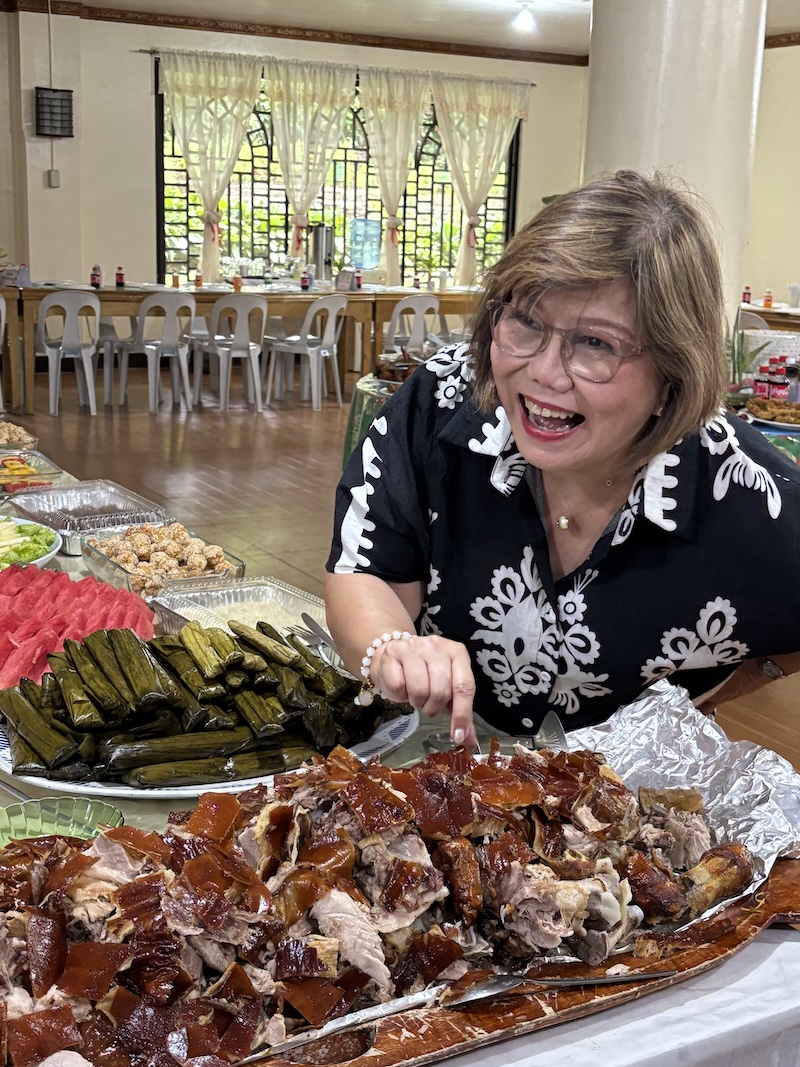
To have or not to have: Grace Sabas-Raquino about to give in to the ‘lechon’ temptation during the holiday reunion of the religious community and their families at MCM
In short, Bukidnon was no hard sell of a destination for us. Malen had the itinerary down pat. Grace Sabas-Raquino, Aleli Raymundo-Belonia, Celeste Molina and I wanted to see for ourselves Malen’s Bukidnon, and in my case, visit my longtime friend, Dom Martin Hizon Gomez in the famous Monastery of the Transfiguration in Malaybalay. We believed it would give us respite from our here and now. Retired (on paper, at least) from various professions in agriculture economics, education, nursing, our group isn’t really living on the fast lane (except one who is CEO of her firm), but still, we wanted some peace and quiet.
Turned out CDO and Bukidnon are a fast lane, literally that is. Its modern highway infrastructure is perfect for fast-moving vehicles (with a tendency to overtake from the right, take note), so it’s easy to destination-hop. The CDO airport is modern—actually the first sign you get that travel to Mindanao is not behind the times, not at all.
Road travel is convenient and fast, so our first urge that noon was to drive off the highway and to the sea, have lunch on the seaside. Along Iligan Road a drive away from CDO airport, we lunched in their biggest seaside restaurant along Opol Beach. It offered your local comfort food, from kare-kare to shrimps and squid, whichever way you wanted them cooked.
Then we drove to the compound of the Missionary Congregation of Mary (MCM) in Malaybalay, where Bishop Pacana spent his last years under the care of the nuns, and where Malen was always welcome. That would be our home for three days, our starting/end point to and from our destinations in Bukidnon. We would have breakfast and say the morning prayers with the nuns and joined them for other meals whenever we were around—the perfect home-cooked healthy meals, actually feasts during our stay. How? It was a happy coincidence that the MCM nuns from around Mindanao and the Visayas were gathered for their annual meet. The vocation of the MCM nuns is in education—they are deployed in the dioceses to teach in the parochial schools. It was our privilege to see and experience, even if superficially, their community life, even as we enjoyed the comfortable accommodations.
It was as if our world had stopped as we listened to the music being made in that quiet, private space
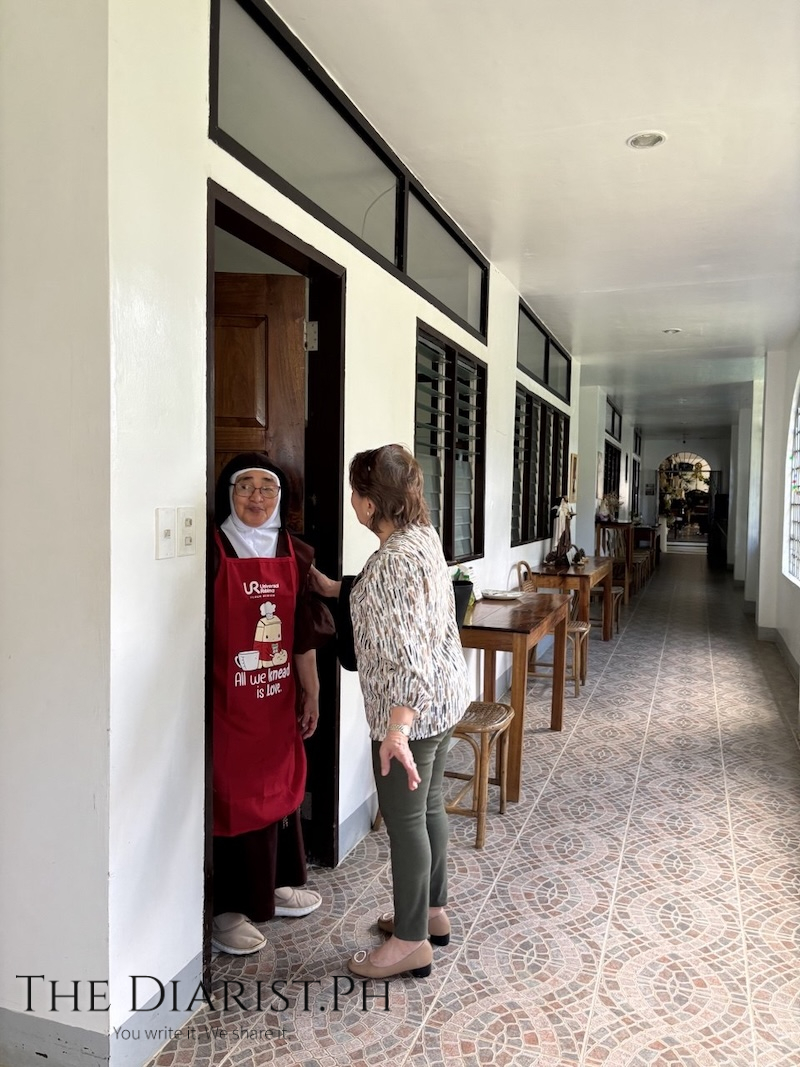
Malen Claravall introduces herself at the back door of the Carmelite convent.
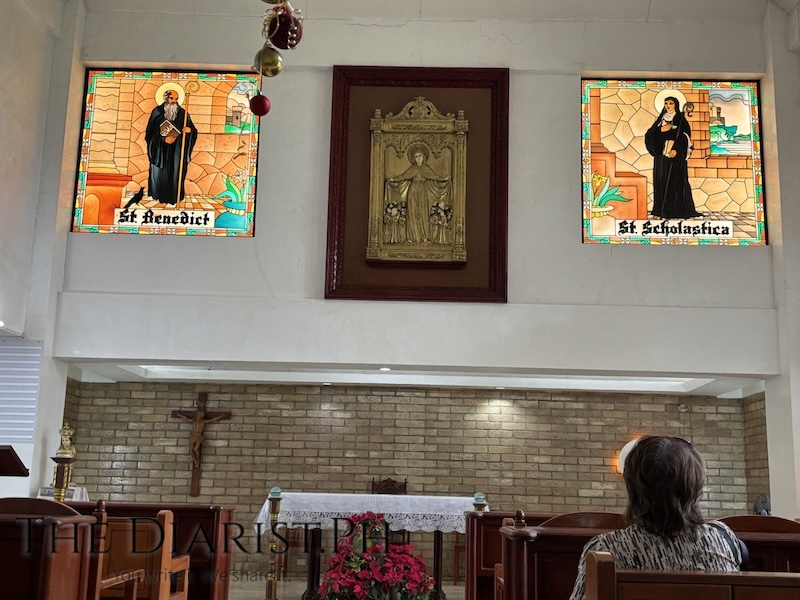
The chapel at the Monastery Mater Ecclesiae of the Benedictine nuns
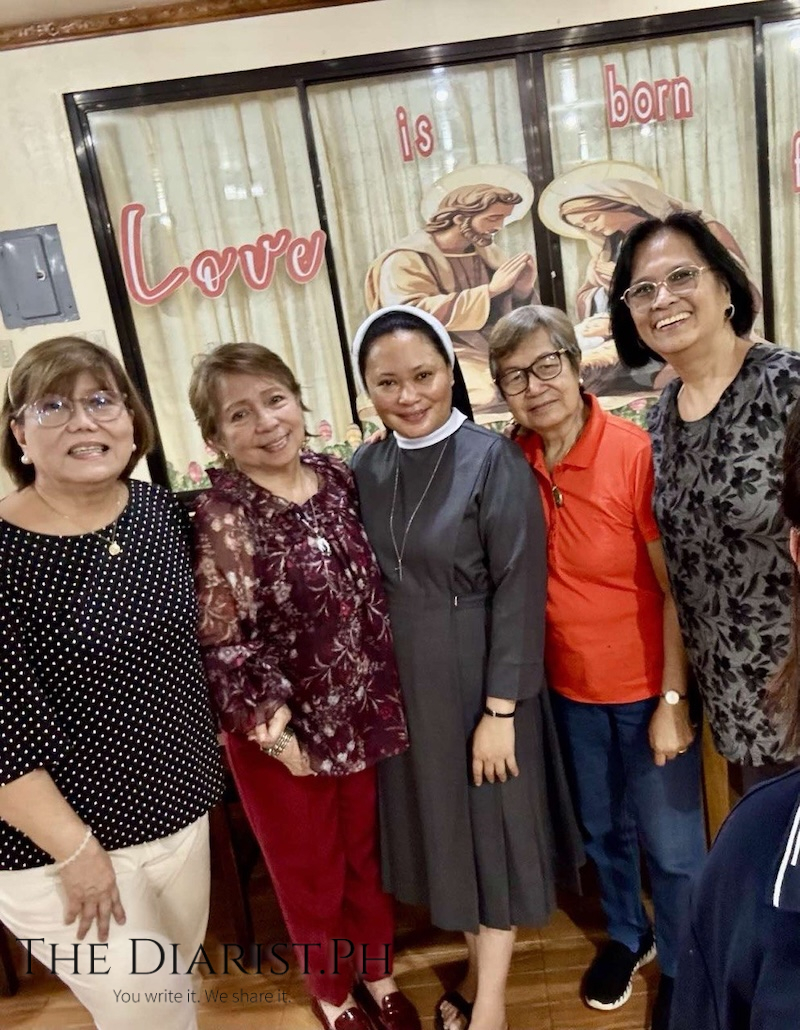
With Sr. Evangeline Hingpit, MCM mother superior
We visited the Carmelite nuns at the Carmel of the Hearts of Jesus and Mary, who live in the cloisters, and who hardly have contact with the outside world requesting for their prayer. The nuns not only know Malen, in the recent past she also “danced” solo ballet for them, as they watched from behind the curtain. This time, in the little time they had away from their daily chores, they received our written prayer-petition, and they sang their own religious compositions, as we sat in our side of the cloister. It was a moment of privilege for us; it was as if our world had stopped as we listened to the music being made in that quiet, private space. I, whose job it’s been to swim in the ocean of social climbers, felt calm and safe suddenly.
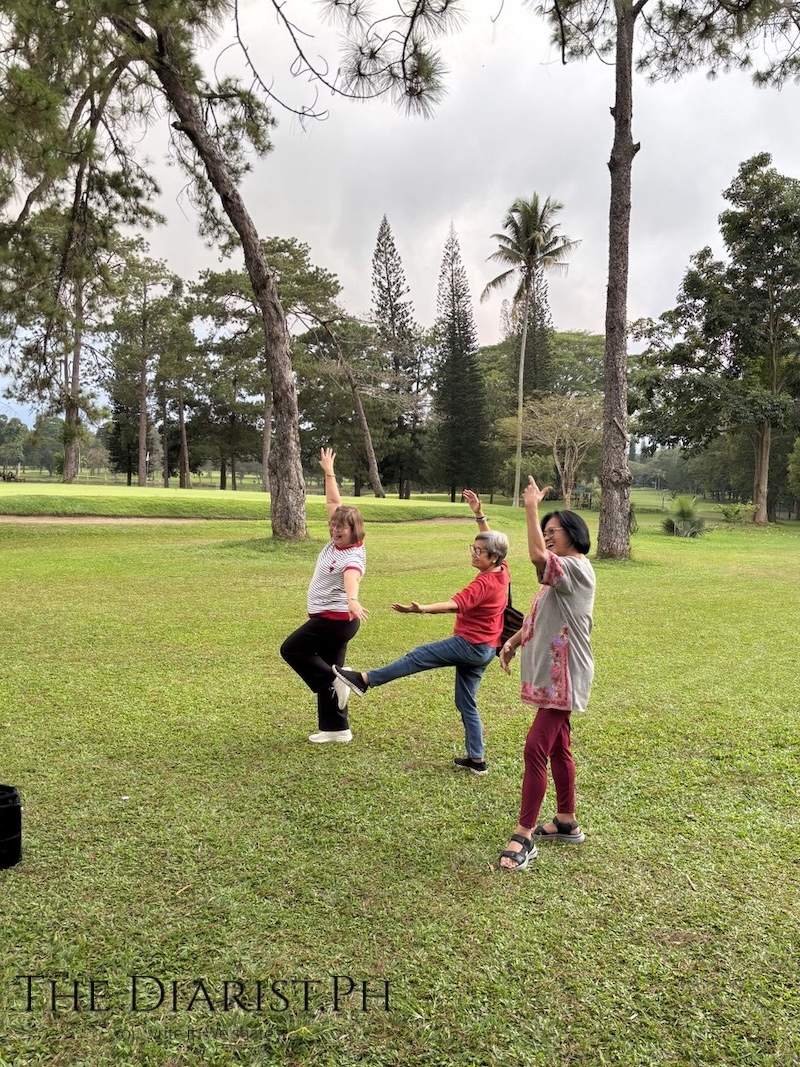
Balletic pose at Del Monte Golf and Country Club
Apparently a must destination in Bukidnon is the Del Monte Country Club in Manolo Fortich, Bukidnon, where we had its famous burger, which took quite long to come so that we had enough time to explore the grounds. It’s a scenic country space of vast green and forest, the leading golf course in that neck of the woods.
We also paid a visit to the home of the Benedictine nuns, the Monastery Mater Ecclesiae, to sit down with a few of them, pray in their chapel, and buy their bottled delicacies. The monastery has good artisanal pasalubong, such as honey, honey lemon, and coffee. I got my St. Benedict medal, believed to protect you from injury and which I wear like an amulet when I play tennis (no, it doesn’t come with guaranteed volleys). I would have that medal blessed later at the Transfiguration.
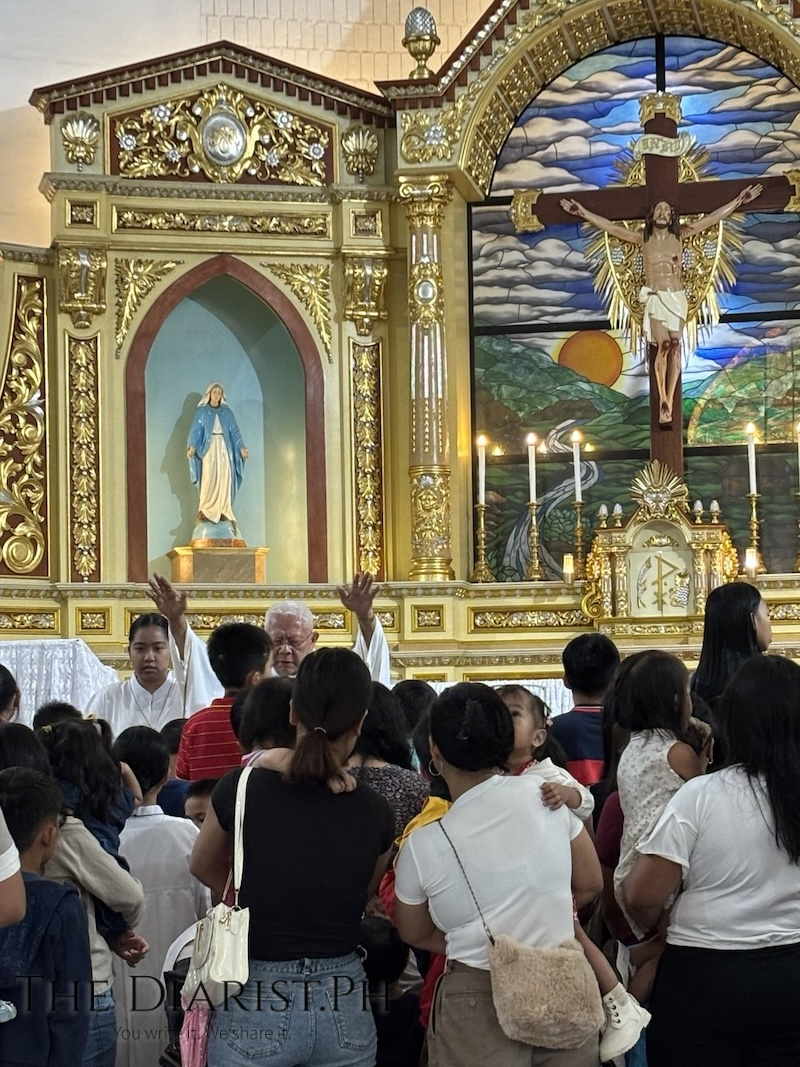
Sunday Mass-goers at San Isidro de Labrador Cathedral in Bukidnon
It’s always a good take-away to attend a Mass in the province, in this case, at the San Isidro Labrador Cathedral, near our base at MCM. We joined Malen as she paid her respects at the tomb of Bishop Pacana inside the cathedral, a pastor who apparently remained in the hearts of his Bukidnon flock.
The cathedral was filled on that Sunday Mass, mostly with families. It warmed my heart to see the Filipino faithful, rich or poor, dressed up or scraggly, old or young, coming together in the Eucharistic celebration, a big assembly where they behaved and observed pious silence. But what was most touching was to see the Mass-goers, during the Offertory, walk the long line to the altar to drop their donations. The moving crowd came from all walks of life, one in faith and worship. To me it was a demonstration of the Filipino’s giving heart, no matter the hard times, and this remains so evident in the province. While their elected leaders rob them blind, the ordinary Filipino remains willing to subsist on religious faith. (They say to a fault, but let’s not go there.)
While their elected leaders rob them blind, the ordinary Filipino remains willing to subsist on religious faith
Aside from the spiritual and the pious, Bukidnon has its scenic side. It is actually beautiful, from the ground and from up the hill. We discovered a breathtaking Lake Apo. To relish the panorama, there’s a privately developed area open to the public; you buy tickets at the entrance to walk down to the lake. The lake is placid, a flat endless carpet of deep green lined with mangrove. It is like a painterly scene in a movie—the idyll in a historically war-torn south.
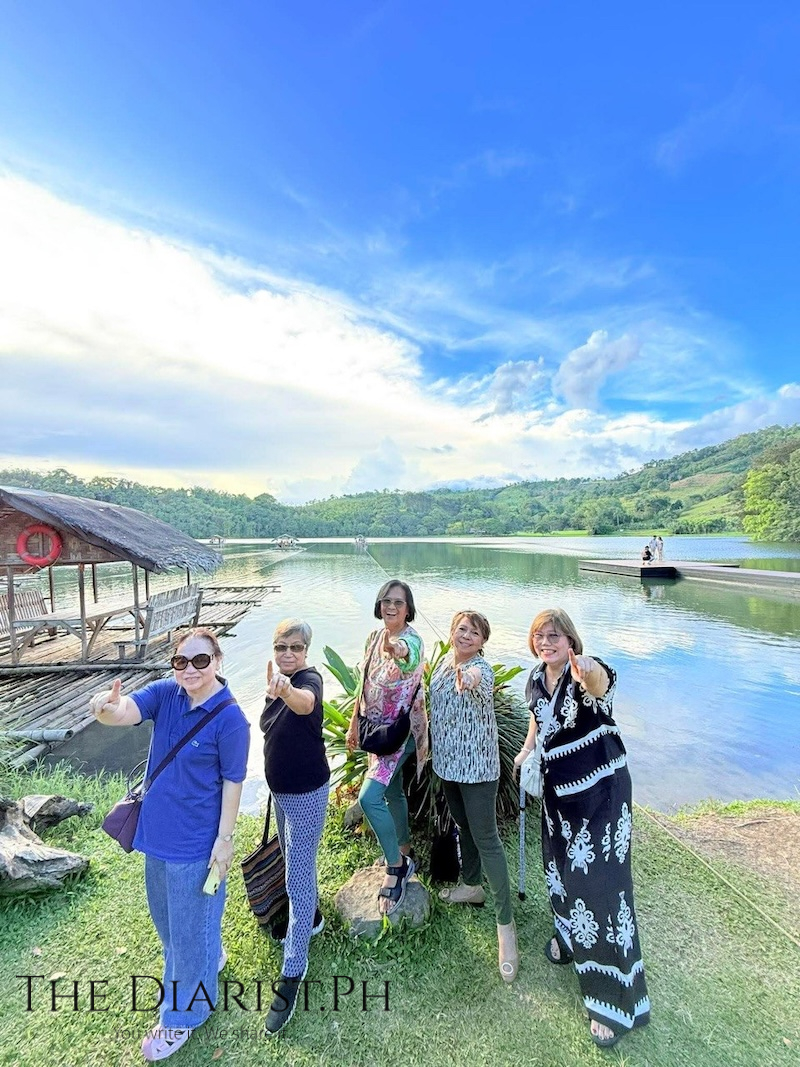
The group’s Instagram moment in Lake Apo

Lake Apo panorama
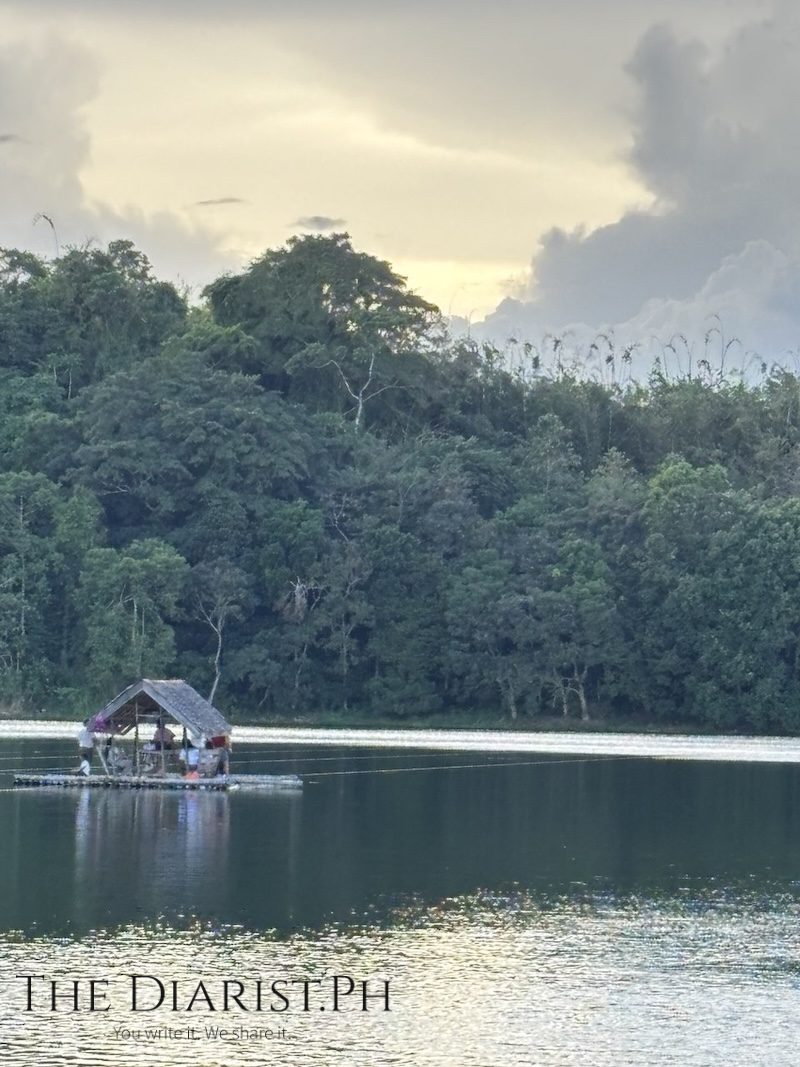
Lake Apo in Valencia, Bukidnon
Lake Apo is your Instagram moment, nature’s current contribution to your selfie.
On another day we drove up to the Suarez Hills Nature Park, where we enjoyed a sweeping bird’s eye view of Bukidnon from the hilltop—and a relishable warm cup of chocolate. The place is good for camping or just chilling.
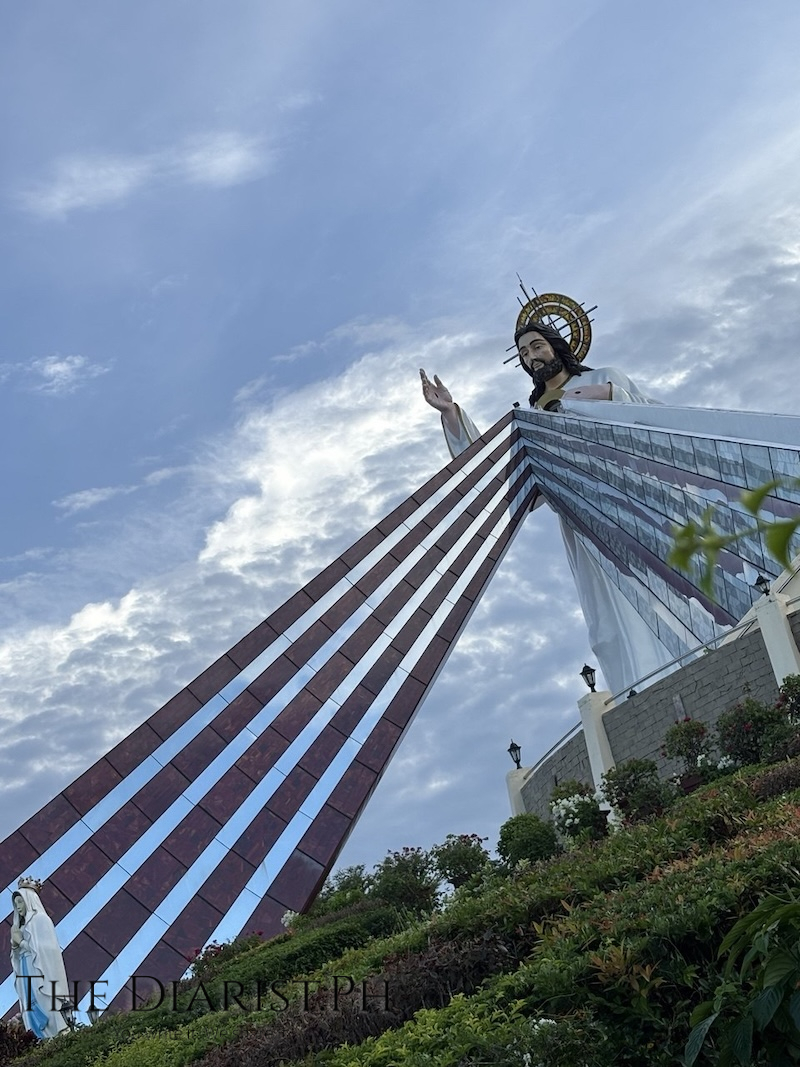
Shrine of the Divine Mercy in Bukidnon
A popular tourist destination we dropped by on our way back to the airport was the Shrine of the Divine Mercy. It is open to the public but no shorts or leggings allowed—the entrance staff gives you a long wraparound to wear. The Divine Mercy statue is gigantic and so overpowering that it seems to put you under a spell when you stand at the bottom and look up to its massive gaze. I haven’t been to the shrine of Christ the Redeemer, the 30-meter-tall statue atop the mountain in Rio de Janeiro, Brazil, but I can imagine that this iconic world sculpture was what gave the idea for the construction of this pilgrim site.
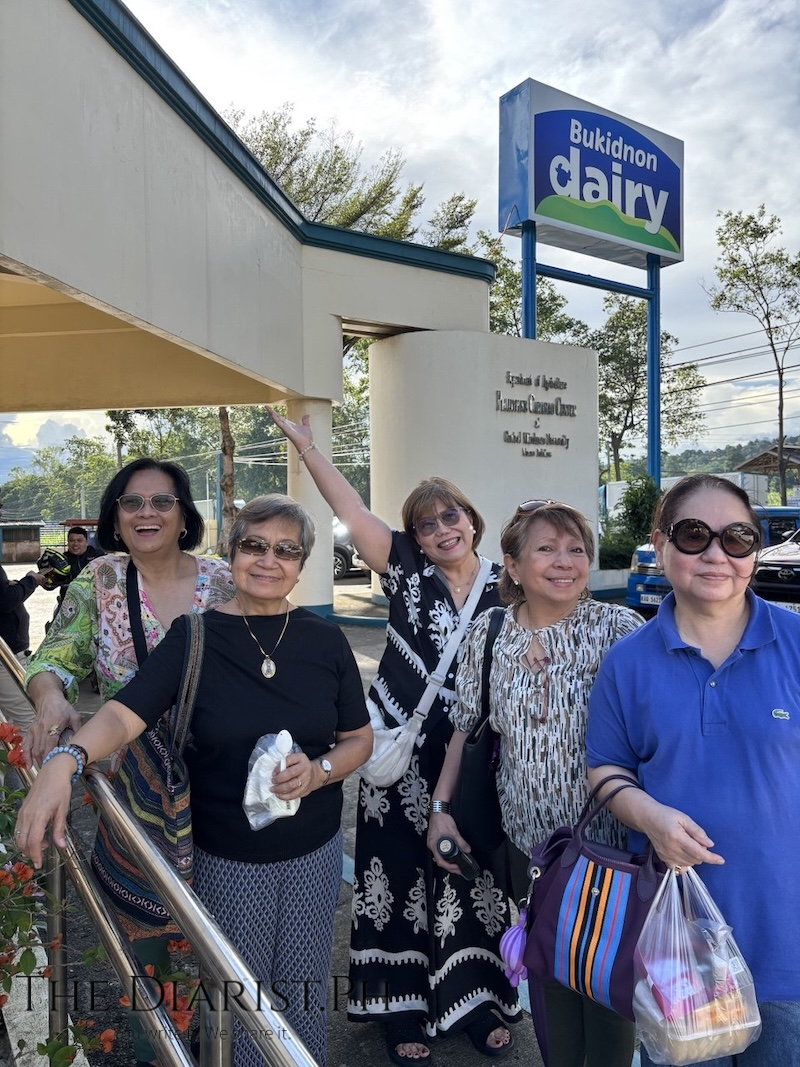
‘Pasalubong’-shopping at Bukidnon Dairy
There are places for pasalubong all over Bukidnon, starting with the popular Bukidnon Dairy that has all kinds of products from the south, from milk pastillas, honey, to other delicacies.
Bukidnon is food for the body and the soul. It is a local destination that could be your option in case the Middle East conflict is spoiling your travel plans to Europe, or if you want to explore the provinces beyond Cebu, Boracay or Bohol. Its accommodations are Google-able.
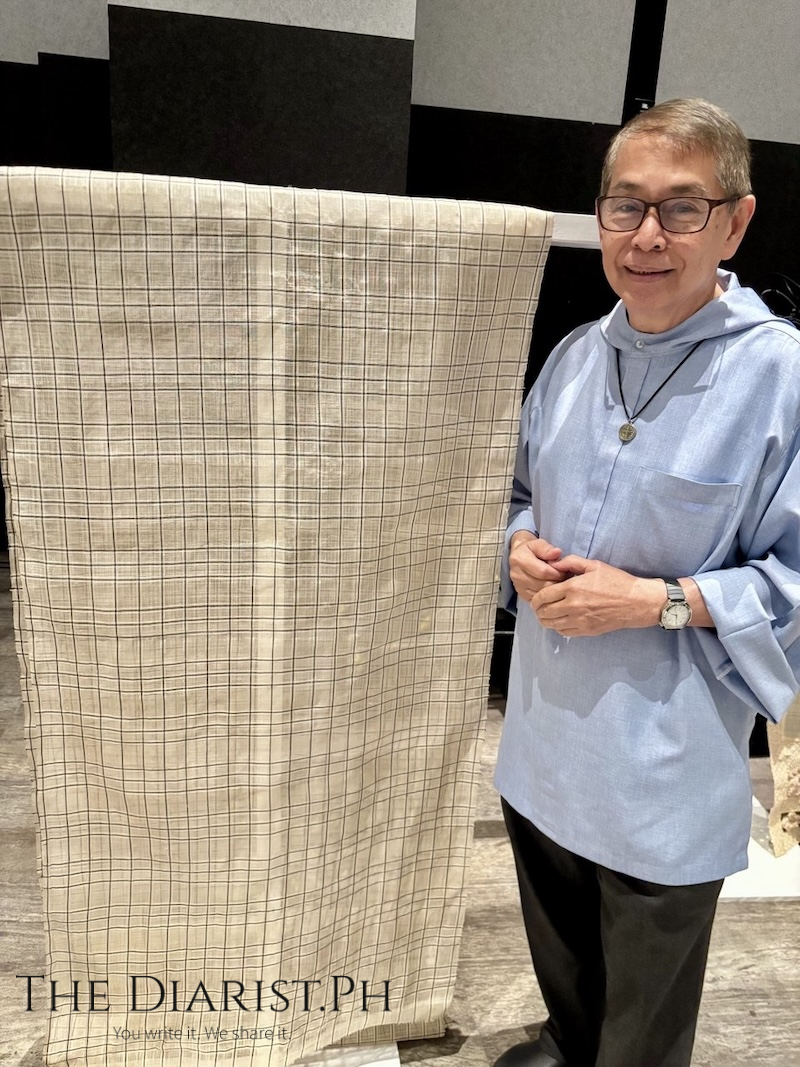
Dom Martin Hizon Gomez, OSB, with woven abaca during the Eloisa Hizon Gomez Abaca Weaving Competition with the HABI: Philippine Textile Council in 2025
To me, however, Bukidnon was a destination not because of all of the above, but because I wanted to visit my friend of 40 years-plus, Dom Martin Hizon Gomez, the Benedictine monk who was the famous fashion designer Gang Gomez. Although Dom Martin and I have kept in touch through the decades, amid the blitzkrieg nature of my career and through the deepening of his vocation, this visit would be my first time to see him in the milieu he has chosen to embrace all his life, The Monastery of the Transfiguration in Malaybalay. At last I would feel myself the moments he’s often told me about.
So—would we join the monks at Lauds at the break of dawn, he asked. I said yes in an instant, then later my group chat clarified, that would be four in the morning, underline 4. Almost all of us still said yes. And we took up Dom Martin’s suggestion to spend the night in the monastery, which has a separate building for guests.
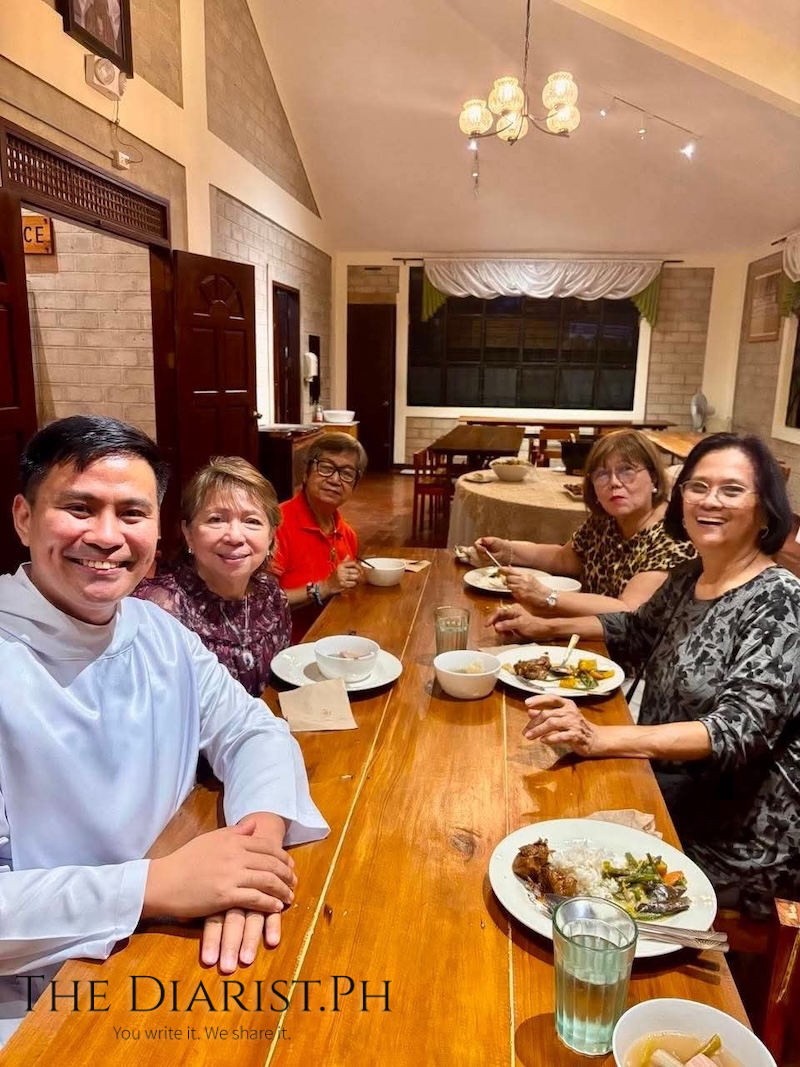
The group with Dom John Paul in the Monastery guest house
But there would be no Dom Martin in the monastery on our visit. He was still undergoing therapy in the family home in Pampanga, from a back injury he suffered during a rough trip to the hinterlands to visit abaca weavers. Not many know that Dom Martin and his family have started an abaca weaving competition in honor of the memory of their mother. The Eloisa Hizon Gomez Abaca Weaving Competition is now a successful collaboration with HABI: Philippine Textile Council, the movement led by Maribel Ongpin for the promotion and preservation of the indigenous weaving industry in the country.
He entrusted us with the monks—Dom Maurus, Dom John Paul, Dom Pio, all young and thus so able and attentive to our senior presence.
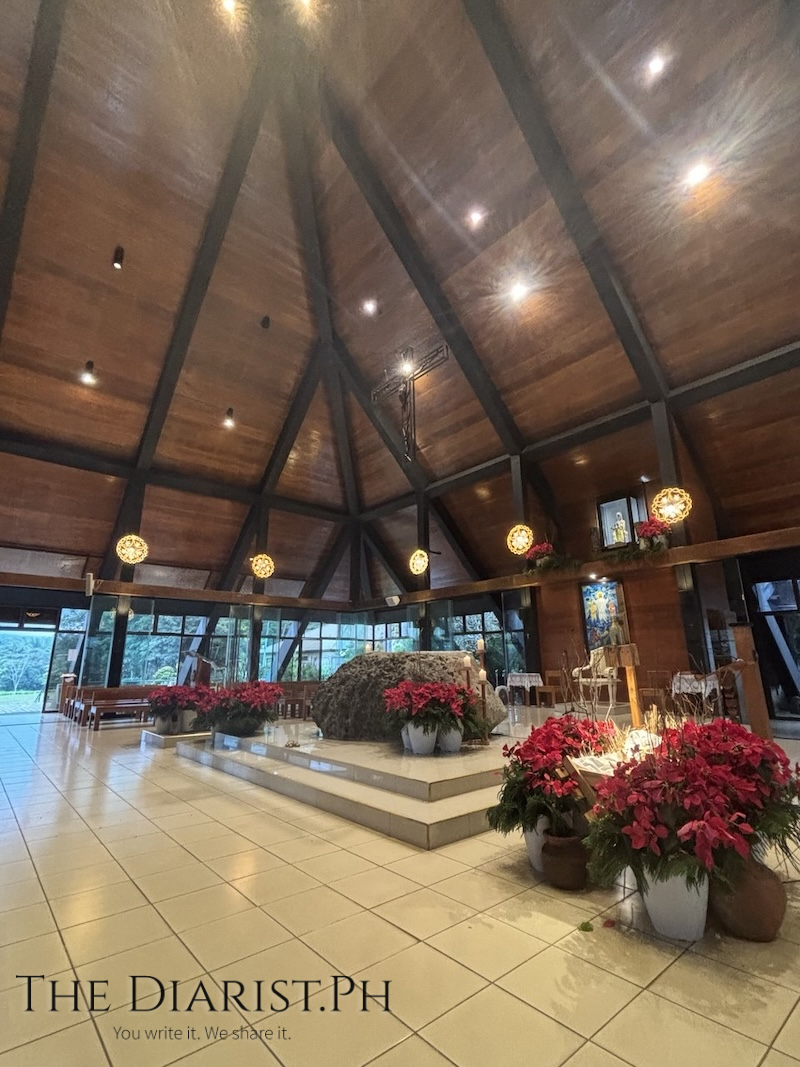
Chapel of the Monastery of the Transfiguration, designed by National Artist Leandro V. Locsin
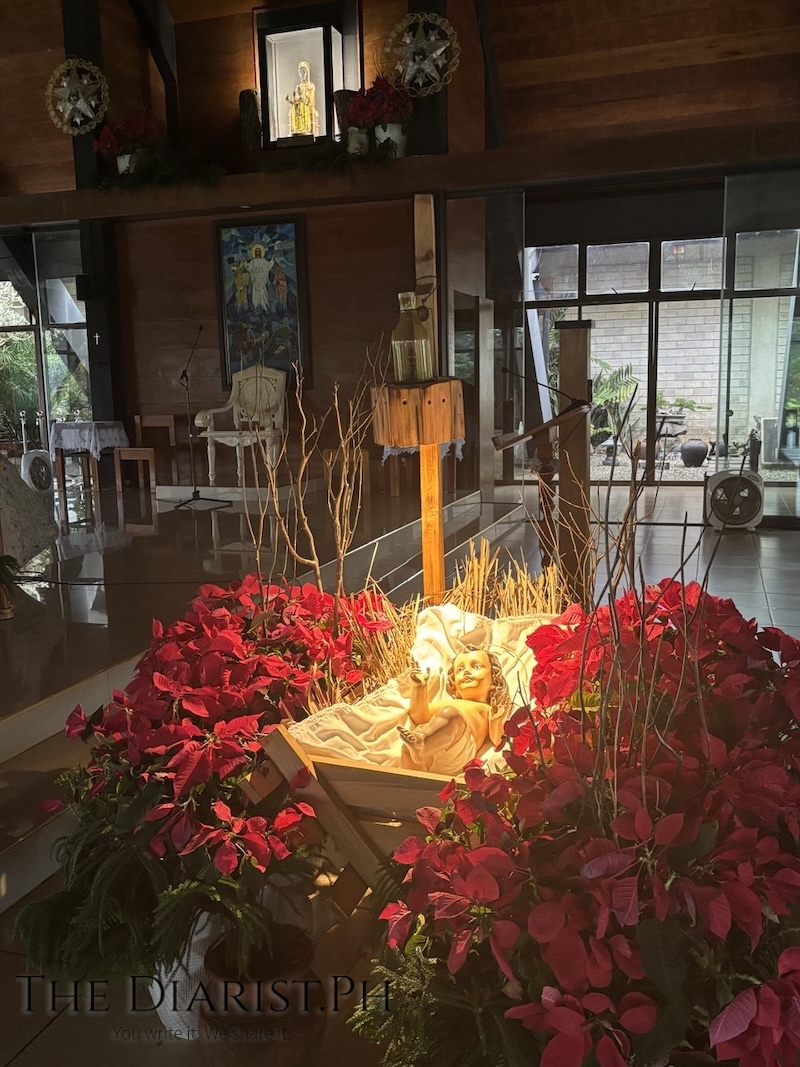
The Child Jesus at the Chapel of the Monastery of the Transfiguration
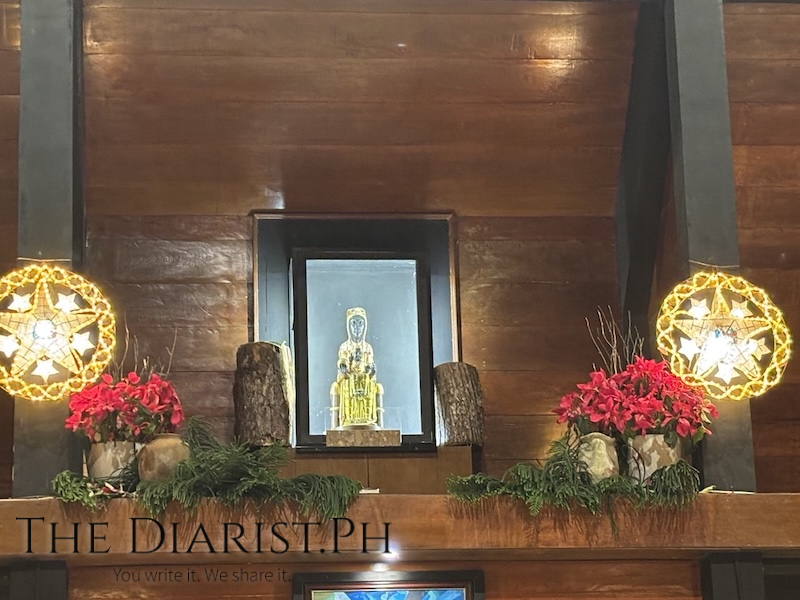
Our Lady of Montserrat above the altar at the Chapel of the Monastery of the Transfiguration last holiday season
The printed images of the Monastery of the Transfiguration will always pale alongside the actual structure, this architectural masterpiece of National Artist Leandro V. Locsin built in 1996. Standing before the pyramid structure on the hill, its roof like that of a minimalist nipa hut, you are in awe of its stark simplicity against a soft sky. It’s as if the muted hues of sundown serve as frame for the Transfiguration chapel in time for your arrival.
Stepping inside you instantly feel the signature Locsin space, with its free air flow, the network of wooden beams in the ceiling. But more important is the sight of Our Lady of Montserrat seated high above the altar. On our visit, the chapel was bright with red poinsettias. We felt a happy welcome.
I woke up at the crack of dawn, carefully walked my way on the still-dark path to the chapel. I had the chapel all to myself for a long moment. There, before Our Lady of Montserrat, I found my peace and calm for the beginning of day, and prayed that it would last more days, if not a lifetime. Indeed this trip allowed us conversations with God. It was a dawn you had all to yourself, to speak your mind out to the Virgin and to Jesus—an unedited wish list you say over and over again every day. You hope that you’d be able to hear a talk-back from heaven.
Then I saw Dom John Paul walking in, followed by other monks. To the sounding of the bells calling in the faithful, the monks took their place in the beautifully lit chapel, where we joined the other early-riser faithful in listening to the community chant the praise to God at the start of the day. Such solemnity and intimacy were a luxury allowed us that moment.
After the Lauds, we were introduced to the abbot of the Abbey of the Transfiguration, Fr. Savio Siccuan, OSB. Just the day before, shortly after our arrival in the afternoon, we joined the community at Vespers to give thanks at the end of that day.
Our two days at the Transfiguration became a time of quiet, of fun bonding over delicious abbey-cooked meals we shared with Dom John Paul in the guest house, and on our last day, an immersion in the Transfiguration Museum filled with artworks by the Philippines’ contemporary artists, and the 50-piece collection of liturgical vestments designed by Dom Martin.
The vestments are made of handwoven fabrics and materials indigenous to the community, in this case, the South. Reading the story posted on the Museum wall, we learned how the permanent exhibit was mounted based on the Rule of St. Benedict that the monks wear the garb available in the community, that the “sacred vestments should contribute to the beauty of the sacred action…. That (its beauty) should derive from the material used and the design, rather than extraneous and lavish ornamentation.”
The back story is how after the Second Vatican Council, “the Church has been conscious and respectful of the culture of the people where the Church finds itself. In the last 40 years or so, this movement in the Church called Inculturation has been gaining more force and acceptance.”
The Benedictine monks had been at the forefront of Inculturation movement
The story on the Museum wall noted how the Benedictine monks had been at the forefront of Inculturation movement: “the brilliant Filipino composer, Fr. Benildus Madamba, OSB of the Abbey of the Lady of Montserrat in Manila…. Fr. Bernardo Perez, OSB started to promote inculturated church architecture with the use of indigenous materials like narra, bamboo and adobe.”
Reading this detail, I felt a little nostalgia and ample gratitude for having known those esteemed Benedictine monks: we interviewed Father Madamba about music several times, especially when his name was mentioned as possible recipient of the National Artist award; Father Perez contributed authoritative and well-read stories to us in Manila Chronicle. One of his most memorable pieces was his insights on how the LRT could alter one’s view of the city to an ugly landscape of rooftops, seen from a moving LRT. His words were prescient.
A generation later would come Dom Martin whose work on the inculturation of liturgical vestments, according to the Museum story, would be encouraged by his mentor, the late Fr. Anscar Chupungco, OSB, the first director of the Paul VI Institute of Liturgy.
Dom Martin “made systematic research on the material, design, color and use of textiles woven from Filipino woven materials” such as abaca, pina, cotton and silk. Through the years this research led Dom Martin to weaving centers and ethno-linguistic groups all over the country, as far as the Yakal in the south. It was on such recent rough trip that Dom Martin hurt his back and thus couldn’t be with us on our visit.
The result of decades of research and creativity is this 50-piece liturgical vestment collection in the museum. “With this collection of vestments for worship,” the story reads, “the artist-monk was able to wed Benedictine classical art with the indigenous textiles of his country. These vestments exude the qualities of noble simplicity, balance and harmony, along with the tradition of classical art and the Benedictine respect for native elements.”
These vestments have been used in the liturgical celebrations in the abbey. My fellow Theresians could only walk in awe around the exhibit, and with Dom Pio annotating, see up close the details of craftmanship. Even I, who had covered the fashion collections of the designer Gang Gomez, could hardly believe how the designer in Dom Martin raised the bar even further in this collection—the intricate craftsmanship (i.e. embroidery), the repurposing of tough materials such as abaca into ceremonial garb, and the designer’s painstaking attention to minute details. How all this remains achievable even in his monastic life.
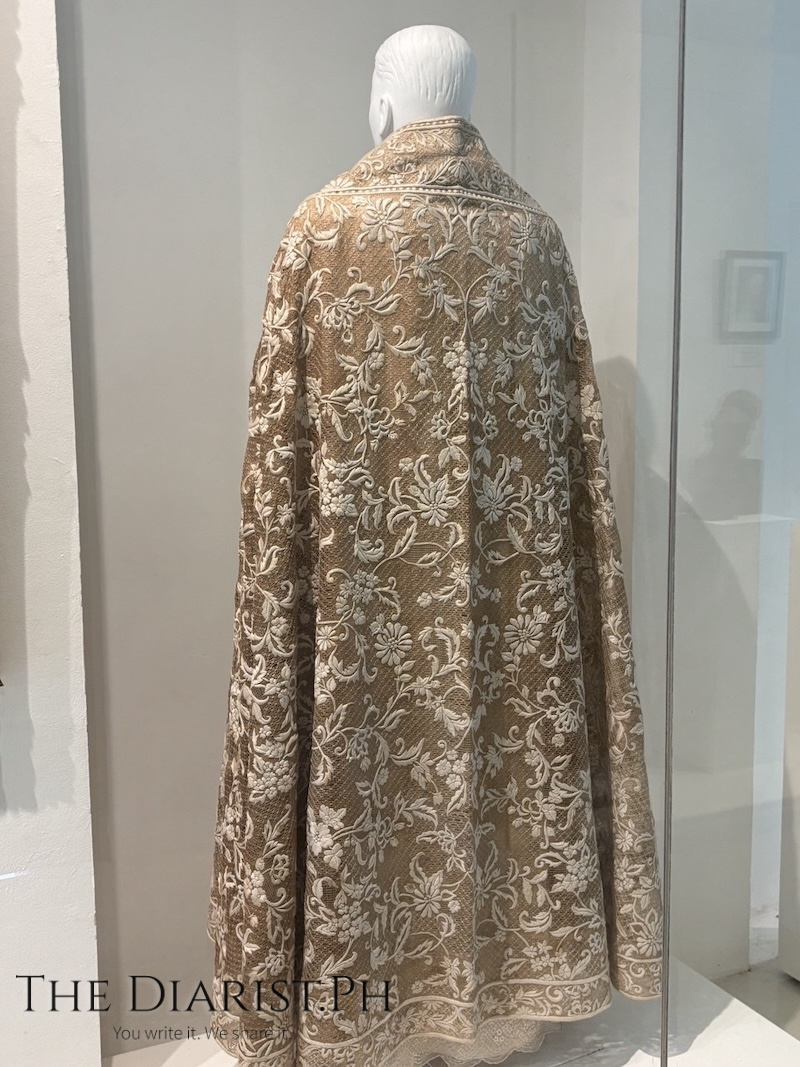
This ceremonial cape of handwoven abaca has hand-embroidered Philippine floral designs and calado (thread-pulling technique).
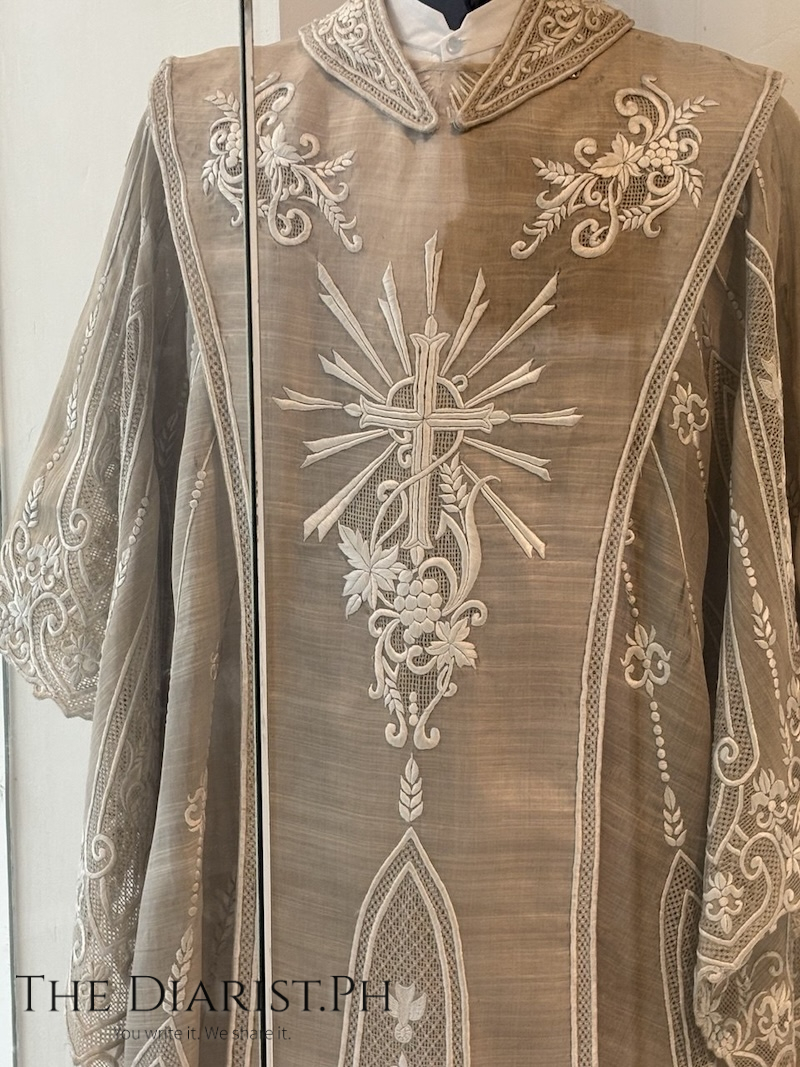
A chasuble worn for a silver jubilee milestone is hand-woven abaca silk with decorative front and back panels, and hand-embroidered symbols of the Cross and of the Holy Eucharist.
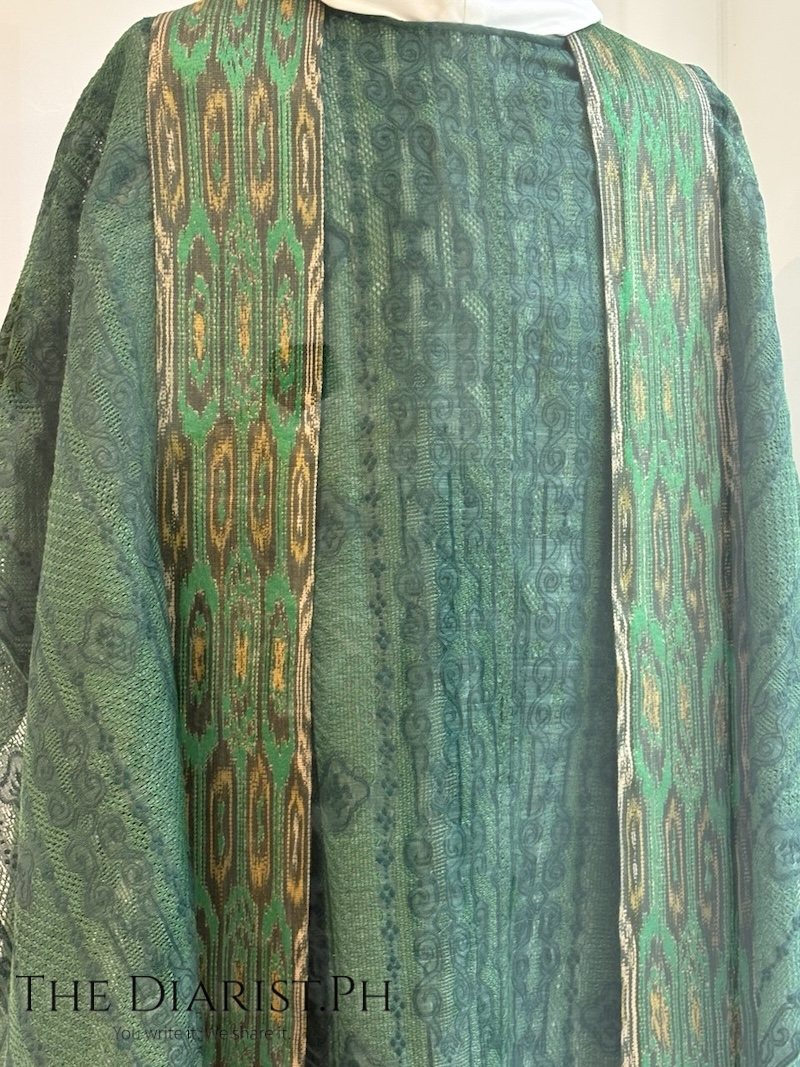
Green hand-woven abaca chasuble has embroidery all over and stole of t’nalak hand-woven abaca highlighted with green embroidery in weave stitch to create the effect that it was woven with abaca t’nalak.
Chasuble worn for Pentecost is in red hand-woven abaca, with embroidery of the flame that symbolizes the Holy Spirit.
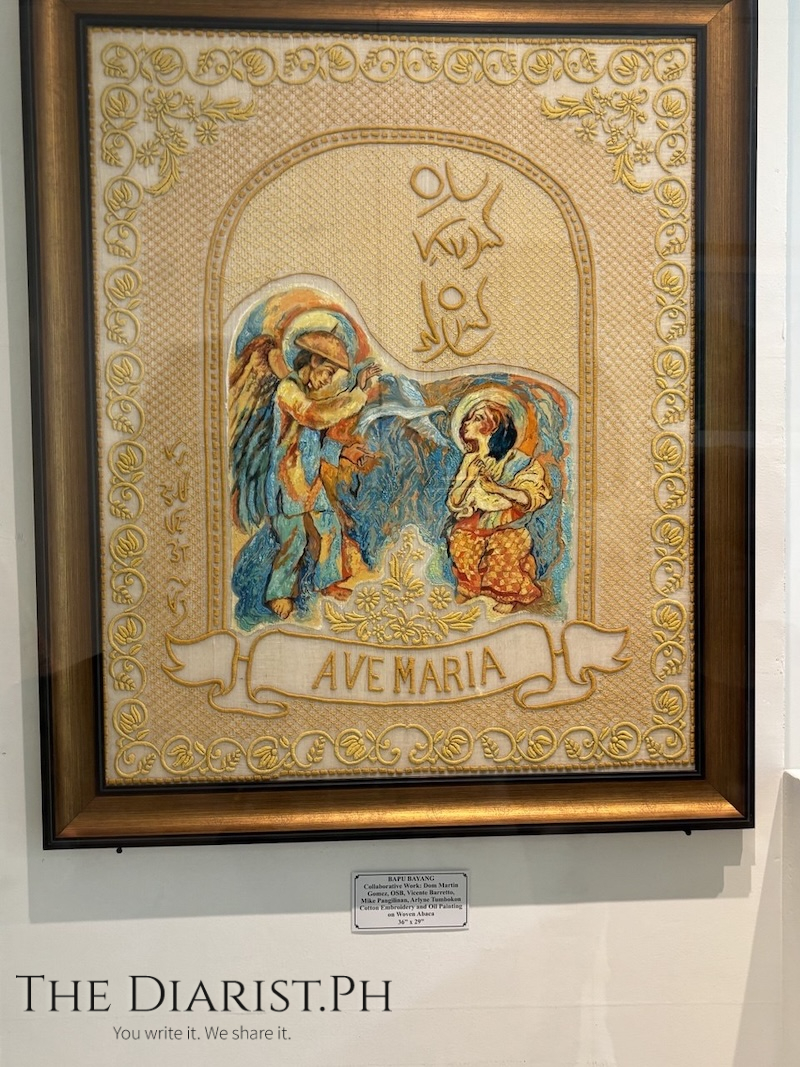 This is a collaborative art of the weavers of Aklan, the embroiderers of Laguna executing the design of Dom Martin. This abaca panel marks the celebration of the feast of the Anunciation. The abaca was woven in Kalibo, Aklan, hand-embroidered in Lumban, Laguna, based on Dom Martin’s design. Ave Maria was first translated into the old Kapampangan as “Bapu Bayang,” then translated by Mike Pangilinan into Kulitan, the ancient Kapampangan script that antedated the coming of the Spaniards. The Kulitan script is on the upper right of the oil painting of the Anunciation by Bukidnon’s foremost painter, Vicente Barretto. Dom Martin’s signature is on the lower left, in traditional Kulitan script.
Conical chasuble of hand-woven pina was worn by the late Fr. Columbano Adag, OSB, on his Golden Jubilee of Monastic Profession. Its design hand-embroidered in yellow (substitute for white, gold and silver) was inspired by an old church tile.
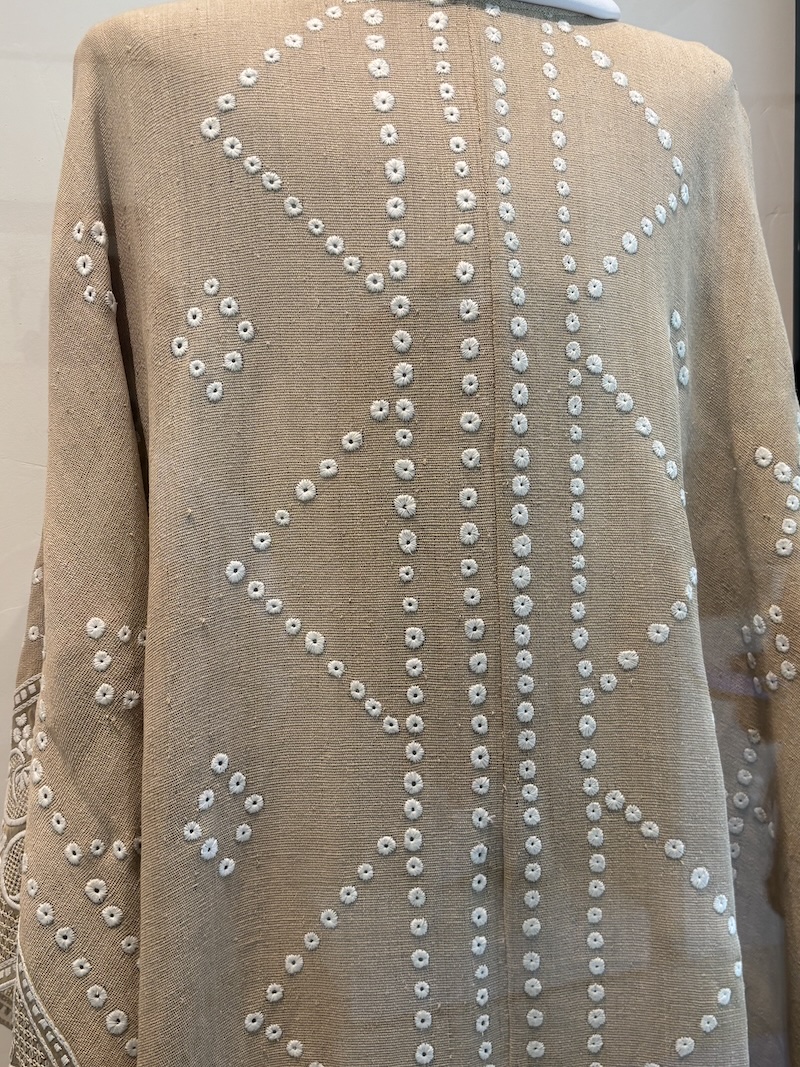
Chasuble is made of hand-woven abaca paper textile. Using the Japanese “shifu” technique, the paper was made from abaca fibers, then cut and rolled to create the weft of the weave. Plain abaca fiber was used for the warp, making it an all-abaca paper textile. Geometric designs were borrowed from the traditional abaca shirt of the Manobo. Instead of the tie-dye procedure used by the Manobo, hand embroidery was used to achieve the same effect.
“The monastic life sets the perfect setting for growth in all aspects,” Dom Martin told us when I told him later about the breadth and depth of his creation. He carried over his passion, craft and genius of design into his life as a monk.
During our very brief stay at The Transfiguration, we learned about the daily life of the monk, a day devoted to prayer and manual labor, and tried to imagine Dom Martin leading that life. And how he’s done so with a grateful and humble heart. Now that is the genuine travel story.


