
The Carlos Celdran exhibit runs to April 22, 2026, at Archivo 1984, 5/F Building A, Karrivin Plaza, 2316 Chino Roces Ave. extension, Makati.
Inside Archivo 1984, which feels more like a living room than a gallery, a vintage wooden television console hums with the digitized ghost of cultural icon Carlos Celdran. His image flickers as he navigates the streets of Intramuros, performing the theatrical tours that made him a household name and a lightning rod for controversy.
To many, this is Carlos Celdran of memory, the provocateur whose defiance of the Catholic Church eventually sent him into exile in Spain.
Yet these walls offer a different perspective, showcasing the visual artist who existed outside the spotlight. This posthumous exhibition, titled Carlos Celdran, reveals the range of his work, proving that his ink sketches, collages, experiments with other media and cheeky pictorial essays were just as vital to his storytelling as his public performances.
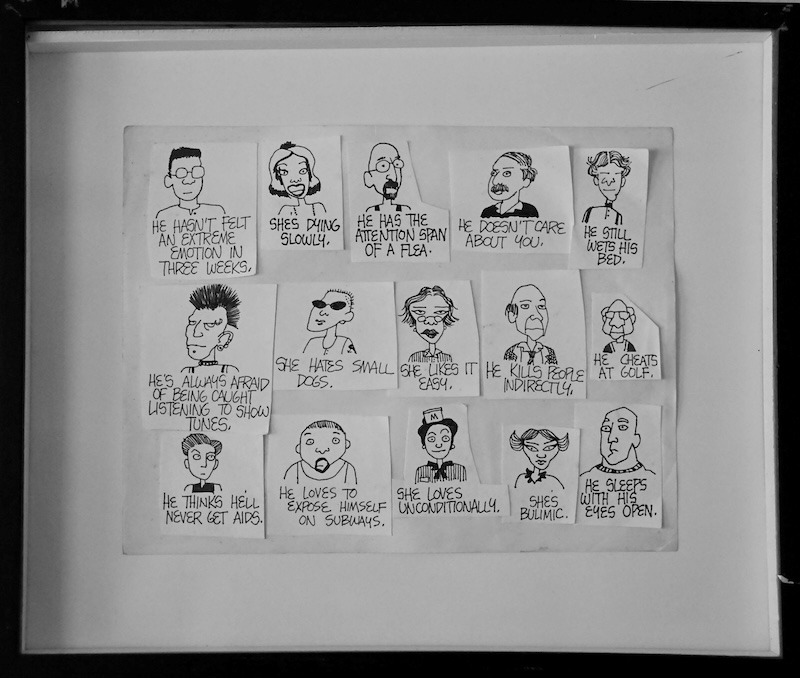
Portraits in cartoon
Celdran was a creative prodigy, starting as a 14-year-old cartoonist for a business paper and commuting to the Port Area to study under cartoonist Nonoy Marcelo. This early grit led him to become the youngest member of the Samahang Kartunista ng Pilipinas. He pursued formal training at the University of the Philippines and the Rhode Island School of Design (RISD). His time in New York during the peak of the HIV epidemic impacted him, sparking the advocacy for reproductive health that would later define his activism.
Returning to Manila in the late ’90s, he designed sets for ballet and theater. A stint with the Heritage Conservation Society exposed him to the historical fortitude of Intramuros, providing the raw material for his future as a guide.
In 2002, he launched Walk This Way, turning history into theater with his flagship tour “If These Walls Could Talk.” He moved from the Spanish colonial ilustrado of the Walled City to the bell-bottom-wearing raconteur of Livin’ la Vida Imelda, a commentary on Imelda Marcos’ life and times that eventually reached New York. It started out as a walking tour of the buildings the construction of which Ms. Marcos had commissioned, and it evolved into a one-man show. The New York Times praised the Off-Broadway production, noting that Celdran’s charm and showmanship turned a historical lecture into theater.
A turning point came in 2010, when he disrupted an ecumenical meeting at the Manila Cathedral to protest the Church’s preaching on contraception. Dressed as José Rizal, he held a sign that read “Damaso,” the arrogant priest in Noli Me Tangere. Celdran was eventually sentenced for offending religious feelings in 2013. He was in jail for 13 months.
Celdran sought refuge in Madrid. Even in exile, he remained a documentarian, launching a walking tour that retraced Rizal’s Spanish footsteps, before his sudden death in October 2019 at age 46.
This exhibition finally connects the dots between the cartoonist, the activist, and the performer, presenting a portrait of a man who never stopped trying to explain the Philippines to the world. The exhibit includes a grid of individual caricatures, each paired with a blunt, unsettling caption about the subject’s private life. Celdran uses high-contrast ink to render these figures, capturing expressions that range from vacant stares to wide-eyed anxiety. The handwritten text beneath each portrait reveals messy secrets, such as domestic habits, health fears, or moral failings, turning the collection into a voyeuristic map of human imperfection. By isolating every character on its own scrap of paper, the work highlights the sharp distance between a public face and the hidden reality of the individual.
This exhibition finally connects the dots between the cartoonist, the activist, and the performer
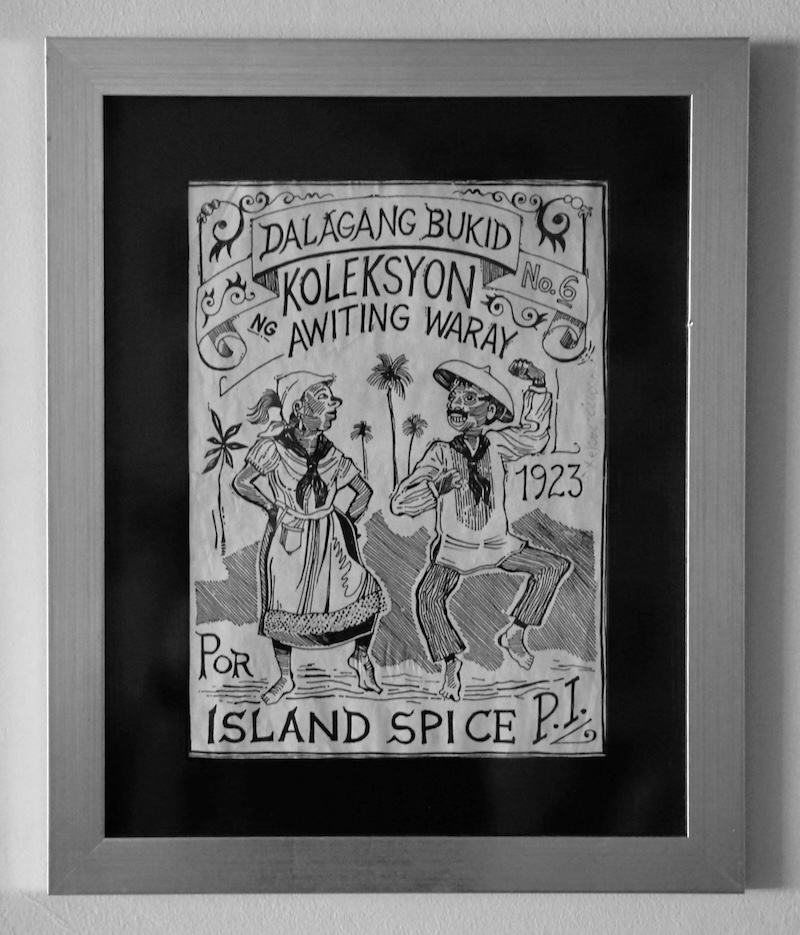
T-shirt illustration for Island Spice clothing store founded by Celdran and his sister and friends
Then there is a series of stylized illustrations that resemble a vintage Filipino songbook or advertisement from 1923 for Celdran’s retail brand, Island Spice. One features a man and a woman in traditional attire, dancing amid palm trees. Its bold lettering identifies it as part of a collection of Waray songs, while the “Island Spice” branding at the bottom suggests a play on colonial-era commercial aesthetics. Celdran uses thick, rhythmic lines to keep the scene in constant motion, reclaiming historical images with a modern, irreverent touch.
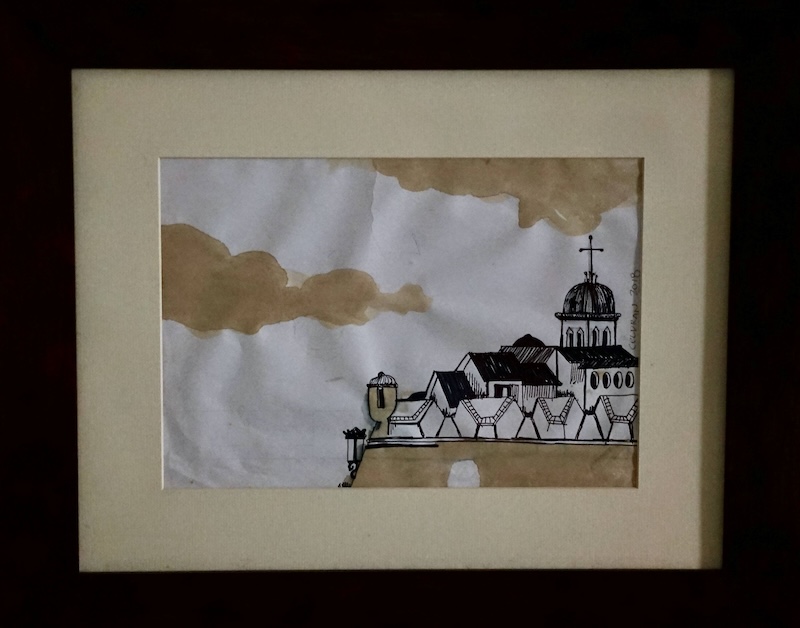
Coffee stains for color in Intramuros scene
Another features Celdran’s use of coffee stains. One depicts the Intramuros skyline with its characteristic stone fortifications and the cathedral dome rising against a stained background. The ink drawings of the rooftops and crosses are precise, contrasting with the large, brownish washes that spread across the paper like clouds or water damage. These organic stains suggest the weight of history pressing down on the city. With the heavy stone architecture at the bottom, Celdran devotes the upper half to the unpredictable shapes of the pigment.
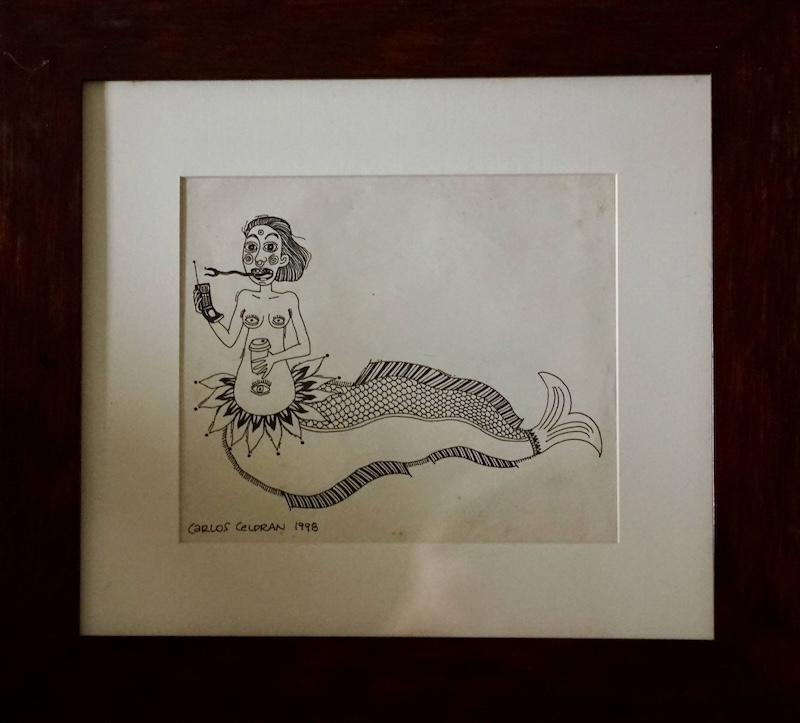
Whimsical mermaid drawing
A 1998 drawing features a mermaid rendered in a whimsical ink style, holding a dated cellular phone with a long antenna. Her forked tongue flickers out toward the device while she clutches a disposable coffee cup against her torso, which is decorated with extra eyes on her breasts and stomach. The figure emerges from a floral, petal-like waist into a long, scaly tail. This character represents a strange collision of mythical folklore and the mundane habits of modern life, captured in fine lines and repetitive patterns.
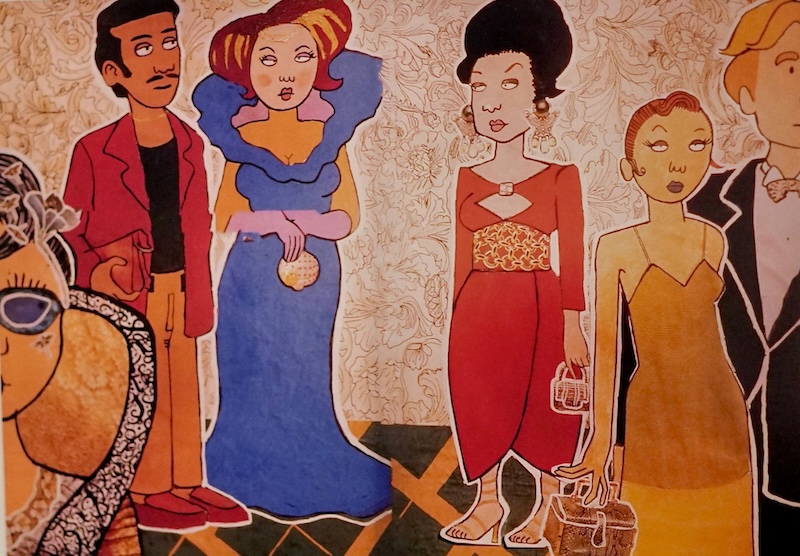
Fashion illustration of socialites
For a fashion magazine, Celdran created a vibrant collage of socialites in formal attire, against a backdrop of intricate floral wallpaper. The figures are cut out and layered to create a shallow sense of depth, each character sporting a skeptical or snooty expression. Rich blues, reds, and golds define their garments, which range from a sweeping evening gown to a tuxedo and a modern terno. This piece captures the artifice and curated fashion of high-society gathering, highlighting the individual personalities in bold color blocks and stylized, cartoon-like features.
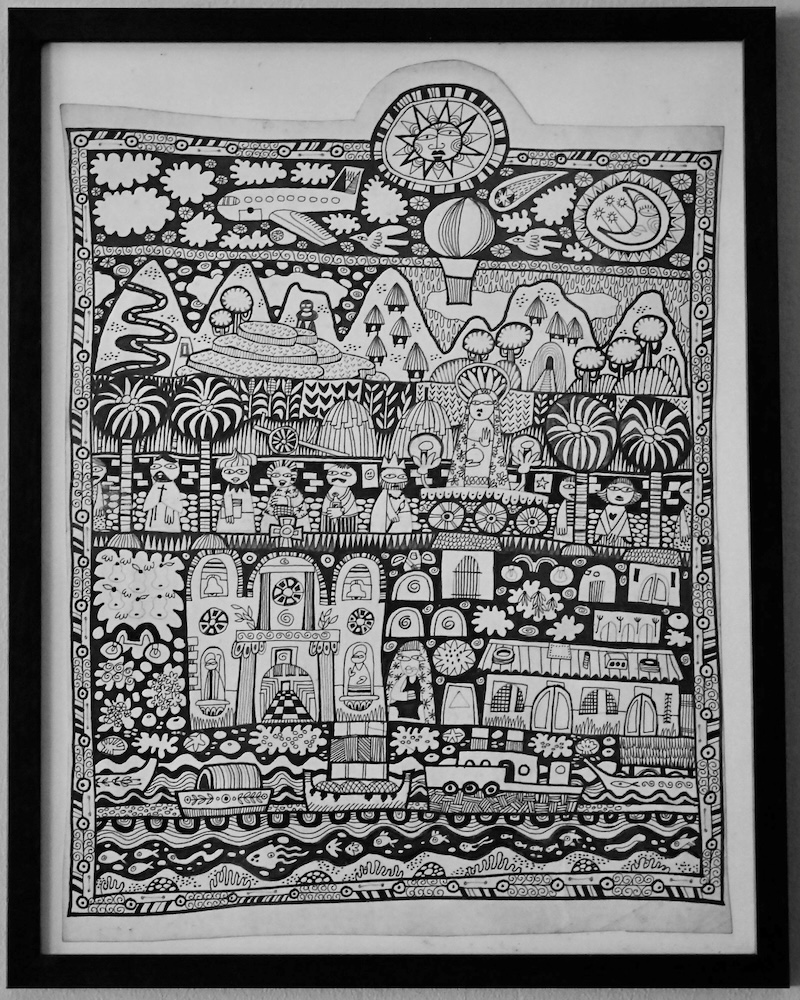
Detailed pen and ink artwork of Filipino life
Then there’s a richly detailed, pen-and-ink drawing which organizes various elements of Filipino life into horizontal tiers. The composition uses precise linework and patterns to define a hierarchy of scenes. At the very top, a sun with a human face looks down on airplanes and hot air balloons, while the middle sections show rolling hills, thatched-roof houses, and a religious procession. The bottom layers depict architectural landmarks, such as a stone church alongside busy waterways filled with traditional boats and schools of fish. Every inch of the paper creates a story that spans the celestial and the natural to the historical and the everyday.
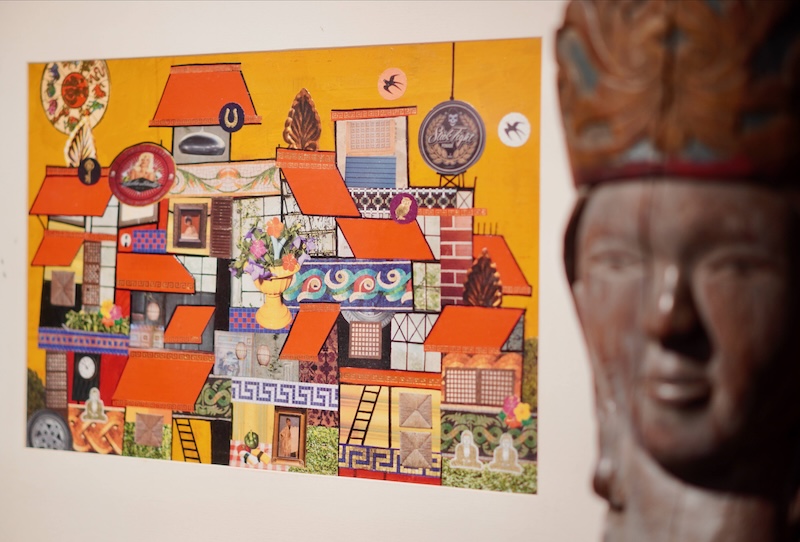
Collage of geometric shapes
Breaking up the black-and-white artworks are collages. There is a saturated yellow collage which is a dense, rhythmic assembly of architectural and cultural fragments. Bright orange awnings and rooftops anchor the composition, weaving together varied textures of brickwork, floral patterns, and Greek fret borders. Within this multi-layered construction, small found-object imagery—a golden urn, a “Stick Fight” emblem, and tiny portraits peeking from windows—functions as collection of historical and domestic symbols. The repetition of geometric shapes brings a sense of order to the chaos, capturing his recollections of places.
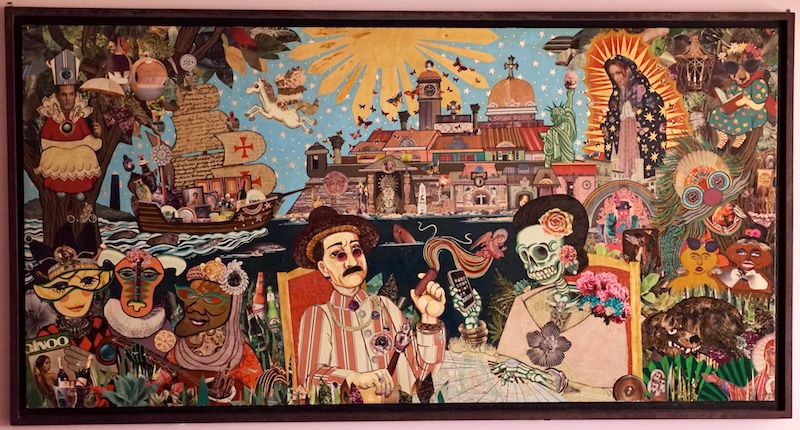
Mural made it to the cover of (Post-)colonial Archipelagos
The gallery’s focal point is maximalist mural, in mixed-media collage and acrylic on wood, presenting a surrealist tableau of Philippine history and pop-culture satire. At its center, a dapper figure sits across from a skeletal woman in a maria clara gown, their interaction framed by a dense forest of symbols: a Spanish galleon, the Statue of Liberty, and a radiating Philippine sun anchoring a golden sky. Celdran layers clashing eras—from colonial religious icons and indigenous-inspired masks to modern fashion editorials—to capture the vibrant, ambiguous identity of a nation shaped by both its heritage and a globalized present.
This painting became the cover of a book, (Post-)colonial Archipelagos: Comparing the Legacies of Spanish Colonialism in Cuba, Puerto Rico and the Philippines.
In this intimate watercolor, Carlos captures wife Tesa in a vulnerable moment, her body relaxed and curled against a dark pillow. Moving away from his usual crowded social commentaries, he uses a minimal ochre background and delicate lines to focus purely on the curve of her form and her serene expression. By stripping away the dense patterns and witty text that define his public work, the piece shifts from the performative to the private. It is a rare portrait of a shared domestic life.
His wife Tesa Celdran is an artist and designer who stood as constant support throughout Carlos’ multifaceted career
Tesa Celdran is an artist and designer who stood as constant support throughout Carlos’ multifaceted career. She continues to preserve his legacy and their shared history through her involvement in Manila’s cultural communities.
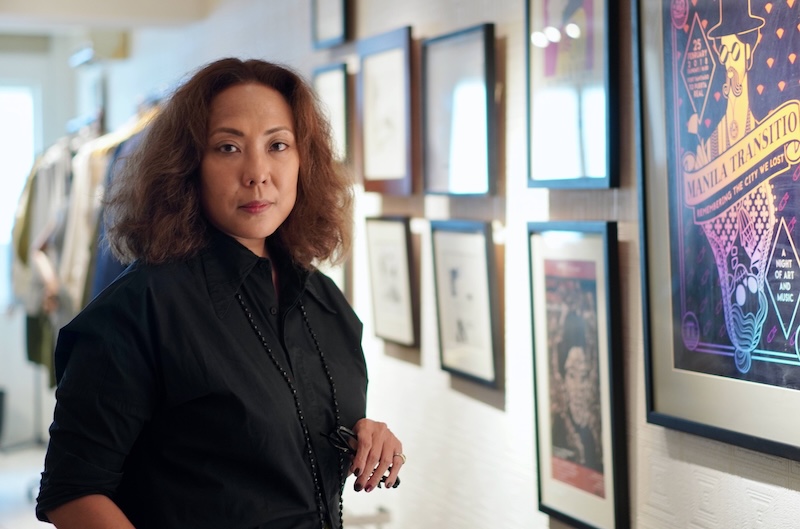
Tesa Celdran
Tesa met Carlos in 1998 in an Ayala Museum art exhibit, a meeting that sparked a partnership spanning over two decades. Married in 2000, they formed a bond built on a shared visual language and a mutual obsession with the soul of Manila.
While Celdran was a whirlwind of creative energy—always painting or mounting shows following a stint in New York—Tesa was his steady collaborator. A former educator and writer, she eventually found her voice as an artist and yoga instructor, learning the intricacies of art from her husband.
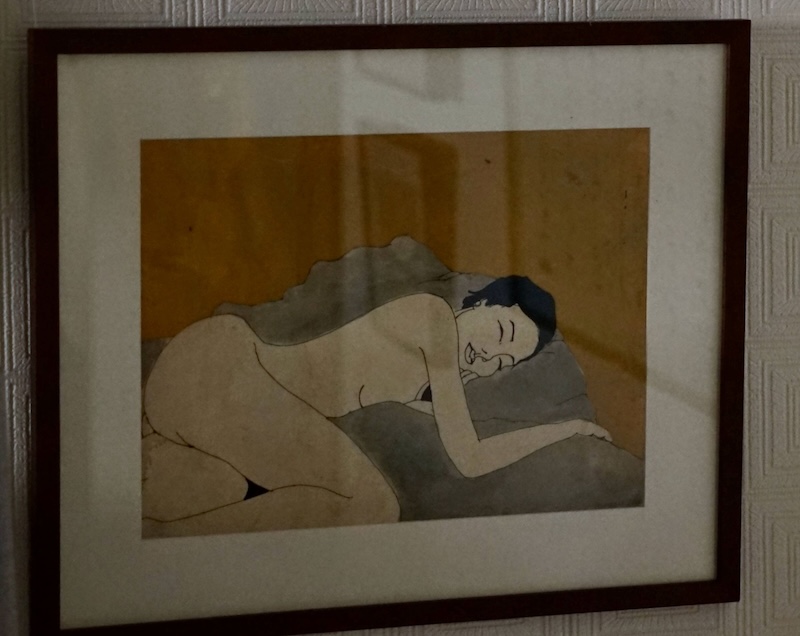
Carlos’ intimate figurative study of his wife Tesa
Their relationship was defined by an intellectual curiosity. Together, they joined the Heritage Conservation Society, turning their shared love of old buildings and Manila’s hidden corners into a successful touring venture. Celdran was drawn to Tesa’s deep roots in Pasay and her intimate knowledge of districts such as Binondo and Ermita, which fueled his artistic explorations of Philippine history. Tesa describes him as witty, opinionated, and fiercely open, once remarking that if one had nothing to hide, one could not be made a target.
Those interested in performance art will delight in a landmark video of Walang Pamagat, a multidisciplinary movement piece. Performed in unusual venues at the turn of the millennium and at the Cultural Center of the Philippines’ black box, the production was an abstraction of Filipino identity inspired by the biblical Jacob’s Ladder.
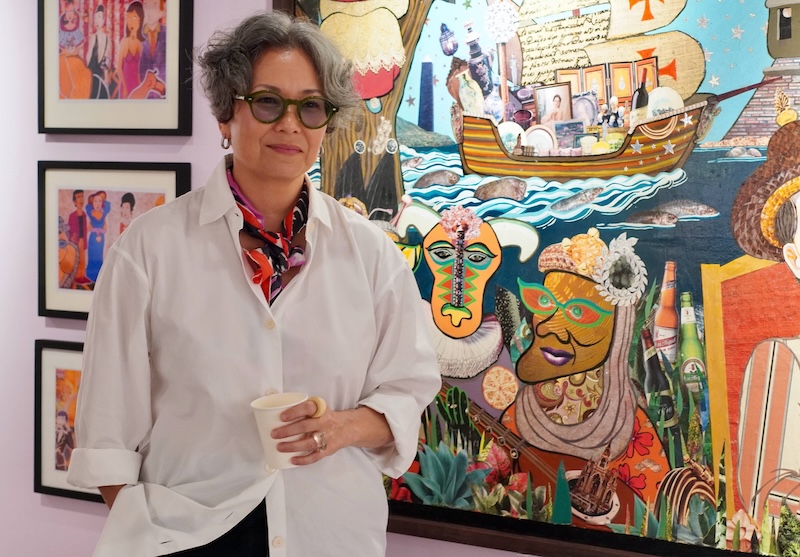
Marta Lovina
Marta Lovina is an artist who returned from Paris and joined Manila’s turn-of-the-century experimental scene. Now a creative producer and art director, she recalls these performances as a collision of fresh, global perspectives. Drawing on his training in performance and multimedia from RISD, Carlos directed a diverse cast including Iñigo Elizalde, Lara Fabregas, his sister Denise Celdran, Dennis Gademilla, Jamie Wilson, Tony Bernardo, and Dexter Lansang, blending moving images with avant-garde soundscapes of cello and cajon.
This spirit of experimentation continued in Holding the Pivot at the Music Museum, a show that explored chaos and the void through individual vignettes. The collaborators, some of whom had returned from creative stints abroad, treated these shows as a way to process their homecoming through ritual and sound art. For Lovina, these works were ahead of their time, reflecting Carlos’ unique, often weird and deeply personal way of taking in the Philippines.
Carlos eventually returned to his paternal roots in Spain, where he gained residency. His final days in Madrid and Barcelona were filled with the joy of art openings and museum visits at the Reina Sofia—a “wonderful” period that Tesa remembers as their last chapter before his sudden heart attack. After years of keeping these works private to navigate her grief, Tesa has been archiving and scanning his vast body of work, and some were donated to RISD. She is sharing his singular perspective on Filipino identity with the world.
The exhibit runs through Wednesday, April 22 at Archivo 1984, 5/F Building A, Karrivin Plaza, 2316 Chino Roces Ave. extension, Makati. Opening hours are Tuesday to Saturday, from 2 to 6 pm.


