
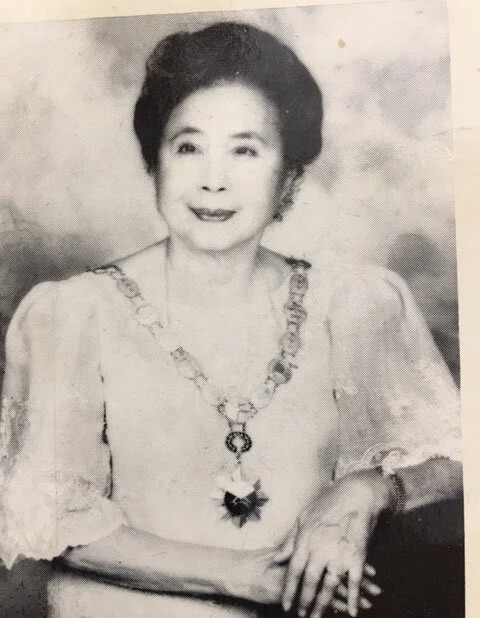
National Artist Leonor Orosa Goquingco was an exceptional Filipina, who devoted a lifetime to teaching and propagating Philippine dance, training generations of Filipino dancers, covering and critiquing Philippine arts and culture for the broadsheets, and promoting Philippine dance genius and talent on the global stage. And this was in the ’60s onwards—even long before buzz words such as “global” and “advocacy” were used.
Until her death at 87, she remained a pervasive presence in the nation’s culture, through the Filipinescas, the dance group she founded which became a leading institution. Filipinescas Dance Troupe became popular because it trained generations of dancers and staged significant performances. Mrs. Goquingco remained a dancer and a dance teacher until she turned feeble in old age.
On top of managing the hectic commitments and training of Filipinescas, she wrote her reviews of the arts on a weekly basis for the leading broadsheets, specifically the Times Journal of the Martial Law era. That meant covering regularly the arts.
Indeed Mrs. Goquingco used prose and the language of dance to define an era of Philippine culture.
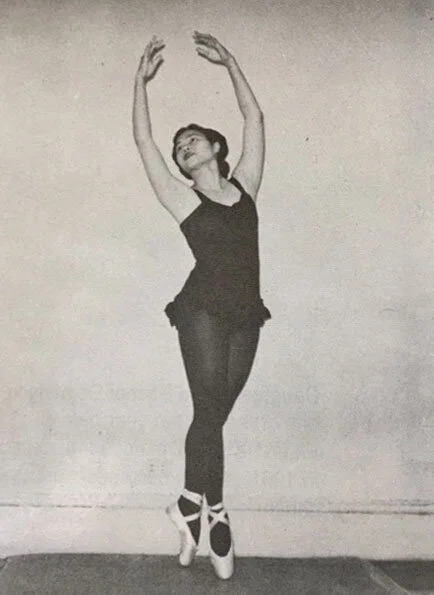
A young Leonor Orosa Goquinco (Image: The Filipinescas Story, 1960-1970)
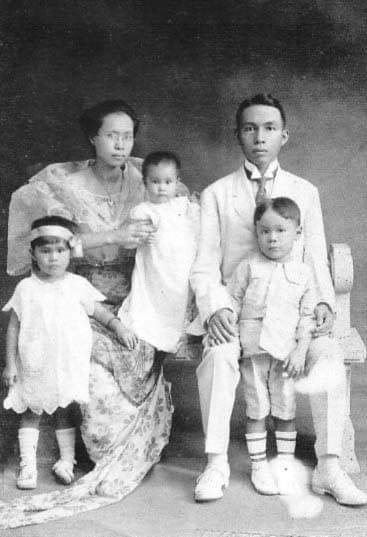
Leonor (standing) with siblings and parents,
Dra. Severina Orosa and Dr. Sixto Orosa (Image: The Filipinescas Story, 1960-1970)
Born July 24, 1917 in Jolo, Sulu, Leonor spent her formative years in the Philippine countryside alongside her physician parents, Dr. Sixto Orosa and Dra. Severina Luna Orosa. Even as a child, she displayed the artistic instinct and formidable intellect that would propel her to the forefront of Philippine culture.
She came of age at a particularly complicated moment in Philippine society, in that uneasy intersection of the Spanish era’s conservatism and the liberalizing influences of American rule. Clearly, Leonor was an anachronism of that time, a modernist and an innovator who gracefully leapt over whatever obstacles came in the way of a lofty dream. Naturally, even her choice of a husband revolved around her passion for dance.
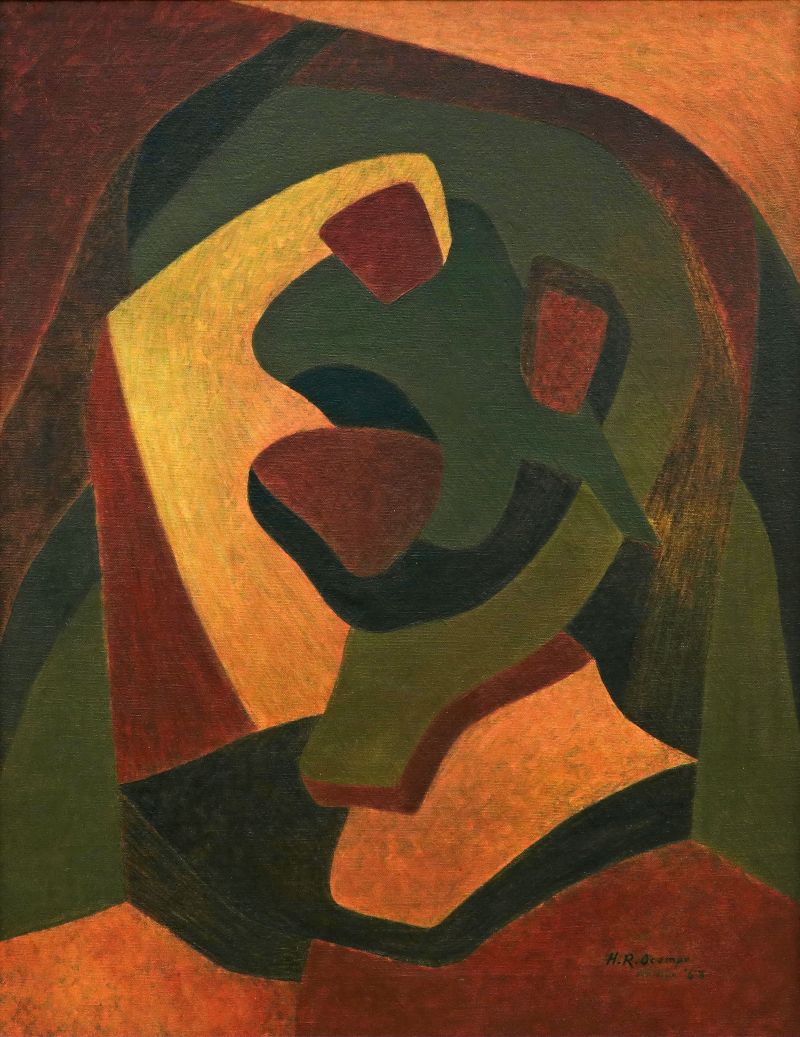
HR Ocampo gave her another of his works, 53-A (Mother and Child), from 1953, estimated at PhP6,500,000-PhP8,000,000. Proceeds from the sale will fund the restaging of Leonor Orosa Goquingco’s historic ballet production, Filipinescas.
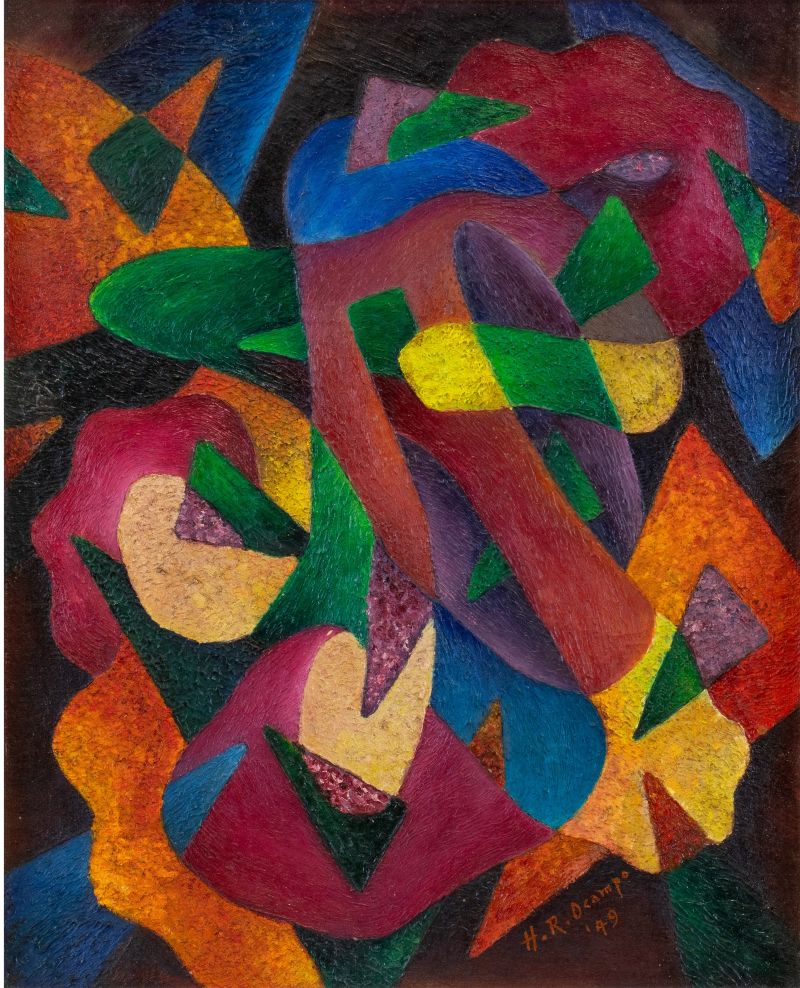
H.R. Ocampo gifted Leonor Orosa Goquingco with ‘Arabesque,’ dated 1949, estimated at PhP3,500,000-PhP4,500,000. Proceeds from the sale will fund the restaging of Leonor’s historic ballet production, Filipinescas.
One of her ardent suitors was the artist H.R. Ocampo, who gifted Leonor with a painting titled Arabesque, after an iconic balletic pose. “Nauna pa manligaw si Mr. Hernando Ocampo (Mr. Hernando Ocampo became an early suitor),” recalls Goquingco’s only son, Dr. Benjamin “Benjie” Goquingco Jr.. “Pero sabi niya, in the back of her mind, ‘He is such a playboy. Papaiyakin niya ako.’ Although they didn’t end up together, the two “had a good friendship,” Benjie says. “No hard feelings.”
While studying in New York, Leonor met Benjamin Goquingco Sr., who drove the young Leonor around. “When they were dating in New York, he was able to capture what my mom wanted,” Benjie says. “My mom would say, ‘drive me to Giselle, or drive me to this ballet.’ Driver (niya) ang father ko. But he was trying to pick up on what this woman wanted.”
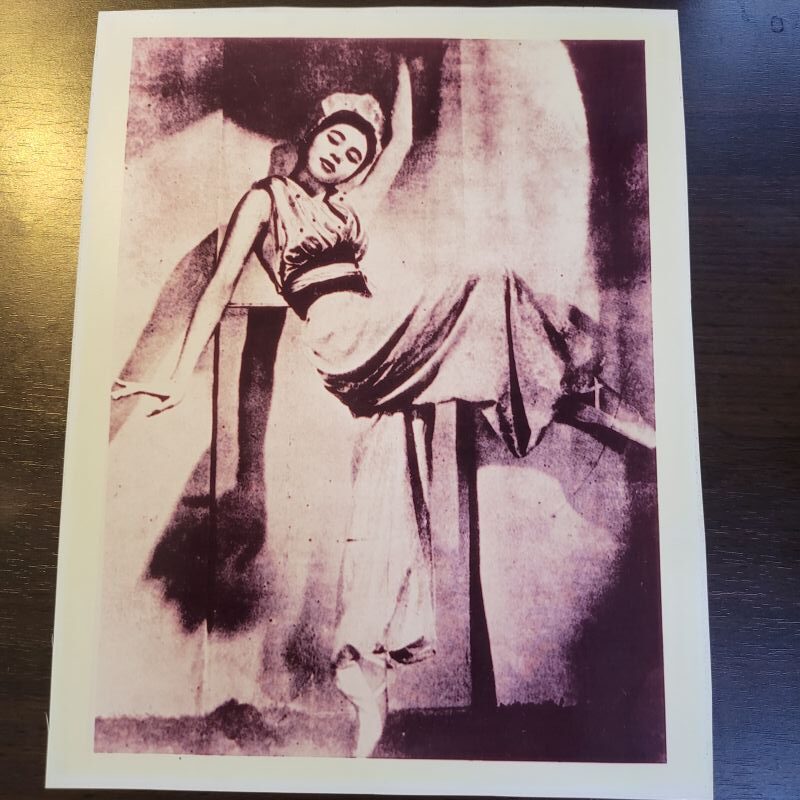
Leonor in early dance career (Photo courtesy of Dr. Benjie Goquingco
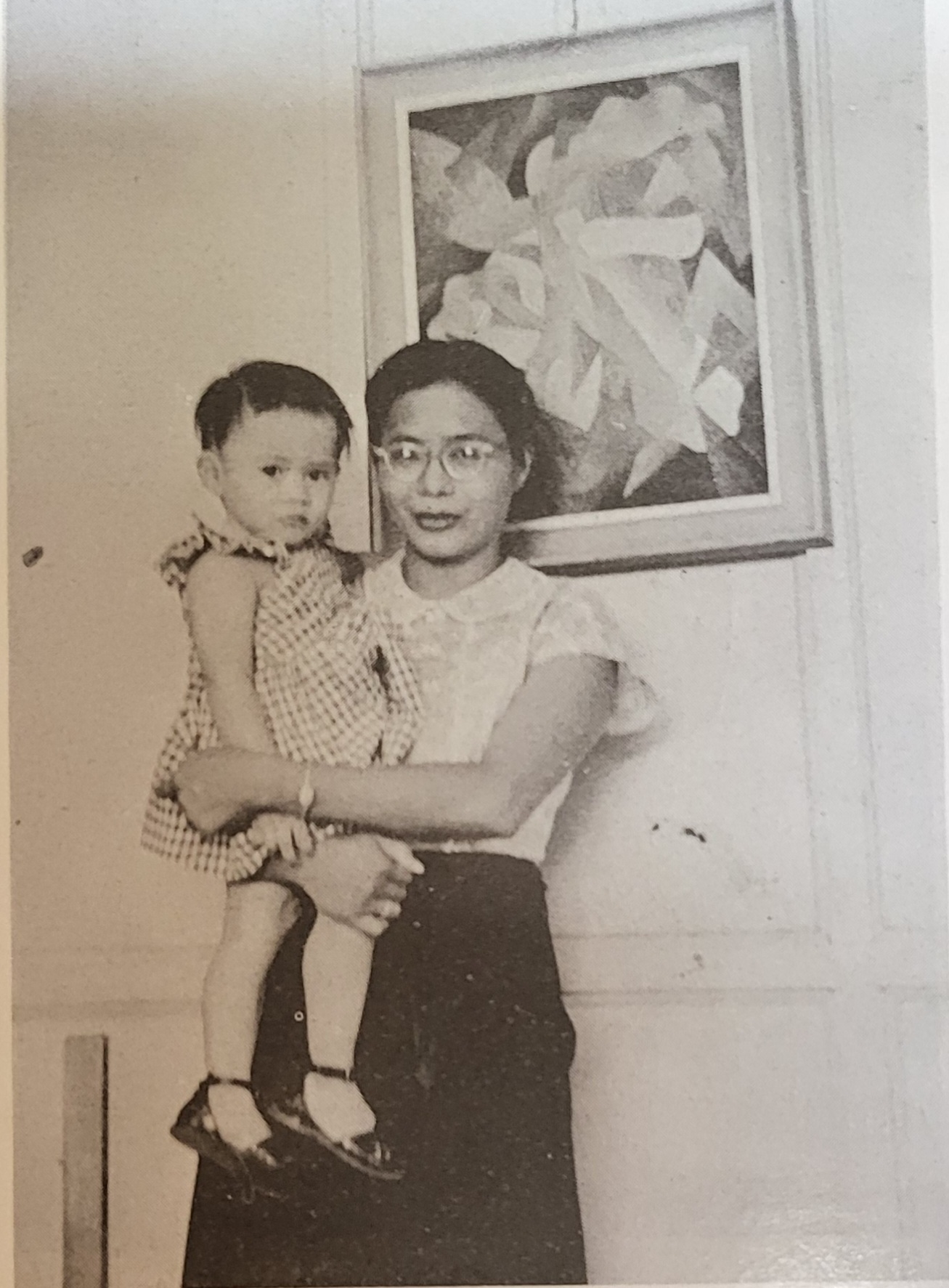
Leonor Orosa Goquingco with her daughter standing in front of H.R. Ocampo’s ‘Arabesque’ (Courtesy of Dr. Benjie Goquingco)
“My mom’s philosophy was, let the guy be more in love with her, than she be in love with the guy,” Benjie continues. “Hindi siya nagpapa-control sa lalaki. Well, my mom had her own lambing, so she knew how to captivate a guy. She even had an Irish boyfriend in New York before. Kasi, basta ligawin siya.
But my father showed persistence. And she said one of her criterias for getting married is—‘Can he support what I want?’ And she saw that my father was very hardworking. (She thought) ‘This is the guy for me.’’’
Benjamin and Leonor got married in 1950 and had two daughters and a son. Even then, motherhood took a backseat to Leonor’s work as a dancer and choreographer.
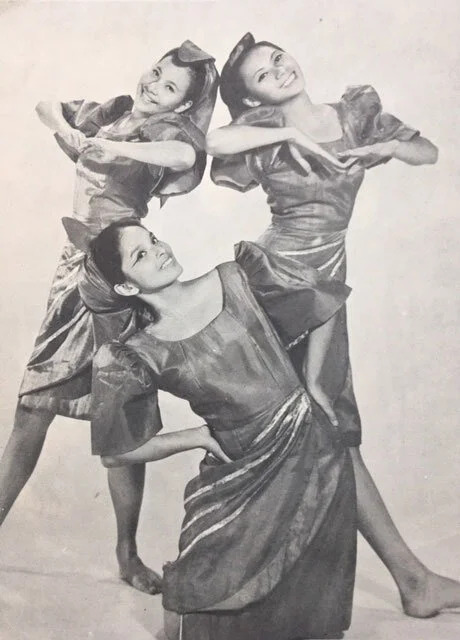
The Filipinescas Dance Group
“As a mother, she left us mostly to our devices because she was busy with her Filipinescas and all her artistic endeavors,” Benjie admits. “We’re already sleeping, and she would knock on our doors —ano na yan ha, mga 2 in the morning, 3 a.m.. She would ask us, ‘I tried this step … does it look okay?’ Hindi siya makatulog when she had a bee in her bonnet. She would ask our opinion about her steps, about her plans and artistic direction.”
Benjamin Sr. proved to be a perfect match, an able provider who went so far as to bankroll some of his wife’s ballet productions. According to Benjie: “Good thing my father was a very helpful person. He was an electrical engineer, but in those days he was also a buyer. Our family on our father’s side had a department store on Escolta. So he became a buyer, and he learned about textiles, embroidery and all that. So he was able to help my mom with the coloration, the costume design. They became partners.”
H.R. Ocampo would pop into Leonor’s life a few more times over the years. One time, he gifted Leonor with another painting, 53-A (Madonna and Child). Later in his life, he revisited his works.
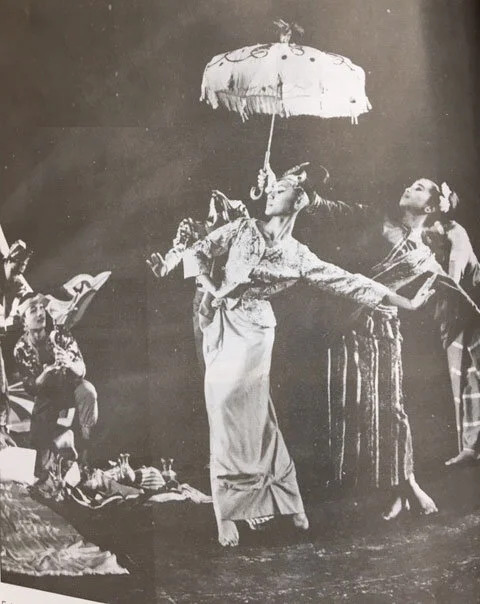
A Filipinescas production (The Filipinescas Story, 1950-1970)
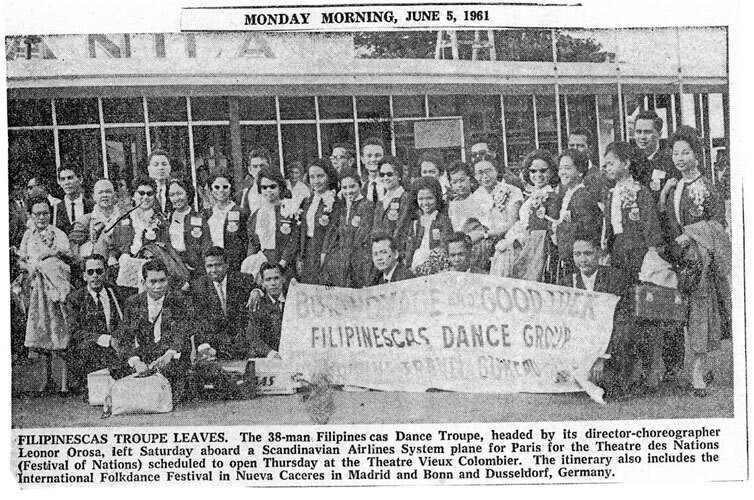
Leonor Orosa Goquingco produced most of her ballet shows, including those staged overseas. (The Filipinescas Story, 1950-1970)
“At that time, I didn’t know what he was doing in our house. Sabi ko sa sarili ko ‘Sino tong bigotilyong tao na to?’ I didn’t know at that time he was already cataloguing his works. I thought my mom was just entertaining a friend. My father would leave the house kasi nagseselos. Alam niya nanliligaw dati.”
Benjamin Sr. supported his wife’s passion and career. But he was also a practical man. “There came a time when my father said, ‘Nene,’—that’s his nickname for my mom—‘let’s stop this first. Let’s concentrate on the real legacy for our children.’ Hanapbuhay. He converted our residences into buildings, and invested in properties.”
Leonor, wanting an outlet for her creative impulses, started writing for newspapers. But dance would remain an obsession. In the twilight of her life, she expressed a desire to be remembered through her work. “Her last wish was, ‘Can you recreate Filipinescas for me?” Benjie recalls. “ So I did. We gathered some dancers, but it wasn’t a full show. Because she had died.”
The opportunity to fully realize his mother’s final wish came years later when a cousin mentioned that Ballet Philippines (BP) might be interested in staging a revival. After meeting with BP president Maymay Liechtenstein, Benjie agreed to co-produce his mother’s magnum opus—driven by pure faith, even when he still didn’t know where to get the funding.
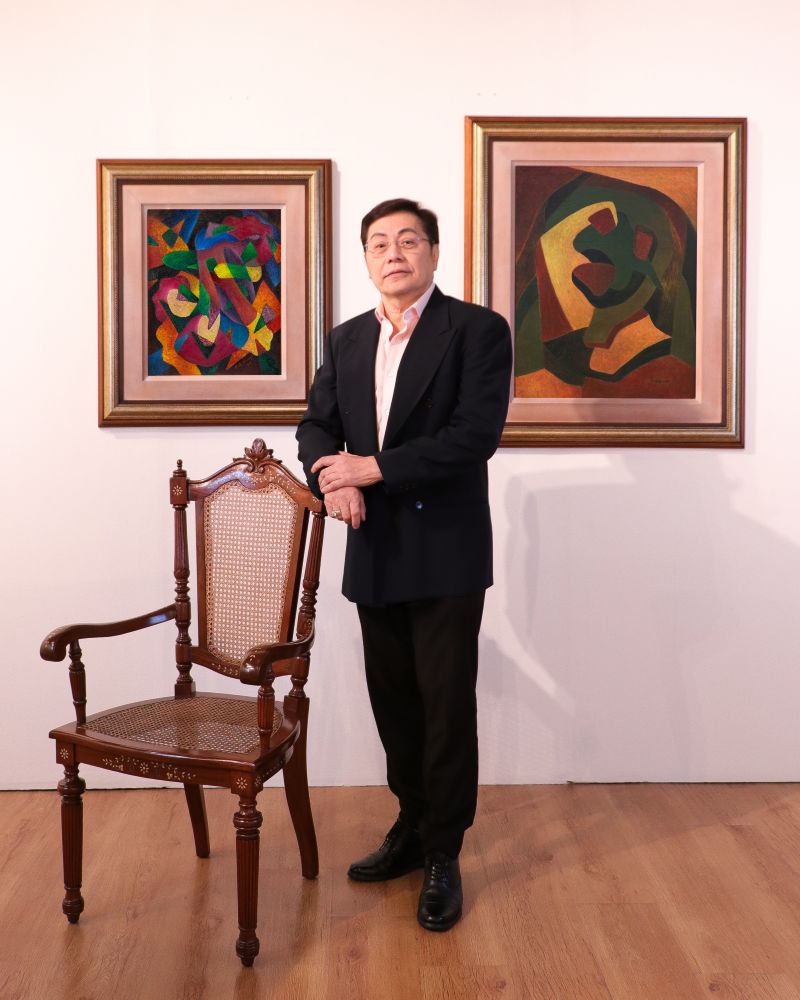
Dr. Benjie Goquingco Jr. before the two paintings gifted by HR Ocampo to her mother, Leonor.
Though Ocampo’s paintings had hung proudly in the Goquingco home for decades, selling them had never crossed Benjie’s mind until a classmate came to visit. “You’re looking for funds to do the production? Yan o!” his classmate said, pointing at Ocampo’s paintings. “Then I remembered my mom’s words and bilin.”
“Sabi niya, ‘Use these if there’s going to be a revival of Filipinescas in the future. Sell it, don’t hold on to it. Just sell it to fund the production.’ All I can say is that, even from the grave, my mom is still calling the shots. Parang she is micro-managing us—to do this, do that.”
On June 6, Ocampo’s two historic paintings will go under the hammer at Salcedo Auctions’ Finer Pursuits sale. Both masterpieces are uniquely intimate, bearing the artist’s handwritten annotations on the reverse side of the canvases.
The sale carries out Leonor’s powerful parting directive: to keep Filipinescas alive for a new generation who will finally get to witness in motion her brilliant, illuminating vision of Filipino culture. It also serves as poignant reminder that long before today’s cultural revivalist trend, there was a severely near-sighted woman (her near-sightedness compelled her to bring any material up close) who, through ironically sheer far-sighted vision and determination, paved the way for everyone who danced after her reign.
Finer Pursuits afternoon live and online auction, starts 2p.m. on June 6, with an online-only morning sale starting at 10am on the same day. View the complete catalogues (which goes live at 4PM, May 22) here: Afternoon Sale ), Morning Sale). For inquiries, please contact info@salcedoauctions.com or call +63 917 894 6550.


