
Photos courtesy of the Benitez-Tirona MiraNila Foundation
‘Those who wish to sing always find a song.’ – from a Facebook meme
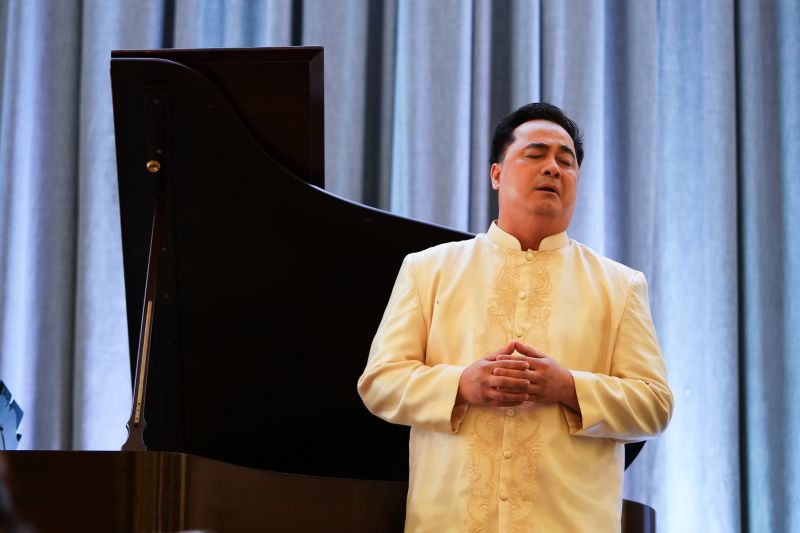
Expressive Arthur Espiritu: ‘He has developed a natural comfort in both the language and the music of the “kundiman”‘
World-acclaimed tenor Arthur Espiritu had been searching for some time for Filipino materials to add to his repertoire. And now, he has found his niche in the kundiman and other Philippine art songs.
Whenever he had a recital of operatic arias here, ever since I first saw him perform in 2010 at the Philamlife Auditorium before it was shuttered, he would oblige with an encore in Filipino. That went for similar appearances in several Ayala Museum concerts.
By then I had turned into a groupie alongside my opera barkada (gang) made up of Princess Nemenzo, Mercy Fabros (before she passed on), Jenny Llaguno (before she was taken ill), Melen Araos, Nympha Saño, Suzy Lolarga, among others. We never tired of watching him, whether he was singing a Schumann lieder or, with an ensemble of younger singers, Bernstein’s Make Our Garden Grow.
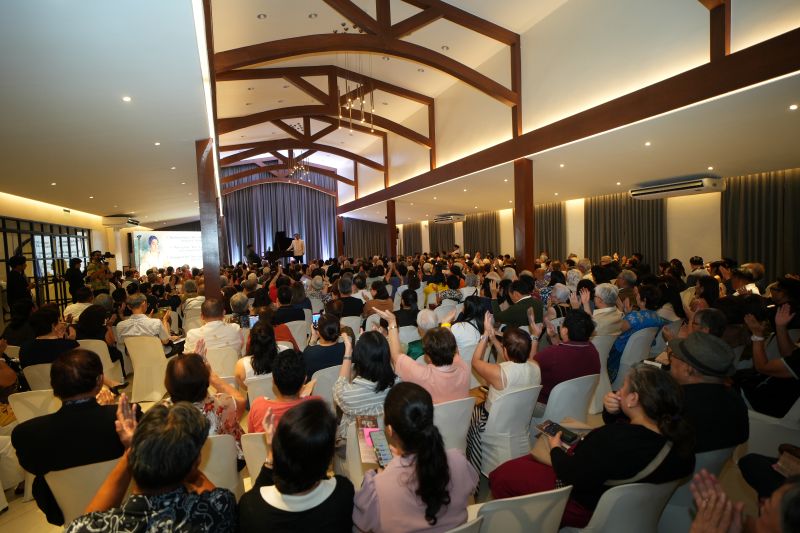
The packed Gallery
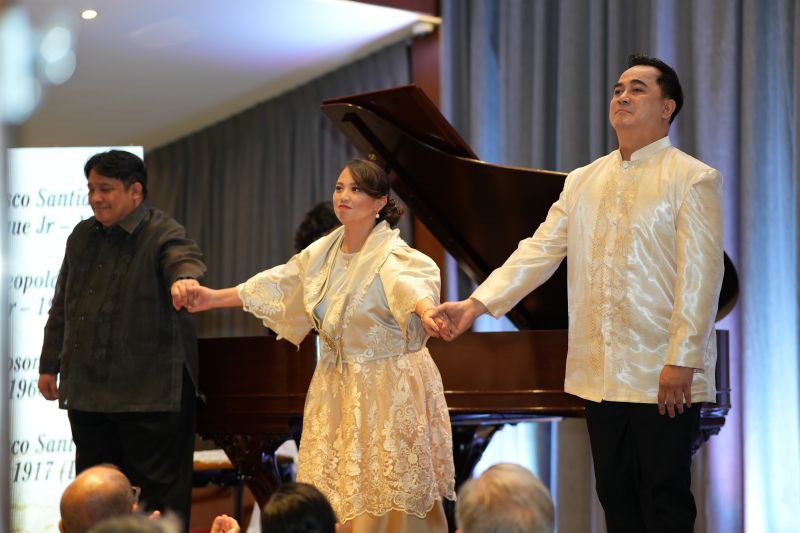
In Mga Awit ng Pag-ibig at Kundiman at the Gallery of MiraNila Heritage House and Library in Quezon City last May 14, Arthur was in full, confident form, his mastery of Filipino, even the sinaunang or ancient Tagalog in the revolutionary Jocelynang Baliuag, was impeccable and flawless. I heard that accompanying artist Najib Ismail had a lot to do with coaching the singer in his pronunciations and where the lyrics fell in the melody.
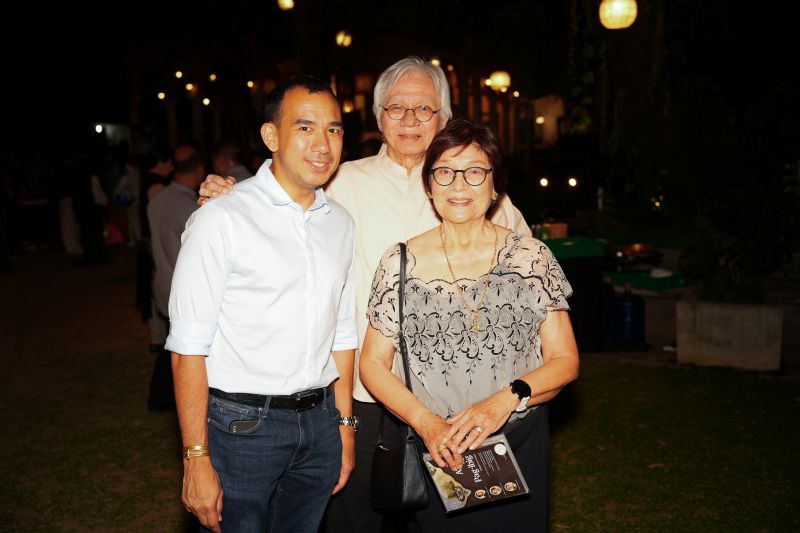
Guests Leon Gallery head Jaime Ponce de Leon, veteran journalist Vergel Santos, and writer Chit Roces Santos
Journalist Vergel O. Santos noticed that right away and couldn’t help texting me in the middle of the concert: “He has developed a natural comfort in both the language and the music of the kundiman.”
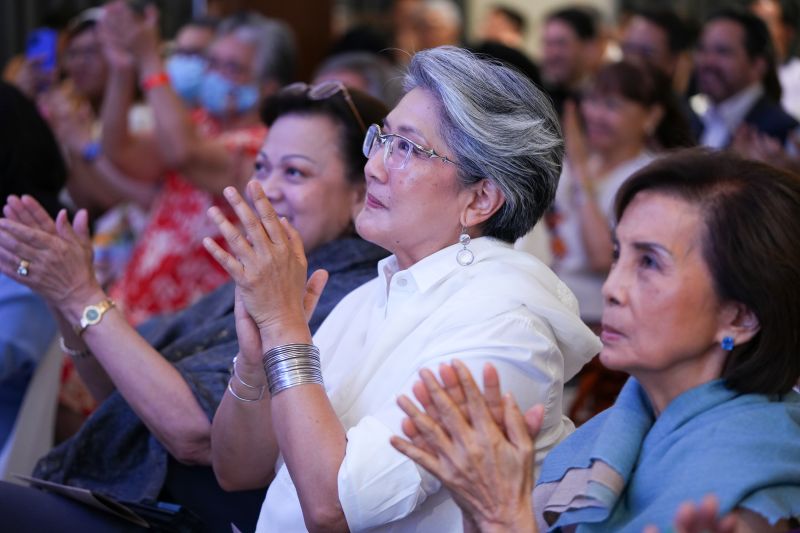
Warm applause from Joanne de Asis Benitez, Irene M. Araneta, Lin Ilusorio Bildner
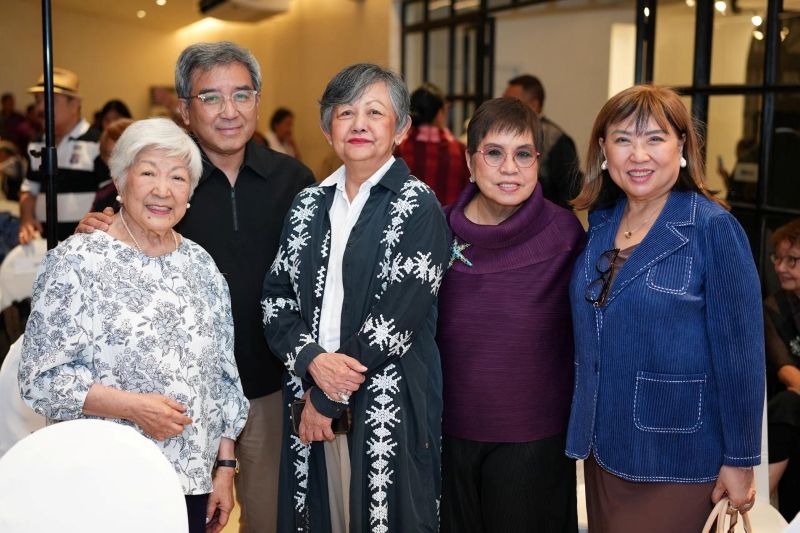
Princess Nemenzo, former University of the Philippines (UP) Diliman chancellor Fidel Nemenzo, Philippine Center for Islam and Democracy president Amina Rasul, Atty. Lorna Kapunan, founder and CEO of Bizu Annie Tanco
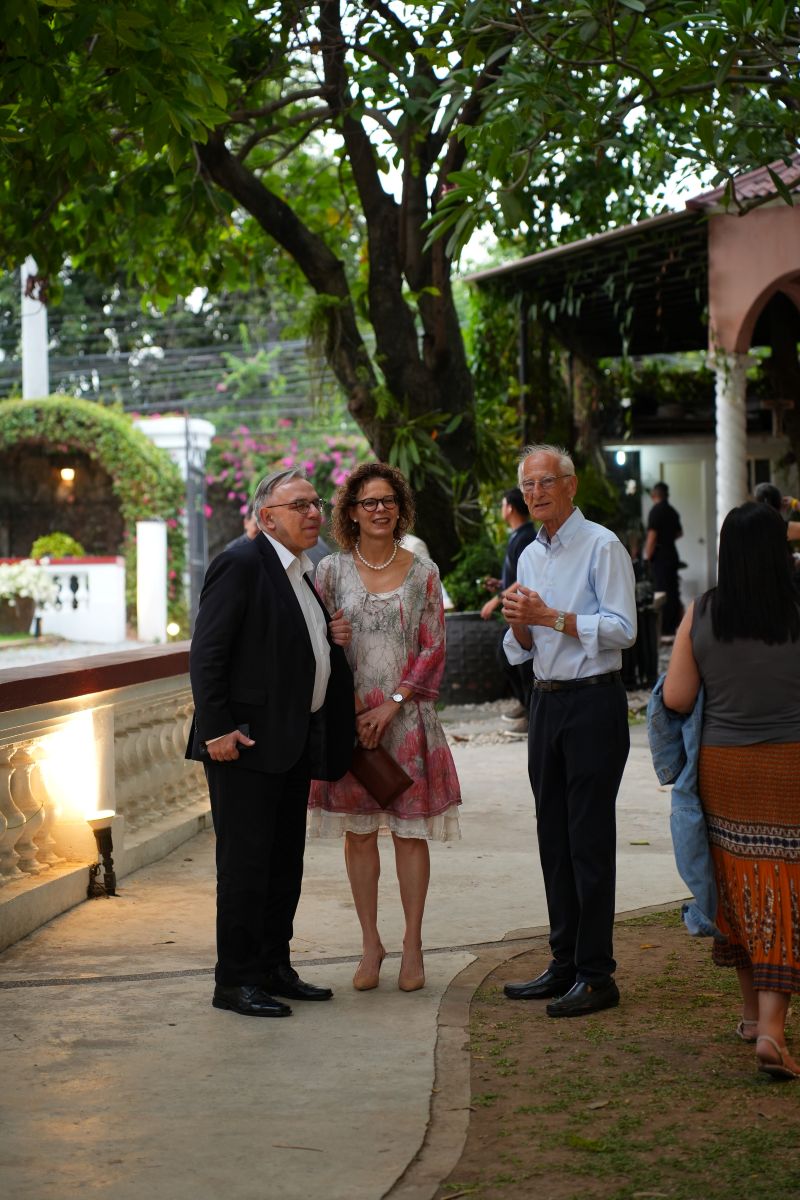
Swiss Ambassador Nicolas Brühl, Denise Brühl, and Daniel Johannot in the MiraNila Heritage House garden
But what is it about the kundiman and our own songs that people from extreme socio-political poles—presidential sister Irene Marcos-Araneta, noted activists Princess and her son, former University of the Philippines chancellor Fidel Nemenzo, Judy Taguiwalo, Tita Lubi, and even the neutral Swiss ambassador Nicolas Bruhl and wife Denise—deemed it their duty to be present on that balmy night in a nearly century-old house? The Gallery was packed, still within its 300-plus capacity, and organizers had to turn away people who still wanted to reserve prized seats.
The ravishing Jocelynang Baliuag is a personal favorite—it never fails to make me tear up. I imagine the Katipuneros humming it under their breath as they went into battle.
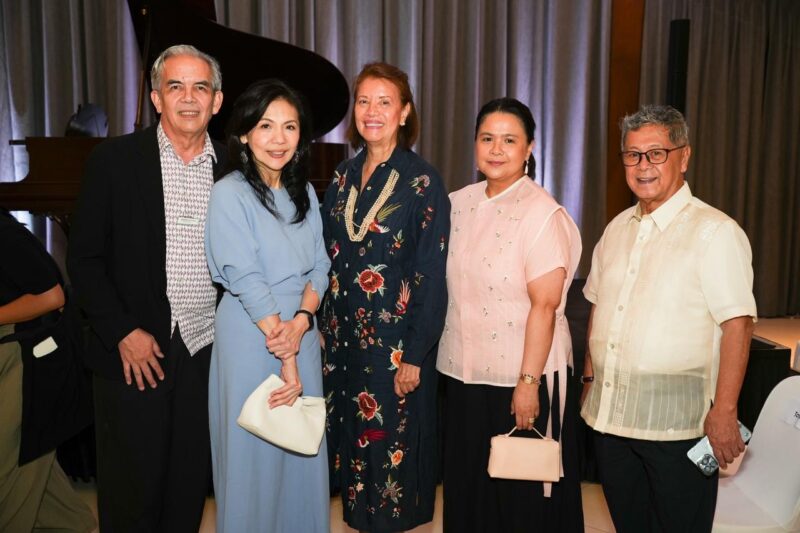
Freddie Benitez Reyes, Benitez-Tirona MiraNila Foundation treasurer, with Cultural Center of the Philippines (CCP) president Kaye Tinga, Petty Benitez-Johannot, CCP vice chair Carissa Coscolluela, and CCP board member Monino Duque
Music and art studies scholar Felipe “Jun” M. de Leon Jr., former chair of the National Commission for Culture and the Arts, said, “It was the official song of the Katipunan. Outrightly patriotic songs were forbidden during the Spanish era. Jocelynang Baliuag is a patriotic song in disguise. It extols womanhood, the woman’s purity likened to paradise. Paradise symbolizes Inangbayan (the motherland). So this kundiman is of noble origin.”
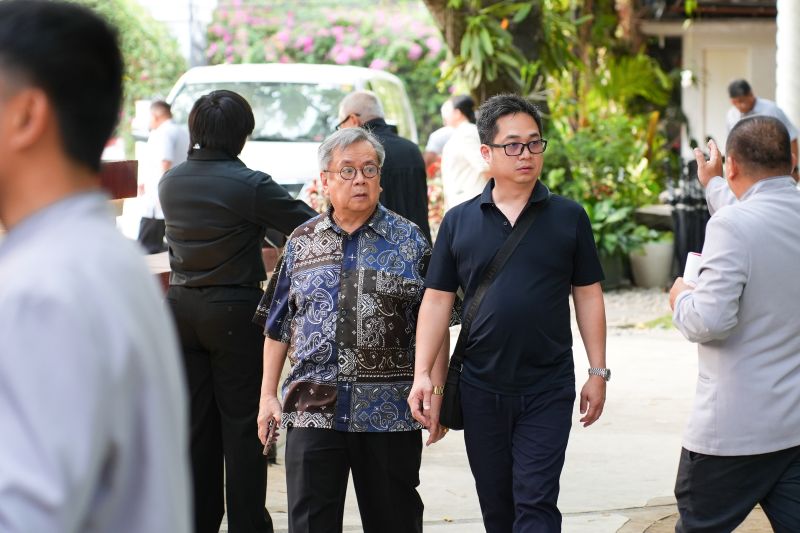
Augusto Espino. composer of ‘Kundiman ng Langit,’ and Miguel Obias
He couldn’t help saying, “I don’t know where people got the idea that any old love song in Filipino is a kundiman. The kundiman has nothing to do with the lyrics, except for one thing. It is a supplication, a plea, in Filipino, it’s a pagsusumamo. It comes with a sincere desire to gain relief from a certain emotion that seems a burden, not necessarily grief. It is a form of delight and connectedness. The kundiman is more of a devotional song rather than one speaking of romantic love. Devotion takes many kinds. It can be patriotic, too.”
Jun’s theory is the kundiman originated as a devotion to the Virgin Mary, who was the symbol of blessed womanhood. He finds the kundiman music in many devotions reenacting the panunuluyan or the search of Mary and Joseph for a place to lodge in where the baby Jesus could be born.
Joed Balsamo, arranger of the anonymously written Jocelynang Baliuag and a composer himself, was present during the MiraNila concert. Arthur acknowledged him for the arrangement he did for high voice and piano.
Joed could not remember if it was Najib or (concert organizer) Joseph Uy who called him up and asked if he could do a new arrangement of Jocelynang Baliuag for voice and piano that would be included in an album featuring Arthur. He sent the score to Najib when he finished it in February 2024.
Asked where he first encountered this song and how it struck him, he answered, “I heard this a couple of times when I was still a music student at St. Scholastica’s College, but I did not pay attention to it until I was asked to play the arrangement done by Dr. Raul Sunico from one of his books. Later, I encountered this again when I was part of the 2007 staging of Pilipinas Circa 1907 where this was one of the songs in that zarzuela. Moving forward to 2015, Dr. Nicanor Tiongson featured another part of the song in the steampunk musical Mabining Mandirigma, where I was the composer and musical director. In this version, I was asked to do a new arrangement for the show where I had to figure out how it would’ve sounded at the turn of the 20th century. In the 2024 arrangement, I arranged it with a more contemporary approach by exploring other chord progressions and a tinge of chromaticism without losing the original intent and character of the kundiman.”
What is it about the maiden Jocelyna who inspired and impelled the revolucionarios to carry on with their fight?
Joed ventured this answer: “It appears as a love song, but the imagery has been changed from a romantic approach to a more nationalistic, primarily so that the revolucionarios will not get caught by the Spanish colonizers. Because of this ‘hidden desire to express their love for the country, somehow the kundiman became the beacon to continue fighting for freedom.”
He continued, “This is very evident in the kundiman composed by early Filipino composers such as Bonifacio Abdon, Nicanor Abelardo, Francisco Santiago, Juan de Hernandez and Antonio Molina. After they had laid the groundwork on the genre, the next generation of composers had a hand on it and turned out a sizable output of kundiman, such as the popular Bayan Ko with music by Constancio de Guzman to the text by Jose Corazon de Jesus.”
Speaking of Bayan Ko, sources told me this could’ve been the encore of Arthur and his partner, soprano Stefanie Quintin, had they not been told that this would sound provocative with the expected presence of a VIP close to the President, and in light of the brouhaha happening at the Senate. The singers settled for Gaano Kita Kamahal, a song associated with the campaign sorties of former First Lady Imelda R. Marcos, as their encore to quiet an audience generous with their “Bravi,” non-stop applause, and standing ovation.
Arthur’s deportment and stage manner, ramrod straight like a foot soldier, in singing Jocelynang Baliuag, compensated for the later loss of Bayan Ko in his repertoire.
Here are the translated stanzas of the Jocelynang Baliuag available in CD and Micro SD formats along with 12 others in the track list:
My beloved, ruler of this soul,
You are like a fragrant sampaguita,
Pure in your grace, noble in your beauty,
A gentle source of endless joy.
A blessed place where you dwell,
Filled with the sweetest happiness and delight,
You shine like a radiant fairy,
And at your sight, flowers seem to bloom.
My heart believes
That as I sail through a sea of suffering,
You will not let me drown in sorrow,
You will come to rescue me in my distress,
A noble maiden, freely offered
To this humble and devoted soul.
Joed said, “The idea of transforming a kundiman from a song of unrequited love to a song about love for country has been interesting. The magic lies in how the poet is able to choose carefully the words while the composer matches those images with the right music. Here, the performer and listener are bound to find the hidden meaning in the melody. It is a skill that has to be developed for both the creators and the audience in order to fully grasp and understand the message of the song that it wants to convey. This is evident in Jocelynang Baliuag. It would have been great if we could know who actually wrote the text and music, but the mere fact that this has been passed down through many generations signifies its importance. We must protect and ensure that the next generation will be able to experience the song when their time comes.”
Jun also spoke about the kundiman’s 3/4 beat, which, therefore, excludes such songs as Dahil Sa Iyo, Hindi Kita Malimot, Ay Kalisud!, Maalaala Mo Kaya, Gaano Kita Kamahal, Saan Ka Man Naroroon, and Ang Tangi Kong Pag-ibig, which all have a 2/4 beat.
He said, “A waltz cannot be a kundiman with its accent on the first beat. The stress of the kundiman falls softly on the second beat, giving it a floating, suspended quality as if it doesn’t want to touch the ground. So in this sense, the kundiman is so spiritual, not materialistic.”
In the real kundiman, he also noticed “many notes in between the beats,” citing Nasaan Ka, Irog. He agreed that the kundiman is the country’s unique contribution to international music literature.
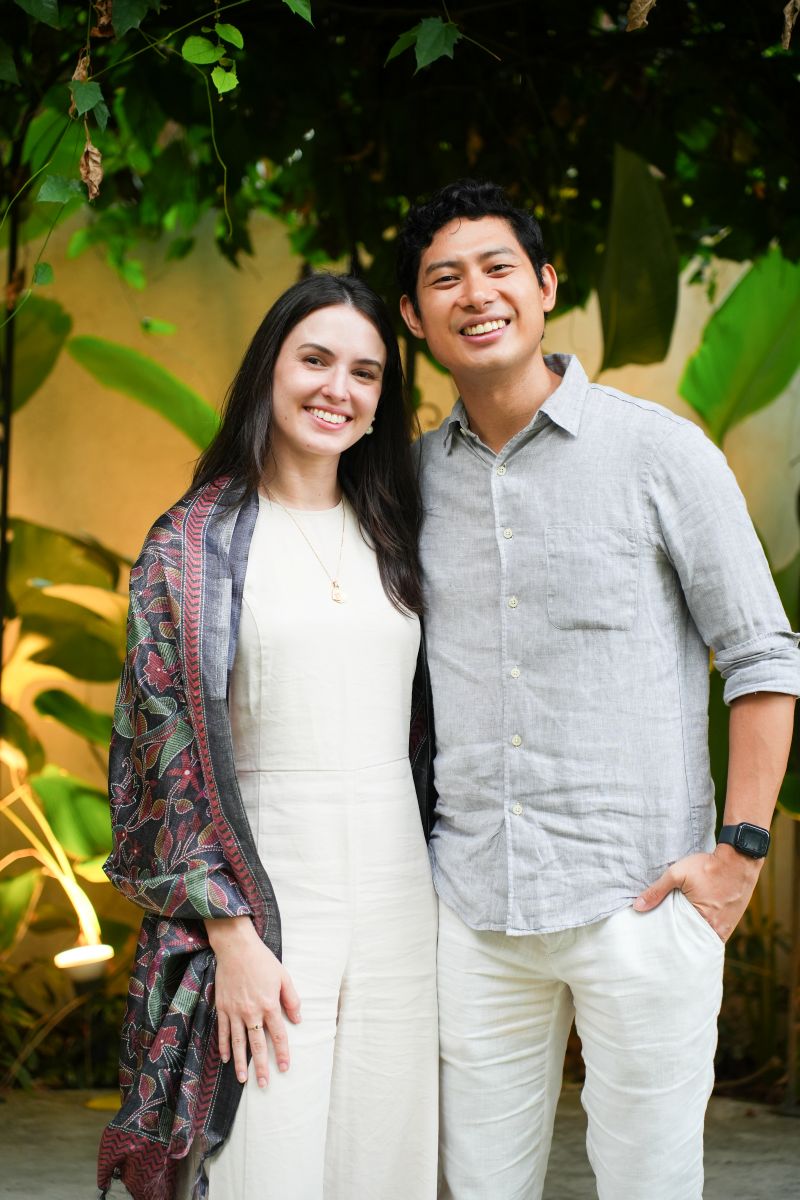
Architect Ana Flavia Panzenhagen and MiraNila’s conservation architect Miguel Sebastian
After the meet and greet with Arthur, Stefanie, and Najib, the audience stepped out to the MiraNila garden lit with lines of round light bulbs, the grass soft under the feet. While others went for snacks offered by Bizu, the rest who chose to have dinner, prepared by Al Bacchio, went inside another part of the storied house. We picked the least expensive set menu consisting of Caprese Salad, Chicken Pizzaiola, and Italian Tiramisu. It was my early birthday treat for my sisters Suzy and Pinky.
Going home, I felt the emptiness in my pocket like one of the kundiman singers or composers, dare I even say, like a revolutionary who idealized Jocelynang Baliuag. But my spirit was soaring, catching the fading trills of the notes that Arthur and Stefanie left floating in the night air. Back in Baguio, I wrenched the CD out of its jacket and played it full blast at six in the morning so the neighbors would waken to the sweetest sounds they ever heard.
To avail of the album Awit ng Pag-ibig, email josephuy2004@yahoo.com, or text or call tel. no. (0930) 954-0053 or log on to www.veniccio.com.
Read more:


