
Reading these latest Komiket titles from Komiket honcho Paolo Herras drives one to ask: Did all these happen when I wasn’t looking?
We all have pleasant childhood memories of comic books that transported us to different worlds. Those were slim booklets which contained suspenseful Filipino tales and mythical creatures or even, in what remains in vivid memory, my first introduction to the American legendary hero Johnny Appleseed.
Graphic novels have captured our curiosity, especially after witnessing at the Frankfurter Buchmesse just how popular this genre is, its rights bought for translation, rivaling fiction’s popularity. It makes sense, because the narration is easily accessible with the sequential art. Today’s graphic novelists speak of how Gerry Alanguilan’s Elmer and Budjette Tan’s Trese franchise opened doors for the komikeros, but credit goes to today’s graphic novelists, who seem to have outdone themselves in the engaging and revolutionary topics they have explored. Painless reading it may seem, but not with this wide range of issues tackled.
The most obvious difference is the heft and length of the current graphic novels. We imagine those slim comics of childhood for rent which could be hung on thin cords to entice the readers who would want a quick read. But the physical appearance is a minor quality compared to all that they offer.
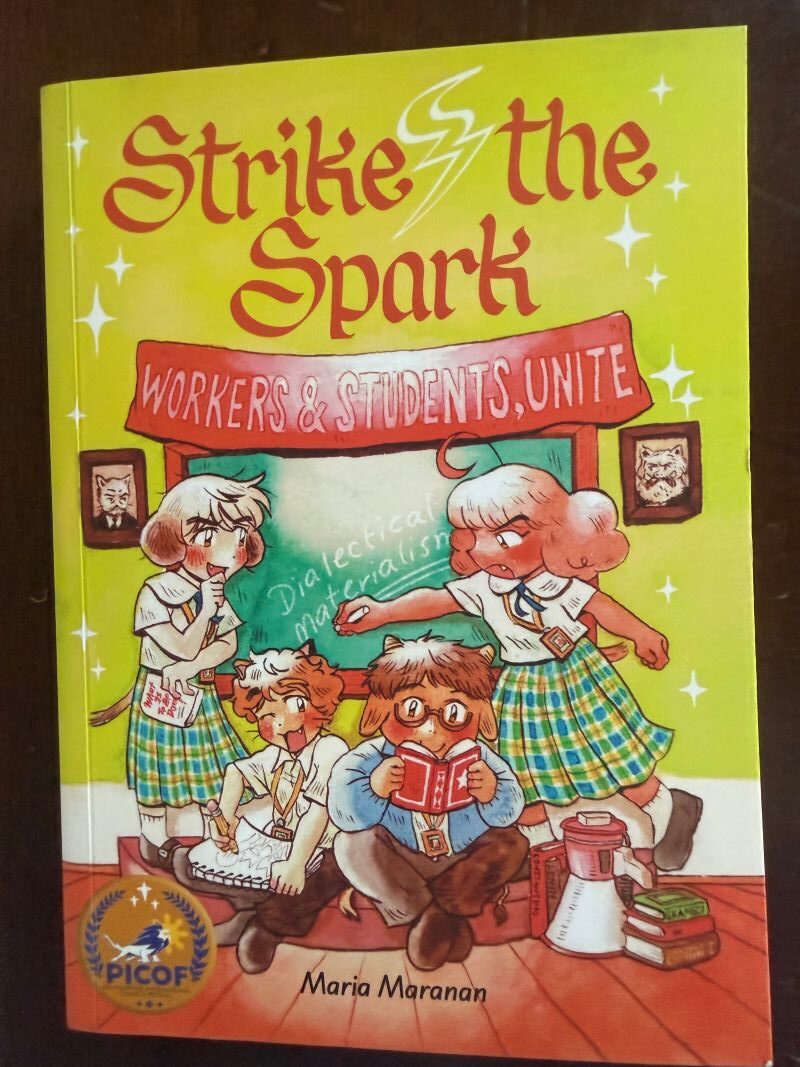
‘Strike the Spark’ by Maria Maranan
Strike the Spark ,written and illustrated by Maria Maranan, is an outstanding example of the genre’s far reach today. Its 12 chapters over 260-some pages document how a group of students in a Marxist study club realize that mere reading and discussing are not sufficient. This becomes more pressing when they find out that the school union, led by their favorite teacher, is on the verge of a strike. The students realize how they could play a vital role in helping the teachers promote their cause, in the process orienting their fellow students who are likewise encouraged to be involved. Not an easy task to gain adherents to, of course.
It is getting to know Marxism via a graphic novel highlighting Philippine reality. It sounds ambitious, but the story and art succeed because they depict many things recognizable. Students talk about the Philippines as one of the worst countries in the world to be a worker because of low wages and harsh work conditions, and how the school’s tuition increases do not go to faculty salaries. The labor situation in the school gives the study club members the chance to put into practice the Marxist theories they have been discussing. There is even the reference to the landmark of a bookstore on Padre Faura, “Solidaridad since 1965,” as plans for a Bonifacio Day rally are underway. It was clever how the interviews with the union members were conveyed in the strips.
In the Afterword, the author-illustrator talks about how her idea was drawn from the Ateneo Employees and Workers Union CBA deadlock when she found herself involved as a campus activist. The Author’s Notes are especially helpful to readers, with bonus pages devoted to the reprinted lyrics of The Internationale in English and Filipino, plus Rody Vera’s Manggagawa, a protest song usually heard in demonstrations.
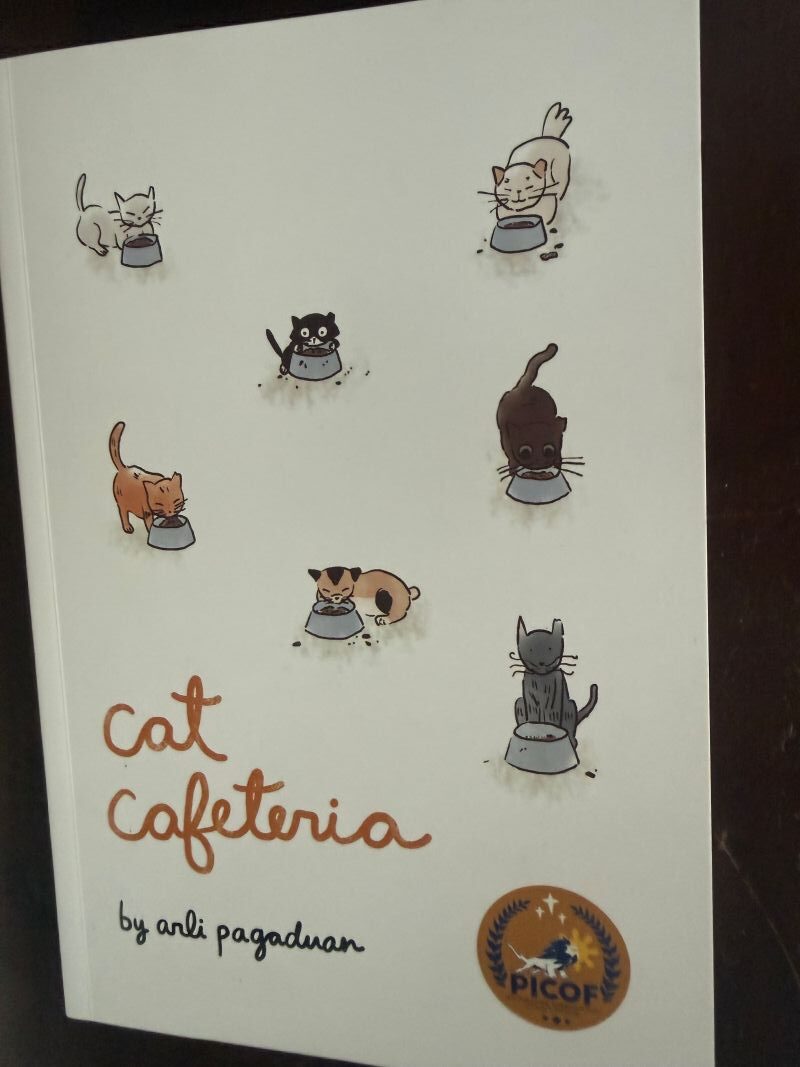
‘Cat Cafeteria’ by Arli Pagaduan
Cat Cafeteria, written and illustrated by Arli Pagaduan, will be a boon to cat lovers as it covers all aspects of cat care in full color. The author is obviously enamored with them, as she churns out all the imaginatively clever cat puns she has thought of: a chapter on Catastrophe, an initial chapter on “Everybody’s a Little Catty,” “The Cat’s Out of the Bag.” In the cafeteria, there is the meownu, sago t’ gulameow, ensaymeowda, etc. She ends with an epawlogue and a paw-sasalamat.
The child narrator who credits her cats for “teaching us to be patient, to rest when we’re tired, and to play every once in a while,” is offended when a grouchy neighbor dismisses her cats as “pusang kalye,” even as she explains that they have been spayed and neutered. But the initially hostile neighbor has his own cat story to tell, a story around a family tragedy, the loss of a son.
It is an instructive and delightful narrative to read, especially as the attractive art work engages and the text is done in very readable and helpfully clear font.
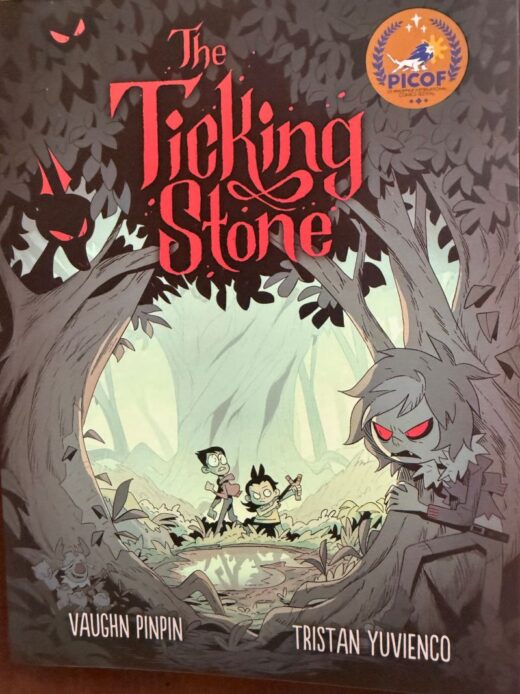
The Ticking Stone by Vaughn Pinpin and Tristan Yuvineco delves into mysteries and strange spirits of Philippine folklore. The hero, Toby Nagtago, accidentally swallows a stone that ticks away when danger is near. It’s quite an adventure as he tries to research on the ticking stone, as he grows a monster-like right arm, meets a manananggal, discovers a box of weird stuff and old photos, Nanay Anay’s sari-sari store with potions and spells and artisinal gayuma, with gummies even playing a role in this harrowing tale—all towards the untethering of the vesper stone!
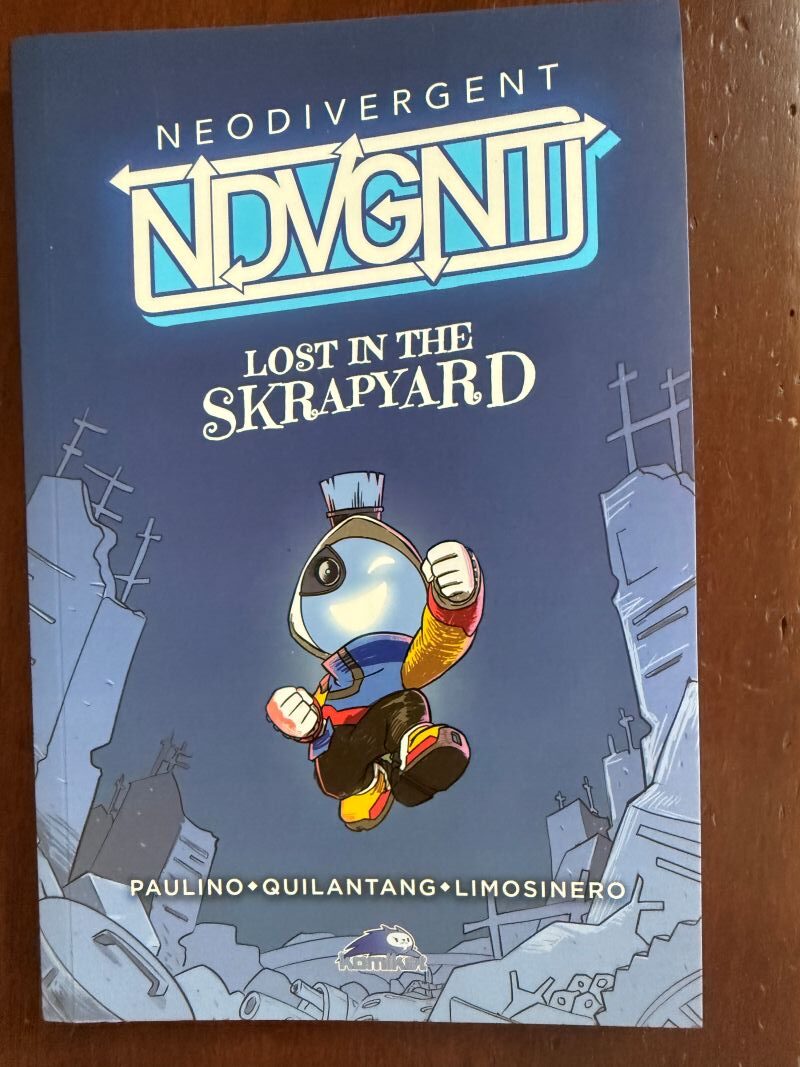
‘Neodivergent: Lost in the Skrapyard’ by Jose Antonio Paulino, RH Quilantang, and Rustico Limosinero
Neodivergent: Lost in the Skrapyard, created by Jose Antonio Paulino, written and colored by RH Quilantang, and illustrated by Rustico Limosinero is the often baffling journey of someone named Oculo who finds himself in a world haunted by the words, “You cannot escape it….”—which he wants to turn off but cannot. He has no memory of the why and where.
One title celebrates and honors neodivergence, guiding the reader to learn more about it
This celebrates and honors neodivergence, guiding the reader to learn more about it. Thus, we read, “Maybe his ears can hear sounds, but his brain interprets them differently,” or “We can never control what others think of us. But if we work on our quirks, there is nothing that can stop us!”
Because of the neodivergent team’s special gifts, they are able to win a seemingly impossible battle when a scoresheet is produced and Richard Wagner’s Ride of the Valkyries is played. Also, there are reminders that “You don’t have to be a warrior to fight! All you need is courage…,” and one cannot escape who one is.
The neodivergent characters are described in greater detail at the end of the novel, with their specific abilities highlighted—Oculo experiencing the world a little differently, responding to gentle music and familiar patterns; Eight has a whirlwind of ideas and often loses focus.
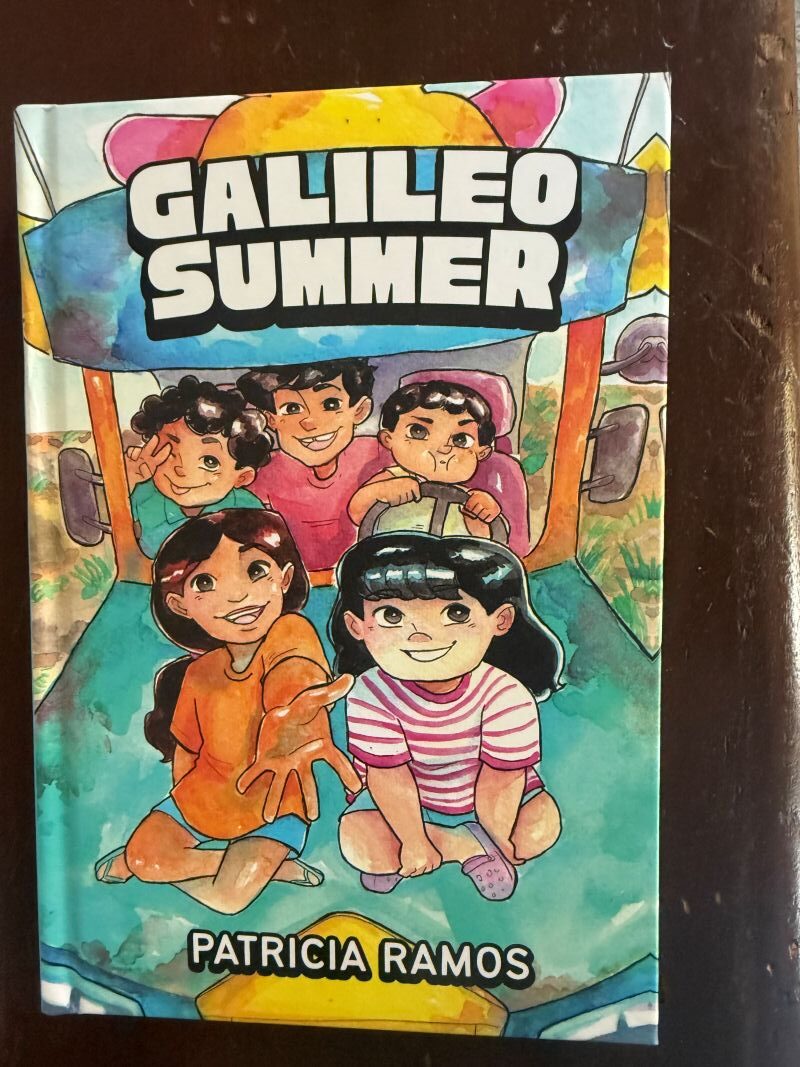
‘Galileo Summer’ by Patricia Ramos
Galileo Summer by Patricia Ramos centers on what Chi assumes to be a boring summer, but turns out to be a memorable one, thanks to a rusty old jeepney that transports Chi and her newfound friends to worlds beyond their imaginations. And the grouchy Grandpa in the summer home softens.
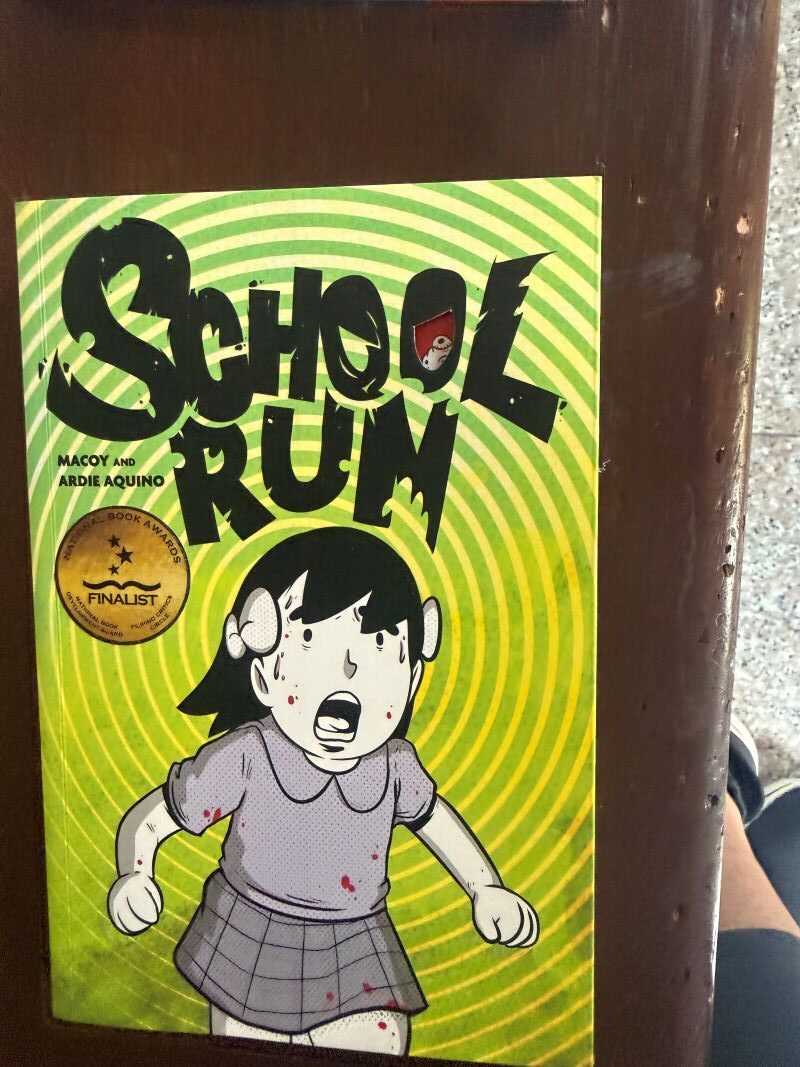
‘School Run’ by Macoy and Ardie Ramos
If you are into zombies, School Run by Macoy and Ardie Aquino, a National Book Award finalist, is made for you. A well-fortified, supposedly zombie-proof Sarao school bus encounters a flat tire—and thus begins a zombie chase over its 239 pages with the group of five students/bus riders on the way to school. The day did not seem that treacherous as it was only announced by the Philippine Atmospheric, Geophysical, Zombie-related, and Astronomical Services Administration (PAGZ-ASA) as Signal #1, indicating mild zombie attacks with the advisory to just bring weapons when venturing outdoors. The students are off to school, seemingly properly equipped with their NZP tablets (zombie virus vaccine), which unfortunately has a time duration efficacy. A helpful foreword and illustrated glossary introduces the reader towards a better appreciation of the zombie world which is made so true-to-life, to one’s horror.
The variety of these titles is concrete manifestation of the growth that Komiket, which began in 2015 as an indie publishing house and a hub for contemporary Filipino komiks, has seen. It has become a launch pad for modern Filipino creators, revived komiks culture, and runs, among many regular Komiket events and book and art markets, the annual Philippine International Comics Festival (PICOF), which connects Filipino creators with international comics communities. Its presence at the Anguoleme International Comics Festival in France has brought Philippine komiks to the second largest comics festival in France. France is acknowledged to be the gateway to Europe’s world of comics.
Yes, the world is taking notice of our creatives in the comic world. Bravo, Komiket and Paolo Herras.


