
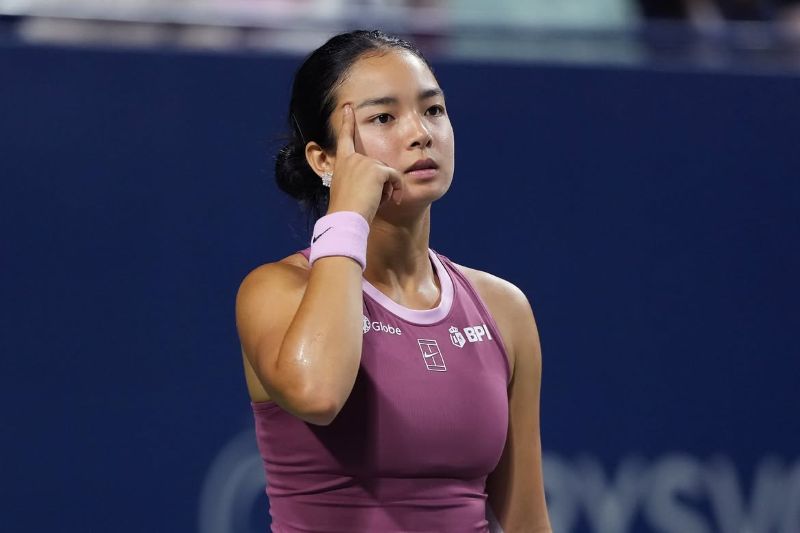
Alex Eala is turning professional tennis on its head. And it’s not only in the way she plays—although that alone makes her a phenomenon—but also in both the lift and the problem she gives the sport because of the vast patriotic following she inspires.
Some of the game’s greats, who have the first-hand experience they can draw on to substantiate their pronouncements, as well as opponents who have played against her, attest to it. Not only can Alex read her opponents and the court well, she possesses the ability to change tactics in mid-match, according to the unrivaled Serena Williams.
Leylah Fernandez, whom Alex dispatched only last week as the defending champion of her home Open, the Canadian, fully agrees, and observes an even uncannier ability: She can “invent” as she goes along.
Alex is obviously a unique problem for opponents, and they will just have to deal with it individually every time they face her across the net. But the greater challenge is to the tennis institution itself— to the tour and its officials and organizers and to the guardians of the sport’s hallowed traditions, its etiquettes, its protocols, its rules: How do you deal with the wave upon wave of crowds that follow Alex Eala with patriotic pride and uninhibited fervor?
For one thing, no place seems big enough to accommodate them. The best compromise is Center Court, normally reserved for the highest-ranked competitor on the schedule. But market realities in professional sports always make for a good argument, if not the stronger one all around—good for the tour, good for business, good for everyone.
And it seems beginning to gain acceptance. Nike deployed it when, in one ad campaign, it chose to go with Alex, still well outside the top 20, instead of Aryna Sabalenka, the world’s number one and the far longer Nike face— soon enough, the dollar validation would show in the books.
Most of Alex’s followers are non-connoisseurs descending in droves by the power of the kuyog spirit
Most of Alex’s followers are non-connoisseurs descending in droves by the power of the kuyog spirit, the communal compulsion to fight behind one of their own to victory or defeat. Their passions are simply too strong to be restrained in order to make them conform to standards and expectations of spectatorship.
As it happens, tennis, which traces its roots to 16th-century monarchical France and has evolved to acquire pretensions to gentrified primness, has a lot of them. Two concerns would seem the most upsetting to the sport’s ruling class: one, nobody breathes while the ball is in play; two, nobody applauds mistakes—service faults should be the most obvious ones.
The hoi polloi and the uninitiated will have to be made to understand why that is so in tennis—or golf—but not in other sports. And the explanation better have nothing to do with class, for that makes it socially protestable. If the reason, taking the first case, is that any movement or sound from the stands potentially causes a break in the competitors’ concentration, it better be able to make the case that tennis, more than any other sport, requires keener concentration of its competitors.
Related stories:
Proud of that Alex Eala Effect: I can’t get a court!
Alex Eala: Gift, grit, and grace
About Alex getting applause for opponents’ mistakes, I wonder if it’s not something she not seldom deserves. Running the opponent around, hitting early and hitting deep or sharp-angled as the situation calls for and doing it with remarkable accuracy—that’s her game, and it takes a particularly knowledgeable and keen assessor to distinguish a forced error from an unforced one. Indeed, how many times have I observed Alex make an opponent double-fault by stepping in and crowding her serve.
I saw Michael Chang do it to the world’s number one Ivan Lendl in the fourth round of the French Open in 1989. And he did it more provocatively, tauntingly, I’d even say. Facing Lendl’s second serve with two match points on him, Chang, hobbled by cramps, walked up really close to the service line. Lendl faulted. Chang went on to become, at 17, the youngest to win the French, a record that remains unbroken in the men’s draw. (Monica Seles did it in the women’s the following year, at age 16.)
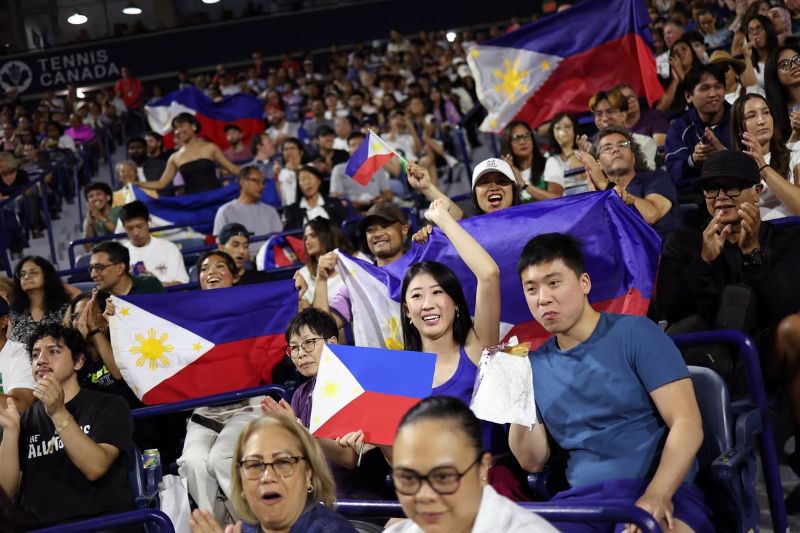
An applause deserved (From IG @alex.eala)
In any case, to the average patriot for Alex Eala, she is the nice and special kid from back home, and any point credited to her, whether earned by skill or on fate, is a point deserved and deserving an applause.
But then, for Alex’s own sake, for her own comfort, being herself part now of the tennis institution, surely nothing would be lost to her fighting compatriots if they made some concessions to the sport’s centuries of tradition by, say, for starters, staying seated and breathing quietly while the ball is in play.


