

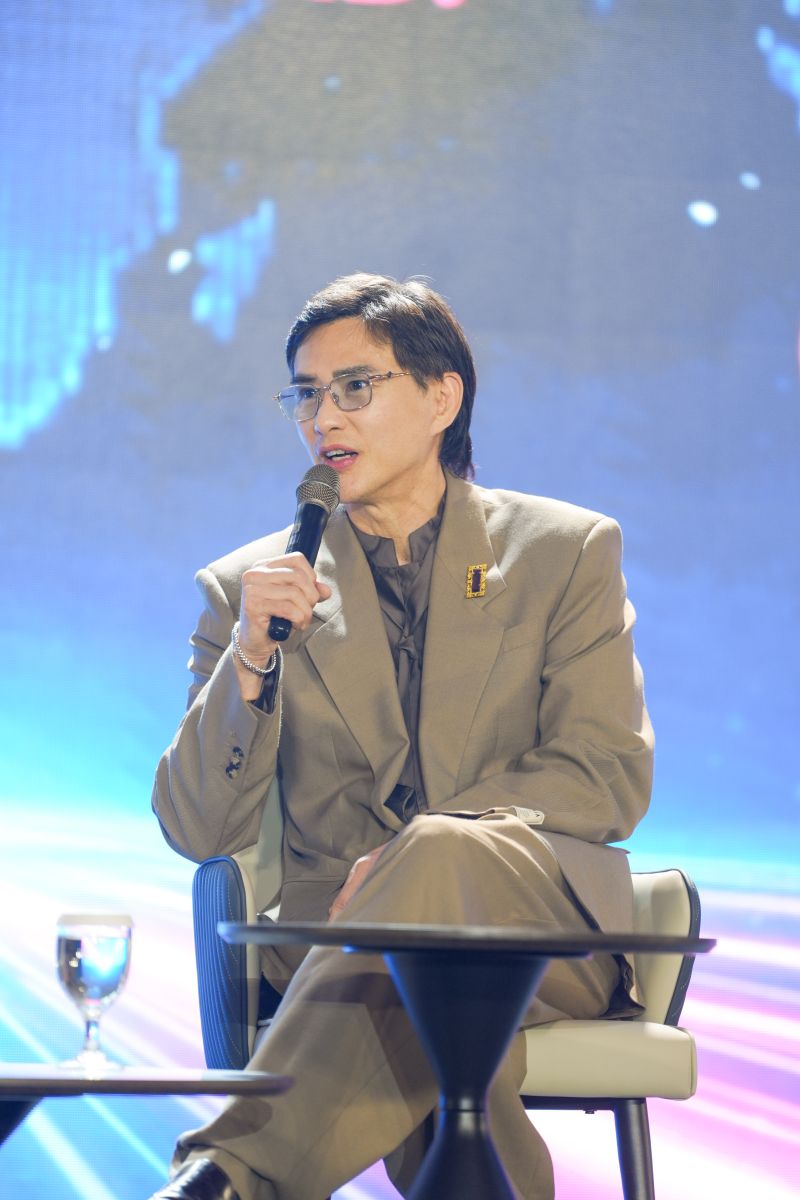
SM Supermalls president Steven Tan: ‘In the early days of Mall of Asia, ‘Tatang’ would go to the malls almost every single day’
Attendees at the 32nd National Retail Conference and Expo (NRCE) at SMX Convention Center Manila last August 7 were treated to a “fireside chat” with Tessie Sy-Coson, vice chairperson of SM Investments Corporation and chairperson for SM Retail and BDO Unibank, and Steven Tan, president of SM Supermalls.
During the session moderated by broadcast journalist and senior vice president for corporate relations of SM Investments Corporation Rico Hizon, Coson shared many insights on retail and the industry.
She revealed that she actually likes to occasionally go shopping incognito. “I would be in my home attire. I don’t have to put on makeup. You know, I just go around and it’s fun,” said the leader of Philippine banking and retail. “It’s fun to be able to do things that you like to do without people watching.”
Tan called himself “a shopaholic. I enjoy shopping. I enjoy buying things. Sometimes, that’s my way of refreshing my mind and updating myself. There’s a lot of things I learn when I travel, visiting other shopping centers, learning and at the same time, enjoying buying things.” SM’s personal shoppers originated when Tan shopped in their own SM stores and asked staff to buy things for him.
Responding to questions from the audience, specifically from Robina Gokongwei-Pe, chair of Robinsons Retail, about her school, days, Coson revealed, “I was an ordinary student. So, there’s nothing interesting. Nobody gets interested in what I’m doing. It’s fine because I’m left to do my own thing. My mind is always somewhere else. So, I’m quiet. So, they think that I’m very attentive in school. Later on, I think that maybe it’s an ADHD mind, where your mind wanders all the time.”
Coson recounted how she started working for the family business early. “I was already in high school and at ICA (Immaculate Conception Academy). So, I was just helping with some of the clothing because my mother had clothing in the shoe store. That was in the ’60s. I was just going around, helping out here and there, but nothing really significant.
“We started as a family business. So, all the children were expected to help out one way or another, or else you felt guilty. We had to help out after school or on weekends. We didn’t go out with friends on weekends. We had to help out because this was what put food on the table for the family. So, we learned. Even my siblings, they started in the warehouse. I started in clothing, then at the cashier. But that was something that was natural for us.”
Tan joined SM as mall manager of Podium, but had the good fortune of working with Henry Sy Sr., “Tatang” himself, in his early years. “I was actually quite fortunate to be mentored by Tatang. In the early days of Mall of Asia, right after we opened, he would go to the malls almost every single day. For six months, I didn’t take a day off, because he would come every afternoon. And I didn’t want to miss that opportunity, it’s up to you if you want to call it just chit-chatting or mentoring. Because when you sit down together, he would tell you a lot of things about how people move, what store should you put at the corner, how many stores should you open before you put a café for the husband to sit while the wife is shopping. So for me, it’s really putting your ear to the ground and listening to what your customers want and need, and giving them what they need.
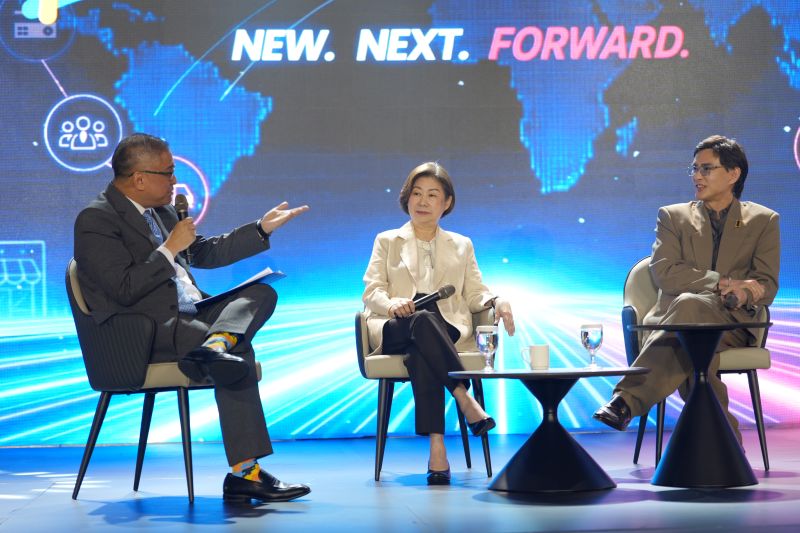
Rico Hizon hosts fireside chat with Filipino business leader Tessie Sy-Coson and SM Malls president Steven Tan.
“Even until this very day, if there’s a situation that I’m not sure of, I’d step back and think, what would Tatang decide? And more often than not, he would be living in my head. So I’ll make that decision based on how I know him.”
Hizon asked Coson where Philippine retail had to catch up with the market, whether millennials or GenZ. “Retailers want all of them, but they don’t want to pay. You have to find that portion where you can fit in. And then also, there’s a lot of online, which sells very inexpensive items. So you have to be able to compete with online, as well. It’s not an easy market, but we’re still surviving.
“The online market, which is not ours—ours is just so-so, not really that great—has their own strategy. But that’s why we thought, since we cannot compete with online, we might as well do it in terms of the assortment, the customer service, the convenience. So that’s the way that we can recover some customers.”
“There are so many competing platforms now,” Tan added. “The duration of GenZ’s attention span right now is just like, maybe, five to 10 seconds. So you really have to catch their attention. I was in Singapore last night, and I was buying a jacket. So I went to that store, bought the jacket, but when I was buying it, the sales lady suddenly told me, ‘Sir, this would look good with you, with your skin, you have fair skin, and these shoes would look perfect on you.’ I tell you, budol is real. And online cannot do that for you.”
Hizon mentioned how entering malls meant hearing “Good morning, sir” and feeling welcome. “Yes, we have to do that,” Coson agreed. “And it’s a good thing that the Filipino consumers like it. So we continue to do that.”
SM already has its personal shopper service, “but if most of the retailers in the mall will have good customer service, that would really be good for the mall. That’s why Steven is also encouraging all the other stores to have good customer service.”
The idea of using AI (artificial intelligence) was brought up. “Actually, if used in the right area, AI will increase productivity,” Coson said. “So I like to encourage the use of AI. But maybe not where you forget about your critical thinking. But in some of the basics, I think it’s good.
“At this point, AI is still evolving. So for us, the AI that will give you the right numbers, will collate all of those things, it’s good to guide you in your work. And also in creativity, AI is good, as well. So yeah, sometimes, when I don’t have a solution, I just look for AI. It’s our good friend,” Coson said with a laugh.
“Make AI your slave!” said Tan. “It’s all about innovation. You just have to keep on adapting to new technology. In no time, maybe AI would just move on, and then there would be something new that would come up. You just have to keep on learning, and innovation is not a one-time, big-time thing. It’s on a daily basis, you have to keep learning new things, and just make it part of your life.”
‘AI will increase productivity. So I like to encourage the use of AI. But maybe not where you forget about your critical thinking’
How important are the MSMEs (micro, small, and medium enterprises) for the large retailers like SM, Hizon asked? “They are very important,” Coson replied. “First, because of their size, they are creative, they do things faster if they are passionate about their business. We started also as an MSME, maybe more of an SME. That’s where you can really learn the basic business, and you have a lot of time to learn. But also for our economy, it’s very important that we have a lot of MSMEs for livelihood. If you’re not employed, you go to an MSME. And I think that’s the way to survive this economy. It’s either you’re employed or you do your small business. Even for the retirees, it would be good for them to also go into business. The livelihood continues, and the purchasing power continues.”
Coson said she learned a lot from the practices of small businesses. “Many of them are very hardworking, and they really persevere. And if you do that continuously, you can really go far. I have not seen a retailer who is successful, who did not work hard. And then you persevere, with all the factors that are affecting you—the global war, local, domestic, whatever. So it’s really difficult. But if you are able to go over the hump, then you can be successful in many things.”
Within SM, different work divisions operate like small businesses themselves, Coson revealed. “Our teams operate like they are different businesses. So, it’s just like a jigsaw puzzle. We put things together, and it becomes a big company. But most of our leaders, they all operate their units like each one is a business.”
Coson said it is to their benefit to encourage businesses, their mall tenants, to expand. “It’s also for their own good, in the sense that when you grow your business, the operating expenses become bigger. So, you really have to expand in order to distribute expenses.
“Of course, it’s not as simple as that. But after a while, in terms of inflation, the cost will catch up. So, you really have to expand and grow your top line so that it can offset your operating expenses.
“That is the reason why we encourage a lot of the businesses to expand. You grow your business, you survive. But, of course, you will have to understand the numbers. So we usually would not leave a store alone, just one or two stores, unless that is really their lifetime dream, to have a small one or two stores that they can handle themselves. Otherwise, we always encourage them to expand.”
And no, Coson insisted, “They don’t ask my advice, because good MSMEs know what to do with their business. The market will tell them what to do, what is right or wrong. But some of their comments are very heartwarming, and that is my income.
“When you’ve been in business for a long time and you just go on and on, you know that there’s no choice but to step back, or go to the sides sometimes.”
“That’s the only way to see the big picture,” Tan added.
When asked what he would tell his younger self, “I’d tell him not to panic,” Tan said. “Because when you’re younger, if there’s a problem in front of you, you tend to panic, and you will not think straight. You will just be disturbed by all the noise. So, always, just like TSC would always tell me, step back and look at the situation holistically.”
So what other lessons can young retailers learn from older generations, or learn at an early age? “As a retailer, you have to learn perseverance,” Coson said. “It really takes a lot of time, just like any businesses that start small. There are a lot of small, small things that you have to handle.
“You have to be exposed early, and try to see, just observe what is going on, and then you will also find your own passion after a while. I guess I was born into a retail family. I had no choice, that is my life.
“What is important is to have good team. And, you know, of course you have to listen to them because you can never always have the right answer.”
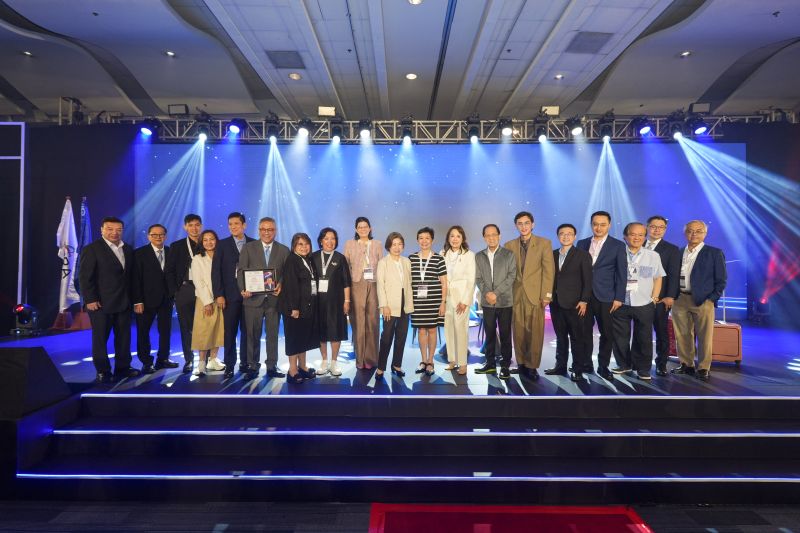
The 32nd National Retail Conference and Expo (NRCE) led by SM chair Tessie Sy-Coson, Robinsions Retail chair Robina Gokongwei-Pe, SM Supermalls president Steven Tan
And yes, she is open to younger entrepreneurs saying SM’s trends and strategies are old-fashioned. “Yes, sometimes our idea can be passé because it doesn’t relate to the market. And we continue to listen. The leaders of SM will always listen to all ideas. You never shut your mind. Another thing that we have to do as retailers is to always be alert—alert for the trends, alert for organizations, alert for many things. At my age, I have to work like I’m part of Gen Z. So I have to be online. I have to always look into social media, listen to them.
“Not that our customers are all GenZ. But you have to know what is the latest. And the best is to listen to the GenZ and listen to the millennials. Of course, we also have the older ones, the baby boomers who have the money to buy.”
Coson admitted she no longer travels as much, “but I have to say that I look at the numbers. But I listen to many people in the provinces. One of the most important things in retail is research. They tell me this and they tell me that. They also guide me on what is the latest trend. So I’m happy that they are with me, because I’m going to download all my work to them. They’re all there. They’re ready to accept the responsibility.”


