
-

- Joey Samson
-
- Rhett Eala
Bench makes its mark for the sixth time at Rakuten Fashion Week Tokyo, with three Filipino designers whose collections connect to Japan through distinctly Filipino eyes.
On Sept. 1, 2026, in Tokyo and livestreamed worldwide, Rhett Eala, Joey Samson, and Jaggy Glarino—gathered and brought to Tokyo by Bench—are presenting collections rooted in Philippine textiles, craft and history, while drawing on Japanese influences, ranging from pottery and kimono fabrics to the history of Japanese migration to Mindanao. The Rakuten Fashion Week Tokyo Spring Summer 2027 runs Aug. 31–Sept.5, 2026, with the show of the three Filipino designers on Sept. 1.
It is a significant shift from Bench’s first appearances in Tokyo Fashion Week, touted as the world’s leading showcase for experimental fashion. When the leading Philippine fashion and lifestyle brand brought winners of the Bench Design Awards, the aim was to introduce Filipino talent to an international audience. The designers were young, contemporary, and largely focused on fashion that could eventually be produced for retail. The strategy has since expanded.
When Bench brought TernoCon to Tokyo in 2023, it presented various contemporary looks for the balintawak, the casual iteration of the terno. The goal was to give the terno the international recognition on par with the Japanese kimono or the Korean hanbok.
The latest Tokyo presentation, derived from the fashion show, Threads of Dreams, is part of the celebration of the 70th year of Philippine-Japanese relations. The project began as a collaboration between Bench and the Embassy of Japan in the Philippines. It continues with the Philippine Embassy in Tokyo and the Japan Fashion Week Organization.
Noel Manapat, the project director, cited Rakuten Fashion Week Tokyo as one of the Big Five global fashion weeks alongside Milan, Paris, New York, and London.
“Japan has a point of view that’s different from the rest of the world,” he told TheDiarist.ph. That difference is that Tokyo offers an interesting stage for Filipino designers. In other major fashion weeks, audiences see international brands whose clothes are available in cities worldwide. Tokyo has a strong presence of Japanese designers and local brands whose work is less familiar outside Japan.
There is also a cultural familiarity for Filipino designers and audiences. “We’re Asians also,” Manapat said. “There’s some form of relatability and harmony in our cultures.”
The response to the Philippine presentation in previous years has been positive. Some audiences find the younger, contemporary approach more relatable because the clothes are easily wearable. When Bench presented designs from Ternocon, a platform and competition dedicated to the terno, the audience was drawn to the distinctly Philippine fabrics and silhouettes. These are elements that they do not regularly see.
The clothes are designed not to be sold in stores. They are occasion pieces, made to be admired for unique workmanship and the stories embedded in them.
“It’s like watching a museum in motion,” Manapat said.
The three designers were chosen because they offer three very different aesthetics. However, they also have established histories with Bench. Eala has created capsule collections for Bench’s sister brand Kashieca. Samson has designed for the streetwear brand, Human. Glarino won the silver medal in TernoCon 2020.
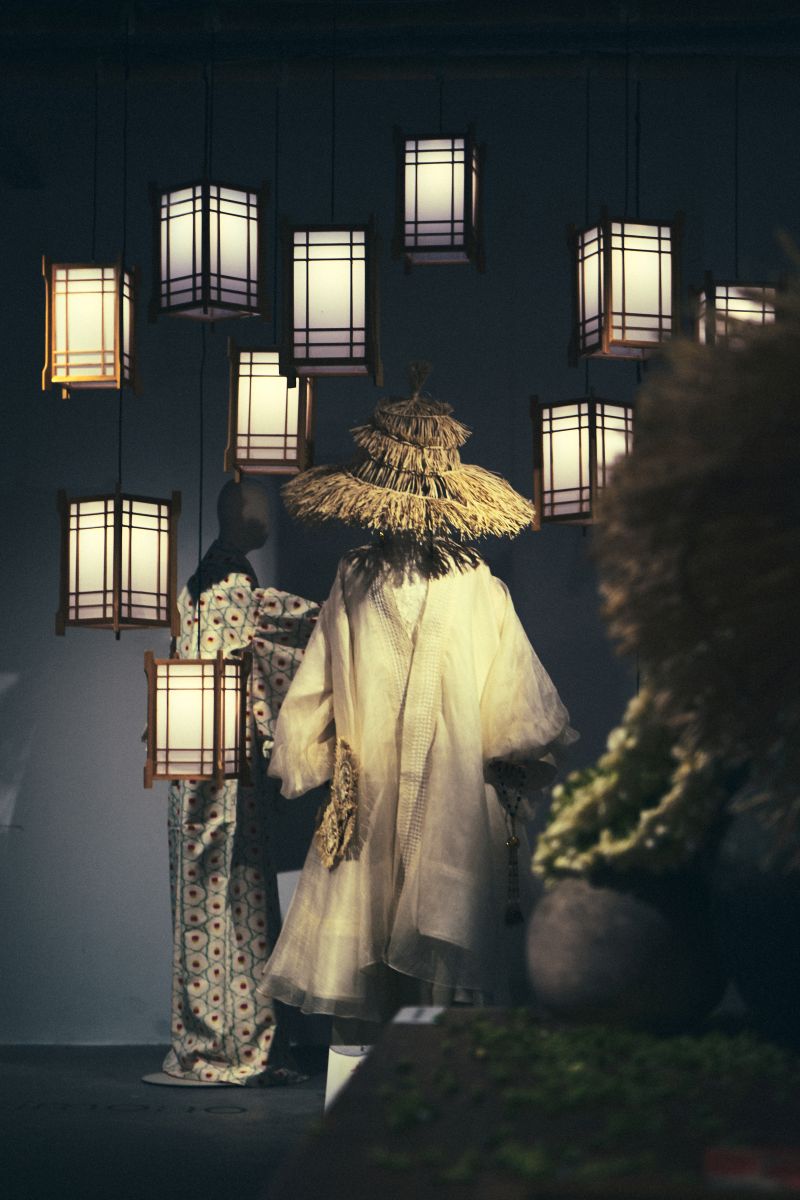
Rhett Eala
Eala brings sophistication and wearability, shaped by his experience in ready-to-wear. Samson’s strength is tailoring and storytelling. Glarino works through experimentation.
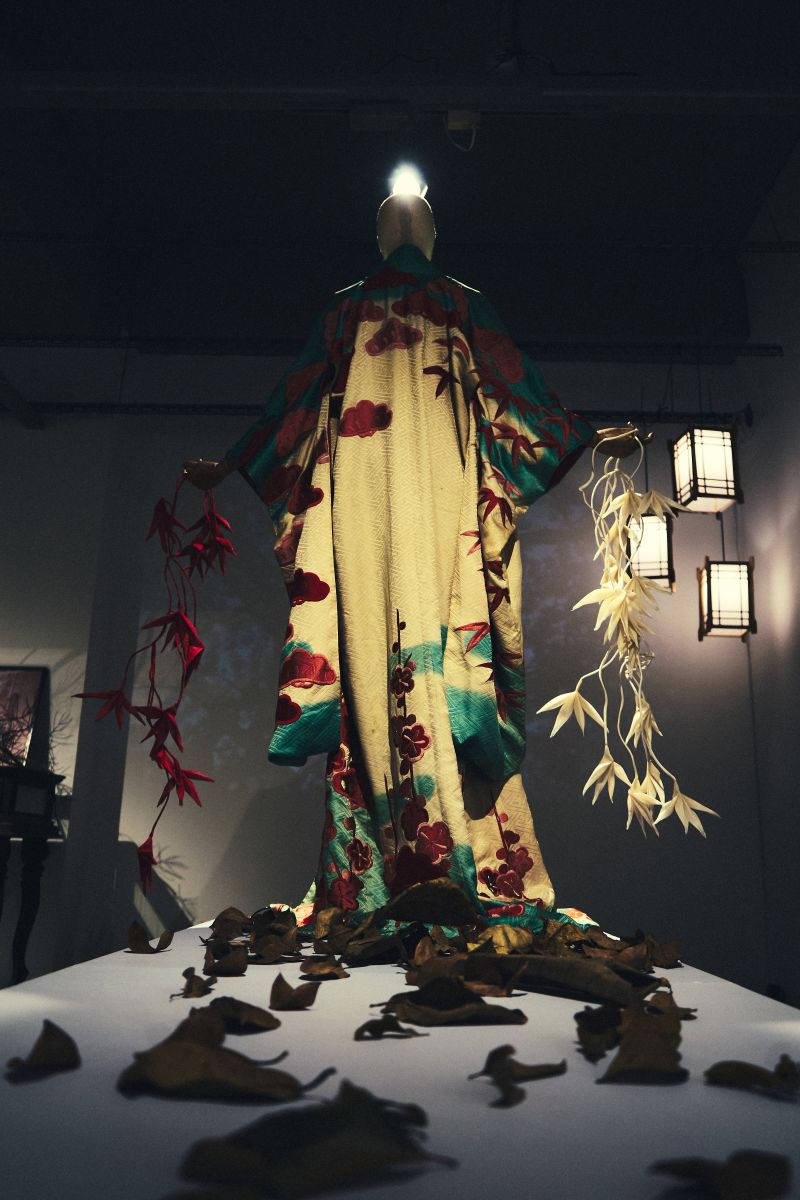
Eala is the romanticist. His collection, Inherited Stories, draws on his mother Roceli Valencia’s memories and her lifelong love of Japan. Valencia operated an antique shop in Hong Kong and collected Japanese pieces that eventually became part of the family’s homes in Tagaytay and Manila. Her interest in Japan also influenced Eala’s appreciation of Japanese design.
Eala looked through archival photographs of his mother and father and drew on her collections of Japanese pottery and ‘origami’
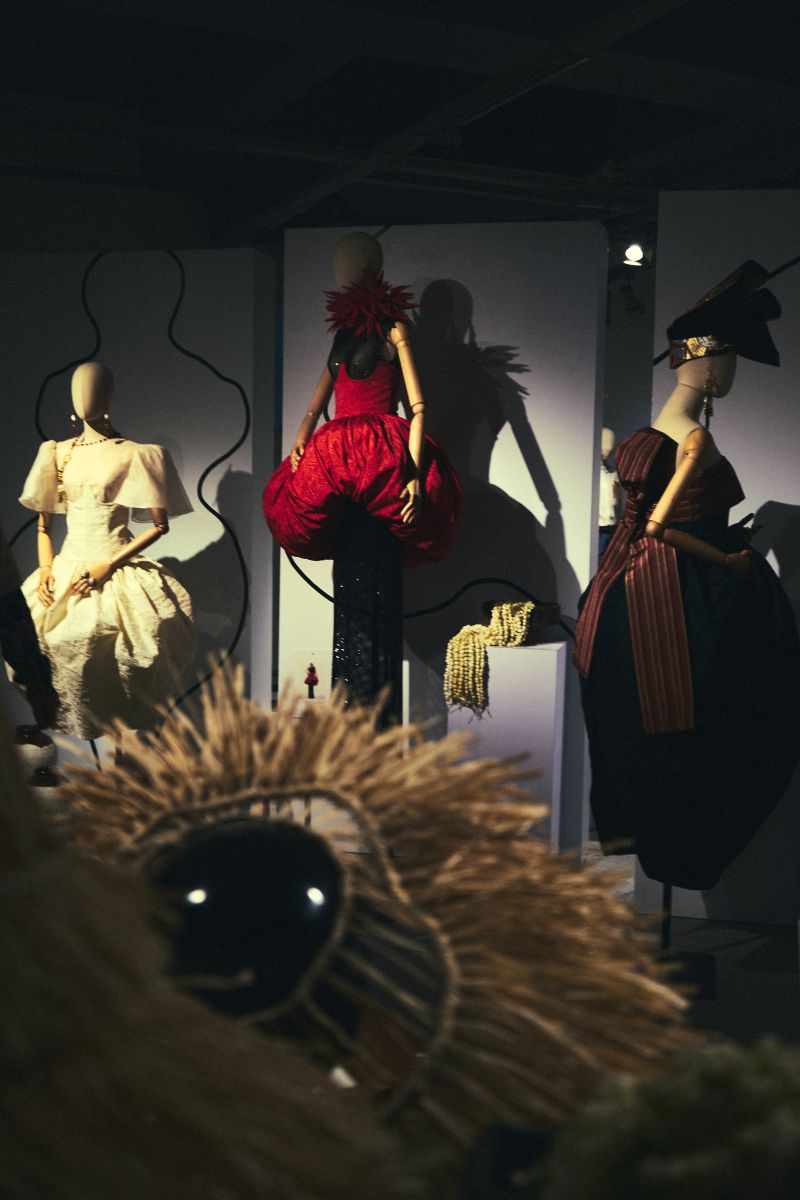
He looked through archival photographs of his mother and father and drew on her collections of Japanese pottery and origami. The references appear in the silhouettes. Mini dresses have skirts that curve like jars or lanterns. A corset with a flared peplum expands into a mushroom shape over a sheer mesh dress, reflecting Japan’s reverence for nature.
Manapat likes in particular the simpler pieces inspired by the Japanese pottery collection of Eala’s mother.
“The way that he formed the shape of the clothing, I think it’s very Japanese in its simplicity, but also in the clean lines that he was able to present,” he said.
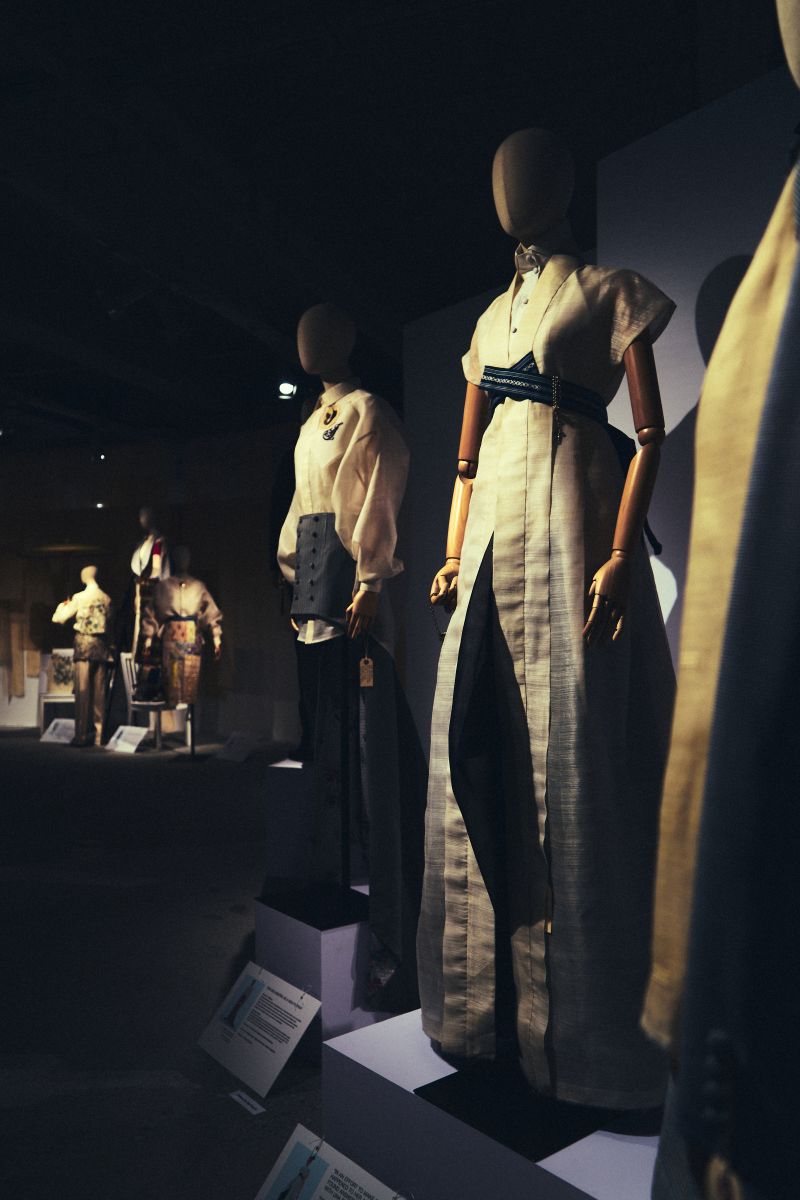
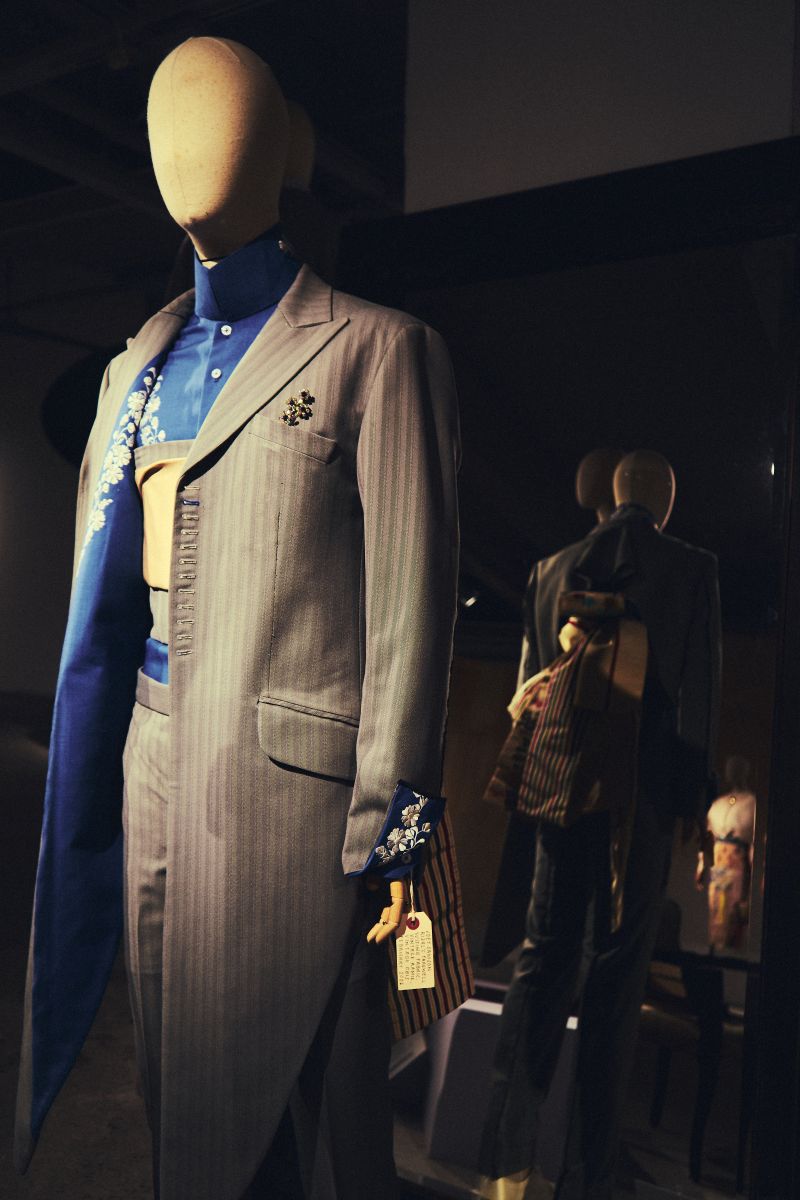
Joey Samson
Samson imagines a fictional meeting between a Japanese romantically linked to José Rizal and a Filipina
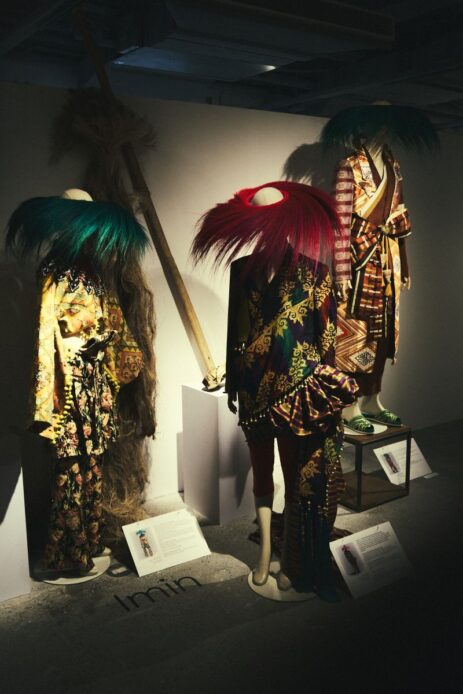
Samson approaches the Philippines-Japan connection through an imagined historical encounter. His collection is built around a fictional meeting between two women who lived in the same era. Seiko Usui, also known as O Sei San, was romantically linked to José Rizal. The other is the woman depicted in Juan Luna’s Una Bulaqueña, the 1895 painting of a Filipina in traditional dress.
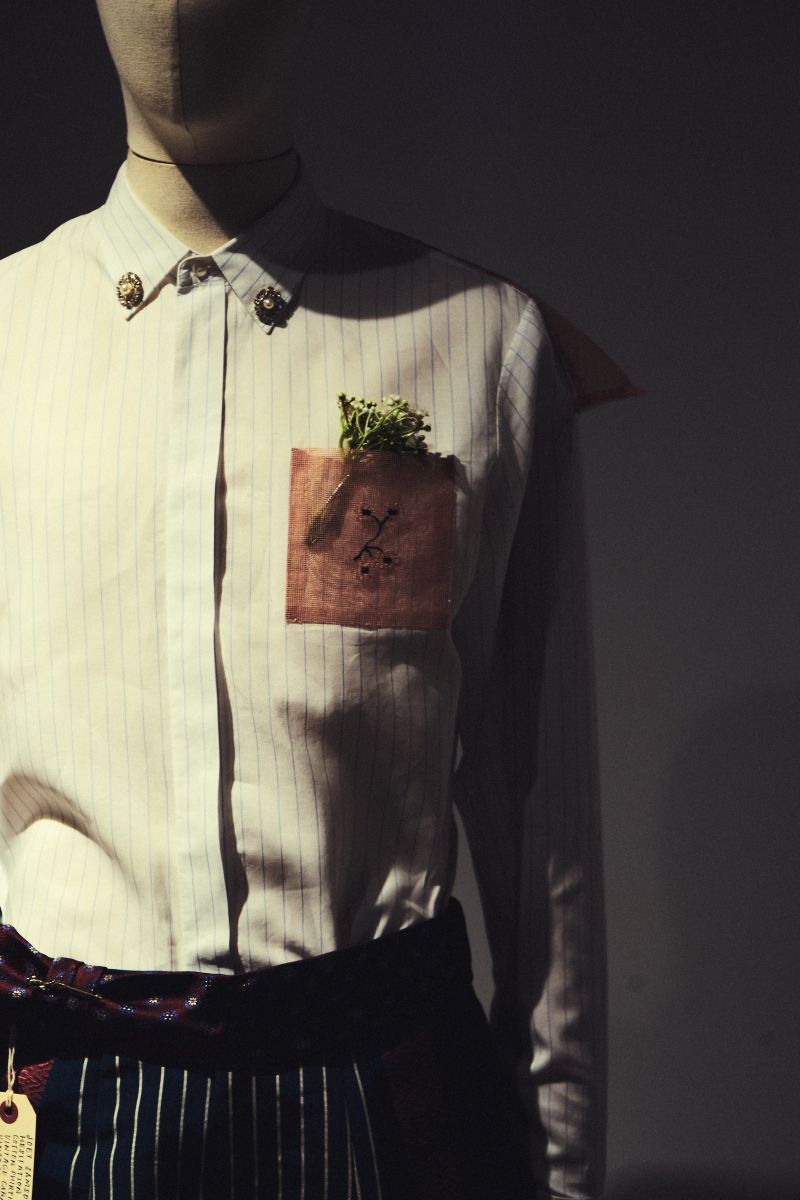
Samson imagines what might have happened had their stories intersected. He combines Filipino weaves, embroidery, and brocade obi with lighter kimono fabrics. Many of the obi were collected during his trips to Japan.
His Philippine materials include piña, inabel, and royal blue cloth from the S.C. Vizcarra collection. Antique barong pieces came from his maternal grandmother. Cañamaso, a base fabric for embroidery used from the 1920s to the 1940s, was given to him by scenographer and Gawad CCP awardee Gino Gonzales. Samson reworks the materials into patchwork skirts and outerwear.
For Manapat, these antique fabrics are among the most fascinating parts of the collection. “Each piece of antique fabric gives its own stories, and then he was able to weave them together into one garment,” he said.
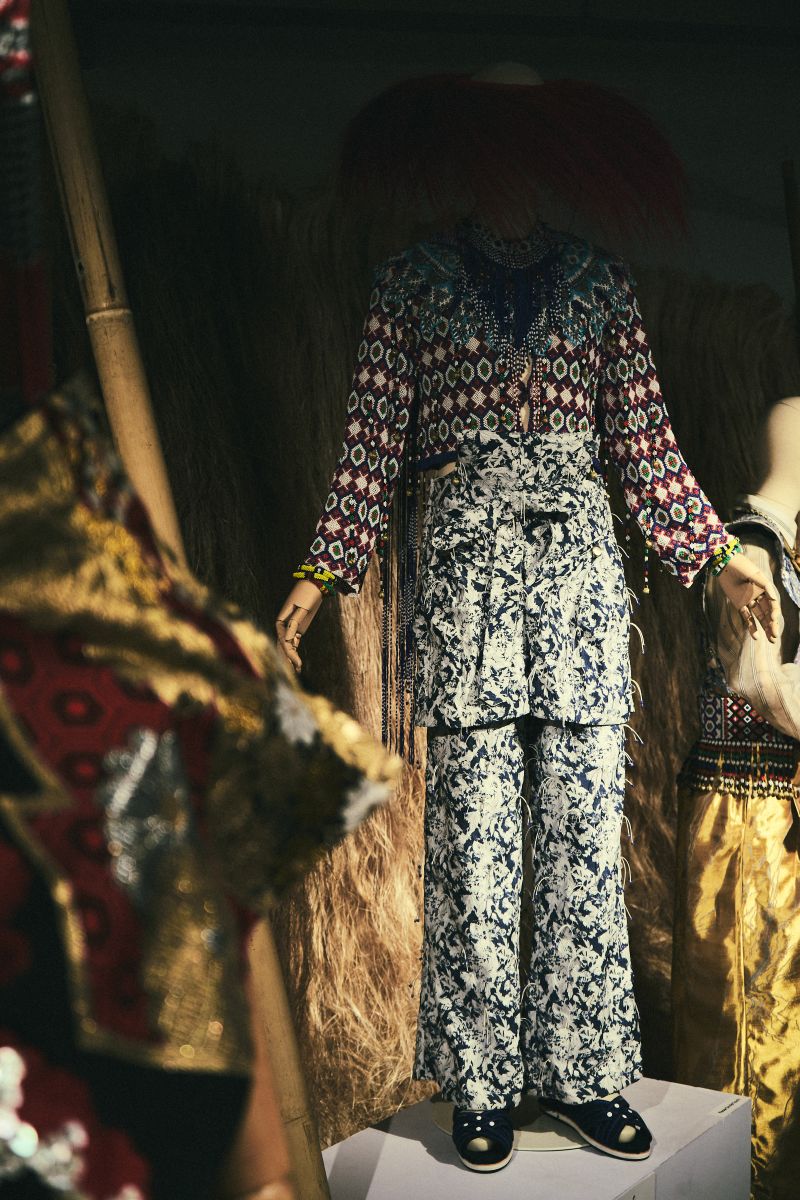
Jaggy Glarino
Glarino draws on the history of Japanese migrants in Mindanao during the 1930s
Glarino’s collection comes closer to home. Raised in the south, in General Santos City, the designer draws on the history of Japanese migrants in Mindanao during the 1930s. Many worked in Davao’s banana plantations. He imagines what might have happened if that cultural exchange between the migrants and locals had continued.
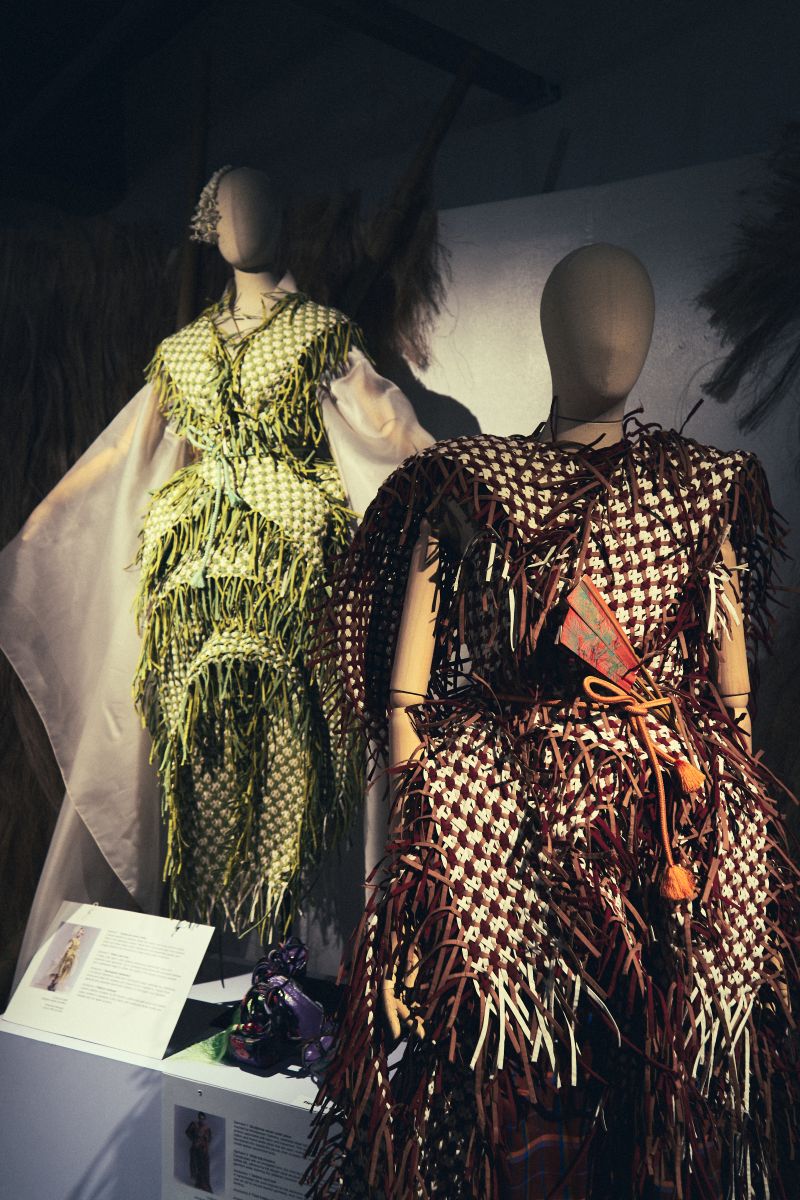
He uses his signature woven technique to mimic solihiya weave and introduces sliced bamboo panels. Recycled nylon from ocean fishing nets becomes structured, armor-like pieces that evoke the Japanese samurai through their architecture.
The collection also draws heavily on the work of T’boli artisans. One standout is a long red and black skirt bearing patterns inspired by a T’boli necklace. The fabric is fully beaded by 45 tribal women.
Glarino uses Cebu abaca for sculptural bodices, linking the collection to the Japanese migrants in Davao who worked in abaca production. For Manapat, the designer’s family history and the avant-garde use of indigenous and Japanese fabrics is one of Glarino’s strengths.
The three collections also explain why Bench sees the Tokyo project as something larger than a fashion show.
There is no immediate commercial objective; it is primarily an initiative of Ben Chan, the founder, chairman and chief executive of Suyen Corporation, whose flagship is Bench. His advocacy is to put Filipino design on the world stage.
Tokyo is a stage towards that goal. Bench is also launching The Terno: A Century of the Philippine Dress, a coffeetable published in collaboration with Rizzoli New York, extending the project into international publishing.
The fashion week collections will remain in Tokyo on loan to the Philippine Embassy for an exhibition at the end of September.
Manapat said the presentation has also required the Filipino designers to adapt to a different production process. In Tokyo, fittings take two days. Each model gets about 30 minutes for one look. Each designer presents 10 pieces. Every garment is fitted individually rather than assessed on several models at once.
In Manila, a fitting can involve 10 models at the same time. Designers can assess the clothes as a group and continue making changes until the last minute.
Tokyo is far more exacting. Once the fitting is finished, everything is considered final. Each model is assigned a dresser who follows the designer’s instructions to the letter. A ribbon or belt with a hanging loop on one side must be positioned exactly that way. The dressers even count how many buttons are fastened and how many are left open.
“In the Philippines, a lot of designers change their mind up to the last minute,” Manapat said. “Sometimes nothing is final until the model comes out, which can also work.”
In Tokyo, there is no last-minute change. By the time the models walk out, every ribbon, belt, button, and detail has already been decided days before. For the Filipino designers, the runway is where all that painstaking preparation finally comes together.


