
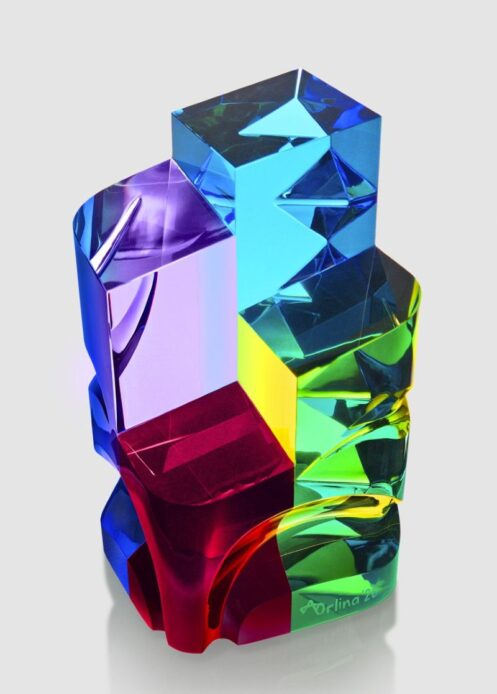
Glass sculptor Anna Orlina’s debut solo exhibition, ‘Reflections of Being,’ runs until Oct. 11, 2026 at Galerie Stephanie, 6th Floor, East Wing, Shangri-La Plaza Mall, Mandaluyong City.
Even if visual artist and glass sculptor Anna Orlina has a renowned father, the glass artist Ramon Orlina, she most certainly did the work herself. Anna, age 34, has been working with glass for some 10 years, and actually completed a specialized four-month program in cold-working and glass cutting at the Vyšší Odborná Škola Sklářská a Střední Škola (Glass School) in Nový Bor, Czech Republic, in 2019. Thus, by her own reckoning, her love for the medium “has only grown,” and the timing is right for her first solo exhibition.
“I think now I have a better understanding of the glass and its limitations,” she says, “which allows me to be more confident and creative with my work.”
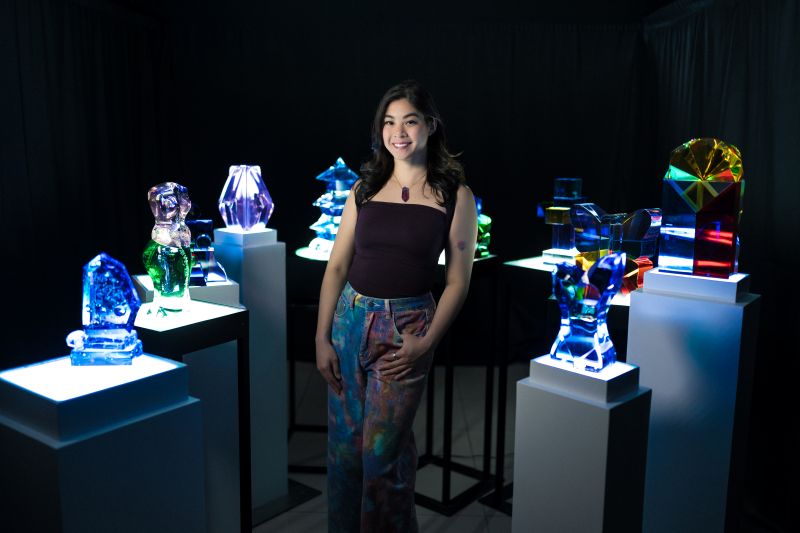
Anna Orlina
What does Reflections of Being mean to you, and why did you feel this is the right time for your first solo exhibition?
Reflections of Being is a reflection of who I am, both as person and artist. The works are inspired by my ancestry, my upbringing, my experiences, and the things that have shaped me throughout my life.
I felt like the timing was right because I’ve been working with glass for almost 10 years. I started learning glass techniques in 2016 and began exhibiting my work in 2022. Since then, I’ve mostly been doing art fairs and group shows, where I would make a few pieces every few months.
I’ve always wanted the opportunity to create a larger collection where the pieces could come together as one body of work. After almost 10 years of working with glass, I felt ready to take that step and create something that really reflects where I’ve come from and who I am today.
Looking back on your journey as sculptor, how has your relationship with your medium evolved from your early days to this current collection?
I think my love for the medium has only grown. When I first started, I was focused on learning the techniques and understanding what I could do with the material. There was a lot of practice and trial and error.
Over the years, as I became more confident, I started experimenting more and pushing myself to try new things or improve the techniques I already knew.
I think now I have a better understanding of the glass and its limitations, which allows me to be more confident and creative with my work. This collection really reflects that growth, and how much I’ve developed as an artist over the years.
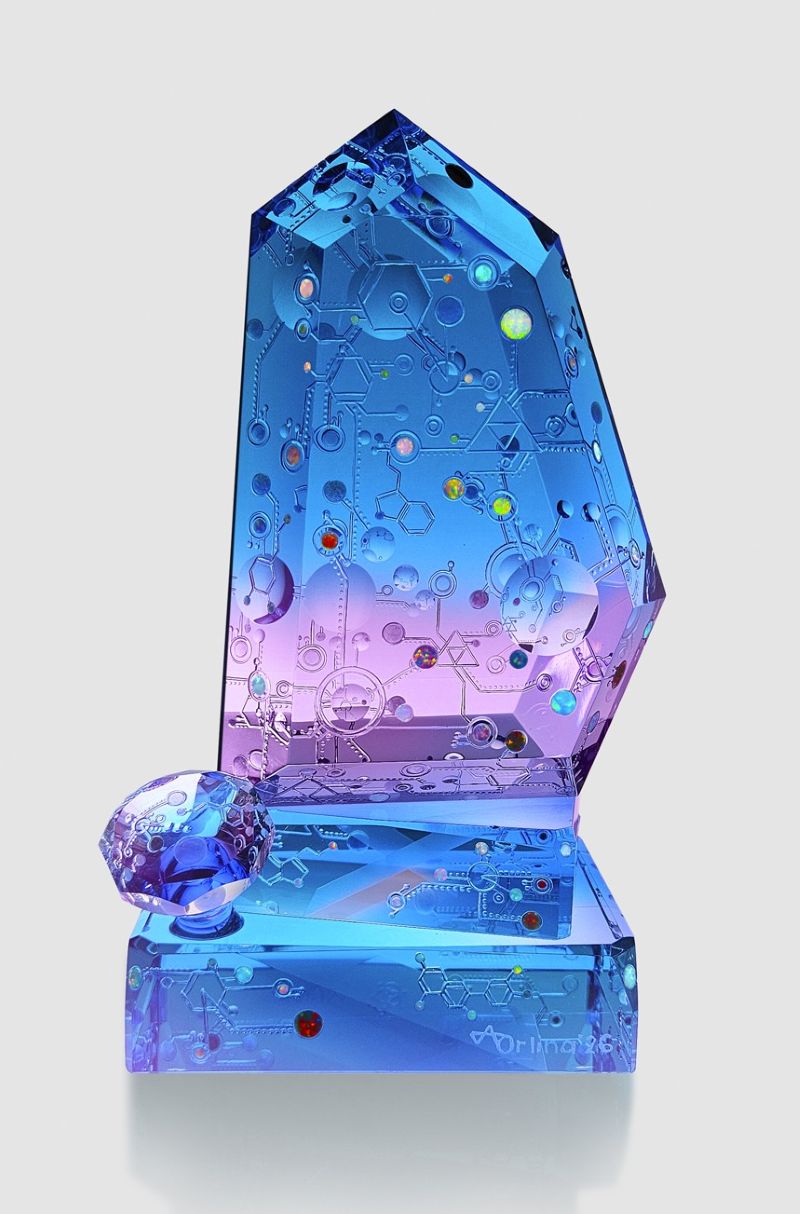
‘Shared Reflections,’ collaboration with David Trout, 24 x 13.5 x 11.5 cm, laminated coldworked glass, borosilicate glass, and 184 opals inlay, 2026
In what ways does this show reflect where you are now?
I think this show reflects who I am right now, both as a person and as an artist. The works include different elements of my background, experiences, the people that have influenced me, and the things that have shaped me.
At the same time, they also show how much I’ve grown over the years. I feel more confident in my techniques and in expressing myself through my work, so I think this collection is a good reflection of where I am in my life and in my growth as an artist.
Every sculptor faces pivotal moments in the studio. Was there a specific piece in this exhibition that served as a turning point or breakthrough for the entire collection?
I think my collaboration with David Trout, a Colorado-based artist who also works in glass, was a pivotal moment for this exhibition. It was my first time collaborating with another glass artist outside of my family, so it was a new experience for me.
It was really fun combining our different techniques and strengths and seeing what we could create together. It opened my eyes to new possibilities, and we’re both excited to hopefully make more pieces together in the future.
Working with three-dimension space requires a distinct connection to material. How do you select your materials, and how do they inform the themes of reflection in your work?
I usually start with the glass that I have available to me. The size of the glass often determines the size of the sculpture, and the colors I use also depend on what I have in the studio.
I actually enjoy working within those limitations, because it challenges me to be more creative and see what I can make with what I have. I also like using scrap glass from previous projects. Since I can laminate and bond smaller pieces together, I’m able to reuse them and turn them into something new instead of letting the glass go to waste.
In a way, I think that also connects to the idea of reflection—taking something that already exists and giving it a new form and meaning.
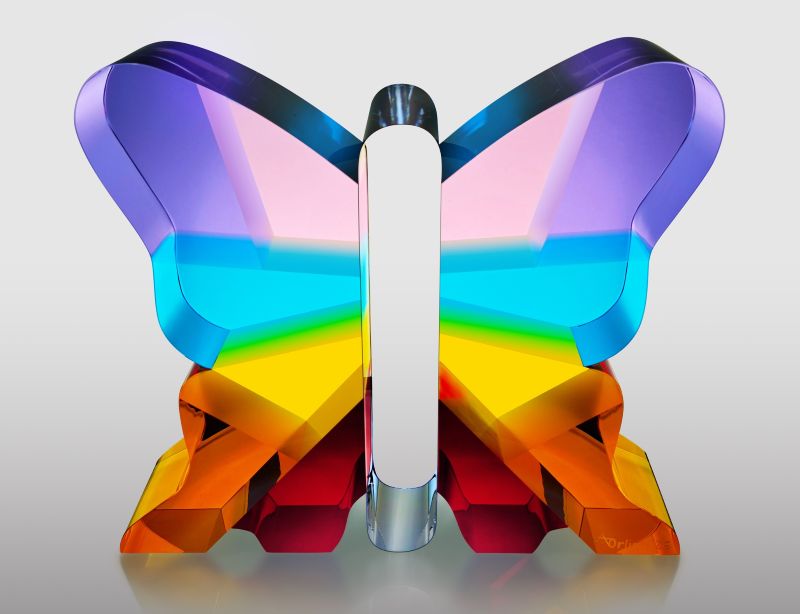
‘MARIposa,’ 28.2 x 33 x 10 cm, laminated coldworked glass, 2026
Sculpture is often a physically demanding and meditative process. Could you walk us through the life cycle of one of your signature pieces in this show—from conceptual thought to final polished form?
I usually start by asking if there is a theme. If there isn’t, I give myself a theme to work with. I find that having some limitations or boundaries actually makes it easier to focus on the concept.
From there, I start doodling and sketching ideas, either on paper with a pencil or on my iPad. The size of the piece is usually based on the size of the glass I have available.
Sometimes I’ll also look through the scrap glass we have and put different pieces together, almost like Lego, to see what fits and works well together. Once I have an idea, I make a more detailed sketch with the measurements and the shape of each piece of glass that I’ll be laminating together.
Then I start cutting the glass to size, grinding and shaping it, smoothing the surfaces, laminating the pieces together with glass glue, and finally polishing the glass. The order can change depending on what the design requires. It’s a very hands-on process, and there’s a lot of planning, adjusting, and refining along the way.
How do light, space, and the physical presence of the viewer factor into how you design these pieces?
I do think about how people will experience the pieces and where they might eventually be displayed. Since glass interacts a lot with light, I consider how the light will pass through or reflect on the sculpture and how it might look from different angles.
I also think about the size of the pieces. I’ve noticed that people tend to gravitate toward taller works, so I do consider that when designing. At the same time, I like to make pieces in different sizes so they can work in different spaces and homes.
I also want people to be able to move around the sculptures and see them from different angles, so the experience can change depending on where they are standing and how the light hits the piece.
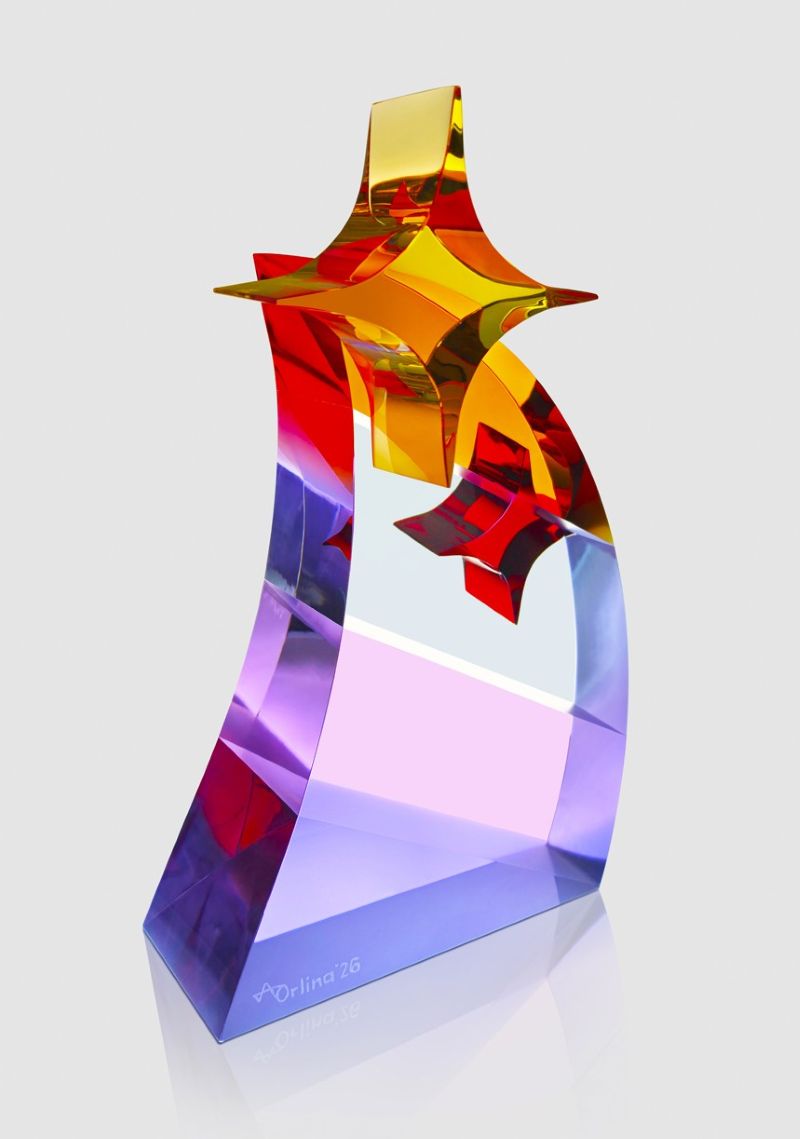
‘Kira, Watashi Wa Star,’ 32 x 21 x 14 cm, laminated coldworked glass, 2026
The title touches deeply on existence and identity. What internal conversations or life experiences were you wrestling with while creating these works?
I wouldn’t necessarily say that I was wrestling with anything while creating these works. For me, it was more about looking back and reflecting on my life—on the experiences, people, and circumstances that have shaped me into the person and artist I am today.
Creating this collection gave me an opportunity to pause and really think about where I came from and how those experiences have influenced the way I see things, the way I create, and even the way I approach my work.
There wasn’t necessarily one particular moment or experience that I was trying to resolve. It was more of a process of looking inward and recognizing the different parts of my life that have contributed to who I am today. In that sense, Reflections of Being is less about conflict and more about understanding, acknowledging, and appreciating the journey that brought me here.
RELATED STORIES
Landmark move: Orlina, leading Filipino artists bat for resale rights
What makes Orlina happy — at 80
And that was 2023: Ramon Orlina reveals priceless cars
Our afternoon with Ramon Orlina….
How do you hope the audience interacts with the concept of “reflection”—do you want them to see your story, or find mirrors of their own experiences in the sculptures?
I think I’d like the audience to experience both. We have mirrors in the exhibition space so people can see their own reflections alongside the sculptures, as well as see the different sides of the pieces as they move around them.
But beyond the physical reflection, I hope the things that have shaped me can also resonate with the people viewing the work. The experiences that have influenced who I am may be very personal to me, but I think everyone has their own experiences that have shaped who they are.
So while the collection is very much a reflection of my own life and journey, I don’t want the viewer to feel that they have to understand my story in order to connect with the work. I hope they can see something of themselves in it—a memory, an experience, or simply something that makes them pause and reflect on what has shaped them into the person they are today.
In that way, I think the sculptures can become a kind of mirror—not necessarily because they tell the viewer my story, but because they give them an opportunity to think about their own.
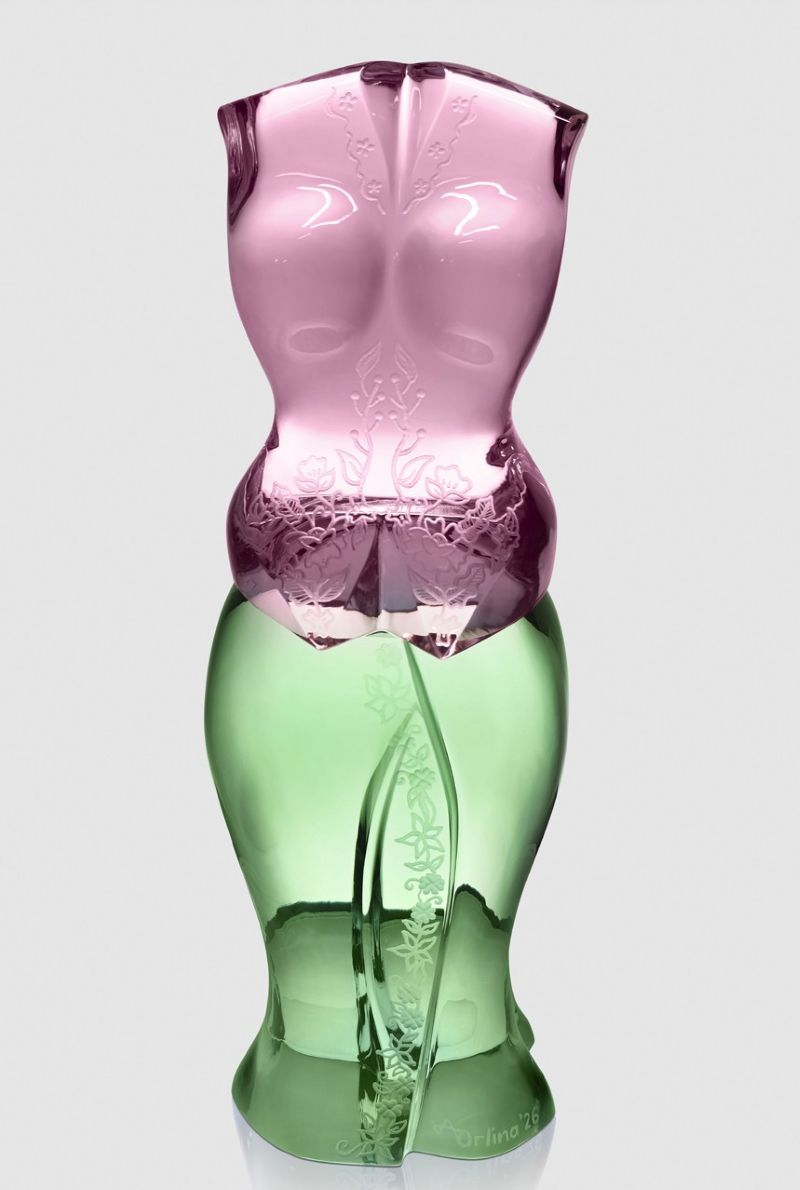
‘Kebaya,’ 36 x 13 x 10.5 cm, laminated coldworked glass, 2026
Stepping into the spotlight for a solo debut can feel vulnerable. What was the most challenging part of pulling this exhibition together, and what was the most rewarding?
I think the most challenging part was definitely the time. I had to start preparing for this exhibition almost a year in advance. I started working on the designs back in April, while also making pieces for other group shows, so finding the time to create a whole collection was challenging.
The most rewarding part, I think, is finally seeing all the pieces finished and together in one space. After months of designing and making the works, it feels really good to see everything come together and finally be able to share the collection with people.
How does it feel to see years of your creative growth consolidated into a single physical space?
It feels really nice to see so many of my works together in one space. Usually, I only make a few pieces every few months for different exhibitions, so I rarely get to see a large body of my work all together at the same time.
Seeing the whole collection together also makes me appreciate how much I’ve grown over the years, both in my techniques and in the way I approach my work. It’s really nice to be able to step back and see that growth all in one place.
Now that Reflections of Being is out in the world, what direction or themes are calling to you next?
I think what’s calling to me next is looking forward to what comes next ,and thinking about how I want to shape my future, both in my personal life and as an artist.
I’m also looking forward to developing my technical skills in glass and learning new techniques that I can bring into my future work. There are still so many things I want to learn and explore, so I’m excited to see where that takes me next.


