
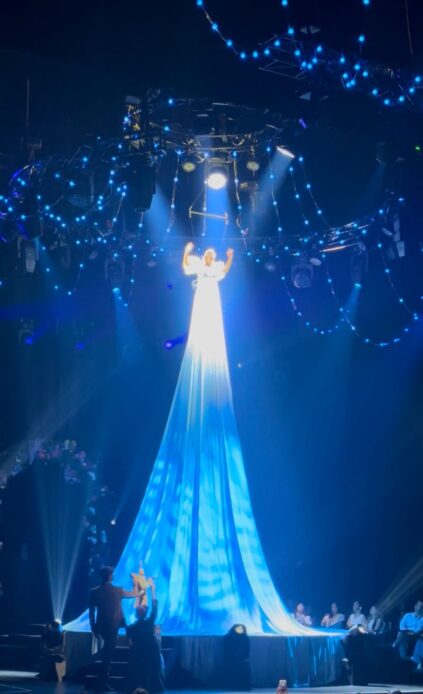
Cirque Alice brought audiences into a Wonderland where the extraordinary came not from magical creatures or fantastical worlds, but from the limits human beings could push beyond. Through remarkable strength, flexibility, and control, the performers turned the human body into a spectacle of its own.
Producers Simon Painter and Tim Lawson and director Lachlan Greenland made it the show’s clear objective. Rather than offering deeper themes for self-reflection or a narrative that challenged the audience to think, the show served as a breather, an invitation to set aside the analytical mind and simply be amazed. Lewis Carroll’s Alice’s Adventures in Wonderland served more as a visual framework for the circus acts than as a story the production sought to retell.
Creative directors Ash Jacks and Kirsty Painter reimagined The Theatre at Solaire as the Mad Hatter’s dinner party, with a raised platform at the center and tables and chairs arranged along either side. The setup brought the audience unusually close to the performers, making them feel less like distant spectators and more like guests at the Hatter’s table.
At first, the show followed the familiar story of Alice discovering the rabbit hole and falling into Wonderland, where she encountered its peculiar magic and shrank in size. One of the production’s more memorable visual moments came when Layla Rose Schillert, playing Alice, opened the performance with a vocal rendition of Flower Duet, as she rose toward the ceiling and the fabric of her signature blue dress extended far below her, creating the illusion that she was shrinking. Raphael Papo, as the White Rabbit, accompanied the action with live violin music, adding to the atmosphere and intensity of the unfolding scenes.
After Alice entered Wonderland, the show abandoned its narrative in favor of a series of circus acts featuring characters from Carroll’s classic. Cirque Alice used these familiar figures as a backdrop for performers to showcase the extremes of their acrobatic abilities. Angela Aaron’s costume design helped bring each character to life through colorful, playful, and imaginative looks, from skin-tight leotards and animal-ear headbands to an assortment of whimsical hats.
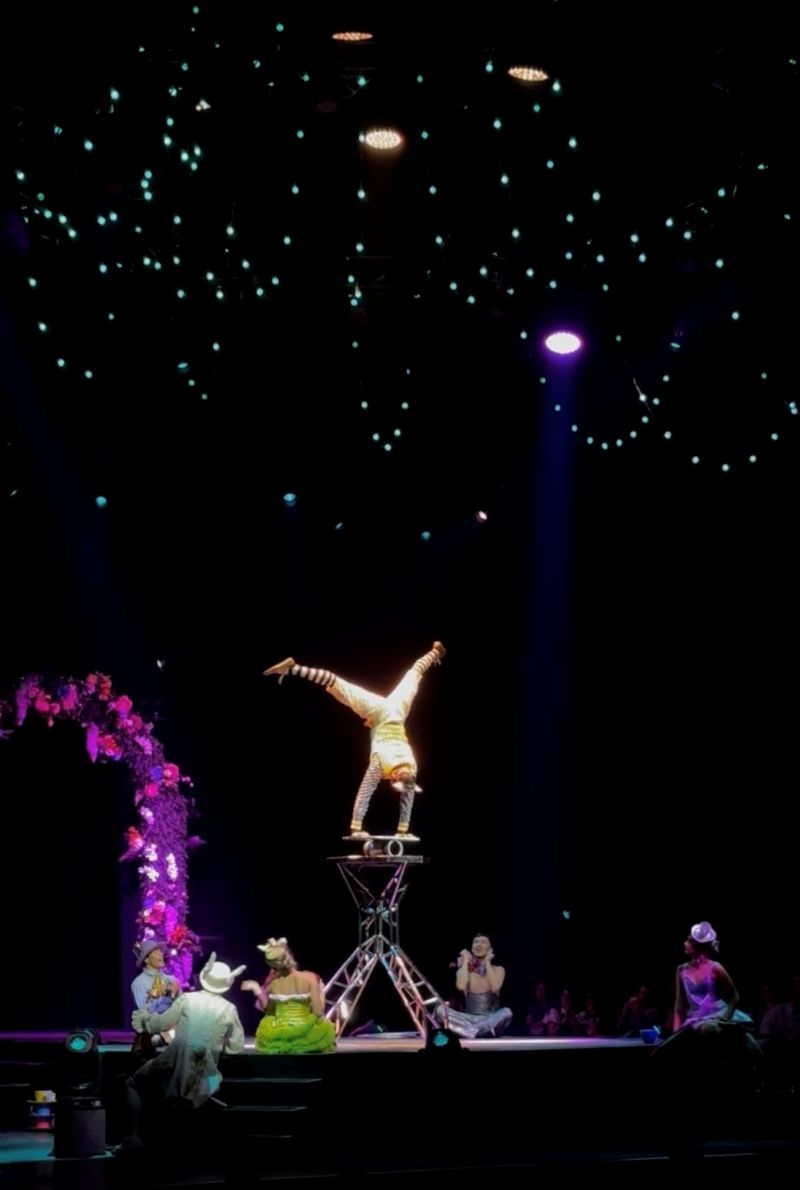
Balancing act by the Tweedles
The Tweedles, played by Temesgen Adole Zada and Leul Derreje Ashebir, set the tone with a display of acrobatic coordination. They came to the stage as human barrels, with one of them launched into the air, rotating repeatedly, and caught with the other’s feet. Every maneuver demanded precise timing and complete trust, making each catch feel precarious.
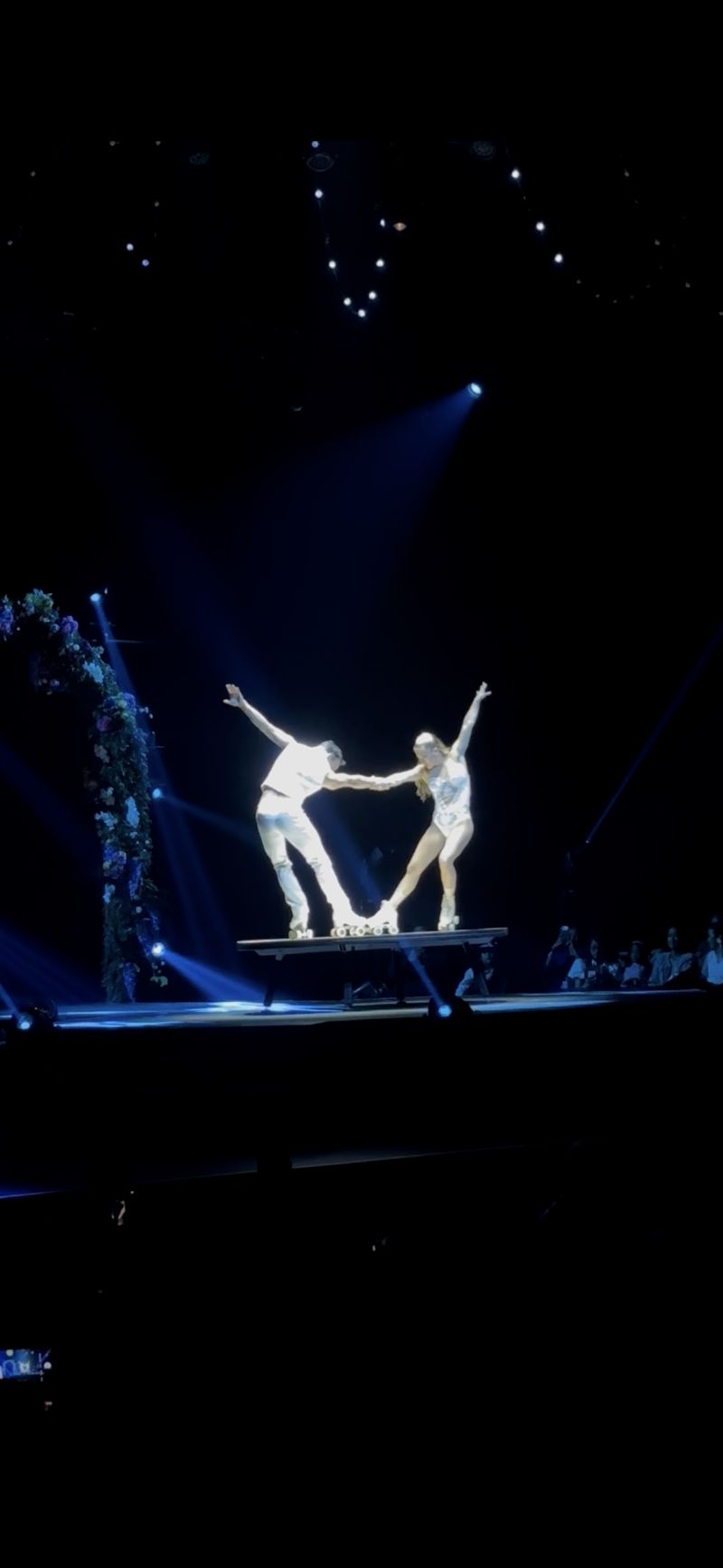
Figure-skating duo the White King and Queen
The White King and Queen, portrayed by figure-skating duo Mathieu Cloutier and Myriam Lessard, pushed the spectacle further. On a small, circular platform, they performed breathtaking stunts on roller skates, navigating the limited space with remarkable control. They raised the stakes by linking themselves with a neck brace, allowing one skater to suspend the other in the air as they spun together.
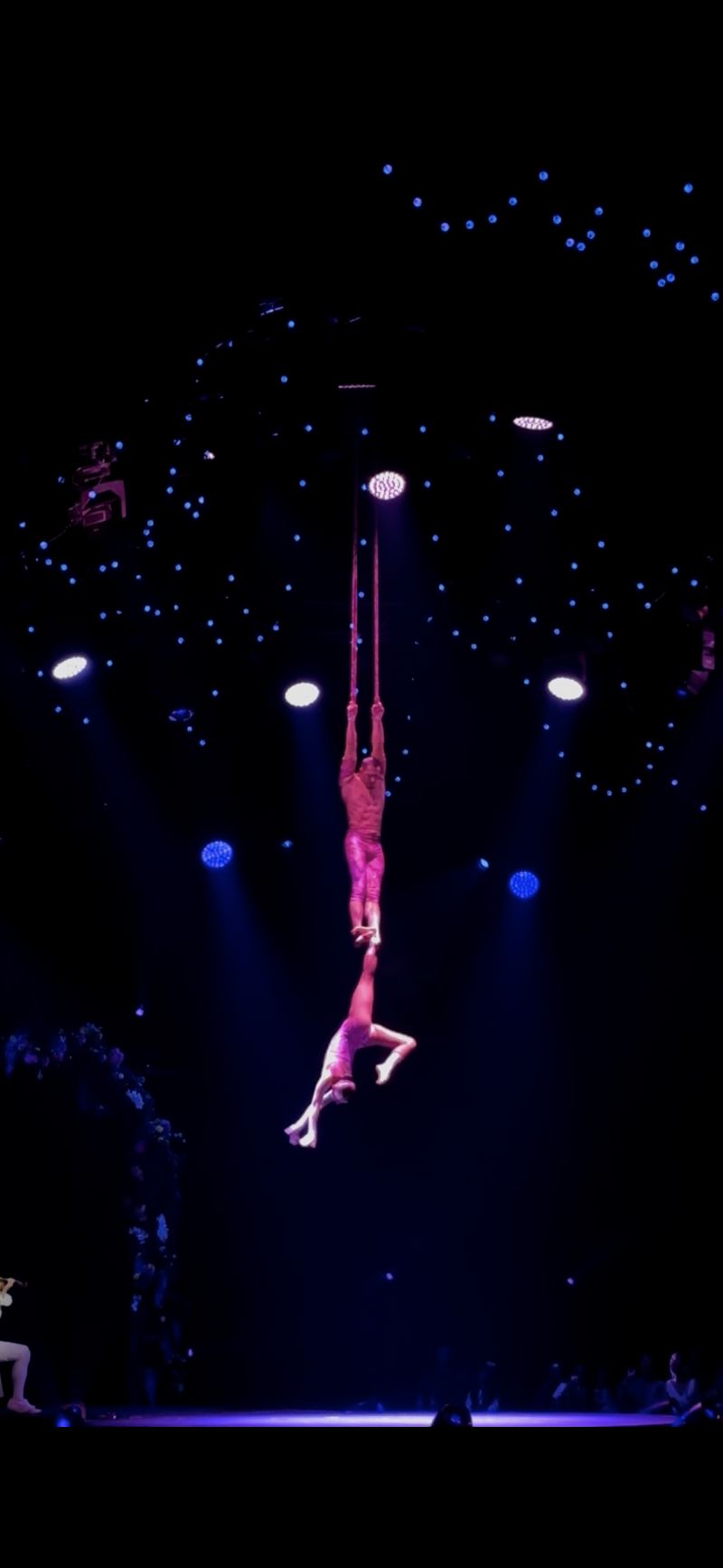
The Flamingos and their aerial rope act
The Flamingos, Anna Stelmakh and Evgenii Slepukhin, took their act skyward, using an aerial rope to suspend themselves above the stage. They balanced and supported each other through remarkably small points of contact, at times relying on a foot or a grip on the toes. The Knights, Fadhili Rashidi and Ibrahim Mwaimise, demonstrated another feat of strength and control: one carried his partner on top of his head, balancing his full body without any other kind of support.
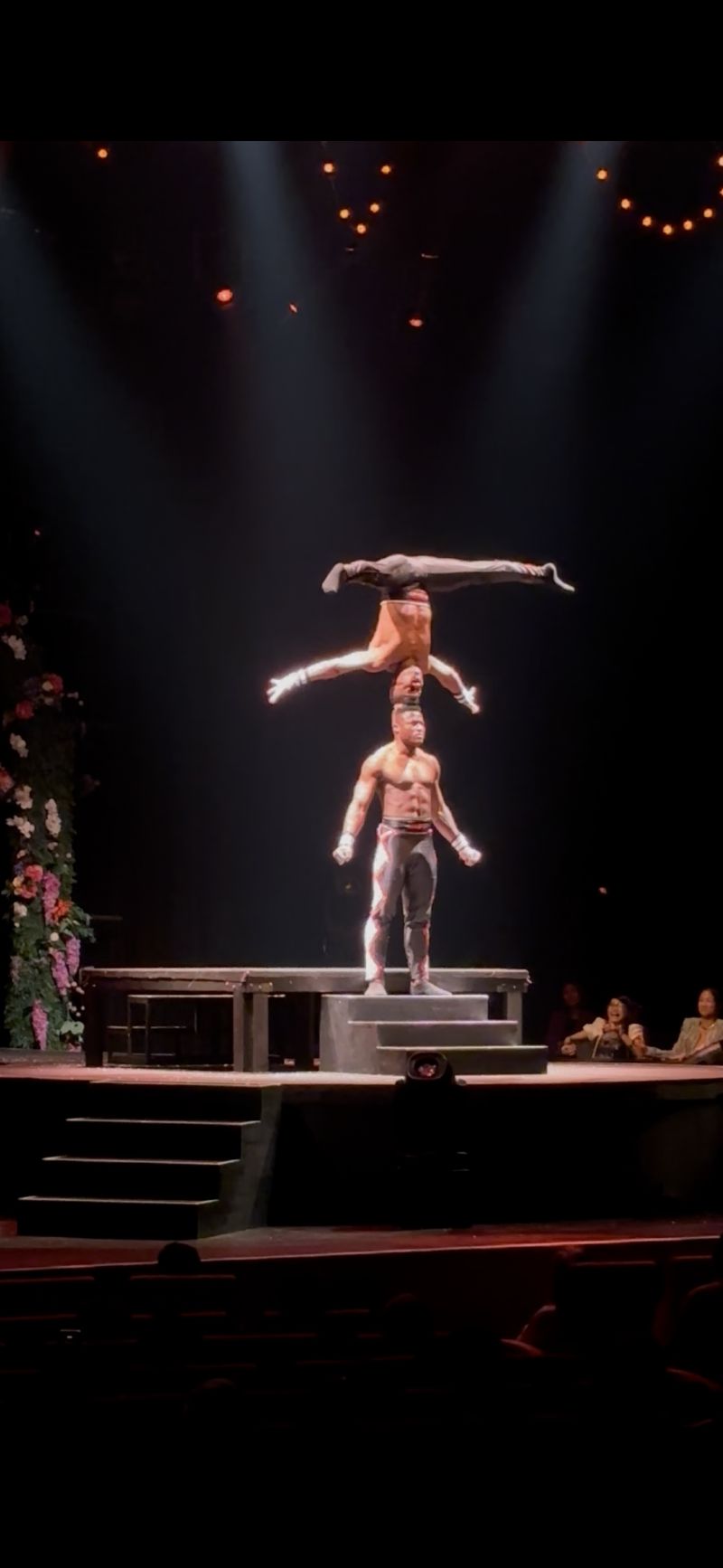
The Knights demonstrating strength and control
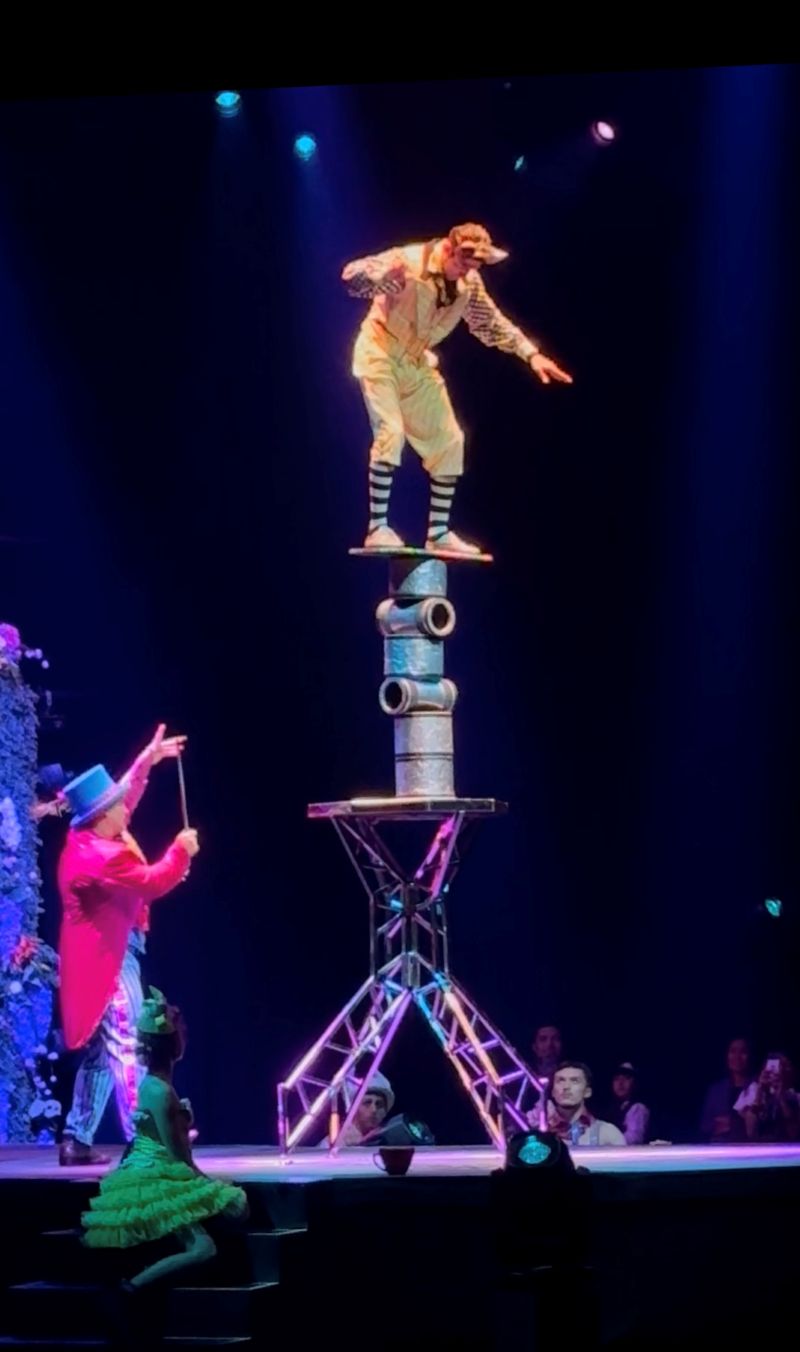
Other performers took the stage alone to showcase their individual skills. The March Hare (Viktor Hladchenko) spun himself inside a human-sized hoop, while the Snap-Dragonfly (Vladyslav Tsarov) maneuvered gracefully around a suspended pole, balancing on it with just one hand or his legs. But Daniel Onofre perhaps put balance to its greatest test. Wearing a charming mouse-ear headband as the Dormouse, he performed a feat far from little, standing atop a thin wooden platform balanced on stacks of small tubes. As he swayed from side to side to match the tubes’ shifting movements, the audience audibly shrieked, watching him maintain his balance on such an unstable structure.
Unlike most of the acts, which featured solo performers or pairs, the Caterpillar brought four acrobats together onstage. Munkhjin Tuvd, Bayarmaa Ganbat, Shinechimeg Otgonbayar, and Dolgorsuren Ganbold twisted and contorted their bodies in unison, using their matching costumes to form the recognizable shape of the caterpillar. The Cheshire Cat followed a similar approach, with multiple performers coming together to evoke the character through coordinated movements. However, its brief appearance left less time to appreciate the act compared with the other characters who received more extended turns onstage.
While the acrobatic acts kept audiences on edge, Cirque Alice also offered brief pauses from the physical feats through moments of comic relief. Darren Partridge’s Mad Hatter brought mischief and levity to the stage with his humor and magic tricks. In one particularly amusing bit, he squeezed himself inside a giant balloon, leaving only his head sticking out. He also invited two audience members onstage to join his tricks and perform silly dance moves, turning them into part of the spectacle. With the Mad Hatter encouraging everyone to play along, there was little room for shyness as the audience became just as much a part of the fun as the performers.
Cirque Alice also featured dance sequences that added variety to the show. Choreographer Dane Bates worked with lighting designer Hugo Mercier Bosseny to match the performers’ movements with well-timed changes in lighting, which helped set the mood for each scene. Some sequences felt passionate and daring, while others leaned into the show’s humor. Together, the choreography and lighting added movement and character to the show beyond its circus acts.


