
The 14th QCinema International Film Festival is from Nov. 13 to 22, 2026, at Gateway Cineplex 18, Robinsons Movieworld Galleria, Ayala Malls Cinemas TriNoma, Fisher Box Office, and SM Cinema–SM City Fairview.
A jeepney strike, a massive rally, a police station filled with protesters, later turning festive. Another rally, this time against censorship. One man took the microphone and hurled expletives like machine-gun fire against a common enemy—only, it turned into something close to stand-up comedy.
Lino Brocka was unstoppable and uncensorable in making films about the ills of society, the same way he took to the streets when he felt it was the fastest way to express his anger and frustration with the status quo.
In 21 years he did 64 films, many of them considered among the best in world cinema, studied and rediscovered by younger generations. He was only 52 when he died in a car accident. He could have done more to continue elevating cinema as art and critique of society.
This year’s QCinema International Film Festival brings back to the big screen the works of Brocka and other Filipino legendary directors, as part of its Rediscovery section: Brocka’s neo-noir film Jaguar, Mike de Leon’s Sister Stella L, and Lav Diaz’s first epic now celebrating its 25th year, Batang West Side.
Jaguar is an adaptation by Ricky Lee and Pete Lacaba of Nick Joaquin’s reportage, The Boy Who Wanted to Become Society, which was about the “Brown Derby Shooting” incident in 1960. Jaguar is the Filipino colloquial term for “guardia,” spelled in reverse. It follows the hard life of a poor security guard and the choices he makes to either survive decently or succumb to a life of crime. The film was screened in the 1980 Cannes Film Festival.
Brocka, Lee, and Joaquin have all been conferred the Order of National Artist of the Philippines in their respective disciplines.
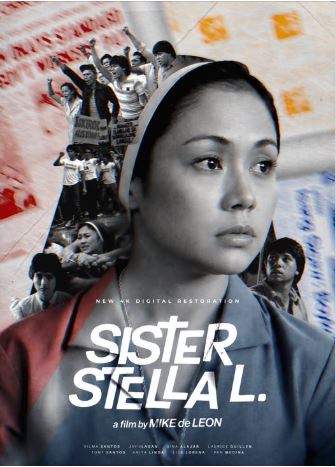
Promotional poster of Brocka’s ‘Sister Stella L’ (Photo from Film Development Council of the Philippines (FDCP) Facebook Page)
De Leon’s Sister Stella L is based on the real-life experiences of Sister Mary Rosary Battung and Sr. Mary Pilar Versoza during the tail-end of the Marcos regime. Both were exposed to the plights of factory workers and the protesters who defend their rights.
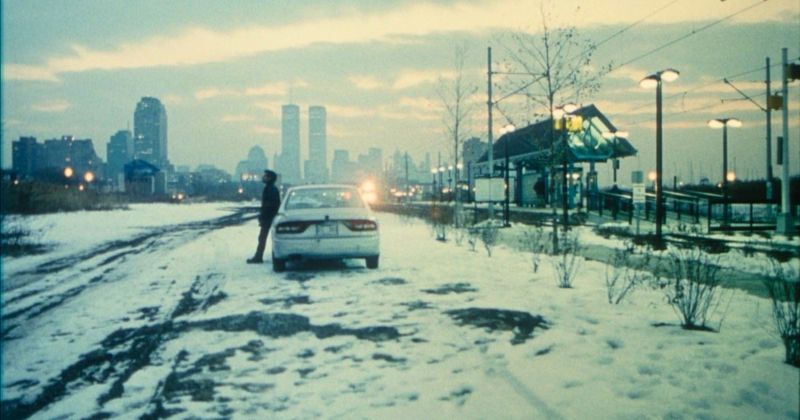
A publicity photo of Lav Diaz’s ‘Batang West Side’
Diaz’s Batang West Side is about two Filipino immigrants in Jersey City. One is a policeman who still carries the trauma of being a torturer of activists and rebels during Martial Law in the Philippines. He investigates the death of a young migrant kababayan.
Related stories:
‘I’m making films until I die’: The day I shot Lav Diaz
‘Ako pala’y isang hangal’—How John Lloyd Cruz’s ‘indefinite leave’ led to ‘emancipation’
QCinema is introducing “genre’teurs,” described in a statement as “a new curatorial concept that explores the intersection of genre filmmaking and the distinctive creative vision of individual filmmakers.
“A portmanteau of ‘genre’ and ‘auteur,’ Genre’teurs looks at films that work within recognizable genres while reflecting the personal style, perspective, and creative choices of their directors.”
“Genre gives filmmakers a framework, while the auteur brings a personal voice to that framework,” says Ed Lejano, QCinema artistic director. “With Genre’teurs, we want to look at films where these two elements come together as a pervading theme that cuts across the festival program. These are films that may belong to a familiar genre, but the way the filmmaker approaches the material makes the film distinctly their own.”
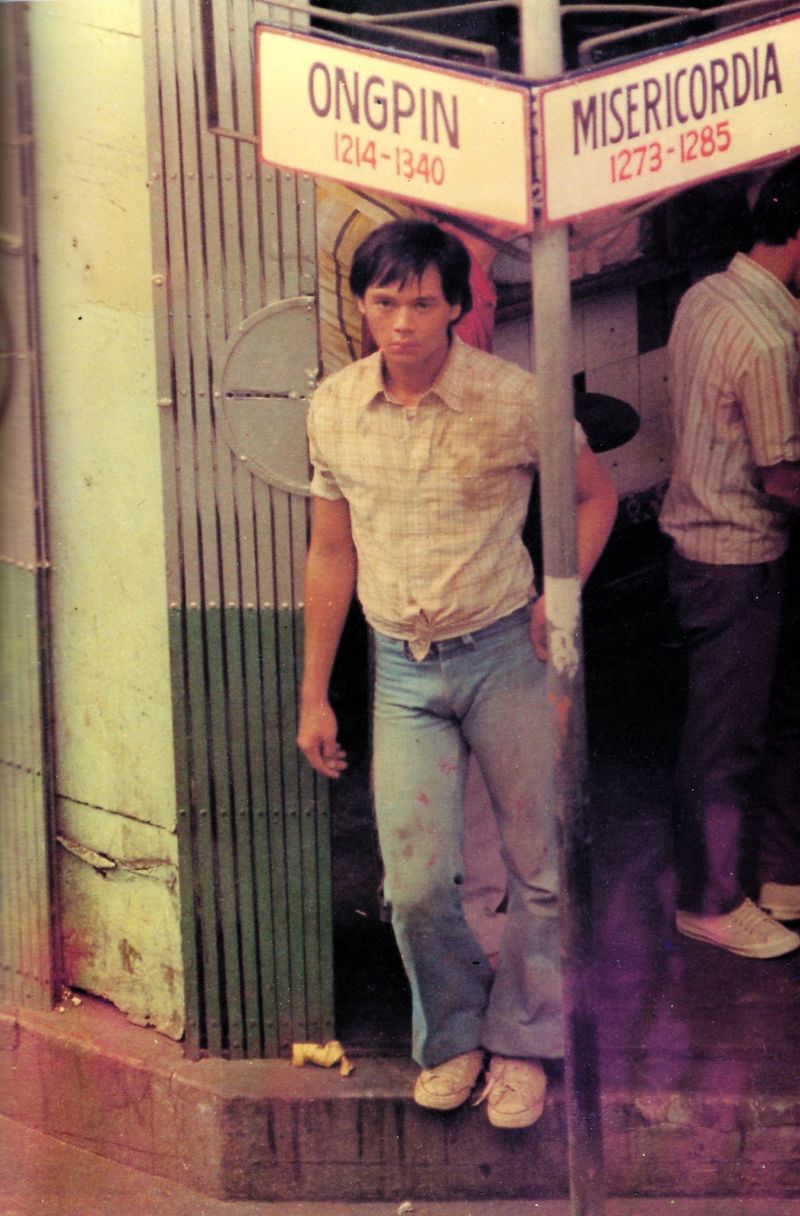
Bembol Roco as Julio Madiaga in Brocka’s seminal ‘Maynila, Sa Mga Kuko ng Liwanang,’ considered one the greatest Filipino films of all time
Brocka (1939-1991) was a genre-defying auteur who became the torchbearer of the second golden age of Philippine cinema. Critics and film historians were one in saying it was Brocka’s Tinimbang Ka, Nguni’t Kulang (1974) and his follow-up, Maynila Sa Mga Kuko ng Liwanag (1975), that inspired and influenced other filmmakers to make the shift from formulaic melodrama to sensible social realist films.
Brocka (1939-1991) was a genre-defying auteur who became the torchbearer of the second golden age of Philippine cinema
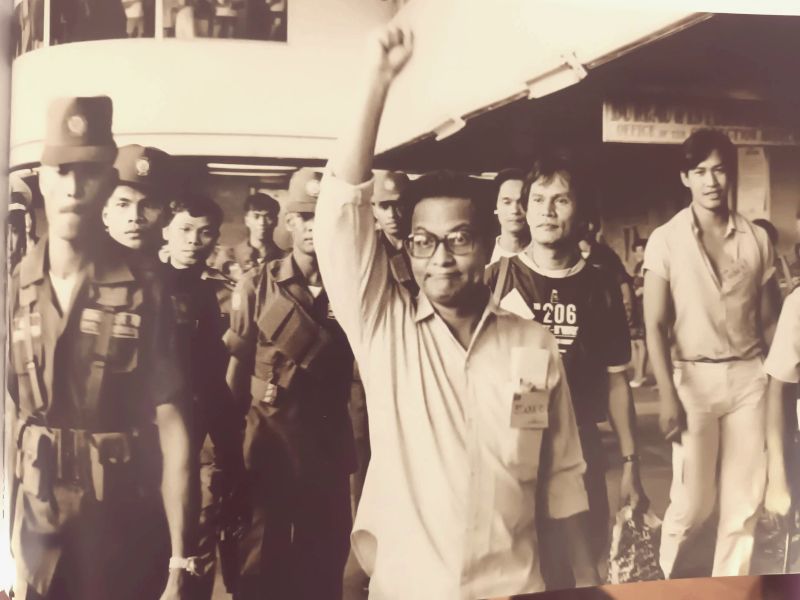
Lav Diaz was a police reporter in the 1980s when he first ran into Brocka. He shared with TheDiarist.ph his memory of the day Brocka, Behn Cervantes, and other activists were rounded up and arrested by cops from the Northern Police District on Jan. 28, 1985 for leading an illegal assembly, “following the forcible and violent dispersal of a demonstration held in sympathy with the jeepney strike called by the Alliance of Concerned Transport Organization.”
Diaz recalled, “May malaking jeepney strike noon. Organisado noon nang husto; pag may pagkilos, ang daming dumarating, yanig ang paligid, takot ang estado. May naganap na malakihang rally sa Cubao, at doon sumama sina Lino, Behn, at iba pa, bilang pakikiisa sa hinaing ng mga manggagawa sa mass transportation (There was a big jeepney strike, highly organized, mobilization big enough to scare the State forces. A big rally was held in Cubao, where Lino, Behn and others joined).
“Hinuli sila at dinala sa Northern Police District. Nang magkagulo na, hawak ng ilang pulis ang kanang kamay ni Behn at ang kaliwang kamay ay hawak naman ng ilang ralista. Panay ang talak ni Lino na bitawan nila ang mga kamay ni Behn. Hinihintay na lang ng lahat na mapigtas ang mga kamay ni Behn dahil umigting ang hilahan (They were arrested and hauled to the Northern Police District. In the melee, the police held Behn’s right hand as his other hand was held by the rallyists, like in a tug of war. Lino was shouting at the police to let go of Behn. The tugging and pulling by both sides got worse).
“Ang daming hinuli siyempre. Dahil nga sina Lino, Behn at ibang maiingay ay nasama sa mga hinuli rin, at inilagay sa seldang napakaraming poging preso, masaya. Ang daming dumalaw sa NPD, mga artista, mga direktor, mga producer, mga nasa production, mga nasa akademia, mga pulitiko, mga aktibista, mga samahan ng mga bakla at paru-paro at tipaklong, naging malaking piyesta ang nangyari, daig pa ang Ati-atihan. Ang daming pagkain, ang daming kantahan, sayawan, tawanan, tsismisan, harutan (Many were arrested and detained, including Lino and Behn. Artists, directors, producers, production staff, even gay groups visited them at NPD. The jail became one big fiesta, rowdier than Ati-atihan.)
“Naging saksi lang ako sa tabi-tabi. Isa lang naman akong reporter noon, sa police beat at pasulat-sulat ng film reviews sa ilang babasahin at music at concert reviews sa Jingle (I was just a bystander, a police beat reporter, and on the side for Jingle, writing music and concert reviews).”
The news of the detention of Lino and company reached President Ferdinand Marcos, and foreign media like The New York Times reported it.
Brocka, Cervantes and friends attended hearings from Feb. 1 to 7, 1985, and were eventually released on Feb. 14, 1985, Valentine’s Day.
Diaz was a full-time reporter who never had the chance to work with Brocka. It would be several years later when Diaz would plunge into filmmaking, long after Brocka’s death.
He said, “Wala, ni minsan ay ‘di kami nakapagkuwentuhan, o nagkakilanlan man lang; masyado akong mahiyain noon…Nahihiya akong lumapit sa kanya; sa ilang pagkakataong may puwang na kilalanin siya o kausapin, hindi ako nagtangkang lumapit (I never did get to sit down and talk with him. I was too intimidated to get close).
“Si Behn Cervantes, naging malapit kami, nangyari ito noong naging OFW na ako sa New York. Di pa OFW ang tawag sa aming mga manggagawang lumalabas noon; overseas contract worker (OCW) pa (It was with Behn that I got close to, when I moved to New York as an overseas contract worker).”
It was while working in the US that he developed the script for Batang West Side.
The late, great Mike de Leon was producer and cinematographer of Brocka’s 1975 masterpiece, Maynila Sa Mga Kuko Ng Liwanag, now considered among the greatest films of all time by The Criterion Collection. They were friends and had a healthy competition in the following years.
De Leon recalled that before Brocka’s arrests, there were warnings from friends. Brocka was very brave, brutally frank in criticizing Imelda Marcos.
In his memoir, Mike De Leon, Last Look Back, he wrote, “It was Lino’s celebrity and outspokenness in anti-Marcos rallies that eventually led to his arrest. Producer Marichu Maceda told me to warn Lino about his attacks on Imelda. She quoted Imelda—‘Sabihin mo kay Lino tumigil na siya, kundi pakukulong ko na siya.”
Eventually, De Leon and Brocka’s relationship turned cold during the Cory Aquino administration.
As an activist who created social realist-themed films, Brocka didn’t take sides. He kept on exposing the ills of society no matter who the powers-that-be were. He was a staunch critic of the Marcos conjugal dictatorship and later, even the Cory Aquino administration.
De Leon said that coming from the trauma of surviving of Martial Law and the dictatorship, people should give President Cory a chance, but Brocka was unfazed when he felt there was something wrong with how things were being handled by the new leaders, especially when the issue was censorship.
We quote De Leon: “After the People Power revolt, I withdrew from any political involvement completely, naively thinking that the country would start healing itself and there was no further need to make political films. But Lino didn’t stop, and our relationship soured when he started attacking the Cory Aquino government. I wanted him to give the new government a chance, but he would have none of it.”
De Leon added, “When he and Sister Stella L. writer Pete Lacaba slanted their attacks on chief censor Manoling Morato by implicating his personal life, I told Pete they were crossing a line, they should stick to the issues of censorship. I also had my clash with Morato about a political music video I made. Nevertheless, I believed that his personal life was off-limits. Lino stopped communicating with me after that. Sadly, we never got to clear the air between us before his untimely death in 1991.
“But Lino, as in many instances in our long friendship, turned out to be right. The social order hardly changed after the revolt. All we did was get rid of a dictator and his family, and we didn’t even do it properly. The Marcoses should have stood trial and been thrown into jail.”
Mike de Leon: ‘Lino turned out to be right…The social order hardly changed after the revolt. All we did was get rid of a dictator and his family, and we didn’t even do it properly’
Lav Diaz was there, and he vividly remembers it was also the last time he saw Brocka. It was at a rally sometime in 1988, denouncing the decisions of the Movie Television Ratings and Classification Board, headed by the conservative Morato. The anti-censorship rally was reportedly held in front of a family-owned building where Manoling lived, along Tomas Morato Avenue, Diliman, Quezon City.
At the time, Brocka’s latest film, Macho Dancer, had an X-rating, meaning it was not fit for commercial release.
Diaz recalled, “Umakyat si Lino sa ibabaw ng jeep, abot-langit ang pagmumura niya kay Manoling, mas maanghang pa sa pinakamaanghang na sili, mas maasim pa sa pinakamaasim na suka, at masyadong ad hominem, wala sa isyung pinag-aawayan minsan (Lino stood atop the jeepney, cursing Manoling to the high heavens, his words spicier than chilli, more acidic than vinegar, and very personal in foul language)!”
Diaz was editor of the culture and arts section of a Tagalog tabloid when he learned of Brocka’s demise.
“Noong gabing mamatay siya, May 22, 1991, natutulog kami sa sahig ng opisina ng Journal Group of Companies, sa pier; nasa editorial team na ako ng People’s Taliba noon, hawak ko ang pahinang pangkultura, ang Tagalog na dyaryo ng Journal (The night he died, we were sleeping over in the office at Journal Group of Companies. I was doing the culture page of People’s Taliba).
“Madalas kaming matulog doon kapag paspasan sa deadline, tapos kakain sa labas, mag-iinuman, babalik at hahabulin pa ang ibang gawain…Bandang mga alas dos ng madaling araw, may dumating na reporter ng People’s Tonight, sumisigaw: Si Lino Brocka, patay! Si Lino Brocka, patay na!…Lahat kaming mga natutulog roon, p (ati na ang mga nakatoka sa People’s Tonight nang gabing iyon ay nagtayuan, tahimik, para kaming nabuhusan lahat nang malamig na tubig, di alam ang gagawin, ‘di alam ang sasabihin, waring may bumagsak na kung ano at waring napakabigat (We’d do all-nighters often in the office to meet deadlines. Then suddenly that night, the People’s Tonight reporter burst into the office, shouting that Lino Brocka had died. The office fell silent, as if a heavy weight had fallen on the room).”
National Artist for Film and Broadcast Arts Ricky Lee, in an article (June 9, 1991, Sunday Inquirer Magazine), explained how Lino remained committed to the cause of the suffering Filipinos, especially the masses. It was the first and perhaps the only time Inquirer Magazine ran an article in Filipino.
“Para kay Lino, ang isang filmmaker ay hindi lang isang artist kundi isang mamamayan din ng kanyang bansa. Kung ang ibang direktor ay kuntento sa pagdidirek lang, si Lino, ginagamit niya ang pagiging direktor para masabi ang dapat sabihin tungkol sa tao at sa lipunan,” wrote Lee. (For Lino, a filmmaker is not just an artist but also a citizen. If other directors are content with directing, Lino uses his being a director to say what has to be said about people and society.)
It was Lee’s tribute piece, titled Si Lino, Kung Minsan, after his long-time friend passed away on May 22, 1991 at age 52.
Lee wrote that Brocka was at the peak of his career: “Sabay-sabay ang mga pelikulang ginagawa, hindi gaya noong mga 1985 na bagsak siya at walang kumukuha dahil may image na seryoso. Ngayon ay okupado siya hanggang sa kalagitnaan ng susunod na taon.” (He was doing many films at the same time, not like in 1985 when nobody was hiring him because he was too serious. Now he was occupied until the middle of the next year.)
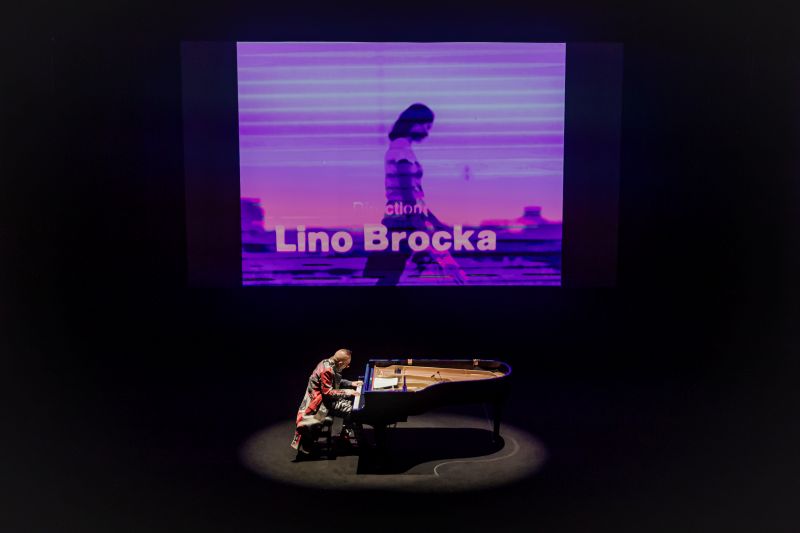
Khavn dela Cruz curated a 21-film Lino Brocka retrospective in Lisbon, Portugal in October 2026. He is shown here providing live piano accompaniment for his documentary titled ‘Lino Brocka: National Anarchist.’
He continues to influence the younger generations of filmmakers, not only in the Philippines but abroad. The most recent tribute was a comprehensive 21-film Lino Brocka Retrospective that ran from Oct. 15 to 25, 2026 at Doclisboa and the Cinemateca Portuguesa in Lisbon, Portugal, curated by Filipino auteur Khavn De La Cruz.
He continues to influence the younger generations of filmmakers, not only in the Philippines but abroad
Titled Lino Brocka: Matem o Artista Nacional (Lino Brocka: Kill the National Artist), 20 films shown included Wanted: Perfect Mother (1970), Tinimbang Ka Nguni’t Kulang (1974), Maynila: Sa Mga Kuko Ng Liwanag (1975), Insiang (1976), Ang Tatay Kong Nanay (1978), Gumising Ka, Maruja (1978), Ina, Anak, Kapatid (1979), Jaguar (1979), Bona (1980), Dalaga Si Misis, Binata Si Mister (1981), Cain At Abel (1982), Bayan Ko: Kapit Sa Patalim (1984), Ano Ang Kulay Ng Mukha Ng Diyos? (1985), Ako at Royal, Natural! (1987), Signed: Lino Brocka (1987), Macho Dancer (1988), Orapronobis (1989), Oca (1990), Gumapang Ka Sa Lusak (1990), and Sa Kabila Ng Lahat (1991).
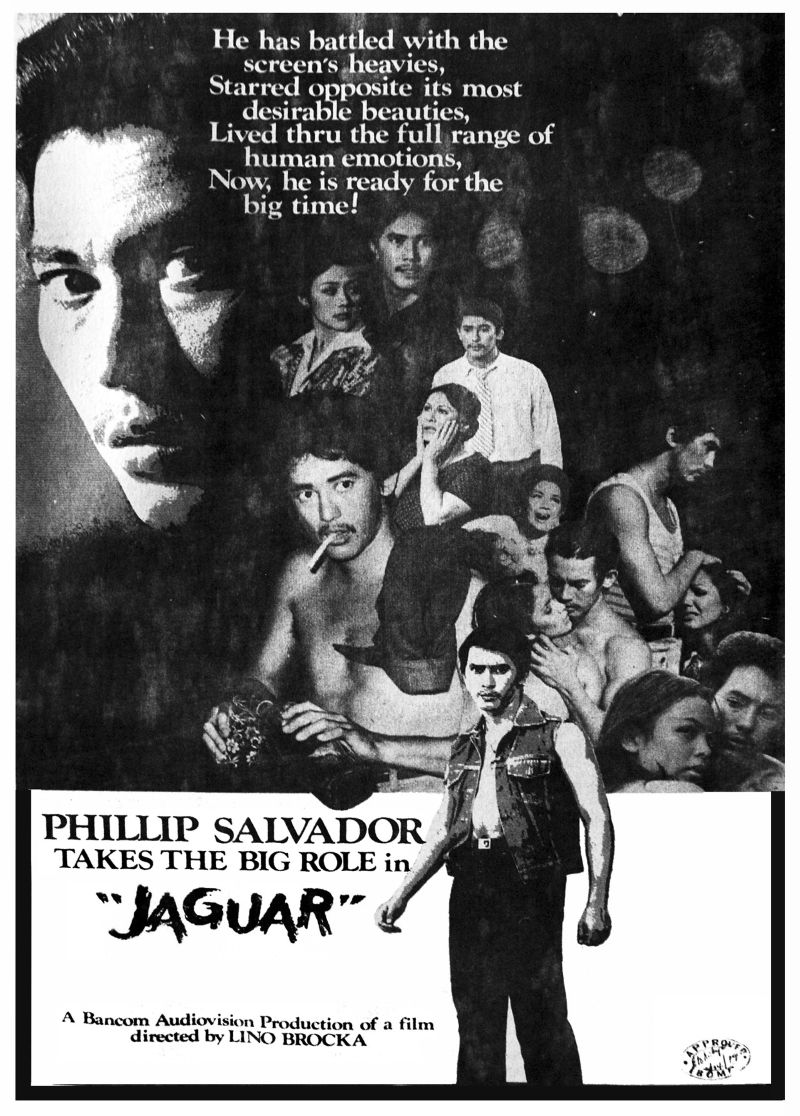
A poster of Brocka’s ‘Jaguar’ in the early 1980s
Jaguar was shown on 35mm format.
The 21st film was Dela Cruz’s experimental documentary, Lino Brocka: National Anarchist, wherein Dela Cruz played live piano as music accompaniment. This docu had its Philippine premiere at QCinema in 2024.
For this year, Dela Cruz’s Bomba Bernal will be part of the QCinema documentary section, Dokyu Days.
De La Cruz also leads the avant-pop rock band The Brockas with Lav Diaz and Roxlee.
Besides Jaguar, Sister Stella L, and Batang West Side, this year’s QCinema’s Rediscovery section also features Amores Perros by Alejandro González Iñárritu.
Diaz’s newest film, Makikiraan Po, will also be shown. It won the Premio Brian Award in Venice and the Critics’ Choice Award at Filmfest Hamburg. It will screen under the Screen International section for its Southeast Asian premiere.
For the main competition, Asian Next Wave, there’s The Burning Giants, a science-fiction drama by Thai filmmaker Phuttiphong Aroonpheng, which had its world premiere in the Orizzonti competition in Venice. It was also selected for the QCinema Project Market in October 2023.
For its Asian premiere, Lebanese filmmaker Rami Kodeih makes his feature directorial debut with Furies. The film also recently premiered in Venice and is Lebanon’s entry for the Oscars next year.
Vintage Violence, a stylized, action-packed rom-com set in Tokyo and toplined by Cole Sprouse, just premiered in Toronto’s Midnight section and is slated as one of the top films in QCinema’s Before Midnight.
Other remarkable genre permutations include I Love Paris, a vampire mockumentary that won the Audience Award at the Fantasia Festival last August, and The Unknown, starring Léa Seydoux, awarded the Prix Jean Vigo in Cannes. Both titles will have their Asian premieres at QCinema.
For updates and the full schedule, visit qcinema.ph or follow QCinema on social media at @qcinemaph.


