
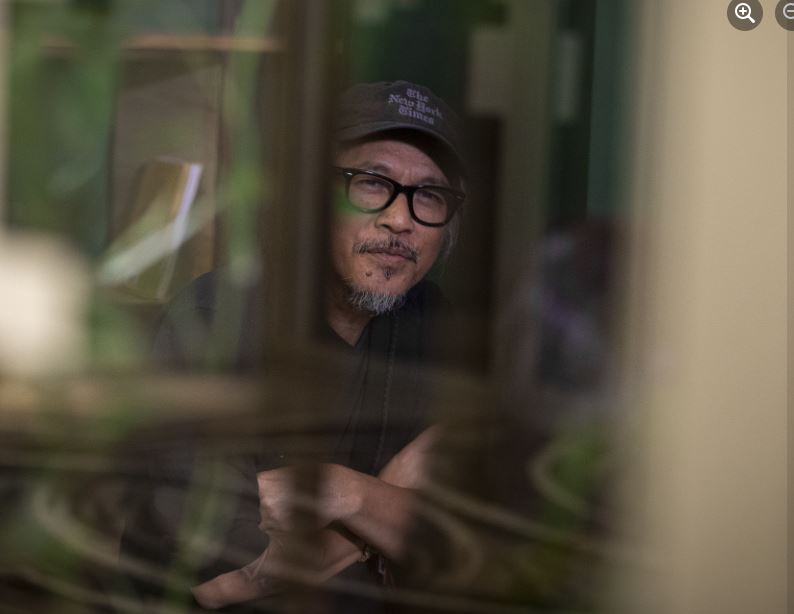
(Phantosmia, Makamisa, Moneyslapper, and Directors’ Factory are showing until Nov. 17, 2024, Sunday at Gateway Cineplex, Trinoma, Robinson’s Magnolia, Shangri-La Plaza Red Carpet and Powerplant Mall. Check QCinema website https://qcinema.ph/schedule.)
If auteur Lav Diaz were a brand in filmmaking, it would be something like punk rock. Not the Green Day or Offspring type, but the irreverent, unpredictable, pleasantly loud pioneers like The Sex Pistols or The Clash—irreverent to the point of being banned by the censors for unpredictable use of black-and-white aesthetics, and loud in terms of socio-political themes that people could equate with inciting a revolution.
Initially a purveyor of the subculture or what once was called the “indie scene,” Diaz created epic black-and-white, Zen-like cinematic gems which film lovers here and Europe now want to experience—Europe, specifically festivals in Venice, Locarno, Vienna, Berlin, Cannes, where Diaz is described as a “rockstar.”
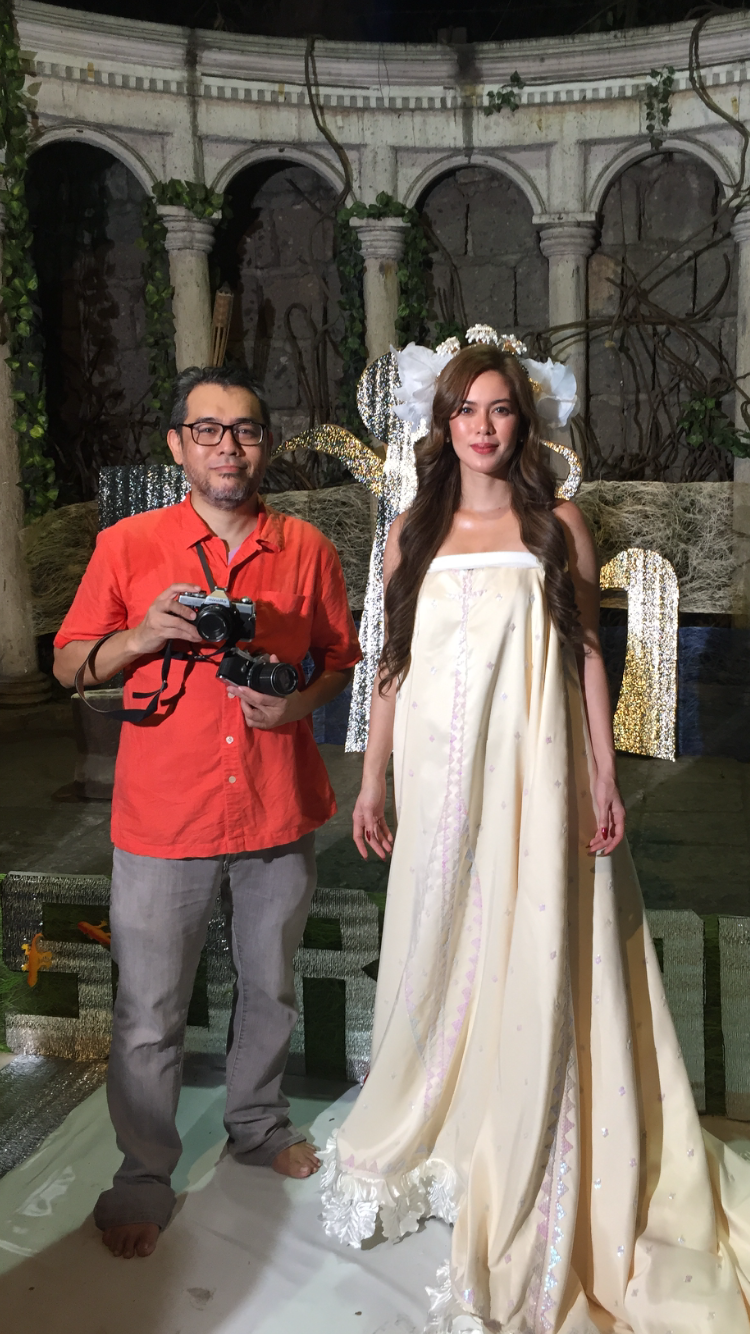
The author as “fashion photographer” with Shaina Magdayao in Lav Diaz’s “Essential Truths of the Lake”
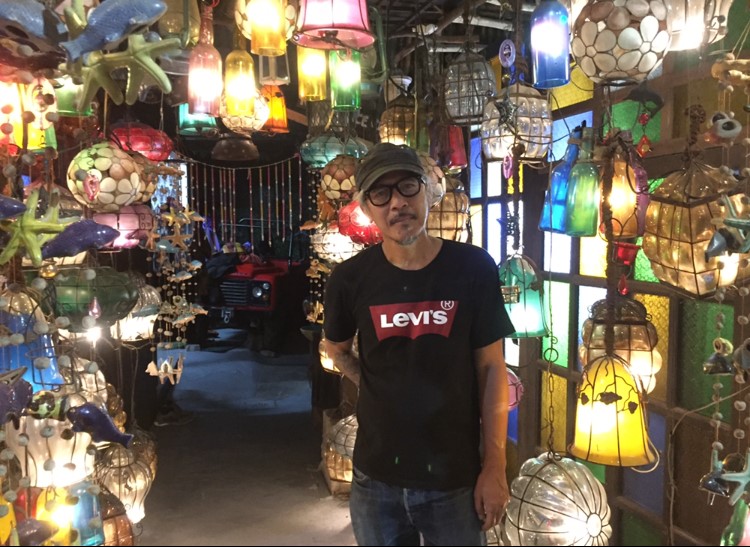
Lav Diaz some time in December 2022, during the shoot of “Essential Truths of the Lake” in a bakery cafe in Marikina City (Photo by Totel V. de Jesus)
Popular Filipino actors who worked with him, like Dolly de Leon, John Lloyd Cruz, Piolo Pascual, Shaina Magdayao, Agot Isidro, Ronnie Lazaro, the late Cherie Gil, and most recent, Janine Gutierrez, would attest to how people on the streets of Venice, Cannes, or Locarno would stop for a selfie or small talk—not with them, but with Diaz.
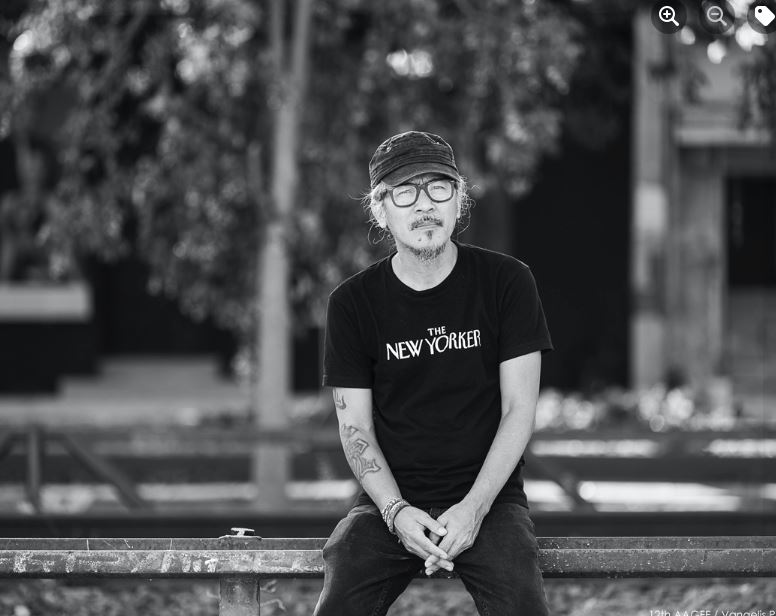
Lav Diaz in Athens, Greece in June 2022 when “Historya Ni Ha'”was shown (Image by Vangelis Patsialos, Photo courtesy of Sine Olivia Pilipinas)
Dolly de Leon acknowledged how her role as a commercial sex worker in Diaz’s Historya Ni Ha (History of Ha) was instrumental in drawing the attention of European filmmakers to her. Eventually, she played an OFW on a cruise ship in Ruben Östlund’s Triangle of Sadness, which opened doors for her in the international scene.
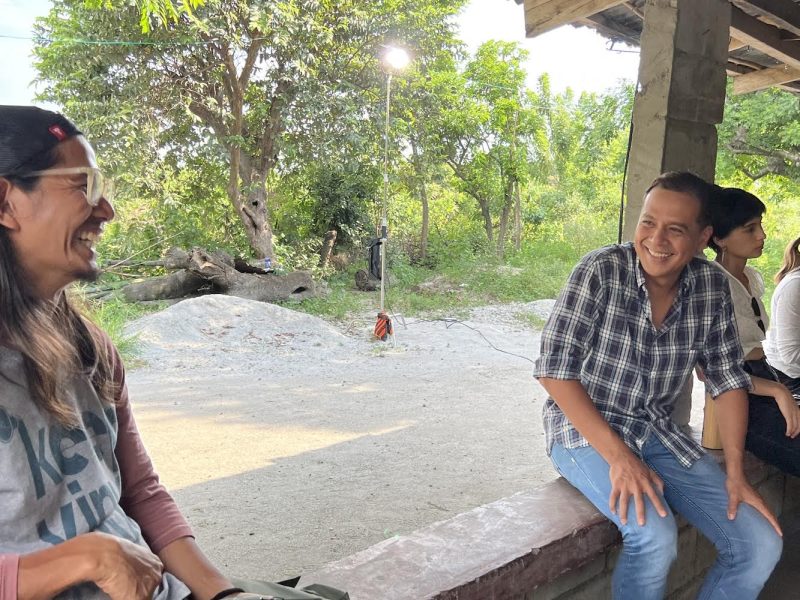
Director Bor Ocampo shares a laugh with John Lloyd Cruz, co-actor Jasmine Curtis-Smith behind him (Photo courtesty of Paralaya Studio)
The same was the case with leading theater-film-television actors Bart Guingona and Soliman Cruz. Romanian writer-director Mihai Mincan of To The North, another film on Filipino seafarers played by Guingona and Cruz, is a self-confessed fan of Diaz. Mincan said in an interview how he discovered Cruz and Guingona in Diaz’s movies. John Lloyd Cruz has done seven films with Diaz, and has said in interviews how liberating and nurturing it has been since he started working with Diaz.
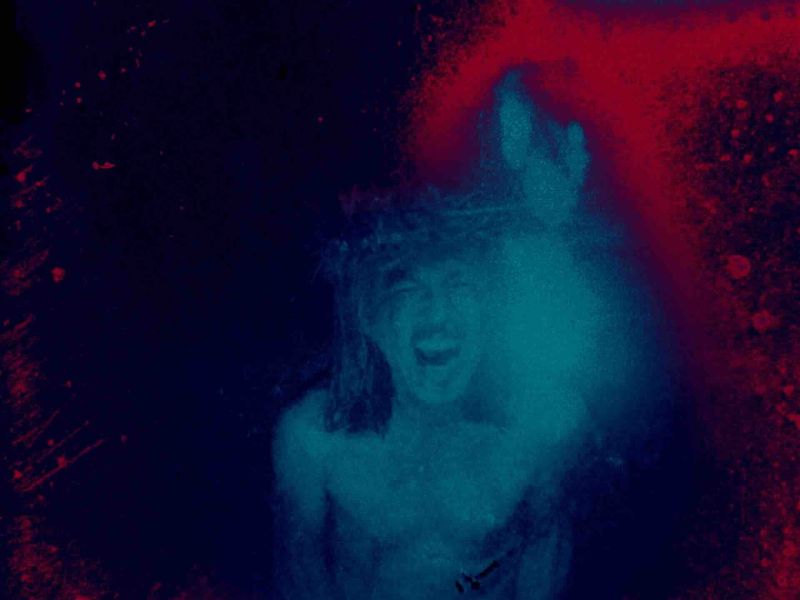
The QCinema International Film Festival, running until Sunday, November 17, has two films featuring Diaz as actor: Bor Ocampo’s Moneyslapper, and Khavn dela Cruz’s Makamisa: Phantasm of Revenge. Makamisa, a documentary inspired by the unfinished novel of the same title by Jose Rizal, debuted at FIDMarseille International Film Festival in June this year. It has John Lloyd Cruz playing a poet, with Diaz as a castrated priest, and German actress Lilith Stangenberg as a crazy American woman.
Related stories:
‘Ako pala’y isang hangal’—How John Lloyd Cruz’s ‘indefinite leave’ led to ‘emancipation’
From Kamias Road to Europe: On the set with filmmaker Khavn de La Cruz

Jasmine Curtis-Smith before shooting a scene for “Moneyslapper” (Photo courtesy of Bor Ocampo)
Moneyslapper, starring John Lloyd Cruz, who was also creative producer, has its world premiere at QCinema. In the cast are Jasmine Curtis-Smith, Charlie Dizon, Ronnie Lazaro, Susan Africa, Malou Crisologo.

A break from the shoot of “Moneyslapper.” From left, Bor Ocampo, Lav Diaz, cinematographer Larry Manda and John Lloyd Cruz (Photo courtesy of Paralaya Studio)

Lav Diaz essays the role of a preacher in Bor Ocampo’s “Moneyslapper” (Photo courtesy of Bor Ocampo)
According to QCinema’s synopsis, the film is about “Daniel (John Lloyd Cruz), who immediately leaves his life behind in Porac, Pampanga, upon winning the biggest cash prize ever in the lotto. After five years of living a life of luxury and traveling around the world, he returns to his hometown to pay some debts, settle old scores, and do right by some people, all the while not realizing what he has become, or what wealth has turned him into.”
View this post on Instagram

Janine Gutierrez and Tanghalang Pilipino Actor’s Company member Arjay Babon in a scene from Lav Diaz’s “Phantosmia” (Photo from Sine Olivia Pilipinas)
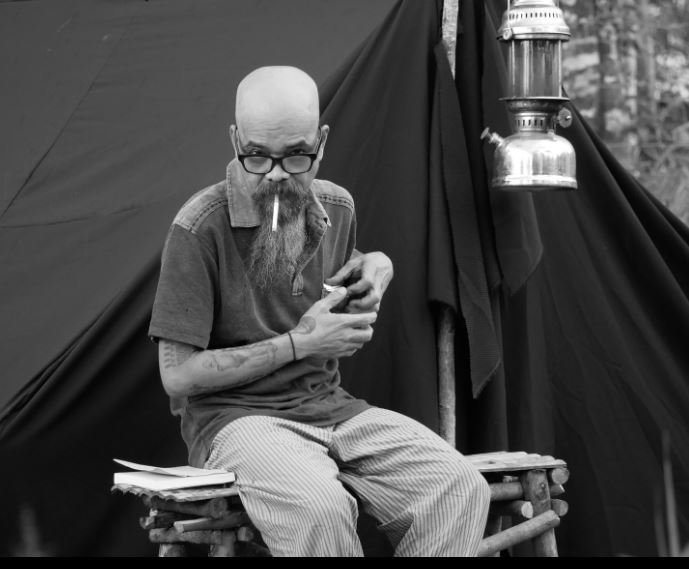
Rock musician Dong Abay plays a poet in “Phantosmia.” In real life, Abay has a degree in creative writing from UP Diliman. He writes poems, and most of them become lyrics for his songs. (Photo from Sine Olivia)
One film in the festival also has Diaz as director, the four-hour, 17-minute long Phantosmia, which had its world premiere in this year’s Venice Film Festival. Besides the veteran Ronnie Lazaro, it features Janine Gutierrez, Hazel Orencio, Paul Jake Paule, rock icon Dong Abay, Allen Alzola, Jay R Escandor, Olin Bulanhigan. Also in it are some Tanghalang Pilipino Actor’s Company members and alumni—Amado Arjhay Babon, Toni Go, Lhorvie Nuevo, Vince Macapobre, Edrick Alcontado, Mark Lorenz Rey, Heart Puyong, and Mitzi Comia.
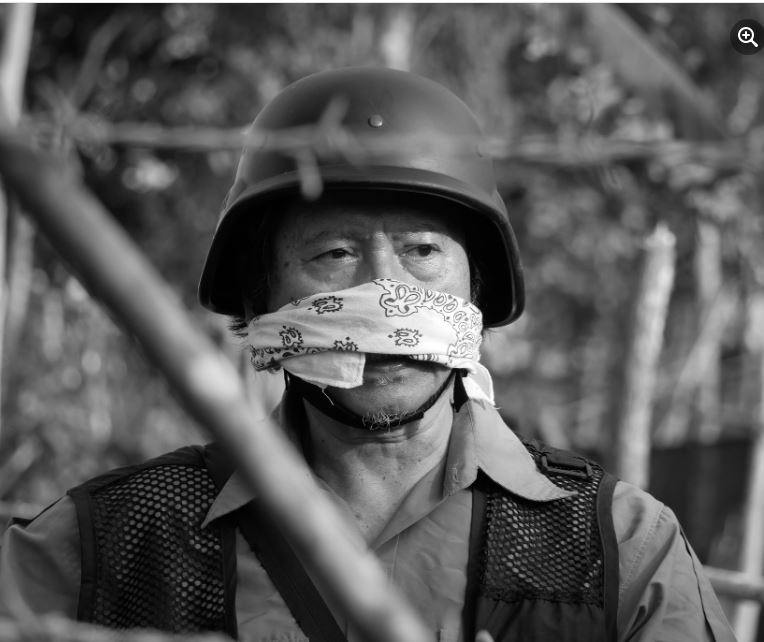
Ronnie Lazaro plays a retired soldier being haunted by his troubled past through a phantom smell, a rare olfactory disease called phantosmia, also the title of Lav Diaz’s recent film. (Photo from Sine Olivia)
The QCinema synopsis reads, “Ronnie Lazaro plays Hilarion Zabala, a retired soldier who suffers from phantosmia: A lingering, phantom smell, seemingly conjured up by his own mind, keeps him from living a normal life. As treatment, his doctor recommends he re-enter the service, such that he will be better able to confront his past and deal with the psychological issues that bring about the malady. He is assigned to a remote island, where he is confronted with the violent reality of the present.”
There’s also a collection of eight short films under the title Directors’ Factory, made under the mentorship of Diaz, through the support of Cannes Director’s Fortnight, the Quezon City Film Commission, and QCinema.
In a message to TheDiarist.ph, a long-time member (who requested not to be named) of Diaz’s production outfit, Sine Olivia Pilipinas, said they are in Spain shooting Diaz’s newest work. Diaz is working with an award-winning and very popular European actor who has also made waves in Hollywood.
If this new masterpiece hits cinemas here and abroad, Diaz may seal his stature among the greatest contemporary filmmakers—Yorgos Lanthimos (Poor Things), Damián Szifron (Wild Tales), Alfonso Cuaron (Y Tu Mama Tambien, Roma), Alejandro González Iñárritu (The Revenant, Birdman, Babel), Pablo Larraín (Maria, El Conde, Neruda), among others. Diaz is in his 60s, in the same age range as this new generation of master filmmakers.
Diaz is in Spain working on a project. If this new masterpiece hits the cinemas here and abroad, Diaz may seal his stature among the greatest contemporary filmmakers
Despite his absence, the imprint of Diaz is heavily felt in QCinema, perhaps the only local festival brave enough to showcase his latest work like Phantosmia.
Who was Diaz in mid-career, or precisely when he was 50 years old and battling the system?
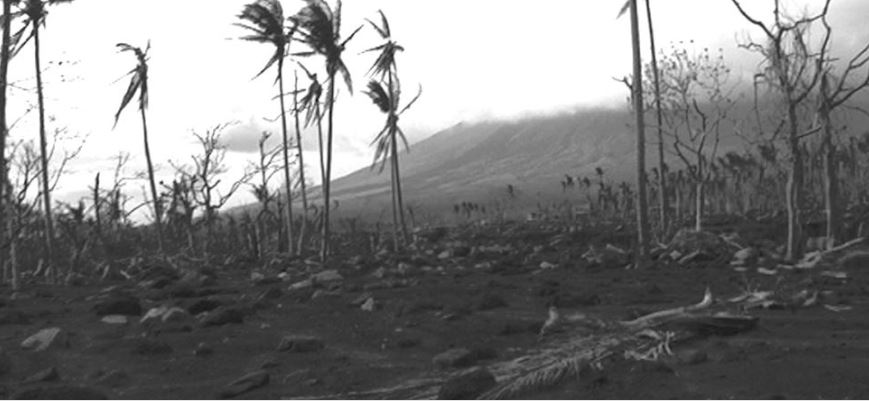
A harrowing scene from “Death in the Land of Encantos,” shot in the aftermath of a super typhoon in Albay. The film was banned by the MTRCB in 2008. (Photo from Sine Olivia)
In 2008, I was lucky enough to have a one-on-one, almost two-hour interview with him in his house in the “Republic of Marikina,” as he called it. I was toying around with my brother’s video cam, and instead of using only cassette tapes to record the interview, I filmed the great Lav Diaz. It took me weeks to transcribe the interview. At the time, his nine-hour-long Death in the Land of Encantos had been banned by local censors for showing a nude actress.
In this no-holds-barred interview, we learned about his struggling days as law student, encyclopedia salesman, punk musician, TV production assistant-scriptwriter, journalist, movie-music critic, newspaper editor, and as a very young man raising a family.
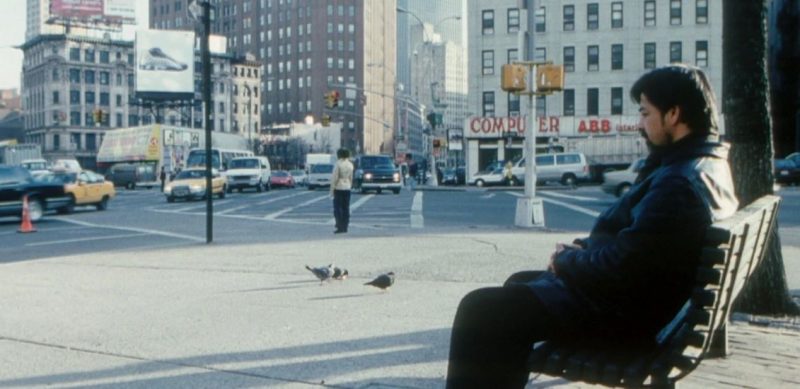
Joel Torre plays a police officer in Jersey City investigating the death of a fellow Filipino in Lav Diaz’s seminal “Batang West Side.” (Screenshot from “Batang West Side”)
Excerpts from our 2008 interview:
On aesthetics, could you compare your years doing studio work for mainstream producers, and those from when you did the six-hour Batang West Side?
My system, my principle in filmmaking is now free-flowing. Of course, it was different during the studio work, my days with Regal Films. Kasi there were obligations, may deadline. You could use only 20,000 feet of film rolls. Everything finished in 15 days. Very limited, P2.5 million ang budget, which was very, very low for a 35-mm shoot. You’re feeding a lot of people. Tapos outrageous yung sweldo ng mga actors. Tapos napakababa ng sweldo naming mga directors. My first film, I was paid only P20,000, pare. Of course the last works, naging P400,000 to P500,000. Nag-jump na. Kasi I demanded it. Burger Boys and Kriminal ng Baryo Concepcion, those were really small, P20,000 yung script. Yung directorial, P80,000 to P100,000. Pero nag-jump na s’ya with Hubad Sa Ilalim Ng Buwan and Hesus Rebolusyonaryo.
And there was a contract (quota) to finish a set number of films?
Yes, 14 films, to be finished in four years. But only four films were finished. The clauses in the contract were one-sided. There was one clause saying that two months after finishing your recent film and you’re not doing anything, you’re free to do other works. Which I did. But Mother Lily of Regal Films didn’t want it that way. When we pointed it out to her, that it was written in the contract, she told us to ignore that clause. She told us, “You’re mine, I made you.” Ganun sya. As long as the contract is not finished, you can’t do other productions. That’s why when I shot Batang West Side, she was very angry with me. She threatened to sue me. But when she learned the film was five hours long, that it was not commercial and not competition, she was okay. She even embraced me and called me, “My son, my son,” and asked me to do another film. That’s why I did Hesus Rebolusyonaryo, which was my last film for Regal.
What made you totally stop working for the mainstream?
First, I had the illusion I could create that aesthetic space within that studio system. I cannot do that. There were incidents during the time of Lino Brocka and Mike de Leon. During our time, Jeffrey Jeturian and all, when we were new, it was very hard. I backed out. I didn’t want to embarrass myself for the rest of my life. I wanted to do my own work. I didn’t want to work in an environment where you’re not only being compensated less, but very unfair, you were exploited and limited in terms of aesthetics. You cannot share your vision.
Sir, let’s backtrack. Even before you became a struggling filmmaker, what was the lowest point in your life? What were you doing?
We were so poor. I was married young, at age 20. My wife was almost 18. I was raising a family at a very young age. Dead end, especially in the Philippines. There were no digicams yet. Although nag-Mowelfund ako, you can’t shoot if you don’t have money. Only the bourgeoise can.
Before that, I was studying law at night and selling books by day. I came from Cotabato, where I worked for two government agencies. Just too much corruption. It was the time of Ferdinand Marcos, Sr. and the National Manpower Youth Council, tapos Southern Philippines Development Authority. It was promising because I was very young and supervisory na kaagad ang hawak ko, pero grabe yung corruption. Malulubog ka dun. It’s all about getting money from the government, from the procurement of materials, to everything. The department heads in our region, they would make bogus travels and programs to make money. And they invoked the name of Marcos. As long as the Marcoses are in power, we’re okay. May ganun talaga. And I was new then. Fresh graduate. I couldn’t take it. So I told my wife, let’s go to Manila. I was able to convince my mother that I would take up Law, but my vision was to get into filmmaking.
Were you an only child?
There were five of us and I was the middle child. The eldest and the youngest are still in Cotabato, with my mother. The second and fourth died already.
For sure, they’re proud of you now.
Yes, because from a bum, I became a filmmaker (laughs).
What made you decide to become a filmmaker, if at that time, it was really hard to become one?
It’s in my blood. I grew up watching films. My father was a film addict. I thought I was going to be a writer. I wrote teleplays. TV nun. I was submitting stories to Sa Masa, the Tagalog sister publication of Malaya (Joe Burgos days). I was a regular contributor while studying Law. I wrote for komiks also, may mga short stories and novels. For Funny Komiks, I wrote Prinsipe Maro. Sa Atlas Komiks, I had a novel titled Pinoy Ninja. (laughs) I also wrote for Jingle magazine, reviews on films and music. Concert reviews. We were doing a lot of things in Jingle. We transcribed songs from vinyl and cassette tapes. But it was still a hard life. Double-triple-quadruple jobs. I was hospitalized because of too much stress. I almost died. At PGH, I was like a guinea pig for young medical students. I didn’t finish law. It was hard to memorize when you were working for so many things during the day.
‘I wrote reviews on films and music. We transcribed songs from vinyl and cassette tapes. But it was still a hard life. Double-triple-quadruple jobs. I was hospitalized because of too much stress. I almost died’
It’s always been difficult to go to the US and find work. How did you do it?
There was a commissioned documentary for TV about street kids that I did for a foundation, and it was invited for screening in the US and Europe. My visa was approved only in the US. Then there was a Filipino newspaper in New York that found out I was working for a newspaper in Manila. They told me they needed someone there, all-around reporter-editor. They were only few staff members. My wife agreed at once because we were so poor. We were really struggling. So I told them if they could fix my papers, I’d go on board. Which they did. It was in 1992. I was able to bring my family there in 1998.
So it was your being a writer-journalist that helped you get there.
Yes, because at that time, before I left, I was already desk editor for the Journal Group. I was assigned in Taliba, first sa news then as culture and entertainment editor. Full blast na ako sa newspaper when my documentary was invited abroad.
Did you attend presscons for movie reporters and editors?
No. I just edited the columns of reporters. T—ina, they would ask me, why won’t you attend press cons? Sayang daw. Because I was editor, they would give me P5,000 to P10,000. But I didn’t get the money. That was when entertainment was booming. There were so many publications. Magazines. All pure sensationalism. I had so many reporters at the time. Up to now, I still bump into them. Movie reporters, I knew a lot. But I already had two short films then for Mowelfund. I didn’t pursue filmmaking, because at the time, 16 mm was very expensive. But my passion for filmmaking continued.
When I was at the desk of Taliba, I wrote a screenplay for Fernando Poe Jr. titled Mabuting Kaibigan, Masamang Kaaway. Then I wrote something for Regal, Daddy Goon, starring Manilyn Reynes. After that, I didn’t continue. I couldn’t. They turned us into typewriters. And at the time, I was also writing scripts for TV, for Balintataw and serving as production assistant. Madami.
Considering the limited resources here, especially in terms of film education back then, how did you learn about the greats like Jean Luc Godard, Andrei Tarkovsky, Akira Kurosawa? Where did you watch their films?
In Mowelfund, we had the basics. Charlie Chaplin, Truffaut, Godard, Orson Welles, the usual stuff in the academe taught the film students. But the bigger part of my education was in New York. Self-study. I watched and read a lot. In New York, up to now, there are so many art houses that show these films regularly. There are a lot of cinematheques. When I was there, I read a lot because there were so many books. Film theories, everything. Binugbog ko sarili ko sa pag-aaral. Then I discovered other filmmakers like Tarkovsky. Russian cinema.
How strong is the influence of Russian cinema in your work? Or Russian culture
Very strong, because my father was an ardent reader of Russian authors. Even my name is Russian, from Lavrenti Beria, the mass murderer of Joseph Stalin. He organized the KGB. He engineered the killing of so many Russians. As for Russian cinema in particular, it was a huge influence. I can’t deny it. Kasi, if you’re a serious filmmaker, you copy them and you set your standard to them. You aspire for their standard. You raise the level. You’re going to make a film, why do it half-baked or half-hearted? Do it well and do it seriously. And give it all, man. No matter that they say my films are long. I’m giving it all, man. That’s my soul. That’s my aesthetics. That’s my philosophy in cinema. And f–k them, di ba? If you can’t appreciate that, sorry. I gave you my soul and I have no regrets.
Somebody described you as a punk director. Where did that come from?
I was into punk rock. I was punk. I had bands in college. I experienced the hippie culture until the punk era. My favorites were The Clash and Sex Pistols. But it’s limited rin, eh. You can’t listen to them all. It’s only later I discovered the underground like Fugazi, and Screaming Trees. Before that, there was disco pa nga e. The motherf–kin’ disco.
What was your course in college?
AB Economics. But I intended to take up music. I intended to finish economics, then music. But I got married in third year college. We’re in the same fraternity. APO sa Ateneo de Davao.
Are you still active in APO?
Of course. I love my brothers and sisters sa APO. Even those in public service, like Bobby Syjuco (deceased) and Jojo Binay. There are many APOs around, in different politics. APO is a service-oriented fraternity. Leadership and service.
Di ba yung Batch 81 ni Sir Mike de Leon, APO yun?
It was based on APO. They made it AKO. I love that film a lot. Especially because it came out in the Marcos era. I used that for Batang West Side.
Do you still have a dream project?
Every project is a dream project. Like what I told you a while ago, for every project I give my soul. I don’t do films half-hearted or half-baked.
So do you expect to get something in return? Since you give the whole of Lav Diaz in every project that you do?
No, no. It’s not only that artist who must struggle. The audience must struggle also to find the good works. That’s the right dynamics, the right interaction. The so-called audience must struggle to find the good works, not only the entertainment fare in mall cinemas or anywhere on television. Find the good works, man. If you want to educate yourself, don’t let just the artist pursue the aesthetics. It’s a dialectical approach. You investigate.
‘It’s not only that artist who must struggle. The audience must struggle also to find the good works…. If you want to educate yourself, don’t let just the artist pursue the aesthetics’
Do you still get frustrated? How often?
That’s part of the struggle, eh. Kung gagawa ka, handa ka na dun. You don’t expect a good trade-off. It’s always the negative trade-off. That’s what you will get. You’ll lose your friends. You’ll lose your family. You’ll lose your f–king girlfriend kasi ‘di mo na maasikaso. You’ll lose f–king everything because you’re so focused on this f–king art. Di ba? Don’t expect glory, f–k that. You don’t need that. If there are affirmations like awards, it’s okay.
Because if you’re in the strategic domain of an artist, bulls–t if you expect them to embrace your work. It’s part of the struggle. Just throw it in there. Your goal is to create models other artists can emulate. Just share your vision with the people. And the greater high would be is if you can change perspectives, if you can educate and change them.
At the end of the day, the role of arts and culture is to protect and beautify humanity. That’s aesthetics, eh. The concept of beauty is aesthetics. That’s where the artist should be. Entertainment is valid. I can understand people in the mainstream with mansions and Mercedes Benzes with their boyfriends and studs. But at the end of the day, are you helping? Aren’t you ashamed of what you are doing? C’mon, man.
Did it come to the point when you wanted to give up? Or when you wished you were in a more financially rewarding profession? Or you could have stayed in the newspaper industry, or pursued your dream of being a musician?
Many times. Every day of your life, man. You wake up, you feel like you’re a fraud. You feel like, “P—–ina, di ba gago ako to be thinking of helping this f–king culture and with a f–king corrupt president? Tapos ikaw na wala naman, you’re thinking of helping this country. Helping this culture grow. Helping these people grow. Bigyan mo ng pride yung country outside. Di ba? Dadalhin mo sa festival abroad, then you wake up one morning and ask yourself, “Am I doing the right thing?” There were a lot of times when I questioned myself. But you take a look at what’s happening in this country. You go back to the aesthetics. I’ll create good works pa rin. In my own small way. You can contribute to this culture. We’re not just rock stars, man.
Amid all this, your own family is living comfortably now. All your children finished college in the US and doing well. How did you do that while, like what you said, you’re pursuing your art that seems to consume you?
I made sure of that. Maybe a great escape, but they’re all in the US. My two girls are college graduates. The youngest is in first year college. The eldest graduated from Columbia University. But I can’t take credit for all that. It was a struggle also on their part. It’s an individual struggle, after all.
Do you have plans of doing other things than filmmaking?
I might shift to doing a rock opera this year. I have so many songs. It’s a rock opera in the mind of Juan dela Cruz.
Pardon us asking, but how do you earn these days?
I earn something when I sit as jury in festivals here and abroad. There’s a little amount I receive from my films being shown in museums. Mga ganun. That’s how I survive.
Do you keep copies of your works? I’ve heard you have no copy of Batang West Side.
I’ve learned from my mistakes. I keep personal copies. Institutions abroad like Vienna Film Society have archives of my films. For BWS, it’s like a lost child.
How’s your health?
OK naman. I’ve been a vegan for the last 17 years. I’ve been a cancer survivor. I’ve been operated on for that. They removed an abnormal growth of a tube over my lungs. I still have nine wires in my ribs. I’ve got to have them removed one of these days. It gets painful once in a while. But I’m alright. My doctors advised me to drink wine to help my blood flow. Now, I can drink beer again (laughs).
In an intimate inuman of indie filmmakers and writers, they came up with a brilliant idea for you to have a tie-up with bus companies that cover long trips, like Manila to Ilocos Norte or Manila to Bicol region and vice versa. In those six-to-12 hour rides, your films will have to be shown non-stop. Would you agree to that?
(Laughs) Oo naman. Cinemabus. We’ve thought of that concept a long time ago, to show our films on ferries, ships, buses, planes. All Filipino indie films. Long trips. Cinemahaba, Cinemaleta, Cinemakalye. We can also have Cinema-kama, while you’re f–king with your girlfriend for long hours.
Is it true that you were once offered to do a bold film and you proposed something like In The Realm of The Senses? Then the producer, as expected, didn’t agree?
Yes, there were actually so many offers. Make it good, di ba? From people like Robbie Tan and Wilson Tieng. Give us sex scenes like these. I told them, if I’m going to make a sex film, I might as well go for a culturally good sex film. What are the models? Like, In The Realm of the Senses. Sex films are good if you’re going to go for it. I don’t know why they think sex is dirty. That f–kin’ Board of Censors. When they see boobs or pubic hair, parang, ha?! Why? Wala ba’ng pubic hair o suso ang mga Pilipino? Wala ba’ng p-ki ang mga Pilipino? And when they watch films, they should contextualize the work. They only watch the sex scene. Watch the whole f–kin’ film! And understand if the film has something to say. Why would a film that has won an award in Venice be banned in the Philippines? That’s f–kin’ insane! Di ba?
That’s why that Board of Censors should be abolished. Their existence is not even constitutional. It’s unconstitutional. Why can’t we abolish that? Change it to a classification board! It’s insane. And nobody’s moving in this f–kin’ Congress. In the House. Pang–ilang clause sa Constitution ‘yung freedom of speech, pare? Don’t ban works, it’s freedom of speech, especially serious works. Look at the past two months. What were the films they banned? Death in the Land of Encantos, Next Attraction of Raya Martin, Imburnal of Sherad Sanchez, and these are very good works, pare. We’re not saying that it’s our films. Just watch the f–kin’ films. Then something from the mainstream has a dick hanging out exposed for a few minutes, they allow it. What is this double standard, na p—–ina nila? What are they doing? ….They’re not thinking. Cultural guardian? That’s f–kin’ insane, man.
‘Are censors helping culture? No. Kasi you ban a work. You censor a work. That’s fascism. That’s very feudal. That alone is human rights violation. You violate the Constitution’
For example, in Raya Martin’s film, there are two guys kissing each other. If you read their comments, the main reason they banned it, there’s no redeeming value daw. I saw it when I sat as jury in the recent Cinemanila. It’s a great work. Then they banned it. Why? Does that mean there are no Filipino gays? That there are no Filipino guys kissing each other? Isn’t it normal and natural for two gay guys to kiss? If that’s not how they view it, they’re out of touch.
What did you feel when you and (Consoliza) Laguardia were in the same hall, like during last Cinemanila Film Fest?
(Author’s note: Consoliza Laguardia served as chair of the MTRCB from 2003 to 2010, or during the Gloria Macapagal-Arroyo administration. She was considered one of the most conservative heads in the history of the local censors.)
I pity her, them. They’re part of this f–kin’ circus. Are they helping culture? No. Kasi you ban a work. You censor a work. That’s fascism. That’s very feudal. That alone is human rights violation. You violate the Constitution. The freedom of speech. We’re not invoking this f–kin’ right. We can sue them for that. But there’s no discourse about it. People are not aware that we have a Constitution that states all their rights, their freedom. Even artists, a lot of them, they don’t know their rights. Kaya dapat labanan ‘yan….
…. You ban a good film. That’s animalistic. You’re not thinkin’. You don’t have a rationale. That’s the problem with them. I am not sayin’ they’re bad people. That they’re hopeless. Just be rational. All you can do is classify, not censor. Make it “For Adults Only.”
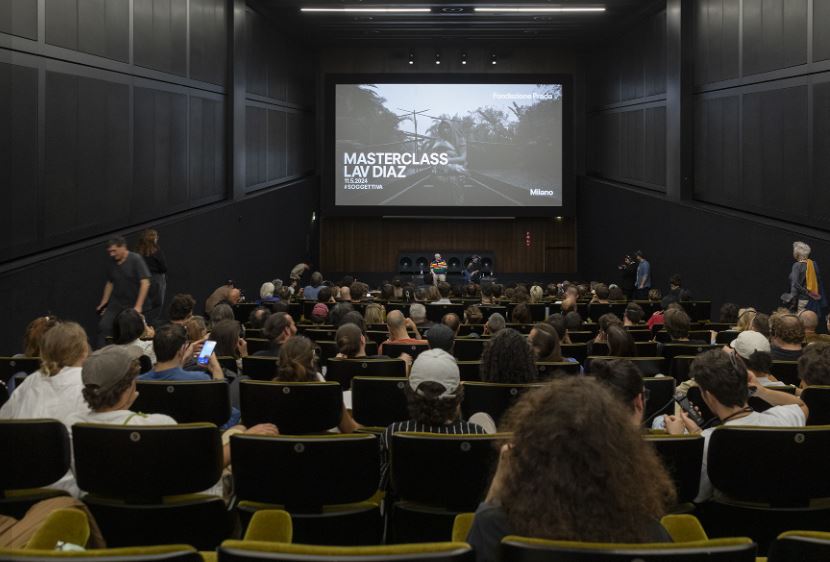
Cineastes in Europe flock to one of Lav Diaz’s lectures. (Photo from Sine Olivia Pilipinas)
Go to Europe. Come midnight, most TV channels show bomba films. Before midnight, there’s even televised Mass. But they have high level of discourse on art and culture. France, Italy, Germany, Scandinavians, Norwegians, Eastern Europeans. They’re not rapists. Our Board of Censors here, they say if they approve and let the public watch films with sex scenes, there will be a proliferation of rapists, maraming malalaswang mangyayari. It’s not f–kin’ true. People have free will. Discerning ang tao. He knows how to draw the line between good and evil, pare. Human rights issue yun…. Why are they not thinking? They’re supposed to be brilliant people.
Given the chance, is there a country aside from the Philippines where you want to live? Where the freedom you seek is a way of life?
Wala. This is our country. My country. It’s free but everything is relative. Free where? Free when? Free for whom? You have these questions. It’s a broad issue. You talk about freedom, it’s a long discourse. A lot of levels and issues to tackle. You start from Socrates all the way down to our president. You talk about democracy, that the Philippines is a democratic country. You go back to the real meaning of democracy, that means there’s no rich or poor. Everybody’s equal. No more fascism. What’s happening here? The gap between the rich and the poor keeps on widening, the more fascist our system becomes. Activists disappear and get murdered up to now. We cannot even invoke our rights to create real art. Up to now, many are homeless. Up to now, there’s widespread hunger. What is that? Democracy? F–k them. That’s not true.
Do you think there’s still hope for our country? Coming from a filmmaker who has experienced the highs and lows of life?
Oo naman, that’s why we continue to create. That’s what I’m saying; this generation, our task is to create models for the next generation. If we earn something or if there are awards, small change to afford us our next meal, that’s affirmation enough. Don’t expect too much. In this society, this milieu? That don’t even care. Like in grants, they don’t give us enough subsidy to work on. One government agency allegedly gives grants but if you read the contract carefully, it’s a loan in disguise. Another agency gives grants that are so little, and the process to acquire it is very bureaucratic. The best models are still in Europe. We’ll get there. It’s hard to be pessimistic.
‘This generation, our task is to create models for the next generation. If we earn something or if there are awards, small change to afford us our next meal, that’s affirmation enough’
In your wildest dreams, have you ever thought of being a financially affluent director, someone with a limo waiting downstairs? That kind of comfortable lifestyle.
That’s only in the mainstream. Sometimes, when we’re invited as jury abroad, we experience that. They give you cars. That’s another thing. Festivals? Sometimes, it becomes a circus.
Until when are you going to make films?
Until I die. Depends. Am writing things.
By the way, how old are you?
I turned 50 last December 30, 2008. Rizal Day. I wasn’t named Jose kasi my father likes Russian names. And at the time, many were named Jose. Two of my uncles were named Jose. A lot of my cousins are named Jose. You know Pepe, he dominated our culture. Ok naman si Pepe.
One of these days, would you like to meet up with a real hardcore revolutionary like Ka Roger? Gregorio Rosal of the NPA?
Oo naman. Oo, sa tingin ko magandang kausap sya. Admirable person. He’s still fighting for his principles. He’s fighting hard. Admirable human beings. They struggle. They fight for the masses.
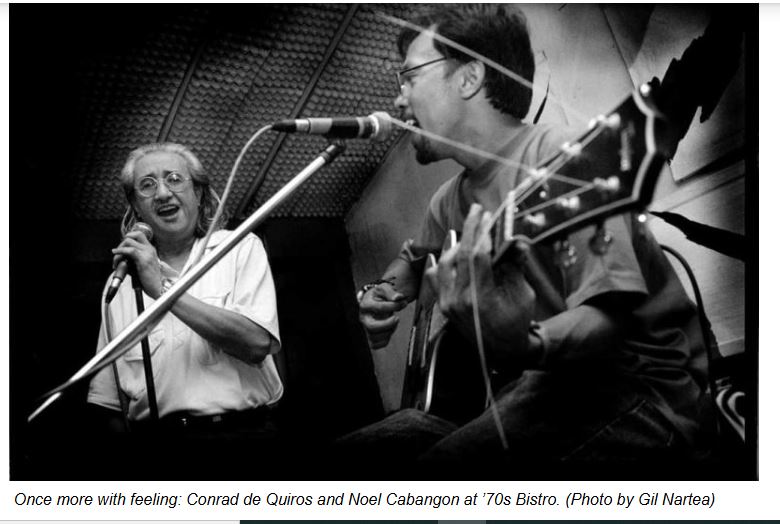
One of Lav Diaz’s dream projects was a documentary on the life of the late “Philippine Daily Inquirer” columnist Conrad de Quiros, shown with Noel Cabangon in this photo by Gil Nartea for The Diarist.
I want to do a documentary on Conrad de Quiros. Modern-day hero. He fights. He doesn’t keep quiet
If you’re offered to do a documentary on someone’s life, a biopic, whose life would you choose?
A lot. Like, I want to do a documentary on Conrad de Quiros. Modern-day hero. He fights. He doesn’t keep quiet. He can’t be silenced. He is a great model. Ang ganda ng discourse nya. Na-articulate nya ‘yung struggle natin. It’s great. I met him a few times. Tsamba-tsambahan. (De Quiros passed away in 2023.-Ed)
Stupid question: For you, what is sexy?
‘Yung mga bina-ban ng Board of Censors (laughs).
What do you think of cinema in general?
It’s still growing because it’s a very young medium. Only 100 years. There are a lot of things to explore. The possibilities are so vast. We’re just starting, man.


