

Has the selection process for the National Artist (NA) awards been reduced to that of a secretive conclave? And must the public endure this cycle after cycle of selection when a number of excellent, even great, artists are bypassed?
Call me sour grapes for grieving over the dropping of pianist Cecile Licad from the list of nominees in the first round of deliberations.
No other pianist can move me to tears or to heights of bliss better than our still undeclared national treasure Cecile. To many Filipinos in far-flung areas, she was their first exposure to the classics (Chopin, Beethoven, Buencamino, Joplin et al), a necessary education at a time when there are budget cuts in arts and music education worldwide.
Do we wait until she’s six feet under the ground like the violinist Gilopez Kabayao, whose provincial outreach record was impeccable and pioneering, before the government thinks of bestowing a national recognition on her? (BTW, the late Kabayao remains an officially undeclared treasure, too.)
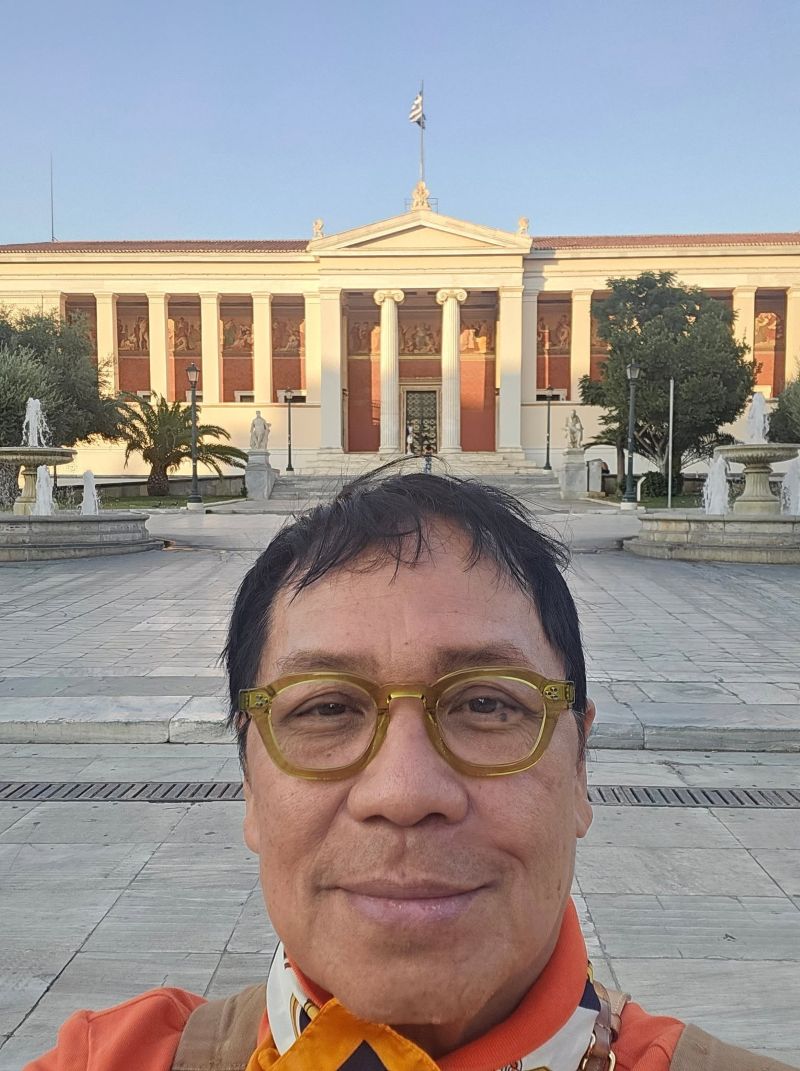
The late Pablo Tariman on Cecile Licad: ‘She will make a Filipino piece sound like it was always destined for Carnegie….’
Now it can be told. Cecile was in the running for the honor of National Artist for Music last year, but was promptly and sadly eliminated in the first round of deliberations. Pablo A. Tariman, the late writer-impresario and Cecile’s BFF, served as her “defense lawyer” even if he was seriously ill and could make his presentation only while seated and not standing behind a podium. Apparently, the reason given for the outright rejection or disqualification was her body of works wasn’t Filipino enough, nor have they made a profound difference in the lives of Filipinos.
Let’s get one thing straight. In the first place, the New York-based Cecile remains a Filipino citizen and has always traveled with a Filipino passport. She has been performing on the piano publicly since age seven and for as long, she has been doing outreach concerts, with or without an orchestra, making do with available pianos, whether grand or upright, and playing for her life.
At 65, she cannot be said to be too young for the coveted award. After all, sculptor Napoleon Abueva was just 46 years old when he got the award, the youngest to ever receive it to date. Her being based in Manhattan is for reasons of convenience—from there it’s easier to cover distances in the Americas and Europe to fulfill concertizing and recording engagements.
From his sick room, Pablo managed to draft, with the aid of his daughter Kalon, his final thoughts on what he hoped would be the second deliberations for Cecile’s cause:
“I remember the first time a Filipino melody slipped into Cecile’s program like a secret folded into a letter. We were in a hall that didn’t look like the capital—wood pews polished by Sunday elbows, the sort of place where you hear the sea even when the sea is miles away. She had just finished her thunder and silk—Chopin, Liszt, the usual cathedrals—and then she turned a page that sounded like home.
I’ve seen her bring Buencamino back as encores, and I’ve seen people wipe their eyes and pretend it’s just the weather
“It was Buencamino. Not the showpiece kind, but the song that makes you stand up a little taller because you recognize your grandmother’s voice in it. You could tell the audience did; the air changed. No announcement, no manifesto—just the right piece at the right time, offered the way elders pass down a story: naturally, as if it always belonged on that stage. (Yes, I’ve seen her bring Buencamino back as encores, and I’ve seen people wipe their eyes and pretend it’s just the weather.)
“Cecile has a way of carrying our music the way she carries her scores—carefully, but ready to risk everything for the truth in a phrase. I’ve watched her in cathedrals and chapels, in rooms that flood when the rain forgets its manners, in towns where the piano arrives like a visiting dignitary and the tuner is the quiet hero of the night. She will fight for a decent instrument, then sit down and make a Filipino piece sound like it was always destined for Carnegie—no apology, no footnote, just music that belongs.
“People ask if she ‘promotes’ Filipino works. I tell them: She lives them. She programs them where they matter—in front of our children, in front of the world, and in front of those who forgot that our composers wrote with the same ink of longing as anybody’s. When Buencamino or a Filipino song enters her set, it doesn’t feel like a courtesy; it feels like a homecoming.
‘People ask if she ‘promotes’ Filipino works,” wrote the late Pablo Tariman of pianist Cecile Licad. ‘I tell them: She lives them—in front of our children, in front of the world’
“And then there is what happens after the last chord. In Baguio, in Iloilo’s Molo Church, in Antipolo, in UPV Iloilo, in places where the road to the venue is longer than the venue itself—there are young pianists who line up with photocopied scores and hand-me-down shoes. She signs, she smiles, she tells them practice is a kind of love. The next week, a mother writes to say her child won’t stop practicing. That’s how a tradition grows: not with slogans, but with hours at the keyboard, planted by someone who believes the child can bloom.
“…(L)isten to any night where a Filipino piece sits beside Chopin and doesn’t flinch. Listen to the hush that falls when a melody from home returns to us wearing concert black. That’s Cecile’s quiet revolution: to seat our composers—Buencamino, and those who will come after—at the long table of world music and pour them a proper cup. She doesn’t announce that she is championing anyone. She just plays—and in the playing, our music stands up, introduces itself, and is remembered.
“If you ask me what a champion looks like, I will point to the woman who can take a storm, a broken pedal, a borrowed hall, and still make a roomful of strangers hear the Philippines in a single line. I’ve seen it many times. I still do. And every time, I go home thinking: The repertoire is bigger than we were told—and our name is written inside it.”
I return to this eloquent defense that was not to be with eyes brimming with tears upon recollection that Pablo assigned me the unenviable job of reading these words before the committee that selects the shortlist for National Artists. It was a cause that he shared with other supporters, including the late businesswoman-philanthropist Zenaida Tantoco, who wished nothing more than for the world-acclaimed pianist to get her due in her land of birth.
In the more than 50-year history of the National Artists, the award has heavily favored the male species
What is worse, in the more than 50-year history of the National Artists, the award has heavily favored the male species. Just look at the results of the recent declaration of new NAs; only visual artist Imelda Cajipe-Endaya and fashion designer Patis Tesoro made it to the final list. Cajipe-Endaya broke an invisible ceiling when she became the first woman NA in the visual arts.
Once again, only two are women out of the 10 NAs proclaimed by President Marcos Jr. The total number of NAs is now 91, of which only 18 (20 percent) are women. Another way of putting it is, only one out of five in the nominees’ pool is a woman. A source said that of the nine National Commission for Culture and the Arts (NCCA) board members who cast their votes for the 10 NAs, all were men.
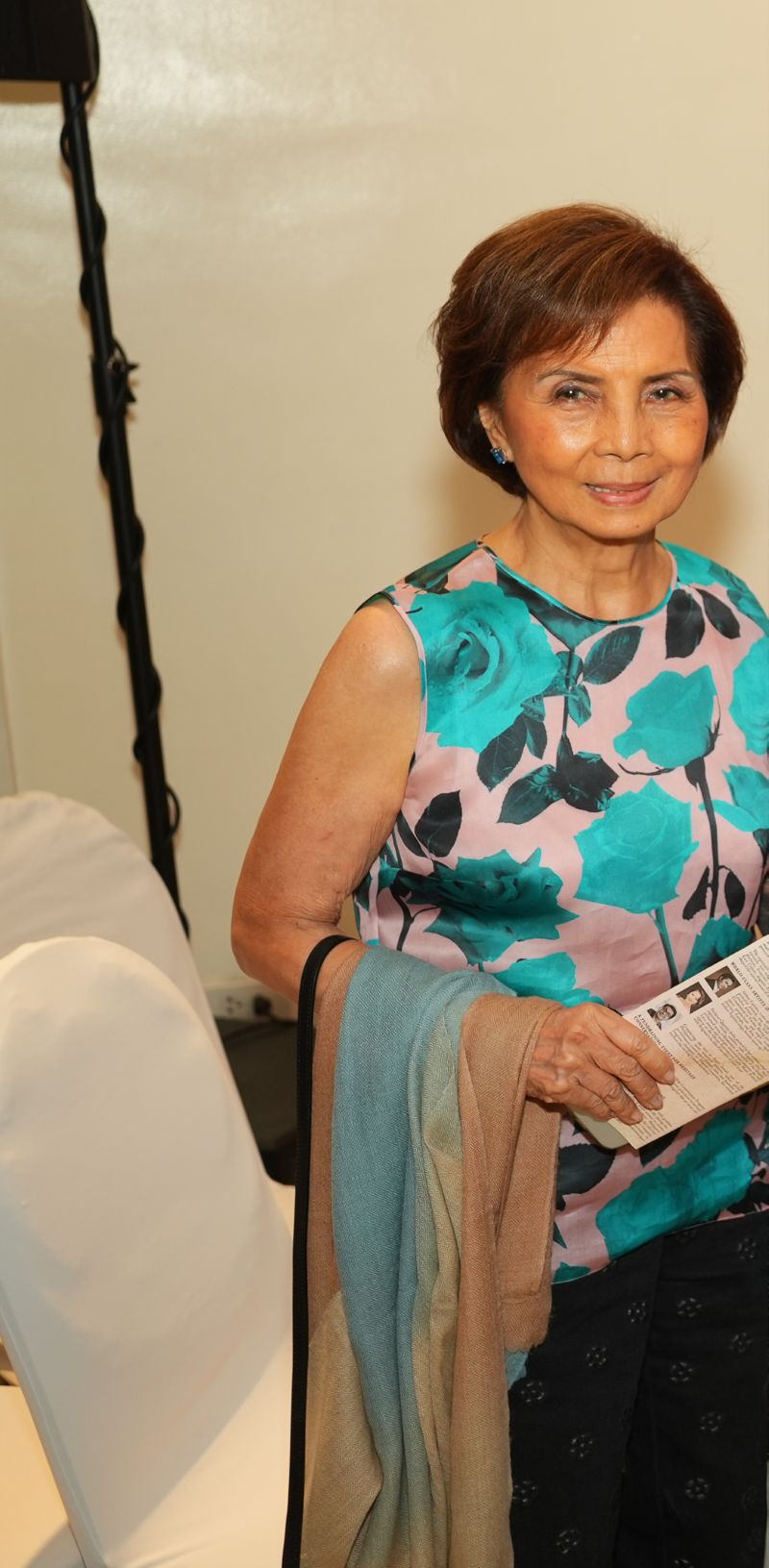
Lin Ilusorio-Bildner: ‘Drastic changes must be undertaken if the revered National Artist designation is to represent art and the artists as privileged expressions of our national culture’
But even a female executive like Gloria Macapagal-Arroyo’s record as President proclaimed 19 NAs, all males. Former President Fidel Ramos had no women among his nine NA awardees. Ironically, a known misogynist like ex-President Rodrigo Duterte awarded 15 NAs, including six females or a respectable 40 percent of proclamations, the highest percentage of women proclaimed by a President. These figures were culled from an informal study of the male-to-female ratio of NAs by businesswoman and art aficionado Lin Ilusorio-Bildner.
Lin wrote in her unpublished paper, “For decades, the dominance of the male species combined with the total lack of transparency that characterizes the whole NA nomination and selection process resulted in a gross imbalance and distortion in gender representation of what represents the best of the Filipinos in various art forms. Drastic changes must be undertaken if the revered National Artist designation is to represent art and the artists as privileged expressions of our national culture.”
She called for a “change in this archaic ‘old boys club’ culture of the NA program. It is equally important to impose transparency in the current conclave-like manner of voting for NAs. After all, each NA becomes a beneficiary of the financial emoluments granted by the Philippine government during his/her remaining lifetime. Upon the passing of an NA, she, or more likely, he is also bestowed the honors of national heroes, e.g. burial at the Libingan ng mga Bayani—all at the expense of the Filipino taxpayers.”
What chances do Cecile, stage singer-actor Lea Salonga, and prima ballerina Lisa Macuja-Elizalde have when faced with the powerful Office of the National Artist Secretariat, which is in charge of the highly secretive process of selecting the NAs every three years?
Surely, the outright support of somebody like retired Chief Justice Artemio V. Panganiban for these three women should also count for something. In his Inquirer Opinion column, he wrote about their “talents (that have) carried the Philippine flag onto the global stage of the performing arts. Despite their achievements, none of them had been formally recognized as a ‘National Artist (NA).’”
He believes that these three women artists deserve a separate category—global Filipino artists, “a separate category that recognizes a level of distinction that transcends national recognition.” But Justice Panganiban’s suggestion seems to have fallen on deaf ears. This is not without a precedent. Apart from the NA awards, former President Marcos Sr. also instituted the International Artists awards.
Panganiban recalled: “In 1976 and 1977, pianist Van Cliburn (USA), prima ballerina Margot Fonteyn (UK), and ballet dancer Rudolf Nureyev (USSR/France) were the first to be proclaimed as International Artists. In 1982, the renowned Russian cellist and conductor Mstislav Rostropovich was also recognized following his performance at the CCP.”
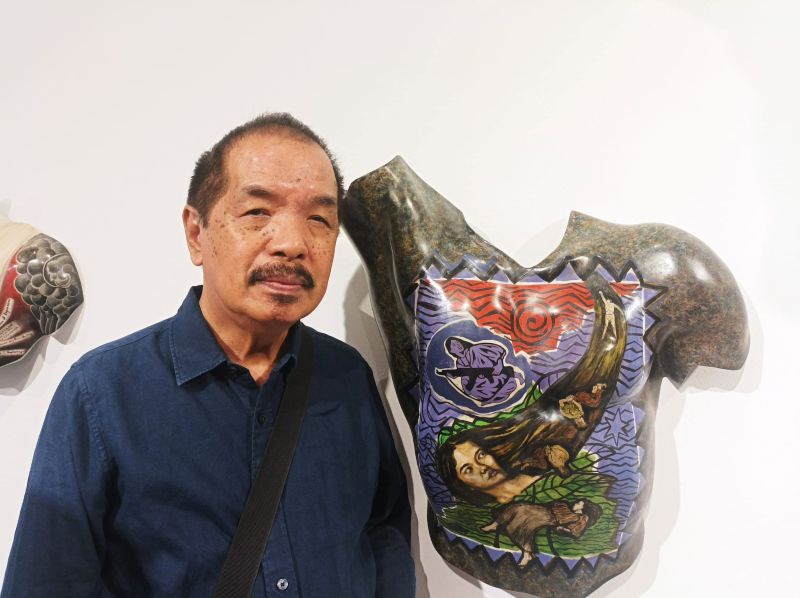
But what to me is the better alternative to too much politicking in the arts is the eventual (I can dream, can I?) establishment of a Philippine Academy for Arts and Letters.
Dr. Anton Juan, director, actor and awardee of the Onassis International Prize for Theater, the Rheinhold Neburhn Award for the Arts and Social Justice, among other prizes, proposed “the creation of a National Academy for Arts and Letters. This will be a revered body of artists and cultural bearers, artist/educators, respected persons of arts and letters who have dedicated their lives to the shaping of a Filipino culture and creating portals towards the dissemination, evolution, appreciation, and understanding of Philippine arts nationally and internationally through energetic practice and critical studies and creative research.”
The National Academy would be ‘a revered body of artists and cultural bearers…who have dedicated their lives to the shaping of a Filipino culture,’ said Dr. Anton Juan
Who will sit in the academy? Anton answered, “There already exists a list of respected artists, chosen by Gawad Balagtas, CCP Gawad Para sa Sining, CCP Centennial Honors for the Arts, Carlos Palanca literary luminaries, Magsaysay Awards, and numerous prestigious awards such as the Nobel, Pulitzer, Knighthoods of several Ordaining Countries, and other international literary, music, visual, theater awards that have been conferred on deserving Filipinos. These artists should compose the prestigious Academy, and to be elected to this is the highest honor on the level of the Order of the National Artist, but non-competitive, non-political, with elections that correspond to the body of work of the artist.”
He sees that the current competition can get too much, saying, “Imagine Butch Dalisay, Greg Brillantes, Nolledo, Cristina Pantoja Hidalgo, Marjorie Evasco, Elsa Coscolluela all ending up, without their wanting to, competing against each other! Agnes Arellano, Julie Lluch, Imelda Cajipe-Endaya, women artists competing against the male artists who, in the field of the visual arts, have occupied the National Artist space!”
Rather than eliminating other artists, the Academy should be proud to gather them. So far the secretive screening process alone of the NA has been cause for so much rupture and schisms, the marginalizing of who is popular and in the mainstream on the one hand, and who have worked quietly all their lives, unknown and unpopular, on the other.
Anton said, “Picture a writer who began writing as a security guard, raising a family, compared to someone privileged with donors and sponsors of their craft, and in positions to be able to create! Or a teacher writer who was writing during the period when pre-PNoy teachers were given a pittance lower than a PNB security guard, to a professor teacher post-PNoy who can afford to write with a salary and a future assured pension, the equivalent of more than US$ 1000-2000? Compare those in the regions who have to compete with the more exposed centrally urban positioned writers. There is the problem of exposure, of paths towards being known, etc.”
He assured that the Academy will eliminate all this. “It will become the conduit for the election of emergent artists through grants and the continuing support of established artists who still have new work through residencies, nationally and internationally. The Academy can develop these linkages because surely, every member will be able to contribute his or her linkage and associations to be benefited from by the Academy as a body.”
He continued, “I think this will eliminate unfair selections till now that depend on the thumbs up or thumbs down of a conclave. I know of so many artists of our country who should be on this list of the Academy of the Arts. We can begin this list, and ask other artists as well who among their peers they respect and honor. And that is every artist now talking. Not a conclave.”


