
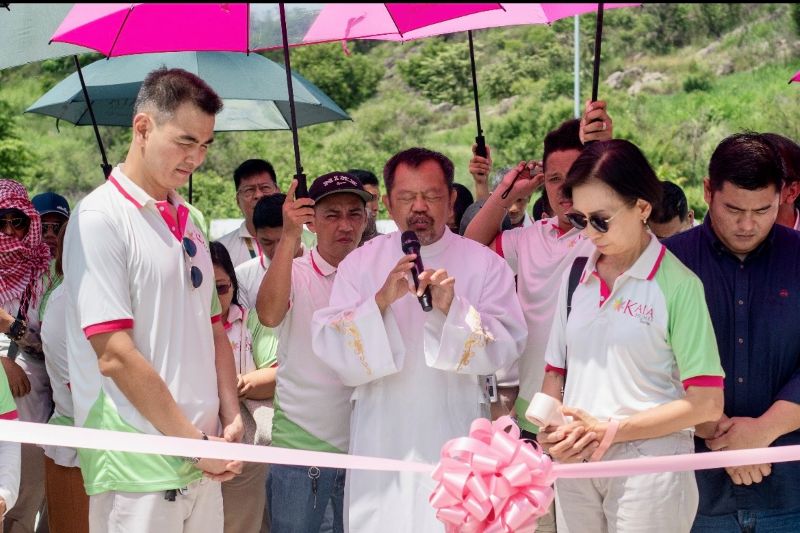
THROUGH the years, there has always been a need for affordable housing. “There are government regulation requirements,” said John Phillip Wang, president of Kaia Homes, Inc. (KHI).
“Our position on the matter is, yes, there are government regulations requirements,” Wang added. “But why stop and just deliver what the government requires? The delivery of the features here are in line with what we deliver in our other subdivisions or other projects. It comes with trying to understand the buyer and trying to focus our efforts around the buyer.”
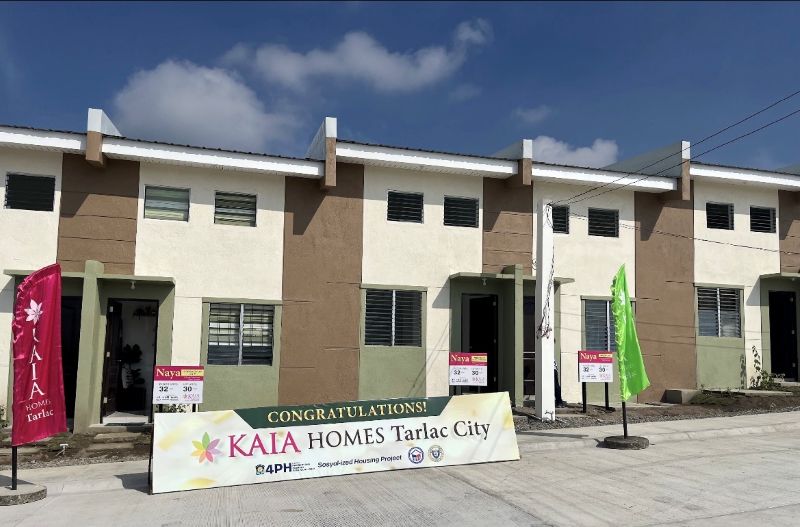
Kaia Homes rises in Tarlac.
Two-storey townhomes are being offered by Kaia Homes in the heart of Tarlac City, the answer of private developers to the government challenge of what socialized housing should look like.
The company recently unveiled its newest benchmark offering for socialized housing, a community that delivers affordability without sacrificing the quality, comfort, and dignity typically associated with private gated subdivisions.
KHI is an affiliate of Citihomes Builder and Development, Inc. (CBDI), that is focused on the government’s call for better socialized housing with private village standards. Rosie Tsai is the chairperson of CBDI.
“We’ve been doing this for many years already,” Wang said. “What does the buyer want when they first move in or when they choose to buy the property? It can be as simple as, okay, here’s the key. It’s down there. 1-2-3, turn right. Or you can do it better. But it requires that you first empathize with the buyer. So, Kaia Homes Tarlac, just like most of our other projects, is designed, built, and serviced with the buyer in mind, first and foremost.”
Kaia Homes lies on 48 ha of land comprised of 7,066 housing units in Barangay Armenia in Tarlac City. Land development started only last April, and the townhomes are expected to be completed in the second quarter of 2027. Through PAG-IBIG financing, prospective owners can avail of a maximum 30-year plan to pay.
This is the company’s third Kaia Homes project in its 12-year history of building socialized housing communities. The project materialized following discussions with PAG-IBIG Fund and the government-expanded program developers, Pambansang Pabahay Para sa Pilipino (4Ps)
Kaia Homes comes with community amenities: clubhouse, gate and guardhouse, perimeter security, multi-purpose covered court, park, and children’s playground. The houses will have roof framing with astrofoil insulation to reduce indoor heat, second floor concrete pouring, foundation grade beam, ground floor posts and beams, second floor beams, and deadbolt security locks for both front and rear entrances.
Landmarks like SM City Tarlac, San Jose Arch, Tarlac Recreational Park, and Camp O’Donnell are just in the vicinity. “Panibagong simula, kaya mo na” is the line that Kaia Homes created to launch the Naya Townhouse unit in Tarlac City.
Every two-storey house has a 32-sqm floor area on a minimum 30-square meter lot. Each unit comes with provisions for two bedrooms, one toilet and bath, rear kitchen, and space for motorcycle or e-bike.
Wang noted that his company cannot deliver any housing project without parks and playgrounds or green spaces. “What we feature are things we believe we can do better than other fellow developers, especially the covered court.
“We’ve built at least eight covered courts already over the last 12 years. Our standard is, if a project is beyond a certain size. It gets a covered court because the clubhouse is typically smaller. If a project is big, you have many residents. When you have home assembly, when you have a Christmas party, we provide a venue.
“The chapel is also typically quite small. Although we’re giving a chapel, that’s not even part of the license itself. We’re giving a chapel out of thanksgiving. That’s not part of the selling features.
“The stair formation is not ladder type, which is sometimes seen in socialized housing. The shower head is telephone type. The lavatory, you can use for brushing your teeth. The ground floor will have window grills, steel and rear door for security. Front and back doors will have deadbolts. Window screens and the screen rear door will be installed for the insects and for the children’s protection.”
Citihomes Builder Development, Inc. (CBDI) started its venture 43 years ago in Cavite. Today, the housing is spread all across Southern and Northern Luzon, with 21 branches in Cavite (including General Trias and Naic), Batangas, Pampanga, and Bulacan.
Not surprisingly, Kaia Homes Tarlac has been involved in building affordable project ever since, with CBDI. “Our first project in Cavite started in 1993,” Wang said. “KHI’s first project in General Trias was in 2015. Even then, we went in with the philosophy of, okay, you need to have this number of square meters. It has to have this door and that door and this many windows. But I said, ‘No, we can do better than that.’ And so we did. It’s as simple as that. Just think of the buyers first.”
Citihomes bought the property in Tarlac City before COVID 19 happened. “First, before any project, you have to do your studies,” Wang said. “This is north of Cristo Rey, the housing of Camp O’Donnell. So there is a community just south of us.
“Second, if you look outside, the main road, Cojuangco Highway, is already four lanes. So very, very accessible. No traffic. Third, the road is very new and very well maintained because the vehicles that pass by here are usually chicken feeders and viajeros.”
Kaia Homes intends to start housing construction before end of the year. “By next year, people can start moving in,” Wang said. “So far, there have been some sales. Like many other project’s successful sales, there are life stages to the project. You get some sales because of the excitement, because of the proximity. But we just launched the model houses this July. So today, you have a visual representation of what the buyers will get.”
The market that will buy Kaia Homes properties will not buy in cash, Wang noted. “I don’t imagine many of them will have P1 million to pay in cash,” he said. “But it’s P4,000 a month. This was launched only last April.
“It’s part of the company’s commitment to comply with the laws of the land. And there are government organizations in authority to promulgate the laws of the land. That’s part of the culture of the company. We are upholding our integrity.”
Citihomes has yet to venture into the Visayas and Mindanao, maybe in the future. “I think that if you want to maintain certain quality, you should not spread yourself out too thinly. We are not publicly traded. We don’t have investors in the company.
“This is still quite a small family and very familial corporate culture. To protect that culture, you cannot grow so fast. I don’t know if the plans might change and we will venture out eventually outside Luzon, but we will not sacrifice our quality standards, just in the name of expansion.”
KHI and its team operate on the Japanese principle of always improving on your trade craft. “We try to keep studying,” Wang said. “Not everything we study makes it. But we are compelled not to back down, not to give up.
“Every day we wake up, especially the production division, the guys who design and build the houses, the only thing we think of is how to make this project better than the last one. I think purpose is a single-word answer to why we do it better. Why do we keep doing this? There are many ways to answer that question. But we just know that this is what we do. It’s our purpose.
“What I think I can share is, it’s not for the money, not for the recognition, not for the accolades or awards. But we know it’s just our purpose.”


