
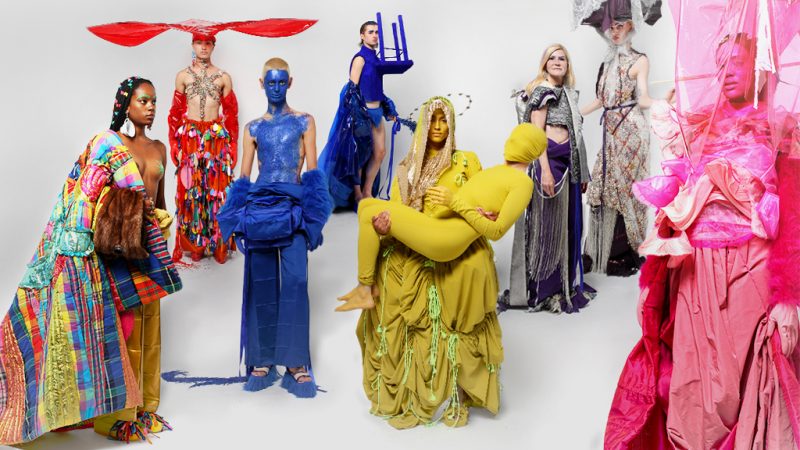
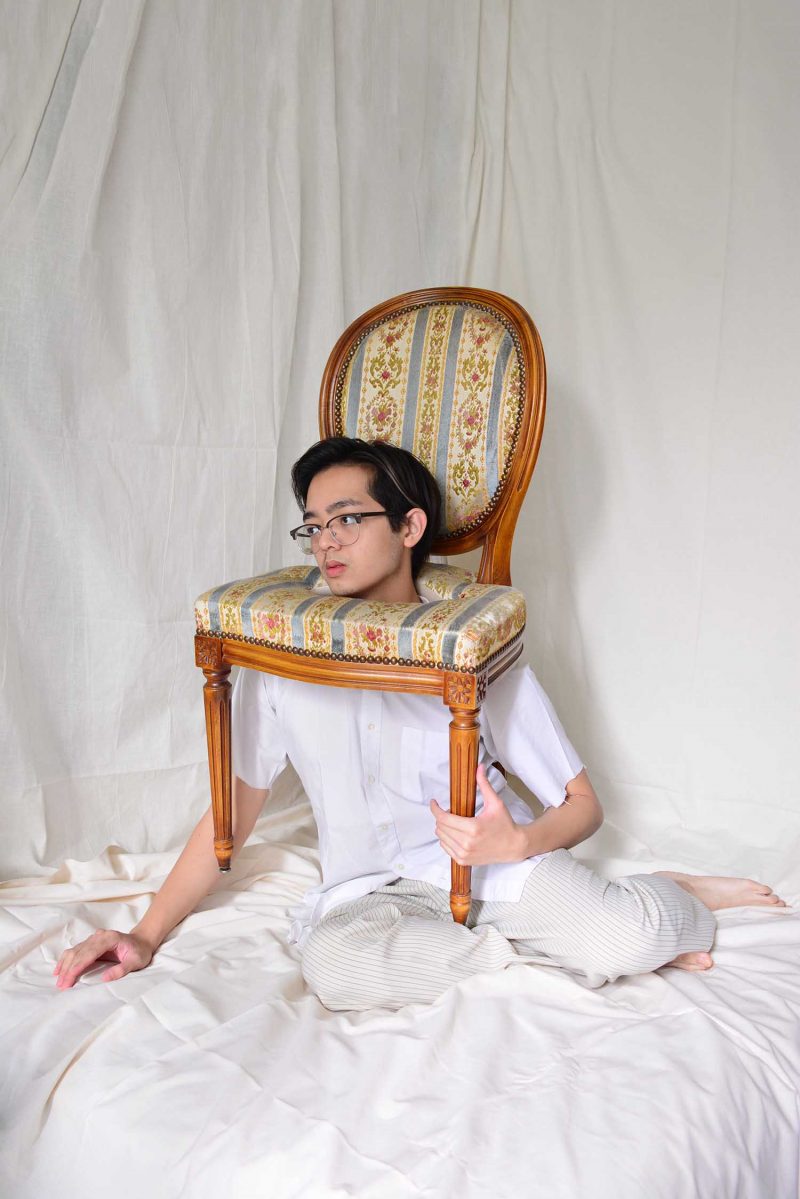
Jude Macasinag: His graduation collection tries to capture the life of a 22-year-old who left his country for Paris.
First published in you.com.ph
“Academic.” This was the word some of the professors of Paris-based Filipino fashion design student Jude Macasinag, 22, used when he showed them his mini-book of his graduation collection at Institut Francais de La Mode.
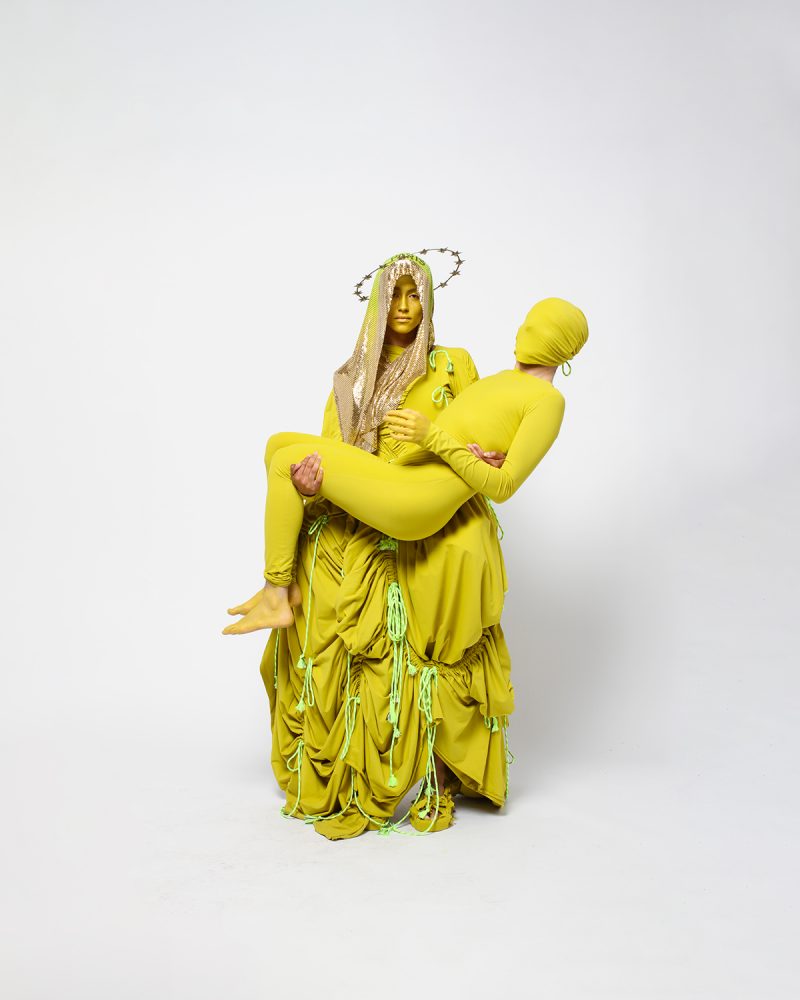
The Homemaker
Macasinag said that making a book he titled Manifesto wasn’t really required in producing a collection, but since he is making a collection so complex, “The best way to talk about it was like how I would write for my thesis,” Macasinag said. “My studies in Makiling (Philippine High School for the Arts) really helped me,” he added.
It has been three years since Macasinag moved to Paris to study fashion design, and he is also the only non-European student with a merit scholarship for the Bachelor program.
Macasinag made six looks which he calls his “six characters” for his graduation collection: The Collector, The Nomad, The Builder, The Homemaker, The Creative, and The Citizen. Acting as muses, these fictional characters draw from different chapters and experiences in Macasinag’s life to form the narrative that is his collection.
The collection delves into themes of self, longing, family, uncertainty, joy, loss, grief— elements that make us human. So for Macasinag, there is no better reason to design than to tap into the “human” side of why and how we wear clothes, “The collection is akin to a diary; however, its contents are not made specific, and thus are, hopefully, universally relevant,” Macasinag explains.
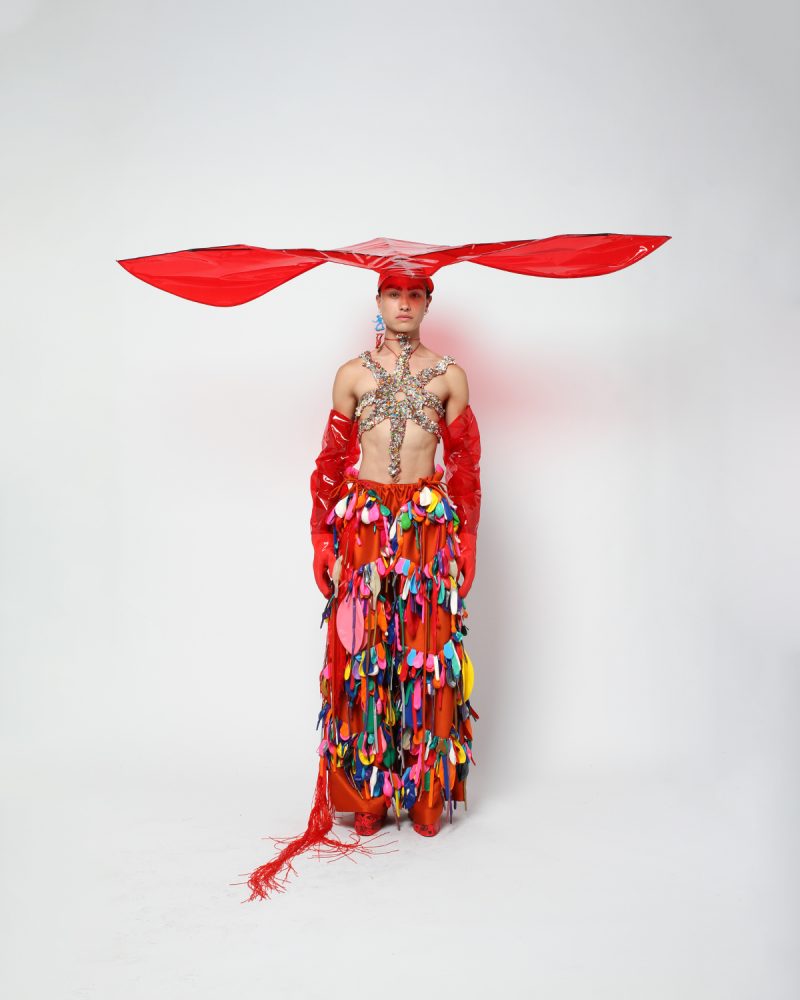
The Collector
“As a child, I would hoard miscellaneous tiny objects which drew my interest—rocks, fragment of fabrics, balloons, stuffed toys, and art materials—which created clutter around the house, irking my parents.”
The Nomad
“When I was 12, I left my parents’ home to study in a boarding school. I gained as much knowledge and skills as I could, before heading heading out in an uncertain direction.”
The Builder
“Moving to France in 2018 has created a hybrid in my cultural consciousness—I have adapted to the country, and am slowly viewing it as a new home, in addition to mine in the Philippines.”
The Homemaker
“Representative of The Homemaker is the Pieta, a religious sculpture which I have seen all throughout my upbringing. Our own Pieta, a family heirloom, was often used in local religious ceremonies and rituals.”
The Creative
“The Creative discusses one’s artistic endeavors, and how he continues to learn and unlearn the knowledge and skill in devotion to his craft. Spending six years in an arts-focused school and also having already studied fashion before coming to France, I found it a challenge to deconstruct and dismantle my preconceptions in the fields of fashion and art. Unlearning is a learning process in itself, and it is only when one unlearns that one finds a new perspective.”
The Citizen
“The Citizen is representative of the constant regeneration of oneself in society. Who and how a person is is never static, and is often the result of several influences he encounters in his daily life.”
But his favorite piece, Macasinag said, is “The Homemaker.” It is one of his unexpected pieces, he said. “I spent months trying to plan a design for that look, but I couldn’t start executing simply because I was not yet convinced. It ended up being one of my most spontaneous outfits.”
The result was a garment that felt very organic. It was also a piece that was closest to home, directly inspired by the Pieta, a religious statue currently kept in his grandmother’s home. “I kept seeing the image while doing research after my grandfather’s death, so I dug into its history and importance within my own family. It definitely left a mark.”
His collection was also picked to be part of the official Men’s Paris Fashion Week where France First Lady Brigette Macron was in attendance. “It’s exciting to show in Paris Fashion Week. But somehow I’m not magnetized towards the label of PFW and being able to do a show. Whether PFW or not, what’s important for me is that my work is being shared with a good audience, and whether the clothes or the content behind it is accessible.”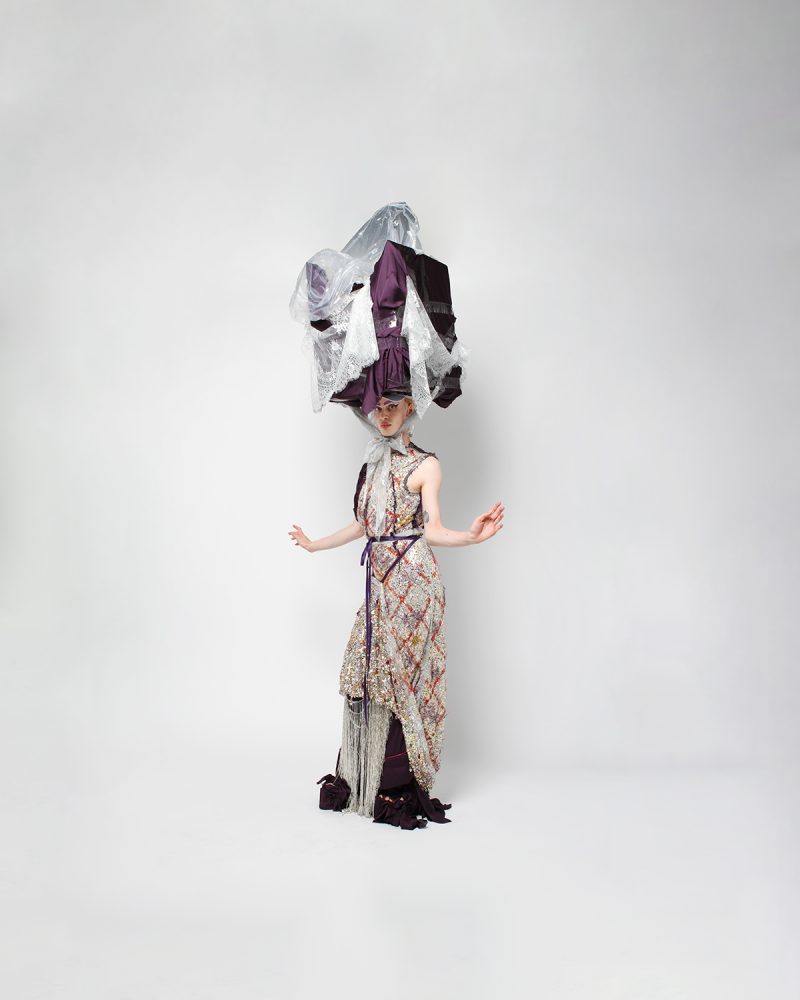
Macasinag felt he “graduated” with flying colors. “I feel free—free in the sense that I know I am equipped technically, culturally, and personally to create and make meaning through what I do,” he said. “Living in an environment like Paris during the formative years of my creative education gives me confidence in the statements that I want to make via my work.
“I will talk about politics through my seams, I will talk about sex through the stitches, I will talk about the things that make us human, whether good or not, in the fabric we wrap ourselves in.”
Macasinag is now focused on getting into the school’s MA program and hopefully getting a scholarship, as well. “I feel like there’s still plenty to witness in an industry like fashion, whether within or beyond its glittery façade.”
As a student who has grown to not necessarily be part of what’s established and not hemmed in by the restraints of the industry, Macasinag feels that there is a deeper understanding of the reason why he does what he does—“It’s a matter of letting that understanding be felt and realized by other people, too.”
Credit: You Ph/YouTube


