
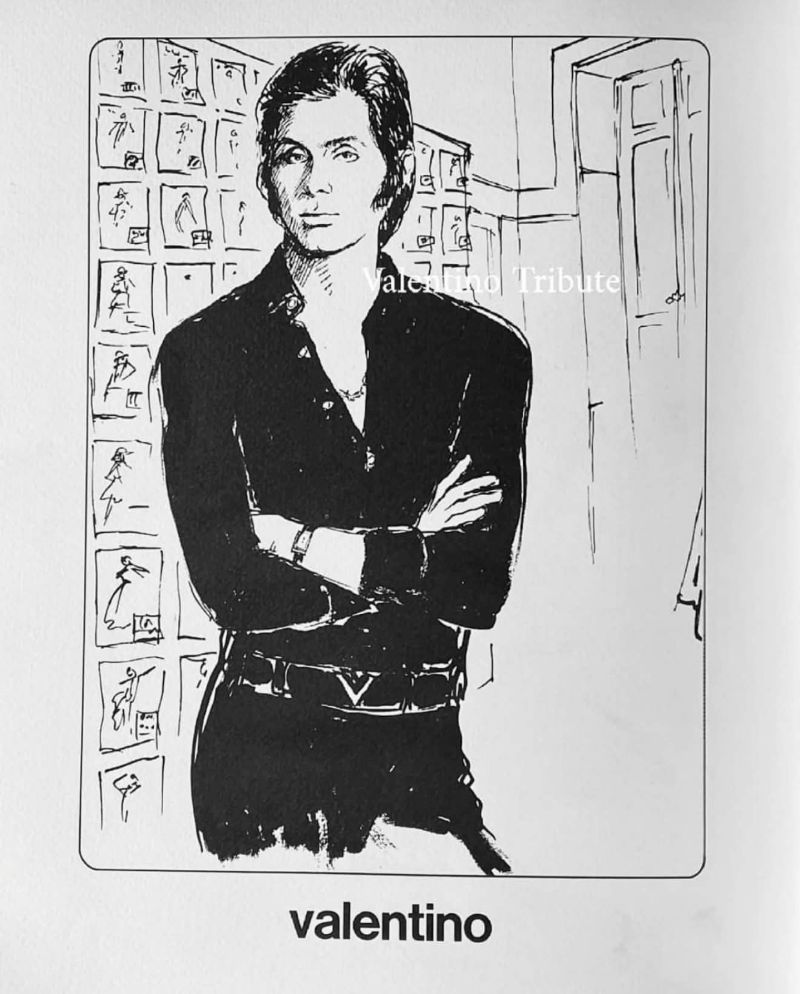
Portrait of Valentino Garavani for Vogue Italia 1971 shows bold ink contrasts and economical lines to focus on the designer’s calm expression and Italian tailoring style
Maning will be launched on Aug. 8, 2026 at 5 pm, coinciding with the opening of Hindy Weber Everything store at 6F Karrivin Plaza, 2316 Chino Roces Ave. Extension, Makati
Long before digital rendering and high-speed photography transformed fashion media, Maning Obregon captured the elegance of haute couture with a few fluid strokes in charcoal, pen, and ink. Among the foremost fashion illustrators of the 20th century, this artist of Filipino descent translated runway collections into images that shaped fashion’s visual language. A new biography by historical archivist and researcher Isidra Reyes, Maning (Archivo 1984 Inc) , restores his place in the history of fashion.
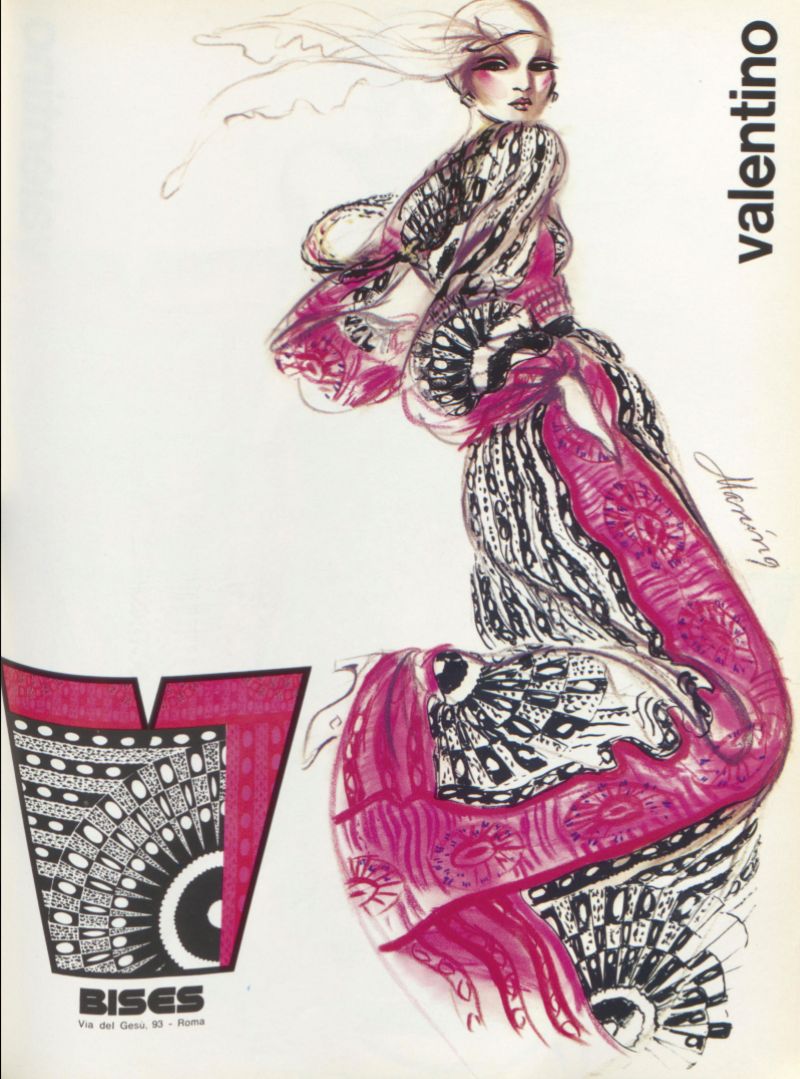
Illustration for Valentino and the textile firm Bises published in Harper’s Bazaar, September 1973
For nearly three decades, Obregon illustrated haute couture for department stores, designers, and magazines. His work appeared in leading American publications and advertising campaigns, alongside sketches of creations by Valentino and Stephen Burrows. More than recording garments, his illustrations distilled the mood, movement, and sophistication from the 1960s to the ‘80s fashion while reflecting the growing presence of Filipino creativity in Manhattan.
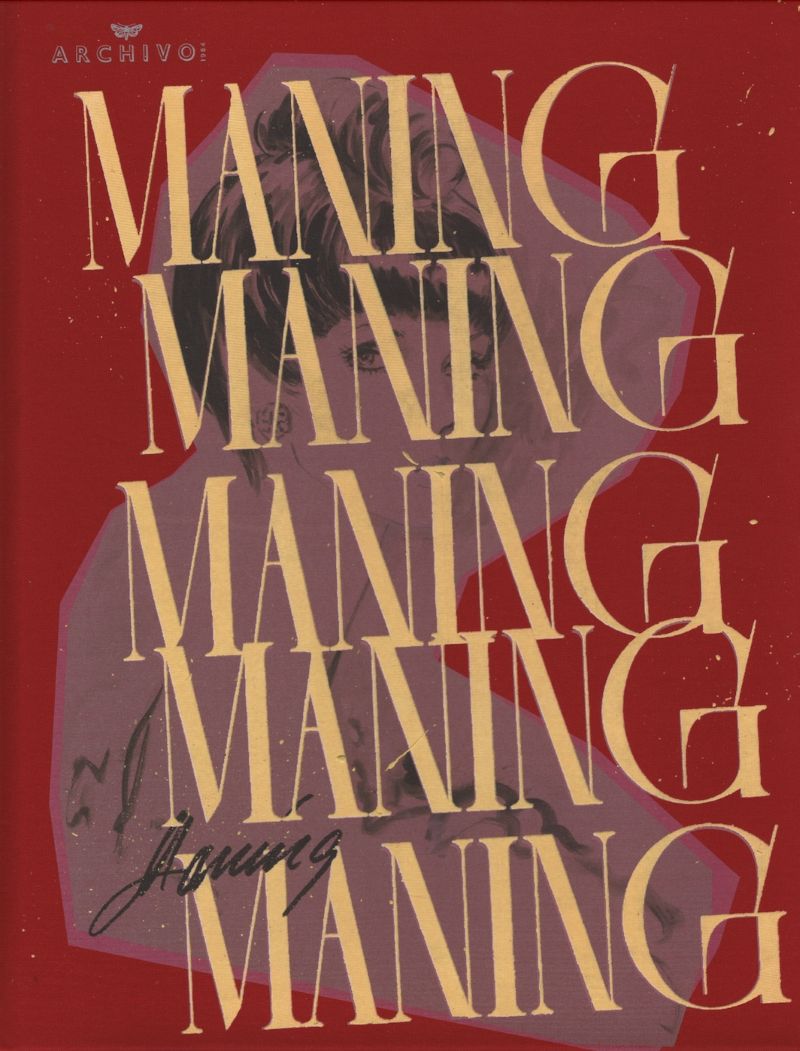
‘Maning’ cover
Born in Brooklyn in 1939 to a Filipino immigrant family, Manuel Obregon Jr. divided his youth between New York and Miami where is father worked. His talent took him to Paris, where he spent a year rendering elaborate coiffures for leading hair stylists while studying at the École des Beaux-Arts. Back in New York, he attended the High School of Industrial Art before joining Vogue under its legendary editor Diana Vreeland. During his tenure at the magazine, from 1962 to 1970, he became known for his remarkable speed, sketching collections at European fashion shows where photography was prohibited. Vreeland favored him because he could translate her rapid-fire ideas onto paper almost instantly while others labored over finished drawings. She once teased Maning’s rival illustrator Antonio Lopez, “Faster, Antonio, before the fashion goes out of style!” Obregon’s hand was always quick enough to match her pace.
Beyond his speed, Obregon wielded considerable influence within Vogue. When a young Patricia “Pat” Cleveland arrived at the magazine hoping to show editors her fashion designs, Obregon recognized her charisma and urged future filmmaker and then associate editor Joel Schumacher and fashion editor Carrie Donovan to meet her instead. His instincts proved right. Cleveland soon embarked on a groundbreaking modeling career and became one of fashion’s first supermodels.
He left Vogue in 1970 after Vreeland’s dismissal. Having already contributed fashion illustrations to The New York Times during his years at the magazine, he expanded his work to other major publications and advertising campaigns for leading department stores, cementing his reputation as one of America’s foremost fashion illustrators. Obregon challenged the conventions of mid-century fashion illustration. In a 1970 interview with The Village Voice, he explained that he had grown tired of depicting clothes in isolation. Instead, he surrounded them with crystal chandeliers, period interiors, and applauding audiences to capture how people actually lived in fashion. “Now, I’m trying to include environments and ambience in my work,” he said. “I’m tired of floating sterile images. After all, we don’t just model clothes down a runway. We work and live in them.”
His instinct for theatrical presentation made Obregon an indispensable collaborator of Eunice Johnson, founder of the groundbreaking Ebony Fashion Fair. He trained models of color and created life-size fashion sketches mounted on folding screens that served as dramatic backdrops for the traveling runway shows. His standing in Johnson’s circle was such that he and designer Lorenzo Leviste were once brought to their hotel in Chicago in a powder-blue Rolls-Royce.
Designer Auggie Cordero recalled a Scott Barrie runway show that organizers delayed because Obregon was racing across the street, still lacing up his thigh-high boots. His arrival mattered. At the same time, he became a generous mentor to aspiring Filipino talent in Manhattan, opening his apartment for late-night coaching sessions that helped models Anna Bayle, Tetta Agustin, and Lingling Gonzalez prepare for international careers.
Yet his place in fashion’s inner circle also brought personal heartbreak. In 1978, his longtime partner, top male model Martin Snaric, who had been discovered by Salvador Dalí, left him to marry Cleveland, Obregon’s close friend and muse. The episode exposed the fragile personal dynamics that often accompanied life at the center of New York’s fashion world.
Despite a flourishing career in New York fashion, Obregon longed to see his mother’s homeland, fulfilling a dream she herself had never realized. In 1979, he finally settled in Manila, renting a house in the Knecht Compound in Pasay. He converted the silong (basement) into an atelier, where he designed gowns with his grandniece, Emmeline Recio, in a creative workshop.
In his four years in Manila, Obregon made his most lasting commercial impact at Rustan’s
In his four years in Manila, Obregon made his most lasting commercial impact at Rustan’s Commercial Corporation, where the future chair and CEO Zenaida Tantoco hired him as Creative Manager and Chief of Visual Merchandising. He transformed the department store’s display windows into theatrical spectacles that style maven Ricky Punzalan compared to the work of legendary set designer Tony Duquette. Rustan’s regularly sent him to Paris to study the latest trends in visual merchandising, enabling him to elevate Manila’s department store displays to international standards.
His creativity extended beyond the windows. When beauty queen Debbie Enriquez needed a costume for a theme party, Obregon and Tony Cajucom quietly commandeered 200 yards of red tulle intended for a Rustan’s Makati display and fashioned a dramatic tiered skirt with a four-foot train on the spot.
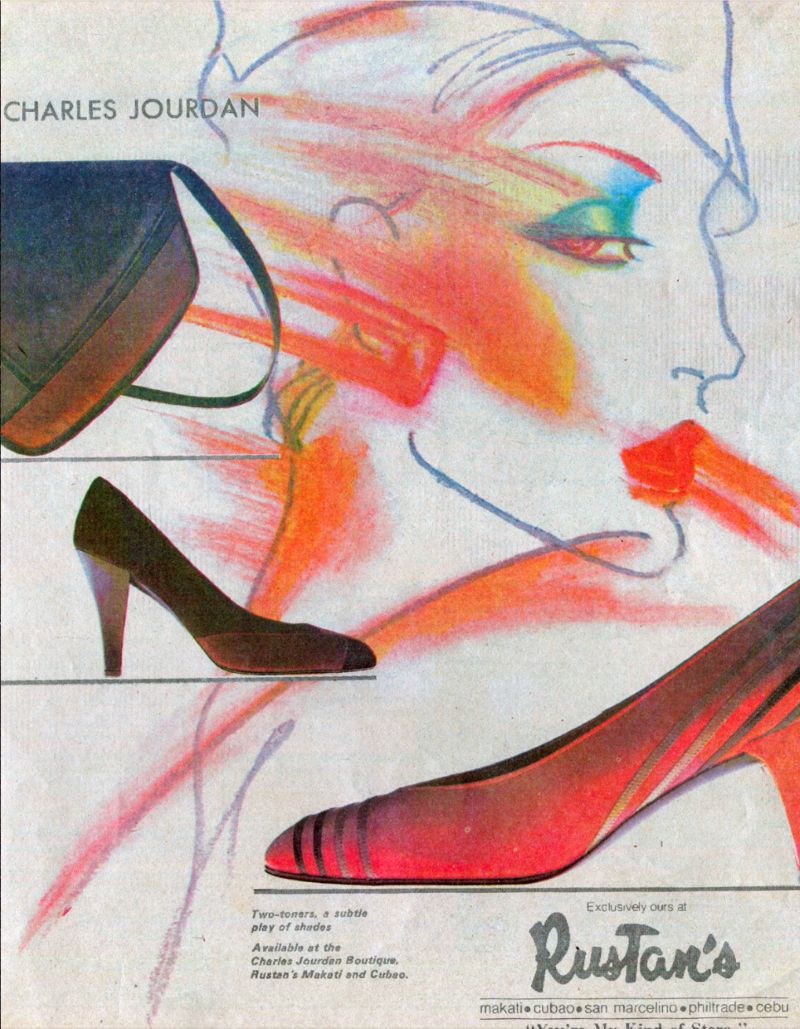
Charles Jourdan advertisement for Rustans
By day, Obregon shaped Rustan’s visual identity and illustrated for Manila Women’s Wear (MWW), championing emerging designers alongside established couturiers such as Auggie Cordero, Bubum Melgar, and Chito Vijandre. By night, he designed elaborate costumes and custom ternos for The Paper Dolls, the pioneering Filipino female impersonator troupe, dressing them for performances at Coco Banana, and creating looks for socialites such as Elvira Manahan.
Obregon left Manila in 1983. Rumors circulated that he had fallen out of favor with powerful figures, a claim Tantoco firmly denied. His departure also coincided with the country’s mounting political and economic turmoil following the assassination of opposition leader Benigno Aquino Jr., a watershed moment that prompted many Filipinos to migrate.
Returning to New York, he resumed his career as a freelance fashion illustrator, stylist, and visual consultant, remaining an active presence in the city’s fashion and artistic circles throughout the 1980s. He died in New York on Sept. 26, 1989, at the age of 50 from respiratory failure.
Before his death, Obregon entrusted his portfolio to relatives. Those drawings, photographs, and keepsakes became the foundation of Maning, allowing Reyes to reconstruct both his life and career.
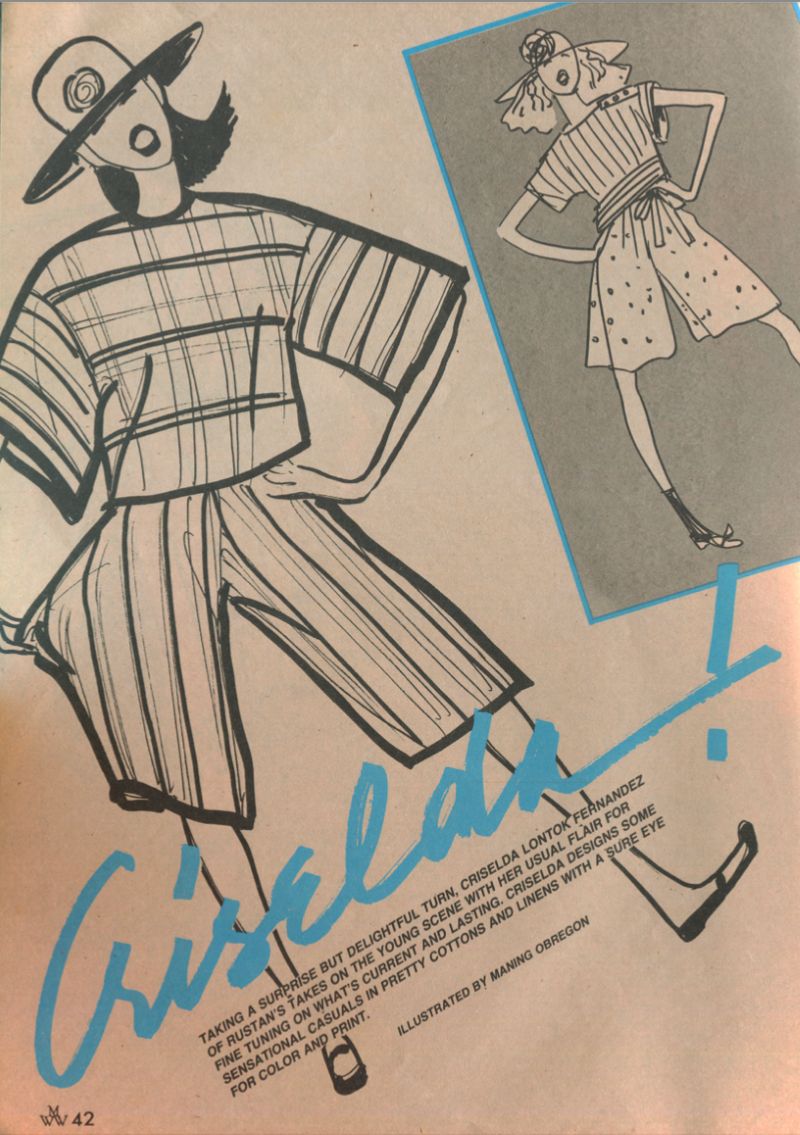
Linear look for Criselda Lontok Fernandez
Obregon elevates fashion illustration into fine art by combining precise drafting with expressive mixed media
Across these works, Obregon elevates fashion illustration into fine art by combining precise drafting with expressive mixed media. In an illustration for Harper’s Bazaar Italia, September 1983, the Valentino gown shows his calligraphic fluidity, using graceful ink strokes to capture the movement of fabric and the head scarf. He layers vivid magenta washes with detailed black line work to render fan motifs, tiling, and delicate lace. Dry-brush textures and wax resists create depth, giving the textiles a woven, almost tangible quality against the bold geometric typography.
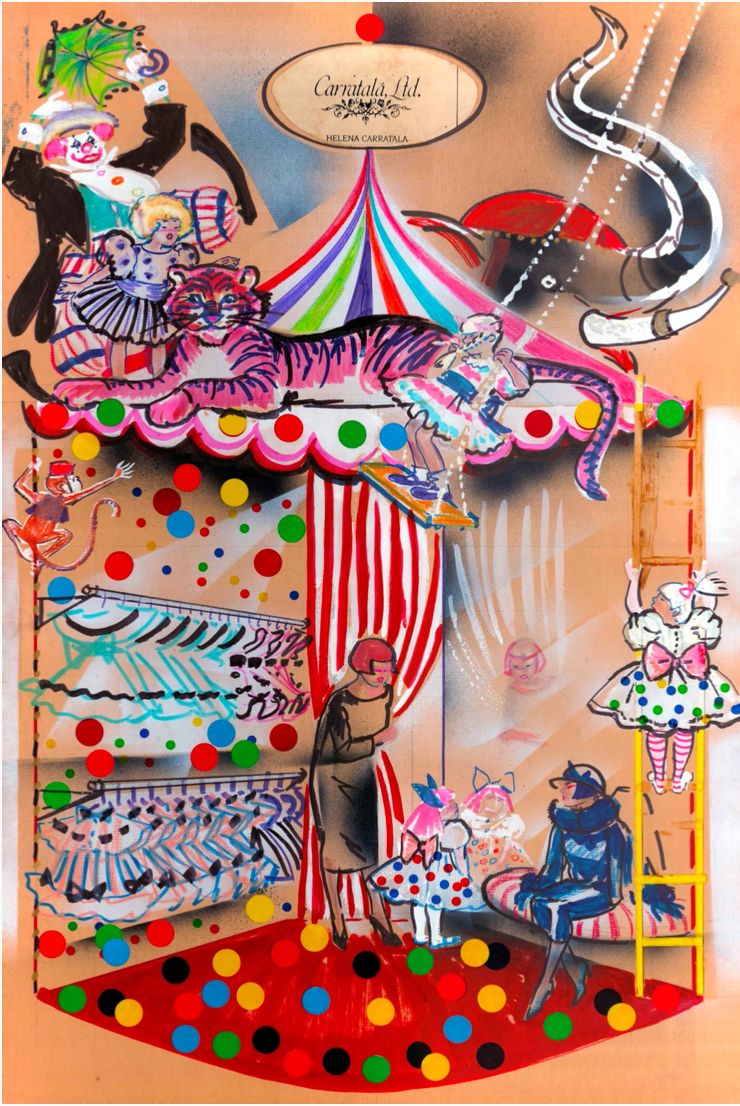
Rendering of Carratala Ltd boutique which shold children’s wear in New York
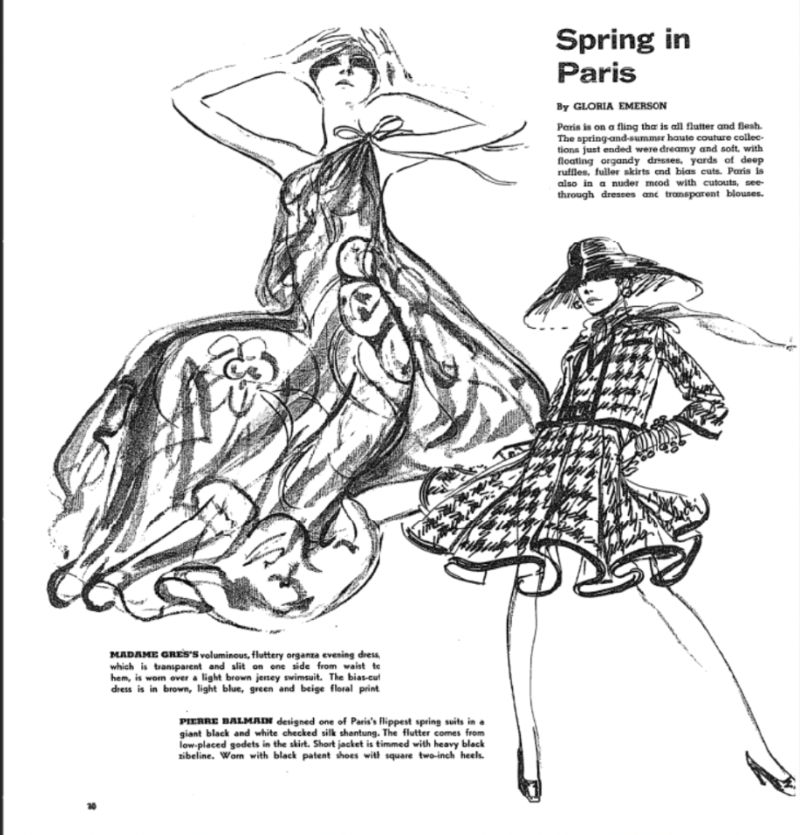
Illustrations for Madame Gres and Pierre Balmain which accomponied Gloria Emerson’s story for NYT 1968
Obregon also adapts his technique to match each garment’s mood. Back in the 1980s, Spanish designer Helena Carratala Mander sold gowns in top US department stores. His illustration of her evening gown uses lively pencil shading and olive tones to make the tulle skirt appear weightless and full of motion. Clean ink lines define the lace bodice, while a touch of coral brings warmth to the face. In contrast, his New York Times illustrations of Madame Grès and Pierre Balmain reveal his speed and precision. Soft charcoal captures the flowing drape of an organza dress, while sharp ink lines define the structure and patterns of a checked suit.
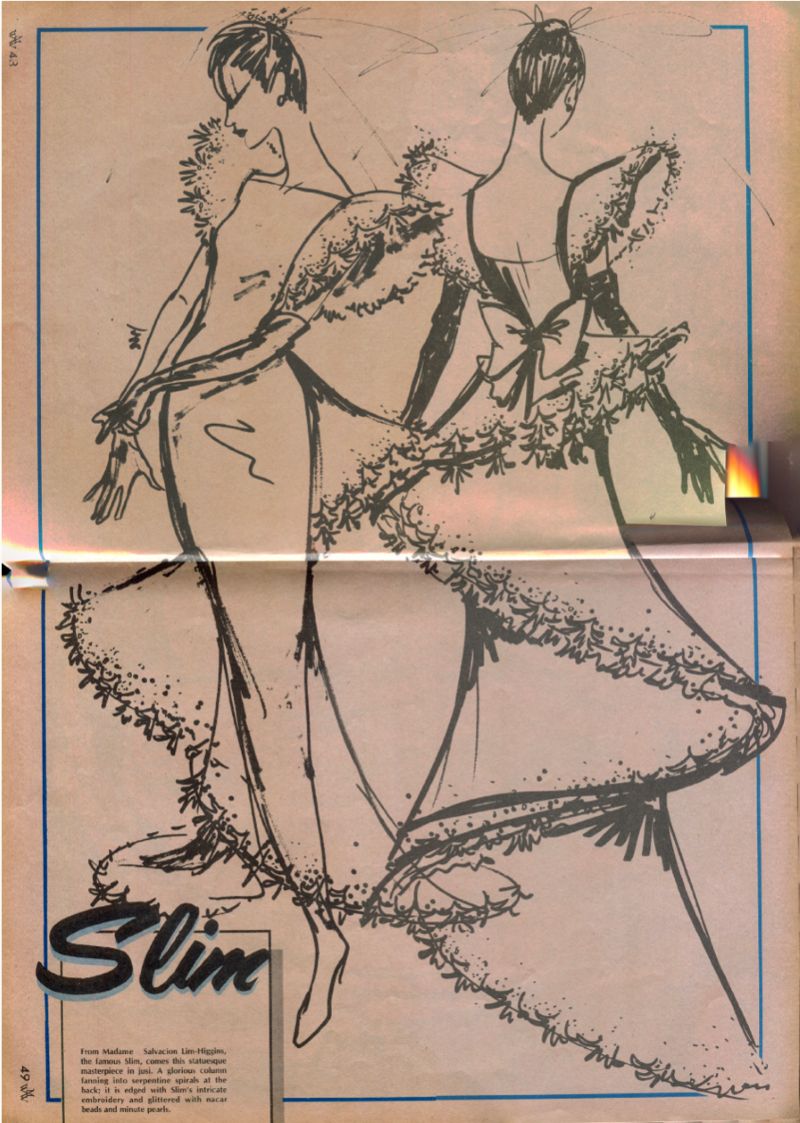
Salvacion Lim Higgins’s curvilinear look for MWW 1983
In MWW’s illustration of Salvacion Lim Higgins’ gown, Obregon uses dramatic charcoal-like ink lines to emphasize its sharp silhouette, double-figure perspective, and sweeping bow-back train. Tiny dots and delicate shading along the edges suggest intricate beadwork while preserving the bold outline. For Criselda Fernandez’s youth fashion for Rustan’s, Obregon uses crisp ink lines to sharpen clean tailoring, bold patterns, and practical details. His expressive faces and breezy poses infuse the structured garments with youthful energy on the printed page.
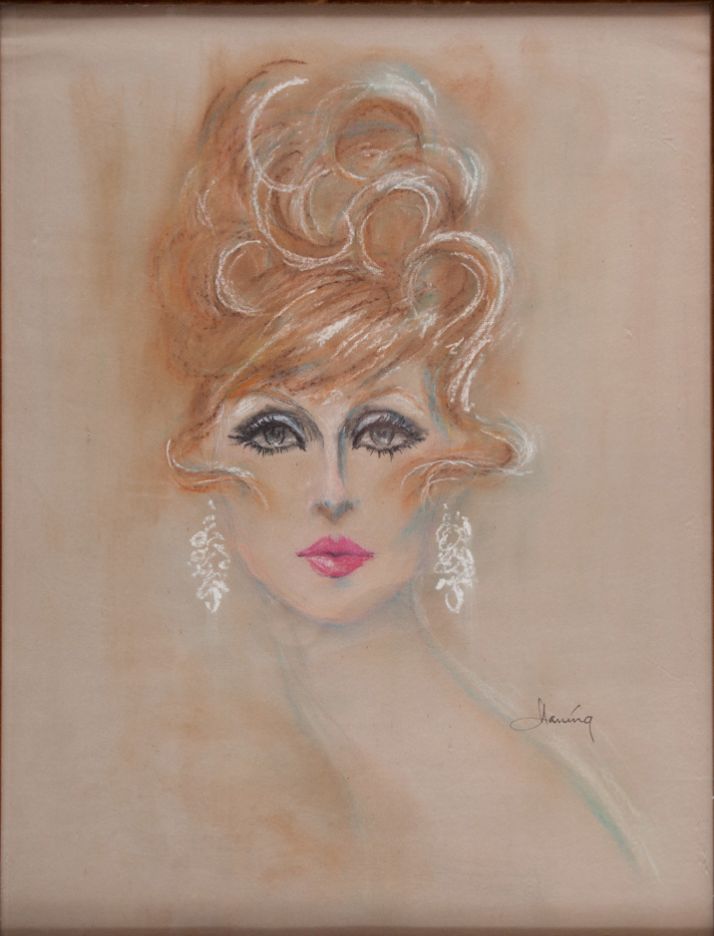
Portrait of gossip columnist Aileen Mehle a.k.a. Suzy distills glamour rather than precision with soft pastel strokes and restarined palette
His Charles Jourdan shoe advertisement for Rustan’s transforms a standard commercial layout into expressive editorial art with an airy, light touch. He sketches a delicate female profile in loose blue ink lines, giving the figure a soft, breezy, unfinished look. Smudged strokes of coral, terracotta, and soft green pastel add warmth, texture, and gentle movement to the background. Against this painterly setting, the shoes stand out in crisp, solid tones with sharp silhouettes, drawing the eye to the product while preserving the illustration’s artistic appeal.
Obregon treats interiors as integral to the fashion narrative. For Carratala’s New York boutique for high-end children’s wear, he imagines the atelier as a circus-like stage with a tent canopy, climbing ladders, and hanging racks. Pointillist dots, bold color blocks, and layered gouache and crayon create depth and movement. The result is an immersive setting where the garments become part of a complete visual composition.
All told, Reyes rescues a remarkable body of work from obscurity, assembling rare photographs, illustrations, and archival records into the first full account of Obregon’s life. Her exhaustive research takes detours into family trees, property records, and micro histories of other subjects. Yet, these idiosyncrasies reflect the instincts of an archivist determined to preserve every surviving detail of a disappearing era. Finally, the book succeeds where it matters most. It restores Maning Obregon to his rightful place among the great figures of Filipino fashion.
Maning will be launched on Aug. 8, 2026 at 5 pm, coinciding with the opening of Hindy Weber Everything store at 6F Karrivin Plaza, 2316 Chino Roces Ave. Extension, Makati)


