
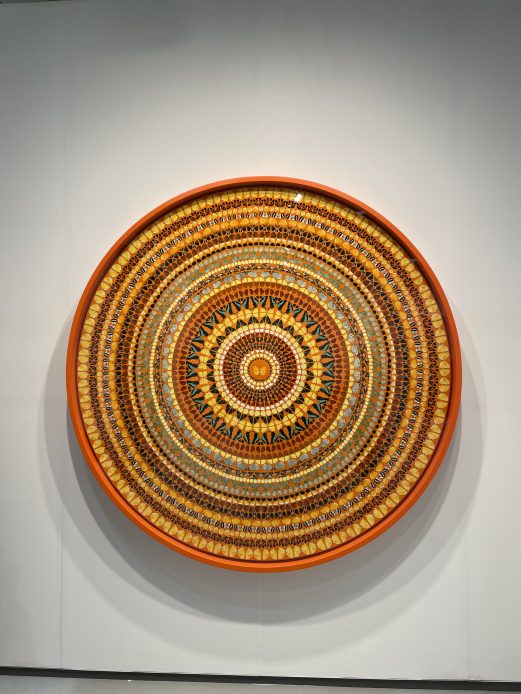
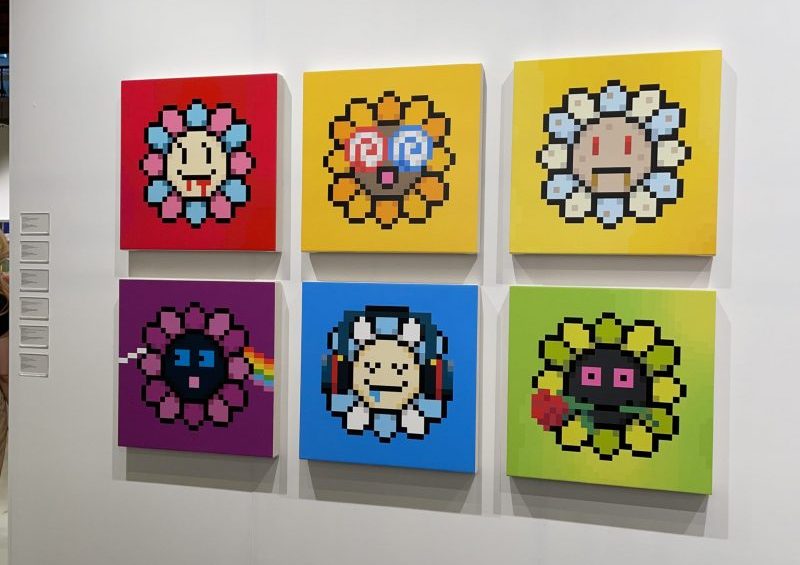
Takashi Murakami
-

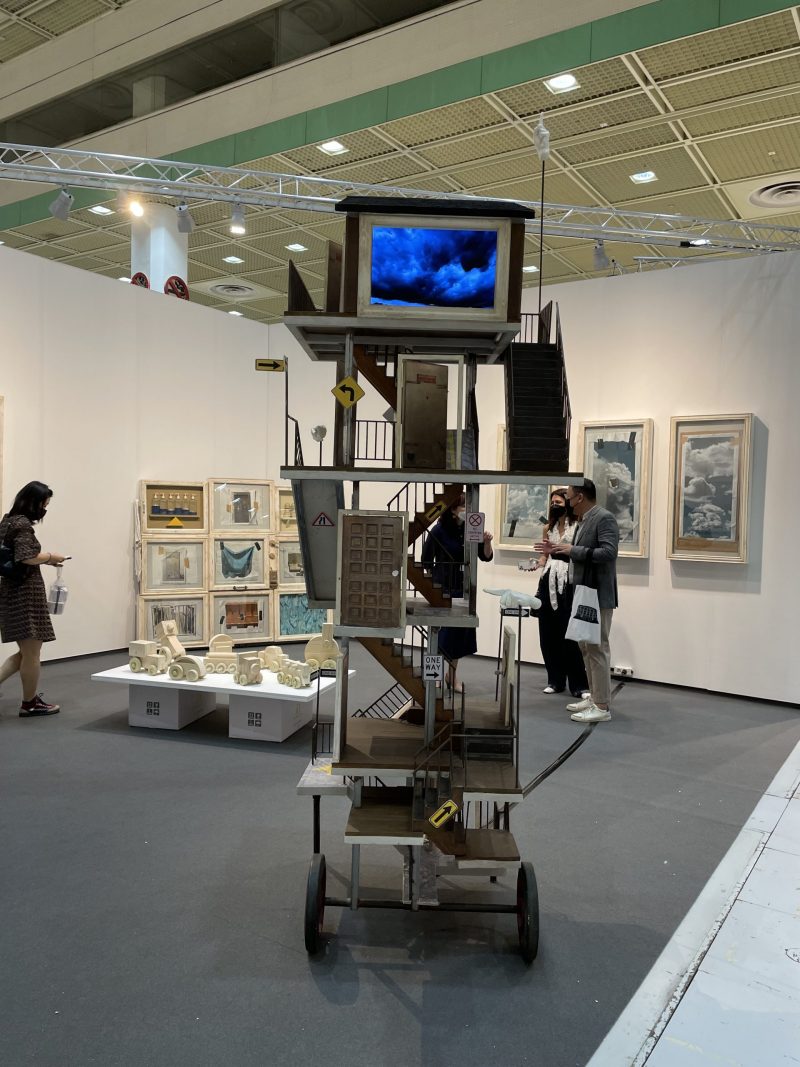
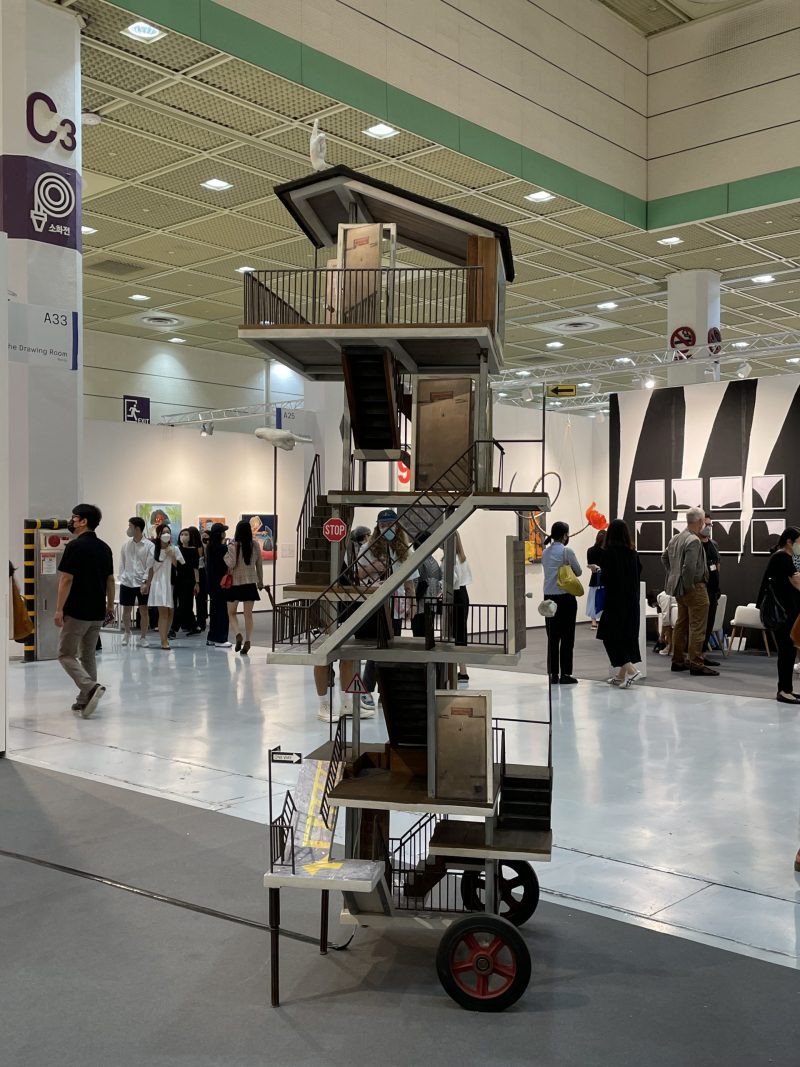
- Jose John Santos III installation front
-
- Jose John Santos III installation
I was excited to go to South Korea, not only because I watched a lot of Korean drama and it was my first time there, but also because of one event: I was excited to see Frieze Seoul, the first Frieze to be held in Seoul. You would also want to see it for yourself.
Going to Frieze is an opportunity to be exposed to art from all over the world. It is an international event that welcomes people to view international contemporary art, especially from Asia. It is one of the top and most influential art fairs in the world. I would say it is prestigious; I learned about it when I was studying contemporary art, and when I was reading some books related to art.
Frieze Seoul was held at the COEX Convention Center in Gangnam Seoul last September 2-5, 2022. There was a total of 110 galleries from all over the world that participated. These galleries are influential across Asia and beyond. The fair is for art made and produced by artists today. Frieze Seoul ran alongside Kiaf Seoul, a South Korean art fair.
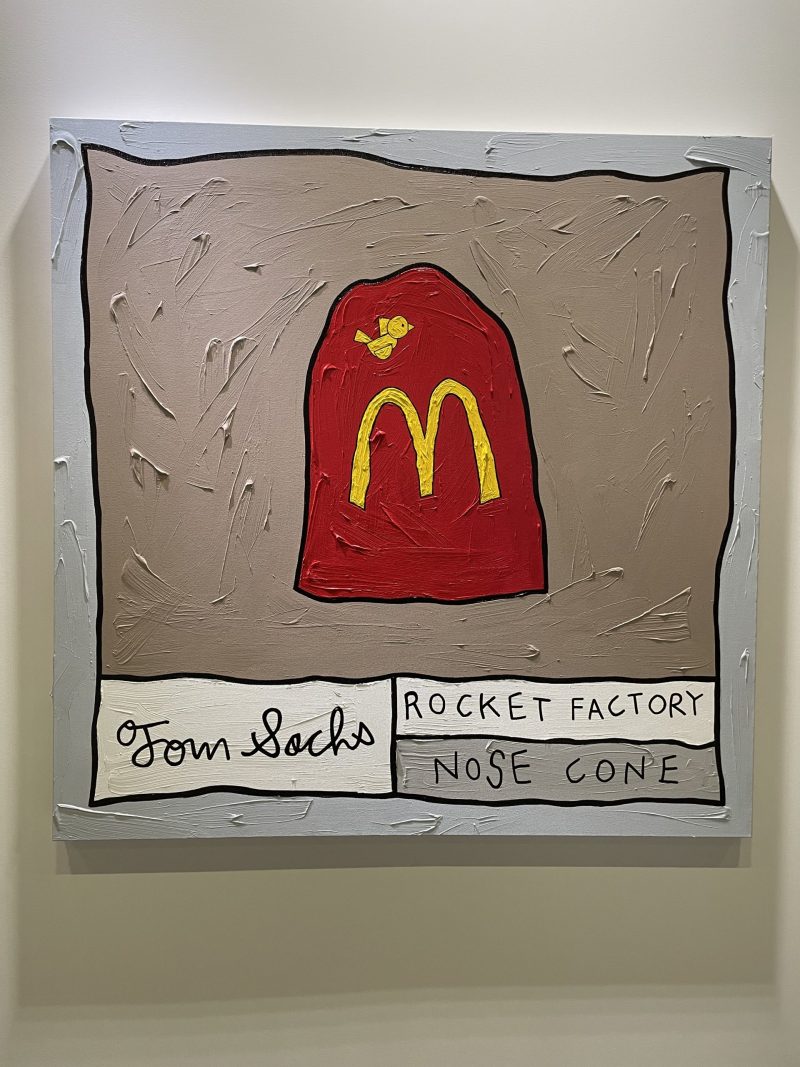
Tom Sachs, McDonald’s Nose Cone with Birdie Sticker, 2022
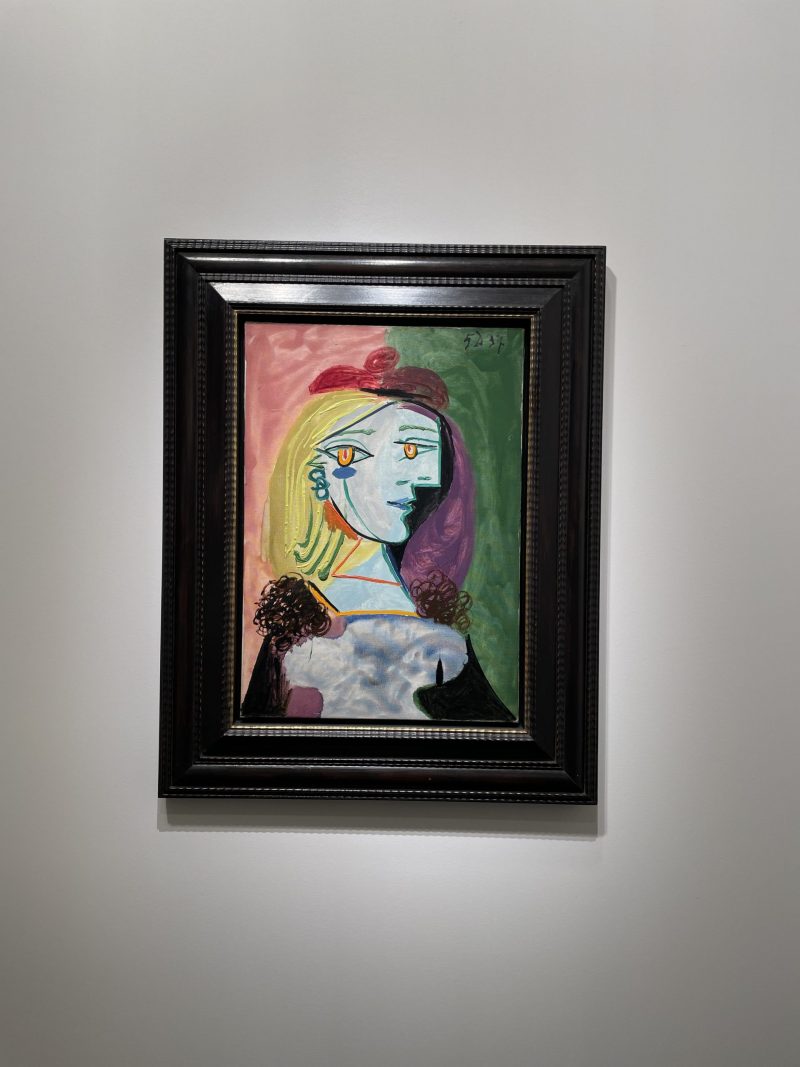
Pablo Picasso, Femme au beret rouge a pompon, December 5, 1937
It was held in the two halls of the COEX Convention Center. One hall had galleries known internationally, and the second hall had influential galleries that showed artworks from their own localities. Each gallery was given a square or rectangular space. I noticed that most of the galleries showed more works from Asia, but there seemed to be no preference with regards to nationality.
View this post on Instagram
BTS RM posts Frieze Seoul in his IG.
But what made Frieze Seoul different? Maybe it was the prestige carried by its name? I will admit, it was a typical art fair, but I think it was the artists presented, the selection of galleries, and how they presented artworks that made it different. There was a wide selection of artworks people could choose and see. It was an international mix, and galleries showed artworks by their best and known artists. I even got to see big names like Pablo Picasso, Tom Sachs, Henri Matisse, Damien Hirst, Takashi Murakami, and so many more. But people would also find themselves attracted to works from artists they were not familiar with or from different countries.
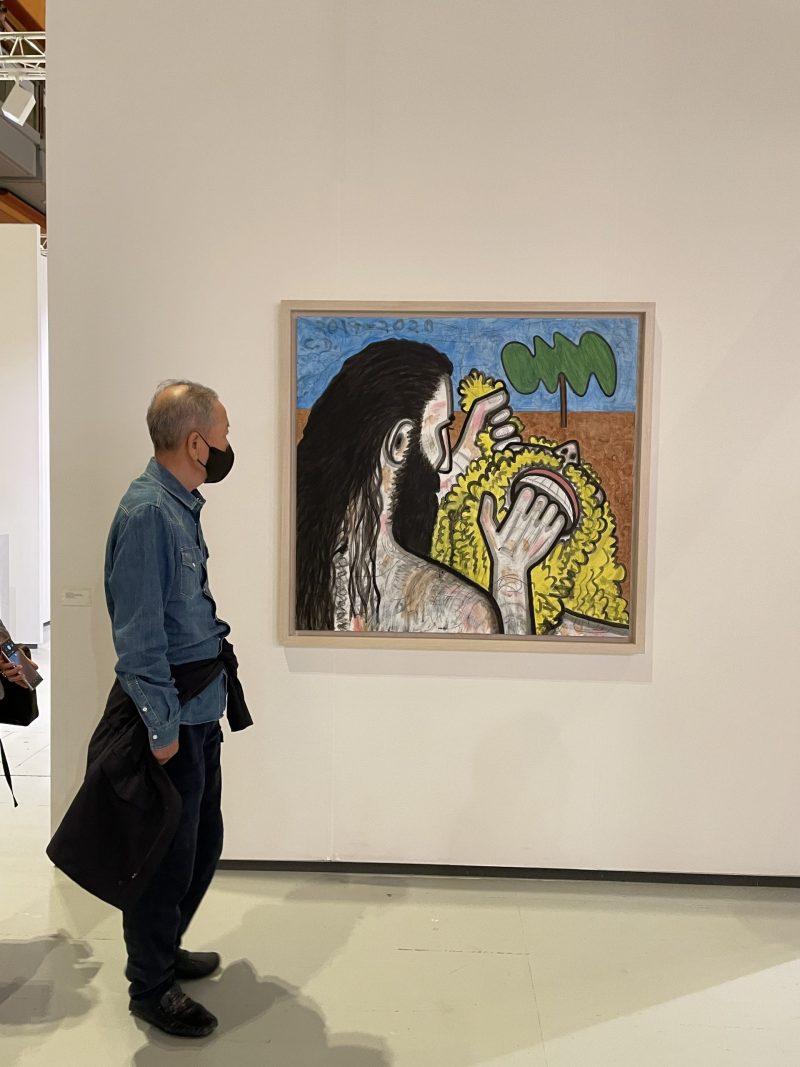
Caroll Dunham, Big Men Up Close 2019-2020
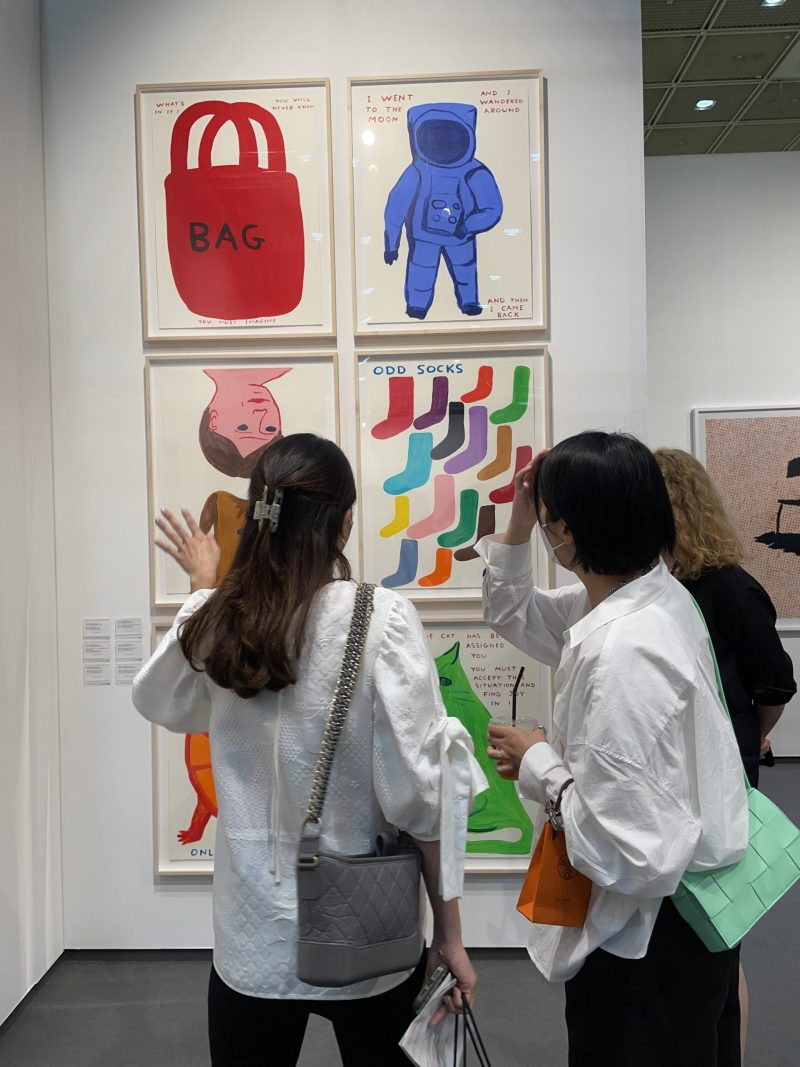
David Shrigley
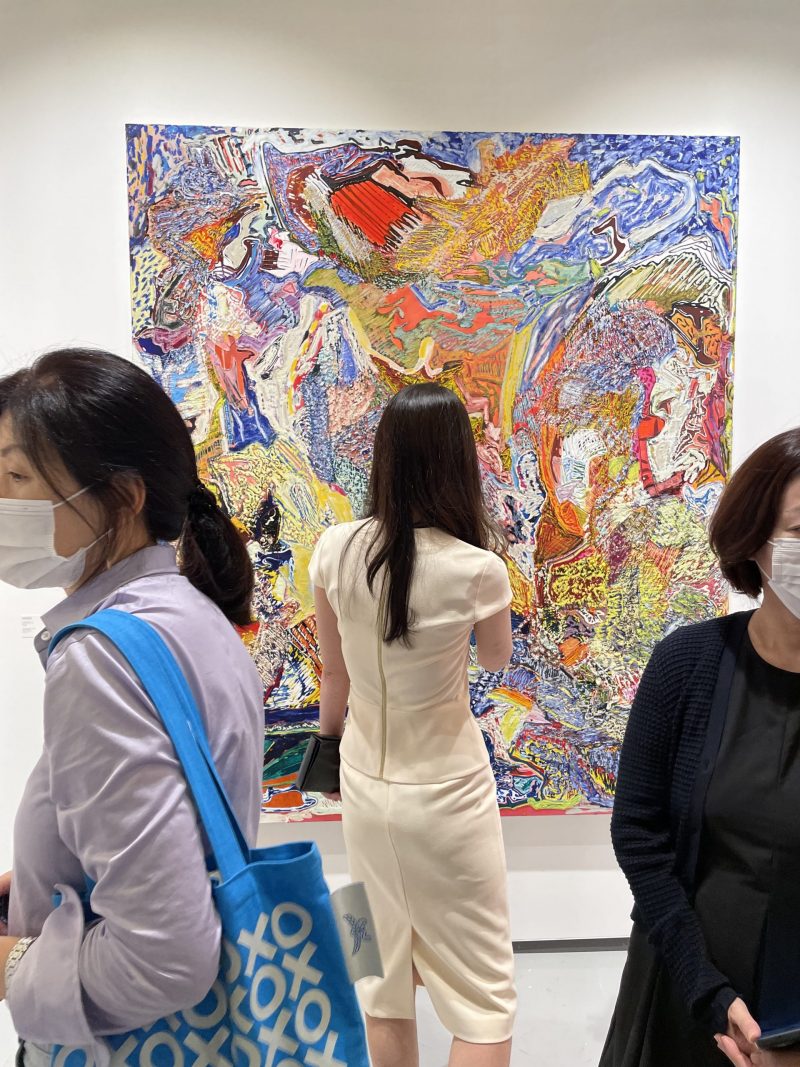
Leelee Kimmel, The Mountain, 2022
I even got to see big names like Pablo Picasso, Tom Sachs, Henri Matisse, Damien Hirst, Takashi Murakami, and so many more
Different artworks were brought in by the many galleries, and a lot of these galleries had good reputations. I got to see galleries I have heard about and galleries I follow on Instagram, like Gagosian, Blum and Poe, König Galerie, Pace Gallery. And I got to see the Philippine galleries that represented us in this big fair, The Drawing Room and Silverlens.
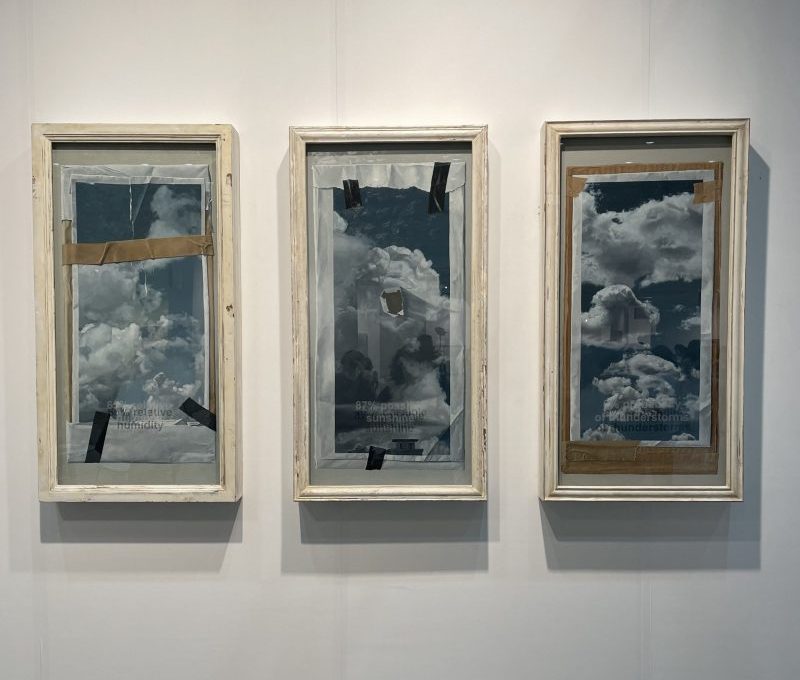
Jose John Santos III paintings
The Drawing room showed works by José John Santos III. His works were easy on the eyes and were on a different level. One installation piece was a “miniature” building that looked like an apartment. It had five floors and no walls, just doors on every floor, and staircases leading to each floor. It also had little street signs pointing to different directions. On top of the work was a TV screen. It was very cool-looking and quickly caught my attention.
Another aspect that made the fair a great experience was how all the artworks were well-curated. Each gallery made sure the works were presented in a manner that helped you appreciate the artworks. It wasn’t too overwhelming, and easy to take in. I found myself seeing most of the artworks. They weren’t just clumped together, not just hung on the walls for a person to buy. The art was presented in a tasteful manner.
But what made this fair different from other Frieze fairs had to be how it focused on artworks from Asia. Also, it was within Asia, making it accessible for people in the region.
Each gallery made sure the works were presented in a manner that helped you appreciate the artworks. They weren’t just clumped together
What I always take note of when I attend events is the people. How big was the crowd? There was quite a number of people, foreigners and Koreans. But there were fewer people attending the event compared to Philippine art fairs. It gave people the chance to breathe and take in the art. There was no shoving and no people using the artworks as mere background for their photographs. People took pictures of the works. Another observation was how the art communities from different parts of the world came to the fair to support their local art galleries. I overheard and saw people with different nationalities chatting with friends from the exhibiting galleries.
Seeing the art fair made me happy because I was given a chance to see an international art fair, something beyond my locality. I also took photos of artworks that I enjoyed—a remembrance, because I won’t get to see these works again. They will be in someone’s home in another part of the world, away from the public eye. I found myself attracted to colorful and bizarre works, at times cartoonish. I admit it was tiring to see so much art in one day, because I emotionally processed the artworks that I saw. They just filled me up emotionally. I was able to view all the works in two days, but some galleries changed some of their artworks, so I got to see more works. There were also less people the second time I went, so I got to view the works in depth.
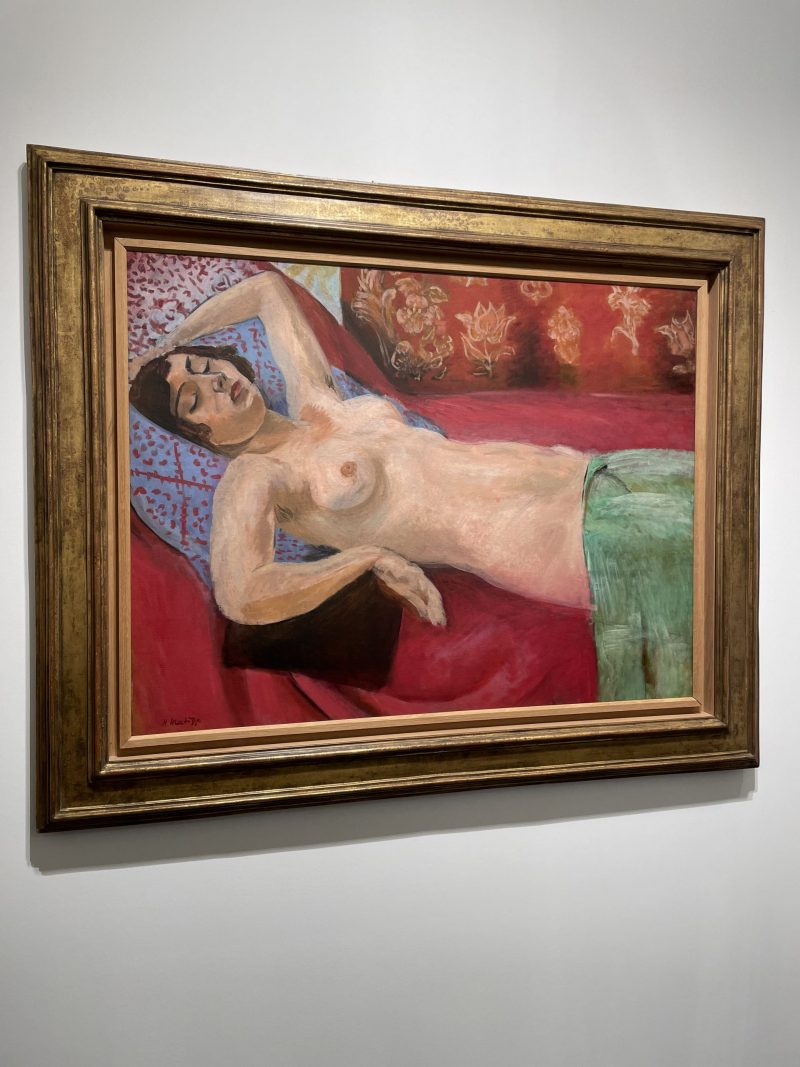
Henri Matisse, Nu au châle vert
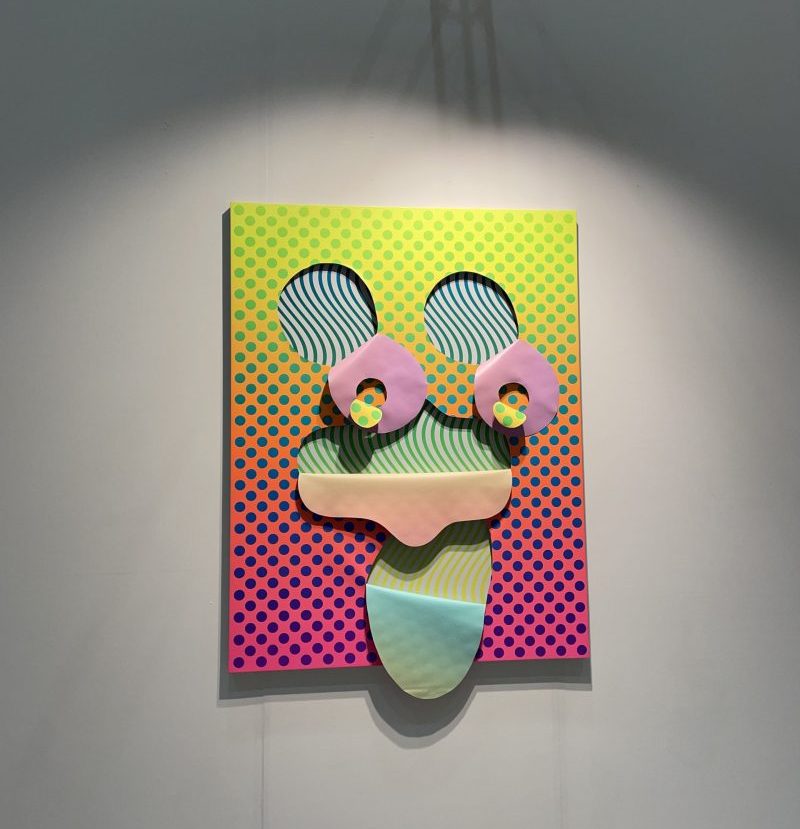
Ron Pruitt, Bipolar, 2020
I loved my experience in Frieze Seoul, and found it fun and amazing. It was a great opportunity to see Frieze Seoul for the first time, to see artworks from different countries, and to see beautiful Filipino artworks making it on the world stage. I’m excited to know what Frieze and other art fairs have to offer people within the region. I hope I will be able to attend more art fairs like Frieze.


