
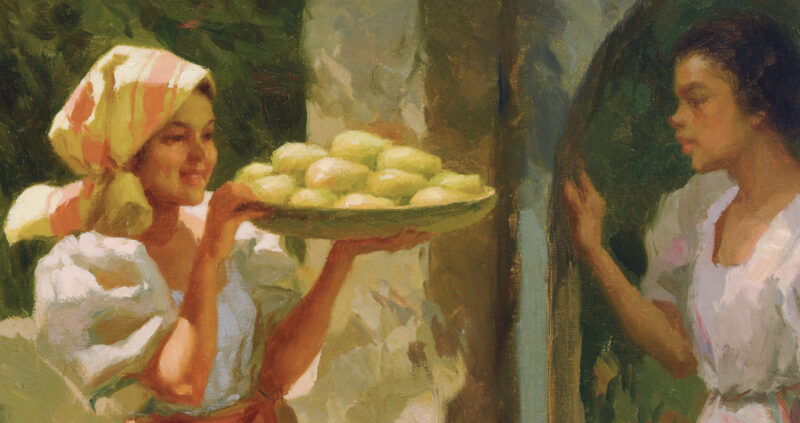
For The Well-Appointed Life this September, Salcedo Auctions presents a significant collection of Philippine art and collectibles that spans centuries, disciplines, and generations, on Sept. 12, 2026 at NEX Tower, Ayala Ave., Makati.
They range from fine art and antiques to ecclesiastical objects, furniture, rare books, jewelry, and other markers of Philippine culture. The collectible objects tell stories of faith and friendship, artistic invention and social change, and the ways Filipino identity is inherited, interpreted, and redefined through time.
Working in partnership, through its Education & Public Programs, with the Asia Society Philippines, Salcedo Auctions is the leader in the Philippine art market, bringing together works with the provenance, scholarship, that place them in the bigger context of Philippine culture.
Highlights are the five works by Fernando Amorsolo from his celebrated Golden Period, including rare pre-war and post-war paintings. They embody the artist’s luminous vision and his enduring ability to transform the Filipino landscape, its people, and everyday life into images of extraordinary beauty.
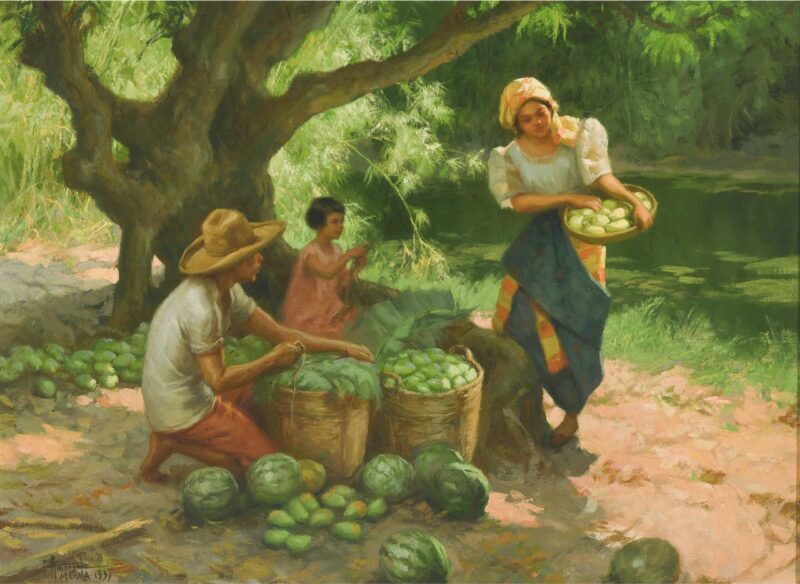
‘Under the Mango Tree’ by Fernando Amorsolo, circa 1930s
They are the rare 1930s masterpieces The Fruit Vendor, Under the Mango Tree, and Sabungero alongside the important 1940s works, Planting Rice and Tinikling Dance. The sunlight, color, graceful figures, and idyllic settings comprise the visual language that came to define the Philippine landscape and everyday scene of Filipino life that Amorsolo has immortalized and built into a National Artist’s legacy.
National Artist César Legaspi is represented by a remarkable 1948 painting of three women and a child gathered around a tray of food. Its date is significant, marking the emergence of the mature modernist language that would become central to Legaspi’s contribution to Philippine art.
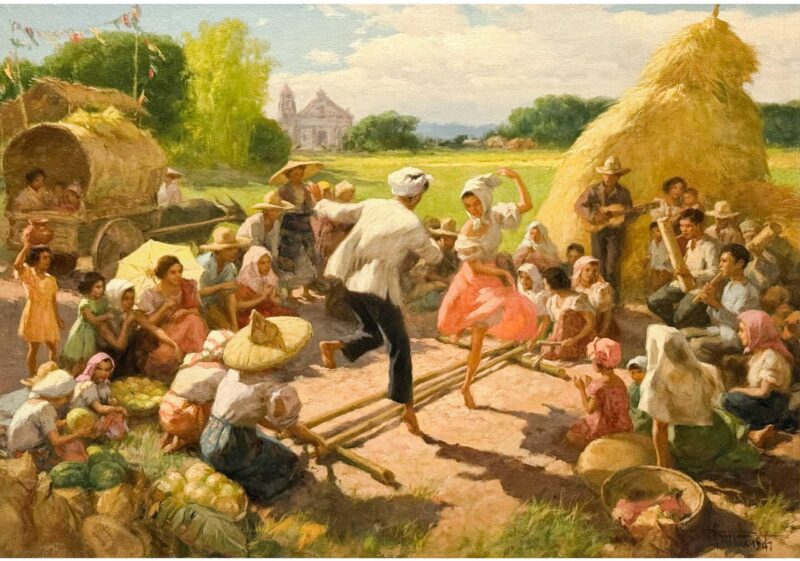
‘Tinikling Dance’ by Fernando Amorsolo, 1945
National Artists Hernando R. Ocampo and BenCab offer very different but equally consequential visions of Philippine modernism. Ocampo’s 53-D, from the collection of National Artist Leonor Orosa Goquingco, carries a particularly meaningful history of artistic friendship and cultural stewardship; proceeds from its sale will go to the 2027 restaging of Filipinescas, the pioneer dance company she established. BenCab’s Larawan series presents an icon in Philippine art, his vendor imbued with strength, dignity, and quiet power.
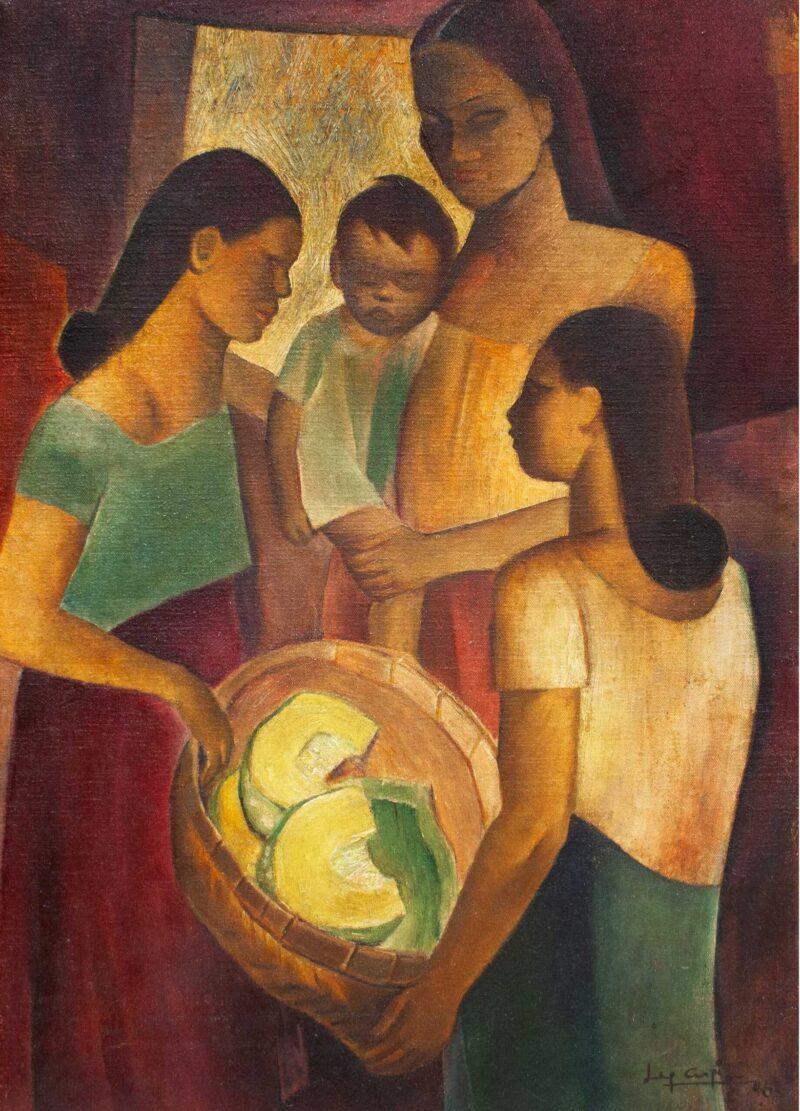
Cesar Legazpi’s untitled oil on canvas from 1948
Oscar Zalameda distills his women vendors into pastel-hued modernist forms that retain their warmth and character. National Artist Jose Joya brings an abstract expressionist dimension to the story, while Mauro Malang Santos, Solomon Saprid, and Danilo Dalena each demonstrates the diversity of post-war Philippine art.
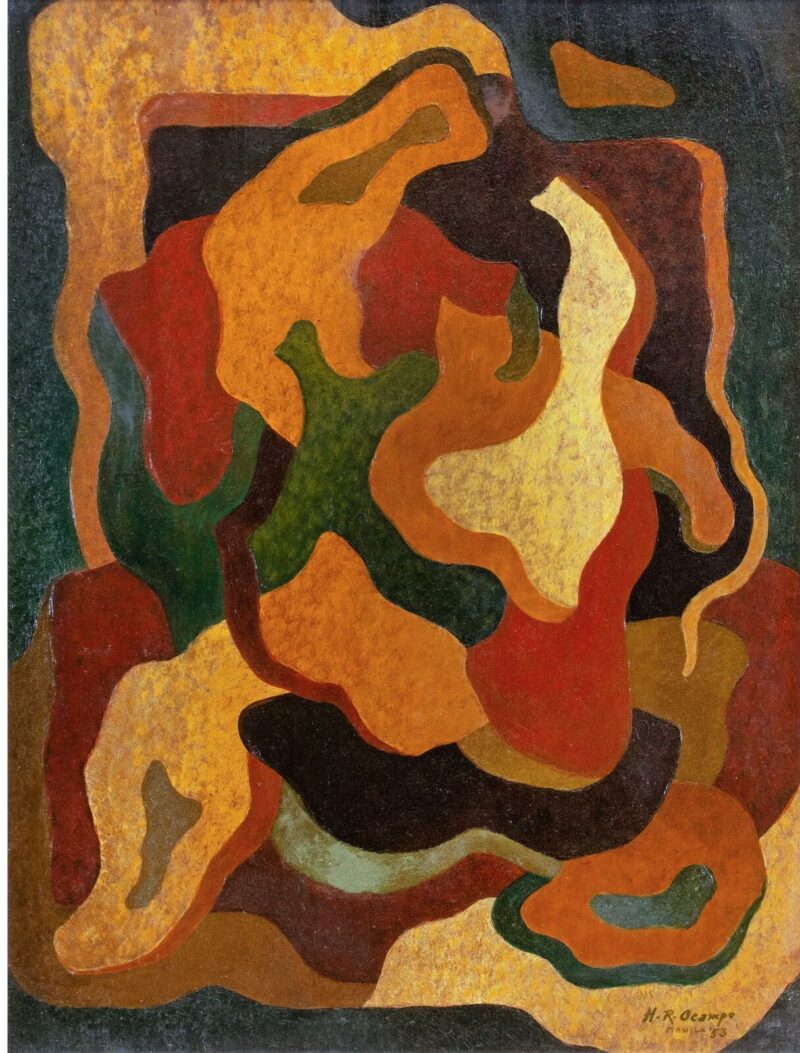
H.R. Ocampo’s ’53-D,’ oil on canvas, from 1953
Saprid’s iconic Tikbalang series transforms Philippine folklore into evocative welded-metal sculpture, giving the half-human, half-horse creature a distinctly modern physicality.
Together, these works reveal a generation of Filipino artists forging new visual languages, absorbing international ideas while developing forms that were distinctly their own.
That conversation continues into the present.
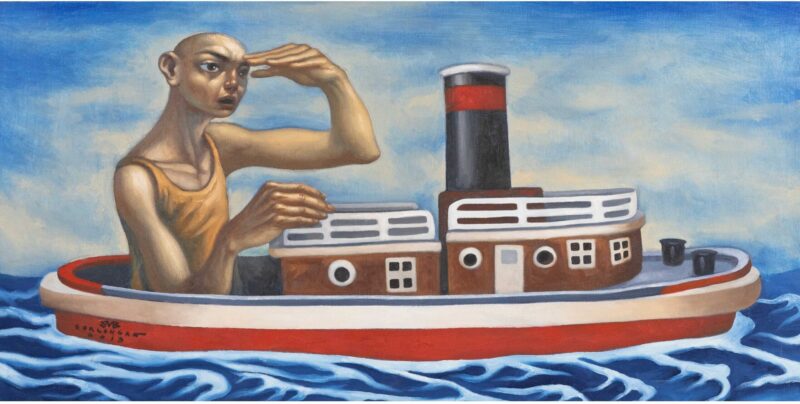
Elmer Borlongan’s ‘Ships Ahoy!,’ oil on canvas, 2013
Jose John Santos III’s Untitled (Tata Ador) reflects the artist’s distinctive engagement with Filipino imagery, memory, and identity. Elmer Borlongan’s Ships Ahoy! brings wit and humanity to contemporary Filipino figuration, turning the image of a solitary traveler aboard a small vessel into a meditation on departure and possibility.
Ling Quisumbing’s Spin A Love approaches modern romance with characteristic playfulness, while Leslie de Chavez brings forth the tradition of social realism.
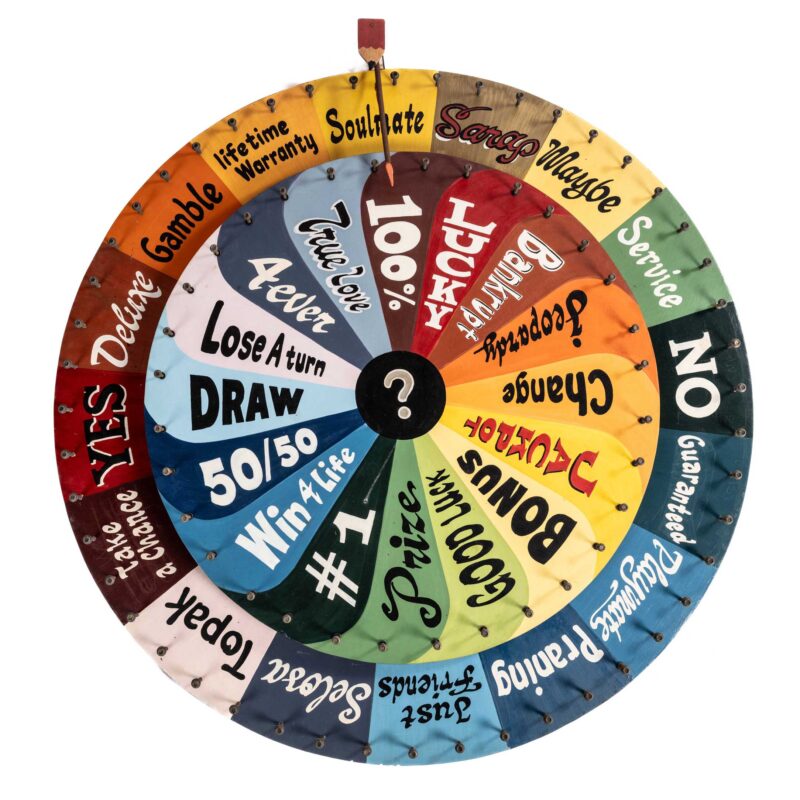
Christina Quisumbing Ramilo’s ‘Spin A Love’ from 2011
Placed alongside established masters, these artists represent the continuing evolution of Philippine art—from inherited traditions and modernist rupture to folklore, abstraction, and new forms of contemporary expression.
As Salcedo Auctions joins the country in celebrating History Month, among the most compelling groupings in the catalogue is that of objects connected to three men whose lives intersected during the final years of the Spanish colonial era.
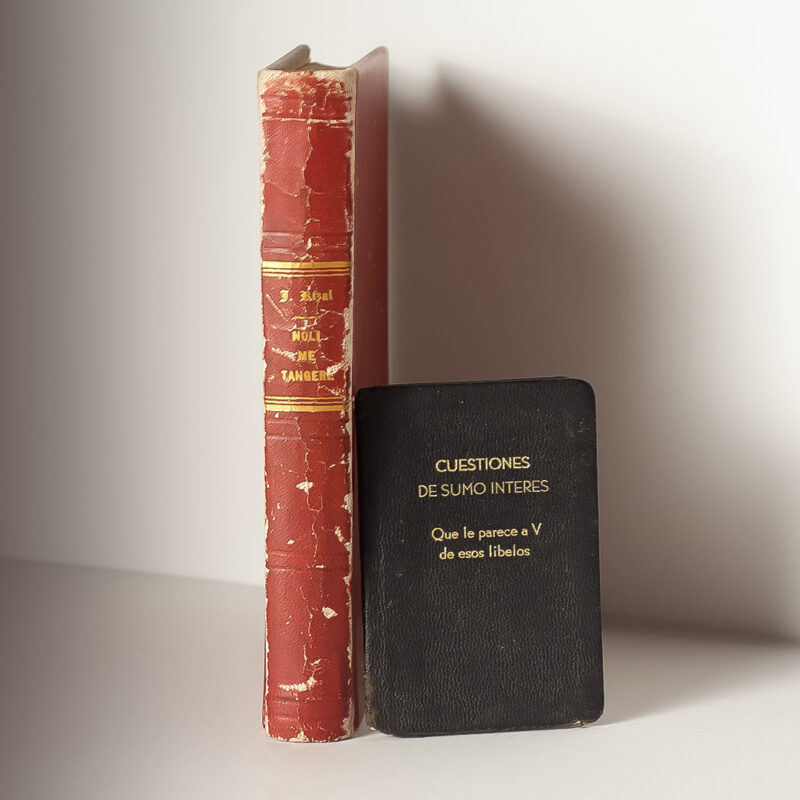
A first edition of Jose Rizal’s ‘Noli Me Tangere’ with a polemical pamphlet by Father Jose Rodriguez.
At its center is a first edition of Dr. Jose Rizal’s Noli Me Tangere, accompanied by a polemical pamphlet by Father Jose Rodriguez denouncing Rizal’s subversive writings. Together, they capture the intellectual and political tensions surrounding one of the most consequential books in Philippine history.
Adding another dimension are two rare landscape paintings of Spanish-era Marawi by Jose Taviel de Andrade. A Spanish soldier, accomplished artist, and art teacher, Andrade served as Rizal’s personal escort before becoming his close friend. The circle is completed by a drawing by Félix Resurrección Hidalgo, inscribed by his nephew Felipe Hidalgo to M. Galvez. A study for an allegorical composition, it demonstrates Hidalgo’s deft command of line, gesture, and tonal modulation.
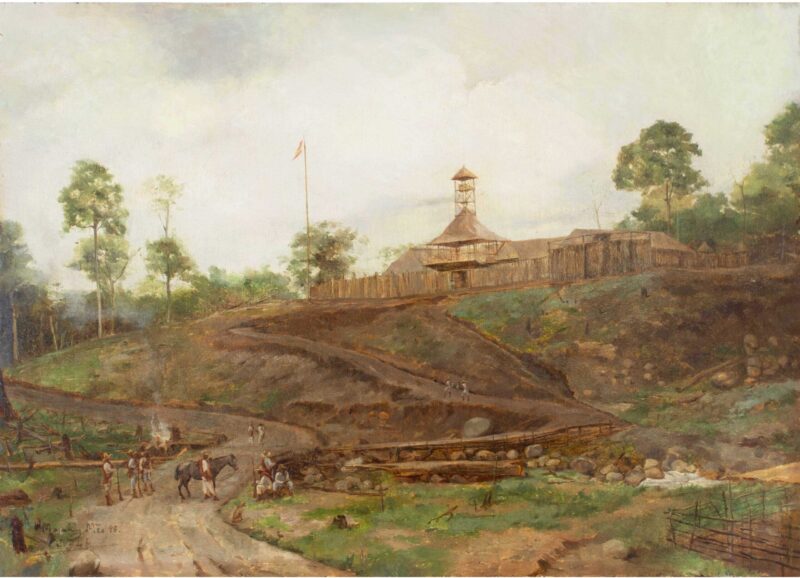
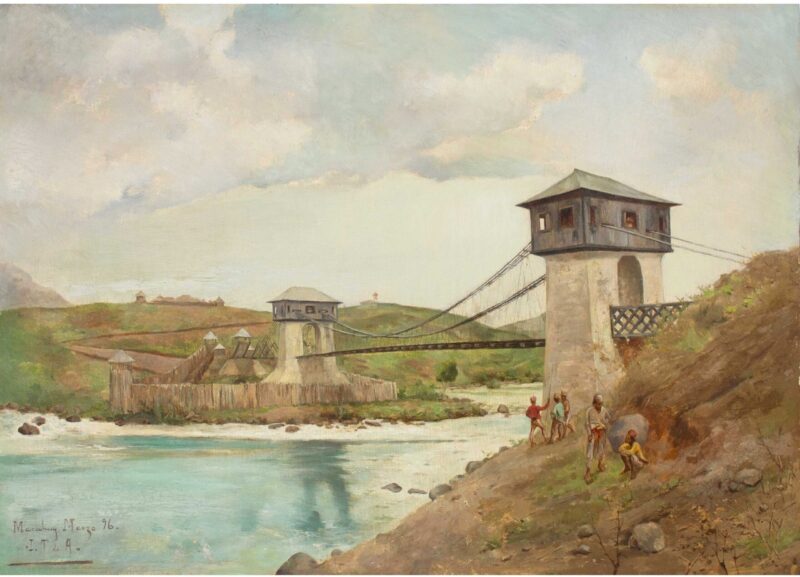
Rare paintings by José Taviel de Andrade, Rizal’s military escort, depicting Marawi scenery in 1896: ‘Vista del puente Alfonso XIII sobre el río Agus, Marawi’ and ‘Vista del fuerte nuevo de Marawi’
Together, these works offer an intimate glimpse into a pivotal period in Philippine history, seen through the friendships, ideas, and creative pursuits of the men who inhabited it.
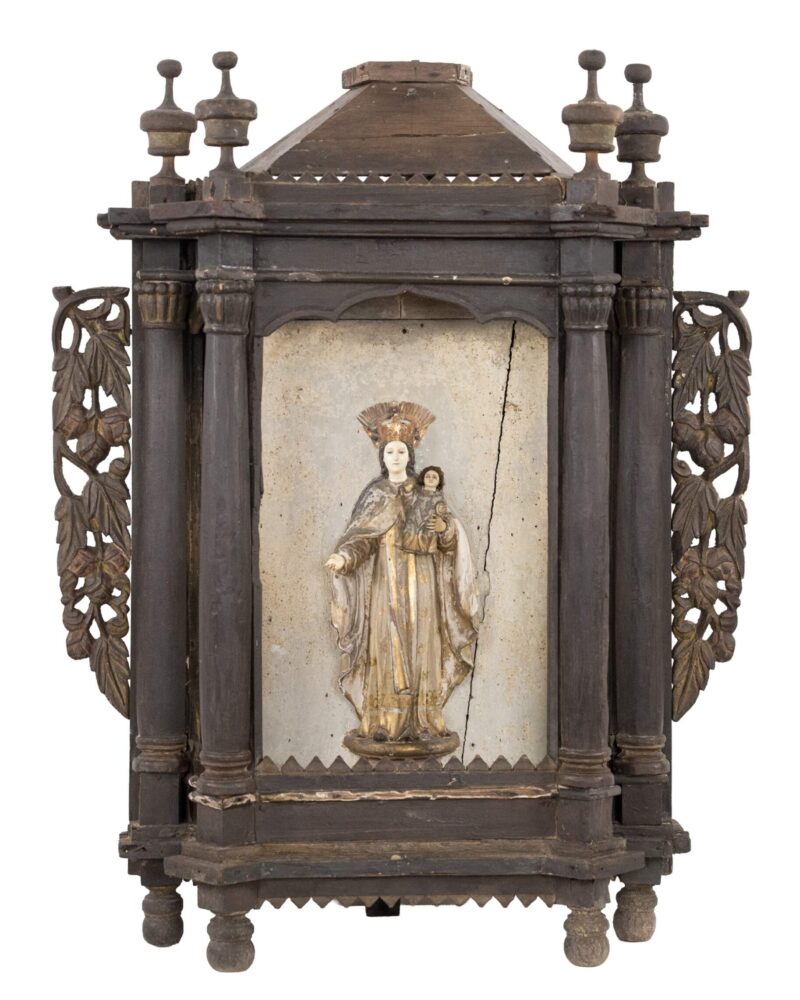
A 19th century Sino-Philippine-Hispano image of Virgen del Carmen from Bohol
Few traditions have shaped Filipino life as profoundly as faith. Yet Philippine religious art has never been simply a matter of inheritance. Across generations, sacred imagery has been absorbed, adapted, and transformed—first by colonial-era artisans and later by artists who pushed its visual language in new directions.
A 19th-century Virgen del Carmen from Bohol and an 18th-century Corpus Christi from Parián, Manila, demonstrate the distinctive Sino-Philippine carving traditions that emerged as local and migrant Chinese artisans reinterpreted European Baroque conventions through their own materials, techniques, and sensibilities.
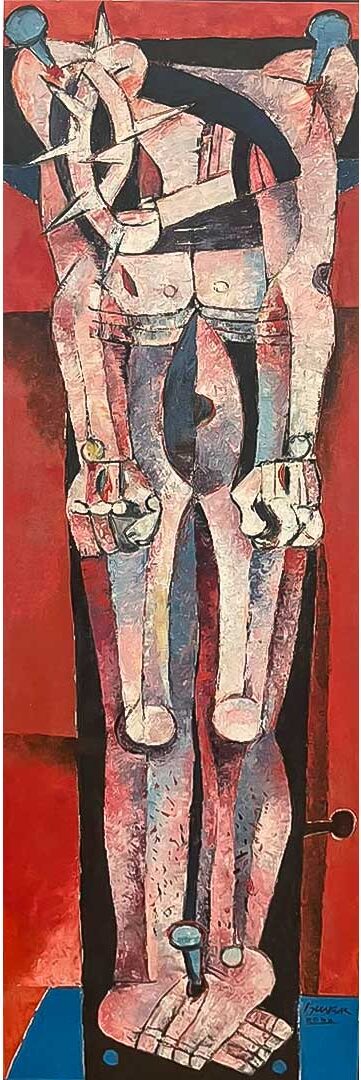
Ang Kiukok’s ‘Crucifixion,’ oil on canvas from 2000
That impulse toward reinvention finds a striking modern counterpart in National Artist Ang Kiukok’s Crucifixion of 2000. Cubist structure and Expressionist anguish transform the sacred image into a powerful meditation on human suffering.
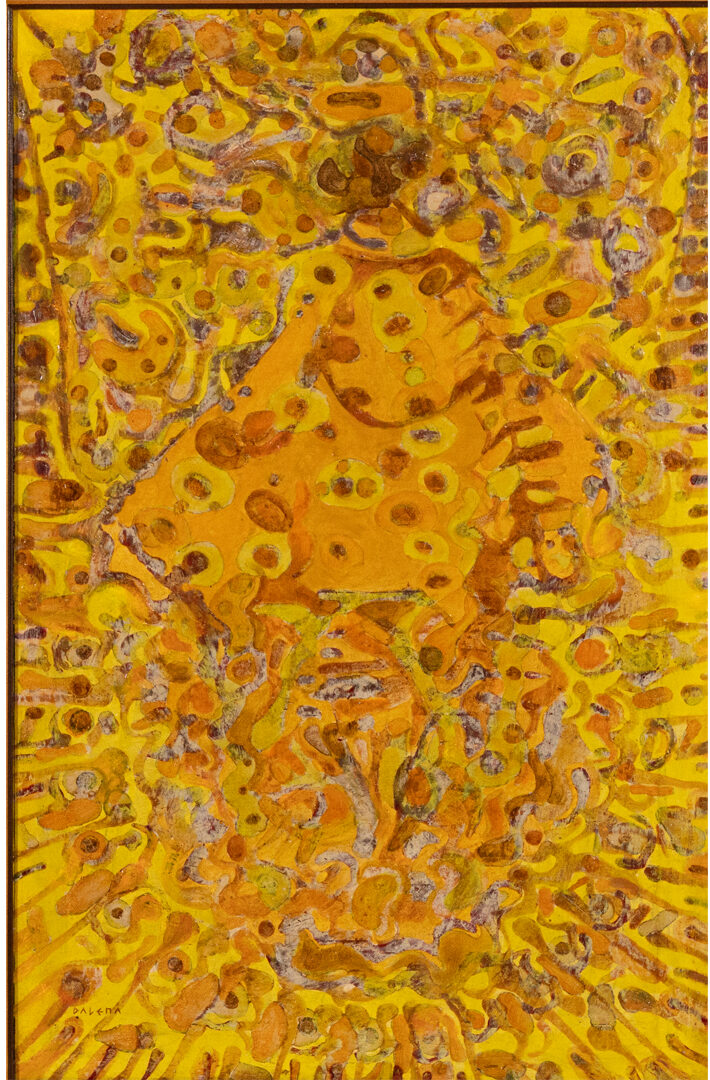
Danilo Dalena’s ‘La Virgen de Antipolo’ from 1969, oil on canvas
Danilo Dalena’s La Virgen de Antipolo of 1969 takes another path. Through warm, gestural strokes and organic forms, Dalena moves figuration toward abstraction while retaining the emotional and cultural resonance of the subject.
Beyond the art lies an equally enticing spread of the things that make a well appointed life.
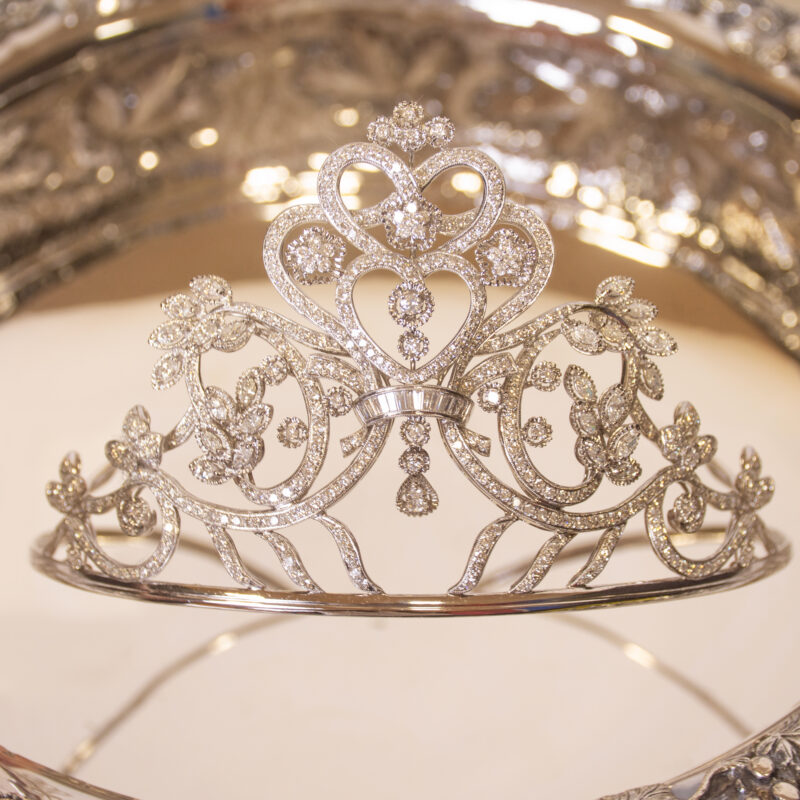
An heirloom tiara with diamonds set in white gold
Distinguished Philippine furniture and ecclesiastical art are alongside rare books, historical objects, and fine jewellery, with a particularly dazzling diamond-studded heirloom tiara among the highlights.
Across a full day of auctions, Salcedo Auctions invites collectors to this feast of art, history, craftsmanship, and gracious living—an exceptional gathering that reflects the breadth, depth, and enduring vitality of Philippine culture.
The Well-Appointed Life
Saturday, 12 September 2026
NEX Tower, 6786 Ayala Ave, Makati City
Schedule and catalogues
Afternoon Sale | 2 pm | Live and online: https://members.salcedoauctions.com/auction/twal_12sep2026_2pm
Morning Sale | 10 am | Online only: https://members.salcedoauctions.com/auction/twal_12sep2026_10am
Preview opens to the public on Thursday, 3 September, 9 am-6 pm daily (except Monday) and runs through 12 September.
For inquiries, contact info@salcedoauctions.com or phone/SMS +63 917 894 6550. Follow @salcedoauctins on IG amd FB


