
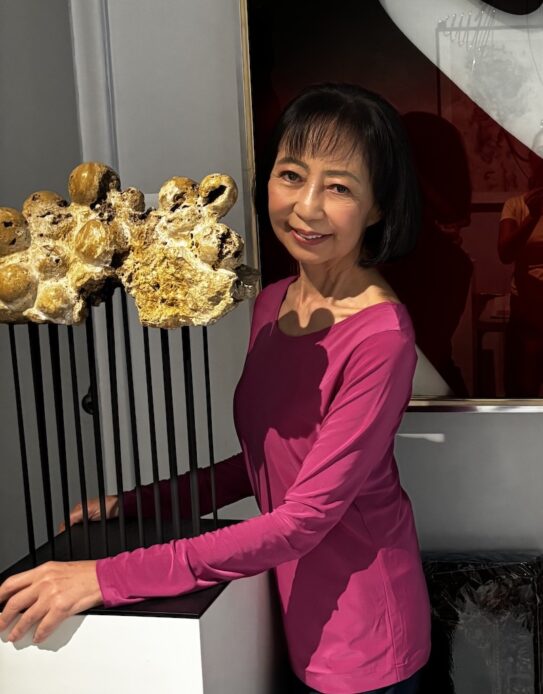
I HAVE learned that survival is not about holding on, but about learning to let go—of certainty, of entitlement, of the belief that security comes from a job, a title, and expectations from people.
Many years ago, an astrologer remarked that the pattern of my destiny chart was that of a survivor. Last year, a Vedic astrology reading said that the period from mid-2025 to mid-2026 would be ruled by Ketu, the shadow planet. It pointed to a multiple whammy in my life—a sudden end of a career, financial constraints, psychosomatic ailments born out of years of prolonged emotional invalidation, loss of creative expression, energy depletion, and a long season of introspection.
True enough, the Philippine Daily Inquirer underwent a reorganization. A new Lifestyle team took over. I mention this because I was the pioneer Lifestyle writer in 1986. After the Edsa Revolution, Inquirer, which started out as an opposition newspaper, had to go mainstream. The Lifestyle section was part of that shift, initially coming out three times a week.
Over time, I engaged with all the editors—Chit Lijauco, Nestor Torre, Llita Logarta, Thelma San Juan, Chelo Formoso, and Cheche Moral. In my later years with the Inquirer, I worked under contract, editing the supplement Elan and later contributing as correspondent. This arrangement allowed me to stay longer with the Inquirer than most employees. This would have been my 40th year with the paper, now considered legacy media in contrast to the era when television and newspapers still had clout.
Last summer, many of us in the Lifestyle section—staffers, contributors, and columnists—were given short notice about the changes. I had been through this before: losing a job and returning to freelancing.
In January 2005, I approached the late editor in chief Letty Magsanoc about renewing my contract with Elan for the year. She kept saying she was busy. By late March, she informed me that Elan was folding in April. I knew it lacked advertising revenue. It was kind of her to give me a grace period.
Thelma San Juan, who was then editorial director and general manager of ABS-CBN Publishing, invited me to be a regular contributor to Metro Home. For three years, I wrote for other publications. It was a rough time. My mother sold our home in Valle Verde to pay debts. I chose to move to a cheap room in Makati to be where most of my work was.
Being fawned over as editor and enjoying the perks, only to be dismissed like a nobody, would not diminish me
In those years, I trained my mind not to overthink, not to dwell on the reversal of fortune. Being fawned over as an editor and enjoying the perks, only to be dismissed like a nobody, would not diminish me. Those three years were tough, but I survived by taking on as many assignments as I could.
Thelma rejoined the Inquirer as Lifestyle editor in 2009 and contacted me to be a regular contributor, knowing that I didn’t like being tied down.
Living was different in the 2020s. During the first lockdown, articles were limited to staff writers. In that period, I survived on blessings and good wishes from friends. When Cheche Moral was named Lifestyle editor after Thelma’s retirement, I congratulated her, saying the promotion was well deserved. She invited me to write for the section.
Living in Makati is expensive, but I managed to pay the bills by living simply.
This “rough patch” was different. Opportunities to write were limited. Payments were delayed. The cost of living had risen dramatically. For several months, I had a coughing flare-up from acid reflux, triggered by hurts buried for decades, thus leaving me depleted.
Thelma once again asked me to write for TheDiarist.ph, which has kept me from getting rusty. By some miracle, friends helped pay the bills. When Thelma recently asked me to write a personal essay on how I barely managed as a freelance writer, my answer came from another level.
Since 1981, I have been studying with the Brahma Kumaris, an international NGO affiliated with the United Nations that teaches values formation. One of my mentors, Dadi Janki, who passed away at 104, once advised me, “Never worry about money. Look at me, I remember God.”
One of my mentors, Dadi Janki, who passed away at 104, advised me, ‘Never worry about money. Look at me, I remember God’
As the head of the Brahma Kumaris, she never carried a wallet or owned a mobile phone—and never cared. She taught me that money is energy, and that being in a tight financial situation is only temporary. Such challenges, she said, come to test our maturity.
The power of pure thoughts is sustained by daily routine. Meditation at 4 am is like recharging the batteries and invoking positive energy throughout the day. We have daily spiritual classes to nourish the mind, and we observe vegetarianism and celibacy. The latter is a choice I made long ago, one that freed me from the bondages of complications in relationships.
During the pandemic, I began teaching raja yoga meditation courses online and conducting short introductory meditation sessions at the Brahma Kumaris retreat center in Tagaytay. BK students work as volunteers, and our courses are offered free of charge. Occasionally, some students would give me a modest token as a gesture of appreciation for my time. If I did not receive direct compensation—which I did not expect—the good karma would find its way back through other means, perhaps a call for a modest writing assignment, or a gift from a friend. There were no windfalls, only just enough to get by from day to day.
‘We just need to align our mentality with abundance, not limitation’
I still refer to my notes on abundance from a lecture by Mohini Pujabi, the current administrative head of Brahma Kumaris. “We just need to align our mentality with abundance, not limitation,” she said. “Don’t keep thinking, I need help. I need money. I’m poor. Always remember we are God’s children. Live with that awareness, and things begin to change. When you are in an extreme situation and remain centered, miracles happen.”
She gave the example of a Brahma Kumaris center that received financial assistance even though the teachers did not want to accept anything. Their purity and honesty—no expectations—attracted a generous donation. It is said that purity attracts wealth, while extreme negativity and vices drive abundance away.
Mohini Didi—the Hindi term for an older sister—often said energy gets drained the moment doubts about managing a situation creep in. “If we are in a difficult situation, God is ready to give us more, but we give up too soon. We are not ready to receive what He is offering. For those who remain honest and pure, God will find a way to uphold their dignity. Everything gets done so you don’t get stuck in your circumstances,” she said. “The problem arises when a situation enters your intellect. Then your powers and clarity disappear. The intellect starts spinning the problem. Keep a solution-based intellect. Acknowledge the problem, but don’t dwell on it.”
I have often experienced this myself. When my thoughts are clear and I am calm, I either find an answer—or I receive a call from a friend offering a little help.
Mohini Didi also said instead of saying we don’t have this or that, we should think of how much we already have. Invoke it. Constantly saying that we lack something creates scarcity. Subtle obstacles arise when we use limiting words. Maintaining positive and auspicious thoughts creates vibrations that attract what is needed.
She often quoted Dadi Janki: “When I think of something, it just happens.”
We are meant to arrive at this state through elevated thoughts. I have come to see this not as wishful thinking, but as an expression of karma—the energy we give out through our thoughts, words, attitudes, and actions, and how these return to us. When we live with generosity of spirit, recognize the goodness in others, and stop wanting something outside of ourselves, we shift the energy from taking to giving. Over time, this inner attitude leaves a record in our mind. Repeated often enough, it becomes habitual behavior, and habitual behavior shapes our fortune.
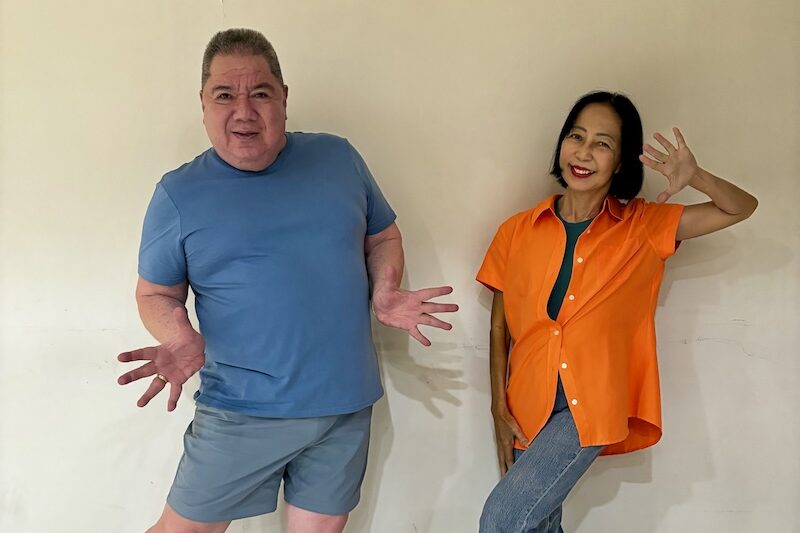
The author with choreographer Douglas Nierras


