


Sample of a shoe last
Text and photos by Elizabeth Lolarga
The decorated shoe molds of Project Hulmahan are all over the malls in Metro Manila, beginning with Estancia, Capitol Commons in Pasig City where the opening night crowd couldn’t keep themselves from touching the transformed shoe lasts despite the signs saying not to. The show is up until April 15 there.
Zena Bernardo, the moving spirit behind the project, is a fourth-generation Marikenya. She had witnessed the peak of shoemaking in Marikina and how her relatives prospered in the industry. What pained her during the COVID-19 lockdown was seeing these shoe shops close one by one.
The mother of Patreng Non, the community kitchen instigator, recalled how the kitchen was organized at the start of the lockdown to feed people who had lost their livelihoods. She was aghast to find the kitchen “using shoe lasts as firewood. That is what made the realization of a dying industry more visual.”
Bernardo had only known Marikina shoes as her footwear. That wasn’t the way for the industry to go so she conceptualized Project Hulmahan that would ensure that proceeds from the auction and exhibit sale of “Hope Lasts” would go to the following causes:
25 percent for the livelihood programs of Bayanihang Marikenyo at Marikenya of which Bernardo is co-founder and executive director;
25 percent for the Community Kitchen Project for disaster response nationwide, including Patreng Non’s Community Pantry PH 3rd, which will fund art groups’ community-based workshops;
25 percent is to be set aside as seed fund for Project Hulmahan Season 2.
The rest of the amount goes to the artists.
To carry out the multi-venue exhibits with 700-plus artists participating, Bernardo said she borrowed money from friends. “And I don’t want to go through that again,” she added.

Shoe lasts transformed into artworks
Baguio silver craft designer and entrepreneur Wilhelmina Maranan Rimando, upon reading reports about the Estancia exhibit, said, “The features in the newspaper and CNN add an emotional dimension. I didn’t know the lasts were bound for the bonfire. Sobrang kurot sa puso (A stab in the heart). Why, is Marikina’s shoe industry irreversibly dead? That’s so saddening like other Filipino industries killed by the global free trade. Have they become just part of our history? I hope our silver jewelry industry won’t go the same way. But I salute this novel idea that makes these shoe lasts last. I hope they find a more permanent museum, and the artworks can travel around the country so the people can see how good our artists and artisans are.”
One of the participating artists, Kora Dandan Albano of Baguio City, submitted a decoupage of printed materials and glue on her assigned shoe last. She used three layers of clear lacquer spray to protect her work.
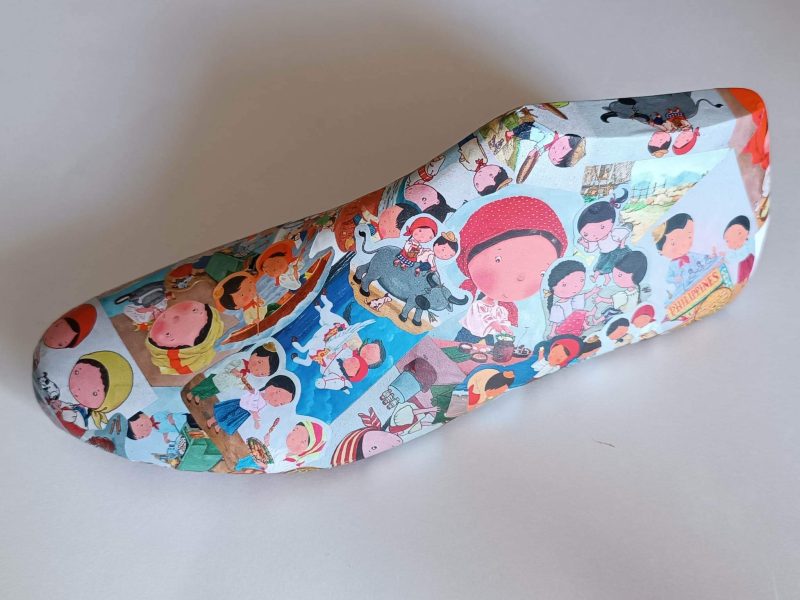
“Kora’s Art Laest” by Kora Dandan Albano
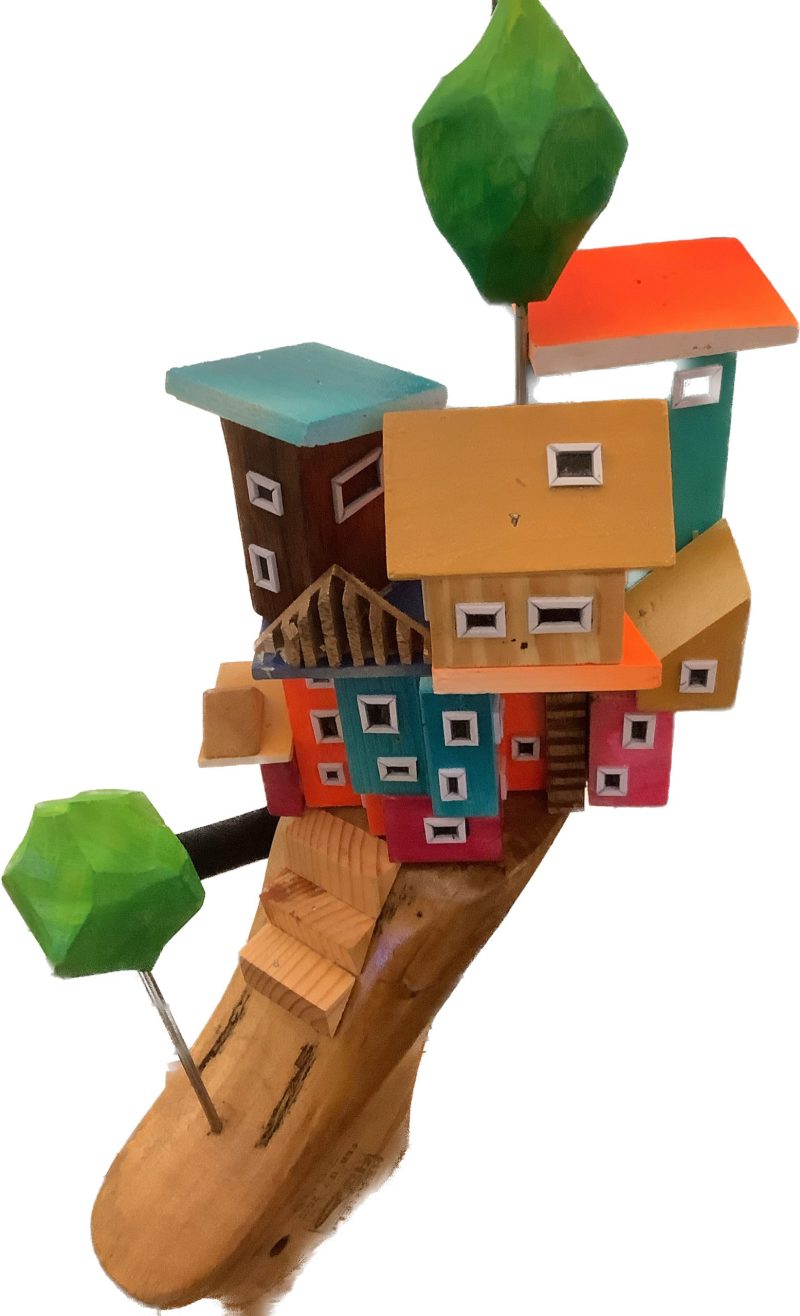
Like the nursery rhyme “There was an old woman who lived in a shoe”
She first heard of the project from the Facebook post of her friend Rizalee Ibarra-Imao, wife of sculptor Toym. “When I learned that the proceeds will go to a good cause, I filled up the application form at once. I am a fan of the Community Pantry initiative, especially during the pandemic.”
‘That’s what I was thinking of while doing the artwork—Chabet and the wooden feet of saints’
This was how word about the project spread—through private messages and public posts. It reached painter Kelly Ramos, formerly of Baguio and now based in Cagayan de Oro City, when Albano sent her the link. She said, “I read the brief, and I was amazed at the story of how the shoe lasts were found and how they got the idea for the project to support the Marikina shoe community. I filled up the Google form and asked for two lasts. Later, I saw a lot of posts by artists from all over the Philippines sharing their works in progress. I then noticed that most of the works were jazzed up. I wanted to go the other way and did a simple paint job, hence The Barefoot Trompe-l’œil.
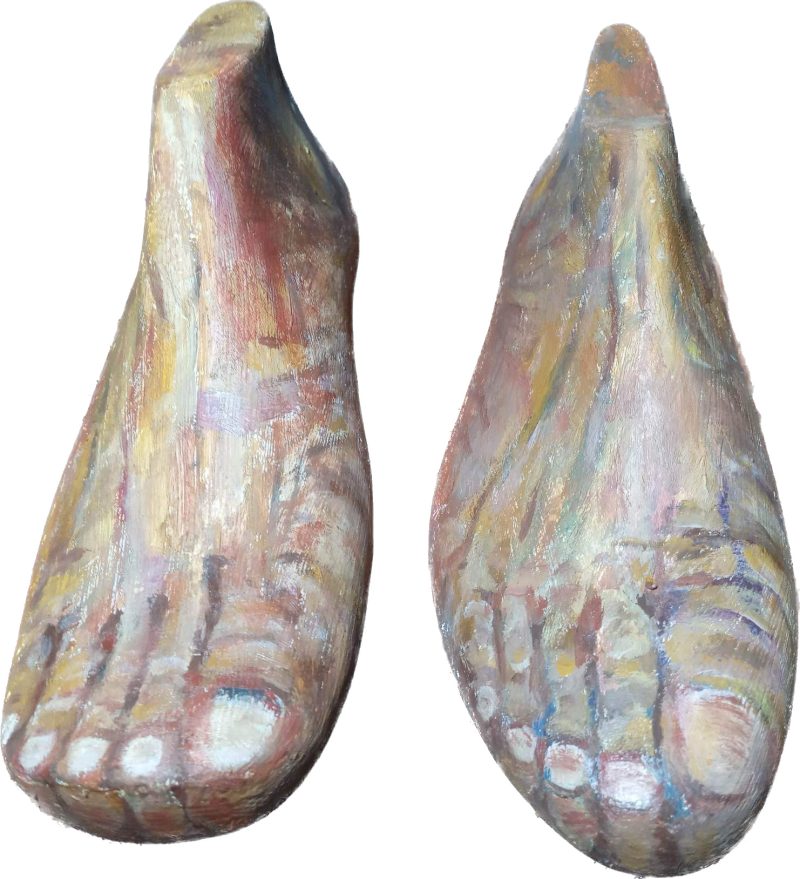
“Barefoot Trompe-l’œil” by Kelly Ramos
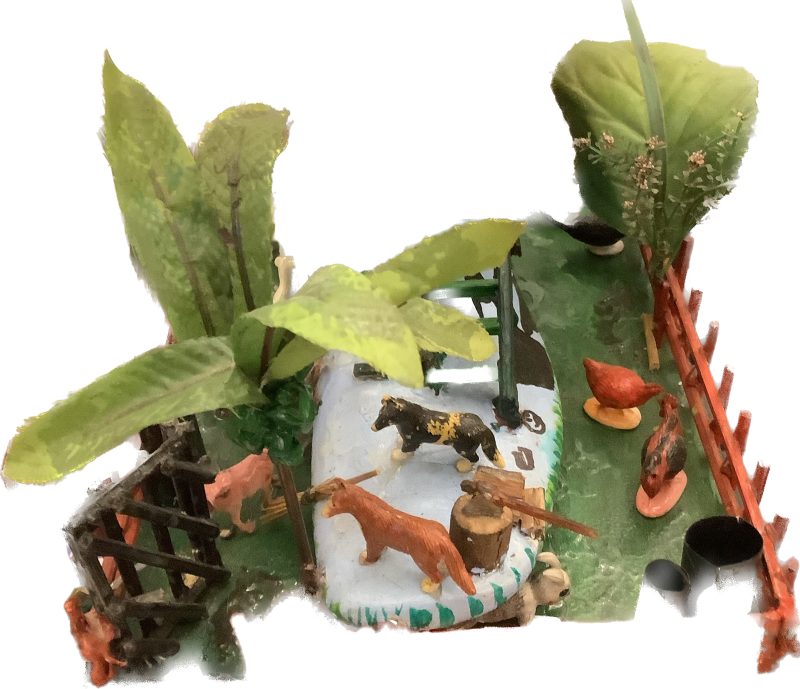
Farm animals and plants on a transformed shoe last
She continued to describe her work process: “While working on them, I remembered a conversation with my old UP College of Fine Arts mentor, Roberto Chabet, who said he was collecting photos of the feet of saints. Whenever he visited a church, he would take pictures, or was it a project that he wanted to do? It’s hard to remember conversations with conceptual artists!”
There came a time when she acquired a cell phone, and she would send him pictures of saints’ feet. “That’s what I was thinking of while doing the artwork—Chabet and the wooden feet of saints.”
When it was submission time, she got to meet Bernardo, who was going through Mindanao to meet the artists and collect the works. Bernardo had just been to Bukidnon and was on her way back to Manila. “I wasn’t part of the Cagayan de Oro group because my network is not at all making geographic sense. We met in a coffeeshop, I gave her my work. I asked her how the project started, how is she doing it since it’s such a huge undertaking, how she got the idea. Then I learn that she’s practically a one-woman team and her background is in social work. And this is her first foray into a passion project of this scale involving creative,” Ramos said.
And that was how the beleaguered shoemakers found their magical elves.
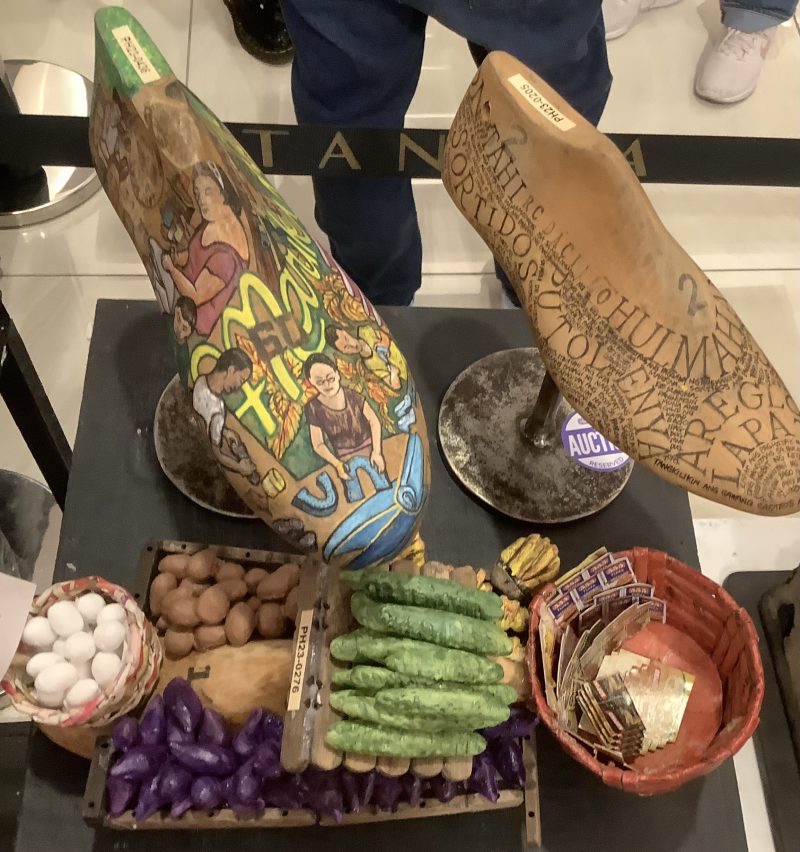
Market vignette
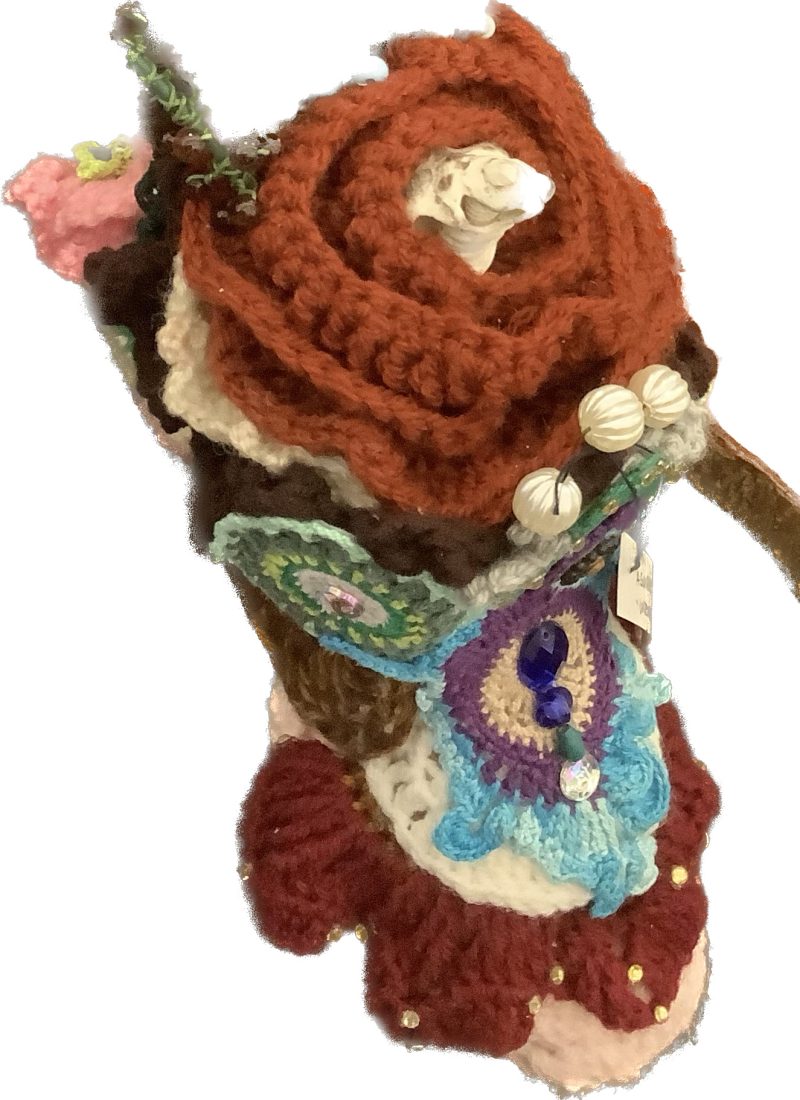
Of beads and yarn
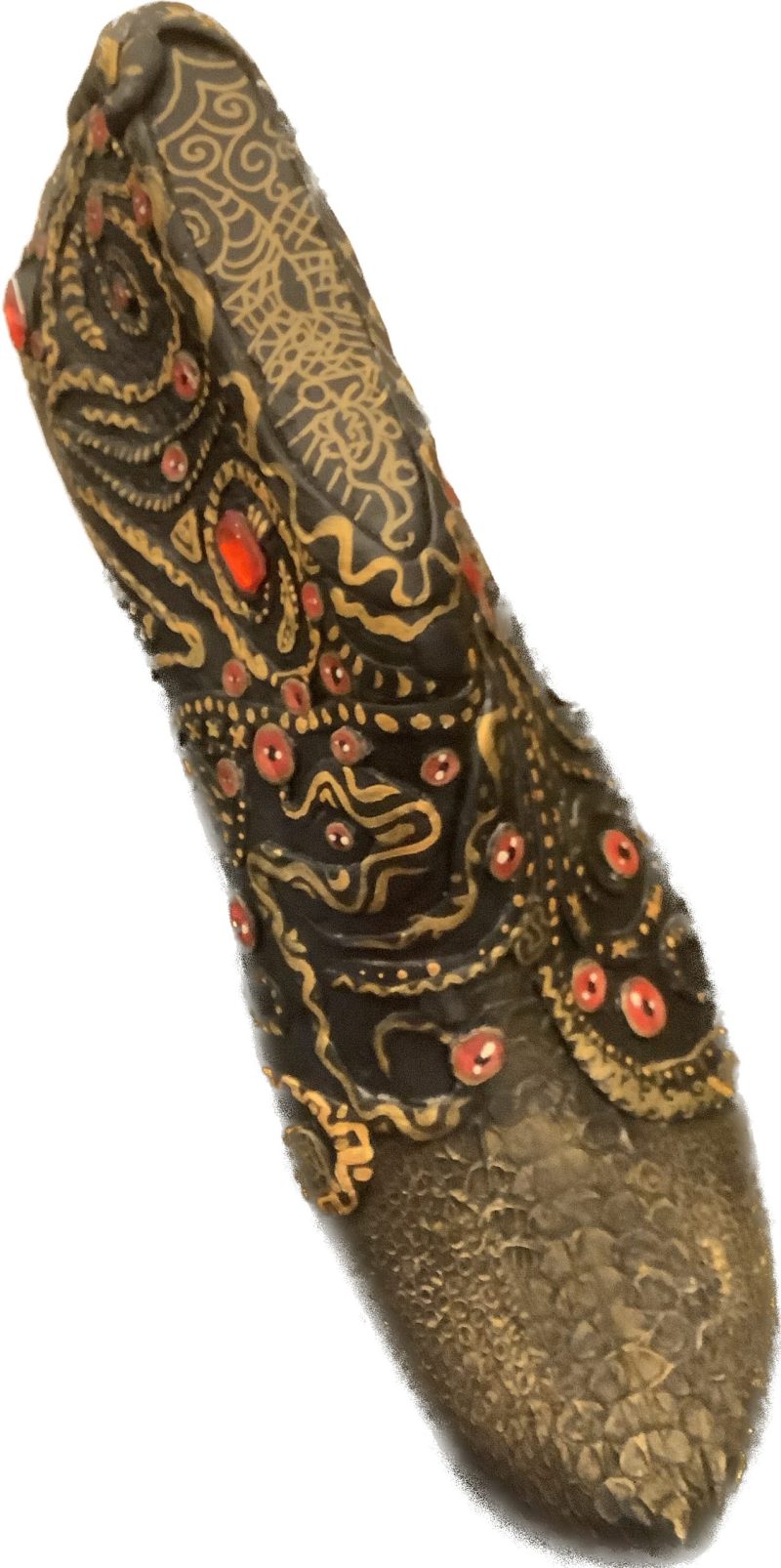
Polka dots and curls
Project Hulmahan exhibits are also lined up at these venues: Newport Mall (until April 3), Lucky Chinatown (April 10-16), Eastwood City and Venice Grand Canal( April 17-23) and Alabang West Parade (April 24-30).


