
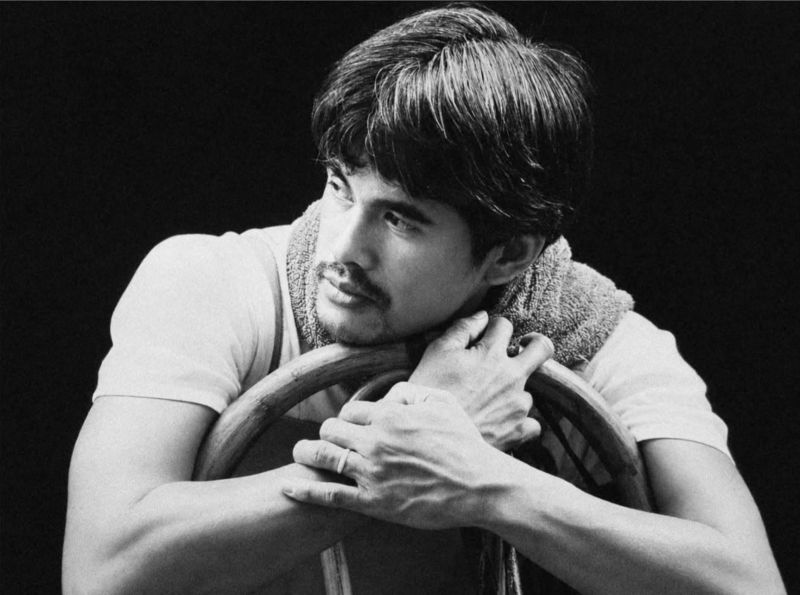
A young Nonoy Froilan
No other Filipino danseur could hold an audience’s attention quite like Rafael “Nonoy” Froilan, who has just been named the National Artist for Dance.
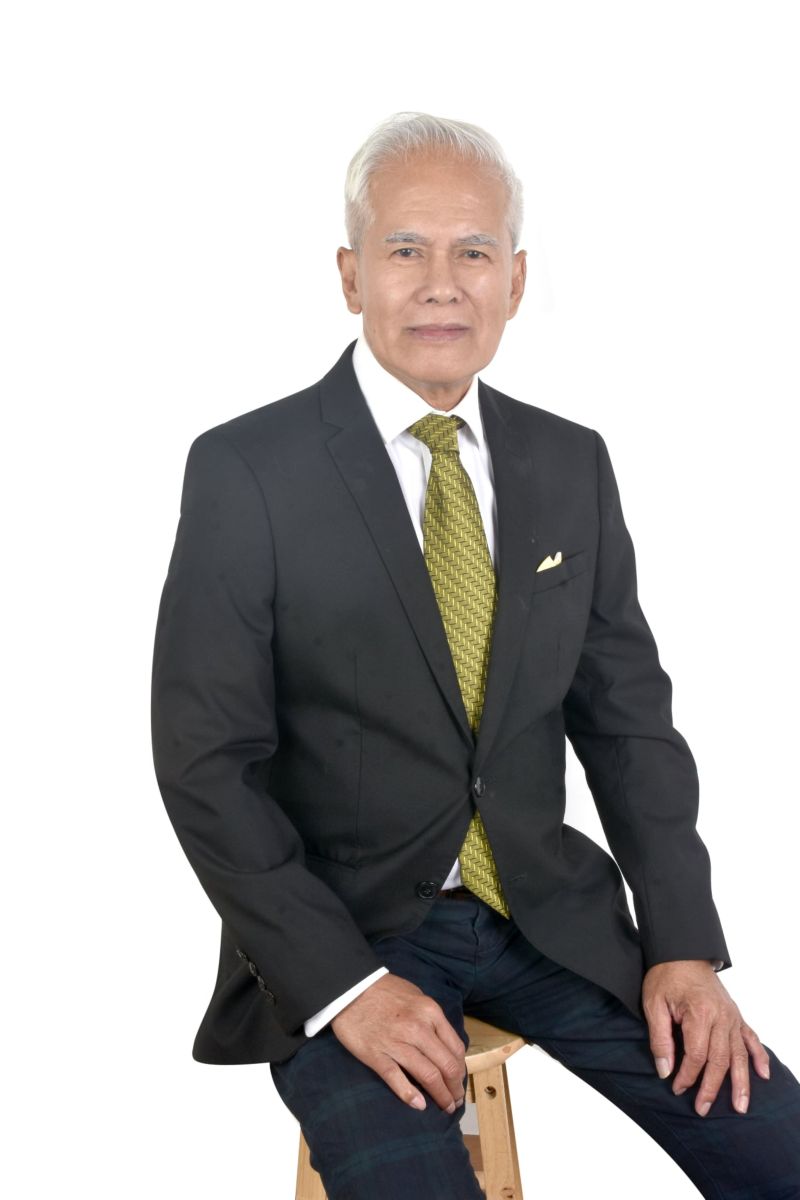
Rafael ‘Nonoy’ Froilan, National Artist for Dance 2025
Younger dancers could spin through more pirouettes, leap six feet into the air, and execute crisper footwork than the men of his generation. Froilan did not need to outdance them; he exuded presence.
On the Philippine stage, he was the quintessential premier danseur noble, the aristocratic male figure of classical ballet, distinguished by elegance and authority. Offstage, he was unmistakably Waray, his accent adding another dimension to a personality people came to know and love.
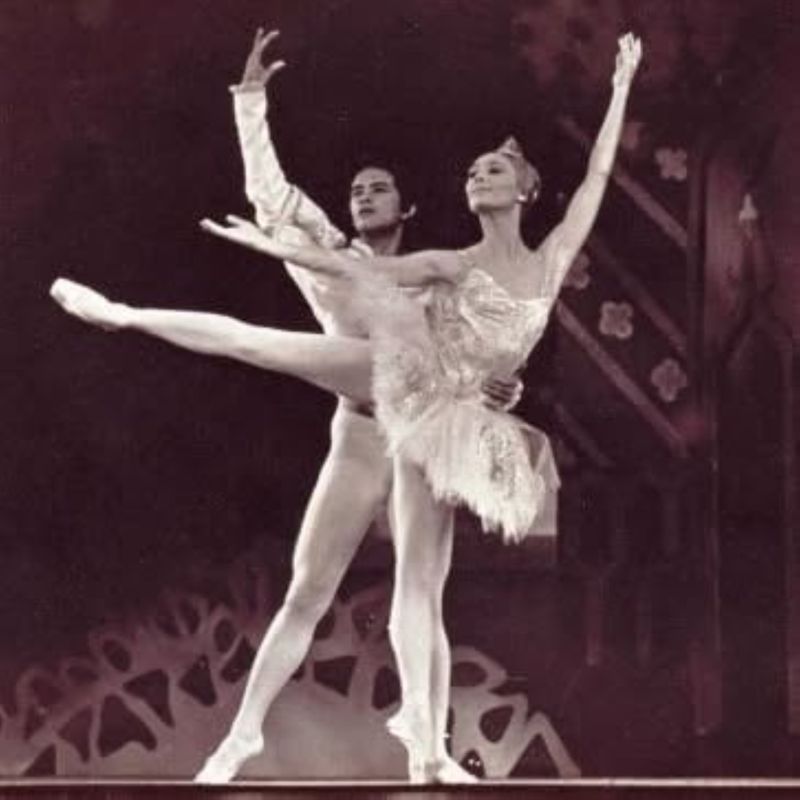
Partnering icon Yoko Morishita
In his 21-year career with Ballet Philippines, he was the only male dancer given a tribute program upon his retirement in 1993, partnering five ballerinas in one show, including Japanese icon Yoko Morishita. (The other tribute was given to Cecile Sicangco-Ibarrola.) When Lisa Macuja-Elizalde, fresh from the Mariinsky Ballet, became Cultural Center of the Philippines (CCP) artist-in-residence in the late 1980s, she and Froilan toured the country extensively, performing famous classical pas de deux. The nationwide tour was their way of bringing high art to people with no access to ballet.
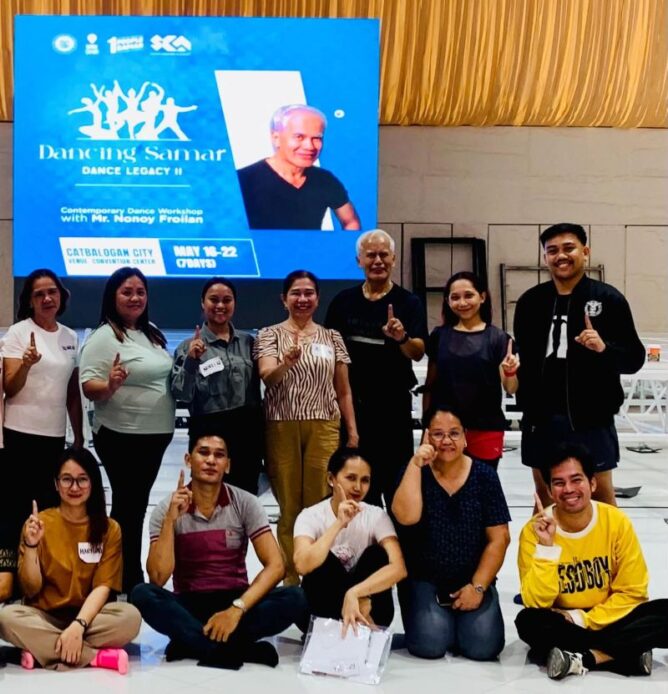
Froilan is often associated primarily with dance, but his work after his performing years tells a broader story. As a repetiteur, he preserved the artistic intent of ballet classics and modern works for a new generation of dancers, and became a faculty member at the National High School for the Arts. Former colleagues and students expressed their appreciation when he was named National Artist for Dance. When he conducted dance and choreography workshops in provinces across the country, participants told him that what they learned from him had made a difference in their lives.
As a videographer, he documented dance concerts, little-known ethnic dances, and the creative process behind National Artist Agnes Locsin’s landmark Encantada. He became a theater actor, played a grandfather in a teleserye, and ventured into art photography during the pandemic.
Yet his extensive accomplishments in dance and the recognition he received from peers and the public were not enough to bring him the Order of National Artist. It was his lesser-known fieldwork preserving the heritage of his hometown of Calbiga, Samar, and its impact on the province and neighboring provinces, that led to his nomination. Froilan had become more than a dancer, mentor and multimedia artist. He was also a preserver, researcher, transmitter and cultural organizer.
Seeing the value of his efforts to revive and preserve local traditions, his townmates and relatives took the initiative to nominate him for National Artist for Dance.
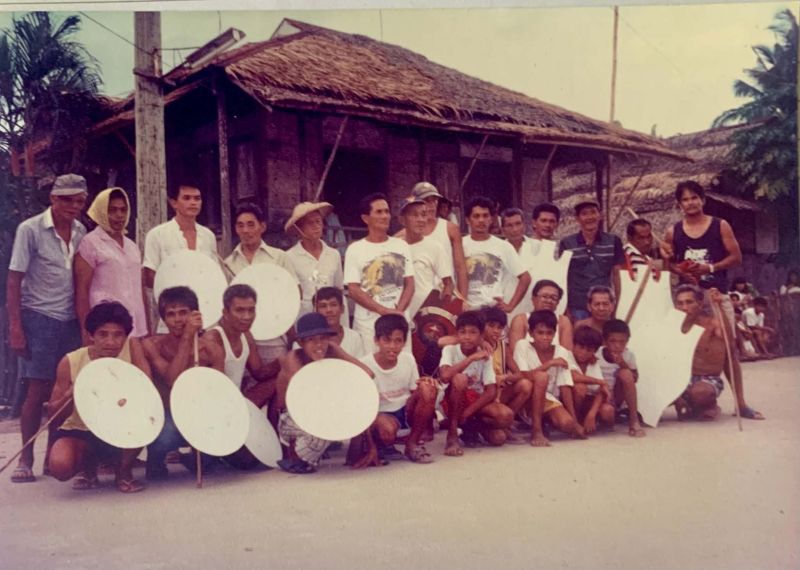
The original cast of the Calbiga Sinulog in 1994
Froilan extended his legacy far beyond the stage. In 1994, he immersed himself in Calbiga. Among the endangered traditions he documented were esmayling, a Waray oral and performative tradition, and the Sinulog, a folk drama about the clash between Christians and Muslims. Pahoy-Pahoy was a community festival he developed from a farming tradition.
Calbiga became a microcosm of what Froilan had been doing. As word spread about its street dance festival, which he initiated, his work created a ripple effect, with other communities organizing their own festivals and street parades. “Culture mapping has stretched my body of work outside of dance,” he says.
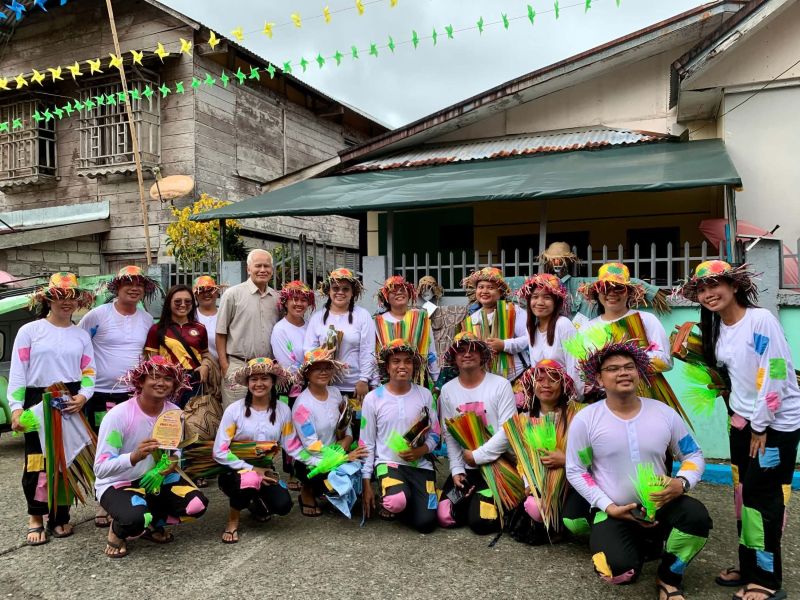
With participants in Calbiga’s Pahoy-Pahoy parade
Perhaps Froilan’s most visible legacy in Calbiga is the Pahoy-Pahoy Festival, now the town’s signature celebration. Froilan brought together Calbiga’s barangays and the mayor to stage the first Pahoy-Pahoy street festival, with prizes from the National Commission for Culture and the Arts (NCCA). The idea came from the town itself. Pahoy-pahoy are scarecrows traditionally used by farmers to protect rice fields from birds. In a community where farming and fishing are central to daily life, the scarecrow became the image for a festival that turned an ordinary farm object into a public celebration.
Froilan worked with his uncle, Osmundo Orlanes, who wrote the script explaining the pahoy-pahoy and its significance, while Froilan directed the production. He held a workshop at the municipal building and instructed participants on the parade formation. The barangays filled the streets with giant pahoy-pahoy made from indigenous materials, accompanied by instruments fashioned from bamboo, cans, and stones. CCP documented the festival on video, radio stations in Samar and Tacloban covered the event, and arts leaders flew from Manila to judge the competition.
Today, Pahoy-Pahoy is held every May 25 as part of Calbiga’s town fiesta, a thanksgiving for the harvest followed by a town parade. A local government resolution designated the date as the festival’s official observance, with the aim of developing it as a tourism attraction and linking Calbiga to Samar’s wider cultural tourism circuit.
Today, Pahoy-Pahoy is held every May 25 as part of Calbiga’s town fiesta, a thanksgiving for the harvest followed by a town parade
After the premiere of Pahoy-Pahoy in 1994, esmayling, a Waray courtship tradition revived by Froilan, was held that evening at the plaza. He had seen the tradition unfold during childhood fiestas and stored it in his memory.
In this poetic joust, a man courts a woman through song. He sings a line, and she answers by picking up his final word. He then responds to her ending word, continuing the playful, improvised singsong dialogue to the strum of a guitar. Historical accounts trace esmayling to Samar, where the name derives from the English word “smiling.”
After sharing glasses of tuba, the local coconut wine, adults would begin singing and joking. A man would stand, select an attractive woman, and start flirting through song. These participants were not teenagers. They were middle-aged adults, some already married, who drank tuba together and allowed the ritual to emerge spontaneously. The performance blended music, flirtation, and comedy. Performers might feign sulking, kneel, steal a kiss, or offer a playful pat before eventually becoming a couple.
“It is like a romantic comedy,” Froilan said. The wittiest and most spontaneous duet wins.
He likewise revived the Sinulog of Calbiga, Samar, after discovering that the festival dance drama was no longer being performed.
Distinct from Cebu’s famous celebration, the Calbiga Sinulog is rooted in the moro-moro tradition. It unfolds as a street debate between Christians and Moros that erupts into battle. Rather than standard stage combat, the confrontation consists of dance duels blending intricate footwork and leaps with eskrima, fighting with sticks, knives, bladed weapons, and various improvised instruments, alongside hand techniques. Froilan adopted movements from the Manobo warrior dance he documented after his retirement, which he found similar to eskrima. Warriors traditionally carried shields and bladed weapons such as the kris or sundang.
Froilan began documenting the ritual in the early 1980s during summer trips home to Samar. The 1994 revival was backed by the CCP, which funded costumes and meals.
Rehearsing locals by the seashore, Froilan drew on his Tanghalang Pilipino background to coach them in voice, diction, and stage projection.
The revivals highlight Froilan’s broader mission as a cultural researcher. He preserved not only formal stage dances, but also spontaneous community traditions rooted in oral exchange, translating them to the theater without losing their authentic Waray character.
Despite his efforts, Pahoy-Pahoy and esmayling continued for only five years before becoming sporadic events. Sinulog was eventually discontinued because of declining patronage and lack of government support. Whenever he returned to Calbiga, Froilan advocated for their revival and tried to convince institutions to incorporate the Sinulog movements into the physical education program, but without success. He also recognized the tradition’s financial vulnerability. It had long depended on the town fiesta budget and the sponsoring Hermano Mayor, and when the money ran out, so did the performances.
Froilan was unhappy with what had become of the traditions and insisted on bringing them back, particularly Pahoy-Pahoy. He wanted to become a consultant, train local performers, reconstruct costumes, and restore their original theatrical elements. That instinct says something about Froilan’s larger role in Calbiga. He continues to watch how the traditions change and still wants a hand in protecting the elements he believes belong to their original character.
In June 2009, Froilan formalized cultural mapping in Calbiga. The work took place in two phases in the late 2000s. He first worked with Niko Zapata of the CCP on a three-day introduction to the process. The following year, he brought in cultural heritage specialist Dr. Eric Zerrudo, now executive director of the NCCA, for a more intensive mapping project.
Cultural mapping documents a community’s cultural heritage. Froilan made headway with Calbiga’s intangible heritage: practices, stories, beliefs, and skills passed from one generation to another through memory and practice, rather than preserved in physical objects. In Calbiga, this meant looking closely at traditions that were still practiced, had been forgotten, or were at risk of disappearing. He also conducted a workshop on organizing festivals.
Froilan and his team documented tangible heritage, including ancestral houses, the Nuestra Señora de la Anunciación Church, the pre-war municipal building, and the marketplace, as well as the town’s history, floods, and livelihoods. They also mapped food heritage, identifying distinctive local products such as binagol, made from giant taro and cooked with coconut milk and condensed milk; a small banana said to grow only in Calbiga; and locally produced shrimp, crabs, and mussels. They documented delicacies, including kalamay and pilipit, along with the people and barangays that traditionally produced them. The mapping eventually helped bring some of these forgotten foods back into production.
Froilan and his team documented tangible heritage, including ancestral houses, the Nuestra Señora de la Anunciación Church, the pre-war municipal building, and the marketplace
Froilan also documented Calbiga’s natural heritage, including the Calbiga River, the town’s center of life, and Umalagging Falls, a seasonal waterfall that appears only during heavy rains, cascading into a lagoon before flowing into the river. He and his team trekked to Dulugayan Falls, another remote site long known to locals but difficult to reach before roads were built. He also documented the Langun-Gobingob Cave System, Calbiga’s vast cave complex, described in Philippine references as the country’s largest cave system. His research helped bring these sites to wider attention, while he also pushed for their protection. When development was proposed, he insisted that structures be approved carefully, and that the natural flow and character of the sites be preserved.
Looking back, Froilan describes his career as something that unfolded by circumstance. One opportunity led to another, often when he was not looking for it.
During a vacation in Manila, he told his mother that he wanted to study in the capital. He got a scholarship at the University of the East (UE) by joining the UE Dance Troupe. One day, his cousin and townmate, dancer Tommy Sabarre, saw him dancing at the university quadrangle.
Sabarre brought him to Julie Borromeo’s Dance Arts Studio, where the teacher, Tony Llacer, noticed Froilan’s manly looks and physique and brought him to Karilagan International, the cultural and fashion organization founded by Conchita Sunico. Froilan danced in productions and also worked as a runway model for hotel fashion shows.
In 1972, Llacer was invited by Alice Reyes to teach ballet with the Alice Reyes Modern Dance Company, later renamed Ballet Philippines. Froilan followed his mentor. He was particularly impressed by Manuel Molina, whose “animal magnetism” onstage made a lasting impression. “I would look only at him. He had so much presence. I wanted to follow in his footsteps. I ended up dancing his roles,” he recalls.
But Molina left for Harkness Ballet in New York in the spring of 1973. Although Froilan was still new to the company, rehearsal master Gener Caringal told him to study Molina’s roles in Norman Walker’s Season in Flight. Froilan had to learn the choreography from playback through the one-inch viewfinder of a camera.
“That was my baptism of fire in dance. I didn’t have a contract yet,” he recalls.
Froilan never looked back. Within a few years, his stage charisma and natural dancing ability had brought him many of the company’s leading roles. In 1973, he created the role of the jilted Young Man in Walker’s Songs of a Wayfarer. His soulful performance made it his signature role.
When Alice Reyes’ company performed in Germany, Swiss choreographer Jean Deroc was impressed by the Filipino dancers. He later traveled through Southeast Asia in search of a lead for his oratorio Le Roi David (King David). His search brought him to Froilan, whom he chose for the title role. In 1976, Froilan flew to Zurich, where Deroc choreographed the role with him.
Froilan took company classes wherever he could in Europe. On one occasion, he attended a class at Nederlands Dans Theater in The Hague. Afterward, he was called to the office of its artistic director, Jiří Kylián, who offered him a place in the company. He had started by dancing for a college scholarship. Now one of the world’s leading dance companies was asking him to join.
Then came another turn. Edna Vida, his fiancée at the time, sent him a cable saying that artistic director Alice Reyes, who would eventually be his sister-in-law, insisted that he return to Manila.
Froilan may not have gone on to dance for Kylián, one of the defining choreographers of the 20th century. But the career that began with a college scholarship did not end when he left the stage. As a repetiteur, teacher, videographer, and multi-media artist, he continued to preserve and transmit what he had learned. Then, in 1994 he went home to Calbiga, where his attention shifted from preserving dance works to preserving the cultural memory of an entire community.


