

Late last year, photojournalist Alex Baluyut posted a poem-like status on his Facebook account with a picture of his bangled and tattooed hand. It read like a foreboding of what was to come.
“Survived 25, can’t say for 26.
I stand to at least reach 70. A good number for a sinner like me.
Oh hey, St. Jude, don’t let me down,
The darkness hasn’t come, not just yet…”
Then just last week, his wife, Precious Leaño, posted a picture of a gaunt Alex, back from an Art Relief Mobile Kitchen (ARMK) feeding mission in Bicol, with these words: “And we are back in the ward…Let’s do this, my love!”
At some point, she wrote to express feelings that seesawed between despair and hope: “I feel tired and outnumbered. To keep on hoping Alex will make it despite all the odds is terrifying…How simple and ungracious of me to think I am limited by what we have; what I can see. How could I forget so quickly what Alex has taught me all these years with the Art Relief Mobile Kitchen: that we fight, and we keep on fighting despite seemingly unsurmountable odds!
“Today, my dear friends and family, you reminded me how Alex fought and is still bravely fighting for his life, for family, friends, and country. And I, oh woman of little faith, have been shown today’s series of events so that I will keep on fighting for Alex, family, community and country. This is what he has been teaching me all these years.
“Alex, even while strapped down by machines in an ICU unit, seemingly unresponsive…he teaches me to keep on believing, to fight the good fight. And I shall, because family, friends and communities are cheering us on
“We don’t run away from a fight. We organize. We do our best. We help each other out. Whatever happens, hindi pa tapos ang kuwento ni Alex Baluyut.
“Friends and family, let’s shower the heavens with prayers for Alex. Manalo man o matalo, lalaban tayo.”
Precious showed that she had imbibed fully the spirit of fighter Alex, even if in the end he died on Feb. 27. For many friends, colleagues, and admirers on FB and Instagram, the loss was too heavy to bear. His mentee and fellow photographer Jean Claire Dy wrote of his stature: “Some people carry cameras. Some carry history. Alex carried both, and over the years he became something larger than the profession itself. A looming legend. An iconic presence in Philippine photography. The kind of man who walked into rooms quietly but somehow altered the gravity inside them.”
But my own Alex memories revolve around how good his grilled foodstuff is, from roasted tilapia and tomatoes to spare ribs. There was always cold beer in their garden cottage in Los Baños, Laguna, to go with our quiet conversations while he smoked through a pack of Marlboro reds, and I inhaled and exhaled the clove-laced Indonesian kretek provided me. There was so much to remember.
I met him in the early ’80s through his brother Butch, the society photographer who departed earlier, when I wrote a profile of him for Who magazine.
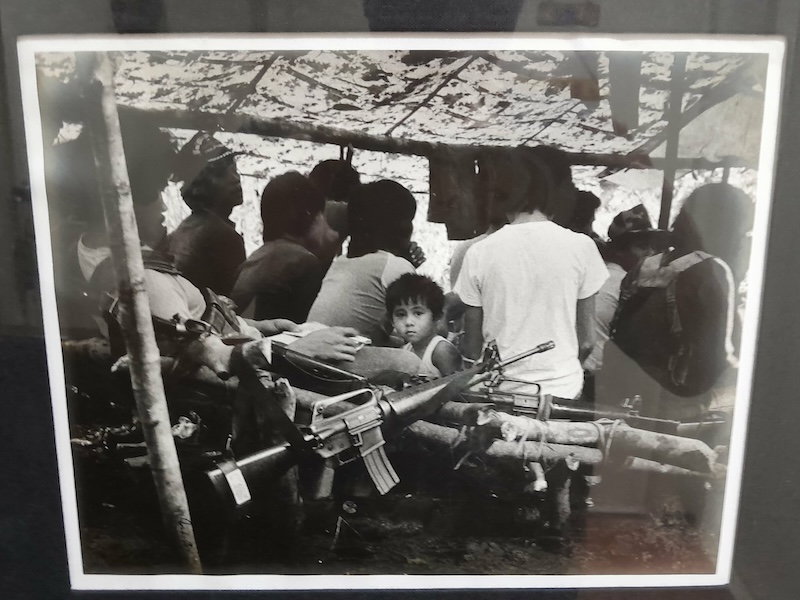
1984 photo by Alex Baluyut of a boy in a red zone in Agusan del Sur
Then we ran into one another again in, of all places on earth, rebel territory in Agusan del Sur, summer of ’84. Who should be ensconced with New People’s Army fighters but Alex, who was documenting their lives?
We slept in neighboring hammocks and shared a nail clipper when we somehow ran out of talk. We also shared small meals of rice, dried fish, and siling labuyo. A comrade would open a can of Skyflakes, in itself a treat. We’d only have a piece each.
Back in the legal world, I’d see him at Hiraya Gallery in Ermita with other photojournalists, with the curators Bobi Valenzuela and Manny Chaves. This time talk extended until closing time.
When Alex exhibited his black and white photographs inthe gallery’s mezzanine and sold each for P200, I bought the one depicting a boy facing the photographer while a group of red fighters attend a plenum, the very telling rifle indicating their cause. I recognized the hut, the location that I had visited at a time when revolution seemed the way out and forward.
When Alex exhibited his black and white photographs in the gallery’s mezzanine and sold each for P200, I bought the one depicting a boy while a group of red fighters attend a plenum
Precious would sing Time After Time for Rolly, me, and our guests on our silver wedding anniversary. I bumped into the Baluyuts again, and they invited my daughter Kimi and me to the birthday of their son Enrique (Rickee) in their apartment in Mandaluyong. It was a time of reminiscing, drinking (Jack Daniel’s on the rocks), eating Alex’s wonderful chili.
When they moved to the University of the Philippines (UP) Los Baños campus, they invited me again for Precious’s 46th birthday, a swimming party. Again Alex showed his skill with the charcoal grill, a skill he honed, according to journalist Eric Caruncho, “at The Right Spot, his short-lived but memorable art cafe/ihaw-ihaw on J. Nakpil in the late ’80s, a hangout for photogs, journalists, and hipsters who thought Penguin Café was too hoity-toity.”
Ed Manalo was Alex’s partner in this venture. Eric said, “Actually, namamahalan lang kami sa beer sa Penguin. Our SOP was to have one drink at Penguin (usually their beer and schnapps combo), hang out for a bit, then continue the party at The Right Spot, which was just a hop away.”
At the end of my Sunday afternoon in Pansol, Laguna, as we watched the pool being drained, Alex and I had a loud laugh at the sight of the black grime left over. He shouted, “Libag natin!”
I had some sleepovers in their garden cottage, the type that would make you sing Crosby, Stills, Nash, and Young’s Our House upon setting your eyes on it. All that was missing were two cats in the yard. I’d get up early mornings while the dew was fresh, and with my digicam capture souvenirs of flora surrounding the cottage. One time, as I was making ready to return to Manila, Alex told Precious, “What do you think, honeycomb? Don’t you think it’s time we adopted Babeth?”
I was touched that they considered me family enough to be welcomed to their home. During a short period, I tutored their eldest Rickee in creative writing (actually, handwritten correspondence), giving him exercises. At some point the correspondence stopped, but not with his parents, to whom I mailed letters and postcards. Alex would use a steak knife to tear open my envelope, according to Precious’ recounting.
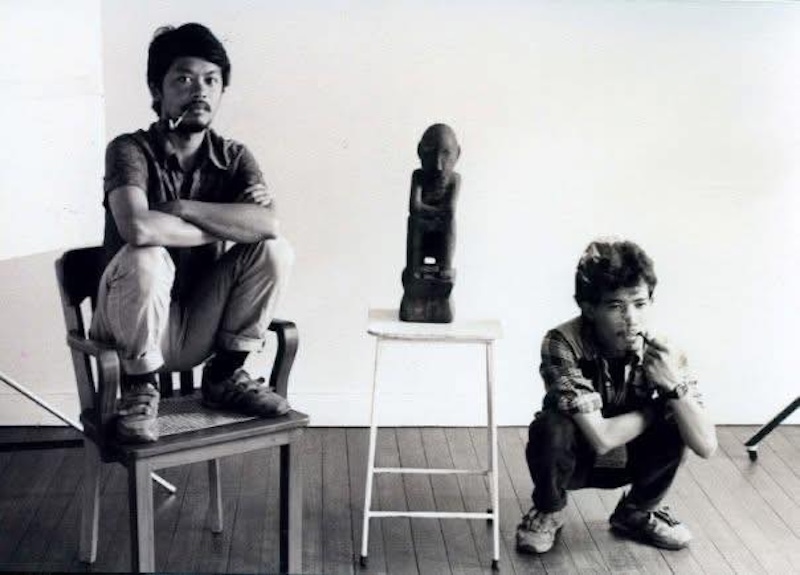
Alex Baluyut and Luis Liwanag pose as ‘bulul.’ (Photo by Wig Tysmans)
I sought out one of his bosom buddies, Luis Liwanag, who considered Alex his kuya and chose him as godfather to his eldest child. Luis works as freelance photojournalist and workshop teacher. The two met during the noise barrage for the imprisoned Ninoy Aquino, at Police Precinct 3 near the Blumentritt market, where those who participated in the anti-Marcos exercise were rounded up. At the time, Alex was with the Associated Press.

Alex with eldest son Rickee (Photo by Luis Liwanag)
Luis recalled, “We hit it off. Rallies were taking place, we became close while on coverage, so close that we decided to rent a room in Remedios Circle, Ermita, across from Penguin and Coco Banana. Every day, we went out to shoot. We loved photojournalism. Our icons were from LIFE magazine. We contributed to the mosquito press, like Mr. & Ms. Special Edition. But Alex was committed to the wire agency, so we thought of a pseudonym after our idol agency Magnum. Ours was also named after a gun, we called it Paltik Photos collective.”
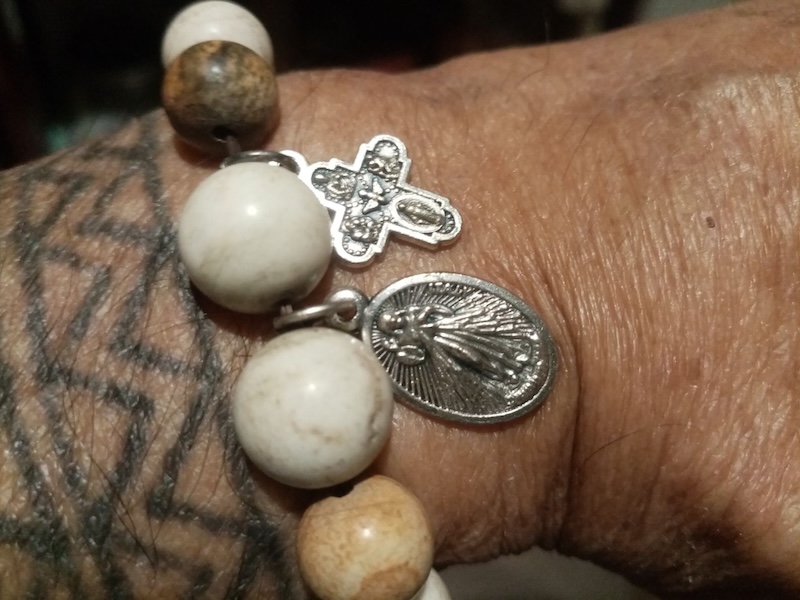
The bracelet and medals on his tattooed wrist (Photo by Alex Baluyut)
He continued, “Our rented room became a halfway house for artists who were up late in Ermita and needed to stay over. At some point, Alex got fed up with the politics in the wires. He joined an exposure at PETA (Philippine Educational Theater Association), the theater group, then Mindanao. For his Mindanao trip, I helped prepare his survival kit. When he returned several months later, he was a changed man. His orientation was different. His passion for photo documentary was at an all-time high. He was more organized, sympathetic, and patient about attending meetings of the movement, whereas I was and remain a punk only.”

Alex naps in between kitchen duties at Villamor Air Base post-Yolanda. (Photo by Eloi Hernandez)
Luis said that even if there was a gap of years in their encounters, they remained kindred spirits. “With the help of Precious, they formed a Yin and Yang. When Super-typhoon Yolanda struck, we photographers went to our respective assignments ,while Alex thought of opening a community kitchen at Villamor Airbase where they met the refugees from the storm with hot meals. They sustained ARMK even during the COVID years.”
He remembers Alex primarily for his passion for service. “We’ve had debates while we were drunk. He would scold me. The so-called quarrel would heat up to the extent that he would turn over the table. But I understood where the passion was coming from. He had a strong personality, so there were many fallouts with others.”
Luis opined that Alex’s temper might have been due to undiagnosed post-traumatic stress disorder (PTSD) from his Mindanao experience, and his history of substance abuse.
Alex also became chief photographer of The Manila Times, with a Who’s Who staff under him, among them Mon Acasio, Joe Galvez, Nico Sepe, and Luis. They were called the Lost Boys for some reason. When another group took over The Times, non-conformist Alex was dismayed and left.
Later, Alex led masterclasses in docu photography at Ateneo de Manila University and helped found the Philippine Center of Photojournalism in what Luis believed to be in “the spirit of serving the people. He always wanted to help. That community kitchen could serve from 500 to 5,000 people. I warned him and Precious that they may suffer from burnout.”
‘He always wanted to help. That community kitchen could serve from 500 to 5,000 people. I warned him and Precious that they may suffer from burnout’
The two friends spent the December holidays together, sharing a meal, but Luis noticed that Alex refused to drink even wine. He said he was unwell and his back hurt. But Luis didn’t pry further, because he knew his friend was always secretive about what he felt.
When he learned that Alex was already unresponsive at the Los Baños Medical Doctors Hospital ICU, he thought of the ways the deceased had, while alive, “inspired a lot of people, including me. He knew how to patiently share what he knew. I am forcing myself to emulate him, but he was in a class of his own.”
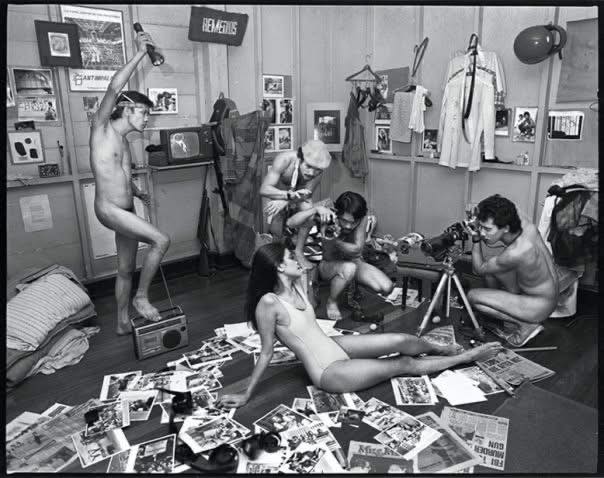
Gigi Dueñas in swimsuit and surrounded by naked photographers, Alex Baluyut and Luis Liwanag among them (Photo by Wig Tysmans)
Writing from the French West Indies in the Caribbean, actress-entrepreneur Gigi Dueñas de Beaupre recalled how she and Alex almost went into a profitable clothing venture. Her initial impression of him was he was snobbish, but later they would hit it off with the other photojournalists hanging out at Hiraya.
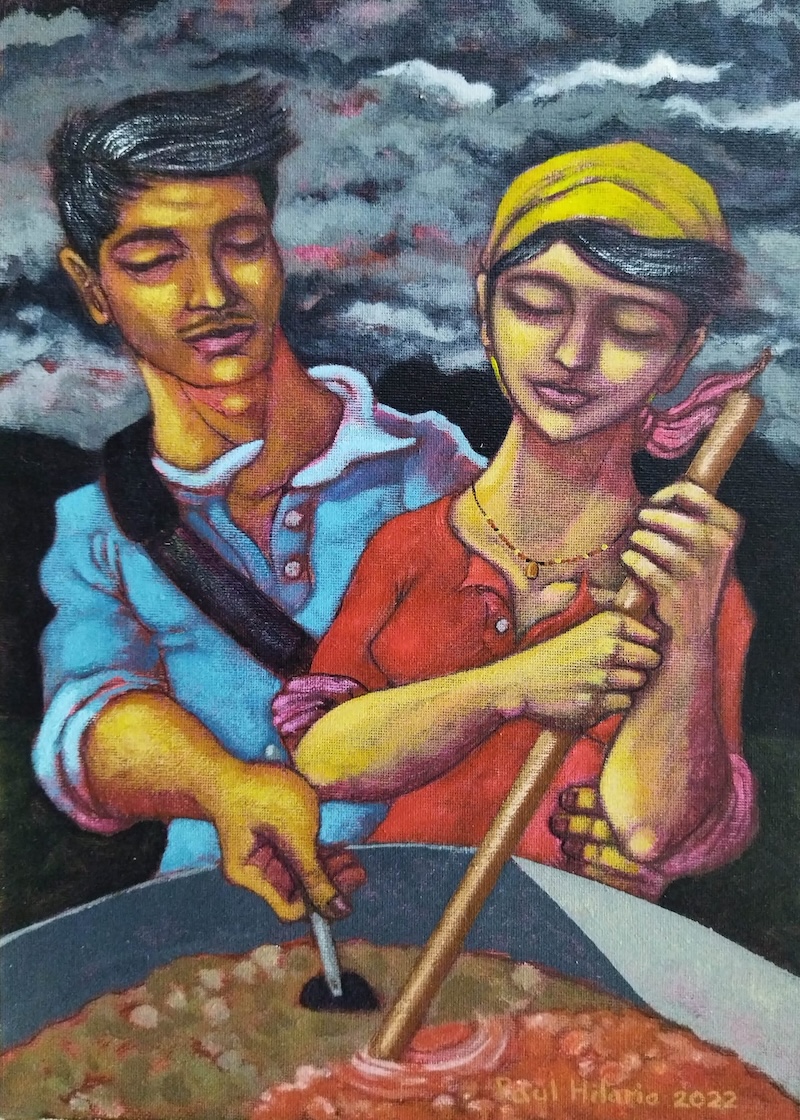
‘Niluto ng Panahon,’ portrait of Alex and Precious, by Paul Hilario
One day, back from her back-and-forth trip to Bali where she was living from three to six months a year, she brought several photographer vests with a great design done by her Colombian painter friend, Patricia Chapparo. Gigi gave one to Luis and another to Alex.
She said, “Type niya, say niya, hoy, we can have them copied here and sell them? I immediately thought of my neighbor in Project 6, a really good seamstress aching for work.” Alex proposed that they split the investment and profit 50-50.
Gigi continued partly in old gay-speak, “We both didn’t have much money to invest, so I would go to Divisoria to buy canvass cloth. The vests were selling naman, but we never earned anything. We would pay the seamstress, buy cloth, and maybe have some coins for coffee. Alex was giving away some to friends. Then came Ding Navasero, also known as Divisoria Jones (dahil akala niya si Indiana Jones siya). May datung si Divi. He bought several vests, iyon pala ipapakopya niya sa Los Baños. Sabi ko, hoy, bru, dapat may percentage kami ni Alex. Oo raw. Hanggang ngayon ang bruhang iyan, wa give!”
She and Alex didn’t feel like fighting with Ding since they didn’t have the capital, so the whole idea was left for him to grow. Gigi looked back ruefully, “Ang bakla, yumaman dahil sa vests. O sige na nga, kaibigan din naman.”
She and Alex continued to hang out a lot at Hiraya and Penguin, sharing ideas, dreaming projects, even screaming at each other over disagreements, then drinking endless cups of coffee with Bobi and Manny. Then, when the photojournalists had nothing to do, they would take pictures of Gigi. One time Luis placed her in an ice delivery truck. Alex snapped pictures of her chatting with Bobi “not because I was beautiful but to test his lights and lenses.” She thought later that maybe she seemed more interesting than just the wall.
Journalist-researcher Caloy Conde wrote on his FB status: “Alex was the kind of friend who got things done. Need a contact? He had the number. Need someone to make the call? He’d step up. In our conversations, he was always quick, generous, and straight to the point.”
Alex shared with him, other journalists, and activists the tales of the places he visited in Mindanao, the people he met, and the dangers he faced, “told with the kind of quiet confidence of someone who had earned every story. He was fearless in the field, but never reckless. He cared deeply about the people he photographed,” Caloy added. He also described Alex as “never territorial, always collaborative.”
Their online exchanges were about food, since Caloy called himself a “good home cook,” but he was in awe of Alex and Precious for taking the extraordinary step of using food “for their humanitarian work. Through ARMK, they brought hot meals to Filipinos devastated by disasters and conflicts in places near and far. That was the man in a nutshell: Whether it was a camera or a ladle, he showed up for people in their most vulnerable moments, and he brought others along with him. But what I’ll remember most is his sense of urgency about the things that mattered. When others were content to wait, Alex was already asking, ‘Isa-kalye na natin?’ Ready to act, restless in the face of injustice, quietly impatient with a world that moved too slowly toward what was right.”

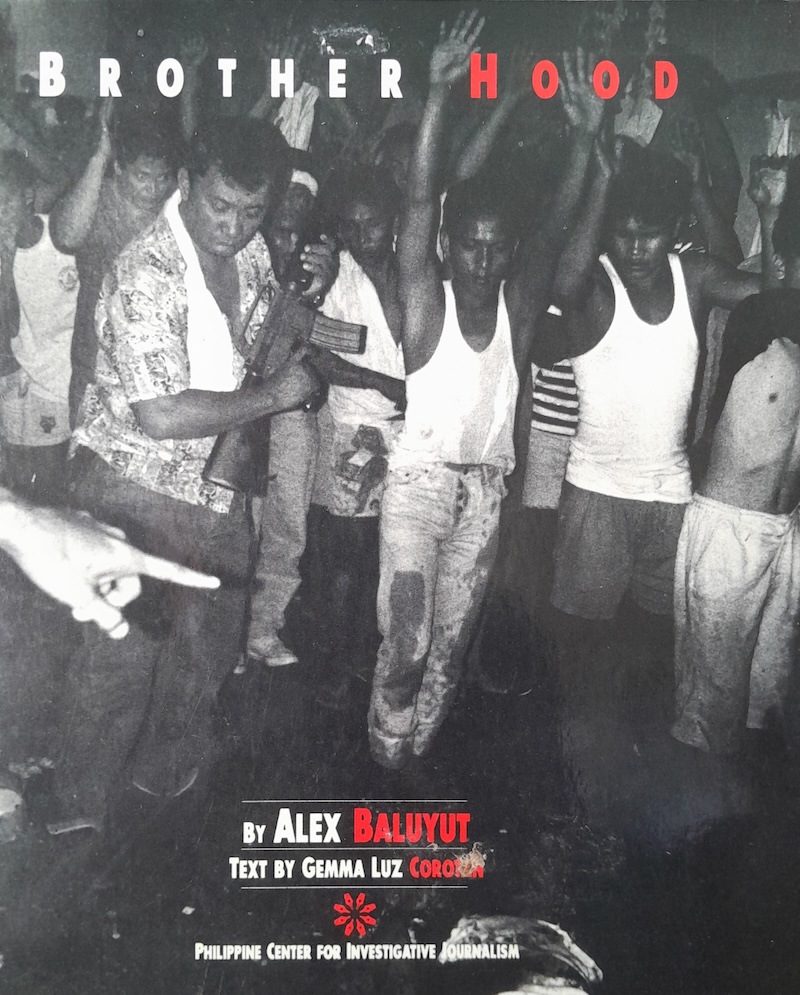
Two of Alex Baluyut’s National Book Award-winning books
Writer Gemma Luz Corotan Kolb, with whom Alex collaborated on the National Book Award-winning Brotherhood, published by the Philippine Center of Investigative Journalism, may not have moved from being colleagues to being friends with him. As she put it, he might have found it “frustrating to do the coverage of the crime, police, and military beat with someone as antiseptic as I was. I knew he was taking drugs, and I always smelled a whiff of it around him. I have never tasted drugs or smoked or drank alcohol or even coffee. He said weed helped him work, while I myself needed to be totally clean to help me focus on anything. He came into the project under a cloud of darkness and hopelessness from what he had seen and experienced in the trenches. While I was already doing investigative, crime pieces, I was still young and naive and mostly hopeful about the world despite what I had seen.”
In short, they had little to talk about. She described their differences this way: “To Alex, journalism and the desire to record history was life itself. There was that part in me, and I still do it in small, manageable doses, but there was also a part that wanted the normal life, the house with the white picket fence, the husband and the future kids who will never have to see and experience the hunger, the poverty, cruelty, and darkness I have seen because I will protect them from them. That part won out. Alex and I were two people thrown together by circumstance who were as different from each other as oil and water. Looking back now, I wish we had actually been friends. It was an opportunity we had but did not take. I think about life and the missed chances and doors we don’t enter and friendships and relationships we don’t pursue for whatever reason, until the window to have them is permanently shut. I wish I had called just to ask how he was and to thank him.”

Wedding photo of Howie Severino and Ipat Luna taken by Alex Baluyut
Broadcaster Howie Severino and wife Ipat Luna enjoyed the distinct honor of having Alex as their wedding photographer in 1994 “before prenup pictorials, same-day edits, and wedding coordinators wearing headsets. We relied on friends. I didn’t know any wedding photographers. But I knew photojournalists. So I asked my friend Alex if he could shoot our wedding. He said yes without hesitation. I had no expectations, except that there would be visual proof we got married.”
He was aware of Alex’s legendary reputation as the guy who walked away from a well-paying Associated Press job to “pursue long-form journalism projects—including the book on the NPA. Alex did not take easy paths. By the time we were planning our wedding, he was already something of a legend. Asking him to shoot it felt almost absurd. Yet he photographed our wedding with the same seriousness he brought to a hostage crisis or guerrilla training in a mountain camp.”
‘Asking him to shoot it felt almost absurd,’ recalls Howie Severino. ‘Yet he photographed our wedding with the same seriousness he brought to a hostage crisis or guerrilla training in a mountain camp’
About the wedding photos: They were in black and white. “None are posed. No one looks at the camera. Nothing feels staged—because nothing was. It was reportage, not a wedding album.
Afterward, some relatives searched for the expected group shots—the assembly-line portraits of abays, the ninongs and ninangs flanking the bride and groom. But that wasn’t Alex. Heaven forbid he direct people to turn this way or strike a wacky pose. That’s not what photojournalists do.”
Another precious memory belongs to Howie’s son, Alon, then 20, who volunteered with ARMK in the aftermath of the Oroquieta floods in 2022. Howie wrote, “It became one of the formative experiences of his young life—chopping vegetables for hours, serving food, sleeping on the floor of the barangay hall, taking instructions from Alex and Precious. He told me later that despite the bleakness—the loss of life, the mud, the exhaustion—Alex kept the vibe light. He cracked jokes. He made it fun. All the while under enormous pressure to feed the multitudes. It was a master class. “
To Alon, Alex was not “the fearless chronicler of wars and rebels and hostage crises—but…the man who taught him how to chop vegetables fast enough to keep up, how to work until the last evacuee was fed, how to keep things light when everything seemed bleak.”
Eloi Hernandez, arts studies professor at the University of the Philippines Diliman, remembered inviting Alex to her class in Art as Photography: “Punong puno ng malulutong na mura ang binitawan mo sa mga estyudante ko—sure ako hindi ka nila malilimutan.”
But her best memory of him is how the great love of Alex and Precious expanded further to include their countrymen through ARMK. She considered him a hero and wished nothing more than for him in the afterlife to cook a good meal for her late dog Arwen, now that nothing more is forbidden to them.

Alex in the hospital
Going viral on FB and IG is a poem by Jean Claire that captures the contending sides of Alex. It is an apt closing to this attempt at a tribute.
Field Notes for Alex
By Jean Claire Dy
He carried a camera
like a small window
through smoke
Cities broke open in front of him
Glass.
Sirens.
Men shouting the language of war.
Still he noticed
a woman brushing dust
from a child’s hair.
Most people who walk through fire
come out as stone.
He came out carrying soup
in a dented pot.
Somewhere in his pocket
a camera still slept
warm with fingerprints,
Waiting
for the next small story
that refused to die.


